Log in
EN
FR

Electrostatic microphones

2199 products found

Categories
Filter
Sort by
Brand
Evaluation
  • Reviewed or not
  • Editor’s award
  • Reviewed by Audiofanzine
Availability
  • Available or not
  • Sold new or used
  • Sold new
  • Sold used
Must-have products
  • All products
  • Flagship products
  • Best rated products
  • Hot products
  • Popular products
Price
  • Freeware
  • Low-cost (< $650)
  • Mid-range ($650 - $2,000)
  • Premium (> $2,000)
€
Clear
Sort by
  • Popularity
  • User ratings
  • Price - low to high
  • Price - high to low
  • Used price, increasing
  • Used price, decreasing
  • Name (from A to Z)
  • Name (from Z to A)
  • Added on
Choose a category
Selected category: Electrostatic microphones
Sort results
  • Popularity
  • User ratings
  • Price - low to high
  • Price - high to low
  • Used price, increasing
  • Used price, decreasing
  • Name (from A to Z)
  • Name (from Z to A)
  • Added on
Filter results 2,199 results found
Brands
Evaluation
Availability
Must-have products
Price
  • Freeware
  • Low-cost (< $650)
  • Mid-range ($650 - $2,000)
  • Premium (> $2,000)
Show results

The best Electrostatic microphones reviews

The reviews Audiofanzine members found the most helpful.
  • « WTF!! »

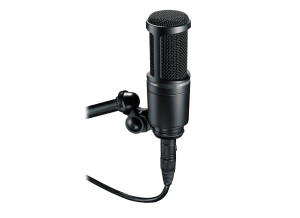
    "Vintage" studio mic, both in terms of sound and design! OVERALL OPINION After having looked for THE mic for a long time, including lots of comparative tests (neumann, shure, seinnheisser, akg, etc), I gave a try to this rather classic-looking studio mic. As soon as I had it in my hands I felt reassured by its weight (so watch out for the boom stands), it's not a plastic mic! I plugged it into my small H4 to make some tests and boy was I surprised: an awesome "vintage" sound! With an H4! I checked the settings on the zoom and realized everything was flat! I asked if I could test it with an avid system (which was displayed at the store) and I wasn't the only one in shock! This mic has an excellent sound quality (if you like vintage sounds), worthy of better-known products. When I asked the price I was dumbfounded! I thought it would be around $500-$600 and it was only $380 with shock-mount suspension and (removable) anti-pop filter! The store must have gone out of stock with the dozen clients that were in that day! It certainly won't oust a U87, but at this price, it's unbeatable!

  • Lf's review

    Cardioid, large-diaphragm condenser mic. OVERALL OPINION I've been using it for four years. I use it in stereo with a Shure KSM137. To be honest, the value for money of the AT2020 is clearly better than that of the Shure, even if the Shure sounds better (obviously). The AT2020 can handle SPL better than the Shure. To cut it short: The AT2020 is an excellent mic considering its price. I recommend it to anyone that wants to use it in a home studio, for example. Very versatile to record acoustic instruments (like guitar) or as ambient mic for small combos.

  • victormelamade's review

    The Perception 420 is the nicest and most expensive mic in AKG's Perception line. The Perception mics are definitely aimed at the home studio market, but you will actually see the 420 pop up in a few pro studios here and there. This is the only one of the perception mics that I have owned that I still have. The others I all found to be lacking in the sound quality category so I sold them off. First of all this mic has a lot of nice features. It is a dual capsule condenser mic with a large diaphragm, which is going to get you a more full and round sound than one with a smaller diaphragm. The mic housing is a very attractive metallic blue with a silver mesh pop screen over the capsule. It comes with a nice aluminum hard case and a spider shock mount, so you won't have to go buy those necessary amenities elsewhere like you'd end up doing with cheaper mics. The mic comes with a 20 dB pad if the signal is clipping in the mic. One of the best features of this mic though is the fact that it can handle so much noise without clipping in the first place. I have recorded a guitar amp that was set extremely loud, probably over 140dB, and this mic was picking it up fine without even having to engage the pad. That is one of the best SPL handling sessions that I've seen from a mic at any price. The polar pattern on this mic is also switchable, which is fantastic for a $300 mic. You can go from cadioid to figure 8 to omni on this mic. There is also a low cut filter, which will cut out some of the rumble and bass noise on your signals that don't need it like vocals. This is one bad pitfall of this mic though, because I think it definitely takes out too much lows and cuts into the body of most sounds. OVERALL OPINION This mic is definitely the best of the perception series due to more features and increased sound quality. I think that this mic is actually a killer deal at only $300. I like to use this mic on my upright piano pointing at the sound board on the back, it sounds awesome. I have also used it on some vocalists over more expensive ones sometimes. It is a really great value mic, and offers a lot of features and decent sound. It's a good deal.

  • « Sony C 48 the unknown LDC »

    A couple of years ago, I was looking for a pair of used Neumann U 87 mics for vocals and general aplications. Then a pair of Sony C 48 was offered to me at a ridiculous low price. Here in Germany the Neumann, AKG,Shoeps mics are omnipresent. only a few people know about high-end Japanese microphones.I already owned a Sony C 38 B and was very pleased of it. Since then i use them on drum overheads or room-mic, piano Leslie-cabs.... Then we had to record one of my songs with double vocals. The other singer did very well with the U87 but i wasn´t very happy with it. So i tried the C48 for my vocals. It did for me what i had expected from the u87! So i think the C48s do their job as well as a U87 or a U89! And they have the 9V battery compartement !

  • « Neumann TLM 103 works beautifully on acoustic guitars »

    Hello curious wanderer, Owned and used a Neumann TLM 103 for about a year now. I've paired it with various preamps including a LA-610 mKII. Primarily used w/ acoustic guitars and vocals. There does tend to be a lot of artifacts when using this mic at close sources -- these artifacts i have not experienced with other mics and concluded that the microphone is causing the problem. These 'artifacts' are distortion in nature of the source and tend to be difficult to edit out or make EQ correction. That's why I only give this a 4 star instead of 5 star review. BUT, like always, take every review with a grain of salt. You can hear it paired w/ other microphones here: https://www.youtube.com/watch?v=jOjTCh4WO_Q cheers, bainmack

  • « Great Mic, Even Better Price! »

    If you are looking for a mid range sounding mic for a great price, the MXL V250 is the mic you are looking for. The V250 averages $60-$80 online, but don't get too excited Canadians, you will be hit at the border and the price will go up. Even if you had to pay around $150 for this mic, it wouldn't be a bad decision. This a great sounding studio mic that is good for the professional who needs a reliable/great sounding mic that isn't going to cost a lot. Specs: -Pressure gradient condenser microphone -30Hz to 20kHz response -Cardioid -15mV/Pa sensitivity -200Ω impedance -80dB signal to noise ratio -130dB max SPL for .5% THD -17.1mm diaphragm diameter -19.9mm capsule diameter -6 micron diaphragm gauge -3.0mA current consumption -47mmX170mm -.8lbs -XLR output -Silver/Gray -10kHz boost -FET preamp -Clip, cleaning cloth, MXL sticker and manual included OVERALL OPINION Most liked- I'd have to go with the clear sound in comparison to the low cost. The MXL V250 is worth every penny even if you can't get it for $60. Least liked- I have to admit, it has to be the 10kHz boost. I am always finding myself lowering the 10kHz region when I use this mix. I mainly use it on vocals but if you are using a piano or guitar you shouldn't need to lower the 10kHz region. P's, S's & T's are hot in the 10kHz frequency for the V250 (and in general), that's my main reason for lowering the 10kHz. For the price of $60-$80USD the price is virtually unbeatable. At the time of purchasing this mic I looked all around for the best microphone for price and quality. My budget was a bit higher but when I began to research the V250. The low price is an excellent added bonus. If you are a Canadian like me, this mic is still worth paying the $120-$150. The highest I would pay for this mic would be around $280. Keep in mind that the sound quality also depends on your monitors & interface (or mixer), room you are recording or listening in, etc. Having said that, the MXL V250 is of great quality on any system. I have personally used it with about 3-4 setups and like the sound I get every time. The V250 is going to keep up with condenser mics in the $200-$500 range. It’s got a 10kHz boost so it really favours things like acoustic guitars and piano. Although the V250 sounds great on vocals and as a room mic for a drum kit too! I really enjoy using this mic in well-treated rooms. If you are using it in a room with bare walls and a hardwood floor you are going to notice a lot more noise in the high range (in art due to the 10kHz boost). The V250 is better suited for a vocalist in an isolation booth rather than a vocalist in a big open room. I didn’t really try out many models before deciding on the MXL V250. I was thinking about a couple models of mics that I had used in the past, but ultimately decided on the V250 because of the low price and good reviews. I have also recommended this mic to others that were in the same position as me. Knowing what I know now I would still make the same choice. There was a time where I even had 2! I do a lot of research before I buy a piece of gear so I don’t often find myself disappointed. I had read the odd review that complained about a DOA unit or what not but I take those with a grain of salt. Pros: -Great price -Versatile -Great sound -Comes with cleaning cloth and sticker Cons: -Doesn’t come with shock mount -10kHz boost -Cardboard box

  • « Gritty Delicate Natural »

    The Rode NT1-A is a large diaphragm cardioid condenser microphone. It runs on phantom power, so make sure your interface or mixer/preamp provides phantom power. When it comes to setting up, it’s a breeze. Just make sure you mute the channel when you plug in so you don’t damage the mic. Mute before disconnecting when you’re done for the same reason. Rode itself as a brand is highly respected in the music industry for making quality products that don’t break the bank, and the NT1-A (along with the NT1) has a reputation as being one of the quietest microphones in the market. I picked mine up second hand on Ebay and collected it from the seller, who worked at MTV in London, and had been using it for voice over work. I used it mostly for acoustic guitar and vocal. The mic came in a sturdy metal case, complete with a shock mount and a dust cover. OVERALL OPINION The quality of the mic itself, for the money is excellent. It has a very natural sound, but also a gritty character that I find works with acoustic guitars and vocals. It’s hard to explain the sound - it’s a sort of brittle tone - and I think with microphones it’s always a very subjective thing that varies from voice to voice and from mic to mic. But for me, I found the microphone was always a pleasure to use. Being a very quiet microphone, I found the mic useable in bedroom recording situations (obviously I still had to eliminate all background noise as much as possible). The frequency response is 20-20,000Hz. Output impedance of 100 ohms. Self noise only 5dB Placing the microphone perhaps 6 inches or so from the sound source creates a nice ambient sound. Up close you get a much stronger sound. I find a combination of up close and ambient can create good results (obviously this requires either 2 mics or 2 takes), but this depends on what you’re doing. My favorite way of using the microphone (as a singer songwriter) was to place the mic so as to form a triangle between my guitar’s sound hole, my mouth, and the mic. This uses the ‘rules of thirds’ principle of recording - creating a very honest recreation of my performance. The slight grittiness and brittleness of the sound works very well with acoustic music. The problem is that when you come to mixing it’s very hard to tune vocals so for someone like me (who’s not a great singer) I always had to go back to recording the guitar and voice separately. But for getting demos down it was awesome. All Rode products come with a 10 year warranty so as long as you take care of your microphone you can be assured it will serve you well.

  • « Brilliant Low-Cost Vocal Mic »

    When I made the decision to start recording vocals in my home studio I decided to buy some low cost mics to experiment with and just to get myself comfortable with the whole recording process. I ended up buying several mics but none of them really impressed for one reason or another. I eventually opted to buy the Blue Spark after doing some thorough research and it was a great investment. The Spark is an XLR, cardioid mic with a frequency response of 20Hz to 20kHz. The build quality is very good and it has a solid and polished feel. It's quite heavy for a mic of it's size, weighing in at 567 grams, with a height of 7.71 inches. It comes packaged in a wooden box and has a custom shock-mount and pop filter which is quite handy if you don't already those items separately. It also comes with a user manual which explains how to setup the mic, store it and tips on recording different sound sources. The mic is mainly targeted at the low-budget market and home/project studio owners. I use mine mostly for in-studio recording of R&B, reggae and hip hop vocals. Being an XLR condenser it requires phantom power which you can obtain from many mixers and audio interfaces. I use mine with an Avid Mbox Mini 3 and the pair works great. If you don't have a mixer or audio interface to provide phantom power but are still interested in getting this mic you can consider buying the Blue Spark Digital which is a USB version of the mic or buy an XLR to USB converter which will use power from your computer. One unique feature of the mic is that it has a "Focus" button which when activated acts as a high-pass filter and rolls off frequencies below 100Hz and adds some boost to the lower . Aesthetically it's a very beautiful and unique-looking mic. OVERALL OPINION What I like most about the mic is the sound quality. The self-noise of the mic is very low and when used with a good preamp it produces stellar results, enough to make you forget its low price. When the "Normal mode" is activated it captures bass and low frequencies very well. The sound is very forward and in-your-face, perfect for hip hop which normally needs powerful vocals. None of the other mics I've used within the same price range capture the bass element of a voice as well as the Spark. It generally performs very well under most of the conditions which I use it for, which is mainly vocal work (R&B, hip hop and reggae vocals) and recording sounds to use in my music (things like hand claps, shakers, tambourines, beat-boxing, custom sound effects, etc). Since it captures vocals so well this should be usable usable for voice-over work and podcasts. Following are the pros and cons of the mic that I've noted: Pros: - Excellent sound quality at its price point - Attractive design. It's solid and feels expensive. - Dual mode to increase/decrease low-end sensitivity - Comes with its own shock-mount and pop filter (free stuff is good) Cons: I'm hard-pressed to find any real cons with the mic, because it performs exceptionally well considering it's cost. But the main thing is the quality/usability of the included accessories. Much as I appreciate that they're free the pop filter is not effective at close range, so I have to use an additional pop filter. The shock-mount is also cumbersome. It doesn't hold the mic very well, it shakes a lot. I've found that it works best when hanging upside down. With that being said I would not hesitate to buy this mic again. It really gives more bang for your buck and shines above most mics in its price range and even some in the slightly higher price bracket.

  • « Good but not for vocals. »

    This line of mics from MXL I don't care for on vocals whatsoever. They have a real high mid sound. I don't like this mic for vocals. I have used it in my studio www.chrislieckstudios.com daily for room micing. It is fine as a room mic but not for vocals. If you have a female vocalist that has high mid range tones and or a head voice then this mic will not work for your needs. It even makes it worse when you try to compress the signal too much. I think that the bump at around 4K is rather annoying for recording what it is intended for vocals. Now it is reasonably price and does look good. OVERALL OPINION Good for room mic application. I do love it for room micing drums or right in front of the kick drum as a room mic. The high mid bump softens well for hard hitting drum sets for some reason. It almost has a room compressed sound that is not typical from most mics in this price range. I have used almost every MXL made and I really love there mics but it seems that each one has a particular sound and so you can't use this mic for toms or inner kick drums but rather room or a less present sound. I like the look of the mic and it is very well made. The boost in the high mid range does not make this a choice that I prefer for a female vocalist nor a high sounding male singer as when you add compression to the mic it sounds worse and more harsh. I think that the idea was to have a more sensitive and better looking version of the MXL 990 but I like the 990 a great deal better and it is less in price. If I were buying a mic under the $150 range I would look around on Ebay and find a pair of MXL 990 mics and use them as a pair and you would have two great, more flat mics to use on several other things aside from vocals. I would buy the MXL 990 over this mic. Too much high mid to high boost for vocals. Use this for room mic on drums it is great for that.

  • « Good mic »

    I am a huge fan of most all of the MXL Mic Line. I use them daily at my studio complex www.chrislieckstudios.com. This microphone delivers a good punch on the low end and is a bit more bass oriented than their normal microphones. I do like the mid range dip as far as my ears can tell. I would use this for instrumentation such as guitar amps or acoustic guitars. The first thing I will say is that I don't normally like external power supply mics. I have had a great deal of issues with some MXL mics when using them with the power supply. This is a tube mic and the tube does sound good. I am not a real fan of most tube mics unless they have reliable and have a reputation for not having issues. It does have a good sized capsule so I do like that. It was a bit noisy on the 4k side and had some high end break up but it still sounded very very good for the money. I would consider this a decent buy but not a steal. I like the SPARK mic better and that is half the price of this mic. I do like it for vocals and I used it several times on a male singer. I do like the sound of the voice on male singers. I used an API and with no compression and it did have the singer right on top of the diaphragm. There was a bit of treble but again no mic is perfect for every singer. I do like the way that it sounded on an acoustic guitar and for room micing it was very very good. The sound was clean and not to harsh as some of my other MXL mics that have tubes in them. The color is nice and it looks very good but that is not a reason to purchase a mic. I like the feel of the mic. It has a good if not sturdy feel but is not to bulky and big. Some of their older tube ones were to big and obtrusive and had some tube issues. I am more of a fan of MXL's mics without tubes but this mic was pretty good sounding and it was a pretty decent buy. I would not get a pair of these as it would be to costly for me to justify the sound of the mic. OVERALL OPINION Impressed with it's punch. Good value in that it cost just the right amount for what you get. The sound is punchy and is a bit more low end oriented. I like this mic. For the most part and it did perform better that expected as it did not get a great deal of reviews prior to my $400 purchase of mics. I looked for a review that I could get my teeth into.

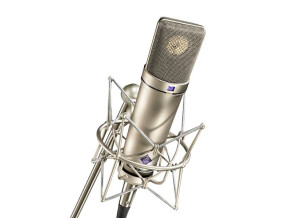
  • « One of the BEST but Expensive »

    I have used U87s for 30 years and I must say they are the best microphone for vocals (aside from the 3K bump) that you will ever find. I do like the U67 better if you have the money. It is the best mic every made. The U67 is the warmest of this mic line by far. The U87 has a specific sound. It is classic sound. Recently you are hearing more high end enhanced vocal sounds ala Katie Perry. This mic is more of a round sound whereby the low end is very present. The U87 is a mic that you will use ever day of your life and for most any application. So if you have the money BUY ONE. We use this at the studio for 20 years www.chrislieckstudios.com or at my school of recording www.comia.us. At times the high mid boost can be very annoying and I move on to an AKG 414, but I don't go by specs I go by the one thing that matters, my ears. Each vocalist is different, and each has their own issues. Some can use a U87 and it is the best sound they will ever get. Some a U87 can sound very harsh. The high mid boost is very noticeable in some situations. I mostly like it for hard hitting vocals and I only use API Pre Amps when I am using the U87. I don't use any other Pre Amps. The low end at about 50hz is smooth as can be. OVERALL OPINION The very best vocal mic (ala warm mic) that you will ever buy. Today's sound has all the low end removed so you need to study vocal sounds and compare the older more warm sounds like John Mayer verses a Rhianna sound or a sound that has all the low end removed. The U87 is the standard of professional recording. I do think if you going to spend a great deal of money on one microphone then of coarse the U87 is a the industry standard for vocals but again it does have a specific sound. Some of the newer records are going for a more high top end sound and are using a great deal of post plug ins to get the sound more punchy. I also use the 87 on room mics, sax, trumpet, room kick drum micing and at times snare or under snare. It is a very good piece to own.

  • BeyondR's review

    Audio-Technica AT4047 is a recording mic that uses a condenser technology that gives a wide dynamic range, a very low noise and also high SPL. OVERALL OPINION The thing that I like most about it is how well it captures the recording, it can be used to record strings, guitars, electric guitars, pianos, instruments ensemble, and of course vocals and choir. Also I really how Pro this mic feels, it has three switchable polar patterns: cardioid, omnidirectional, figure-8, which is really handy for recording several type of musical instruments. also low self-noise, wide dynamic range and high SPL capability, Dual-diaphragm capsule design maintains precise polar pattern definition across the full frequency range of the microphone. This mic is a pretty good deal if you want to spend more money and get better sound quality, it costs nearly 1000 $ , however the features provided by this product are pretty crazy, it has a custom shock mount that provides superior isolation, also a Integral 80 Hz high-pass filter switch and 10 dB pad switch. The precision and quality of sounds is outstanding, I really do enjoy the quality provided by this product however I would consider buying something more new, because this mic has some years behind, that's why I would rate this mic 8/10. Right now you can find something cheaper but that is pretty equal in terms of sound quality and precision of the sounds. I tried several condenser types of mics , this has has a big advantage, the low noise and the precision of capturing the frequency range. However I don't think I would buy this mic again because you can find something better and that doesn't cost as much as this mic does, so keep that in mind if you're searching for a podcasting mic or a vocal recording type of mic.