Log in
EN
FR

Dynamic Microphones

1258 products found

Filter
Sort by
Brand
Evaluation
  • Reviewed or not
  • Editor’s award
  • Reviewed by Audiofanzine
Availability
  • Available or not
  • Sold new or used
  • Sold new
  • Sold used
Must-have products
  • All products
  • Flagship products
  • Best rated products
  • Hot products
  • Popular products
Price
  • Freeware
  • Low-cost (< $150)
  • Mid-range ($150 - $300)
  • Premium (> $300)
€
Clear
Sort by
  • Popularity
  • User ratings
  • Price - low to high
  • Price - high to low
  • Used price, increasing
  • Used price, decreasing
  • Name (from A to Z)
  • Name (from Z to A)
  • Added on
Sort results
  • Popularity
  • User ratings
  • Price - low to high
  • Price - high to low
  • Used price, increasing
  • Used price, decreasing
  • Name (from A to Z)
  • Name (from Z to A)
  • Added on
Filter results 1,258 results found
Brands
Evaluation
Availability
Must-have products
Price
  • Freeware
  • Low-cost (< $150)
  • Mid-range ($150 - $300)
  • Premium (> $300)
Show results

The best Dynamic Microphones reviews

The reviews Audiofanzine members found the most helpful.
  • « Great Sounding Tom Microphones »

    There are great things about these microphones if used and placed properly. They are proximity microphones and I ran a comparison at my studio, www.chrilieckstudios.com, and Remember I grew up as a professional engineer using 420 mics on toms only. The Sennheiser 420s are the best tom mic ever produced, however I must say that this microphone is the closest I have tested and at the price there is not a microphone for toms that is better. They don't have the attack at 3.5K to 4.5K that I need, but that is a quick fix with a simple one band EQ boost. However if the drummer hits the toms hard (like you should have them do at all times) the mic will provide enough attack to cut through the mix. We test mics and gear all the time as my engineers work at The Guitar Center so we have gear at the studio all the time. They provide a good bump at about 200hz so if you like that bump (I don't I remove all the low mids on my toms) these mics will provide you a deep low mid tone. OVERALL OPINION I would not use this mic for snare except for in a live environment. They don't have the attack at 3.5K to 4.5K that I need, but that is a quick fix with a simple one band EQ boost. We test mics and gear all the time as my engineers work at The Guitar Center so we have gear at the studio all the time. I have been doing this for 30 years so I am aware of what microphones sound good. I say if you have a studio and you are looking for a Tom Tom Microphone, this is the only professional line of tom tom mics I would buy. I have a set of them on the toms now and have done 40 records with these mics. You will have limited uses of these microphones. They are not good for much else besides the tom toms. They do not do well in other application modes but if you want exclusive microphones for your tom toms, and you are on a limited budget.

  • moosers's review

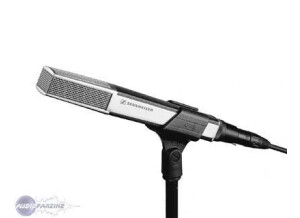
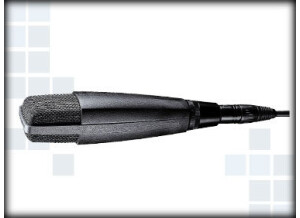
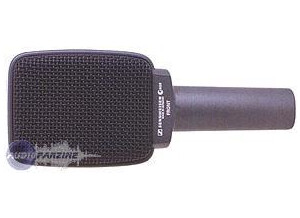
    The Sennheiser MD 409 is a dynamic microphone great for both in the studio and on the stage. I have only used this microphone in the studio, but have seen it used in a live setting as well. Only one of the sides of the microphone will pick up, which is what makes its such a great microphone for micing guitar amps. The MD 409 has been around for a while and has become ubiquitous in studios and on stages alike. OVERALL OPINION I've been using the Sennheiser MD 409 for about four years and have found them to be one of the best dynamic microphones I have used and are great for a number of different applications. Due to the nature of the way this microphone is shaped, it is great to put up on the grill of an electric guitar amp. It also sounds great on tom tom drums and vocals. I have seen the MD 409 used for vocal mics on stage a number of times, including in Pink Floyd's Live at Pompeii. However, its best sound application is probably for electric guitar amps as it really shines in this scenario. It also sounds great on horns - specifically saxophone. Sennheiser has a lower end model of this microphone known as the e609, and while the e609 is a great deal for the price, the MD 409 is the original and reigns supreme. The sound quality of the MD 409 is full and crisp and always delivers a great tone for me. The price isn't too expensive for a great dynamic microphone like this one, but it isn't the cheapest microphone on the market either. The Sennheiser MD 409 has become a classic mic and Sennheiser has a great reputation for making great sounding microphones that are reliable. I highly recommend this microphone for studio owners and anyone looking for a great dynamic microphone.

  • « Excellent bang for the buck »

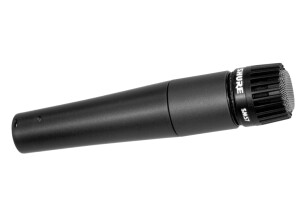
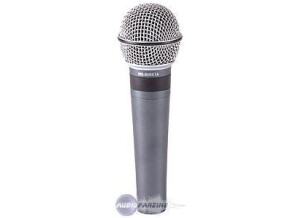
    I bought an SM57 primarily to record electric guitars. I spent hours with several other microphones and never really got a sound I was happy with until I tried the SM57. It was the clear winner after multiple position and amp setting checks. I also recorded some vocals with the SM57-- very versatile mic. There's a reason why so many people say so many good things about this mic. It's only a $100! Can't go wrong. I used it on this track for reference: https://www.youtube.com/watch?v=MeQ4J7vLdvI

  • « I collect these mics. Have three. »

    A phantom powered dynamic mic? Yup. This was Blue's first attempt at phantom powered dynamic mics, and the first in the world at the time. When this mic was discontinued, Blue went on to make the Encore phantom powered series. I'm not a fan of their Encore mics. There's something special about the Blue Ball. I use mine with my ringer shockmount for my burlesque shows, sometimes I sing with them. It's a dynamic mic with condenser features, most noticeably, detail in voice. It catches the minor details of the mids and bass of your voice. Highs are comparable to an SM-58. If the highs had as much detail at the lows, then it would get five stars. It does take some patience when setting this mic up with a PA. It's sensitivity can jolt you with feedback if you're unaware of how high the built in preamp is. They're hard to come by nowadays. Guitarcenter will sell them for dirt cheap whenever they get them in stock. Ebay is $40-$160.

  • « New in Box. Took me hours to figure out the wiring. »

    Thank god it came with a cable. Wiring is just like TS to XLR cable wiring: XLR pins 1+3 and joined together; which are the shield and pin 1 on the mic side. The shield doesn't have a pin on the mic side, it's soldered to the metal tab. Don't lose the little screw, as it makes a solid connection between the shielding cable and the body of the mic. XLR pin 2 is either pin 2 or 3 on the mic side (low-z or high-z connections). I tried both low-z and high-z. Low-z setting is 200 ohms and, at least for me, requires a cloud lifter gain booster for my mixers (which I don't have). So mine is set for high-z. I love the sound. Focuses on mids and highs; in my opinion great for live shows as most stage mics are SM-58s which have always been more bass friendly. Very punchy for live shows. I think this mic was built for broadcasting. It's hard to tell as there is zero info on this mic. This is quickly turning into my favorite mic for MCing on stage, singing, and podcasting.

  • Deleted member's review

    The Audix OM3 is a handheld microphone designed for live use. It is a vocal microphone, and is a dynamic, so it falls under that overpopulated category. Does the OM3 have a place in a singer's arsenal? The Audix OM3 has a polar pickup pattern of hypercardioid, so by itself, it has a very good rejection of all off axis sounds. However, Audix seems to tighten up polar patterns more than usual for live vocal microphones to reduce bleed, so the Audix OM3, along with all of the other microphones from the OM series, are especially tight, and offer absolutely superb off axis rejection. This makes them rather unsuitable to micing a group of singers, but that was not what they were designed for in the first place. The Audix OM3 has a frequency response from 50 Hz all the way up to 18,000 Hz, far higher than the industry standard SM58's response that only goes up to 15,000 Hz. Audix includes so tagline claims in this as well when they market. They have very low mass microphone diaphragms to increase output levels, and to improve the transient response of the microphone. It also boasts a proprietary anti feedback design, which I am not quite sure what the definition is of, but the shape and taper of the microphone body, along with its finish, is absolutely stunning. OVERALL OPINION I think that the problem of the OM3 lies in the fact that I personally do not understand where it fits in the market. It is a flatter version of the OM2, which puts it closer to the OM7, but it includes the slight vocal presence in the middle, making it a slightly more tapered version of the OM7. I do not dislike it, I just do not quite understand where it fits, because it seems to be a toned down version of the OM2, but not so toned down that it is as versatile as the OM7. Either way, one should listen to and try the microphone before making a decision.

  • moosers's review

    The ElectroVoice 654 is a dynamic microphone that was originally designed for radio and broadcast purposes. ElectroVoice has a number of microphones, including the famed RE-20 that were made for broadcast and are now used for musical recording purposes as well. The 654 is amongst these microphones, although it's seen a lot less than the RE-20. The mic has a omnidirectional polar pick up pattern and will gather frequencies between 50 Hz and 16 kHz. It comes mounted on a swivel microphone clip. OVERALL OPINION My experience with the ElectroVoice 654 has generally been pretty good. I've gotten better results in certain situations over others with the 654, but more times than not I've gotten a good sound with it that I'm in the end happy with. The two main applications that I've used the 654 have been as a drum room microphone over the head of the drummer, and for recording the bottom of a snare drum. I've definitely gotten my best results with the mic when used over the drum kit, as often I'll hit it hard with a compressor and blend the signal with the rest of the drums. I've also tried the mic out on floor tom, but we ended up switching the microphone out as it didn't have a full enough sound for the application. I would definitely bet that there are other applications for the 654 that work well in the studio, as I would imagine that it sounds pretty good for certain types of voices, but I haven't tried it further than what I've discussed so I can't speak this from experience. I don't have any idea what kind price the 654 would cost you, but there definitely doesn't seem to be too many of these out there. I wouldn't say that it's worth trying to seek one of these out, but if you have one on hand in a studio, it's worth trying if you need an extra mic in the mix...

  • « Very good microphone, wish it was a little cheaper though »

    When it comes to instrument microphones it can be difficult to pick the right one for what you need to do. We have been through so many different instrument microphones and some we like and some we don’t. The BeyerDynamic M 201 TG gives use a clean and respected sound. We just didn’t like the price tag that is on it. For some reason I felt like this microphone was a little over priced considering some of the other microphones that BeyerDynamic makes that sound very similar to the M 201 TG but cost about 30 percent less than it does. OVERALL OPINION Some instruments in your studio or on stage are hard to microphone up because of the space around the instrument and it could be a tight squeeze in order to get a microphone back there. The M 201 TG is a slim microphone that can reach back to those hard to reach places. This microphone also does a great job of not interfering with your speakers and monitors because it has a special coil design. It will allow you to have it very close to all of your gear without it causing issues to your other gear or audio quality. This is a great hypercardioid polar pattern microphone, it has a 3 pin connector and a well built frame. The M 201 TG should hold up for a long time and be your tuff to reach places microphone especially in a cramped studio like ours or small stage where all of the gear might be crammed together. We do not use this microphone all the time but it is great to have it for some situations. The sound is crystal clear no matter what you record with it. If the price was a little less we would probably purchased a couple of these. BeyerDynamic has always made great microphones but for some reason I feel they overpriced this one just a little bit. If you have the money to spend, check out the TG V90r by BeyerDynamic.

  • « Studio or Live and still get punchy bass »

    The AKG D12 VR is the most recent microphone that I have had a chance to use. It is brand new and has not been out for that long. It has 3 filter modes built into it and it is the perfect microphone for kick drums. If you like your kick to have a big hard hitting sound and still be recorded clean then this is the microphone to get. You can use this microphone in the studio or on stage and it will sound great either way. OVERALL OPINION The huge plus to this microphone is the 3 filter modes, one of them will add some more fullness and low end to your kick, another one will give you some cutting of mid range frequencies will the 3rd one is more for high end boost. You will have the only kick drum microphone you will ever need with the AKG D12. The AKG D12 VR is built to last you a long time, though I have only used it twice so far. I must say that I am really impressed with what AKG did with this microphone all while still making it affordable for the home musicians. The D12 VR is an active dynamic microphone with a cardioid polar pattern. The frequency range is 17 Hz to 17 kHz. It is by far the best kick drum microphone in this price range, I have heard a ton of kick microphones and none of them in this price range can even come close to what the D12 can do mainly because of the filters. If you are looking for full bass tones, and a punchy sound than the D12 VR will do it for you with no problem. After recording with this microphone I could see in the EQ in Pro Tools how punchy and warm it really was. We did not have to cut or pull back any frequencies, we really didn’t even have to EQ it at all. It was ready to cut through the mix as is.

  • « EQ boosting »

    The AKG D5 is a vocal microphone that can be used for our lead and backing vocals. It does a great job of not picking up much external noise from the rear and sides of the microphone. It is a super cardioid microphone with a frequency range of -70Hz to 20kHz. If you have a softer voice you wont have to worry about it with using the D5, it will still bring your voice to the for front with just a little EQ boosting when you mix and master your final track. If you have a deeper toned voice this is where the microphone could use some work, it will really over due your low tone and can make it muddy if you are not careful. It works so much better if you have a “lighter” voice or a female voice it sounds amazing. For the price of the D5 you really can not expect to get a better quality, most of its competitors will charge you almost double what the D5 cost to get the same level of quality. I have only used this microphone for recording purposes and never seen it used live. OVERALL OPINION My favorite part of the D5 is for the songs or vocals that are not punchy and are more mellow, it will still bring your voice out very clear (with a little EQ boost). But like I said it does need some work on a male voice that is deeper, you will have to do some cutting of the low frequencies in order for it to be clean. The value of this microphone is great for the price which is less than 100 dollars now. I have used a ton of microphones that are use for voice and this one does not stand out, but it doesn’t sound bad either. It is ok, if you only have about 100 dollars to spend for a vocal microphone for your home set up. This one should do the trick with no problems.

  • moosers's review

    The BeyerDynamic M 300 TG is a moving coil dynamic microphone that has a cardioid polar pick up pattern. The mic is designed to be used both in the recording studio and for live shows, but I've only used it inside of the studio so this review will focus on this application of the mic. The mic also has a frequency response pick up between 50 Hz and 15 KHz. OVERALL OPINION I first used the BeyerDynamic M 300 TG about three years ago, although I haven't had access to one for a while since I no longer work at the recording studio that I used it at. The M 300 has a variety of uses, but is best suited for recording male vocals in my opinion because it has the capability to handle high volumes and is perfect for capturing that rasp in a voice. I'd recommend using it mostly for rock music vocals, but it definitely has some other uses as well. I've also used it on electric guitar and have found this to be as good as of use for the mic as any. However, the built in pop filter makes it seem like they designed it for vocals, which it is also great for. While I haven't used it for any other applications beyond vocals and electric guitar, I would bet that it would sound good for any application where there was a good amount of pressure involved. I haven't seen too many of these microphones around since the one that I have used, which is the reason that I haven't used the mic in a while, but I wish they were more readily available because the mic is really a good one. It has a little bit more clarity than a Shure SM57, but at the same time definitely has a comparable sound to it. I'm not really sure how much the M 300s usually go for since I don't see them around all that often, but would imagine they would be in the range of a few hundred USD. I'd say that if you're looking for a nice dynamic microphone that this is worth looking into for sure, but there are plenty of more readily available options that are comparable if you can't get your hands on one.

  • moosers's review

    The Crown PZM 30D is a dynamic microphone that you can place on the inside of a piano or even on the floor. Its design is unique and allows it to pick up a great deal of specific sound. I have only used this microphone in the studio, as I believe that is the intended use for the microphone, but one could definitely use it in a live setting if they wanted to. OVERALL OPINION I've been using the Crown PZM 30D for about two years and I have found them to be quite useful in a number of different situations. The main use I have for the PZM 30D is to place it inside or on the top of a grand or upright piano. This picks up a lot of detail from the piano and will also isolate it really well if you have other instruments in the room that you do not want to bleed into it. I have also found this useful when recording noise or talking in a room if you place it on the floor as it will pick up everything in the room. The price of these is really reasonable for such a useful microphone. Having a pair of these is great and I use them all the time when recording piano and even sometimes for recording a Leslie speaker cabinet with a Hammond B3 organ. While these aren't the most versatile mics out there, as they can only be used for a few different applications, having them around is more than useful and they can really come in handy for the things it is good at. I can't think of any other type of PZM microphone that I could compare this to, as this mic is pretty unique. Overall I highly recommend these microphones for professional and home studios alike as they are great sounding and incredibly useful.