Log in
EN
FR

Sennheiser Dynamic Microphones

95 products found

Filter
Sort by
Sennheiser
Evaluation
  • Reviewed or not
  • Editor’s award
  • Reviewed by Audiofanzine
Availability
  • Available or not
  • Sold new or used
  • Sold new
  • Sold used
Must-have products
  • All products
  • Flagship products
  • Best rated products
  • Hot products
  • Popular products
Price
  • Freeware
  • Low-cost (< $150)
  • Mid-range ($150 - $350)
  • Premium (> $350)
€
Clear
Sort by
  • Popularity
  • User ratings
  • Price - low to high
  • Price - high to low
  • Used price, increasing
  • Used price, decreasing
  • Name (from A to Z)
  • Name (from Z to A)
  • Added on
Sort results
  • Popularity
  • User ratings
  • Price - low to high
  • Price - high to low
  • Used price, increasing
  • Used price, decreasing
  • Name (from A to Z)
  • Name (from Z to A)
  • Added on
Filter results 95 results found
Brands
Evaluation
Availability
Must-have products
Price
  • Freeware
  • Low-cost (< $150)
  • Mid-range ($150 - $350)
  • Premium (> $350)
Show results

The best Sennheiser Dynamic Microphones reviews

The reviews Audiofanzine members found the most helpful.
  • moosers's review

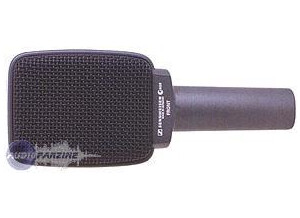
    The Sennheiser E 906 is a dynamic microphone designed and best suited for use with electric guitar. I have only used this mic for recording, but it is definitely suitable for both recording and live shows. It has a super cardioid pick up pattern and has an three band switch to choose between a flat signal, bright, or smooth. OVERALL OPINION I've been using the Sennheiser E 906 dynamic mic for about two years and have found it to be an extremely useful mic for recording electric guitar. The shape and make up of the mic allows for only one side of the mic to be picking up any sound, so putting it up against the grill of a guitar amp will block out any sound outside of what is on the side that is picking up the sound. In addition to be a great mic for electric guitar, it also works for tom tom drums while recording or live shows and even vocals for live shows. Compared to the Sennhesier MD 409 or the e609, that both have a similar look and use, this is priced in the middle of these two mics as it is not as expensive as the MD 409, and is a bit more expensive than the e609. It doesn't sound as great as the MD 409, but is a bit fuller sounding than the e609, and is probably a bit more versatile than the e609 as well. Even though it is more expensive than the e609, it isn't that much more expensive and the only difference other than the fuller bodied sound, is the switch in the back for setting slight EQ changes. I have really come to trust Sennhesier to make good mics and other products, and this mic definitely lives up to the standard. Overall, the Sennheiser E 906 is a great mic for amateurs and professionals alike.

  • moosers's review

    I've only used my Sennheiser e604 on tom drums in the studio, but I could certainly see them being used live because of the convenient clip. Since it is a dynamic mic they would probably work on guitar amps and snare drums as well. OVERALL OPINION I've had my Sennheiser e604 for about a year now. My favorite part about it is that it has a clip that you can easily mount on to a drum. Although if I had the money I would prefer to have another Sennesier 421, this really does the trick on tom drums, making for a very full sound at a pretty reasonable price. I would use this on a tom drum over a Shure SM57 just because it is easier to set up, but if I had extra 421s I would definitely use those, however, until I can afford to upgrade, the e604 definitely does the job I need it to.

  • « Sennheiser E609 »

    Large diaphragm microphone designed special like for miking guitar amps. Compact design. Silver on the input side. Black on the audience side. I play loud rock guitar and I am very picky about the tone of my rig being accurately sent to FOH. I use some effects in my signal path and want them to make the trip out front too! Sound techs like 'em too! Bought two of them at Piano's N Stuff in Blawnox, north of Pittsburgh. I think I picked them up for just under a $100.00 each since I was buying two. <a href="https://www.nstuffmusic.com">https://www.nstuffmusic.com</a> I use two combos in my live set up. Any two of the following: Marshall 5175, Fender Studio Lead. Tech 21 Trademark 60. Hughes and Kettner Attax 80 or Gallien Krueger Backline 100. You put the E609 in front of the speaker, close up and you are done. The sound of the rig comes out front, not the mike (yes, I'm talking to you Mr. SM57). I put relatively high SPL into these knuckleheaded looking mics with no breakup. That's good. you can't polish a turd. If your tone blows this microphone will not cure it. Well made mic by a good company. Both of mine have about a hundred gigs on them and two recording sessions. No complaints. You will not break the bank on this mike and should be very happy with the results. I you are not satisfied, please keep the wonder whisk as our free gift. This review was originally published on http://www.musicgearreview.com

  • « great for live drum recording »

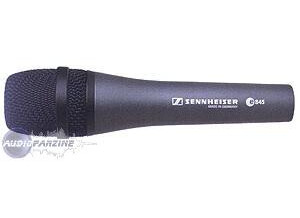
    The Sennheiser E 945 is a dynamic microphone designed for use both in the studio and on the stage, although I’ve only used it in the studio. While it has a similar look to an SM57, the sound quality is definitely different and for this reason has a different set of applications. The Sennheiser E 945 also has an awesome look to it, with a silver metallic finish on it. OVERALL OPINION I’ve been using the Sennheiser E 945 for about two years and it has become my go to microphone for recording the bottom of a snare drum. I usually record the top of a snare drum with a Shure SM57, and blend the two signals together to get a sound I am satisfied with. For some reason, the Sennheiser E 945 excels beyond expectation when it comes to recording the bottom of a snare drum. It has a certain high end presence that is perfect for picking up the rattling of the snares and is without a doubt the best at what it does in terms of picking up this signal. Since it sounds so great on the bottom of a snare, I honestly have never used this microphone for anything else. I’m sure it would sound good in a few other situations, but I have never had the chance to try it out on anything else. Sennheiser E 945 isn’t too well known, but for those who do know it they know how great it sounds for snare bottom. If you can find one of these used, which is pretty hard because they are pretty rare, the price varies and I would really only recommend it to the user who is either a professional or is recording drums all the time in their home studio. While it is truly a great microphone for recording snare bottom, I can’t speak to how good it sounds on anything else and would therefore recommend those interested to try it out themselves to see if it fits their personal use. All in all, the Sennheiser E 945 is a great microphone that not too many people known about.

  • « concise sound »

    The Senheiser e835 is a hand held style dynamic microphone that can be used in just about any situation. I've personally only used it in a recording studio where I was the assistant engineering on the session. The e835 has a hypercardioid polar pick up pattern, so it picks up sound best when a source goes directly head on into it. While I haven't used this for vocals during a live show, this is the perfect kind of microphone for that sort of use. The setting that I used it in was for a live recording session. OVERALL OPINION When using the e835 , the main idea for us was to get a nice sounding vocal without it picking up too much surrounding sound since the singer was in the same room as the drummer and the rest of the band. This wasn't for the recording of an album, but for a live recording session, so the idea was more to get a vibe with everyone in the room rather than isolating everyone. We choose the Audix e835 one day when we decided to start experimenting with the vocal microphone that we did for these sessions to see if anything else could work as well as the Electrovoice RE-20s that we were normally using to record vocals. The e835 was around and seemed like a logical choice because of it's hand held nature and the fact that it is a hyper cardioid microphone that won't pick up unnecessary low or high end sound. While perhaps not as good for this application as the RE-20 was, the e835 got us a very good sound when run through a Neve 8108 console and a Tube Tech compressor. It wasn't as full sounding as the RE-20, but was definitely adequate and did a great job of isolating the vocal sound. Although a bit more expensive than other hand held microphones of this nature, the e835 is definitely in another league as it sounds a lot better than most of them out there as well. If you're looking for a high quality vocal mic for studio live sessions or live shows, the e835 should definitely be on the list of mics to investigate.

  • moosers's review

    The Sennheiser E 602 II is a dynamic microphone that I've used in the studio, but is equally useful in a live sound setting as well. The mic has a cardioid pick up pattern and is perfect for low frequency applications like deep horns, bass, and kick drum. The mic has a built on clip and will pick up frequencies in the range from 20 Hz to 16 kHz. Thus far I've only had the opportunity to use the mic on the inside of a kick drum, but it's definitely more versatile than this - I just haven't had the chance to use it for anything else. The mic is built like a brick and is definitely built to last. OVERALL OPINION Until recently I hadn't used the Sennheiser E 602 II, but I'm glad it's now in my mic vocabulary as it's really a great microphone. While I haven't used it for anything other than kick drum, I'm hoping to get the chance to use it for other applications in the near future as it's definitely got multiple applications. I've always been a huge fan of Sennheiser mics, but the E 602 II has a unique low end quality that I haven't heard in other mics from them. It also helps that it's extremely rugged and this is why I can see it being used for live sound as well. The price is a lot less than I thought it was going to be, as it's even a bit cheaper than the ever popular AKG D112 and Shure Beta 52A kick mics, which are pretty much it's competition. I'd definitely throw this mic in the mix if you're looking for a great kick drum mic, as even though it may not be as popular as the other aforementioned mics, it's got a really punchy and direct sound. At right around $150 US dollars, it's a great deal for a great mic that can bring you a long way. I don't know how it compares to the original E 602, but the Sennheiser E 602 II is a stellar microphone to have in any studio!

  • « great mic »

    As a karaoke singer and former DJ, I got tired of using Nady and other cheap microphones due to the distortion in the sound and the pickup of noise. I bought a pair of Sennheiser COM 190’s microphones about 3 years ago and have never looked back! They really are that good. I have been around sound systems for many years and have been told many times to buy only Shure microphones but did not listen due to budget restraints. I finally broke down and bought my very own Sennheiser COM microphones and yes they are great, what a difference! There really is a difference. It is like night and day. OVERALL OPINION No distortion. No background noise. No hissing, popping or sputtering! Just clean, crisp vocals. The microphone actually makes people think I can sing! All kidding aside---do not buy an inferior microphone to save a few bucks. Spend the money to do it right or don't do it at all. Very clean good sound, pretty affordable it shouldn’t break your bank account too much depending on where you purchase it from. This is for all the DJ’s who need a clean quick sound that will travel across the club without a problem. These mics work wonders on even poor systems. You really cant go wrong with Senheiser mics because if you ever have a problem they will take care of it, they offer great customer service and tech support for any one that has purchased an item from them. Even if its out of warrant you can still get it fixed by calling them. But you wont have to worry about that because it wont go out on you. Its built like a tank, and it will last though all of the tugging pulling and dragging around from venue to venue Sennheiser COM 190 is the way to go.

  • « Need a dynamic and money is no object? »

    Specification Detail Microphone Type Dynamic Polar Pattern Supercardioid Frequency Response 40kHz-16kHz Impedance 250 ohms Exceptionally good feedback rejection Shock mounted capsule provides very good rejection of handling noise Hum compensating coil Integral pop filter Includes quick release clamp Length 7.9" Width 1.9" Depth 1.9" Weight .55 lbs. OVERALL OPINION I'll start by saying this is the best dynamic microphone I've ever used. It is fantastic on just about everything! I found a great use for it with male vocals, snare, toms, kick drum, percussion, electric guitar, and bass. I'm certain it would excel at other applications, like winds and brass, and other acoustic instruments. The mic has a nice immediacy of the transient attack, and it still gives a sparkle on the top end that rivals great condenser mics. The lows and low mids are extremely rich and detailed, while still picking up nice breathiness from vocals. This is a "secret weapon" type mic - everyone knows about the more famous older brother mic, the MD421, but I think the 431 is even better. They have similar frequency responses, but I prefer the polar pattern of the 431 for more precise miking, and the 431 is easy to hold in the hand, for live rockin' vocal performances! This is George Massenburg's favorite snare mic, and Dave Grohl's favorite vocal mic for a reason - it rules! I'd honestly love to have a full complement of them - enough to top and bottom mic all toms, snare, and kick of a drumset. The problem with that is, they're danged expensive! But honestly, the mic is fully worth it. If you have something that you like an SM-57 on, this will do the job just as well, only it will sound better! An added bonus is that the microphone has a really cool, distinctive look, so it helps in that regard. I highly recommend the Sennheiser MD431 for nearly any microphone application.

  • Deleted member's review

    The Sennheiser E 905 microphone is another one of Sennheiser's E 90x microphones, which along with the E 60x microphones, are intended for use on drums. The E 905 is a bit strange, as it is a microphone designed specifically for applications on a snare drum. The E 60x line lacks an equivalent microphone. That being said, the E 905 is a quite good microphone that will give you some very nice hits from a snare, and it is a good choice if a person is very intent on mic'ing up a drum kit very meticulously; I am no drummer, so I am not. However, the snare is an instrument that often needs more processing than others, and it is nice to have a track dedicated only to the snare. The Sennheiser E 905 microphone is a dynamic microphone specifically engineered to use on a snare. It is claimed to have a very fast attack time, and the short body makes it less cumbersome to stick on a snare: a huge advantage. It has a standard cardioid pickup pattern and a rather impressive frequency response range of 40-18,000 Hz. This all comes together to bring forth an element of the Sennheiser E 905 that I am absolutely enamored by: Remember when I said that the snare is important to mic up individually because it is often an instrument in need of EQ? Well, when you decide to use the E 905 to mic it up individually so that it can be EQ'ed, the snare just so happens to lose that very need to EQ. OVERALL OPINION I should consider it a blessing that I am not a drummer, because when I talk to my drummer friends, their minds seem to wander toward the $1000 they spent mic'ing up their drum kit with BUDGET drum microphones. However, the E 905, along with most of Sennheiser's Evolution instrument microphones will give the user the flexibility to tweak the sound, and quite frankly, less need. I wholeheartedly recommend this microphone to anyone who wants to mic up their drum set and has a bit of cash to burn.

  • Deleted member's review

    The Sennheiser E 902 is supposed to be Sennheiser's successor to the very nice and interesting E 602. The E 902 is intended primarily for use with a kick drum, although Sennheiser advertises it, like the E 602 as a "bass instrument" microphone. I am quite sure that it will work well on bass cabinets, but it was not an application that I got around to testing it on. This review will, consequentially, cover their use on kick drums. The Sennheiser E 902 is a dynamic microphone specifically designed to be used with bass instruments, so it will get utilized mostly on kick drums. It has a cardioid pick up pattern, which is nice, because if it gets placed in the hole of a kick drum, it will pick up some of the boominess in the kick. It has a bass-heavy frequency response from 20 Hz all the way to a respectably high 18,000 Hz. The E 902 has a stand mount built right onto the microphone, and this resulted in considerably less hassle in setting it up inside of the hole. This mechanism is a markedly noticeable improvement over the E 602. In my review of the E 602 II, I mentioned how the E 602 II seems to magically fix low end kick drums that had a tendency to sound boxy. In keeping true with the fact that it is a higher end microphone, the E 902 does not have this compensation built into the curve. The E 902 will make a good kick sound good, and a bad kick will continue to sound bad, so it is not a magical solution to a bad kick like the E 602 seemed to be. This particular microphone from Sennheiser tends to be very clean, very honest about the sound it imparts. OVERALL OPINION I like the E 902 more than the E 602, but they are differently colored. The E 902 is not designed to compensate for any bad bass signals like the E 602 is not only engineered to do, but is also advertised to do. Do your research before you buy anything, and you'll have a great kick in no time!

  • Deleted member's review

    The Sennheiser E 825 S is a dynamic microphone designed for live vocal work. While I can tell you now that I would probably pick it over several other entry level microphones, the E 825 S does not avoid the markings of a budget microphone. It may have a frequency response that goes all the way up to the expected 15,000 Hz, but the bottom cuts out at 80 Hz. This is not something typical of a quality microphone, but I hesitate to call the Sennheiser E 825 S shoddy in any way whatsoever. But I would never buy it, for reasons stated in "Overall Opinion." The 825 has a cardioid response, which is typical. I found that the microphone does actually offer a nice level of clarity, even over some of the standard microphones (but then again, everything seems less muddy than an SM58 when I have a richer baritone voice). It also has an on/off switch, that never stops irking me for the simple shallow cosmetic preference I have. OVERALL OPINION The Sennheiser E 825 S is Sennheiser's entry level microphone for stage work. It is my no means a terrible microphone in this regard; in fact, I find that it is actually quite comparable to even some of the less budget oriented microphones from other companies. That being said, at its price point, it cannot compete with the next microphone up which is a standard: The Sennheiser E 835 is a staple microphone for many people. Several people believe that the Sennheiser E 835 kills the vaunted Shure SM58. So maybe the E 825 S was not built to compete with it, but at only $20 less new than the E 835, it sure seems like it is trying. What is rather bothersome about this is that understandably, $20 can stack up over several microphones. However, Sennheiser also sells a three pack of the E 835 for $10 less than three E 825 S microphones would cost. So, there is very little reason to settle for this and not go for the next one up.

  • Deleted member's review

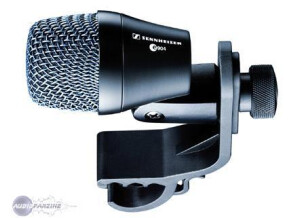
    The Sennheiser E 904 is Sennheiser's would be follow up to the already fantastic E 604. The Sennheiser E 604 was a great microphone, having a really nice transient response for snares, and in the absence of the legendary MD 421 II, toms as well. Despite this, the E 604 was a strange spike at 5,000 Hz that oft times introduced a bit of strangeness into the sound. Despite this, the E 604 was described as thunderous, so does the Sennheiser E 904 improve upon this while keeping the essence that everyone has grown to love? In a word, yes. In many, many, words, I find that the E 904 is a bit less explosive than the E 604, and thus, has a bit less of that thunder, but it is not enough of a deficit to really make a true difference in the sound unless one were looking for it. Instead of the explosiveness of the Sennheiser E 604, the E 904 is a bit warmer, and a bit punchier, so it has a bit more low end than the E 604. If you look at the frequency graph, you can find a very strange chart: the chart almost looks like it belongs to a condenser! The Sennheiser E 904 is a dynamic microphone with a cardioid pickup pattern, so this is quite standard, and it does a good job of managing bleed. The frequency response of the E 904 starts at 40 Hz and goes all the way up to 18,000 Hz. Also to be expected. OVERALL OPINION The Sennheiser E 904 is a great microphone, perhaps not worthy of triumphing over the God of Thunder, the E 604. Instead, it offers a different, more warm and punchy tone. Sennheiser's bid to make this the successor to the E 604 would be rather ruined if it were not for the elimination of the strange spike at 5,000 Hz that he E 604 has. So if you have a bit more money to spend, and want a warmer, less bombastic sound, the E 904's are a good way to go!