Log in
EN
FR

Ribbon Microphones

236 products found

Sort results
  • Popularity
  • User ratings
  • Price - low to high
  • Price - high to low
  • Used price, increasing
  • Used price, decreasing
  • Name (from A to Z)
  • Name (from Z to A)
  • Added on

The best Ribbon Microphones reviews

The reviews Audiofanzine members found the most helpful.
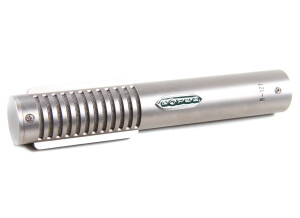
  • « Oktava ML 52-2 Ribbon Microphone »

    Took a chance on the ML52-2 Ribbon and in a word, "Psyched". I mostly record acoustic and electric guitars in combination with my Neumann and AKG C414's. I set the Oktava quite a distance from the acoustic and behind the Condensers to capture more room (sound treated). I was super impressed, I put it up against the Royer and the Oktave out shined it at 1/5th the price. Mine came with the Lundahl 2911 transformer,recommended, also I use a quality Mic Pre, which is a must. The stock mic clip is junk so I ordered the Oktava Elastic mount (47$ shipped). This is a killer ribbon, warm, articulate and fast, really brings out the bass in a good way, it does need careful placement and is a bit delicate. Handle with care. But it is wonderful sounding and looks cool as well. I am very happy with it and I have a lot of mics of the high end type, what a value, so get one, get the Lundahl tran and the shock mount and you be happy,,for reals...

  • « Oktava ML 52-2 Ribbon Microphone »

    After an exhaustive search I took a chance on the Oktava ML 52-2 Ribbon Microphone. I was very pleasantly impressed with the sound of this Mic, far exceeded my hopes, in a word it is a Fantastic Microphone, I put it up against Royer, Rode, sE, and others and the Oktava out preformed those in a big way. I use it in a multiple mic set up along side my Neumann and AKG C 414 Mics and the blend is out of this world, alone it is outstanding as well, all you could hope for in a Ribbon Mic, I place it further out than the other mics to capture the room, I record mostly acoustic guitar but it works killer on amplifiers as well, super warm and articulate. You need a good mic pre and careful set up for best results, impressive in every way, compared to microphones at 5 times the price. You must get the elastic shock mount (47$ US from Oktava, shipped) .The only thing I can think of is the mic is delicate and must be handled gently, but it takes hugh SPL and is wonderful. I use a DBX Tube Pre, Do NOT use phantom power, this is a passive dual ribbon, plus it looks cool as heck, Old School design, I can not say enough about the quality of this Mic, I highly recommend the Lundahl 2911 transformer upgrade as the stock tranny is not so good, you can get the Lundahl from Oktiva or other places, a real must (75$ US) so for under 300$ you get an extraordinary good mic for less than 1/3 the cost of a used Royer, sounds better. Check one out, you will not be sorry, well built and sounds fantastic, cheers,,,

  • « Multi Purpose »

    The Beyer Dynamic M 160 is a hypercardioid ribbon microphone. It has a double ribbon transducer that makes it a versatile microphone to use on a number of instruments as well as vocals. We have used this microphone as an overhead drum mic, it was one of the best drum microphones that we had at the time which was about 4 years ago. Depending on how far you put this microphone away from your drum or guitar will determine the sound that it captures. It may take some playing around with it, we had to do it at a few different distances from the acoustic guitarist before we got a sound we where happy with. OVERALL OPINION The Beyer Dynamic M 160 comes with a small case to carry it in and a microhpone clip. The M 160 seems to be pretty fragile though, I wouldn’t take my chances with dropping it. I do wish it came with a hard case to protect it more when we have other gear around it when moving it from place to place. The M 160 only cost us around 500 dollars at the time when we bought it and we compared it to microphones that we have used that cost well over 1000 dollars. Though we never really used it for vocals, we kept it on the instruments side because we felt like that’s what it was best at. It really brought out the true sound of our instruments no matter how punchy they where or how high or low the frequencies where. The Beyer dynamic M 160 opened up and made everything sound huge. Keep this microphone about 6 inches away from your guitar and watch how amazing it sounds. It actually sounded exactly the same as it really did once we recorded it. There was no EQ needed or any extra processing for that matter.

  • « for all types of vocals »

    This is one of the finest ribbon mics that money can buy. Traditionally ribbon mics are regarded as very fragile mics that you wan't to keep away from very high SPL's. However, the great thing about Coles 4038 designs is that they can take very high volumes with no distortion or risk of damaging the ribbon. I believe the cap on this mic is around 135dB. If you haven't used a ribbon mic, you don't know what you're missing! Ribbons provide a very, very realistic tone. They seem to react to sound much like human ears do, because if you have a good pair of monitors there doesn't seem to be that much difference between how you hear your sources and what this mic can put out. The top end on this mics is absolutely silky smooth and never harsh. A couple of favorite uses for the 4038 are guitar cabs and horns, but in practice you will be hard pressed to find sources that don't sound great through this mic if they sound good in the first place. It connects with a standard XLR cable, and doesn't need phantom power. In fact I believe phantom power will damage the mic, so be careful not to accidentally engage it. This mic also has another advantage of having a different frequency response on the back. When you are close miking something using the back of the mic, the source is a little bit brighter. Saves you the time of adding a top end shelf! OVERALL OPINION I have had one of these for almost 7 years. I love this mic! I have the both models of this, and I use them in nearly every session. If you have background singers, try setting one of these about 5 feet in front of them. It sounds like they're all right in front of you! I definitely recommend getting this mic if you are serious about getting very realistic sounds in your studio. It costs over a grand, but it is money well spent for the discerning audiophile.

  • moosers's review

    The Beyer Dynamic M260 is a ribbon microphone designed for use in the recording studio. As with all ribbon mic, I wouldn't use this outside of the studio, but as far as ribbon microphones go, the M260 is as sturdy as any. It has a hyper cardioid polar pattern. OVERALL OPINION I've been using the Beyer Dynamic M260 ribbon mic for about a year. I like the M260 beacuse it is a great sounding ribbon mic that isn't as fragile or expensive and some of the other ribbon mics out there. The sound quality of the M260 is full and warm and is great for a number of different things. The main applications I use the M260 for is percussion and electric and acoustic guitars. I have also used it on drums, but I would only recommend it for lighter drums or snare drum, as it can only take so much punch. This is a great choice for an all around ribbon microphone and will work in a number of different applications. The price is really a bargain, and even though it isn't as great as a Royer or RCA, it will cost a fraction of the price. The price makes it a great option for professionals and amateurs alike. I love having the M260 around because I find it presents itself quite handy to me a lot of the time. The low price tag means that I don't worry about it as much as I would some of the more expensive ribbon mics out there, and it is also a lot sturdier than a lot of ribbon mics out there. The sturdy casing also makes me worry less about this ribbon mic. Overall, the Beyer Dyanmic M260 is one of my favorite ribbon mics out there because it has a great sound and is set at a truly great price.

  • « My precious!!! »

    Very nice ribbon microphone for many applications OVERALL OPINION Used it for live on different Guitar amps and compared to the SM57, MD421 and the C414. All microphones are fine for this kind of application but the Royer gives a bigger and opener sound than all others. Definitely my number 1. In studio it is often used for brass sections. I also used it for Cello, oboe and clarinet recording and loved it. For the flute it missed some high end but with a little eq that was ok. On vocals it works fine if you're looking for a dark sound.

  • moosers's review

    The BeyerDynamic M 500 N is a dynamic ribbon microphone that is best suited for use in the studio. The mic has a hypercardioid pick up pattern and boats a frequency range that starts at 40 Hz and goes up to 18 kHz. I don't know too much backing information about the M 500 N, as it isn't one of BeyerDynamic's most well known microphones. It's been a little while since I used this microphone, but still have some fond memories of it and hope to get a chance to use it again in the future. The mic also features an on/off switch. OVERALL OPINION The BeyerDynamic M 500 N is overall a very solid microphone that can be used for a number of different purposes. I've personally only tried it for a few different things, and haven't actually used the microphone in a few years as I'm no longer working at the studio where they had it. The last session that I used it on was for recording some percussion. I was told before hand by one of the house engineers at the studio that the mic was great for congas and the like, so we tried it out on some percussion and the results were fantastic! You could hear all the detail in the sound, but it wasn't overly distracting as the sound was still whole and cut through very well. If I remember right, we used it for some shaker, tambourine, and conga tracks. I also once used it on an electric guitar cabinet, which I also thought sounded pretty great. I don't think it would be too easy to find one of these to buy, as they are no longer made and don't seem to be all that readily available. There are definitely some comparable and similar BeyerDynamic mics, so if you can't find this one check out some of the others they've got...

  • moosers's review

    The RCA BK-5B is a vintage ribbon microphone that is designed for broadcast and studio purposes. I've only got experience using the mic in the recording studio, but I do believe that the original intentions for the mic were for broadcasting. The mic has a cable attached to it and also comes on a small mic stand that is made for putting the mic on your desk. The mic has a uniaxial pick up pattern, which is similar to a cardioid pattern but it also picks up sounds from the side and from the side. It will pick up frequencies between 30 Hz and 20 kHz. OVERALL OPINION The RCA BK-5B is definitely a great mic to have around the studio. It's kind of a like a really thick sounding Shure SM57, as it seems to work well for similar applications. Although it's physically thicker and larger than a 57, it has the sound to match. I've used the BK-5B for a variety of applications including for recording kick drum, snare drum, vocals, and electric guitar. It's definitely versatile enough to be used across the board, but these were the applications that I got a chance to use it for. Even though it's a ribbon microphone, it doesn't sound like a traditional ribbon microphone, although it does share a low output level. I don't really know what kind of price the BK-5Bs go for used these days, but I would imagine that they would be about mid level. You definitely won't see too many BK-5Bs out there, as I've only seen the one that I've used before. They probably didn't make too many of these, but if you are interested in vintage ribbon microphones that aren't as expensive as other vintage RCA mics, the BK-5B is something you should definitely be aware of.

  • moosers's review

    The Shure 330 is a ribbon microphone that is best suited for use in the recording studio. Like any ribbon mic, I would recommend keeping this safe in your studio, as ribbon microphones are not only fragile, but this mic in particular is old and not meant to take too much stress. The Shure 330 has a unique shape that makes it interesting to use in a number of different situations. OVERALL OPINION I've been using the Shure 330 ribbon microphone for about six months and it is one of the most interesting looking and sounding ribbon microphones that I have ever used. I love it for a number of reasons - the first reason being its great tone quality. It has a unique and warm tone that would be hard to replicate with any other microphone. This is the only Shure made ribbon microphone that I am aware of, and the main thing I have used to record with it is electric guitars. If you place it at an angle toward the speaker of an electric guitar amp, it gives you an awesome tone on its own, or great for blending with another microphone. It really just depends on what kind of sound you are going for, as this won't give you the same sound by any means as a Shure SM57 or any other dynamic microphone, Shure made or otherwise. The Shure 330 is also great for acoustic guitars, and will give you an extremely unique tone on vocals. To my knowledge, the Shure 330s are pretty rare and hard to find. For this reason, these microphones will cost you a pretty penny if you can even find one used. They are for the professional studios and probably not worth it for a home studio owner. This being said, for those that can find and afford one, the Shure 330 is truly a great microphone.

  • « Sounds and looks great »

    The Sontronics SIGMA is an active ribbon microphone with a larger price tag on it. But after just a few uses I realized that I have just purchased a microphone that I will be using for a long long time. This microphone is a phantom powered microphone that puts a very warm and natural sound in your recordings. It also looks great too, which is one of the reasons that I think it cost so much. The looks of the microphone alone will shock people. The SIGMA has a shock mount feature that is very good, you can put this microphone very close to the artist or instrument and you will not have to worry about any vibrations being recorded from the microphone stand. OVERALL OPINION The frequency response on this microphone is 20 hz to 20 khz and it has a figure 8 polar pattern. After just looking at the specs, I was in the store and really didn’t want to get it because the price. I though it looked great though, the sales guy told me to take it home and try it. If I didn’t like it bring it back and get a full refund. So I bought it and after using it for a week I felt like I got my 700 dollars worth already and didn’t think twice about returning it. I have since recorded about 6 whole albums (not all my albums) with this microphone and every person that has come in and used it loves it. They always say something about the look of a microphone, and like it or not appearance is very persuasive in getting people to come and record at your studio. This mic looks great and sounds amazing. I have recorded everything from vocals to harmonicas with it and it has never let me down. I love how it sounds with acoustic guitars and bass cabinets.

  • « figure 8 pattern and a clean sound »

    The MXL R40 is a Ribbon Mic that comes with a shockmount and it is well made. I am not a fan of the color (teal-ish) but it is not that bad once you get it in your studio and set up. This microphone does not require phantom power so you will need to make sure your interface either does not have phantom power or the phantom power is off because there is a huge history of phantom power damaging these microphones. OVERALL OPINION The polar pattern is a figure 8 pattern, you will not get a colored sound with this microphone. The recordings will be pretty clean for the most part and you can just about record anything with it. I do prefer it on vocals and not instruments just because some instruments may be a little to harsh and aggressive for this microphone. An acoustic guitar is ok but when using it to record a bass cabinet it really made this microphone sound cheap. Some people have used it with Brass instruments before and said that it sounded great, but I have not tried anything other than vocals and guitar tracks with it. It will make your low frequencies (voice or acoustic) sound very clean, that is my most memorable experience with this microphone. Many similar microphones that I have used in the past do not do well with low frequencies in the 20 to 40hz range at this price. But the MXL R40 sounds great, it keeps up with its reputation of the MXL line of microphones. I have used many MXL microphones and all of them are really well made and last a very long time without any problems. I am just not sure what they were thinking with this color. I am a fan of this microphone but not the color, they should have at least came out with a black or grey one for those of use that don’t like bright colors in our setups.

  • « Unreal!! »

    Royer SF-24 microphones where used in a studio downtown for a few years, whenever we had the chance to get into that particular studio we did because how much we loved these microphones. The SF 24 by Royer is a newer version of the SF 12. The SF-24 is very quiet and has a very low self noise to it that is lower than 18 decibels. It does not matter which instrument you are recording with the SF -24 or how far away from the SF-24 you are, you will still get a great recording without the need to process the sound anymore. All of the frequencies are very consistent and when you look at the recording in an equalizer you will see how consistent they really are. The Royer SF-24 has 2 balanced head amplifier systems that have low sensitivity of -40dB. You can pretty much use the Royer SF-24 with any pre amp that you want. OVERALL OPINION The SF-24 may look fragile but when you actually get to see one up close and feel it you will see that its pretty solid and well built. That doesn’t mean that you should take a chance with it though because the cost of it is over 4000. Which makes it pretty much out of the reach for any at home musician. I am very thankful for the handful of times that I got to use this microphone. It almost makes you not want to record instruments with any other microphone at all. The sound quality is amazing and unmatched. I have yet to hear a microphone that can record brass like the SF-24 can. If you get a chance or can afford to get this microphone it is a must have! Seriously! At least call around local studios and see if they carry it, so you can use it!