Log in
EN
FR

Electret Microphones

304 products found

Filter
Sort by
Evaluation
  • Reviewed or not
  • Editor’s award
  • Reviewed by Audiofanzine
Availability
  • Available or not
  • Sold new or used
  • Sold new
  • Sold used
Must-have products
  • All products
  • Flagship products
  • Best rated products
  • Hot products
  • Popular products
Price
  • Freeware
  • Low-cost (< $350)
  • Mid-range ($350 - $850)
  • Premium (> $850)
€
Clear
Sort by
  • Popularity
  • User ratings
  • Price - low to high
  • Price - high to low
  • Used price, increasing
  • Used price, decreasing
  • Name (from A to Z)
  • Name (from Z to A)
  • Added on
Sort results
  • Popularity
  • User ratings
  • Price - low to high
  • Price - high to low
  • Used price, increasing
  • Used price, decreasing
  • Name (from A to Z)
  • Name (from Z to A)
  • Added on
Filter results 304 results found
Evaluation
Availability
Must-have products
Price
  • Freeware
  • Low-cost (< $350)
  • Mid-range ($350 - $850)
  • Premium (> $850)
Show results

The best Electret Microphones reviews

The reviews Audiofanzine members found the most helpful.
  • moosers's review

    The Neumann U77 is a vintage electret microphone that is made for use in the recording studio. Never bring this outside the recording as it is a vintage and delicate microphone that needs to be treated with care at all times. The mic comes with a power supply and I believe it can also be powered with a battery if needed. This is a major difference when compared to the other Neumann mics that look like this one like the U87, but as long as you have the original power supply, you shouldn't have any problems with powering this mic properly. OVERALL OPINION I've first used the Neumann U77 a couple of months ago and I was instantly impressed with the crystal clear sound quality and clarity that I heard while using the mic for recording vocals. It has a really rich tone and an extreme amount of detail, making it perfect for recording all sorts of vocals that you would want a lot of clarity with. This mic is pretty rare and is hard to find if you want to buy one. This doesn't mean that you can't find one, they are just hard to come by since they weren't made for all that long of a time. These are somewhat similar to the other mics in the 'U' line like the U87, but there is definitely a different tone that you get with each, even if the difference is subtle. For some things I would prefer to use the U77 as it tends to have a little rounder of a sound and is probably better suited for male vocals because of this, while with a U87 this might not always be the case. If you are looking to buy a Neumann U77 you will be able to find one at a reasonable price even if it is steep by a lot of home studio owner's standards. This is a great vintage mic that doesn't get enough credit probably because of its scarcity.

  • moosers's review

    The Realistic PZM (pressure zone microphone) is a microphone that I have used in the recording studio. Like most microphone of this nature, it can cross over to the live show world, but I've only used it in the studio, so my review will be about the use of the mic in this type of setting. Realistic is a brand put out by Radio Shack, but is no longer a company as far as I know. However, they did make some interesting gear that is useful, and included in this category are the Realistic PZMs. OVERALL OPINION The only application that I've used the Realistic PZMs for is an acoustic grand piano. Putting this under the hood of the piano not only gives your sound isolation, but also gives it an up close and personal feel. Of course depending on where you place the mics, you can get a wide array of sounds, but I generally keep the Realistic PZMs by the strings rather than the hammers, as this is what I would do with and PZM microphones inside of an acoustic piano. While the Realistic PZMs might not be the cleanest or more in depth sounding microphones out there, the fact that you can slide them just about anywhere more than makes up for this. I really wasn't expecting too much from these microphones since Realistic isn't exactly known for making high quality microphones, but I was definitely pleasantly surprised. It seems like there are a few gems made by Realistic that have fallen through the cracks over the years, and while I wouldn't call these microphones 'gems,' they are good sounding mics. I don't know how easily accessible these are, but I would imagine that they wouldn't be the easiest microphones to find since they haven't made them for years and are somewhat of an off brand. However, if you see them in a studio you're at like I did, definitely give them a whirl if you need a PZM!

  • « Spare »

    I have been using the Behringer ECM8000 for a long time. It only cost 60 bucks but it sounds way better. I am very surprised that it cost so little because if you compare it to microphones that cost 2 and 3 times more than it cost you can barely hear any differences. The ECM8000 has no low cut filter on it though, which could be a difference with some of the higher prices similar microphones. The frequency response is 15 Hz to 20 kHz and the polar pattern is Omni. OVERALL OPINION The ECM8000 comes with a gold plated 3 p in XLR connector and it will work with phantom power as long as the voltage is +15 to +48 volts. The response with the ECM8000 is very flat, it is actually more flat than some 200 dollar similar condensers that I have used and heard over the years. The ECM8000 is very portable, usually when it comes to Behringer and the microphones they put out I usually don’t jump up to get them because I don’t feel that their microphones are as good as they use to be. It seems they have cut back on the quality of producing Behringer microphones over the years. I have used close to 3 different microphones that have went out on me over the last 4 years. Most of them were cheaper microphones though but they still were not reliable. The ECM8000 has held up great and it has been very reliable. I have had no issues with it at all, though I do not use it as much as I use to. I refuse to get rid of it because it is a great back up microphone just in case something unexpected was to happen. I suggest getting a couple of these for back up microphones. Because at this price, you can afford to get a few of them just in case.

  • « Great Room, Space Mics »

    This is not an electret microphone, as it is categorized on this website. It is in fact a small diaphragm condenser mic designed by Neumann. It is a small, tiny microphone that is great for picking up faint sounds and ambiance. I only have experience using them in the studio as I've never taken them out to a live gig, but I know full well that they can be used not only for concerts but for field recordings, theater, etc. Therefore they are an incredibly versatile microphone as they can be used in all types of recordings, whether for music or foley effects or sound design. Part of the reason for this versatility rests with the seven different capsules that can be placed over the mic, thereby changing the tone of the mic considerably. OVERALL OPINION I really like using these microphones as a room mic, particularly when recording a drum kit. I have found that the space and air that these mics pick up is one of their most salient features. I have tried using them as overhead mics but I found that they didn't do the kit justice compared to some of my other go-to small diaphragm condensers. I think that in general they are better used from a distance. I have heard recordings that used them for theater (placed in the rear of the theater). I have also seen them used in recording orchestral performances, which I was also extremely impressed with. These are a pretty expensive microphone (about 1,500 apiece, 3,000 for the stereo pair). I highly recommend using them in a stereo pair, as I have honestly only used them in that capacity. They are a great way for an engineer to capture ambiance and give a feeling of space to their recordings.

  • moosers's review

    The DPA Microphones 4011 is small diaphragm condenser microphone to be used in the recording studio. I wouldn't use the mic outside of the studio under any circumstances considering the high price tag. The 4011 is definitely a popular model, and can also be seen under the name Bruel & Kjaer, which is what DPA was called before I believe. The 4011 has a cardioid polar pick up pattern that will gather frequencies within the range of 40 Hz and 20 kHz. OVERALL OPINION I don't think that I have a bad thing to say about the DPA Microphones 4011, as it's definitely one of the best small diaphragm condenser mics that I've had the pleasure of using in the recording studio. It's suitable for applications of all types, as it's just the type of mic that will sound good on just about anything. I've used it for only two applications - acoustic guitar and hi hat. However, from everything that I've heard from other engineers suggests that this mic sounds great in any application where you'd want a silky high end response without sacrificing body. The 4011's are also some of the most expensive small diaphragm condenser microphones that I've seen around, so chances are that you'll only be seeing these in professional recording studios. I don't know if I'd recommend going with this over something like a Neumann KM 184 or 88, or even a Shure SM81, as although it definitely sounds as good or better than these mics, it costs a good amount more. Having said this, you really couldn't go wrong with the DPA Microphones 4011, so if you can afford it for your professional studio, it's definitely something that I'd consider doing as generally speaking, everything you record with these will sound as good as they can be. Having a pair of 4011's would pretty much eliminate the need for having any other small diaphragm mics in a smaller studio setting as well, but again the price makes them less feasible for smaller studio owners. The bottom line on the 4011's is that they're pristine top tier microphones that you really can't go wrong with...

  • « A very good mic for recording instruments (both electric and acoustic) »

    I got a stereo pair 5 years ago for not much money. I have other more expensive microphones, but I always reach for these when I want to mic up a speaker cabinet. I've used them on electric pianos, organs, bass amps and all manners of guitar cabinets and combos. The frequency response is not anywhere near flat. It cuts lows and boosts highs. But it does it tastefully, minimising the need for post EQing. I am satisfied with their noise performance as well and the pair is very closely matched. I have a good collection of vintage tube amplifiers and cabs and they all seem to like the MCE-530's. I tend to mic my bass amps and I like how they report the bass very much. The build quality is very good, they are German made. They are compact and extremely lightweight which I really appreciate. You can position them anyway you like and you can use any old mic stand without worry. I would buy another pair, but I haven't been able to find any. I hope this helps.

  • « Great for overheads and instrument-miking »

    I found this mic by pure chance, while I'd known the CX-516 and 508 for long. I now own four pairs of it. I use it live, for overheads or to mike instruments up. Very sensitive -like all condenser microphones-, it allows to mike instruments not equipped with a pickup (such as mandolins, ukuleles, banjos...) whithout requiring the musician to stick to the microphone. I also use it to mike several instruments at once, in "classic" overhead way or for moving sources like accordion bass sounds or bagpipe drones. Even positioned far from the source, it renders good dounds that are totally usable in live situations. It's not much feedback-prone, but it doesn't mean it can be used as a dynamic mic ;) Its very short body allows to place it in hardly accessible places. Up to two can be put in the included pouch, as they're often used by pairs... In a nutshell: Pros: + Reasonable price + Flat bandwith, making it very little prone to feedback + Good sound, even far from the source + Small size Cons: - Very short body, which is not always practical in some circumstances

  • moosers's review

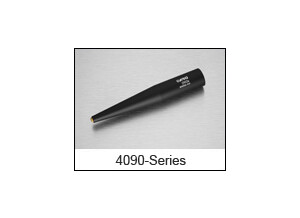
    The DPA Microphones 4090 is a small diaphragm condenser microphone designed for use in the recording studio. The mic is uniquely designed, but picks up the standard frequencies between 20 Hz and 20 kHz. It has a omnidirectional pick up pattern, making the 4090 great for micing from above. For this reason, I guess it can be used for live shows as well, but I haven't done so and would only recommend it if you're going to be using it to record a live show rather than for live sound reinforcement. OVERALL OPINION In terms of sound quality, the DPA Microphones 4090 is very silky sounding and offers up a lot of clarity. It is definitely suited best for acoustic instruments of all types, as I've had awesome results with it on an acoustic guitar as well as for both banjo and mandolin. Although I haven't yet had the chance to try it with the following applications, I also think the 4090 would work well on violin and as drum overheads or for micing up individual cymbals like a hi hat or something like that. It's sleek design makes it easy to position and especially useful for hanging them from the ceiling or from a similar location. The DPA Microphones 4090 is actually a lot less expensive than I would have thought, as the first time I used it I thought for sure it would be worth more than it is. So in my opinion you're getting a great deal with the 4090, but it still probably won't be cheap enough for home studio owners. In essence this is a professional's microphone, so I'd really only recommend it for professionals looking for a super clean sounding small diaphragm condenser for a number of different applications. All in all the 4090 is a very well made and designed microphone that will give you some great results when used properly in the recording studio.

  • « TableTop »

    The Crown PCC-170 is a surface microphone that can be mounted to just about anything. It is a condenser microphone that only cost 300 dollars and it is perfect for tables, podiums, and desktops. It has a max SPL of 120 dB and an output impedance of 150 ohms which is good for a microphone of this size and price. The frequency response is 50 Hz to 20 kHz and the polar pattern is hemispherical. OVERALL OPINION I have used this microphone for meetings for several occasions and even had it on a small table top podium. It is pretty small and it is also flat so it does not stick up very far from the surface that it is on or mounted to. The PCC-170 being the size that it is makes it pretty discreet and under the radar. The sound quality is decent. I have heard lot better from other surface microphones but for the price you just will not get much more because when it comes to table top or surface microphones you have to approach them differently than you would any other type of microphone. The PCC-170 does not pick up a lot of external or surrounding noise that is going on. It is pretty direct when picking up voices so you will need to be within 2 to 3 feet from it for your voice to pick up clean. A good thing about it is that it is very quiet. If you are not speaking into it, it will not make a single sound and it will even sound like no microphone is even on. That was a huge thing for us because we wanted to leave it on and not have to turn it off or unplug it in between speeches. So the fact that it is very quiet has helped us greatly by allowing us to just leave it on even if no one is at the podium to speak.

  • « Apex 130 Microphone »

    I bought this microphone off of Ebay for $90. I've seen some of them sell for quite a bit more. This microphone is great. It is well constructed, very sturdy, and comes with a nice shock mount. It is competitively priced, but there is no aspect of cheapness about it. It does a very good job of recording guitars, bass, vocals, and cello. It has a very nice low end, and would be comparable to other high-end mics with 1" diaphragms. You have to get your own case, since it only comes with a zippered pouch. The mic appears to be of superior construction and is very sturdy. I would compare it to an AKG mic. In no way does it feel cheap. This is a much better mic than any Shure mic that I have used. It is a really good deal if you can find it under $130. This review was originally published on http://www.musicgearreview.com

  • « good for price »

    I was a little skeptical about this mic at first for a saxophone being that its fairly cheap, but I was pleasantly surprised by its response to my sound. I very rarely have gotten a true sound with many different mics, but mixed correctly this thing is amazing. You'll need to turn down the lows so you do not get distortion in the lower notes (common with most clip on mics) and same thing with the high so it does sound like a whine. Used this on soprano sax playing for a wedding (Hooked up to a JBL PA Speaker) and use it at church every Sunday on Tenor and Soprano. Each horn needs to be mixed differently so don't expect to switch back and forth a lot unless your sound guy is awesome or you're working your own sound. You get some key noise, but not enough to ruin a sound or any performance. All in all, this was a great purchase and I would recommend as one of the best cheaper solutions for a sax mic. Great for acoustic instruments and believe it or not it sounds great on a banjo and a mandolin it really keeps the acoustic sounds but doesn’t take away the highs or lows. the only thing that keeps this mic from being better is that it doesn’t have other types of clips for it but if you get it you be surprised at how good it works in many different situations and instruments OVERALL OPINION You can't beat this mic for horns! We are able to wander all over the venue playing which gets a great crowd response. The ruggedness and sound quality of this mic is unbeatable. I have also used this mic in a church setting playing classical trumpet pieces. It has NEVER let me down. Try it.

  • « Great for documentaries »

    Designed for professional recording, broadcasting and film/TV/video production Short length is well-suited for ENG, outdoor recording and other specialized uses Provides the narrow acceptance angle desirable for long-distance sound pickup Excellent sound rejection from the sides and rear of mic Switchable low-frequency roll-off Operates on battery or phantom power Line + gradient mic, 14.5" long XLRM type output Roll-off switch Includes windscreen. OVERALL OPINION One of my main gigs is I play lead guitar in a fairly large touring pop rock band. Our sound guy and I have backgrounds in film and one day on tour he suggested we do a road documentary. I initially laughed it off and said he was crazy. But a few months and crazy chances later we actually decided to go through with it. We had a very good camera but we needed an ambient shotgun style mic. So the search began. We really knew nothing about these kinds of mics, but we had a friend who had access to quite a few. The primary goal was reliability since we were going to drag it on the road and we really didn't want to bring a backup. After looking at a few brands, the Audio Technica shotgun mics seemed to feel the most solid. We also didn't want to spend more than half a grand which eliminated a lot of choices. But we were immediately attracted to this one and bought it. The fact that it operates off a battery and doesn't need phantom power is a great perk because we're obviously on the go. But the real question is: how does it sound? Well it sounds great I must say. We got some seriously nice audio out of it. And it doesn't really pick up a lot of room noise. Which is shocking based on how 3D the pickup pattern is. I don't know how they do it but it works great. We would definitely buy another one if this one broke but it never did. For the price you really can't beat it. We compared it to a few shotguns over 3 times the price and the difference was minor. For any kind of film audio or maybe radio use this is great. We're about to use it for some gang style vocals just to see how it turns out. We'll see. Highly recommended.

Categories that may interest you