Log in
EN
FR

Peavey Studio & Home Studio

119 products found

Categories
Series
Filter
Sort by
Peavey
Evaluation
  • Reviewed or not
  • Editor’s award
  • Reviewed by Audiofanzine
Availability
  • Available or not
  • Sold new or used
  • Sold new
  • Sold used
Must-have products
  • All products
  • Flagship products
  • Best rated products
  • Hot products
  • Popular products
Price
  • Freeware
€
Clear
Sort by
  • Popularity
  • User ratings
  • Price - low to high
  • Price - high to low
  • Used price, increasing
  • Used price, decreasing
  • Name (from A to Z)
  • Name (from Z to A)
  • Added on
Choose a category
Selected category: Studio & Home Studio
Sort results
  • Popularity
  • User ratings
  • Price - low to high
  • Price - high to low
  • Used price, increasing
  • Used price, decreasing
  • Name (from A to Z)
  • Name (from Z to A)
  • Added on
Filter results 119 results found
Brands
Evaluation
Availability
Must-have products
Price
  • Freeware
Show results

The best Peavey Studio & Home Studio reviews

The reviews Audiofanzine members found the most helpful.
  • « Great, cheap live mixer »

    The Peavey Unity 2000-16 is a 16 channel mixer intended for live use. There are inserts on every channel as well as line ins, which are through 1/4" connections. There is also a microphone input for each channel through an XLR jack. This mixer is a 16x2 mixer, meaning that there are two groups, generally intended as left and right for stereo. There is 3 band EQ and monitoring out available on each channel for stage use, and if the insert jack isn't otherwise being used, it could be used as a direct out if the cable is only inserted part of the way in (to the first "click"). UTILIZATION I never had to open the manual on this one, everything functions in a very straightforward fashion. SOUNDS This is a relatively quiet mixer, but it is intended for live use, not the studio. In a bind, I did use this in the studio once, using the aforementioned insert jack trick. There wasn't a lot of hiss on the recordings. To hear a track that was tracked (but not mixed) using this board, go to www.soundclick.com/exnightstalker and listen to the song "No Love Lost." OVERALL OPINION The best thing I liked about this mixer was how cheap I got it for. I never bought it for live use, but couldn't afford a real mixer for my first 16 track recorder so this thing fit the bill. Eventually I replaced it with a Mackie 32x8 (which I hated), then a Tascam 2516 (which was bearable), and finally a Soundcraft Ghost 32 (which I love). This mixer served its purpose well, especially considering that it wasn't meant to be used in a recording environment. If I needed a good, rugged mixer for a club and wanted to spend next to nothing on it, in order to spend more money on the rest of the PA system.

  • « Stylish and built well »

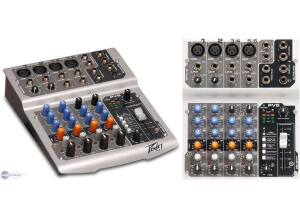
    I was in the market to buy a small mixer that was compact and had at least 4 channels. I came across the Peavey PV6, it has 6 channels so I decided to get it because of the price and figured the two extra channels would not hurt and I could probably use them. I love the design of this mixer because for this price you don’t find many mixers that have a nice look to them. The main base of this mixer is like a white-ish brushed color that pops out, not like all of the rest of the lower end mixer. The knobs are bright orange, blue, black and even some white ones. They are all made well too; they look great and will not break or get stiff even if though I was a little harsh on them. UTILIZATION This mixer has 1 effects send and 1 effects return. It has effects built into it that I found rather good for it to be at this price. The input type is XLR and there are 4 inputs and 2 outputs on the PV6. SOUNDS The PV6 works with a 16.5 VAC power supply and only weighs around 5 pounds. It is very portable and looks great. I would take it everywhere with me for a while. I do still own it but don’t use it much because I am not as mobile as I use to be in the years past but I will get rid of it because it worked great and I never know when I may need it again. OVERALL OPINION This mixer allowed me to adjust the Rang of the microphone input gain from 10dB to 60Db easily and even the LED metering was pretty good. I really have no complaints with this mixer and the price (100 dollars) is great for the features and quality of a mixer that it is. I recommend this over a lot of other mixers in this price range that are coming out now.

  • « sounds like the SM58 (vocals) »

    The Peavey PVM22 is a dynamic vocal microphone that is priced well. It is great with reducing feedback and giving you a consistent sound during a live show. It feels pretty good in your hand, and is light enough to hold for long periods of time if needed. It is made to be used with instruments as well, it is better than the SM58 by Shure because of its ability to give your instruments (non electronic) a great sound. The vocal capabilities between the PVM22 and the Shure SM58 sound almost the same to me; the prices are a little different though. But if you want a better all around sounding microphone I say go with the PVM22 because you will have something that will sound great on stage and in a studio with almost anything you put in front of it. OVERALL OPINION I have been using this microphone for a while because my school owns a few of these and we used to use them all of the time with different instruments and for different things. The frequency response is 50hz – 16kHz which is pretty standard for a microphone that can handle vocals and instruments. The look of it is pretty fresh and clean, giving you a black paint finish. It comes with an adapter for your microphone stand and a carrying pouch. This microphone is also pretty small in diameter and in length giving it a great feel in your hand. It can get slipper though because if you hand sweats the rubber finish on it also gets slick, which is something to think about before purchasing this microphone. It gave me trouble in class a few times and I would also be scared thinking it was going to slip out of my hand. Especially if you a performer and move around a lot on stage.

  • « Panic »

    The Feeback Ferret D has been in my rig since 2009, it is a feedback processor that has panic filters on it. Using the Ferret D will get rid of all of the horrible frequencies that need to be gutted out. You can simply use a filter that the Ferret D offers and it will find certain frequencies that you tell it to and it will eliminate them. There are over 16 different filters to choose from and the Ferret even has four different presets to fit with whatever you environment is. UTILIZATION Using the Ferret D is simple because it is just about using the filters efficiently. Sometimes as we all know you might experience some sudden feedback that can really ruin your set and fast! All you have to do is use one of the Panic Filters and you will quickly have full control over the feedback and you can get rid of it really quickly. If you are into live sound whether you are a DJ for a band or group or an artist setting up your own gear, having the Ferret D is a must have because it will take care of your dirty work and get rid of all of the feedback. SOUND QUALITY The Ferret D has 2 channels with 2 XLR inputs and 2 XLR/ 2 ¼ TRS outputs. You can rack this unit up and have it in your set up quickly. No matter what setting you are in you will be able to change your options or change filters if you are in a panic situation and have sudden out of nowhere feedback strike your gig. OVERALL OPINION Even you are having some minor feedback sound issues that some people don’t think are that bad, you should still go out and get this unit because it will give you ease of mind knowing that feedback will not take over your performance.

  • « Decent at best »

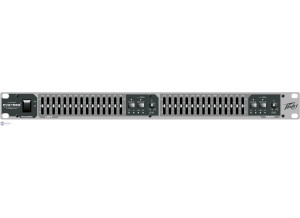
    The 215EQ is a dual band graphic EQ and it cost under a 100 dollars. It has nice and bright output level LEDs and a switchable 12 6dB cut or boost. The low cut filter on this unit is also a great addition for it to be at this price. The low cut filter is 80 Hz 24 dB. UTILIZATION Setting up this unit is very easy especially if you have used similar models before. There are 2 15 bands on the 215EQ and it can be racked up only taking up 1 rack space on your rig or set up. I used this EQ for a few months before upgrading to the PV 231EQ because I was in search of more bands. SOUND QUALITY The sound quality of this unit is decent; if you want better quality go with the PV 231 unit. You can use the 215EQ to get a decent sound that will work for your set up, but with this unit only costing 99 dollars you won’t get a great sound. I only used it for live gigs and never had a chance to test it out in a studio. After I finally upgraded this unit is when I realized that it was not that good. This was one of my first EQ racks and at the time I really didn’t know how important it was to have a good quality one. This unit is not going to take your sound to the next level but it will work for you until you can get your hands on a better unit. OVERALL OPINION I think this unit could be a lot better if the sound was better but that is why they make better models of it. This one is the most inexpensive unit that they have and it is worth the buy if you are just getting your feet wet and in the learning process. But if you are a live gigging musician or DJ I would not get this.

  • « Peavey RQ 2318 »

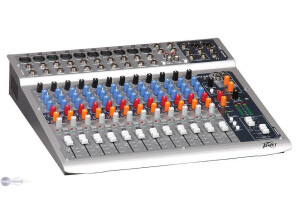
    Bought this with a new PA system at Smith music in Quincy Il. Paid $479.00 Purchased it for 2 reasons, 1.For my son's band to use when they are gigging on the weekends 2.For me to rent out to other bands when my sons arent playing. I really like the compact size, and the tilted angle. The flat surfaces above and below the sliders make it easy to label all the channels. It has the usual inputs XLR and 1/4, plus each channel has a TRS input for individual effects such as gates, compressors. As well as having 2 effect sends and returns for the mains AND the monitors. Plus it has rca's and Line in 1/4 for cd'players and such. 2 Channel monitors really help dividing all the sound on stage, and theres even a Mono channle fader that could be hooked up to a soundcard in a PC to record live shows on a laptop It is really hard to find a low cost hard case for this, since it has unusual measurements. It doesnt have an input for a light either, but a trip to Staples took care of that with a $14 dollar halogen desk lamp Very well put together. the sliders seem like they could bend easily if they were pushed to the side as well as the knobs. but all in all it is very sturdy Great mixer for the price. If you ever thought Peavey was junk, well, think again...they have radically changed everything. Way to go Peavey This review was originally published on http://www.musicgearreview.com

  • « Peavey RQ 2314 Mixer »

    I got this mixer in Harrisonburg Va. at the Guitar & Amp Center. It replaced an aging 12 year old 12 channel Ross mixer. The unit sold for $479.00 This is a compact, easy to use, and well constructed mixer. Just the right features for a traveling band that mixes on stage but can be used with a snake. Nothing at this time. I have had this board for 10 months and it hits the road every weekend. The Peavey RQ 2314 is a great mixing board for the traveling band. It features 12 XLR mic inputs and channels 11 & 12 are duel with not only the XLR but two ¼ inputs for your needs. I use a CD player in the duel inputs of channel 12 for pre show and break music. The board is well built and has two effects inputs and two monitor sends. Effects can be mixed to the monitors and the key singer in our group loves this feature. I know that other boards are considered superior to the Peavey but this board replaced an old Ross system (used that one for 12 years) and is every thing and more for our needs. We use it on stage but it is designed with XLR sends if you’re using it with a snake. Peavey has just reduced the price of this great board (I paid the higher price) making it an even better deal for the traveling band. “Peavey Quality All The Way”. With the now reduced price of this mixer I don’t think there is a better value available. This review was originally published on http://www.musicgearreview.com

  • « Peavey Kosmos »

    Where: Musician's Friend Why: Boost PA Cost: Around $200 The Kosmos provides great clarity to recorded and live sound. The subs output is mono. Great for most applications, but bites the big one when you pump a stereo synth thru it. Give me a dual sub output or I have to daisy chain the PA system. The Kosmos is built tough and I can read all the controls clearly. The Kosmos provides the diversity I need. I like the clarity it provides. A dual sub output would make it a perfect item for all applications. This review was originally published on http://www.musicgearreview.com

  • « great for computer music »

    This mixer is overall great, I have seen it and been able to interact with it in several home based studio’s. So I decided to give it a try myself. It's so easy to use and is a joy to work with! The effects are brilliant and making your own is easy! The fact that it has a built in Feedback Ferret in it just makes life easier! It's only got eight filters, but that's enough for small-scale live sound! It's direct USB recording is just a god-send and whatever you put onto a USB flash drive can be played back through the last channel! Six auxiliary masters make it easy to run large-scale sound and it is also equipped with four sub-groups!!!!! If there is any drawbacks, it would be that the push buttons to select where the channels go to (e.g L/R) are really small and doesn't really help during live sound!!! UTILIZATION 4 Aux channels + 2 Effects/Aux channels. 4 Subgroups. Media in and out. 2 adjustable effects groups. Lots of possibilities in the built in effects (Compressors, Limiters, Reverb, and etc.). I have recorded strait to a usb Jump Drive, but have not used the direct to pc recording. The direct to USB Drive recording was okay but you kind of have to guess on your volume levels. As you cannot hear what you are recording. SOUNDS I have experience a little buzz but that could be because some of my wire’s weren’t grounded properly. OVERALL OPINION Overall, I have had my mixer for 2 1/2 years performs perfectly week in and week out. Have it paired with 2 Peavey Impulse 1015s pushed by a Peavey PV900 amp. I also run 2 Peavey 15" Black Widow 500w wedge monitors pushed by a Peavey PV900 amp. Other auxes go to headphone mixes, a set of voice only monitors, 1 for effects, and 1 for a more "tune-able" output for recording.

  • moosers's review

    The Peavey PMA 250 is a stereo power amplifier. These are on the older side but I don't know from when exactly. I've only used one of them in a home recording studio setting to power up a set of Yamaha NS-10 monitors. I actually sold the NS-10's I used to have to this studio owner and he already had the Peavey PMA 250 power amp. It's seems to do a pretty good job with the NS-10's, but I didn't have the opportunity to A/B it with another power amp. Different power amps can make a big difference it sound when it comes to using passive monitors, but any good one should be adequate. I don't remember all of the connections in the back of the PMA 250, as we just hooked up the NS-10s via speaker cable. On the front panel of the power amp there are only volume knobs for each of the two channels, and also a power switch. This is a rack mountable piece of equipment, and will take up four spaces so it's probably a good idea to just leave this thing on the floor unless you've got extra space at the bottom of your rack. It's not a light power amp, but I'm not sure there's such thing as that anyway. While the Peavey PMA 250 isn't the best overall power amplifier that money can buy, it can be bought used for less money than most power amplifiers, making it a worthwhile model to look into. It doesn't seem like there were a ton of these made, or at least there aren't very many being sold today. It's the kind of thing where if you came across a good deal it might be worth it, but probably not worth taking the time to find one since there are plenty of over cheap power amplifier out there more readily available...

  • moosers's review

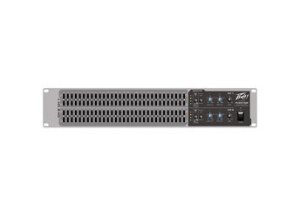
    The Peavey Q231 FX is a stereo graphic equalizer, with each band consisting of 31 bands. It is an analog piece of equipment and it can be used either in the studio or for live shows. I've only used the Q231 FX in the studio, so this review will be focused on this application of the equalizer. A major feature of the equalizer i the FLS, which stands for Feedback Locating System. It allows for quick and easy filtering of noise and feedback. It's got 1/4" TRS connections for both channels and for both inputs and outputs. It is rack mountable in a traditional rack casing. UTILIZATION Using the Peavey Q231 FX is just about as simple as it gets in terms of using a graphic equalizer. Simply move the sliders up or down for cutting or boosting at the specified frequency. The frequencies on the 31 bands range from 20 Hz to 20 kHz, and overall they are chosen wisely. In addition to the 31 bands on each channel, the Q231 FX also has buttons for a low cut at 40 Hz and bypass. There is also a gain slider for setting your overall output, which ranges from -15 db to +15 db. It also has metering for the overall output level. A manual isn't something that is necessary for this unit. SOUND QUALITY The Peavey Q231 FX won't add any sounds of it's own, and will simply do what it is told to. It is great for notching out the specific frequencies found, and since there are 31 bands you can almost always find the frequency you're looking for. The Peavey Q231 FX can be used across the board, as I can't necessarily say that it sounds better for one application over another. It is best for filtering out noise and feedback, but also will do a great job with notching. I usually prefer using a parametric EQ for versatility purposes, but when you've got 31 bands, I really can't complain. OVERALL OPINION I've used a good amount of different outboard graphic equalizers before, and I really can't think of too many that are all that much better than the Peavey Q231 FX. I can definitely think of a ton of other parametric EQs that I'd rather use, but when it comes to graphic EQs it seems that the Peavey Q231 FX is as versatile as any that I've used. The FLS is a great feature which really just puts it over the top. The price of one of these new isn't too expensive, and since they have been making them for a little while I would imagine that you can get one used for a good amount cheaper. If you need a hardware graphic EQ, the Peavey Q231 FX will do the job very well at a reasonable price.

  • moosers's review

    The Peavey CEL 2 is a stereo compressor, limter, and expander designed for use in the studio and on the stage. My experience with the CEL 2 is in the studio, but I have seen and heard of this being used in a live setting as well. However, this review will focus on the CEL 2's use in the studio since my experience with it is limited to this application. The CEL 2 has 1/4" connections for inputs and output as well as for a side chain. It is rackable and will take up only a single space. UTILIZATION The make up of the Peavey CEL 2 isn't exactly complex, but it definitely does offer up a lot of parameters and versatility, so it did take me a little bit to get used to everything going on here. Having said this, most of the parameters found on the CEL 2 will be familiar to experience users, so not too much adjusting is necessary. Each of the two channels has three sections for compression, limiting, and the expander. The compression section has parameters for threshold, ratio, attack, and release, while the limiter just has one for threshold and the expander has two for threshold and ratio, which when turned to one end or the other will either gate or expand your sound. In addition, the CEL 2 has an output level knob and buttons for bypass and for the side chain. I haven't seen a manual for the Peavey CEL 2, so I can't say anything about how well it might be put together. SOUND QUALITY The sound of the Peavey CEL 2 is about average in general, but it will get the job done for a number of different applications. The main thing that I have used the CEL 2 is for drums of all types, including snare drum, kick drum, and tom toms. I found that it sounded best on the kick drum, as it helped to give it a punchy sound that was both consistent and tight. While I didn't like it as much on the snare, it worked fine for what I was doing as it was really just for a demo. The CEL 2 probably works for other applications as well, including for stereo pairs of drum overheads, but I haven't used it in this capacity so I can't speak any further on it. OVERALL OPINION Overall, the Peavey CEL 2 offers up a good amount of versatility for a two channel compressor in this price range for this type of use. It is great having the expander and limiter in addition to the standard compressor, as it makes the CEL 2 more versatile than many of it's peers. I can't speak on what one of these will cost now, since they've put on the CEL-2A, but I would imagine that these aren't very expensive if you can find one used. While not the most exciting sounding dynamic processor that I've used in the studio by a long shot, it still will give it that glossy sound and will get the job done more times than not.