Log in
EN
FR

Yamaha Amps & Monitors

Series

62 products found

Categories
Series
Filter
Sort by
Yamaha
Evaluation
  • Reviewed or not
  • Editor’s award
  • Reviewed by Audiofanzine
Availability
  • Available or not
  • Sold new or used
  • Sold new
  • Sold used
Must-have products
  • All products
  • Flagship products
  • Best rated products
  • Hot products
  • Popular products
Price
  • Freeware
  • Low-cost (< $300)
  • Mid-range ($300 - $450)
  • Premium (> $450)
€
Clear
Sort by
  • Popularity
  • User ratings
  • Price - low to high
  • Price - high to low
  • Used price, increasing
  • Used price, decreasing
  • Name (from A to Z)
  • Name (from Z to A)
  • Added on
Choose a category
Selected category: Amps & Monitors
Choose a series
Sort results
  • Popularity
  • User ratings
  • Price - low to high
  • Price - high to low
  • Used price, increasing
  • Used price, decreasing
  • Name (from A to Z)
  • Name (from Z to A)
  • Added on
Filter results 62 results found
Brands
Evaluation
Availability
Must-have products
Price
  • Freeware
  • Low-cost (< $300)
  • Mid-range ($300 - $450)
  • Premium (> $450)
Show results

The best Yamaha Amps & Monitors reviews

The reviews Audiofanzine members found the most helpful.
  • « very clean sound »

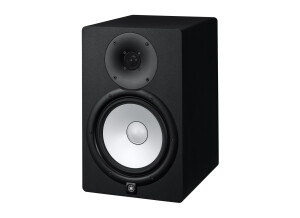
    The Yamaha HS80M have been sitting on my workstation desk several times. I purchased these and then didn’t like them at first just because the sound didn’t “thump” enough for me. At first I was very disappointed in them especially after paying all that money for them. But it wasn’t untill I started reading up on mastering music that I started to understand that you don’t want your studio monitors to have a lot of heavy low end. You need a good balanced set of monitors so you can get a clean mix in. SOUNDS The sound of these are good and flat. I am so happy that I understand how to mix and master music now and it makes these so much better because I was having to work to hard in my mix to over compress drums and bass to get it to thump in them. Then wonder why my mixes sounded so muddy on the low end. The Yamaha HS 80m’s havent gave me a bad experience yet. I have been getting nothing but clean masters when mixing with them. I also have a semi accoustic treated room with some foam on the walls an a few bass traps in the corner which help a lot. OVERALL OPINION Overall, these are one of the best sets of monitors that I have used and pretty sure they are the best they I have here at home. With so many different monitors on the market you need to be experimental and find the ones that will suit you the best and give you the best mix. So for these are the best ones for me, I wouldn’t choose any other ones right now. I am happy with these and will have them for as long as they hold up, not that they would go out on me anyways because they are yamaha!

  • « great flat sound »

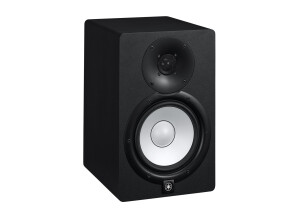
    I've been using the Yamaha HS50M’s since August 2006. In my experience HS50Ms are very interesting speakers. I can say they have the most realistic sounding bass I've ever heard, period! The timber of the bass instruments are so real there is nothing to touch them in Hi-Fi or pro-audio market in this respect. Bass instruments also sound very tuneful. I had a chance to hear HS80Ms as well. Their bass reproduction even go deeper and they have a bigger sound. But they are also more expensive. I can imagine HS50Ms sounding great on speaker stands such as Atacama with signals fed through a warm sounding pre-amp( maybe a valve pre-amp). My only bad thing would be that acoustic piano (and sometimes vocal)recordings sound bright and thin on HS50s. But for the price one can easily forgive these flaws. SOUNDS They sound pretty good, Yamaha also makes great monitors at an affordable price, but one minor flaw is that they are not 100% quiet, they do have baseline noise even with nothing connected to them that you can hear in a quiet room. But in the $400/pair price range, something has to give as designers make their trade off decisions. OVERALL OPINION Overall, These speakers sound PHENOMENAL for the price. You almost forget you're listening to $400 monitors when mixing with these. These things look like toys but sound like $1000 near-fields. I actually prefer them to anything I've heard under $500 and for my taste, like them better than the new-standard HR824s which always sound boomy to me. If you want flat, these speaks are flatter than a pancake. Almost too flat at times, if that makes any sense. It could get fatiguing but cutting the high frequencies with the switches in the back seems to correct that problem. I recommend these for engineers on a tight budget.

  • Audiofanzine FR's review

    Originally written by John Michael on Audiofanzine FR. Near-field monitor speakers Used in home studio Marantz PM4001 amp SOUNDS Let's be clear: these speakers were conceived to check how a mix/recording will sound with most systems (small hi-fi system, car audio, etc.). They must be used with the same settings as consumer products, meaning you have use the loudness feature of an amp, for example. Good stereo imaging, dynamic transient response, faithful response: if your guitar amp sounds too narrow or your voice has a lack of personality, you'll hear exactly how they sound, unlike recent compact monitors which always enhance the sound. In this last case, when you listen to your work with a good hi-fi system, the sound is hollow or too deep and you won't recognize your mix. This means that your monitor speakers didn't accomplish their job. OVERALL OPINION I've been using these monitors for over 10 years. I also used them as home speakers for one year. They are great as near-field speaker but the sound quality decreases when used in a living room. Now, I use them in my home studio for all my recordings and I'm very satisfied. The sound matches what I hear with a premium hi-fi system or a good car audio setup. Very consistent... just essential.

  • « My faithful and tireless speakers »

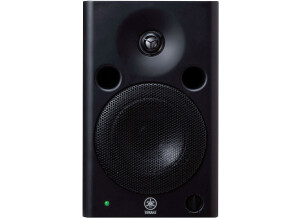
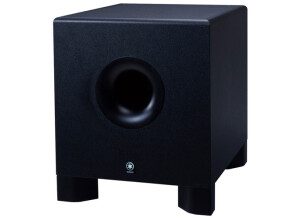
    I needed something better than my hi-fi system to make electronic music with my PC! I was looking at classified ads but a musician friend of mine recommended me the MSP5, which were on sale. An important point for me back then, and still today, is that the vents are on the front, because I can place them close to a wall (I don't have another choice!). Use: Home studio, after more than 10 years, they still work perfectly No amp because they are bi(amplified), my setup consists only of two MSP5s connected to the outputs of an analog mixer. SOUND I have not many points of comparison. Frequency response curve: They lack deep lows (which is normal given the size of the speakers) and they have some sort of dip and a boost in the mids, which makes the overall sound more aggressive than with other speakers. I am so used to them that I have a hard time assessing sounds! In any case, they have a very good dynamic response and at loud volumes the vents blow so much air with the kicks that you can use them as hair dryers! Beyond a certain volume you can hear air-swishing sounds from the vents, which is annoying (but only at very loud volumes, to rehearse with your deaf buddies, not a level you'd use for mixing). I think they are best for rock, pop and similar, rather than electronic music or techno (especially due to the lack of deep lows). OVERALL OPINION After more than 12 years of use I still can't part with them (even if I bought some Genelecs, I'd still find a use for the MSP5s). I haven't tested any other models at my place but I have been able to use other ones in other home-studios: The big Yamaha 80W with subwoofer wouldn't suit me because the vents are on the rear and the difficulty to find the right place for the subwoofer. However, it's true that the lows go much deeper which makes it more comfortable to mix electronic music. I have also used some Genelecs, which are certainly better... but the price is not the same! I'm happy with my MSP5, which I know very well now. I also work with (good) cans since the kids' rooms are close to the studio. When a mix sounds fine both with my cans and the MSP5s then I can say it's okay. They are solid, reliable, dynamic and a bit aggressive, you need to tame them (like all monitors), but once you do, it's a real treat to use them.

  • « Yamaha P120 »

    I bought the P120 mostly because I needed an 88-key weighted keyboard with great portability and cost-efficient quality. I bought it at Guitar Center for $1099, excluding accessories. The P120 is very light and easy to move, which is a plus for any keyboardist who travels frequently for gigs. Also, the majority of the sound samples are great for the amount of money that the keyboard costs. The grand piano patch sounds great in the lower register, and the e. pianos and clavichords sound fairly good as well. The touch of the keys is also very good, if you're used to playing on weighted models. Playing high notes can sometimes be a pain, especially if the sound feeds through an amp. Be sure to turn the mid high and high ranges on your amp lower if you do decide to go that route. Also, the church organ and strings sounds are pretty cheesy by themselves. The guitar sound isn't much better. The user song mode is limited (two tracks) and you can only do three. This is definitely not a model to get if production and beats are the focus; the P120 is strictly a performance tool. The body design is fairly modern, especially the silver model. Seems to be pretty durable, although i haven't had it for very long. All the connections are on the side of the keyboard as opposed to the usual location in the back. Comes with a clear, stylish stand that looks very good. Overall, the P120 is a good instrument for the performing keyboardist who doesn't like a whole lot of bells and whistles that add weight and confusion to the instrument. The P120's purpose is simple: to create a great playing interface that enables the player to jam to his or her heart's content. Its light weight makes it very portable, and you should be good to go with a stand and amplifier setup. This review was originally published on http://www.musicgearreview.com

  • « ok, but you can get better »

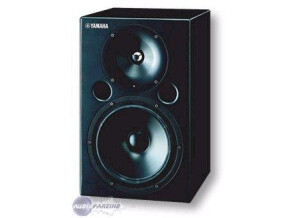
    The Yamaha MS P3’s are a set of monitors that I have used on several occasions. They are some of the first monitors that we possessed at our studio across town. They did they job for a long time, and we didn’t really have many complaints with them, until we upgraded our studio and got some monitors that cost more and then we said, “wow, what have we been missing”. The Yamaha Ms P3’s work great with out a doubt, but once you hear that same mix you just did in some other monitors of high quality you will hear what i'm talking about. SOUNDS Sounds good though, I really like the accuracy between the mid range and the low range. They are exaggerated at all like a lot of affordable monitors are. Not too much with the design of these monitors just basic dull design. These where created to mix with not to look at. I really have no complaints with the sound, but these are typical affordable monitors in my opinion, they have a decent sound and you think you have a great monitor until you hear a higher quality one then you are shocked! OVERALL OPINION Overall, we used these for a bout a year or maybe a little longer before deciding to upgrade and go with something else that sounded a little better after our trip to the local music store. We were able to trade these in a get about 50 percent of what we paid for them back to put toward our next set of monitors which is good, that means they hold there value pretty well. But you can always purchase them use them and if you don’t like them take them back within the 30 days or whatever your store’s policy is. If you are on a budget look into some of the Mackie Monitors or Alesis and compare them to these. These will fall short.

  • moosers's review

    The Yamaha MS10s are a set of passive studio monitors that are designed for professional recording studios. They are suitable for all sorts of applications in the studio including mixing and monitoring. Since they are a passive set of monitors they do require an external power amp. A great feature of the Yamaha MS10s are that it has three knobs in the front to control bass, treble, and volume. This allows you to accurately set your monitors to your room to make sure they are best set for mixing. Having the volume knob on the front is also a big plus as most monitors don't have it in sight. SOUNDS The sound of the Yamaha MS10s are pretty great as they are great for mixing because of their great all around frequency response. It covers the low end very well as well as a great mid range and high end. It definitely reproduces your sound accurately and faithfully, although sometimes I feel I have a small bit of trouble in terms of transferring mixes to other system. While they are well equipped for mixing, like all monitors it will take some time to learn them so you can accurately mix on them. Overall, the Yamaha MS10 has a good frequency response all across the spectrum and from what I can tell has a good dynamic response and good stereo imaging. OVERALL OPINION I've been using the Yamaha MS10s for about four or five years and have found them to be a nice set of studio monitors. While they no longer make these, if you can find some used they are good for mixing and are a great addition to any studio, professional or home based. Yamaha makes great studio equipment and their studio monitors are always top notch. While these are now pretty rare, they are a great set of studio monitors for the home studio owner looking for a nice set of monitors for mixing and monitoring at a reasonable price.