- Short-cuts : Products
- DJ Gear >
- Hi-Fi >
- Resources >
- Misc. Products >
Fishman POWERBRIDGE VT
By Rockmonster on 04/03/2008 at 02:44 Serious about music, want to make it your profession.
See all user-reviews
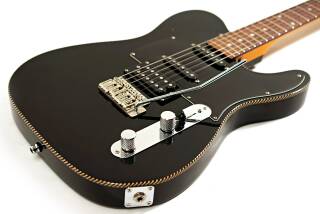
Had this puppy installed in a Telecaster for about 3 years now. I am a bit of a Metalhead, so.. this does not always get a a lot of play.. but it is certainly a classic guitar and brought to higher levels of versatility with this modification. The Powerbridge gives a decent approximation of an acoustic... in a pinch. The piezo sound is a great option if you need to pull off Stairway To Heaven live... but it also lends itself to great chicken' pickin' tones.And sweet quasi single coil tones for Blues.. Actually.. better on the latter. Believe it or not.. I have tried other setups.. as I need the versatility. I also own a Yamaha RGX820Z.. with Seymour Duncan JB bridge and 59' in the neck.. This is also equipped with an active, battery munching piezo circuit in the tremolo system. Also very sweet.. I would say this has a bit more control over the tone shaping aspects than the Fishman, but this is also a proprietary Yamaha product.. the Fishman is a great alternative to something you can install into your Tele. ( I think they also have a trem version of this for Strats. I have also tried the Parker Fly stuff.. they are all kind of the same result. The signature piezo sound... somewhere between an acoustic and an electric single coil clean tone.
I find this to be a good value... *IF* you need this specific type of versatility from your equipment. Certainly better than an acoustic modeler pedal or even that found in the Boss GT8.. now, if you go Full Monty and get a VG88 or some other high end guitar synth, you can get more realistic, true acoustic tones. It really depends. If you hate those, love your tube amp and like the organic interplay between your Tele and your amp... Get this. If you would use everything in a Roland VG88, for instance... then the Fishman may not be the way to go.. and just pony up on the outboard gear. I would buy this again.. perhaps. I am not a huge Telecaster fan.. and would possibly opt for the Tremolo version for my Stratocasters. It is a great tool to have in your belt if you love your amp and don't want visual modifications done to your guitar.(i.e. Roland GK pickup,etc).. and still bridging acoustic and electric tones for live sets. This is probably not what you would ever consider using in the studio as an acoustic unless you were looking for a very specific piezo tone... It could happen..
Used this pickup in an Ibanez RG550 for over a year... Basswood has a very balanced smooth tone, so.. I think it was a forgiving canvas for a pickup to make an impression. I have had extensive experience in tone dissatisfaction..
so I am always changing stuff in and out of guitars.. It IS a disease! I have used Fender, Gibson, Paul Reed Smith, EMG, Dimarzio, Seymour Duncan, Carvin, etc, etc.
Alright. So, now the pickup. EMG81. The pre-eminent metal pickup of choice for all the Nu-Metal kiddies. This pickup has been around FOREVER. I think I was using this 12 years ago.. maybe longer... so this is definitely not the new piece of gear lots of people think it is. Very high output, neutrally voiced pickup. It has a lot of clear, boosted signal. Kind of the opposite gain approach of the Dimarzio HS-3.. which is a low output... very, VERY neutral pickup. Zakk Wylde seems to love this in a Les Paul.. I imagine it might be a good choice in that guitar.. as the maple may add brightness.Let me also add that he has a maple neck, so.. this has a small bit of impact as well. In the Ibanez, it was opaque. Flat. Neutral. Can't think of any other boring adjectives to describe it. The good news is.. it should take on the characteristics of your rig. If you have a good preamp... or a Marshall JCM800.. with a bunch of Boss pedals in front of it.. you might be able to get a nice dark, heavy tone. (like Zakk) Not particularly complex.. pretty straightforward, high gain. Easy pinched harmonics, but not rich and detailed sounding. The best way to get a rich sound would be if you have a crunchy amp.. and use this to push it into higher gain. I'm sure Zakk Wylde's rig would not scream quite so loudly if you played a Strat thru it. The best part about this is that it is verbose. Huge. Fat. Like playing a regular humbucker with a clean boost. (One good way to avoid buying this, changing your pots and adding batteries) But if you want a dead quiet, high output solution.. need your notes thick and meaty (and your rig provides the character you want) this is the way to go. You hear it on lots of heavy albums nowadays... the question one has to pose themselves is... Do I want to create my OWN sound? This might be it... but there are lots of other options.
I owned my Wuhan China for a couple years, I should have never let it go.
Wuhan makes the trashiest China cymbals ever! This is what a china is supposed to sound like! Zildjian, Sabian, and even my beloved Paiste have never made a China cymbal that could touch a Wuhan. The other cymbal makers make what sounds like a crash cymbal with an identity crisis, but Wuhan makes trashy, dark, explosive, punchy cymbals with low harmonic overtones, and minimal sustain! The other cymbal makers just don't have the punchiness and lower harmonic tone, and don't sound all that Oriental either. These do.
Amazing, they are dirt cheap too, everyone should own one. I had a 14" but always lusted for a 16" or even 18" for more volume. I played melodic indie rock with a hardcore/metal influence and this cymbal added a lot of character and aggressive tone to our sound. Metal drummers have known for years what a china cymbal can do for a blast beat, and I quickly learned what a good trashy China can do for heavy music, like hitting it with the snare for accented upbeats, breakdowns, or crazy accents.
They are fairly thin and its possible to crack them, but I never did and I played mine pretty hard, so my personal experience with durability is positive.
The 12" has little to no sustain, and the 14" is a little more washy sounding, and the sustain increases as you go up in size. These are such a steal at under 20 bucks for a 14" and under 30 bucks for a 16".
You will either love 'em or hate 'em but at least try one out.
Wuhan makes the trashiest China cymbals ever! This is what a china is supposed to sound like! Zildjian, Sabian, and even my beloved Paiste have never made a China cymbal that could touch a Wuhan. The other cymbal makers make what sounds like a crash cymbal with an identity crisis, but Wuhan makes trashy, dark, explosive, punchy cymbals with low harmonic overtones, and minimal sustain! The other cymbal makers just don't have the punchiness and lower harmonic tone, and don't sound all that Oriental either. These do.
Amazing, they are dirt cheap too, everyone should own one. I had a 14" but always lusted for a 16" or even 18" for more volume. I played melodic indie rock with a hardcore/metal influence and this cymbal added a lot of character and aggressive tone to our sound. Metal drummers have known for years what a china cymbal can do for a blast beat, and I quickly learned what a good trashy China can do for heavy music, like hitting it with the snare for accented upbeats, breakdowns, or crazy accents.
They are fairly thin and its possible to crack them, but I never did and I played mine pretty hard, so my personal experience with durability is positive.
The 12" has little to no sustain, and the 14" is a little more washy sounding, and the sustain increases as you go up in size. These are such a steal at under 20 bucks for a 14" and under 30 bucks for a 16".
You will either love 'em or hate 'em but at least try one out.
I owned my 16" AAX Stage Crash for a couple years before I sold it off to another drummer.
The sound quality of the cymbal changed dramatically to my ears over the time owned it. I remember buying it and thinking it sounded great, to eventually cringing enough that I replaced it with a different brand of cymbal. I don't know if it was my partially my taste that changed or refined with time, or if it was completely the cymbal's sound degrading with time.
The finish on my AAX started out brilliant and shiny, and dulled dramatically with time, while staying set up in an air-conditioned home and only occasionally being handled to gig out. It seems like just exposure to air, natural light, and skin oils ruined turned the original brilliant finish to a dull discolored appearance, and dulled the sound as well in just a couple short years.
My AAX stage crash was punchy with minimal sustain, and fairly balanced in tone and not too bright. It was perfect for the pop punk rock band I played in as a teenager, ideal for quick syncopated crashes where it could cut through. Later as the finish dulled, it started to lose its glassy high frequencies and took on a more shril brassy sound that made me cringe.
One thing I didn't like was its light weight, as a result playing overly heavy or riding the crash were out- it flopped around like a fish. It was more like an oversized splash cymbal than a hardy crash. I had to rely on my other crash for that type of effect.
I finally grew disgruntled with this cymbal and sold it for 20 bucks to a younger drummer in need. I had only spent $80 on it but until you got into the uber expensive Hand Hammered line I thought this was the best Sabian had to offer and would serve me better than it did. I ended up going with Paiste from there on out and never looked back.
If Sabian has upped the quality of their AAX line in the last 10 years then maybe they are worth checking out, after all I did enjoy mine for a while befopre it went south on me. If finances allow it (and they did for me) I would go for the hand hammered line or not buy Sabian at all.
The sound quality of the cymbal changed dramatically to my ears over the time owned it. I remember buying it and thinking it sounded great, to eventually cringing enough that I replaced it with a different brand of cymbal. I don't know if it was my partially my taste that changed or refined with time, or if it was completely the cymbal's sound degrading with time.
The finish on my AAX started out brilliant and shiny, and dulled dramatically with time, while staying set up in an air-conditioned home and only occasionally being handled to gig out. It seems like just exposure to air, natural light, and skin oils ruined turned the original brilliant finish to a dull discolored appearance, and dulled the sound as well in just a couple short years.
My AAX stage crash was punchy with minimal sustain, and fairly balanced in tone and not too bright. It was perfect for the pop punk rock band I played in as a teenager, ideal for quick syncopated crashes where it could cut through. Later as the finish dulled, it started to lose its glassy high frequencies and took on a more shril brassy sound that made me cringe.
One thing I didn't like was its light weight, as a result playing overly heavy or riding the crash were out- it flopped around like a fish. It was more like an oversized splash cymbal than a hardy crash. I had to rely on my other crash for that type of effect.
I finally grew disgruntled with this cymbal and sold it for 20 bucks to a younger drummer in need. I had only spent $80 on it but until you got into the uber expensive Hand Hammered line I thought this was the best Sabian had to offer and would serve me better than it did. I ended up going with Paiste from there on out and never looked back.
If Sabian has upped the quality of their AAX line in the last 10 years then maybe they are worth checking out, after all I did enjoy mine for a while befopre it went south on me. If finances allow it (and they did for me) I would go for the hand hammered line or not buy Sabian at all.
I owned my 2002 22" ride for a few years before sadly parting with it. I had it paired with an 18" crash from the 2002 series, and they were a match made in heaven, though I wished I could have had a 20" crash to fill it out. Paiste makes awesome cymbals, and they really shine when you get up into bigger sizes like 18"-20" crashes and 22" rides.
Some things I liked about my 22" ride were:
1) The 2002's durable finish. Fingerprint, smudges, hand oils.... never hurt the finish on this cymbal even when I was constantly setting up and breaking down without wiping the cymbals down. I can't say the same thing for the finish on a Sabian AAX crash I owned previously, which actually hurt the sound in time for that cymbal.
2) The fullness of sound- it is a thick ride, and you can get a great ping from it but theres always a moderate wash underneath the ping depending on your technique. I played further out on the edge and got a lot of volume from the wash (for a "large" sound) while still having articulation of the stick on metal cutting through the band. It was a perfect balance.
3) You can actually crash this cymbal! Even as thick as it is, with proper technique you can ride it like a crash and get a beautiful LOUD wash. I employed this alot for the indie rock band I played in.
4) Its durability. I played this cymbal heavily for a few years, never had a dent, ding, scratch, or crack. Even when playing on the edge a lot, it stood up to it. Paiste makes quality cymbals.
Things I don't like:
1) It is heavy. Not a huge deal, but due to its 22" diameter and thickness you have to be careful when putting it away. If you dropped it it would break a toe for sure.
2) The bell is a little harsh, or hard to find the sweet spot since its a bit small. If you are one of those ride-the-bell-of-the-cymbal on the chorus of the song kinda guys you might feel disapointed. I'm more of a play-it-in-the-fied kind of guy who likes moderate wash underneath a subtle ping. So it didn't bother me.
If I had to buy all new cymbals over again, I would definitely look at the 2002 line, and consider the Signature series if my $$ allowed it since I'm not playing as heavy of music as I was then. The 2002's were great for my band but were a bit much when I filled in for a church band once. The 2002's cut through and are LOUD, even though retain more sensitivity and musicality than something like the RUDE series which are aptly named.
Some things I liked about my 22" ride were:
1) The 2002's durable finish. Fingerprint, smudges, hand oils.... never hurt the finish on this cymbal even when I was constantly setting up and breaking down without wiping the cymbals down. I can't say the same thing for the finish on a Sabian AAX crash I owned previously, which actually hurt the sound in time for that cymbal.
2) The fullness of sound- it is a thick ride, and you can get a great ping from it but theres always a moderate wash underneath the ping depending on your technique. I played further out on the edge and got a lot of volume from the wash (for a "large" sound) while still having articulation of the stick on metal cutting through the band. It was a perfect balance.
3) You can actually crash this cymbal! Even as thick as it is, with proper technique you can ride it like a crash and get a beautiful LOUD wash. I employed this alot for the indie rock band I played in.
4) Its durability. I played this cymbal heavily for a few years, never had a dent, ding, scratch, or crack. Even when playing on the edge a lot, it stood up to it. Paiste makes quality cymbals.
Things I don't like:
1) It is heavy. Not a huge deal, but due to its 22" diameter and thickness you have to be careful when putting it away. If you dropped it it would break a toe for sure.
2) The bell is a little harsh, or hard to find the sweet spot since its a bit small. If you are one of those ride-the-bell-of-the-cymbal on the chorus of the song kinda guys you might feel disapointed. I'm more of a play-it-in-the-fied kind of guy who likes moderate wash underneath a subtle ping. So it didn't bother me.
If I had to buy all new cymbals over again, I would definitely look at the 2002 line, and consider the Signature series if my $$ allowed it since I'm not playing as heavy of music as I was then. The 2002's were great for my band but were a bit much when I filled in for a church band once. The 2002's cut through and are LOUD, even though retain more sensitivity and musicality than something like the RUDE series which are aptly named.
I owned my Paiste 2002 18" crash for a couple of years before sadly parting with it. I like the lower overtones and the deep wash it gave me, which were mostly due to its 18" size. I started to stray away from smaller crashes and splashes due to the weak wash or sustain and harsh high frequencies, and ended up playing only a 18" crash and 22" ride form Paiste's 2002 series. The two cymbals blended perfectly together for playing in an heavy hitting indie rock band.
I like the finish on the 2002, its not very brilliant but it held up really well for years even though I was constantly setting up and breaking down my set, and never even wiped the cymbals down from hand oils and fingerprints. This had ruined the finish and even dulled the sound on a Sabian AAX crash I had previously.
Another thing I liked about this cymbal, was that it was fairly loud, not in a harsh way like the RUDE series but in a way that filled a room and still cut through a band. I would say that the entire 2002 series is probably sonically somewhere between the RUDE series and the ultra expensive Signature series. They have a bit of the power, projection, and volume of the RUDE series, though more musical and sensitive like the Signatures. They lack some of the complexity and refined tone of the Signatures though, to be a more powerful cymbal that would stand up better for heavier rock music.
My 18" crash proved very durable as it served me in playing heavy rock music. My technique involves setting the cymbals low and flat and being struck most on the edges instead of the face, so the edges received a lot of abuse from the sticks wihtout ever being dinged, dented, or warped. I think it has a lot to do with the thickness of the cymbal, and yet again is another reason why I was better off with 2002's than Signatures which can veer to the thinner side.
My Paiste cymbals were the most expensive cymbals I had ever bought, but I had become disatisfied with zildjians sound, and Sabian's quality of anything below the Hand-Hammered line which was too pricey for me. I believe I paid almost $170 for the 18" crash, more than I had ever paid for a crash, but still more affordable than had I bought Sabian Hand Hammered or Paiste Signature.
If I had to buy another setup all over again, I would try and buy Paiste Signatures if I could afford it because I would enjoy the complexity and brilliance, but for what I was playing when I owned the 2002's- they were perfect. I followed good adivce from fellow drummers in the same style of music, and played a ton of cymbals before buying them, and they stood up to the abuse I gave them.
I like the finish on the 2002, its not very brilliant but it held up really well for years even though I was constantly setting up and breaking down my set, and never even wiped the cymbals down from hand oils and fingerprints. This had ruined the finish and even dulled the sound on a Sabian AAX crash I had previously.
Another thing I liked about this cymbal, was that it was fairly loud, not in a harsh way like the RUDE series but in a way that filled a room and still cut through a band. I would say that the entire 2002 series is probably sonically somewhere between the RUDE series and the ultra expensive Signature series. They have a bit of the power, projection, and volume of the RUDE series, though more musical and sensitive like the Signatures. They lack some of the complexity and refined tone of the Signatures though, to be a more powerful cymbal that would stand up better for heavier rock music.
My 18" crash proved very durable as it served me in playing heavy rock music. My technique involves setting the cymbals low and flat and being struck most on the edges instead of the face, so the edges received a lot of abuse from the sticks wihtout ever being dinged, dented, or warped. I think it has a lot to do with the thickness of the cymbal, and yet again is another reason why I was better off with 2002's than Signatures which can veer to the thinner side.
My Paiste cymbals were the most expensive cymbals I had ever bought, but I had become disatisfied with zildjians sound, and Sabian's quality of anything below the Hand-Hammered line which was too pricey for me. I believe I paid almost $170 for the 18" crash, more than I had ever paid for a crash, but still more affordable than had I bought Sabian Hand Hammered or Paiste Signature.
If I had to buy another setup all over again, I would try and buy Paiste Signatures if I could afford it because I would enjoy the complexity and brilliance, but for what I was playing when I owned the 2002's- they were perfect. I followed good adivce from fellow drummers in the same style of music, and played a ton of cymbals before buying them, and they stood up to the abuse I gave them.
The IObanez FL9 Flanger is an analog flanger. Flange is a type of phase effect that produces a wide range of "swooshing" effects on your guitar tone.
It has your standard 1/4" inputs and outputs, AC adapter input, and red led, all in a sturdy duck yellow metal box.
Flange is a complicated effect. If you've never used one, understanding what the 4 knobs control takes a bit of experimenting. The FL9 has knobs for "delay time", "regeneration", "speed", and "width", and can be a bit daunting to master. Sometimes I create a cool sound, and then forget how to achieve it again, the tange of sounds possible and level of control is probably unmatched by any other stompbox flanger on the market. But for a devoted knob twiddler, you will be in heaven. This box is not capable of making a "bad" sound, only strange ones you may find unusable at the furthest extremes of its spectrum.
The FL9 is classic analog flange sound all the way. There is no harshness, nor thin-ness. It is a thick and warm flange, that will make your guitar warble and whoosh for days. Add in an analog delay in your signal chain, and you'll be in space cadet heaven.
I especially like the ability to dial in some Andy Summer's Police sounds, which are on the more mild side, all the way to extreme whoosh effects that make the room feel like its spinning and are unusable except just to sound wicked.
Both original FL9's from the 1980's and the brand new reissues of the same era will cost you way over $100. They are worth it, if you value a warm, warbly, swooshing analog Flange effect for your guitar sound. Theres nothing about this box that I don't like.
This is a noise reduction stompbox for guitars. I never really thought about it but I assume it's all analog... Anyway the box is very sturdy, Boss-shaped and sized but WAY heavier.
Well, VERY basic setup with one mere single knob... But does it need anything more?
It doesn't provide the effects loop that its Boss counterpart does, though.
Well, all you expect from this noise reduction box is to... reduce noise, don't you? If such is the case, you can expect to be 100% satisfied. Whether it is a single-coil pickup noise or the typical hiss of a huge distortion box that annoys you, just find the right setting and you'll get your guitar sound -- your WHOLE guitar sound, NOTHING BUT your guitar sound. Hard to find a setting that will suit both your clean and saturated sounds though, so try to get a setting that is relatively hiss-free when distortion is off. It proved efficient in taming successively a SansAmp GT2 in Mesa simulation mode, a Zoom Tri-Metal (not too difficult though, this one has an integrated noise gate but the Decimator still removed whatever was left of noise), an EHX Metal Muff and a Big Muff boosted by an overdrive.
Since I don't use a proper amp I couldn't test it within an fx loop.
I've used this one for approximately one year now. A good addition to my home-studio-oriented rig, as it finally made exploitable some of the sounds that I'd been carving carefully for years (anyone who's played a GT2 in high gain settings or boosted a Big Muff will know what I'm talking about). A bit overpriced maybe (it did cost 169€ new if I remember well, but I got it used with the knob a bit messed up - but still usable- for 110 or 120 I think).
This is the first noise reducer I've used since the (very basic, sustain-killing) one that was included in my old multi-effects unit, and I'm really satisfied with it. Set it up carefully and it will respect carefully your guitar tones. Seems like a new evolution of it is about to be released, I can't wait to see what more it could bring (although I will most likely stick with this one which already perfectly suits my needs).