Log in
EN
FR

Kawai

235 products found

Categories
Series
Filter
Sort by
Evaluation
  • Reviewed or not
  • Editor’s award
  • Reviewed by Audiofanzine
Availability
  • Available or not
  • Sold new or used
  • Sold new
  • Sold used
Must-have products
  • All products
  • Flagship products
  • Best rated products
  • Hot products
  • Popular products
Price
  • Freeware
€
Clear
Sort by
  • Popularity
  • User ratings
  • Price - low to high
  • Price - high to low
  • Used price, increasing
  • Used price, decreasing
  • Name (from A to Z)
  • Name (from Z to A)
  • Added on
Sort results
  • Popularity
  • User ratings
  • Price - low to high
  • Price - high to low
  • Used price, increasing
  • Used price, decreasing
  • Name (from A to Z)
  • Name (from Z to A)
  • Added on
Filter results 235 results found
Evaluation
Availability
Must-have products
Price
  • Freeware
Show results

The best Kawai reviews

The reviews Audiofanzine members found the most helpful.
  • « Very stable, well made »

    My Kawai KG3E was made in 1990. I traded in my Kawai KG1E for this piano along with a cash differential to move from a 5' 4" instrument to a 6' 1" instrument. First, I live in a large city and visited many new and used piano dealers in the area and spoke with a number of technicians to get recommended brand feedback. Kawai and Yamaha were the most frequent brands recommended for reliability and build quality. As I understand it, my KG3E piano had been well cared for (kept in a climate controlled environment, used in a home, kept clean with the top down when not used and lightly used ). My piano is a 6 foot model. The bass response in our home is full and warm. The piano tone overall has been voiced warm as well. The sound has been and remains consistent across the keyboard. The piano holds tune amazingly well. The action touch is moderate, perhaps somewhere between a Steinway and current Yamaha and Kawai models. Finally the piano has a good dynamic range. The technicians I spoke with shared that the late model KG Kawais are "work horses" with found in many clubs, churches and commercial venues throughout Dallas. The general opinion was that they are extremely stable and reliable instruments to buy. What I was told is that pianos really wear out from heavy use and the climate conditions they were stored in, not from age. Personally I recommend the older KG line of pianos as they are excellent values, I've had very good luck with them, and the technical community in my area thinks highly of them. I get the feeling that the new piano dealers really wish these pianos would simply go away. Perhaps these stable used instruments are competing too much with newly made pianos?

  • Audiofanzine FR's review

    (Originally written by iSiStOy/translated from Audiofanzine FR) See previous reviews. UTILIZATION Classic configuration. Patch editing is rather complex. You don't have to know the FFT formulas but you should already know what additive sound synthesis means (that is to say potentially thousands of parameters) if you want to create a patch from scratch. The user's manual is much too short!! SOUNDS The sound is... how could I describe it... ... I can't find the right words! Mind-blowing!!! With a good tube preamp and a good channel strip (tube, compressor, EQ) you'll get a killer sound!!! It doesn't sound very realistic although it should, theoretically. It's wonderful for ambient with its incredible pads and stunning organic sounds. The keyboard's feel and responsiveness are excellent. It has been my master keyboard since I bought it. OVERALL OPINION I've been using it for 2 years. It's the ultimate tool to create atmospheres even if the editing is terribly boring (but it's "normal" for this kind of synthesis). Rather good value for money. But I'm not objective. With the XP I would even steal it from a newbie who would probably be fed up due to the unproductive editing hours. I bought mine (K5000W) on Ebay for a very low price with CC box and a memory extension.

  • « Great feel and sound »

    full keyboard weighted keys UTILIZATION The manual is clear, but the setup is not easy to get right. SOUNDS The sound is fantastic. I usually use the grand piano only. I like it and always get positive feedback after a performanc. OVERALL OPINION I played every digital piano I could locate within four states. The Kawai MP8 is the one I choose to play. It is a great sounding "grand piano." The drawback is the wood construction for the weighted keys. It makes the unit very heavy and that becomes a problem if you travel a lot to play. Even though it is difficult to transport, I would still choose the MP8 Kawai exclusively for the realistic touch.

  • « A good affordable vintage synth »

    The Kawai 100F is a vintage Synthesizer that is a very small piece of vintage gear, I think it only has 32 keys on it and doesn’t weigh much at all so it can be packed up and taken with you if you need to move it around. It is also a well built synth, the company that originally made these was bought out not long after they got built so I think that cause some problems with why it was as popular as I think it should have been. Most people will look down on this unit because it only has one oscillator, but there are still many different options to make it sound amazing and give it life. UTILIZATION Using it takes no effort there are only about 20 to 25 buttons or knobs on it, and they are all labled in plain English. This would be a great, vintage synth sound module to add to your collection if you are into vintage gear like I am. I still have one of these and I have used it about a million times. I am actually thinking of selling it to get another board ( because I have my eye on a few other pieces of vintage synths). SOUNDS The sounds are great, don’t let the one oscillator scare you away, you will have the options to really add some cool stuff to your sound, there are a number of effects and a hi pass filter that can flare up your sound too. OVERALL OPINION This board is still affordable and can be found online, I have even seen some people that had them brand new in the box, I don’t know how in the world they still have a brand new one but I have seen them. I would purchase a brand new one though because they are still asking a lot of money for them. And part of the vintage thing is it having some use to it. I don’t buy them unless they have been used and abused.

  • ericthegreat's review

    The Kawai KG-3c is a great grand piano, I used it while in college it has a beautiful sound and is built very well. Ours was a reconditioned piano. Before we had it , it was a conservatory used intensively and it was restored for the purpose of resale. We use it every day and so far no problem of deterioration has occurred. Many other retailers have warned against this method is saying that the piano will fall apart very quickly. That may be true, but for now we really have no problem, and have been for 2 years. I tried a lot of pianos before choosing one. What we found most questioned is the sound produced by the instrument. It is beautiful. What we love most, aside so the sound is the fact that there is a mute (we play in an apartment in the evening), the keys are not difficult to play (some pianos are really unpleasant use). What we like least is primarily concerned with the mute. Unfortunately it greatly reduces the treble, so that the notes are almost inaudible ... Which is really not practical. We are very pleased with this piano. The sound and resonance are really nice and does nothing to detract from the game we were referring to this election and we unhesitatingly recommend it to anyone wishing to acquire a quality piano for daily training. I have tried many different piano’s and our university had many different ones, but the Kawai KG 3 was the best one that I have every came in contact with. Plus the price isn’t too bad either. It’s actually an average price for what a full grand piano for its caliber should be costing these days you may be able to get a great deal on one If you find one that is refurbished like we did. But you will need to tune immediately.

  • « VPC1 is an excellent choice for MIDI only Piano simulation, not general midi keyboard use »

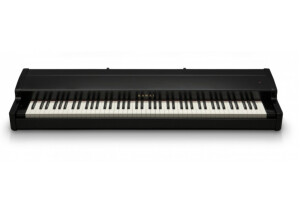
    I use the VPC1 exclusively with Pianoteq, running on an ordinary laptop, with an M-Audio interface and 2 KRK Rokit 6" powered speakers. I use USB only, no power to the keyboard, although it does come with an external power supply. This keyboard has no onboard sound at all. It is purely intended as a PIANO keyboard, for use with simulated electronic piano sounds via MIDI. Some other keyboard instruments can also work, such as harpsichord, etc., but it is not suitable for stage piano use. The instrument is heavy and bulky. A little hard to move around for performances. The action is excellent. Feels exactly like a grand piano, with a fairly heavy touch, but not to the point where it's tiring to play, at least not for me, although I've seen reviews that faulted it on this point. It is well made. I've used mine almost daily for two years and it seems no different than when brand new. The velocity curve default on my software is pretty standard, which is to say it is not idiosyncratic or unusual. The output is very sensitive, from a whisper pianissimo to as loud as you can play captured in seemingly infinite gradation. It defaults to 1 = silent (0 is note off), so it can emulate a piano almost perfectly. It has three pedals as an included accessory, and has a sostenuto function, so you really can play it just like the grand pianos emulations. Overall, it is expensive but probably the best choice out there for under $2000 US for a MIDI piano controller with no extraneous nonsense.

  • « Kawai mp7 underrated »

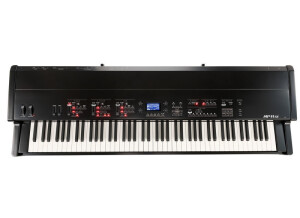
    If you look on the web you will find many reviews with technical info so i wont be adding to those. I will say that as a pro piano player owning a few top end stage pianos that the MP7 is underrated in my view, prehaps it is due to the extreemly reasonable price and that it is not yet as well known as the major brands. It easily competes with the most expensive brands such as Nord with a far better action,I find it hard to choose between my Roland Rd700nx and this piano. There is one technical point I wish to add and that is about the EQ. I have not found a stage piano that does a better job at shaping the sound just by adjusting the EQ as this one. One is able to get the most nuanced spot on variation in sound with this four band EQ. So for me this has been an exellent purchase and I can highly reccomend that you try this out for yourself if you are considering a new stage piano.

  • « Very good sounds and keys but the price.. »

    I have used the Kawai MP 6 many times, it is an 88 key digital piano loaded with 256 sounds. One thing I will say about it is, if you are looking for a stage piano or a good piano for your home then this might not be for you. They really didn’t put much effort into the “piano” side of it as much as they did making it more of a workstation type of board. The price is 1500 dollars and that is over priced in my opinion because you can purchase a full workstation for that price with many more sounds and features . And if you are looking for a great digital piano then you can get one cheaper than the Kawai MP 6. So the MP 6 is kind of an in between keyboard, and from my experience I have learn to stay away from gear like this. Yes, it does sound great and works perfectly , but for the price you can get so much more. UTILIZATION You can record with your USB drive in MP3 or WAV files with the MP6 and it has an on board 3 band EQ. the Kawai MP 6 does have realistic sounding piano’s and it is well built. My only issue with it is why does it have to cost 1500 dollars when for that price you can get a full workstation with similar sounds. SOUNDS There are plenty of acoustic and electric piano patches on the Kawai MP 6 and all of them do sound very good. You can also hook it up through MIDI in/out. At first glance of the specs and the piano sounds of the Kawai MP 6 you will want to have it. But there are just so many other boards out there that have similar sounds plus more for that same price. The Kawai MP seems to also be a little heavier than the standard digital piano which if you are looking at it for a stage piano could cause a problem with transporting it from home to a small venue or wherever. OVERALL OPINION Overall, it is a very good sounding electric piano but after using it and seeing the price I was not going to spend that money for it when that money could get me so much more than just an digital piano.

  • « q »

    This is a 61 keys (5 octaves) keyboard embedding 100 sounds (16 bit PCM) and 50 styles. Its feature include - a one track sequencer with very limited memory - a stereo chorus effect which does not sound so bad - an auto-accompaniement section with one finger chords (or full chord) - some kind of an arpegiator named "ad-lib" section which provides a few arpeggio pattern, based on the current chord - transpose and fine tune There is only - one 1/4" TRS phone output - one sustain pedal inlet No MIDI or Line Out... UTILIZATION There is no editable settings, just stereo chorus on or off and keyboard velocity curve (3 predefined curves) OVERALL OPINION It lacks everything to make it a real music instrument useable on stage or home studio, but the sounds were not so bad for the time being. What I dislike most is the keyboard itself which is much too soft ... I was just a child at the time I played with this and I really enjoyed it. I heard it recently, some sounds were still interresting and I would enjoy to have them (better sampled) in my plugins ...

  • JackLudden's review

    This is a 5 octave synth, MIDI controller and more. You can connect headphones, have a line out to an amp, and there is MIDI in and out. There are well over 100 sounds available for the keys including drums and random sound FX. You cannot edit them - you just take them as they are. However there are some effects, such as a hall or a room reverb. You can also play back demo songs, and if you play a note or a two note harmony on the bass octave, the chording of the song will change to the chord that is specified - so you can do a lot more musically than you'd normally be able to do, and it's a lot of fun to play with. UTILIZATION The configuration is quite simple. You just dial up the patch you want and play for the most part. Setting the reverb is just pressing a button, starting and stopping as well as choosing demo songs to play over is also very simple. The manual is very clear and should clear up any confusion you may have - although the layout of this keyboard is very self-explanatory. OVERALL OPINION I have had this keyboard for about 5 years. I like the versatility it offers, in that it has so many ready to use patches. I like how you can use it to play drums like a drum machine as well, so if you're playing music with a friend and there's no drum set around this can suffice. However I will say that the sound quality on this keyboard is really quite poor, cheesy sounding and dated at this time in 2008. Using this on a recording would seem more like a "throwback" than a good sound. Also the action feels too bouncy and cheap to be a real contender. That said, it is still fun to beat around on and to play over the corny demo songs it provides. It is also pretty cheap, so it's not a bad value. If you just want a stock keyboard to play with and perhaps to use as a MIDI controller, this will serve you just fine.