Log in
EN
FR

Orange Bass Guitars

42 products found

Categories
Series
Filter
Sort by
Orange
Evaluation
  • Reviewed or not
  • Editor’s award
  • Reviewed by Audiofanzine
Availability
  • Available or not
  • Sold new or used
  • Sold new
  • Sold used
Must-have products
  • All products
  • Flagship products
  • Best rated products
  • Hot products
  • Popular products
Price
  • Freeware
  • Low-cost (< $450)
  • Mid-range ($450 - $1,500)
  • Premium (> $1,500)
€
Clear
Sort by
  • Popularity
  • User ratings
  • Price - low to high
  • Price - high to low
  • Used price, increasing
  • Used price, decreasing
  • Name (from A to Z)
  • Name (from Z to A)
  • Added on
Choose a category
Selected category: Bass Guitars
Sort results
  • Popularity
  • User ratings
  • Price - low to high
  • Price - high to low
  • Used price, increasing
  • Used price, decreasing
  • Name (from A to Z)
  • Name (from Z to A)
  • Added on
Filter results 42 results found
Brands
Evaluation
Availability
Must-have products
Price
  • Freeware
  • Low-cost (< $450)
  • Mid-range ($450 - $1,500)
  • Premium (> $1,500)
Show results

The best Orange Bass Guitars reviews

The reviews Audiofanzine members found the most helpful.
  • « From deep and mellow to punchy metal »

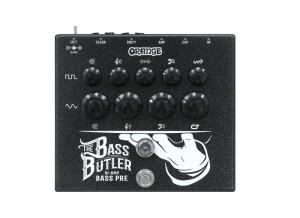
    There are some well-received bass pedals and preamps on the market, and the Bass Butler by Orange ranks toward the top – and for good reason. If you want your bass tone to flourish, and particularly if you want that punch (necessary for rock and metal), this preamp delivers. In a nutshell, the Bass Butler has two channels, a very traditional Clean and a rhythm guitar Dirty (a popular bi-amp arrangement among modern bassists). The Clean channel can work independently, whereas the Dirty channel works in conjunction with the Clean (when activated). There’s also an Expression out/in that allows the merging of the Dirty channel (based on its settings, of course); I’ll get to that later. https://www.youtube.com/watch?v=xp2-9YehNAo Before getting into the sound, as per the demo video included with this review, a brief background on the Bass Butler’s setup. Each channel has its own Cab Sim, being the Orange OBC410 on the Clean and the Orange PPC412 for the guitar (yes, I realize a bass also is a guitar, but I’ll refer to the Clean channel as being ‘bass’ and the Dirty channel as being ‘guitar,’ as a matter of differentiation). There are a few ways to hook up the Bass Butler, the first being from Amp out. When going Amp Out, both channels merge together WITHOUT the Cab Sims, which is ideal if going direct to bass amp/cab hardware. You can go DI to a virtual cab, whereas a virtual amp is optional since the Bass Butler is a preamp insofar as your tone is concerned (I did include this preamp direct to an Ampeg amp/cab and it sounded very good, although the tone will alter when going direct to various amps and for obvious reasons). A second application is to go through an amp’s effects loop. The third method of connection is via the XLR outs, both of which retain the cab sims, which make it very convenient if going direct to a mixer/board, with each channel controlled accordingly. On that note, one thing I wish the Bass Butler had would be the Cab sims from the Amp out connection (with a switch to turn the sims on or off, thereby allowing you to have a single line out for DI recording, rather than using a dual female ¼-inch to a single male ¼-inch (which only costs about $10, which is what I did). As a side note, there’s a Ground Lift switch (to remove unwanted hum and noise). Now, the Bass Butler has a LOT of headroom... an amazing amount that requires its own 18v adapter (included), which means most pedal board supplies likely fall short, thus necessitating a surge protector of sorts. Regardless, for DI recording, I had to keep the volume for both Channels rather low, which is a good thing – I won’t fall short of volume! The Clean channel is very traditional, but big full notes that range from woody to punchy and bright, perfect for music ranging from traditional jazz, country, medium rock, stoner rock, etc. It includes a typical Treble and Bass EQ. The studio-grade Compressor is most impressive, as it keeps the signal very clear and exceptionally tight (when you want that characteristic). The Dirty channel is based on a guitar amp and that’s where you get the ‘clang,’ bite and drive. It also includes a Midrange EQ (besides Treble and Bass). I suspect there’s more than enough Treble and Midrange on this Channel to satisfy any bass player, as both certainly brighten a tone to a great degree and beyond what I ever heard on hard-rock and metal bass tracks. The melding of the two channels spans a significant range, which I demo on the video (bear in mind that my limited talents are directed more toward the six-string rhythm variety, but when you want that intense bass, a pre-recorded track in many software programs often fall short). The Gain control on the Dirty channel holds a lot of magic, in that a little does a lot to provide character, but it’s when you dial the Gain in around 12-noon and beyond that its true nature blossoms. I also find it intense enough that I haven’t set the Gain past 2-o’clock, although an effective setting has a lot to do with the style of music and how much Volume (blend) you include of the Dirty channel. Speaking of blending, the optional expression pedal may not seem so ‘optional.’ This is a fantastic tool that needed to be part of the Bass Butler, to create a massively wide array of bass tones from very deep and brooding to punchy and driven (heavy fuzz sounding when pushed). With an expression pedal’s treadle all the way heel back, you hear nothing but the Clean channel, and as the treadle rocks forward, there is a progressive blending of the Dirty channel – to the point of full blend between the two channels with toe all the way down. This means you can go from super clean to super dirty, and anything between. Overall, this is what a bass guitar is supposed to sound like and can sound like, for those Pastorius and Entwistle inspirations, and I demoed a range of tones on an inexpensive bass (match up a Precision, Rickenbacker, etc., and the results should be more impressive). A pure tone shaper, there is very little to complain about. My only gripe, as indicated (and I heard this on a few video reviews) is that I would like the Cab sims as part of the Amp out (with an on/off switch), as opposed to managing two separate lines via the XLR outs. Regardless, this fantastic preamp weighs 1.29 kg (or 2.84 pounds) and measures 17 cm x 8.5 cm x 17.5 cm (or 6.6 x 3.3 x 6.5 inches), about twice the size/weight of a traditional pedal, forward angled in design for easier viewing and switch/knob access during floor/pedalboard operation.

  • « Orange AD200 B Bass Head »

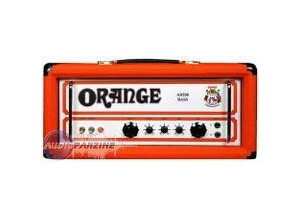
    As the name suggests, this head is covered in orange Tolex. It's back-to-basics, 200W tube head that is about as close as you can come to plugging your bass straight into a power amp. Active and passive inputs, Master Volume and gain, Treble Middle and Bass, standby and power switches, all front mounted. 53 pounds. About me: I've played bass professionally for 44 years. I currently play in a praise band in a local church and also do studio work. I favor rock but have played just about every style, even -- shame -- disco. Favorite players include Paul McCartney, James Jamerson, Tony Levin, Chris Squire, Joe Osborn, Bob Glaub and Sting. Tried it at a local dealer, coupled with an Orange 410 cab with Eminence speakers. The AD200 B is loud -- plenty loud enough for most small club situations -- and delivers a very nice, warm, old-school tube bass amp sound. Despite having only three tone controls, it puts out a surprising variety of tones. Think of it as a Fender Bassman on steroids. It's pricey -- $2200 street. Add in an Orange 410 cabinet at $900 and you're talking prohibitively expensive for most players. Solidly constructed with quality materials. My only caveat is to handle it with more care than a solid-state amp because, after all, tubes are made of glass and more susceptible to being tossed into a truck or car trunk. The Orange Orange AD200 B Bass Head delivers old-school tube bass sound, but at a cost -- $2200 for the head alone -- that probably puts it out of the range of all but professional players or those with lots of credit. 5 stars for quality, 3 stars for realistic pricing. This review was originally published on http://www.musicgearreview.com