Log in
EN
FR

Line 6 Bass Guitars

17 products found

Categories
Series
Filter
Sort by
Line 6
Evaluation
  • Reviewed or not
  • Editor’s award
  • Reviewed by Audiofanzine
Availability
  • Available or not
  • Sold new or used
  • Sold new
  • Sold used
Must-have products
  • All products
  • Flagship products
  • Best rated products
  • Hot products
  • Popular products
Price
  • Freeware
€
Clear
Sort by
  • Popularity
  • User ratings
  • Price - low to high
  • Price - high to low
  • Used price, increasing
  • Used price, decreasing
  • Name (from A to Z)
  • Name (from Z to A)
  • Added on
Choose a category
Selected category: Bass Guitars
Choose a series
Sort results
  • Popularity
  • User ratings
  • Price - low to high
  • Price - high to low
  • Used price, increasing
  • Used price, decreasing
  • Name (from A to Z)
  • Name (from Z to A)
  • Added on
Filter results 17 results found
Brands
Evaluation
Availability
Must-have products
Price
  • Freeware
Show results

The best Line 6 Bass Guitars reviews

The reviews Audiofanzine members found the most helpful.
  • « Variety of Bass Sounds »

    The Line 6 Variax Bass has some very simple controls that do a lot to change the sound. There is a volume control similar to any standard. There are 'bass' and 'treble' eq knobs typical of what you might find on a bass with 'active' pickups. There is a knob that blends between 'neck' and 'bridge' pickups. You might be wondering about this because there are actually no magnetic pickups on the bass. In fact, this knob really just blends between the sounds of modeled 'neck' and 'bridge' pickups. This is a really cool feature that just makes the range of sounds even more versatile. The final knob is unique to the Variax. It is a knob to switch between all the different bass models (Jazz bass, precision bass, rickenbacker, Music Man, even sound acoustic sounds and synth sounds). It is not complicated at all to figure out. If you want to achieve the sound of a particular bass, it might be helpful to consult the manual to see what kind of bass each model is taking after. Some model descriptors like 'modern' aren't as informative as others. UTILIZATION When I purchased this bass, I was mostly interested in the variety of sounds it could produce, not whether is was comfortable to play. However I was pleasantly surprised by the play-ability. My previous bass was a standard j-bass. The radius of neck on the Variax bass seemed much smaller in size compared to the j-bass. If anything it almost felt more like I was holding a guitar than a bass, maybe the neck was even a little too small. The bass needs to be powered in order for the DSP chips to process the sound from the piezo bridge pickups. You can use batteries or use the provided TRS cable with power supply to power the bass. I also own a Variax 700 electric guitar and a POD X3 and HD500. All this to say that the bass can also be powered using a Variax ethernet cable. This is my preferred method of use. SOUNDS I use this bass primarily to achieve of variety of sounds in the recording studio. For the money, I think this is a no-brainer for anyone that records bass a lot, especially for a variety of music. I have only used it a couple of times in a live setting. I always feel that the subtle differences in bass models get lost in a live setting and are more apparent on a recording. Plus, I also have the impression that the bass might have more parts that could stop working at any point so it would be less reliable that a trusty j-bass. OVERALL OPINION The Variax 700 bass by Line 6 can produce a variety of really good bass sounds. The quality of craftsmanship may not match the 'top of the line' models of the companies the bass models, but you can be certain that the sound comes really, really close. Plus, you can usually find these bass guitars pretty cheap online. I think compared to other bass guitars in the $400-500 price range, the craftsmanship is on par and the sound quality exceeds the competition. Can it replace a collection of $3000 bass guitars? No. But should it replace your Squire P-bass? Absolutely.

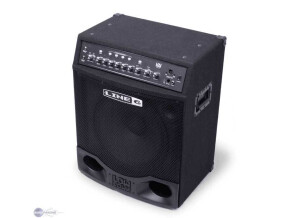
  • « Line 6 Lowdown Studio 110 »

    I've played bass professionally for 44 years. I currently play in a praise band in a local church and also do studio work. I favor rock but have played just about every style, even -- shame -- disco. Favorite players include Paul McCartney, James Jamerson, Tony Levin, Chris Squire, Joe Osborn, Bob Glaub and Sting. -------------- * 75 Watts * 10' speaker * 12'W x 12'H x 12'D * 24 pounds A small, lightweight combo amp. Covered in dark gray carpeting with vinyl corners; black metal grille. Top-mounted controls and jacks include 1/4' input; active/passive switch (-10DB pad); Drive, Bass, L-Mid, Hi-Mid, Treble; Octo Comp; Master Vol.; Headphone out (1/4'); CD in (1/8'); four amp/cabinet model pushbuttons: Clean; RandB; Rock; Grind. Rear panel includes XLR out with ground lift switch (takes the cabinet model sound to the board); preamp out; power cord socket and power switch. Purchased in 2005 from Musiciansfriend. I needed a small, portable amp for practice, small gigs and possibly for studio work. MSRP: $349.99 Price paid: $225 (B stock -- box had been opened). This amp puts out a lot of sound from a small package. I have used it outdoors with a small combo and had bass players come up to say how amazingly loud it is for its size. It handles a B string with ease. Three of the four amp model presets are very usable for me: Rock (very punchy); RandB (think Motown); and Clean (a clean Brit sound with presence -- my favorite setting.) Grind sounds, um, grindy -- very distorted with lots of high end. Not my metal cup of tea. Line 6 says the models are 'inspired by' the '74 Ampeg SVT (Rock); the Ampeg B-15 'Fliptop' combo (RandB); the Eden Traveler (Clean) and a distorted SansAmp through an SVT mixed with a clean DI signal (Grind). Perosnally, I'd prefer a an overdriven Marshall tube head for Grind, but that's just me. There's also a 'secret' Brit model that can be achieved by following instructions in the owner's manual. Press the RandB and Rock buttons together to get a Synth setting. Synth uses the amp's volume, tone and Octo Comp knobs to manipulate envelope, wave shape and octave parameters for some 'interesting' sounds. Octave down is particularly nice, envelope sounds. less so. The Octo Comp compressor does its job nicely with minimal noise. A tube overdrive sound can be achieved by running the Drive control high and leaving the master volume down. You can program your own presets by tweaking knobs and holding a preset button down for two seconds. Factory presets can be recalled if you make a horrible mistake or decide 'Suicidal Distorted Dragon Tail Thrash' isn't that great a tone after all. The only negatives I can find in the Studio 110are slight hiss from the headphone jack, and the lack of parcticality form its Synth section. Not many usable sounds unless you're a fan of '70s 'yow-yow' envelope filtering. And the Synth and amp model presets aren't footswitchable, so on-the-fly live changes aren't possible unless you want to bend over and play bass one-handed while pressing buttons. Construction seems solid and fine. I've read opinions stating that the cabinet is made from inferior materials, but I have used this amp weekly for practices with no problem and for the occasional gig without problems. If you're loading it in and out of a truck every night, maybe it won't hold up, but that's not what the amp is designed for. The Line 6 Lowdown Studio 110 delivers what it promises: decent preset amp models at the touch of a button plus the ability to create more of your own. CD in coupled with headphone out makes it ideal for practicing along with recordings, and the preamp and XLR outs make recording easy if you're looking for a cabinet sound rather than straight DI. It has served me well in a number of light rock or church settings and puts out a ton of low end from a small package. This review was originally published on http://www.musicgearreview.com

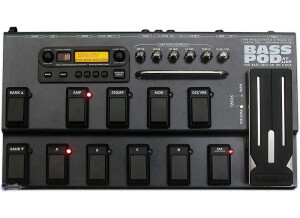
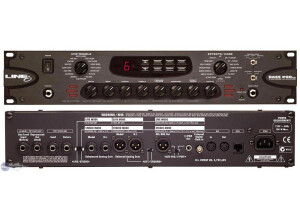
  • « Line 6 Bass Pod »

    Bought it at Mars Music (R.I.P) in Arlington Texas It was a display the last one in the store since they had a going out of buisness sale. Paid $200!!! for it. The modeling and effects are top notch. So many to choose from. It's moderately easy to use to. The "gianormous" ammount of selection is kinda overwhelming. Not a dislike it just I am so indecisive that it becomes hard to choose. It's also not the PODs fault that Im not too technically inclined and have a hard time with all the nobs. Its plastic, light wieght, and I would slit my wrists if I dropped the little bugger. Its a great preamp but a better recording device (I have yet to use it for the latter...but plan on it). Most impotantly READ THE MANUAL!!! I had to download one from www.line6.com. Go Line 6, go! This review was originally published on http://www.musicgearreview.com

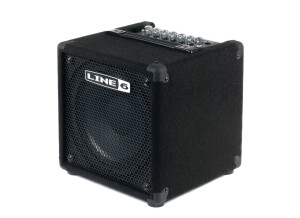
  • moosers's review

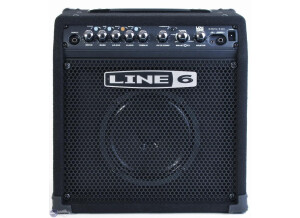
    The Line 6 LowDown LD15 is a small bass guitar combination amp that is suitable for use in the studio or for practicing. It definitely seems to be designed for practicing, but where I've got experience with it is in the studio. Like the name mentions, it's got 15 watts of power. The amp has built in modeling it in, which is something I'll talk more about in the following sections. As far as the connections go, it's got 1/4" connections for your instrument input, as well as for a headphone output. It also has a mini-plug 1/8" input for a CD or mp3 player if you want to play along through the amp. UTILIZATION Using the Line 6 LowDown LD15 is really a simple thing to do. Most practice amps are made as simple as possible, but I would say that the LD15 has more features than your average practice amp. The parameters that it has include those for drive, bass, lo-mid, hi-mid, treble, opto compression, FX, and master volume. It also has four buttons for amp modeling, which has modes for clean, R&B, rock, and grind. A manual isn't necessary unless you're a true beginner. SOUNDS The overall sound of the Line 6 LowDown LD15 isn't very impressive to me, but it is by no means a bad sounding amp. It packs a good amount of punch for a small 15 watt amplifier, and definitely offers up the proper amount of control over your sound between the amp modeling, basic parameters, and effects. I will say that I think it sounds best when played clean and without the effects. The effects that it has are for chorus, octave, and a filter, as well as a separate parameter for compression. The effects are useful for messing around with, but I wouldn't use them for recording or anything permanent. The compression is good enough for touching your sound, but again isn't a professional sounding signal processor. Overall the amp has a very respectable sound, but I would really recommend it primarily as a practice amp. OVERALL OPINION For an inexpensive practice amp, the Line 6 LowDown LD15 will definitely get the job done more often than not. The features are definitely nice to have, like the compression and the effects, but they aren't the best sounding effects of their kind by a long shot. They do have larger amps like this one if you're looking for something to play shows with, but unless you are in a very small setting, I don't think that this will work for shows. All in all, the Line 6 LD15 is worth exploring for beginner bass players looking for an amp to get started with.