Log in
EN
FR

SeriesBeyerdynamic TG

45 products found

Filter
Sort by
Evaluation
  • Reviewed or not
  • Editor’s award
  • Reviewed by Audiofanzine
Availability
  • Available or not
  • Sold new or used
  • Sold new
  • Sold used
Must-have products
  • All products
  • Flagship products
  • Best rated products
  • Hot products
  • Popular products
Price
  • Freeware
€
Clear
Sort by
  • Popularity
  • User ratings
  • Price - low to high
  • Price - high to low
  • Used price, increasing
  • Used price, decreasing
  • Name (from A to Z)
  • Name (from Z to A)
  • Added on
Sort results
  • Popularity
  • User ratings
  • Price - low to high
  • Price - high to low
  • Used price, increasing
  • Used price, decreasing
  • Name (from A to Z)
  • Name (from Z to A)
  • Added on
Filter results 45 results found
Evaluation
Availability
Must-have products
Price
  • Freeware
Show results

The best Beyerdynamic TG reviews

The reviews Audiofanzine members found the most helpful.
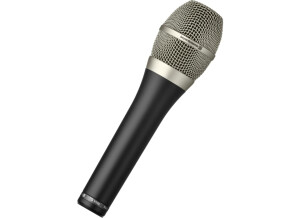
  • « Beyerdynamic TGX-58 Microphone »

    I have been reviewing this unit as a replacement for my Shure SM58 which bit the dust some time back (only 3 years old!). This unit costs about $270 AUD which is considerably cheaper than the recommended retail price of a SM58! This mic is a good performer. It has a nice even top end and a fair bit more sizzle than a '58. It seems to take less "effort" to sing with this mic. I could plug it in with only minor adjustments to my monitoring and FOH settings. It also recorded quite nicely. It would be decent as a hand held for a female singer as it is quite light. It also looks good. It doesnt take close hard vocal as well as a '58. I like to sing very close to the mic and this seemed to "push" it a little too much. Backing off has its own issues such as feedback etc. which is a problem in some places we play that have less than desirable acoustic qualities. This mic also has an on/off switch which didnt seem to function properly when I first plugged it in. After a couple of clicks it worked ok but that didnt give me an immediate good impression. You can screw the on/off switch down to lock it, but I dunno....I always associate on/off switches with cheaper mics for some reason. I swapped back and forth between the sm58 and this mic quite often, and found that although the sm58 did sound a little duller, I could seem to get more out of it when required. It is quite light, a nice soft lacquer coating (black) and comes with a solid clip to mount on a stand. Looks nice. This mic is quite nice. I didnt keep it because we did have a couple of problems due to all the other guys using sm58's so its probably best I keep to the same thing. The Beyer would be a great mic for anyone starting up a PA system or for a backup. I didnt try it on instruments so no comment there. This review was originally published on http://www.musicgearreview.com

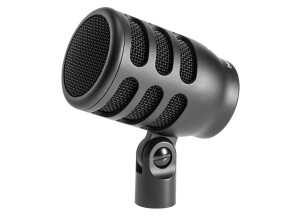
  • « for your kick »

    The TG X 60 by Beyer Dynamic is a dynamic mic that is specifically designed for large drums. It has a very large dynamic capsule, so that it can respond better to the long wavelengths of bass frequencies. It is a cardioid polar pattern. There is no switchable pattern, and there is no pad for higher SPL's. There is also no low frequency filter, since the goal of this mic is to capture them. The mic connects with a standard XLR audio cable. The mic definitely has a tailored frequency response. There is definitely a bump in the low frequency area from 50Hz to maybe 200Hz. The mids seemed to be scooped out a bit until around 2-3k, and at that point there is definitely a spike. That is probably to help bring out the click; in a kick drum to help it cut through in a mix instead of just sounding muffled and washed out. You could use this as your studio kick drum mic, and also as a live one. OVERALL OPINION I have had this for years, and I still haven't decided if I like this or AKG's D112 more. They are the same price, so it's an easy comparison to make. The TG usually ends up with a sound that is beefier and has more weight to it, but it is often harder to get it to cut through in a mix than a kick recorded with the D112. Another nice use I have found for this mic is miking a bass amp. If you combine that signal with a DI signal from the bass, you can just use the miked signal to serve as the bottom end, and then use the crisp DI signal for the top. The result is a well balanced bass sound that won't turn to mush in a mix. It doesn’t cost much, so the price is low for a very nice kick sound. Gets my seal of approval.