Log in
EN
FR

Pioneer

417 products found

Categories
Series
Filter
Sort by
Evaluation
  • Reviewed or not
  • Editor’s award
  • Reviewed by Audiofanzine
Availability
  • Available or not
  • Sold new or used
  • Sold new
  • Sold used
Must-have products
  • All products
  • Flagship products
  • Best rated products
  • Hot products
  • Popular products
Price
  • Freeware
€
Clear
Sort by
  • Popularity
  • User ratings
  • Price - low to high
  • Price - high to low
  • Used price, increasing
  • Used price, decreasing
  • Name (from A to Z)
  • Name (from Z to A)
  • Added on
Sort results
  • Popularity
  • User ratings
  • Price - low to high
  • Price - high to low
  • Used price, increasing
  • Used price, decreasing
  • Name (from A to Z)
  • Name (from Z to A)
  • Added on
Filter results 417 results found
Evaluation
Availability
Must-have products
Price
  • Freeware
Show results

The best Pioneer reviews

The reviews Audiofanzine members found the most helpful.
  • « A less expansive CDJ2000 :) »

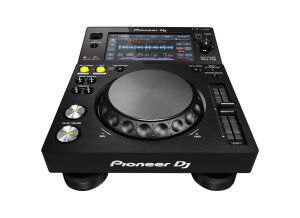
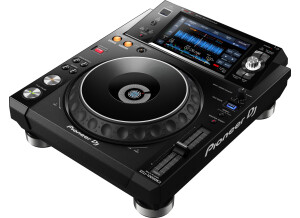
    Everytime market leader Pioneer releases a DJ player, we’re back into the same endless debates going back and forth... Well, I won’t feed that trend and try to give you my opinion, as neutral as possible :) A DJ for the last 15 years, I’ve used many CD players in the past, from a big, 19” player (Audiophony CD 1220) to flat ones (Denon DNS-3500, then a CDJ-1000 Mk3 for the last… 6 to 8 years). I generally do 50 performances a year. Let’s get into the context: a satisfied user of my CDJ-1000Mk3/Serato combination for years now, I couldn’t help being more than tempted by the CDJ-2000. Problem is, even with a rather important number of shows a year I couldn’t afford one of these at $1800 (a little lower now). Very disappointed by the CDJ-800 years ago, I wouldn’t even consider lower-end models from the same brand (CDJ-850 / CDJ-900), first because of their manufacturing quality, and also due to their features (I don’t care about an autoloop or loop divide, but hot cues :8O: can be useful :p). Don’t even mention controllers, makes me want to puke: a big, low-end plasticky thing with a lot of controls and lit up as a Christmas tree with professional-looking features that you actually never use in a live situation All in all, when I saw this model Pioneer had released I wasn’t deterred by the USB-only mode (other manufacturers had done that long before), especially since my CDF weren’t fed by much else than Serato timecoded CDs. A bit circumspect about the touchscreen, I thought “let’s buy one to try it, and resell it at a good price if something’s wrong” :). After a few weeks testing it in my living room, here’s my opinion on it: a real killer! Nothing to be critical of, I can’t compare with the CDJ-2000NXS’s USB part for I never used it but the software’s ergonomics seems quite close. Touchscreen is very responsive, sound quality is flawless. Very satisfying! After thatn you have to get used to Rekordbox, which doesn’t work the same as Serato SL / DJ but hopefully I won’t have to keep the computer in front of me while mixing as all controls can directly be accessed on the player (thanks for that, Pioneer!). Plus, getting back my loops and cues makes things easier! OK, there are still a few cons: - platter is not backlit - no “pitch reset” control - a lot of things can be done to the loops using the touchscreen, but to leave the loop jou have to use the “exit loop” control above the jog – so you tend to look everywhere for that control at the beginning :p - the JOG’s resistance can’t be set (but it’s still rather soft) As for its pros, value-for-money is quite good, even if Pioneer is making a nice margin and incites to use Rekordbox. If you have a CDJ-2000 (either a Nexus or not), skip this one. If you’re still using a CDJ-800/1000 like I did, perhaps this one’s worth the investment! ;)

  • « A great device close to a pro system - Highly recommendable »

    As a semi pro DJ, I use this XDJ RX daily for training. I’ve only had it for a few days, but this was enough to conquer me. I have tried none of its competitors so far. (I mean, no standalone device!! Only Denon and Stanton offer equivalent products, but they’re a level under! Otherwise, I come from vinyl then CD mixing…) >> What I like best about it : .Ergonomics and setting of all functions similar to CDJ / DJM you can find in clubs, to me that’s its #1 asset .Ease of use – coming from vinyl/CD mixing, I found my marks while I originally feared the XDJ RX would deliver feelings closer to a PC controller. It’s not the case, you really feel like playing on a good old CD player with the feelings and way to proceed Pioneer is known for. .Rather good sound quality .Very good screen .Overall product quality .Rekordbox, an excellent music library management software .Of course, its #1 functionality : being useable in standalone with just a USB drive that went through Rekordbox, no need for a PC ."Slip mode" is nice .Its effects >> What I like less .A third channel wouldn’t be too much, if only for mixing an external source (or even 4 channels). Now, I can live with 2 channels as I’m dynamic enough in the way I play, plus I knew it beforehand so this is not a problem at all for me. .In spite of the great quality and response of the jogs, real CDJ-style jogs would have been much better. .Otherwise, not much to say about it on the negative side… It’s a great product which I’d call semi-pro level, one step above the DDJ controller series as far as sound quality and building quality are concerned, and well above the CDJ350/400... .I highly recommend this device for all who dislike software + controller interfaces as much as I do and don’t want to spend $6000 for a CDJ/DJM system, as well as for all who need to work their mixes at home before mixing in clubs… This standalone is a good investment with a excellent value for money, especially when compared with a full system!

  • « Great for mobile DJs (easy to transport) »

    For which specific applications or uses have you chosen this product? For small performances and home use. How long have you been using it? I've owned the SX1 starting June 2014, then the SX2 since February '15 Have you tested other comparable or competing products before purchasing this one? No other controllers, but just before I had a CDJ 1000 + DJM 700. What are the pros and cons of this product? Pros: easy to transport, intuitive and easy to use (except for Serato Flip but I think it's because I don't use it enough...), does what it's expected to do. Cons: I had CDJ1000s before the SX, which I bought for transportation purpose since my live use didn't require so much, but I have a lot of regrets. The jog is too small for me, even if I don't scratch much (I love to but it's not made for it! :-D). The controller feels like a toy at first sight (that's just my opinion), effects are not bad but it's still better on an external hardware - not with a software. Frankly, the controller is perfect for mobile DJs who have to transport all their gear every weekend, as it's light and easy to transport (especially with the DJC-SC5 bag). But, if you like to mix/scratch and develop your creativity "as much as can be", this won't do for you. So, all CDJ1000/2000 or SL1200 (or any other turntable, by the way) owners should think twice and skip this one, there's no enjoyment to expect from it (except the moment you put it back in its bag at the end of the evening :-D). Otherwise, the concept is not bad but it won't replace a CDJ/SL1200 + mixer setting. Yet, it's a good start for beginners. A word to the wise! ;)

  • « Hardware Tactile DJ effects that stand up in a world of Software »

    The effects covered in this unit are quite comprehensive. You essentially have two categories, beat mapped and non beat mapped. The beat mapped effects include delay, echo, pan, flanger and transformer. The non beat mapped effects include Jet, zip (phaser style effects) wah, ring and fuzz. The beat effects are contolled via the "beat" section on the left. You get various division of time, a tap tempo button and a manual adjustment knob for tempo. On the other side for the non beat effects your primary controller is the "Jog wheel." With the jog wheel, you can spin your way to delicate, subtle effects to super deep craziness. You can control this unit with standard midi messages but as far as I know, no one has made a PC/Mac editor for this unit. In reality, it doesn't really need it as it is designed to be manipulated quickly and efficiently with you analog fingers. This is a digital processing unit with all digital effects. The connections include 1/4" and RCA audio inputs and outputs as well as MIDI in and out. UTILIZATION Once you get used to the layout, which won't take long (took me about an hour) you will be flying on this thing. With dedicated effect selection buttons and the jog wheel, you will be remixing your own tracks like you never thought possible. The beauty about hardware (especially if it is made right) is that you don't have much setup other than plugging in your sound source and plugging the hardware back into your PA. The manual is clear and efficient and is a good read if you won't to understand more about the effects them selves and very unique and interesting options the EFX 500r offers. SOUND QUALITY I use this mainly as an effector for my live performance set. I play various intruments (keys, guitar, bass, vocals, sampled drums, synths, etc....) in my set and I run everything into two stereo channels, one clean, and one into this. My rig is setup so that I can select at any time, what instruments are going into the efx or just going straight to the PA mixer. Therefore, everything at one time or another runs through this. As for faithful reproduction, this unit only operates at 16bit, so I feel that for live performance, I don't notice that much but for studio applications, I do notice some weakness in the sound. Especially in my vocals and my analog synths and bass. I am actually selling this unit now to purchase the EFX 1000 which runs at 24 bit and has more effects and options, including spdif in/out. I imagine this will greatly improve the sound quality of my set. I love the effects on this unit. I guess my favorite would be the delay as it comes in so handy having a solid delay with so much control right at your finger tips. The only effect I have any dislike towards would be the Wah. The filter isn't as clean as I get from my analog gear, but I can't be too upset, it is an older digital unit and in all fairness, the Filter isn't horrible, just an older digital version. OVERALL OPINION What I like most about this unit is what it is, a hardware standalone effects unit. Other than the EFX 1000 (and the 500) these are the only mass produced, somewhat affordable hardware, tactile EFX units I am aware of. I am honestly shocked that Pioneer is the only one who makes something like this. In an age of computers and software, it is getting harder to find quality Hardware gear without searching for boutique manufacturers and forking over an arm and a leg. What I don't like about the unit is simply the features that are missing from the big brother (efx 1000). These include the 16 bit processing power (1000 has 24bit) and the lack of the SPDIF in/out. I paid $350 for this many years ago and at that time, that was a good deal. I am very pleased with this unit and only plan on selling it to get the "step up" model. When I bought it, 16 bit was plenty good. Now, 16 bit is dated so I can't give it a great sound quality rating, more like a 7. The only things I have come acrossed that are similar are all software (Turnado, Artillery, Stutter Edit, the Finger). All the software units are great in there own ways, but I will go Hardware any day of the week when I can. I would definitely purchase this if you are looking for something to spice up your DJ sets or if you are like me, your crazy, massive Looping performance set. In the end though, unless you primarily run MP3's or CD's for your sound sources, you will won't to upgrade to the EFX 1000.

  • Audiofanzine FR's review

    (Originally written by salvadorgaleote/translated from Audiofanzine FR) I recently bought a pair of Pioneer HPM-100 loudspeakers whose sound quality has been praised by several friends of mine in spite of their age. I got them all set up right away and played one of my favorite vinyl records. I immediately heard a difference between both the left and right sides. I was disappointed. I realized that the unbalanced sound imaging came from the mid driver of the right speaker, which was broken. I asked for help to get the system to work correctly. Once the mid driver had been repaired I connected the loudspeakers to a Pioneer M-90A amp and a C-90A preamp, I put a Johnny Hodges CD in the Pioneer DV-09 player and listened to "All Of Me". The sound is fabulous with powerful lows, balanced mids and smooth highs. The imaging is precise (I can localize every musician with my eyes closed), the sound is round and I can even hear the breath of Johnny on his reed. I was shocked because I had found again an old, nuanced, rich and exciting sound. I played the song again, turned the volume up and it gave me goose bumps! Is it the harmonious mix of components? I put a Johnny Hodges vinyl record on my Thorens 320 MkII and it sounds even better. I strongly recommend these loudspeakers. If you find them, don't hesitate to buy them but try to feed them with high quality components (my first test with an integrated amplifier was not so impressive). I won't give these HPM-100 the best grade to but they come really close to it!

  • FP User's review

    Same amount of features as most other mixers in it's price range plus effects which I feel is all it's good for. UTILIZATION Exteamely easy to use. Almost self explainatory. Manual is good too. I would not trust this thing in a club enviornment. No way! The plastics and build reminded me of something you would find in RadioShack. I'm suprised they don't break during shipping to their retail locations. Very chinsey. SOUNDS Crunchy sounding when being used at high levels. The highs really get fuzzy. The E.Q. is okay but the knobs feel very cheap. OVERALL OPINION Being that Iv'e used it several times as my friend owns one, I can honestly say that every time I use it, it leaves me frustrated. I don't think mixers should have effects built in. A MIXER IS A MIXER AND AN EFFECTS PROCESSOR IS AN EFFECTS PROCESSOR. Don't combine them cuz one or the other will suffer. In this case the mixer end falls off. Originally posted on FutureProducers.com Posted by: Unknown ( 6-, 2003)

  • « Very good mixer! »

    Yes, it can be rack-mounted, with the mod. RCA, 1/4" jack and XLR connectors 4 channels, very practical The EQ is all right. It was more than enough back then and even today. Nice but limited effects section (although it's more than enough). USE Very easy to use SOUND Transparent sound. To get a quality and clear sound, you must ALSO consider replacing the power and filter capacitors. Use quality capacitors and you'll be surprised!!! The same applies to the faders. Clean them to avoid having noises and crackling. All electronics age with time and the capacitors age pretty badly. Personally, after some modifications, my djm 500 produces no noise, no crackles and it sounds perfect (I also have the djm 600, djm 400, ecler nuo 5, power france pmp 403, freevox dj club, and american audio q2422...) There are mixers that age better than others (depending on how much you use them and how you store them). OVERALL OPINION I've used it frequently for quite some time. I have lots of other models (freevox, pioneer, power france, ecler, soundcraft...)

  • « Used it with vinyl and CDJ platters »

    The DJM 700 K from Pioneer has effects built right into it like the phaser, flanger or crush effects and there are also 4 different patterns for sampling like the pitch up, pitch down, reverse and roll. I was very happy to use these effects because I was going to be upset with the price of this unit until I had the chance to use it live and work with the effects. I was even able to assign some of the buttons to my effects in my computer to trigger them live. UTILIZATION Setting up this mixer is simple, but if you plan on getting into MIDI and using it with a software program then you might want to make sure you read up on it first because some of the software applications with work with it better than others. But if you want to just use it as a controller then you should be fine in almost any DJ software. If you are a performing DJ I think this is a good mixer to have because of its live functions like effects and quality. If you are not really a live performer than you can get something so much better for a lot cheaper! SOUNDS I have used this mixer with my old vinyl turntables and then a few days later turned right around and used my CDJ turntables with it and it worked great with both set up. It can handle anything and at this price it should be able to. Pioneer always has well made products and I have been using them for 10 to 15 years and they have never steered me wrong. OVERALL OPINION The DJM 700 is a little heavier than I expected at right around 15 pounds but it is not very big. Also it doesn’t come with a case so you will need a good gig case or “hard case” for it.

  • « Video and Audio mixing »

    The Pioneer DVJ-1000 is a turntable console that has a high price tag on it. But it is well worth the money spent. I have used for about 6 sets so far and I love how easy it is to use and even more importantly it is reliable. Using this unit to create visuals to my set was a huge plus. You can use this to perform audio sets and mix in video effects with it as well. With most of the clubs that I was working in having monitor set up for visuals this unit was a must! Using video with your audio is something that you will need to practice with and a unit like this does not come cheap. I do no recommend getting this unless you are serious about permanently adding visuals. It cost way to much just to only have access to video monitors on limited occasions. It will take a lot of practice to work with both mixing audio and video with the DVJ 1000 and the manual will only take you so far. The build and make up of this unit is very solid. All of the materials are very solid and nothing at all is cheap. The video and audio output is very good, and at a high quality. The on screen display will show you track numbers and content on DVD’s as well as MP3’s or whatever source you are using to bring into it. The screen colors are not very bright and dynamic though and it is nothing like using a computer screen. The sound quality is something that I think cannot be replicated with this unit. No matter where you are pulling your audio from, if it is running through the DVJ-1000 you can guarantee a high quality output of audio. All of the knobs and buttons on this unit are made well and the platter has an excellent feel. It is by far the best feeling platter that I have ever used for a portable unit.

  • « With ITCH only »

    The Pioneer DDJ-S1 is a controller for Serato and basically on for Serato. I am not sure if it is “officially” compatible with other software’s but I didn’t have good experiences when using it with other software programs like Virtual DJ (and a few others). Also, at first this controller seemed to be price a little too high to me, but after I got my hands on it I could see why it was more expensive. The build of it is very good, it is not made out of cheap plastic materials and provides a great feel for the user. There are balanced XLR outputs and 2 XLR inputs and ¼ inch Phone to run it to PA equipment if needed. I was using this interface for a few months in 2011 and it never gave me any issues. When using this interface I did notice some small lagging issues via the microphone output when using it. It was a small delay when speaking and most of the time this was not really an issue because it did sound “cool”. But for some this could be a big issue. I have never used this for a major gig, mainly only smaller clubs and bars. This controller is for the Serato ITCH user and lover. If you are not sure about using Serato ITCH I would not recommend this controller. If you are already familiar with each and love working with it then this controller will suit you perfectly. I do not recommend this to the new user either because it is restricted to Serato, I encourage new users to try a few different programs until they fine one they are comfortable using. The controller is a professional controller though, but it was not for me because I do not use Serato that much anymore like I use to .

  • « Great for DJ'ing and Listening »

    The Pioneer DJ HDJ 500 K headphones are a pair of closed back DJ headphones that have a 40 mm magnet driver and removable cable. These headphones are very affordable and that is probably the only reason I chose to give them a shot. Costing only 100 dollars, I was looking for a pair of headphones that would be great for DJ use and general listening use that I could take on the road with me and not have to worry about damaging my main pair of headphones. The HDJ 500 K is very comfortable around my head even after wearing them for long periods of time. The ear cups are very soft and do not irritate my ears. The sound of HDJ 500 K are very good for this price. The highs and mids are clean and crisp and the low end has a nice thump to it making it easy to DJ with because I can match up tempos and beats easily. The only thing about these headphones that I feel could cause an issue is the build of them not being as durable as I like my headphones to be but at this price I didn’t expect to get something that would be able to withstand the tough life on the road. I have been using these headphones for a while now and I am even thinking of getting a second pair just to leave at home. I have used many other Pioneer headphones and some of them are really good and some not so good. These are very good for the price I just don’t think they are that durable and heavy duty. I do recommend getting these though and they could be a great pair of headphones if you are looking for your first pair of DJ headphones. The HDJ headphones from Pioneer are very good, they make a few ones that have the same “Rare Earth” Magnet Driver in them.

  • « Nice look, but sloppy mids »

    The Pioneer DJ HDJ 1500 headphones are a pair of closed back headphones that I used for my DJ sets. I have used it in a handful of sets now and I am pretty happy with it. They are not the best pair of headphones that I have used but they are far from the worse. They have large diameter speaker units and soft ear cups. They come with a carrying pouch and fold down for transportation and storage. The design of these headphones I nothing different, but they do look very clean and modern. I get a lot of complements when I use the HDJ 1500’s no matter where I go. I love the way they feel on my head, they are very comfortable and the ear pads are very soft. The sound is ok in my opinion. The highs are decent, but the mids are subpar to me and I feel like they really make the music sound muddy. It is easy to over look the fact that the mids are sloppy because the bass hits so hard and really when you are a DJ, the bass in your headphones is very important so you can get your music and timing lined up. But when I really focus on the quality of the sound the mids really throw me off and I was very disappointed with them. I have not heard many DJ headphones that have sloppy mids, sometimes it’s the highs or the lows don’t hit hard enough but never the mids being too sloppy. At this price (180.00) I do not recommend these headphones because some of the Shure headphones have a similar sound to these but cost about 50 bucks less. They main thing I I think I was paying for with these headphones is the style of them. They do look amazing; they are very clean and bright. But to me the look does not matter as much as the sound does.