Log in
EN
FR

Eastwood Guitars

89 products found

Categories
Series
Filter
Sort by
Evaluation
  • Reviewed or not
  • Editor’s award
  • Reviewed by Audiofanzine
Availability
  • Available or not
  • Sold new or used
  • Sold new
  • Sold used
Must-have products
  • All products
  • Flagship products
  • Best rated products
  • Hot products
  • Popular products
Price
  • Freeware
€
Clear
Sort by
  • Popularity
  • User ratings
  • Price - low to high
  • Price - high to low
  • Used price, increasing
  • Used price, decreasing
  • Name (from A to Z)
  • Name (from Z to A)
  • Added on
Choose a category
Sort results
  • Popularity
  • User ratings
  • Price - low to high
  • Price - high to low
  • Used price, increasing
  • Used price, decreasing
  • Name (from A to Z)
  • Name (from Z to A)
  • Added on
Filter results 89 results found
Evaluation
Availability
Must-have products
Price
  • Freeware
Show results

The best Eastwood Guitars reviews

The reviews Audiofanzine members found the most helpful.
  • « Great Retro/Modern look with clear bell-like humbuckers »

    Features The Backlund 400 DLX has a mahogany body and neck with a polyurethane finish (it comes in blue, black or red, whereas the model I’m reviewing is red). It is the ‘deluxe’ model as it comes with a tremolo arm/bridge not found on the regular Backlund 400. Weighing 7.5 pounds (3.4 kg), its body shape is unlike any other and has design elements that crosses vintage with modern. The mahogany neck (24.75-inch scale) has a rosewood fretboard with a soft-C shape. The fingerboard radius is 14-inches (350mm), with 24 medium jumbo nickel frets, mother-of-pearl shark teeth position (aka ski slope) markers and a 1-5/8” carbon nut. The two-piece plastic guard (more a design feature as opposed to an actual pickguard) has a brushed metal-looking finish atop a two-toned, beveled body. The bridge is a Duesenberg Tremolo System that has a similar ‘range’ as a Bigsby, viz., two semi-tones up or down (with flat edges on the bridge for better comfort while palm-muting). There is a slight neck heel bevel to the neck (upper frets are relatively easy to access). The neck and bridge pickups are both medium output passive custom wound double coil humbuckers. The electronics (volume and tone) are quiet, as is the 3-position switch. The jack cover is a countersunk Telecaster style. There is a Volume and Tone control, and the 3-toggle switch (with silver tip to match the hardware) that selects bridge humbucker, bridge + neck tapped or neck humbucker). The machine heads are Wilkinson tuners and the hardware is chrome. The Buckland 400 DLX does not come with a gig-bag or case, but there is an option for a case (the guitar’s shape/length suggests that a gig-bag would not be available). An Allen-key set was included for truss-rod, vibrato arm and knob adjustment. Sound The pickups have a bell-like and clear quality that accentuates the harmonics and note definition. They are sensitive to touch and produce a good deal more volume when the guitar is picked hard versus softly, being ideal for those who like to include a lot of dynamics in their playing. I would classify the pickups as mostly midrange output, since neither bass nor treble tend to accentuate as much or to excess. There are three variations in pickup selection via a toggle switch, each with a variation on a full-bodied tone. In essence, when switching from a bridge to a bridge/neck tapped the same tone can be heard with a transition from high-mids emphasis to mids; and then switching from bridge-neck tapped to neck there is more emphasis in low-mids. Even with these differences it is apparent that you’re hearing the same pickups (likely since the neck and bridge pickups are the same custom wound pickups). The Volume control rolls off slowly, although there is a decent difference with only a partial turn (from full to down slightly), thus making it very good when rolling off higher-gain and distortion (between lead or heavy crunch to a moderate crunch). The Tone control has a good range, and when rolling the treble off completely the bridge pickup sounds very much like the neck pickup. The split-pickup selection has a similar reaction, sounding deep enough and similar to the neck pickup with the tone rolled back completely. Interestingly, the neck pickup sounds only a touch darker (more bass) with the tone rolled back completely. Action/Fit/Finish No adjustments were required – a solid setup. Pickups were adjusted at a reasonable height with chrome pickup rings to match the pickups. There were no flaws in the paint (bubbles, streaks or consistency issues), the neck is smooth with the same red polyurethane throughout. The paint separation or edging (between black and red) is straight and without quality (bleeding) issues. The neck heel has a modest and smooth carve (no armrest or belly contour, although comfortable to play). The carbon nut has a good cut/finish, the frets well dressed (a slight bevel or roundness to their edges), and the tuning pegs have a solid feel when turned. Reliability & Durability This guitar plays well and sounds as good as it looks (although its look certainly succumbs to a particular taste). It is in the higher priced instruments among the Eastwood collection, but the detail and construction is not typical and is a show-piece as much as it is an instrument to be played. The Wilkinson tuners feel solid, the volume/tone knobs are steel, the strap buttons well-secured and of a good size and contour/shape, and the pots are quiet and feel of good quality when turned. All aspects to this deluxe guitar are up to standard for a quality instrument, as they should be for the price. The frets are nickel, which means faster wear than stainless steel, which is one of the minor downfalls for a guitar of this caliber. Overall Impression Designed for Rock ‘n Roll, the Backlund 400 DLX is good also for softer Rock to Hard Rock. It can get through Metal fairly well (not as good as guitars made for Metal), which is good considering its looks (you can’t argue that it may look retro in some respects, yet has a very modern appeal). The pickups do cut through the mix when combined with high-gain gear, and certainly pickups can be swapped if a higher output is preferred. At a price of $1479 USD the Backlund 400 DLX is a bit pricey, but no more so than a good Stratocaster or Les Paul Standard. And if you like the Backlund design, then there are no substitutes. It certainly plays extremely well (good neck feel and low action), it has a nice finish and fret-work, and it sounds good with various types of gear, from distortions, overdrives, modulations, etc. For its price range I would like to see locking tuners and stainless steel frets; as well, the tremolo arm is not meant to be a ‘whammy’ bar, as being too aggressive tends to loosen the arm within its housing (held in place with two Allen key screws), besides having a range of only a few semi-tones, viz., it is a VIBRATO or TREMOLO arm. In a seated position a person’s thigh tends to be in the way of the tremolo arm at times – however, due to the design of the Backlund 400 DLX you can play it in a classical seated position (similar to a Strandberg and other such guitar designs), and doing so allows for better tremolo clearance.

  • « Great playability, clear biting tone and a unique Backlund look »

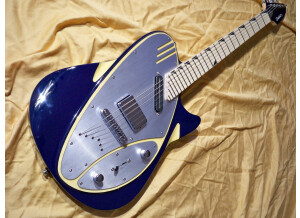
    Features Weighing 7.5 pounds (3.4 kg), the Backlund 200 guitar has a mahogany body with a polyurethane finish (it comes in blue, black or red, whereas the model I’m reviewing is blue). With a Telecaster style body, there are obvious design elements of Art Deco and Streamline Moderne, making it look very Americana (and particularly from the 1950s, albeit with some modern aspects and tone). Its looks reminds me of the old 1950s diners found across middle-America, which is a good thing, since I like nostalgia. It has a solid maple 24.75-inch scale maple bolt-on neck (and maple fingerboard) with a soft-C shape. The fingerboard radius is 14-inches (350mm), with 23½ medium jumbo nickel frets, shark teeth position markers and a 1-5/8” carbon nut. The pickguard (which covers much of the front of the guitar in two sections) is plastic, but has a brushed metal-looking finish. The bridge is a Tune-O-Matic (with flat edges for better comfort while palm-muting) with a through-body tail. There is a slight neck heel bevel (upper frets are easy to access) and an ample belly contour and arm rest. Both pickups are medium output passive custom wound, with a humbucker in the bridge position and a blade at the neck. The electronics (volume and tone) are quiet, whereas the 5-blade switch has some modest clicking when changing pickup selections, but a very typical level of ‘noise’ (nothing of consideration). The jack cover appears to be a countersunk Telecaster style. There is a Volume and Tone control, as well as a 5-blade switch for a host of very usable sound options (bridge humbucker, bridge tapped, bridge + neck tapped, neck tapped and neck). The machine heads are Wilkinson tuners and the hardware is chrome. The Buckland 200 does not come with a gig-bag or case (an option for an additional fee), nor was there a truss-rod tool (that may have been overlooked in shipping as Mike Robinson over at Eastwood rush-shipped the same day as ordered and then was received the next day – all the way from Memphis TN to Northern Ontario!). Sound The pickups are very clear and cutting, including the neck pickup. They are not shrill or thin, but simply sizzling and clear. There are five variations in pickup selection and there seems to be a very nice transition from one to the next. In other words, when switching from a bridge to a bridge tapped you can hear the difference, but it’s not extreme (thus making it very practical when you want a slightly different tone from one pickup selection to the next). The same is true when selecting a bridge + neck tapped, neck tapped or neck. I’m uncertain who makes the pickups, but Eastwood indicates they are custom wound. The Volume control does not roll off suddenly, but produces a very gradual reduction until backing off to about 90% (where it drops much faster). The Tone control has a good range, and due to the crisp clarity it comes in handy (to back off the treble) when playing some higher-gain distortions. Action/Fit/Finish This guitar has a very nice setup with no adjustments required. Pickups were adjusted at a good height with no concerns in that regard and all routing for pickups was done with precision. The neck blade pickup had a slight slant to it, so that the bass (heavier strings) did not over-power notes in the higher registry. There were no flaws in the paint, the neck is incredibly smooth (satin finish), and the frets very well dressed (a slight bevel or roundness to their edges). The neck heel has a smooth carve, as do the armrest and belly contour. The carbon nut has a proper cut/finish, and the tuning pegs have a solid feel. You can see the wood grain under the yellow paint (which is translucent, as opposed to solid like the blue pantone color on the body) and there does not appear to be any bleeding or sloppy work in that area. Reliability & Durability A professional-level instrument, the Backlund 200 plays as well and sounds as good as any guitar in its price-range, and when compared to other guitars in my collection. The Wilkinson tuners (a trusted name in the industry) have a very solid feel, the knobs are steel, the strap buttons well-secured and of a good size and contour/shape, and the pots are quiet and feel of good quality when turned. All elements are up to standard for a quality instrument, and with a Tune-O-Matic through-body design not much can go wrong. The frets are nickel, which means faster wear than stainless steel, but that would require several years of regular play. Overall Impression The Backlund 200 may be ideal for softer styles of music (jazz, blues, country), but it handles rock and higher-gain rather well – and with a pleasant ‘edge’ to the tones (although most hard-rock or metal players may not be keen on its design). The pickups absolutely cut through the mix and are clear and sizzling without being overly bright and definitely not brittle. At a price of $1249 USD it is of typical value (neither overly expensive nor a bargain), but in large part you are buying a Backlund design, which is one of the elements that drew me to this guitar – I love the looks, although it’s not for everyone. It certainly plays as well as any guitar I own, it has a great finish and fret-work, and it sounds good with just about any gear I put it through. For its price range I would like to see locking tuners and stainless steel frets, but overall I’m enjoying playing it very much.

  • « gotta love eastwood's »

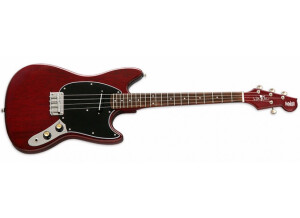
    The overall feel of the Eastwood Guitars Sidejack DLX is outstanding, as the action on the one that I played was incredibly low and very easy to play. Playing up and down the neck isn't an issue, as it in general an easy guitar to play. The guitar is definitely on the smaller side because of the small body, and is pretty light because of this. In my time using the guitar I've found it very easy to get a full bodied sound with a lot of character. UTILIZATION This guitar is probably most often used for rock and alternative music, as it definitely has the Kurt Cobain connotation attached to it. I've used the Eastwood Guitars Sidejack DLX for recording with a '76 Fender Twin Reverb and a variety of pedals including an Ibanez Tube Screamer overdrive, a Boss CS-3 compressor, and a Line 6 DL-4. Even when used without any pedals or effects, the sound I got was instantly impressive both as a lead and rhythm guitar. I would say that I like it best as a rhythm guitar because is really sounds full bodied when you play barr and power chords, but it is suitable for any type of use. SOUNDS sounds are very good. OVERALL OPINION Overall, I'm definitely an advocate for this guitar. As any guitar player knows, Eastwood has an incredible line of guitars, and this Sidejack DLX is just another flavor that they have to offer. I don't believe that there are too many Fender Mustang Reissue '69's out there since I believe that they were only made for a short while. I don't know how well this matches up to the other Eastwood’s either since I haven't tried them. I would imagine that the price of this is somewhere in the middle, but it probably varies since it isn't the most readily available. If you're into Eastwoods and come across one of these, I'd definitely encourage you to do a double take.

  • « Fantastic Cleans and Gritty Rock »

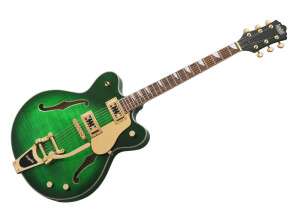
    Features The Classic AC has a 24.75-inch scale length, and a chambered mahogany body with a flamed maple top (it comes in natural and green, whereas the model I’m reviewing is natural). The top is natural with white edge binding (and three black pinstripes), whereas the sides and back are transparent cherry. The Classic AC has a mahogany set neck design, a zero fret (set above the other frets to reduce buzz), a 1-5/8” nut, and a rosewood fingerboard with unique Shark’s Teeth inlays. The bridge is an adjustable Tune-O-Matic wrap around, which matches the Gotoh style nickel/chrome hardware. The pickups are two EW-Retro (Eastwood) Humbuckers, controlled by 1 tone and two volume knobs (one for the bridge and one for the neck) and a three-way switch (bridge, bridge + neck, neck). It comes stock with #10-#46 strings, whereas a gig-bag or case is extra. Sound Sometimes you never know what you’re going to get when you order a guitar. Often guitars are purchased based on looks, or maybe a demo video (although you never know what gear and caliber of gear the guitarist is using… and a highly skilled guitarist can make just about anything sound good). Eastwood’s Classic AC definitely was not a let-down. Although it sounded just fine with different gear, I used The Sheriff V4 preamp in the demo as it has a Plexi-sound (and Malcom Young used a Marshall Plexi). Both the guitar and amp responded well together, and although I didn’t play any AC/DC riffs (for copyright reasons), the tone was unmistakable. On the bridge pickup there as some very well-defined raunchy grain that was very responsive to playing. The neck pickup lacked any mud or boom, which I like, and the notes were well-defined. What really surprised me is when I blended the two pickups, particularly with the bridge volume up high and the neck pickup only high enough to be added in the mix. The result was the same raunchy grain, but with added thickness, heaviness (bottom end) and balls. Action/Fit/Finish The guitar’s action is relatively low and the string bend easily (even on the highest frets, which is not always the case with higher priced guitars). The entire body (and back of neck) has a quality gloss shine without any perceivable flaws. There does not seem to be any flaws in the binding and there are no visible rough edges or cracks around the pickups. There are no rough edges to the frets (all appear to have a slight bevel for smoothness) and the neck binding (with side dots) appears to be well done. The headstock, and its binding, also is of good quality. The one minor flaw is the sharks tooth inlay at fret 17 – when bending the lowest strings you can feel a slight edge of that inlay, although not sharp or uncomfortable. Reliability & Durability For a guitar made in China, and a selling price under $600 USD, I would place this guitar with others in its price category. It plays well and sounds excellent – perhaps being a consideration for those wanting a Malcom Young tribute guitar of pretty decent quality or those looking to spend within that price point while looking toward Yamaha or other such budget-minded guitars. The electronics are quiet and the knobs/tone pots have a very solid and smooth feel. Overall, it does not play or sound like a cheap guitar. To the trained eye it may not hold up as well (e.g., binding and inlays) as a custom Les Paul, or the original Young guitar by Gretsch, but I’m very content with its quality and sound based on the price and proves you can get a darn decent guitar made in China (if the standards are in place). Overall Impression Certainly you can play some good sounding lead on this guitar, since the pickups are hot enough, but for classic Rock rhythm this is one of the best sounding guitars I’ve heard and is so ‘AC/DC’ when plugged into a Plexi-style amp. Although this guitar was inspired by the Gretsch model played by Malcom Young, a vital component to the band’s sound, Eastwood simplified the controls to mimic its Classic 6 model, and definitely headed in the right direction with its Retro Humbuckers for that defined and grainy classic rock response as individual notes ring clearly without mud. The looks of the pickups, natural wood color and headstock design may appear ‘classic’ as well, but the unique Sharks Teeth inlay lends itself to a modern vibe. Somehow it all works. The knobs are easy to control, with knurled edging and the neck pickup’s volume knob sitting on the lower horn (for easy access without bumping into the wrong control, viz., as opposed to having the two volume knobs sitting next to each other). The neck is neither thick nor thin, but a soft C (maybe a D) – enough meat for larger hands, but far from cumbersome for those with small hands.

  • Audiofanzine FR's review

    (Originally written by Mischka/translated from Audiofanzine FR) China 21 frets, two P90 pickups. Fixed bridge. Two volume and two tone controls, toggle switch. No idea... Perhaps a slim taper? UTILIZATION Pleasant and quite round but too thick neck. It's a set neck, which is quite rare in this price range. Easy access to the upper frets. The guitar has exactly the same problem as the real Firebird with non-reversed headstock: it tips forward, but a few days will be enough for you to get used to it. The guitar is a bit heavier than a standard Telecaster. Excellent sound and good manufacturing quality. The pickups sound good and are quite faithful to the original P90. The main disadvantage of the P90 is the noise, which depends on the room size and the distance to the amp. No feedback problems even at high output levels. SOUNDS I play in a punk rock band and this guitar perfectly matches my needs. I play a VOX AC30 with a wah-wah pedal, a TS7 for rhythm parts and riffs, and a SD2 for solos. I only use the bridge pickup. The sound is dry and sharp but not too dirty (just as I like it). Very good sustain due to the set neck... I can almost get the Les Paul Junior sound I need for my band with this guitar. The Stormbird is not so wild as a Les Paul Junior, a bit bulkier but it's alright. The toggle switch is not a problem... If it were the case I would fix it with adhesive tape!! OVERALL OPINION I've owned it for two months and I think I will keep it. It will be an excellent second guitar when I have a better instrument (LP Junior, Rickenbacker 620, etc.). I like very much the neck, the pickups and the retro and original look. The machine heads are the main con. I've already tighten them several times but I will have to replace them soon. Yes, I tested lots of other guitars but no Eastwood. After buying it, a friend of mine bought a Hummingbird (Mosrite/Univox replica) and he's very satisfied with it! I think this guitar offers one of the best value for money right now... especially considering the price of a real Gibson. The only question is: how will it sound in 10 or 15 years?? Update after several years: I won't ever know how this Eastwood will sound in the future because I sold it to go back to my roots: bass guitar... Nowadays, I think the best value for money is a Custom '77!