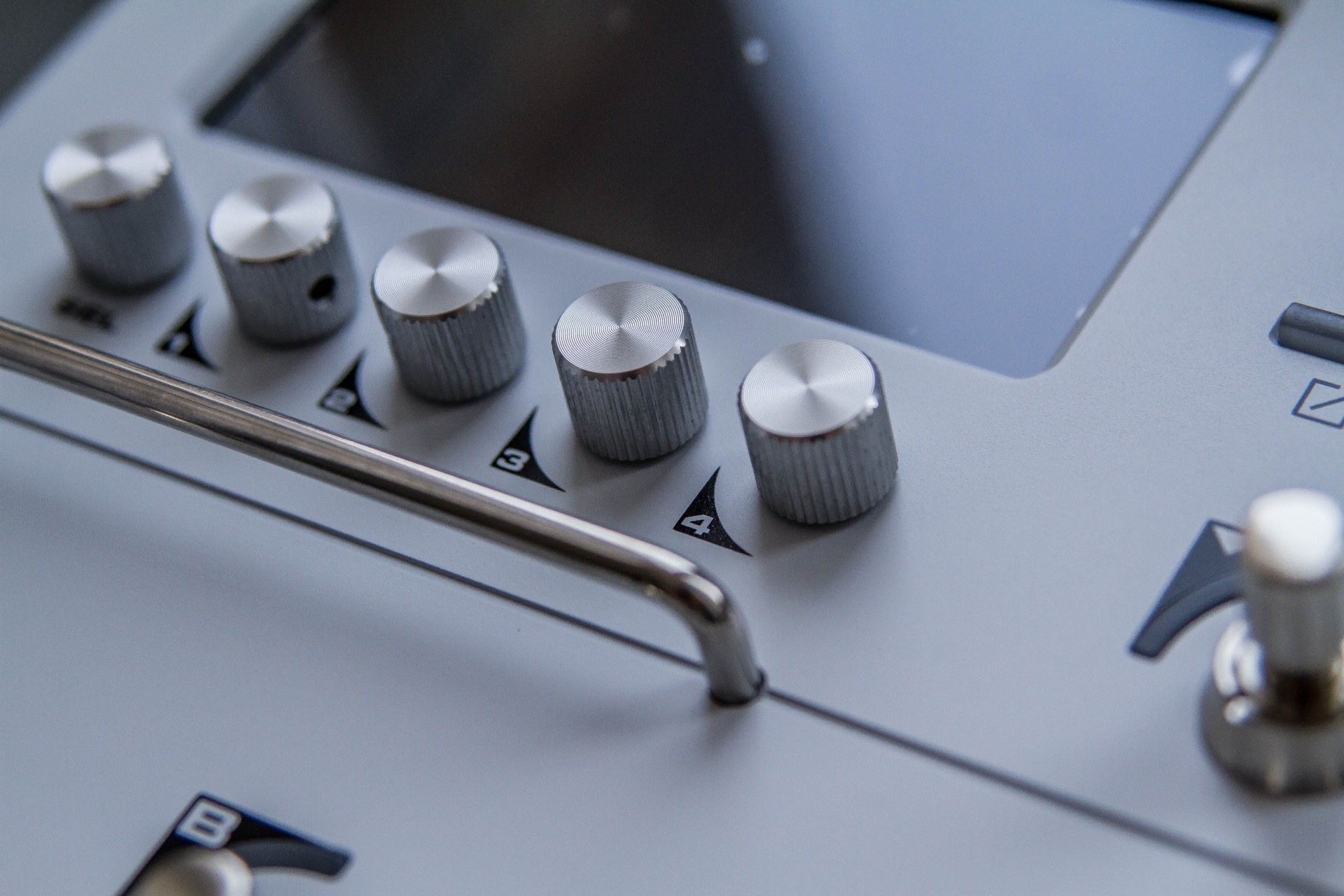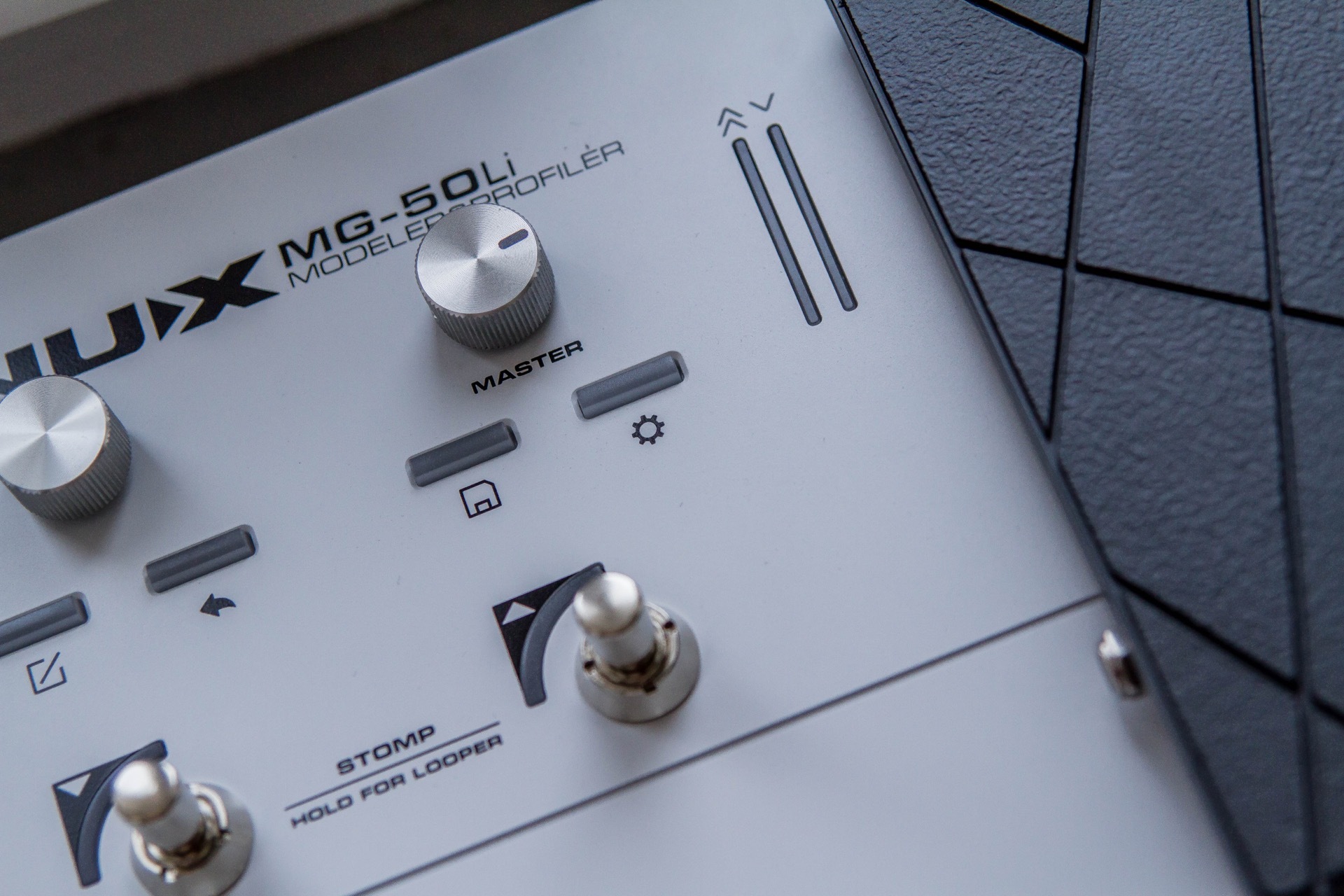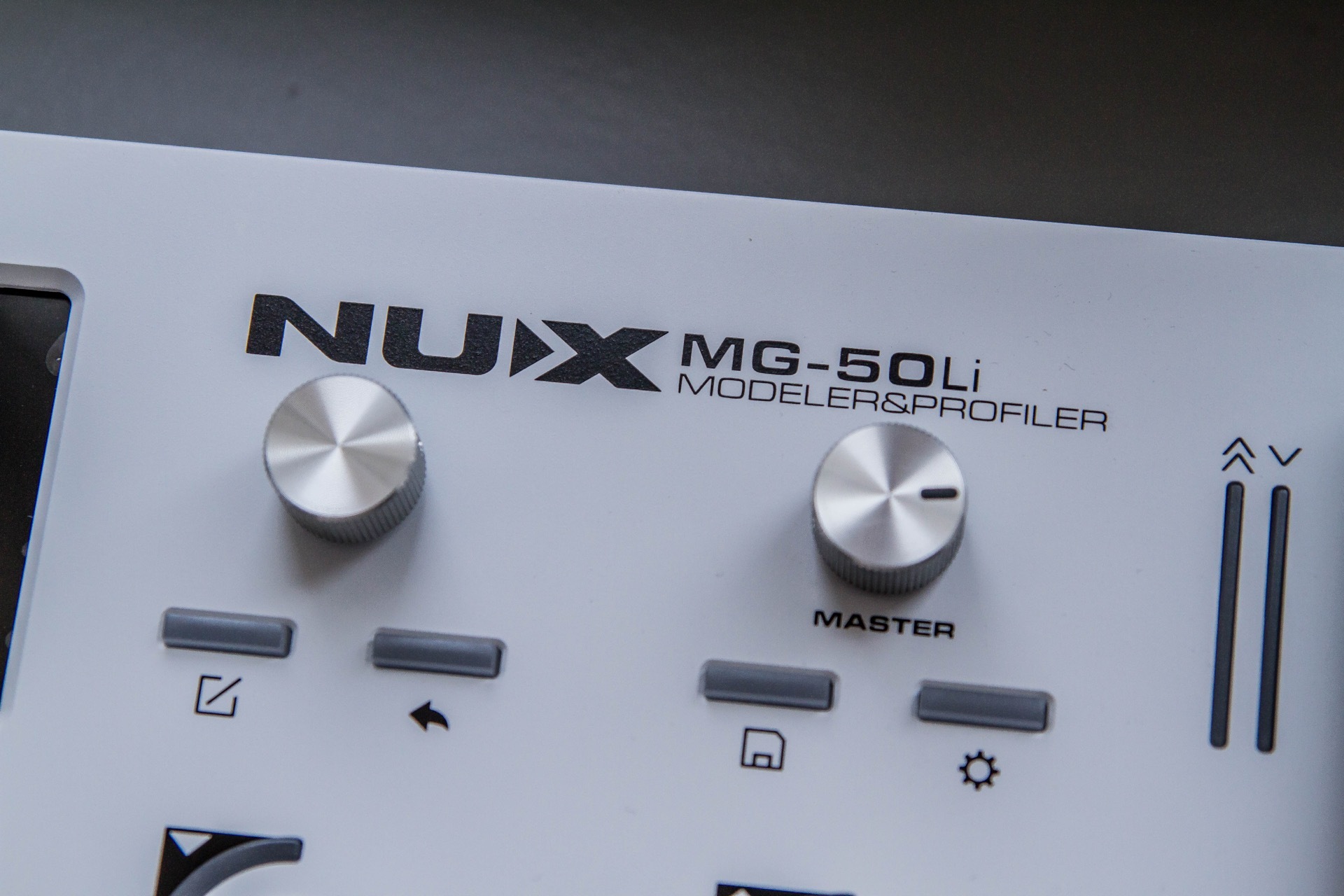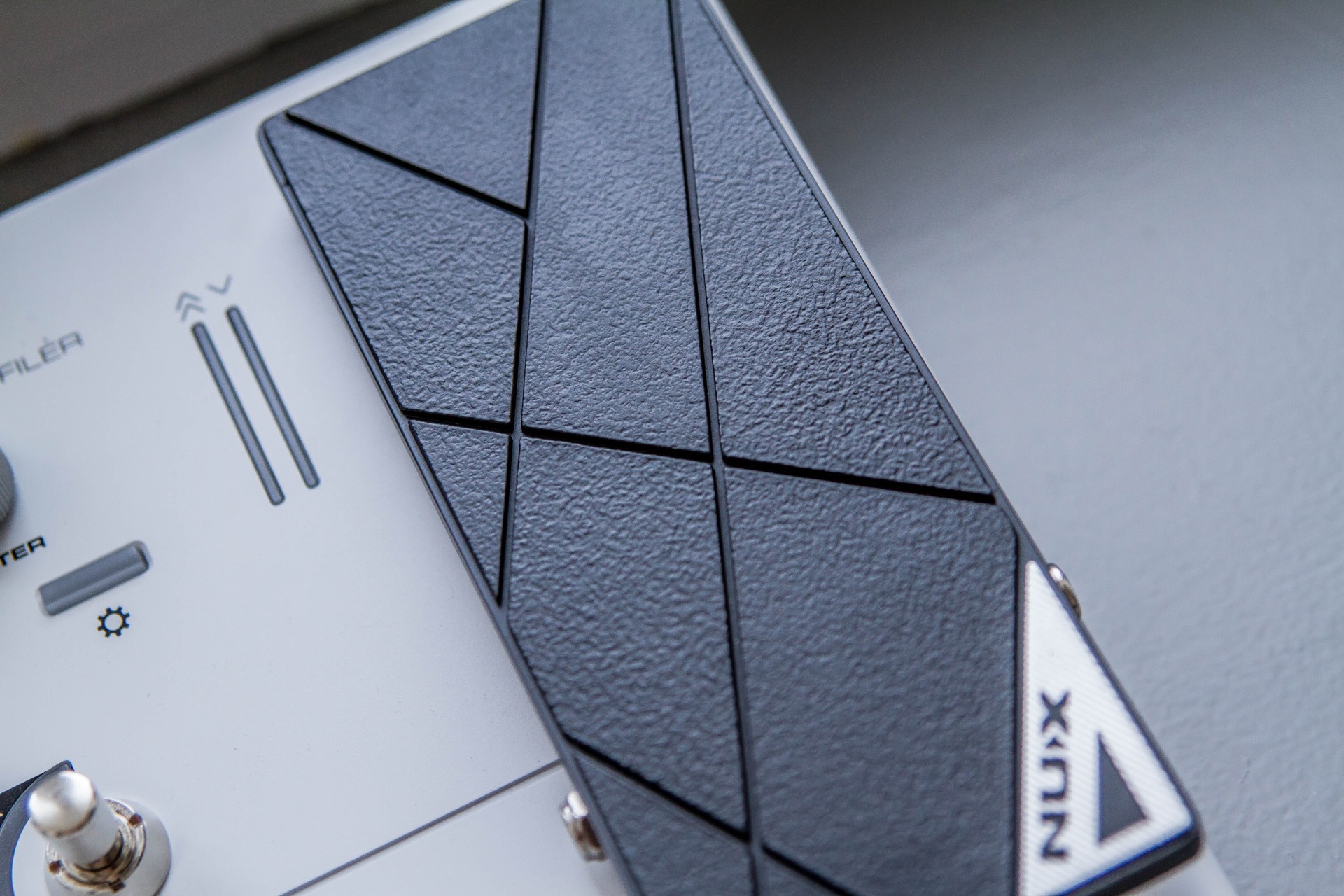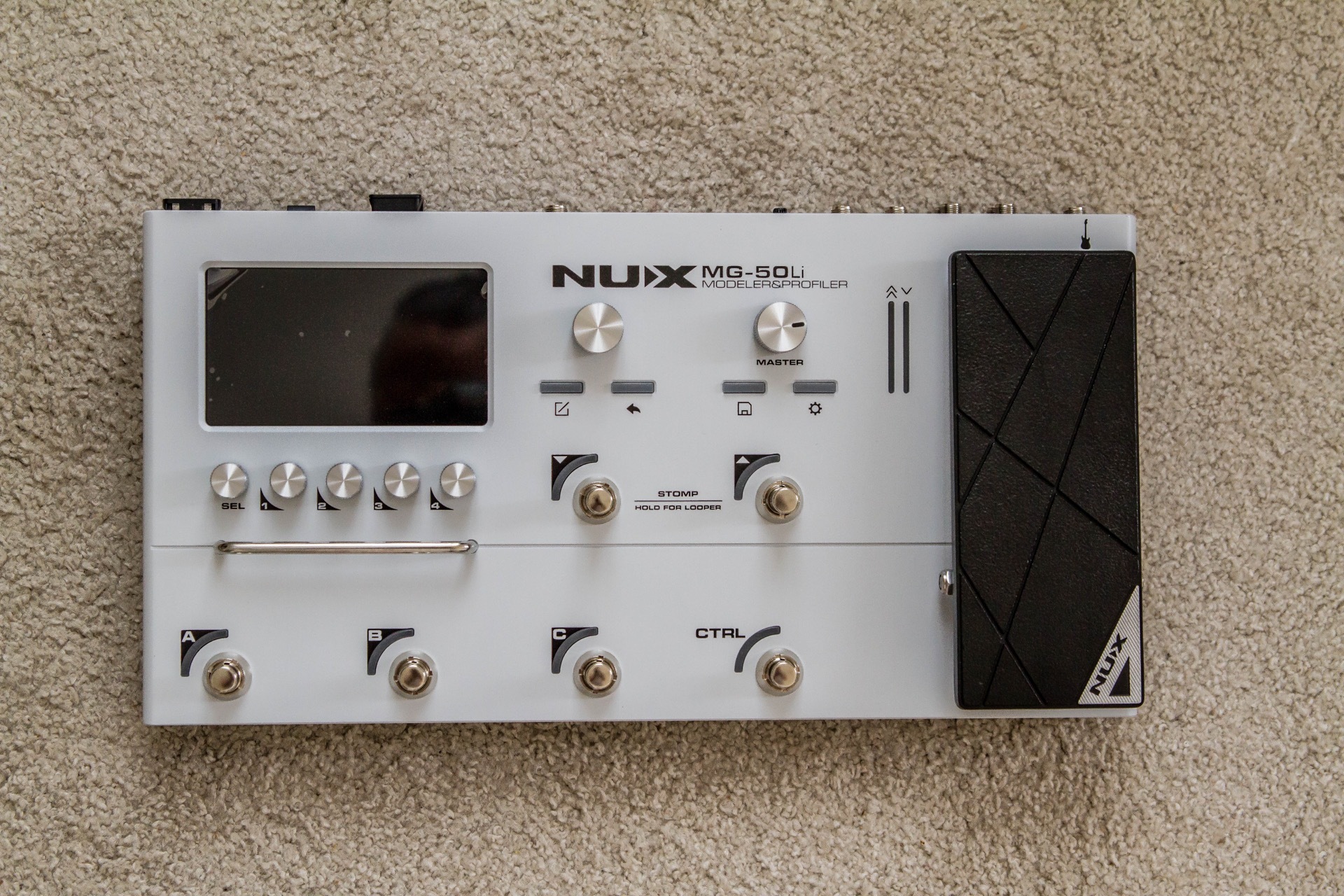

Unveiled in March 2026, the MG-50Li is the latest digital multi-effects processor from nUX. With its aluminum chassis, three processors, and the ability to capture amp and overdrive pedal sounds, it has everything it needs to challenge its direct competitors and outshine them. In this review, we’ll see (and hear) if this new flagship multi-effects unit lives up to its potential.

Owner’s tour: Detailed overview of the MG-50Li
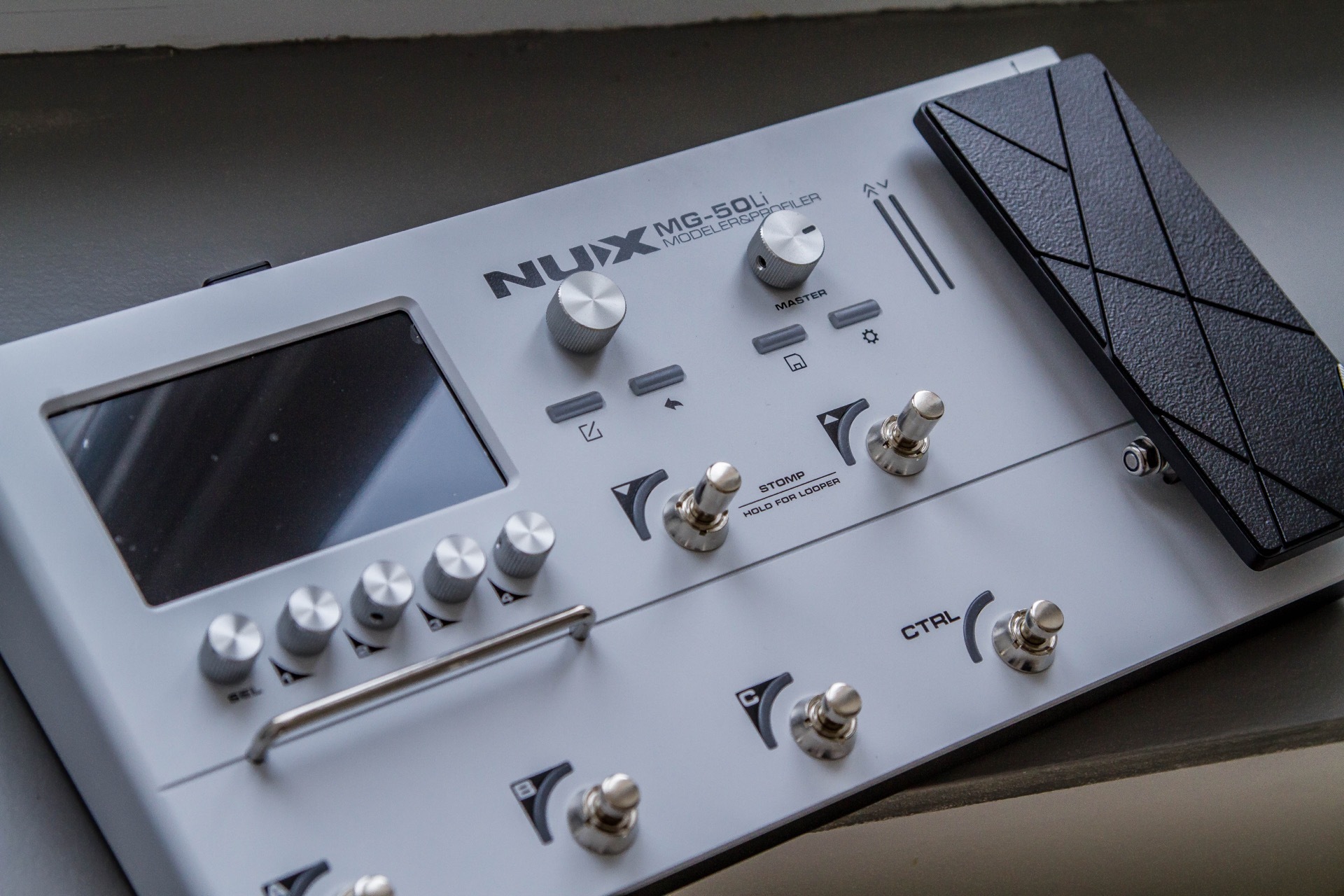
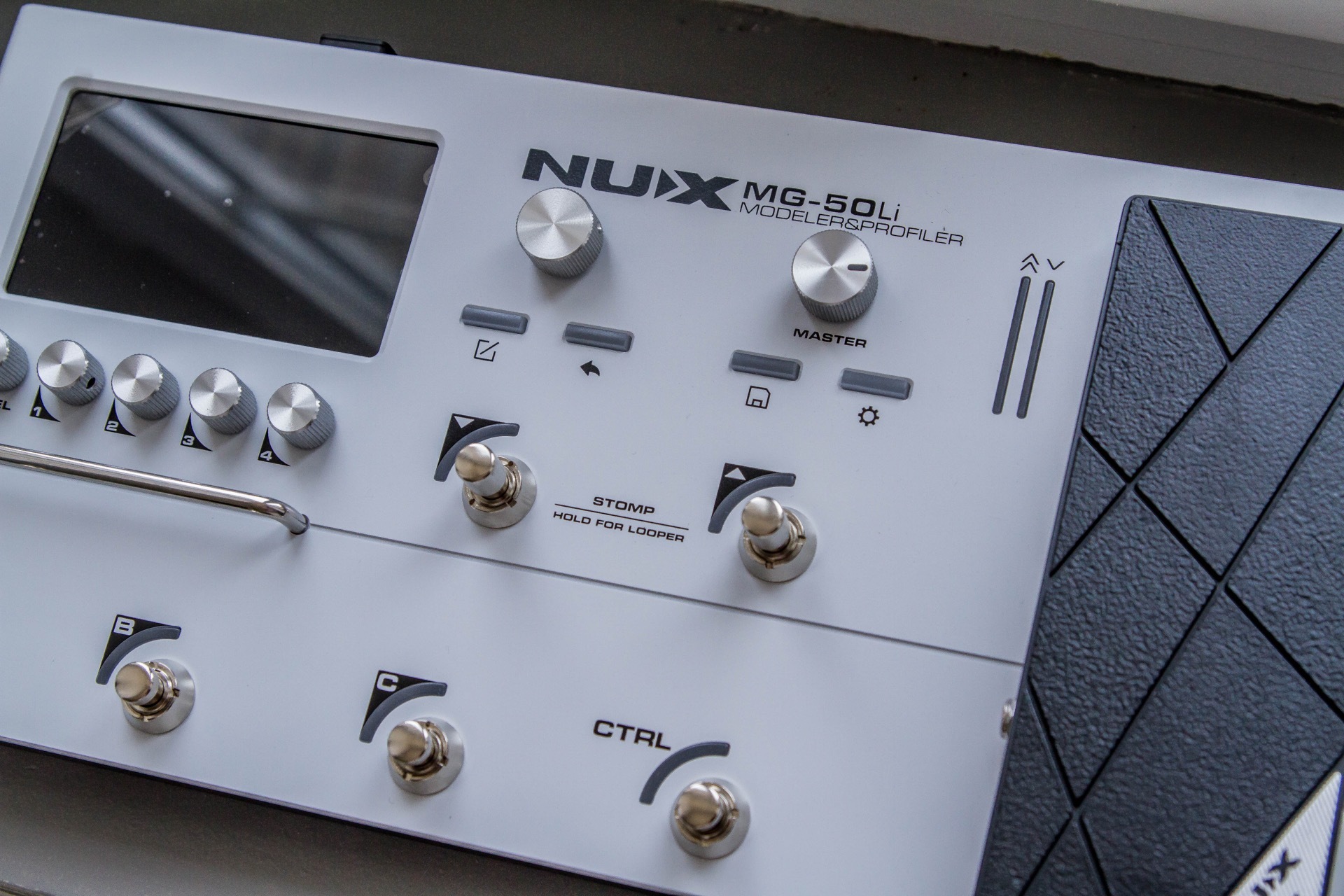
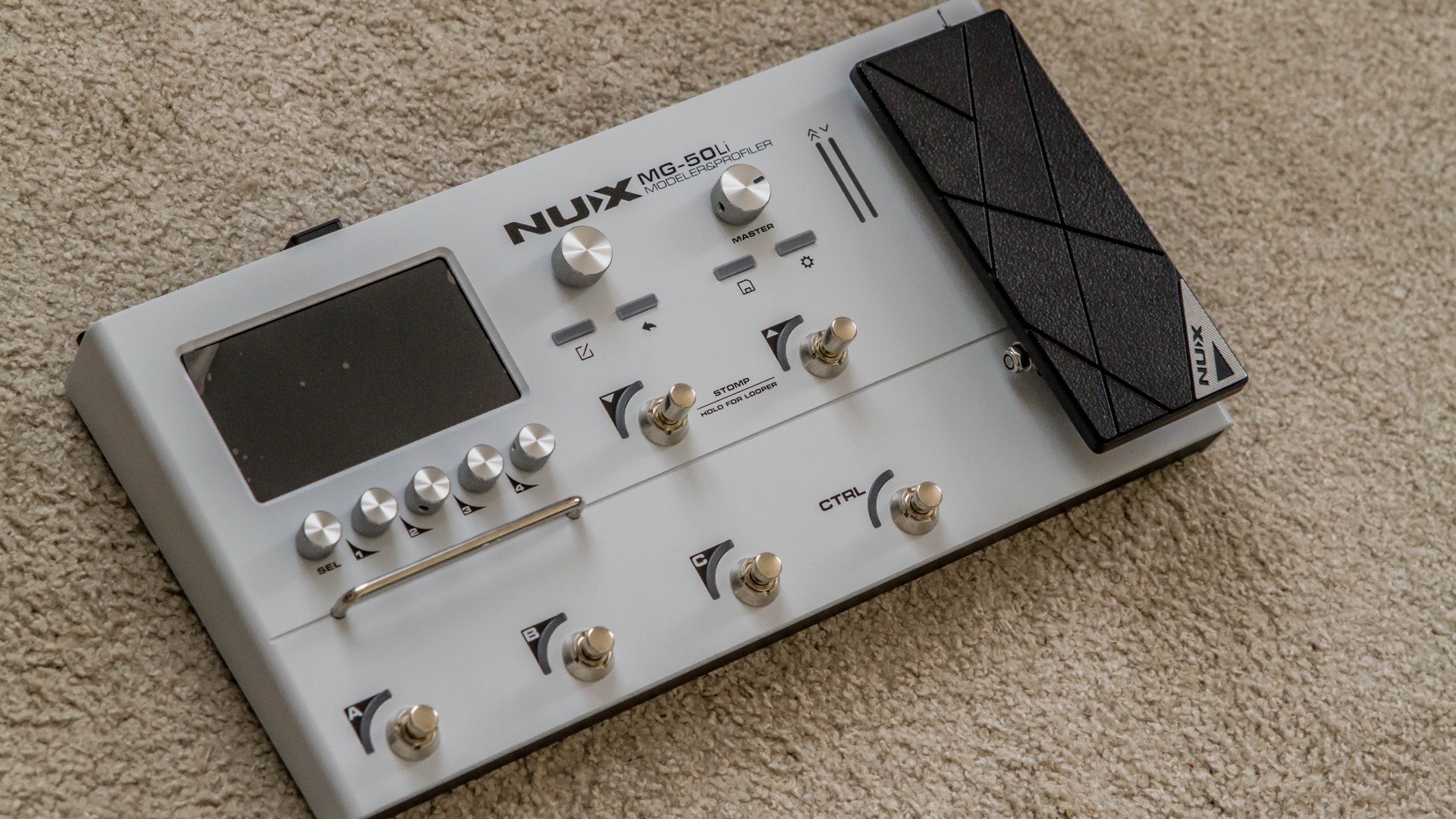
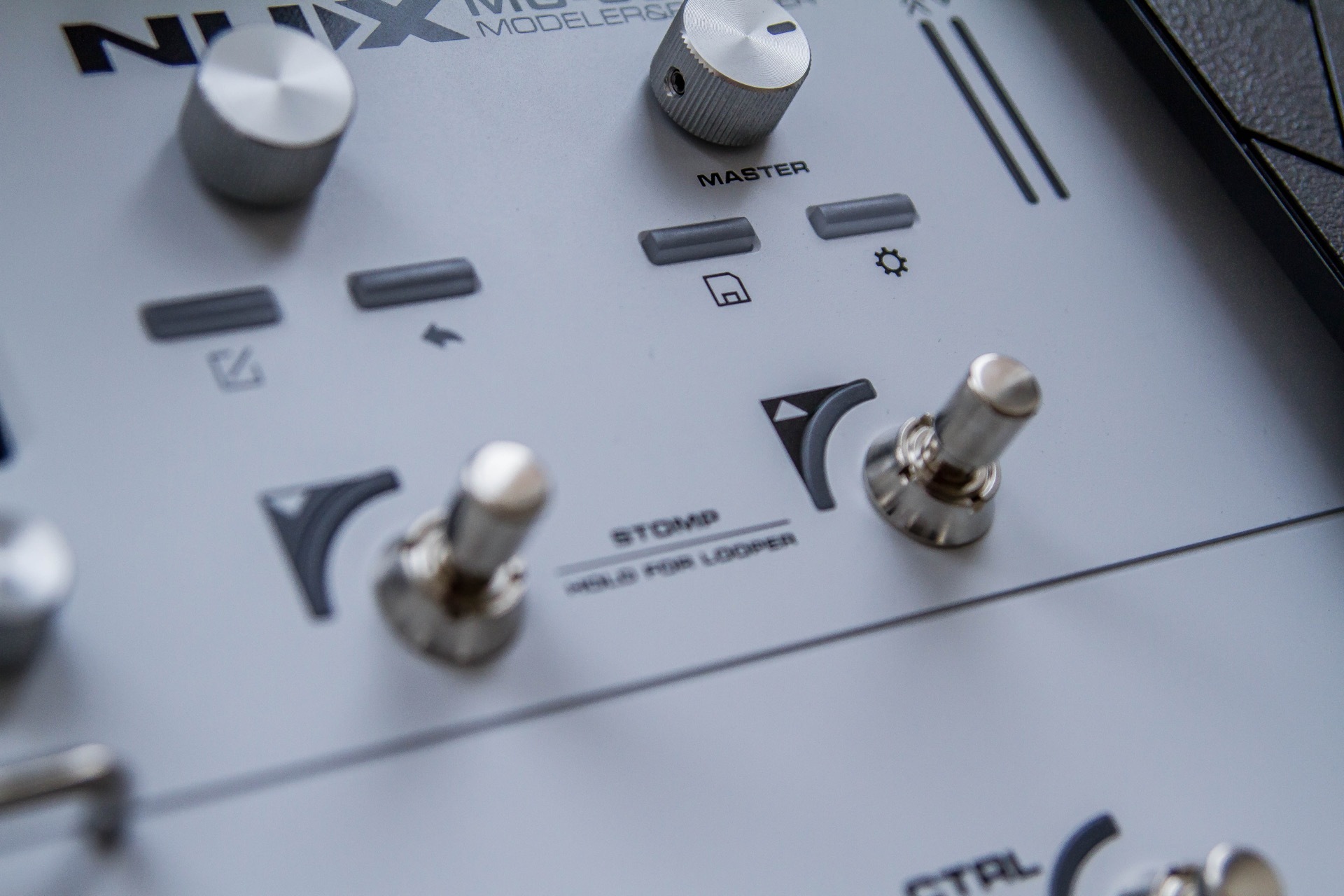
A 5-inch, high-definition screen is located on the left side of the pedalboard, while the assignable expression pedal occupies the right. The five encoders/buttons located below the screen provide access to various menus: Stomp (footswitch assignments), CTRL/EXP (assignments for the expression pedal, the CTRL footswitch, and any external footswitch), IMAGE (provides access to the User Manual menu for the hardware capture mode), IN-TRIM/XLR (input level adjustment window), and CONSOLE (settings for various volumes: 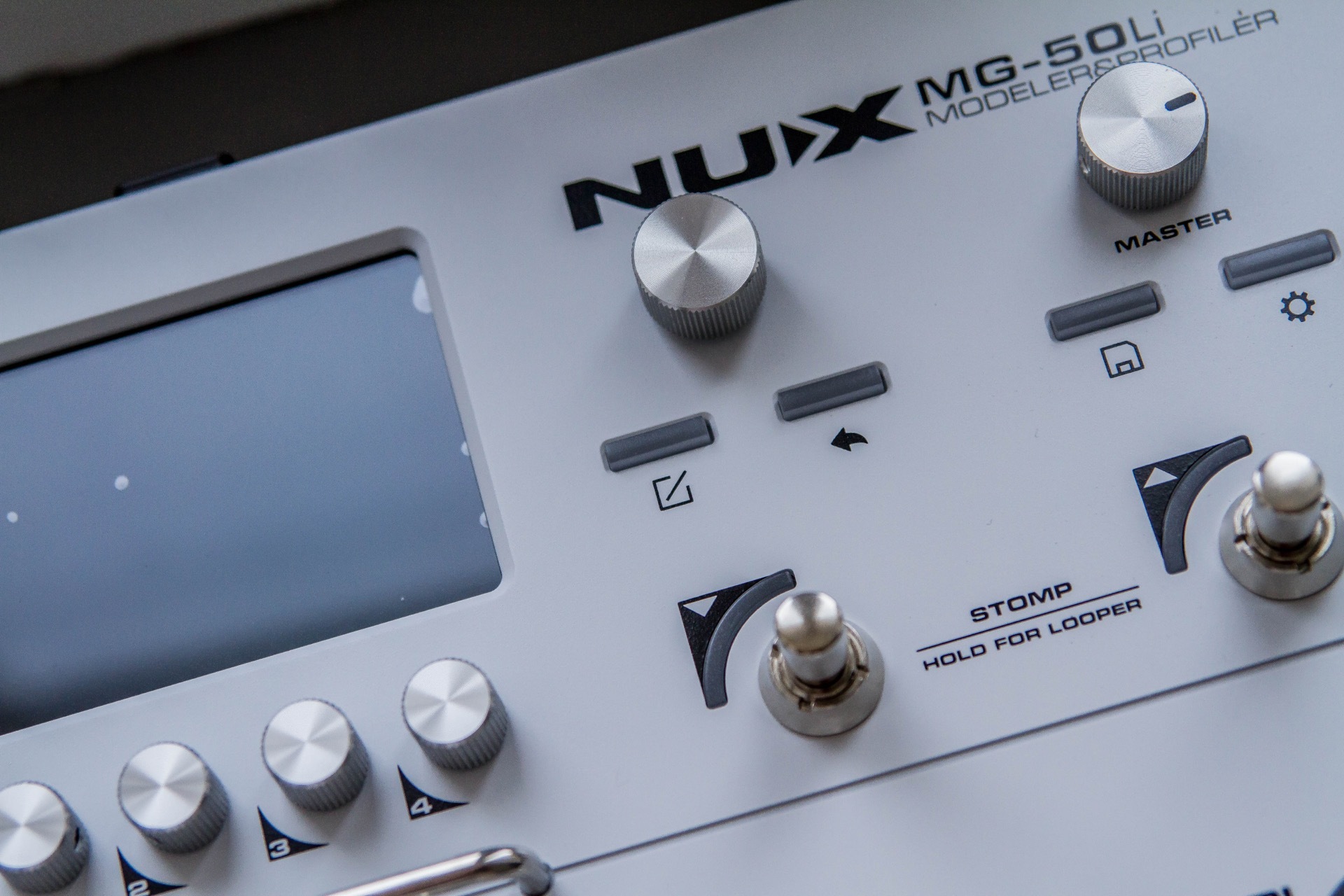
The two buttons closest to the screen allow you to access the editing menu for the various blocks and to “go back.” The last two buttons provide access to the preset/scene save menu and the pedalboard’s general settings menu. A small VU meter is located near the expression pedal; it displays input and output levels in real time via a set of LEDs.
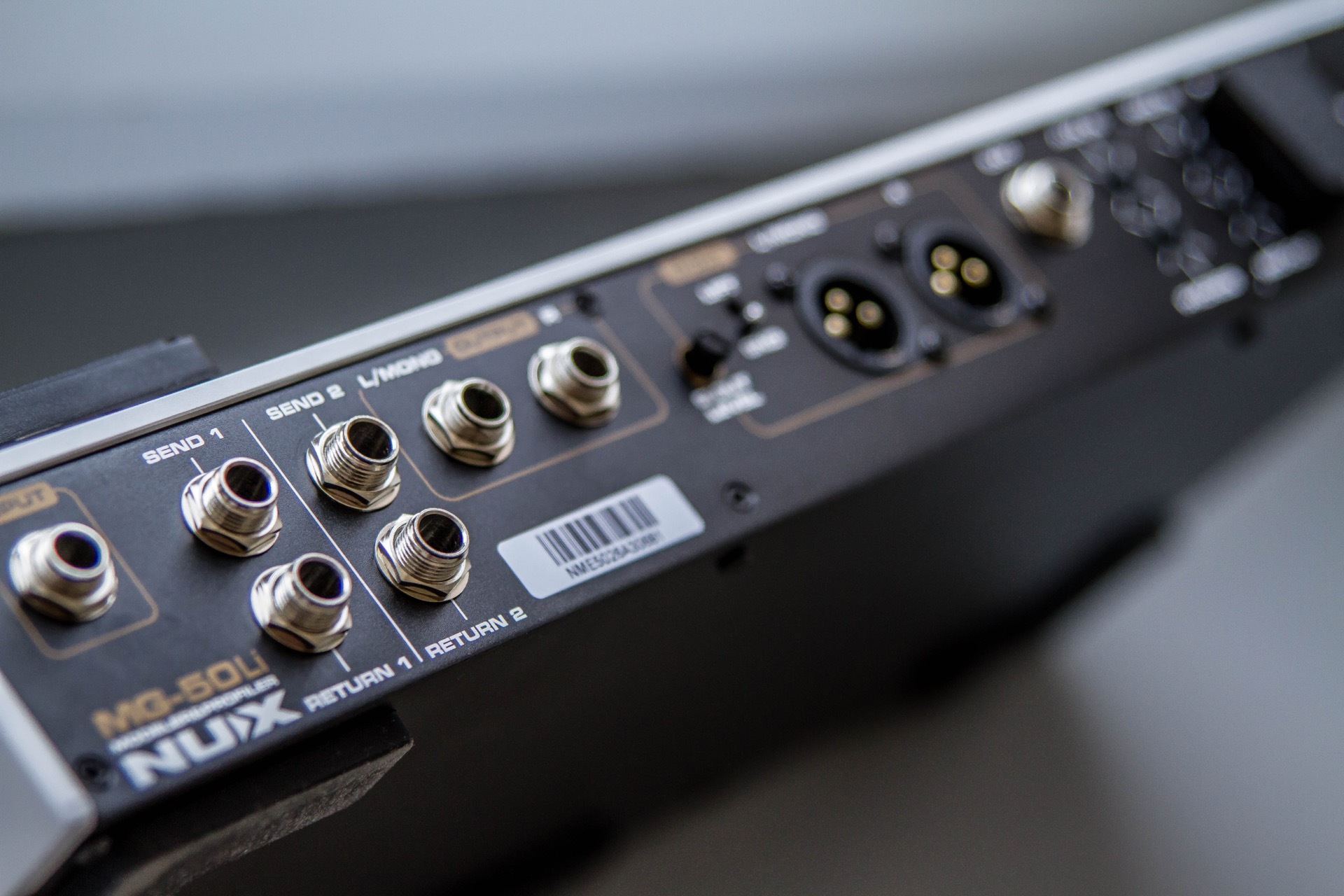
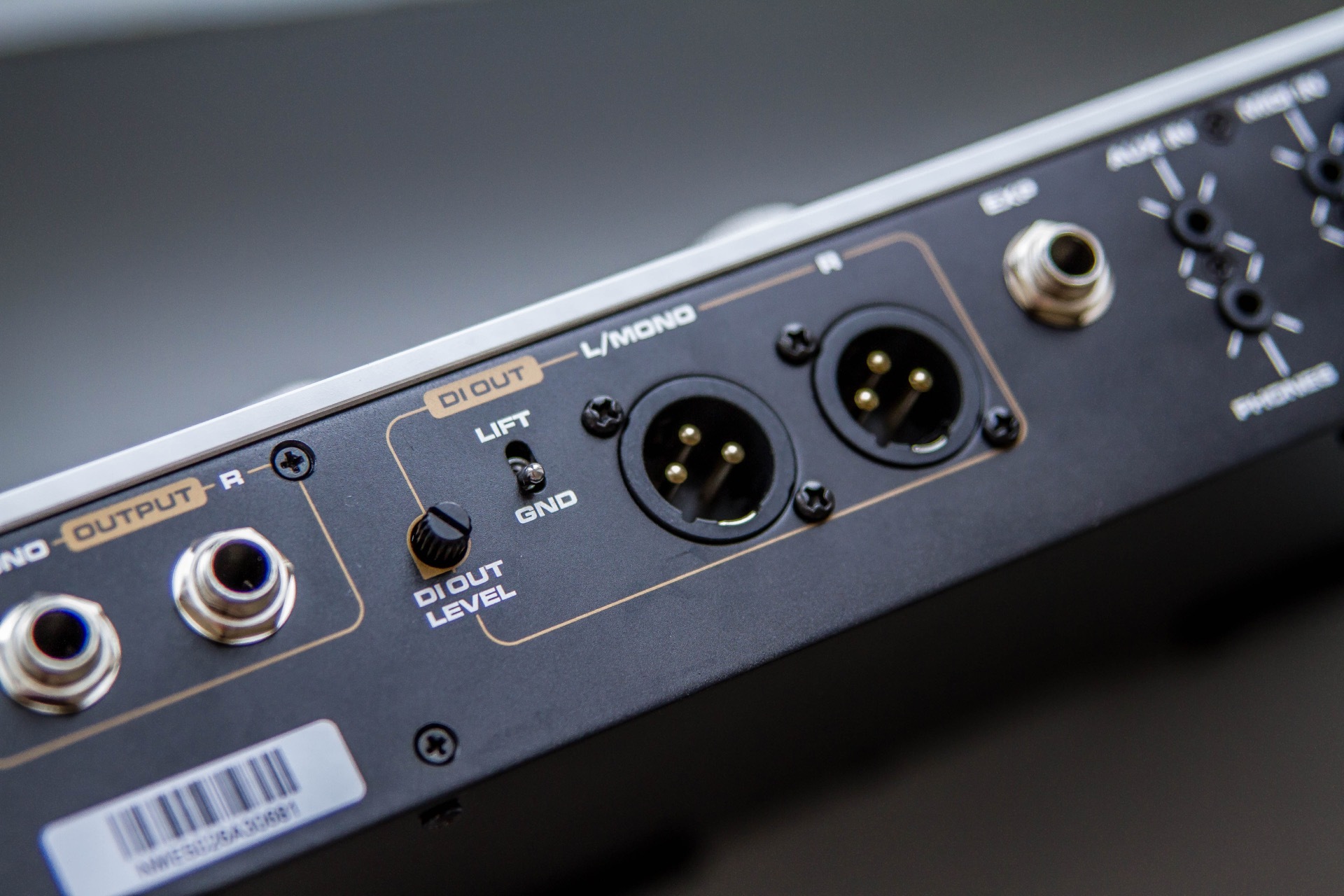
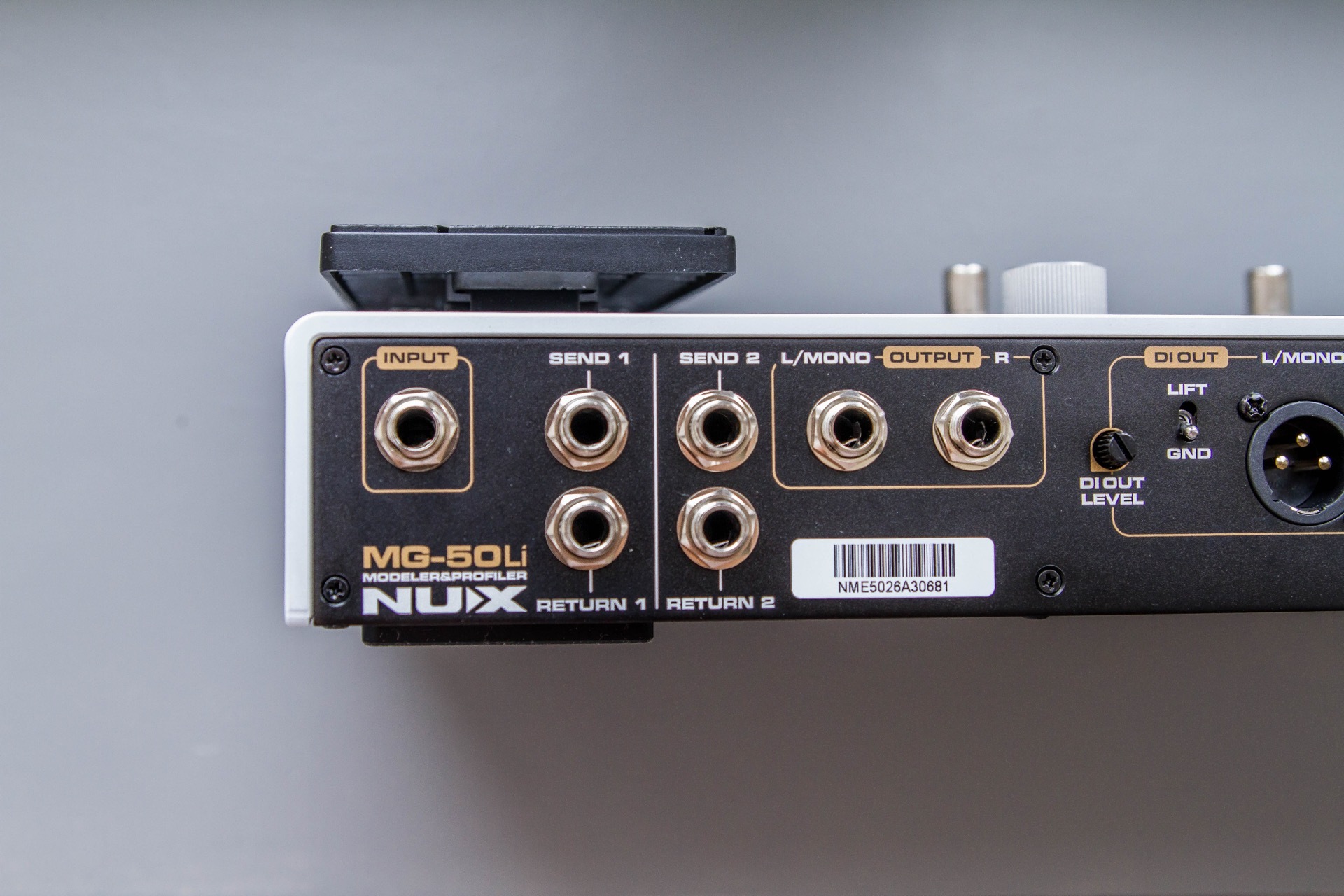
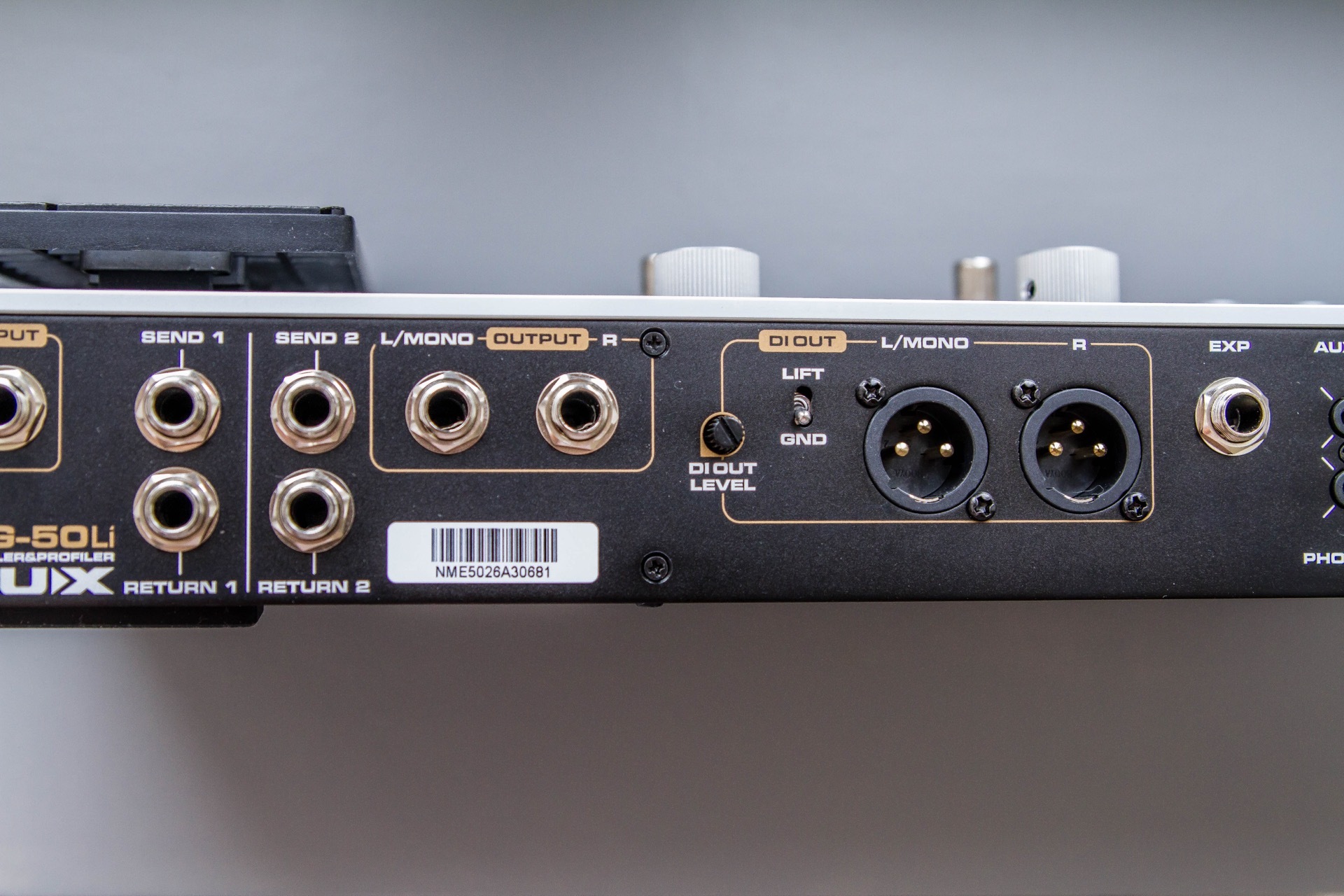
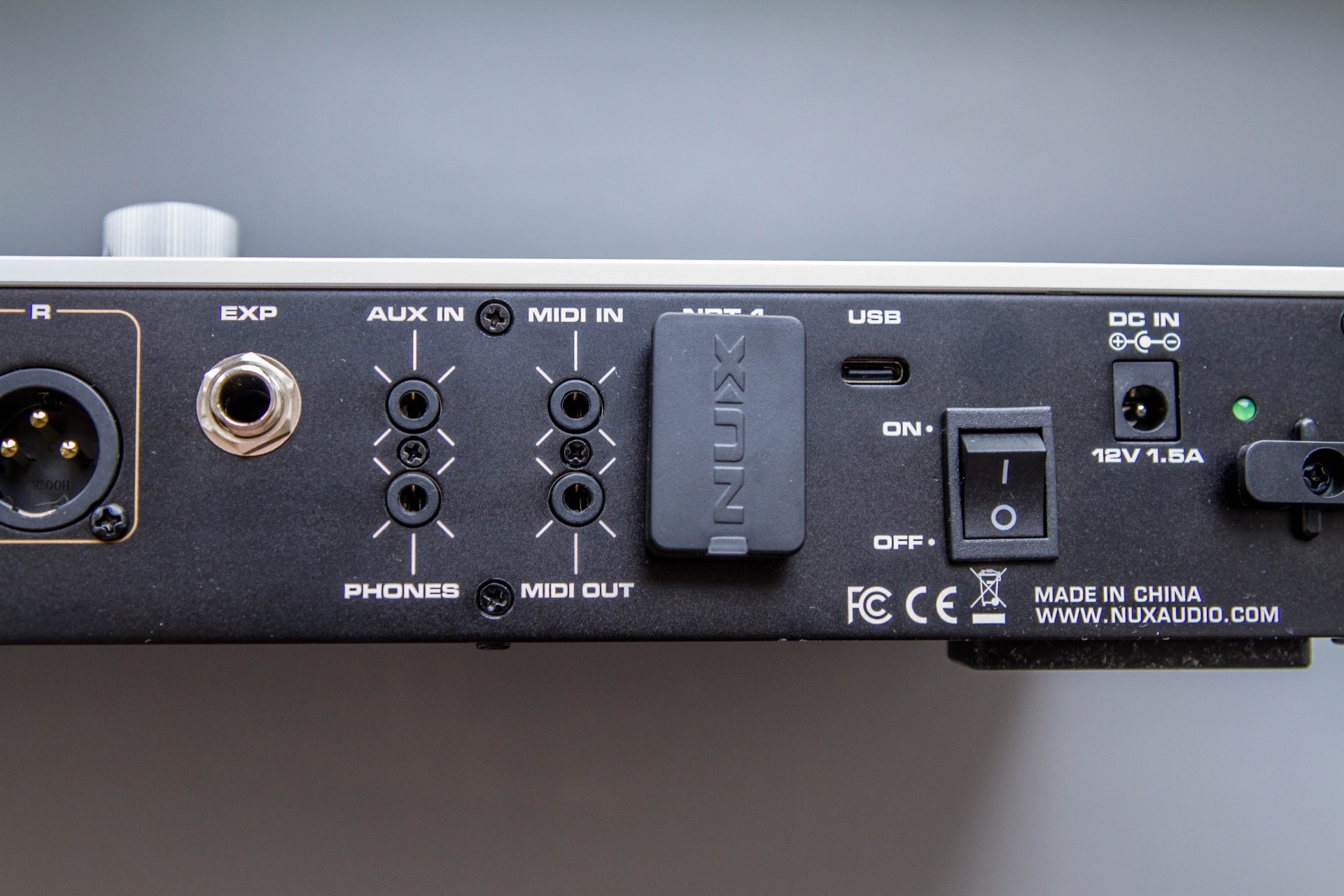
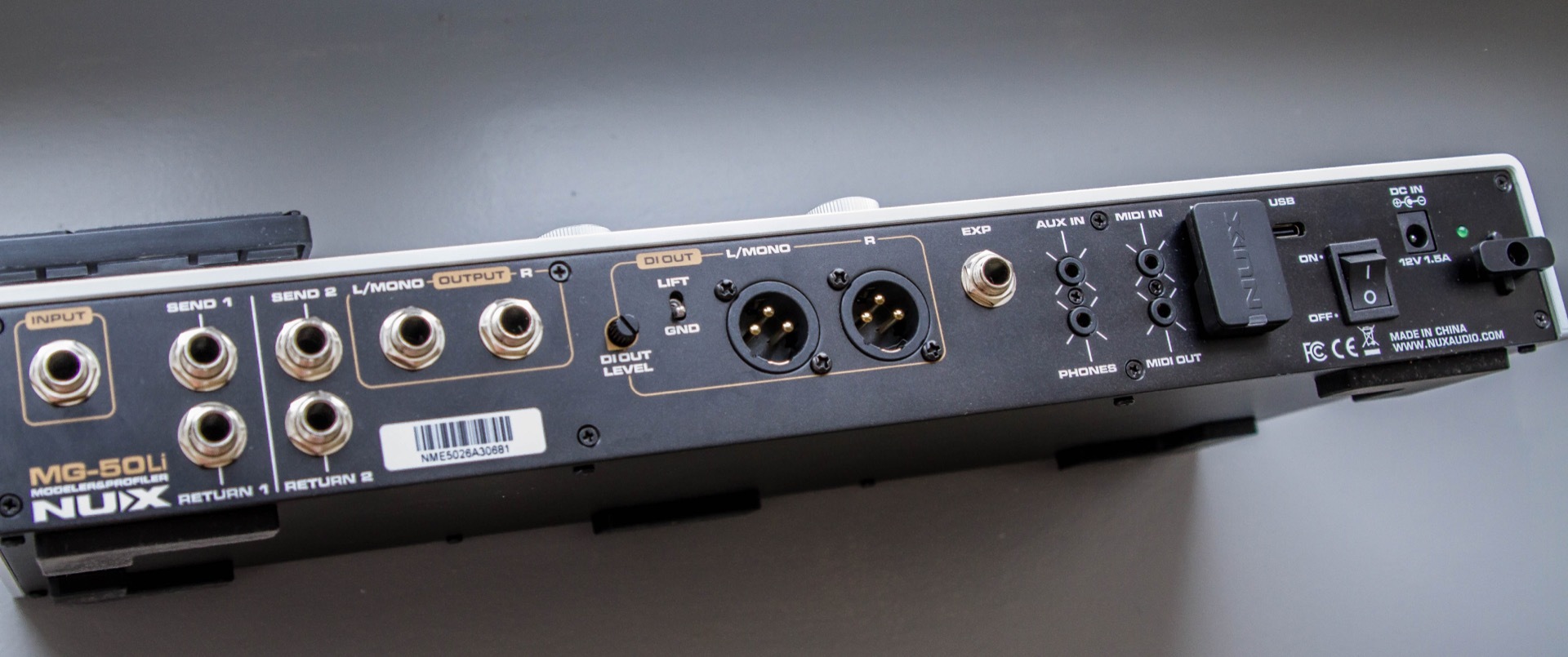
The various connectors are grouped together on the back of this beauty. From left to right, you’ll find: a jack input, two jack effects loops (Send 1, Return 1, Send 2, and Return 2), two jack outputs (L/Mono and R), two XLR outputs with their own dedicated level control (DI Out Level) and ground switch, a TRS jack for an external expression pedal, an AUX input, a headphone output, MIDI IN and MIDI OUT jacks (all four via 3.5mm mini-jack), a USB-C port labeled “NBT-1” for the included Bluetooth adapter, another USB-C port for connecting the pedalboard to a computer, the ON/OFF button, and the power jack.
While the back panel of the MG-50Li is easy to read and understand, using the pedalboard itself is a bit more complex. It takes some time to learn how to perform all adjustment operations quickly. This is often the case with nUX products, which—fortunately—always come with editing software that’s very user-friendly.
 |
 |
 |
Key features of the MG-50Li: TS/AC-4K technology, image capture, and Cyber-IR
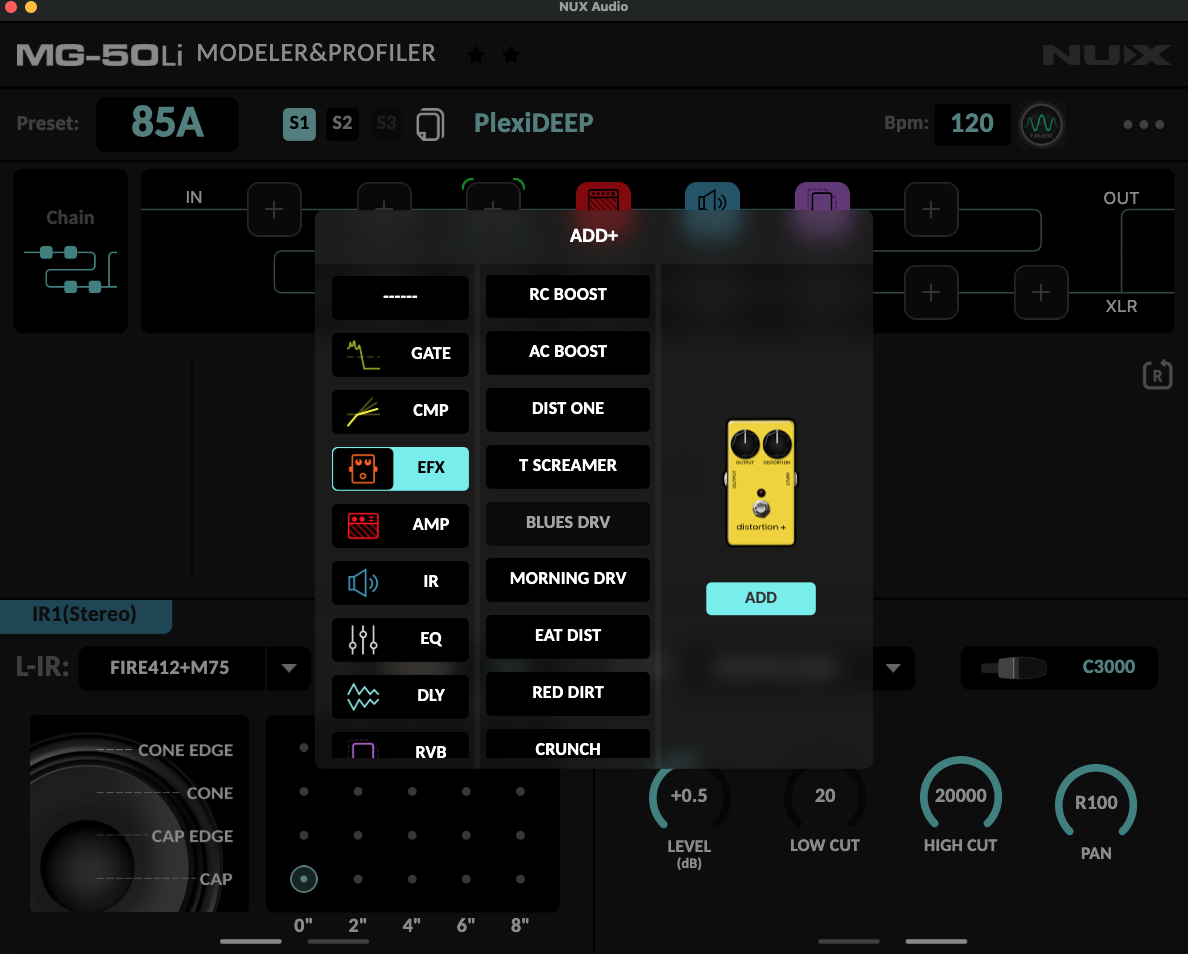
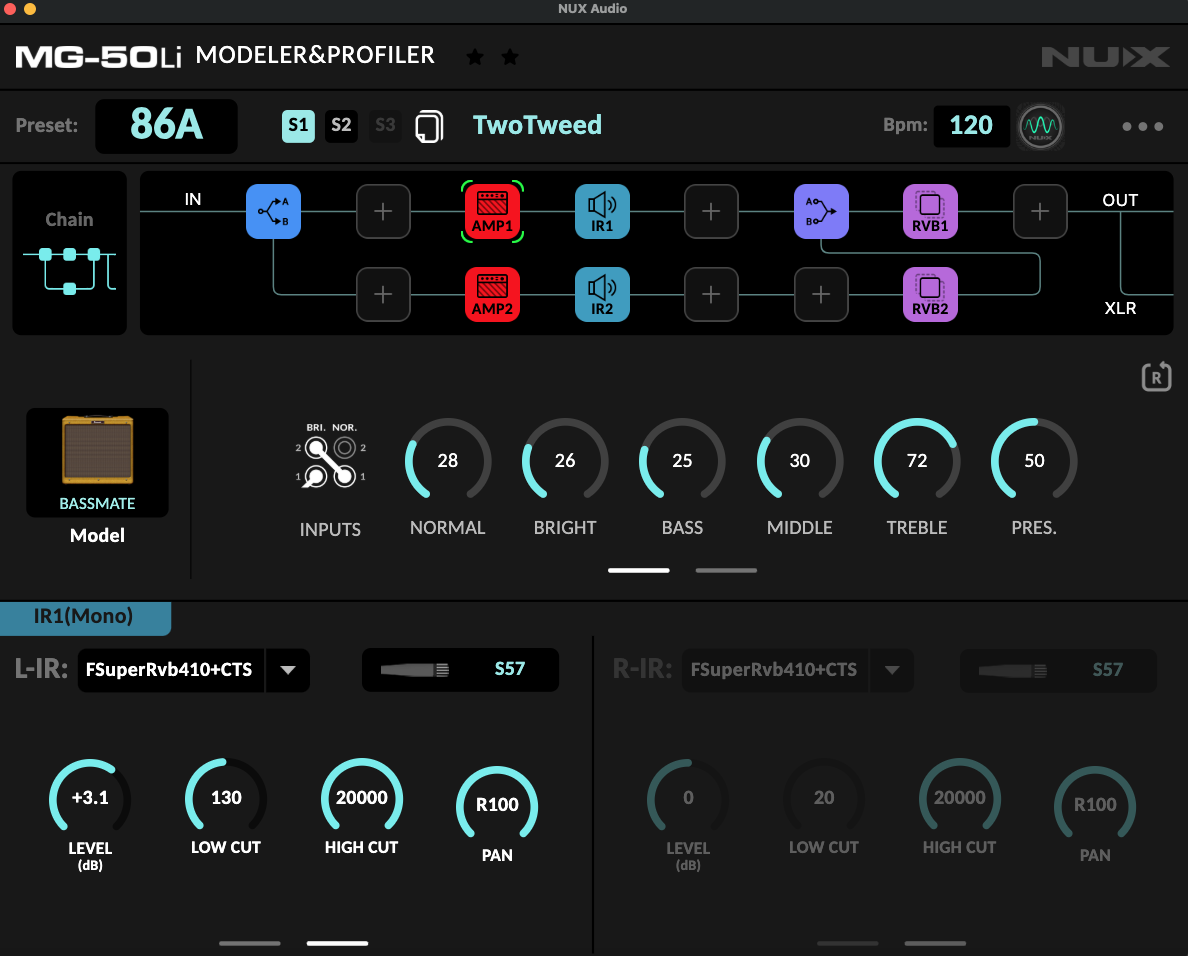
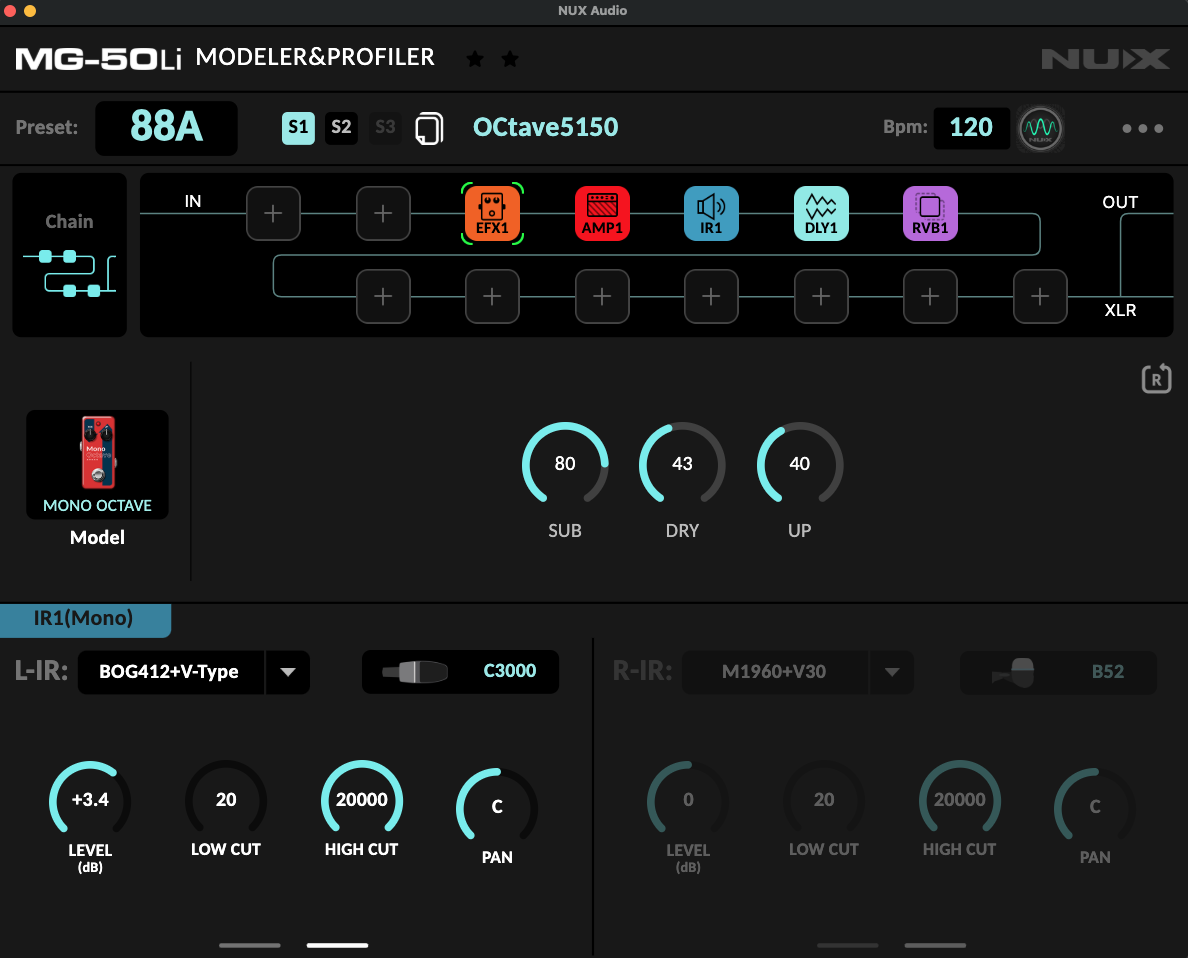
For its latest pedalboard, nUX has utilized its TS/AC-4K (True Simulation of Analog Circuit, 4K) technology, which digitally reproduces every component of an amp to create a highly detailed, dynamic model. The MG-50Li is equipped with three NXP RT processors, allowing it to handle chains of up to fourteen blocks with three routing options: in series, parallel, and split. This processing power results in a latency of 3 ms, which I didn’t notice while playing.
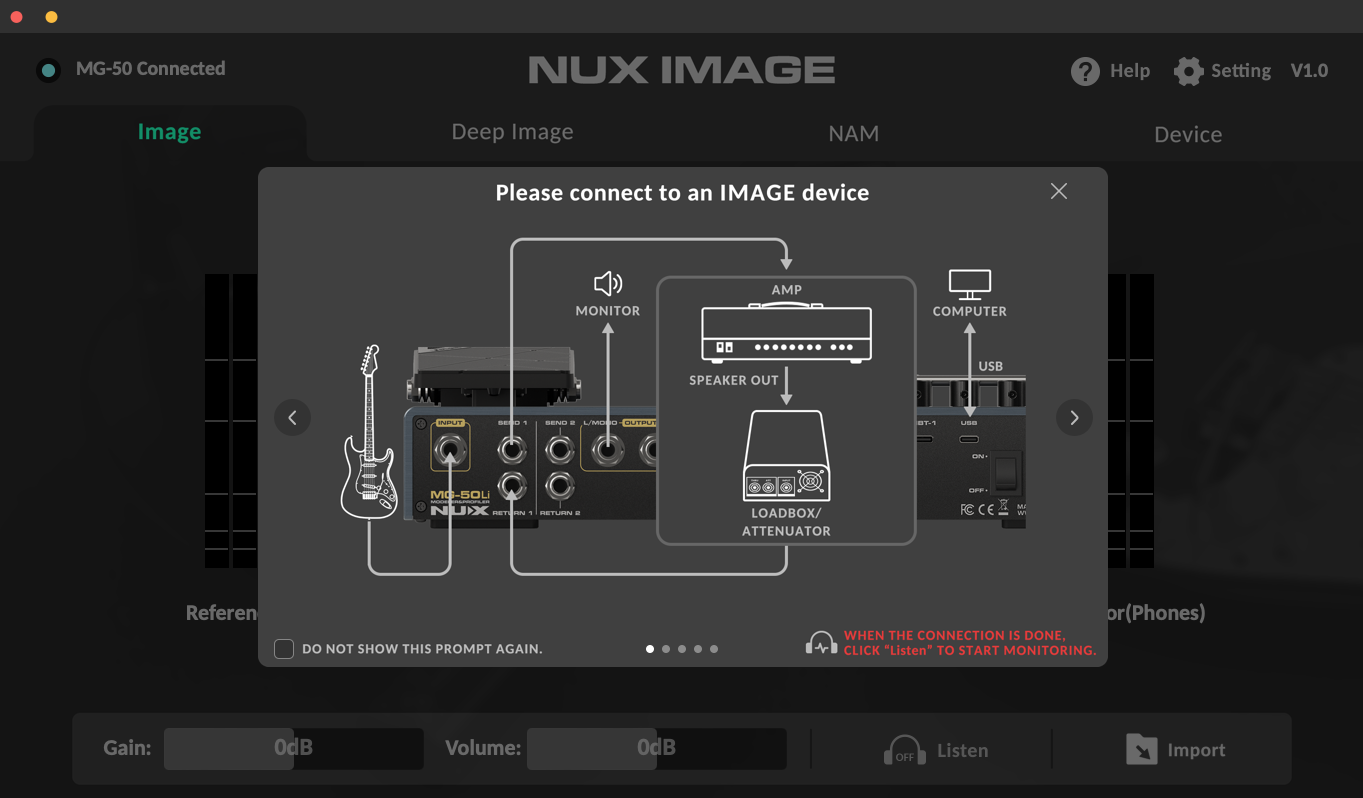
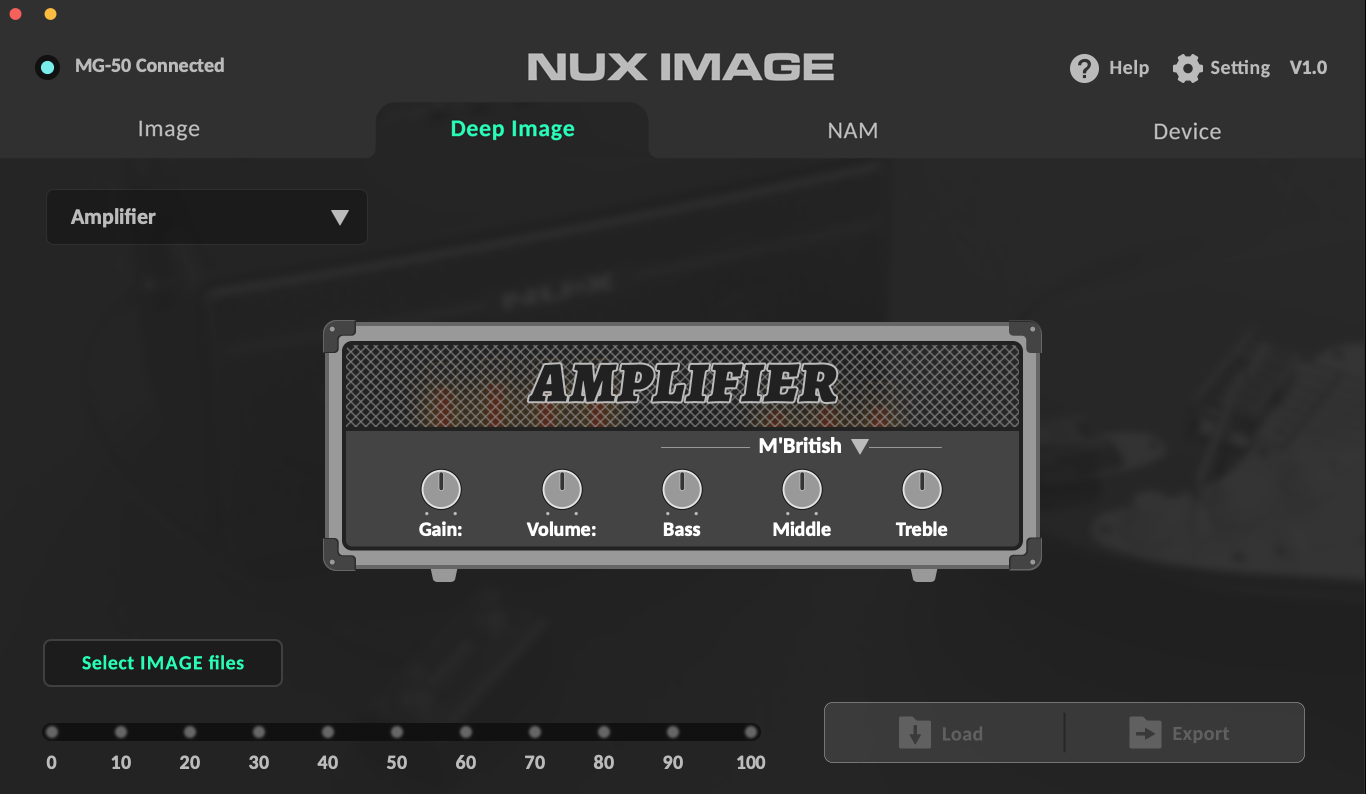
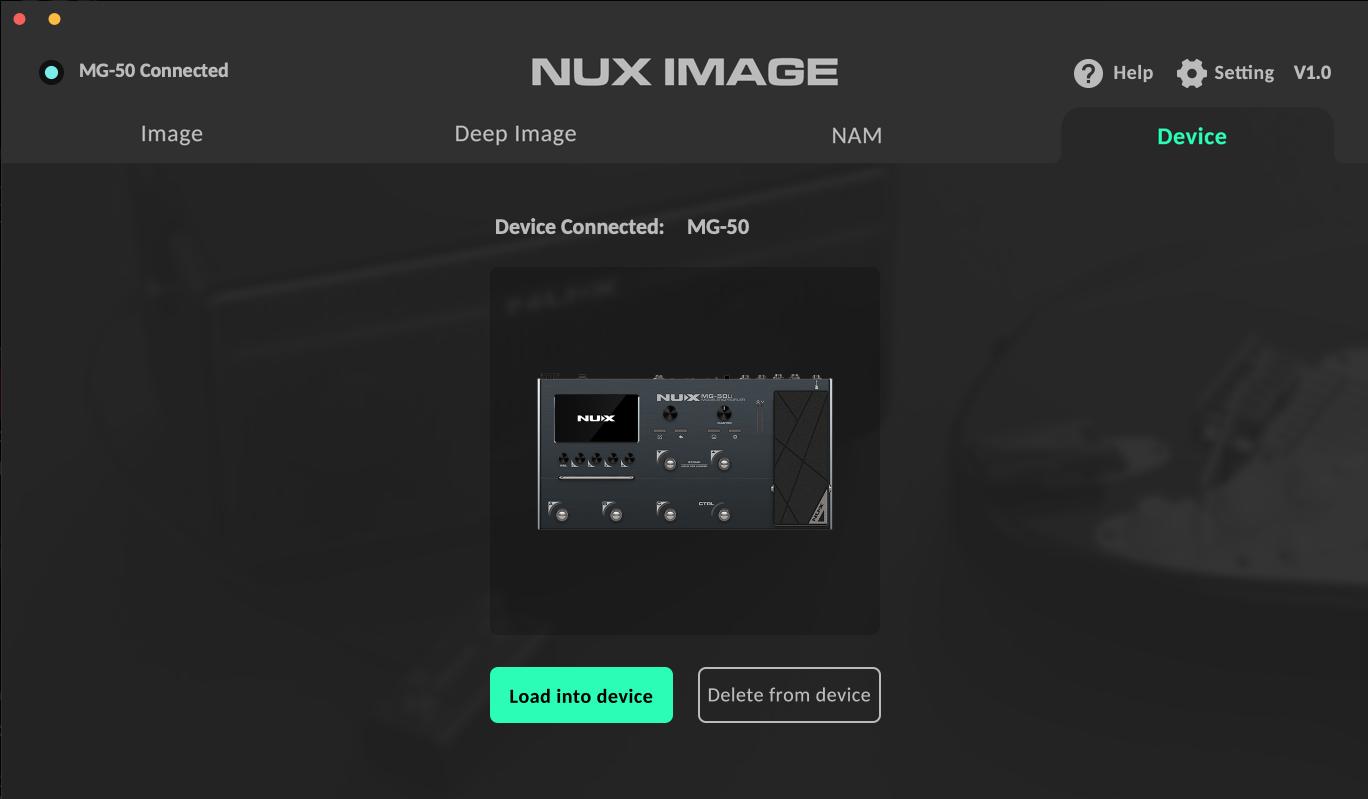
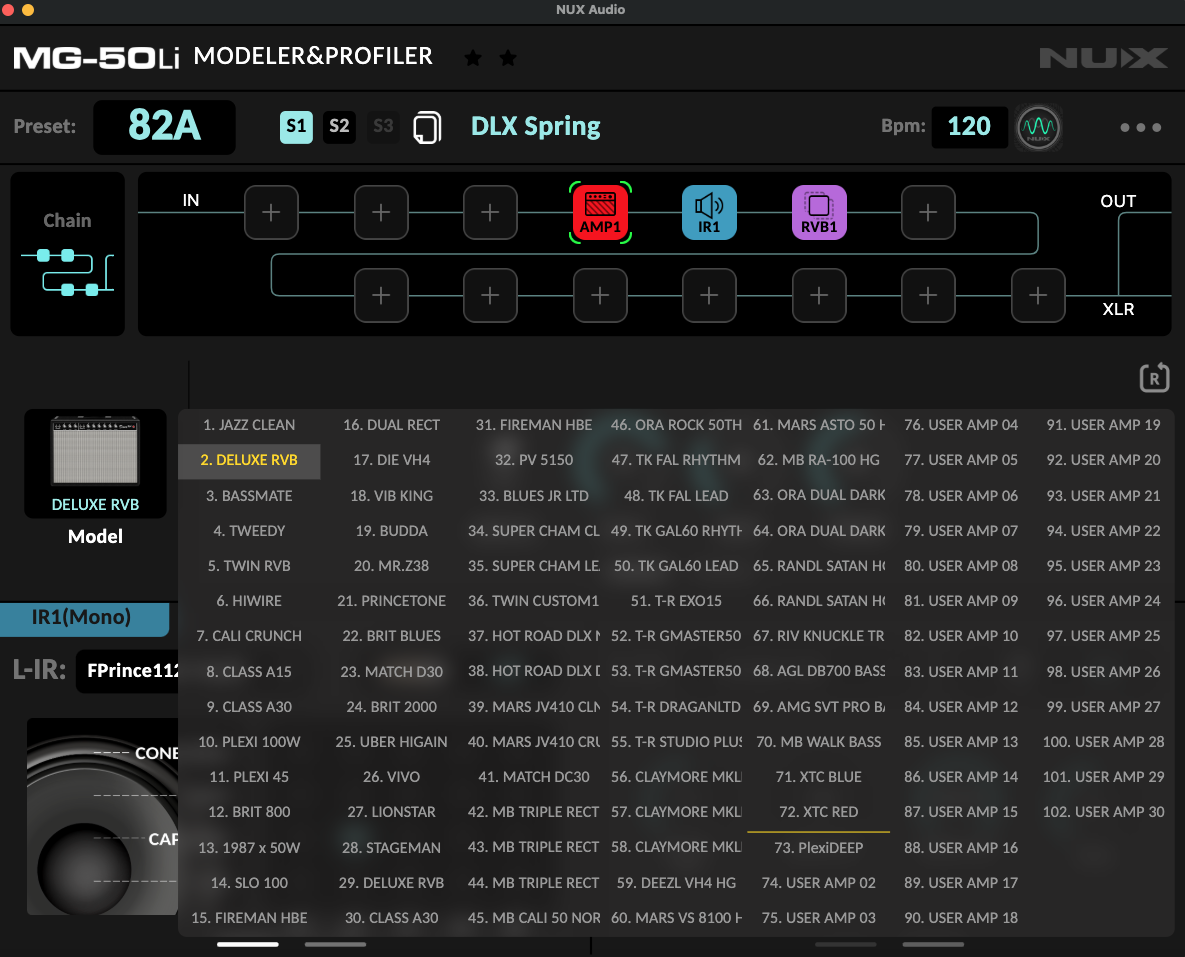
In addition to the in-house TS-AC-4K modeling, nUX has integrated a new method for capturing amps and overdrive pedals into its multi-effects unit. Called Image, it allows you to create a digital version of an analog amp. This process requires dedicated software, nUX Image, which allows you to create an Image (a single capture), a Deep Image (multiple captures with different gain settings to create a Deep Image), and import a NAM file into the pedalboard. The last tab in the software, called Device, allows you to import IMAGE files into the unit.
 |
 |
 |
The MG-50Li operates at 32-bit resolution with a 48 kHz sampling rate. The unit also functions as a USB audio interface, which is handy for basic home recording. This flagship pedalboard from nUX comes with twenty-eight TS/AC-4K amp models and thirty Image amps that nUX has captured. You also get thirty slots to capture your own amps. For the purposes of this review, I captured my trusty Marshall 1987x (50-watt Plexi); I’ll come back to that later.
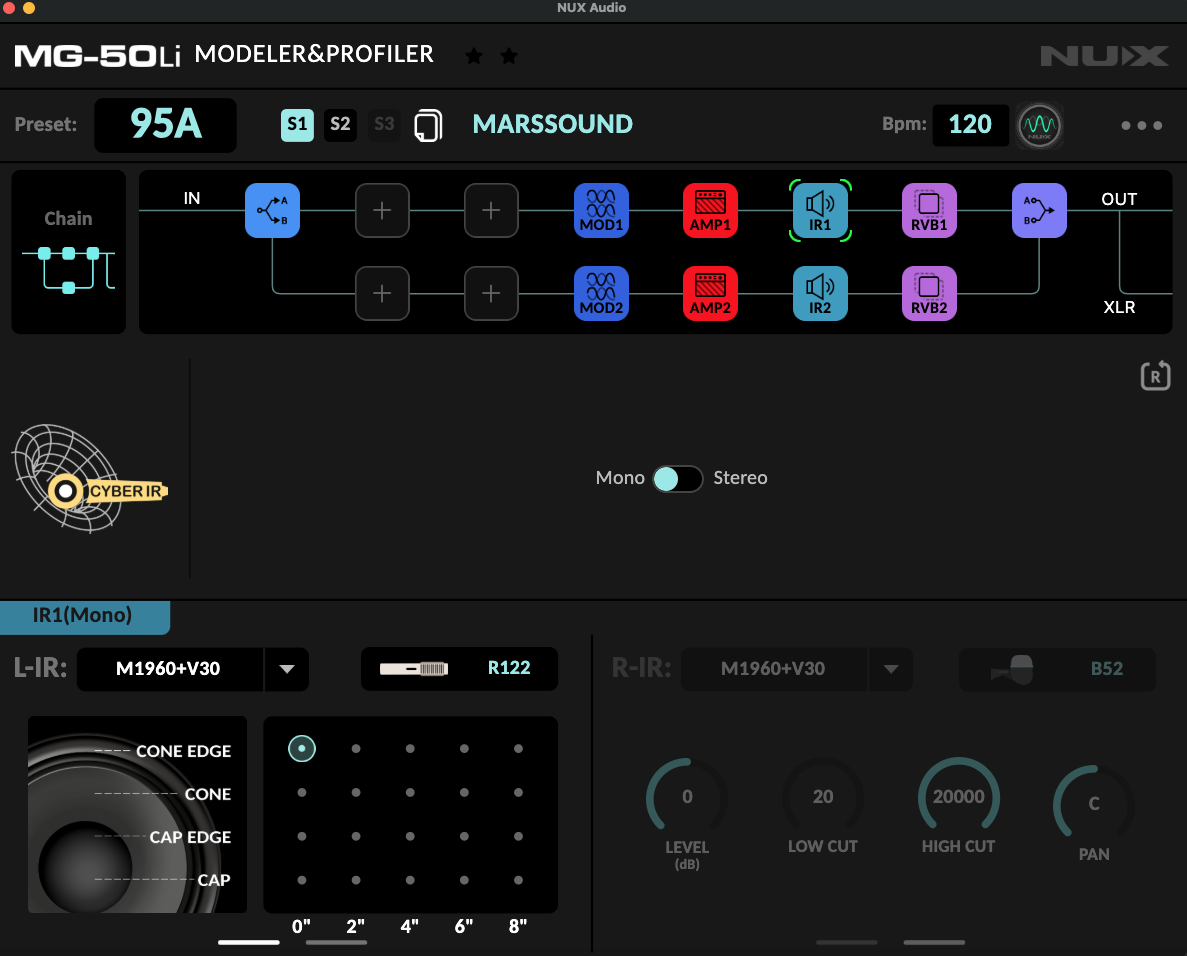
In addition to the ability to capture amps and import NAM files, the MG-50Li also features the new Cyber-IR technology, which can operate in mono or stereo. You can select a different impulse response for the left and right channels, creating a very wide sound. For each channel, you can adjust the level, apply filters (low-pass and high-pass), and choose its position in the stereo field. Forty-two impulse responses are built into the unit, and thirty slots allow you to import your own.
 |
 |
 |
 |
 |
 |
As everyone has surely noticed, the MG-50Li includes the suffix “Li, " which stands for Lithium. The unit is equipped with a rechargeable lithium battery that provides up to six hours of battery life on a five-hour charge. That’s a really useful feature if you want to play in places without access to electricity. More good news: the MG-50Li comes with everything you need to get it up and running. The large box contains:
- The MG-50Li
- A very sturdy carrying case (a big plus)
- A USB-C to USB-C cable
- Two mini-jack (male) to 5-pin DIN connector cables
- An AC adapter (12 Volts, 1.5 Amps)
- Two Pedal Toppers (small orange caps to place on the footswitches)
- The NBT-1 Bluetooth adapter for editing sounds from a smartphone (a big plus)
- A USB-A to USB-C adapter
That’s not all—the MG-50Li also features a stereo looper, which is always handy. Upon unboxing, the pedalboard is covered with a clear plastic shield that labels the function of each button and encoder. It’s a thoughtful touch, but it didn’t really help make things any clearer. After taking the unit out of its box and connecting it to my usual gear, I jumped right into the nUX Audio app and started creating a few presets.
Sound review: Our impressions of the modeled amps and effects
Having already had a few nUX products, I’m familiar with the TS/AC-HD technology, but I discovered the TS/AC-4K with this new MG-50Li. From the very first presets I created using its modeled amps, I was pleasantly surprised by the realism and dynamics.
You can feel and hear that the brand has thoroughly refined its modeling algorithms, and they’re now more enjoyable to play and listen to. The character and personality of each modeled amp come through clearly, and overall, the tones make you want to play—which is a good thing. You can even adjust the bias for each modeled amp and choose the power amp technology: EL84, EL34, 6V6, 6L6, and Solid State.
The L/R Cyber IR system is well-designed and allows you to achieve a wide sound, since you can use two impulse responses at the same time—one on the left and one on the right. The modeled effects are also better than on the other nUX pedalboards I’ve been able to test. The overdrive effects respond well to touch, and the reverbs and delays are very pleasant. Only a few modulation effects, such as the Uni’Vibe, are a bit less successful, in my opinion.
The MG-50Li comes with a collection of 13 overdrive pedals captured using the Image process. This expands the range of available effects and provides access to some rather unusual pedals, such as the Fulltone OCD Germanium or the Boss HM-2 Heavy Metal. Another feature I really liked is the consistent absence of a noise gate when creating a preset; if you want one, you add it yourself, unlike many other multi-effects pedals where a noise gate is always active.
The nUX Audio apps for PC/Mac and smartphones work well and are nicely designed. Creating and editing presets is much easier using one of these apps — the pedalboard’s ergonomics are clearly not its strongest point. The expression pedal, however, is quite solid and inspires confidence and durability. Once the presets and scenes are set up, the pedalboard performs its functions efficiently and remains pleasant to use in live performance settings.
Image and Deep Image capture: Our test with a Marshall Plexi amp
To capture your own gear, you have two options: Image and Deep Image. The first, as its name suggests, creates a highly accurate image of the amp or pedal connected to the pedalboard. The process takes about two minutes and is very simple to perform. The Deep Image process enhances the realism of the capture and provides a digital version of the gear with adjustable gain.
For this test, I created a Deep Image of my Marshall 1987x using images with Volume I set to 1, 2, 3, 4, 5, 6, 7, 8, 9, and 10. The MG-50Li then combined these different images to create a Deep Image that’s more accurate and enjoyable to play. In fact, while Image amps already offer very pleasant sounds and playing feel, Deep Image amps are a step above. With multiple images of the same amp, the pedal can determine its behavior based on the gain control position, resulting in a livelier, more detailed final capture. The Deep Image process is as simple as the Image process but takes more time.