Log in
EN
FR

Empirical Labs

19 products found

Categories
Filter
Sort by
Evaluation
  • Reviewed or not
  • Editor’s award
  • Reviewed by Audiofanzine
Availability
  • Available or not
  • Sold new or used
  • Sold new
  • Sold used
Must-have products
  • All products
  • Flagship products
  • Best rated products
  • Hot products
  • Popular products
Price
  • Freeware
€
Clear
Sort by
  • Popularity
  • User ratings
  • Price - low to high
  • Price - high to low
  • Used price, increasing
  • Used price, decreasing
  • Name (from A to Z)
  • Name (from Z to A)
  • Added on
Sort results
  • Popularity
  • User ratings
  • Price - low to high
  • Price - high to low
  • Used price, increasing
  • Used price, decreasing
  • Name (from A to Z)
  • Name (from Z to A)
  • Added on
Filter results 19 results found
Evaluation
Availability
Must-have products
Price
  • Freeware
Show results

The best Empirical Labs reviews

The reviews Audiofanzine members found the most helpful.
  • « A masterpiece »

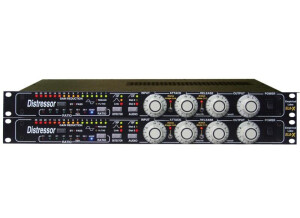
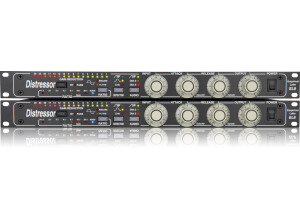
    The Distressor EL-8X is a digitally controlled analog compressor. The stereo Distressor model ships as two matched Distressor units along with a short pair of good quality stereo link cables intended to connected between the two units' Stereo Link TRS connections on the rear panel. Additional connections are parallel 1/4" TRS and XLR balanced input and output connections. The power cord connection is a detachable IEC socket and of course standard power cords are included. The Distressors also come with a short yet helpful manual which, in addition to covering utilization basics, also has suggested settings and "pet tricks." The fun, laid back style of writing makes the manual enjoyable to read and indeed, I keep a manual on my rack for occasional reference even though I've had my Distressors for years and am very comfortable with their operation and characteristics. Of note, the "X" and stereo designations in the model number indicate the presence of the Brit Mode and Stereo Link features which are optional on the basic, mono versions of the Distressor. The Distressor also has a very nice color coded 20-segment LED bargraph for gain reduction, and does not have any input or output level metering. You also get true Bypass selectable with a pushbutton switch on the front panel. UTILIZATION Empirical Labs lay their equipment out similarly across their model range, but differently from other gear manufacturers. If you've used other EL gear, the Distressor's front panel layout should be familiar if you haven't, you'll want to spend some time getting the hang of how they do things. Scrolling through the compression ratios (1:1, 2:1, 3:1, 4:1, 6:1, 10:1, 20:1) are familiar territory for anyone who's used a compressor before. In 1:1, you use this unit for its filters rather than compression. There is also a special "Nuke" ratio which creates an extremely aggressive, heavy, radical compression characteristic that works especially well for super-compressed room mics. Another area where EL differs is in their Input, Output, Attack and Release knobs. The I/O do not have your typical markings referenced to dB levels (there is not 0dB unity marking, for example), but I think this is good because if forces you to listen to what you're doing. Of course you can reference your I/O levels to any metering you might have on your signal source or destination as well, which, again, is just as well since those are really the important reference levels. Likewise, the attack and ratio knobs do not have the usual markings in seconds and milliseconds, but instead arbitrary numbering from 0 to 10.5 as with the I/Os, which, again, happily force you to set the units by ear rather than sight. I love that the knobs are large and easy to read, with hash marks that make it easy to recall settings as tight as half a tenth of a point. You use the input knob to drive the compressor. The more you crank the input knob, the harder you're compressing and the more gain reduction you're going to get. One catch when operating a pair of Stereo Linked Distressors is that it's the compression that gets linked--one unit's compression settings will slave to the other, but you must still take care to set the ins and outs just the same to avoid shifting the stereo image. I'm sure EL did this to make linked operation more flexible, but for the sake of efficiency I would have liked perhaps a toggle switch to allow the I/O's to get linked along with the comp circuits, especially since there is no 0dB unity reference marking on those big ol' knobs. Let's be honest, if you're stereo linking compressors, you probably want to retain a stable stereo image along with the compression characteristics! In addition to the excellent compression facilities, the Distressors have two great filter banks: Detector and Audio. The Detector filters are an adaptive high pass filter which really cleverly follows the signal characteristics and works brilliantly with heavy compression where you don't want the signal's low freqs to get too weird or pumpy; also in this bank is a band emphasis setting that can help smooth over the upper mids so they don't get too shrill as you compress more aggressively, and finally, there is a "Link" mode which, along with the Stereo Link toggle switch, links two Distressors together. The other filter bank, Audio, features a different high pass filter which functions like any other HPF like you'd find on a mic or preamp, with a rollof frequency of 80hz. Then you have two Distortion filters: Dist2, which adds second order harmonics to the signal, which can help digital signal sources sound a bit more like they're passing through analog tape or classic transformer gear and is more or less a very subtle, general purpose filter; Dist3 takes things a bit further with more aggressive third order harmonics which can add a little "hair" to your signal. It's especially handy for rock bass sounds. Common to both filter banks is the ability to select between one filter, or to stack multiple filters on each other, so for example you could have the Detector HPF and band emphasis working together to keep weird modulations out of a heavily compressed signal, of you could have the Audio HPF and Distortion modes working together so that you're not adding too much THD under 80hz. The last feature to discuss on the EL-8X model is the special "Brit Mode," selectable by a toggle switch on the front panel. This setting is intended to evoke and extremely fast, aggressive compression characteristic similar to the classic 1176 "all buttons in" trick. The Brit mode is, in my opinion, of limited use. I've used it a couple of times on rock bass for a certain, super-quick "clamp down and let go" type of characteristic, but this is the one feature on the Distressor that I could take or leave. I really like having it as an option on the pallet, but I try it a lot more than I end up using it. This feature can be used along with any ratio you want, but even in 1:1 when you're letting it do its own thing, it's still very aggressive, and if you're wanting the "all buttons in" emulation, you'll want to keep attack and release settings under 4 on the dial. That said, you can get a clearer sound and less aggressive clamp-down by keeping the attack higher than that and not hitting the compressor so hard with the input. SOUND QUALITY Well, let me say that I normally don't believe in "perfection" when reviewing a piece of audio equipment, I mean, there's ALWAYS going to be something that leaves a tiny scrap to be desired with any gear, and generally speaking, the best I ever believe in rating some aspect of a piece of gear I'm criticizing is a 9--to me, that's just about as good as it gets...but the Distressor is the exception and I want you to know that I don't take my rating of a "10" here lightly. The fact is, what EL really knocked out of the park with the Distressor is just how incredibly MUSICAL this freakin' thing is, practically regardless of how you set it. Once you get the hang of how the compressor and filters handle, you really can't go wrong with this unit in terms of sonics. While a given setting may be the right one for a given source, hence all the ratios and filter options, it's almost impossible to make a signal completely unlistenable with the Distressor. This is what makes these units truly general purpose, and indeed, I have yet to encounter any signal source that the Distressor simply couldn't flatter! It's really that good. You can SLAM a signal in nuke mode right off the meter, we're talking past 20dB of reduction with a super thick, brutal, massively hairy, pumpy, breathy sound, and if it's the right setting for the source, it will STILL SOUND AWESOME. If all your source needs is a tender little kiss in 2:1 with a dB or two of reduction tops, say maybe on a vocal with a pretty good dynamic range but you just want to smooth it out and get it a little silkier, that will sound wonderful as well--and really anything in between. If you want a classic DBX-ish sounding comp characteristic, try 6:1, this is a great ratio for snare drums and sometimes vocals or bass. If you want a good, smooth characteristic that can still push things forward a little, 4:1 is a good one. 20:1 is my least-used setting, mainly because I don't use full-on limiting all that terribly much, but of course you can still get a good sound with it, something that takes 10:1 up a notch or two but doesn't have Nuke's maniacal, over-the-top insanity. My favorite setting bar none, and my most common go-to setting for just about anything from vocals to bass to guitars to percussion to kicks or snares or even drum overheads would have to be 10:1 "opto mode" which is a relative emulation of the classic opto compressors such as the venerable LA-2A. What you do is set the ratio to 10:1, attack all the way up, release all the way down, and you get this special circuit. Keep the input lower and you can a really nice, clear sound that clamps down late to just keep the signal in check, but if you want, you can crank the input just about as far as you want and the characteristic gets more aggressive, more in your face, more muscular--you can take the gain reduction meter into the yellow or red, and doggoneit if the thing doesn't just stay so completely musical sounding. I'm sorry to gush here, if you've read my other reviews then you know I like to stay pretty balanced and critical even on gear that I really like because, as I say, you can suss out the pro's and con's of anything no matter how good, but the Distressor sonic abilities really are a 10 out of 10 in my book. Hey, there's a first time for everything! OVERALL OPINION There's really nothing I'd change about the top of the line, fully optioned Distressor EL-8X save maybe for a switch that allows slaving of the I/Os in Stereo Link mode as mentioned above. That's really it. Everything else about the Distressors is just as I like it and I never go wanting otherwise. My Distressors get used literally on just about every session I do. If there's only one thing I'm compressing, it's probably through a Distressor. Also currently at my disposal are the Empirical Labs Fatso Jr (a different animal completely) as well as classic compressors from DBX, Altec and JoeMeek, FMR Audio RNCs, and more, the Distressors are bar none the kind of my racks. If I had a rack full of Distressor and nothing else, I'd a) be a happy camper and b) not be wanting for compression characteristics, thanks to the huge variety of sounds that can be attained by all the compression options and filters available. This is my desert island compressor without question, bar none my favorite compressor for tracking with comp on the way in, and hugely versatile come mix time (in fact, I routinely serial compress a given signal with Distressor on the way in, then a little more on the mix perhaps in a difference setting, say 2:1 or 3:1 kisses on one round, then 10:1 opto on the other). It's a jack of all trades, master of many compressor, certainly worth every penny, and comes with my highest recommendation.

  • moosers's review

    The Empirical Labs Distressor EL8 is a single channel compressor that's designed for use in the recording studio. This is the original model of the Distressor as there's also an EL8-X that has a few added features and also a stereo model. For those who haven't heard of it, the Distressor is probably the best modern made compressor, at least in my opinion. It has both XLR and 1/4" jacks for connecting to it, as well as 1/4" connections for stereo linking. It is a rack mountable piece of gear and will take up just a single space. UTILIZATION It shouldn't take too much time to get used to using the Empirical Labs Distressor EL8, as while it's got a lot of controls to offer, it's still pretty easy to use. The main parameters found on the EL8 are knobs for input, attack, release, and output and a button for setting the ratio (from 1:1 to NUKE), but it also has a few other tone shaping options that you won't find on any other compressors that I'm aware of. A manual shouldn't be needed... SOUND QUALITY The sound of the Empirical Labs Distressor EL8 is nothing short of awesome. It's one of my favorite compressors overall and one of the best for getting that full, modern compression sound. I love using it to track vocals, but it's also great for drums and a variety of other purposes. While maybe not as warm sounding as some vintage compressors, that's what you have those for and you have the Distressor for a cleaner, more modern sort of tone. Overall, without a doubt one of the compressors I use the most. OVERALL OPINION You really can't go wrong by picking up an Empirical Labs Distressor EL8. It's one of the best modern compressors out there and virtually every professional studio has one. It's not overpriced and can be incredibly versatile. It's great to have a set of these on hand, which we do in most of our rooms, for stereo mixing. If you're after a modern compressor, the Distressor EL8 is what you want.

  • moosers's review

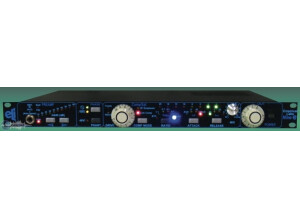
    The Empirical Labs EL9 Mike-E is an analog channel strip that consists of both a mic preamp and a compressor. The unit has both 1/4 inch and XLR connections and is generally pretty user friendly. It is indeed a rack mountable piece of outboard gear and will take up only a single space in a traditional rack. UTILIZATION The make up of the Empirical Labs EL9 Mike-E isn't too hard to follow overall. It is easy to use and has parameters that are ubiquitous across most mic pres and compressors, so those with previous experience with channel strips like this one should be able to adapt to this rather quickly. In the mic pre section, you've got parameters for plus or minus gain as well as a phase button and a phantom power button. The compression section has parameters for drive, comp mode, ratio, attack, release, and mix. There is also an overall output level knob that is in its own section. I haven't seen the manual for the EL9 so I can't say too much about it. SOUND QUALITY The all around sound quality of the Empirical Labs EL9 Mike-E is very impressive. The mic pre is quite accurate and has a sound that can be described as fat and wide. The compressor is probably the most impressive part about this unit, however. Since compressors are their specialty, the compressor in this channel strip has an incredible sound. It has a variety of parameters that make it possible to get all sorts of different tones. For this reason I find it easy to use the EL9 in tandem with just about any type of instrument or voice as it can adapt to all sorts of different situations. OVERALL OPINION I've been using the Empirical Labs EL9 Mike-E for about a year and it has become one of my favorite pieces of gear made by Empirical Labs, which is saying a lot considering their impressive line of gear. I would definitely recommend it as a top choice for those looking for a top tier channel strip with a great sounding pre and an even better sounding compressor. While the price isn't exactly cheap, it is reasonable and is aimed at those professionals looking for great tone regardless of the price. All in all the Empirical Labs EL9 Mike-E is a very impressive unit that should be looked into by any professional engineer interested in new and exciting channel strips.

  • moosers's review

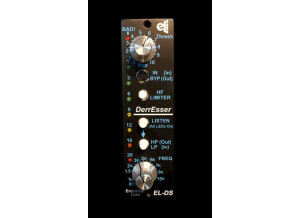
    The Empirical Labs Derresser is a high quality outboard de-esser that I believe will fit into any lunchbox style casing and therefore isn't rack mountable. I'm not too sure about the connections as the one that I have used was pre racked already in a studio. UTILIZATION The make up of the Empirical Labs Derresser isn't too hard to follow as everything is pretty straight forward. You've got parameters for threshold and frequency as well as buttons for high pass/low pass filter, high filter limiter, and bypass. Even if you don't have much experience with dessers, as long as you understand the basic concept for this unique dynamic processor, I don't think you'll have any trouble figuring it out. I haven't seen the manual, so I can't say how well put together it is, but it is easy enough to use that I don't think one is necessary. SOUND QUALITY The sound quality of the Empirical Labs Derresser is top notch. This is definitely one of the best sounding dessers that I have used, although I haven't used all that many different outboard dessers. I have only used this for vocals as that is what a desser is generally used for, but I guess that if you wanted to get less sizzle on another instrument, this would work fine. This is also a pretty versatile desser compared to the other ones that I have used, making it great for pretty much anybody's voice... OVERALL OPINION I first used the Empirical Labs Derresser about a year ago and since haven't had the chance to use it since I don't own one myself. Hopefully I can get back to the studio that I used this at soon as this is a great tool to have around. It ranks up there as the best outboard desser that I have used and is probably just as good as you are going to find one. It is easy to use while maintaining a great deal of versatility in addition to its top notch tone quality. If you are looking for a great sounding desser, the Empirical Labs Derresser is a great place to start.

  • moosers's review

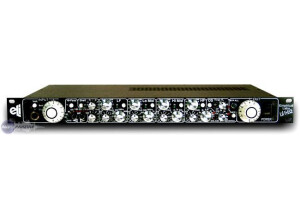
    The Empirical Labs Lil' FrEQ is primarily an equalization and filtering unit, but also has some dynamics control as well. The unit is made up of analog components and has XLR connections in the back with a 1/4" TRS input in the front. It is indeed rack mountable, and will take up only a single space. UTILIZATION Using the Empirical Labs Lil' FrEQ won't preset any problems to the experienced user when it comes to parametric EQ. However, I can't really say how well a beginner would fair here, as even though this isn't all that complicated, it does have some parameters beyond the traditional configuration, and isn't exactly your typical parametric EQ. The Lil' FrEQ has sections for a high pass filter, as well as a four band EQ and a dynamics section. It also has overall input and output levelers. If you're a beginner, I'd say it is a good idea to have the manual around, but I don't think it is necessary. SOUND QUALITY I've yet to honestly use a piece of gear that I didn't love made by Empirical Labs. They simply have an awesome line of products, which are diverse, versatile, and each brings something to the table that gear by other manufacturers don't. Not only does the Lil' FrEQ have an outstanding filtering ability with plenty of control, but also has built in dynamics to help you keep your signal in check. Rarely do you see such an in depth filtering system with the added bonus of having dynamic capabilities that isn't a straight up channel strip. I've found that with the Lil' FrEQ that not only am I able to do more traditional equalization, but I also find it to be awesome for filtering experimentation. OVERALL OPINION I've really only got good things to say about the Empirical Labs Lil' FrEQ. It is certainly a professional's piece of gear, so it has the price tag to go along with it, but other than that I have no complaints at all. If I were to add only a single piece of outboard gear to my setup, this would definitely be in the mix for it, as the Lil' FrEQ is the perfect combination of versatility and tone...

  • mooseherman's review

    This outboard compressor is all analog. It can be racked easily (takes two rack spaces, being stereo) and works similarly to most outboard compressors. There are two 1/4' ins (dual mono or stereo). Great because all the controls are pretty obvious. UTILIZATION The controls for this compressor are rather particular. Eventually, the sound becomes really easy to manage, but it certainly takes a lot of time to get comfortable with it. As most compressors operate a little differently from one another, this one is certainly no exception. That being said, once you've worked out the kinks and don't push it too hard, it gets easier and easier to use, and usually yields great results. The manual should only need to be read once to really figure it out, practice and trial is more important than anything in getting a feel for it. SOUND QUALITY I've seen this effect save recordings from sounding weak and thin, and I've also seen it suck the life out of them entirely. It's a difficult beast to tame, but when used properly it can really work well. It makes drums, bass, guitars, keys and piano sound really thick and fat, usually better than other compressors will. Whenever this is the effect you are going for, the Distressor is a good choice. Sometimes the compression will need to be a little bit more subtle. While the distressor can go for a really subdued effect with decent results, I tend to use other compressors for a variety of reasons. That being said, you can't go wrong with this for most situations if you really know how to use it. OVERALL OPINION I've used this for over a year. I really like the clarity and depth that it can help provide to a track or even an entire mix. I've used many different kinds of compressors, but as many engineers will tell you, there is only one Distressor. While not always the best choice, sometimes it's the only choice. It's too versatile a piece of gear for any engineer to not own! Definitely highly recommended by most professionals and amateurs alike.