Log in
EN
FR

Mesa Boogie Guitar Pre-amps

Series

9 products found

Categories
Series
Filter
Sort by
Mesa Boogie
Evaluation
  • Reviewed or not
  • Editor’s award
  • Reviewed by Audiofanzine
Availability
  • Available or not
  • Sold new or used
  • Sold new
  • Sold used
Must-have products
  • All products
  • Flagship products
  • Best rated products
  • Hot products
  • Popular products
Price
  • Freeware
€
Clear
Sort by
  • Popularity
  • User ratings
  • Price - low to high
  • Price - high to low
  • Used price, increasing
  • Used price, decreasing
  • Name (from A to Z)
  • Name (from Z to A)
  • Added on
Choose a category
Selected category: Guitar Pre-amps
Choose a series
Sort results
  • Popularity
  • User ratings
  • Price - low to high
  • Price - high to low
  • Used price, increasing
  • Used price, decreasing
  • Name (from A to Z)
  • Name (from Z to A)
  • Added on
Filter results 9 results found
Brands
Evaluation
Availability
Must-have products
Price
  • Freeware
Show results

The best Mesa Boogie Guitar Pre-amps reviews

The reviews Audiofanzine members found the most helpful.
  • « Mesa's best kept secret »

    On the surface this looks like a somewhat simple and dry preamp. 2 channels. Effects loop. Graphic eq. A few switches and such. Once you dig into the manual you realize the possibly versatility with this preamp. Yes, dialing this thing in is in reality the equivalent of driving a space ship, but this is Mesa and you shouldn't known that before you started. UTILIZATION Let's start with the clean channel. This is a bit less complicated than the lead. Basically it's a blackface circuit. It's best to treat it like that and take what you can get from it. Nice dark sparkly fender cleans are to be had here. Actually, besides maybe the Suhr 3 channel preamp, this is the best blackface cleans you will ever get from a preamp. That's really all there is to be said for the clean channel. The lead side is another story. It's very versatile. If it weren't for the manual, many players would be lost. Using the graphic eq as well as the various switches you can go from a classic rick kind of crunch to a Mark II Kirk Hammett style high gain sound, to a more modern recto/mark IV petrucci thing. SOUNDS I use it with a Peavey 50/50 power amp into a VHT 4x12. This amp is an odd fit in a lot of bands. It's not quite modern metal but it's not quite 80's hair either. It fits in great with 90's alternative. It can easily do the metallica thing. I expect a lot of people who use these don't spend much time on the clean channel which is a shame for how good it is. It's a stretch to say, but you can use this in a lot of situations. I have a friend who used one in a post rock band for years. If you do dream theater it can get that tone easy. It's basically a Mark clone after all. OVERALL OPINION This preamp isn't for everyone. But it's a darn good preamp. If you like American sounds, this is the preamp to get I think. Unless you have some huge budget. It won't do marshall or vox. But it will do fender and mesa without a hitch. The value is massive. Both channels alone are worth the price. Try changing the tubes around. They really do matter a lot.

  • « Beefy Pedal »

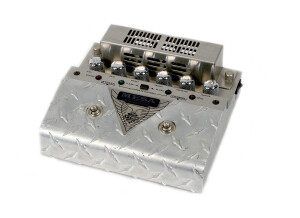
    This pedal is basically a Mesa Recto preamp in a little box. You get most of the features you would see on a normal amp but in a small but larger size foot pedal. The tone of this pedal is great. You get a very thick and fat sounding distortion that will sound great with just about any guitar and or any amp. This is a pedal that will take control of any guitar or any amp. It will dominate pretty much any setup you have because this thing is a beast. UTILIZATION FEATURES: Handbuilt in the USA 2x12AX7 2 Channels, 3 Modes (Clean, Blues & Solo) Mode Assignment Switches Gain, Master, Bass, Mid, Treble and Presence (Universal) Bypass Switch Clean Gain Adjustment Control Record/Headphone Out External Switching Inputs Available as: V-Twin Pre-Amp Pedal Optional Gig Bag • V-1 Bottle Rocket or V-Twin • Shoulder Strap SOUNDS The tone is huge to say the least. You get a very thick crunch tone that is extremely close to a the sound of a Dual Rectifier. This pedal will greatly saturate you tone and thicken up the weakest guitar or guitar pickup in your arsenal. I like this pedal with any guitar you throw at it. I especially like this pedal with a Gibson Les Paul or another guitar with a humbucker style pickup installed. You get a meaty tone that will cut through pretty much and band mix successfully. OVERALL OPINION This pedal is a great addition to any person who needs a fat sounding distortion who uses maybe Fender amp or Vox or just about any clean based amp. If you need a beefy steroid pedal than this is your best bet. Another great thing about this pedal is the ability to use headphones or record out with it. SO you can send it to a recording console or the house PA system if you didn't bring your regular amp or if stage volume is an issue. I don't think Mesa Boogie makes these pedals anymore. So the used market is the only way to go at this point. I think you can pick them up for around $350+ in the classifieds or used market.

  • « Great at what it wasn't built for »

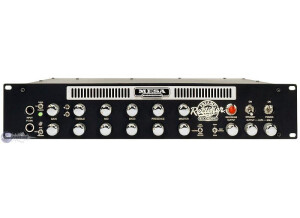
    Mesa Boogie sought to answer the trend of digital emulations of their rectifier series amps with an analog alternative, the rectifier recording preamp. Featuring 2 distinct channels and 6 user modes (clean/ fat/ brit for channel 1 and raw/ vintage/ modern for channel 2), the preamp is modelled closely to the typical rectifier amp with some notable additions. A bright and -3db pad are added to channel and a preamp voice toggle on channel 2 allows you to choose between "live bright" and "warm record" modes. The preamp is tube based running 6 12ax7's and an effects loop is present as well. The focus of the preamp was the recording output, however, mesa have included several I/O options to make the unit gig friendly as well. The construction is top notch and the preamp looks very sharp in a rack. UTILIZATION The preamp is very simple to use and connects directly to an interface to record to your DAW. The inclusion of a footswitch makes sessions easy to navigate. I used the preamp with an external power amp and cabinet with wonderful results. With this configuration, the unit sounds splendid at both bedroom and gigging volumes. Construction is solid and gives you the same sense of confidence as any other Mesa product. SOUNDS The cleans are voiced differently from a normal rectifier head, offering note separation and brilliance typically not found in the series. The bright switch worked very well livening up my dark sounding Gibson's and sounded at home stock with my brighter, maple fretboard equipped guitars. The gain sounds are excellent and being able to control your output with a poweramp can deliver some very saturated sounds. As impressed as I was with the live application of this product, I felt that the direct recording function was a little underwhelming. The preamp direct sounded lifeless and lacked the excitement of capturing the same setup in the room with a e609 microphone. OVERALL OPINION If you are looking for a preamp to match with a poweramp and cab, this is an excellent tube offering that can be had for as little as $650 used. If you were excited about the direct recording application of the rectifier preamp, you will more than likely be dissapointed with the results.

  • « Mesa Boogie Triaxis »

    Mom and Pop type music shop (castle music) in Santa Barbara California, in approximately 1989. Price paid, about $1,000 new, whatever full retail was at the time. I bought this unit to finish the stereo rack half stack I was putting together. My Rack: Space 1: Furman Power Conditioner/pwr strip Space 2: 1/2 space korg tuner, 1/2 space Boss compression/limiter Space 3: 1/2 space dbx stereo noise gate, sholtz midi octopuss w/2 loops Space 4: Rocktron Intelliflex Space 5: AKG Uhf Wireless Mic Space 6: Mesa Boogie Triaxis Space 7/8: Mesa Boogie Simul Class 2:90 Cabinet: Stereo Mesa Boogie 4-12 The triaxis nicely complimented the Boogie Simul Class 2:90 power section, and also supports real time midi control which allowed me to make full use of my Art expression pedal unit. On a particular channel I can assign either of two pedals to control a triaxis parameter in real time. I.e., a volume pedal that effects master volume, hence absolutely no change in tonal qualities, and a second pedal which simultaneously brings gain up, bass down, trebel up, 5 band eq up, presence down...for example... These pedals are also used to control real time parameters on the Intelliflex, and the midi octopuss serves to switch non-midi modules as well simultaneously. Conceptually, to have 90 channels of tube preamp, midi switchable, well what can I say...that's like having 45 two channel tube heads all set at different tones at your command by channel switching! In practice you end up settling on say 10-20 different tones, but duplicating these settings on some channels and using different intelliflex settings to create a different sounding channel. The key is your in charge of what your 20 differnt tones sound like as opposed to say a modelling amp like line 6 or vox in which they tell you what your 20 different tones must sound like. With a Triaxis you can do way better, and have total control over your sound. I did extensive comparison between the Triaxis and the Marshall JMP midi preamp, taking both units home and playing them for days. I have always been a Marshall man at heart, having owned JCM 800's at three different times. I had also owned a Boogie Mark IV, and that is how I got into Boogie as well. In the end, the Triaxis not only sounded better, was more versatile sound wise, and had superior options for real time midi expression. HOw does it sound? Well, I won't spend much time here...it sounds as good as any boogie sounds...this unit is able to reproduce most any boogie product that has come out. There are about 8-9 different amp modes to choose from that you can assign to any of the 90 banks. Combined with the three different modes on the Simulclass 2:90 that gives alot of combinations. I can find any sound I want here from the cleanest cleans to the heaviest type triple rectifier type sounds (not sure if it is actually a triple rect, but it sounds as intense as one). The thing I really love is that I can have controlled third harmonic feedback (the good kind of feedback) at will.... reminds me of why I loved my Marshalls. Find the right spot on the stage and your Triaxis/2:90 is singing for as long as you want. Now here is the deal....I enjoyed this setup for many years...and 6 months ago was considering selling it all in favor of a more simplistic rig...my hair is shorter now, and I'm not doing the heavy rock thing any more...natural evolution to the blues thing, so I was in favor of getting a combo of some sort. Well after researching many rigs and settling on a Fender Hot Rod Deville 410,... I decided to try an experiment on my triaxis that I had never done... the midi dump and upload! I found some websites with artist settings that could be downloaded to my computer, and uploaded to the triaxis automatically via the midi cables. Damn! This thing sounds so frigging good now..what great blues tones that I had never dialed in! I guess it makes sense that these artists with their roadies can really play with these units and dial in fantastic different sounds. So much better than what I had found. I want a do over..want to go back to my heavy rock days and re gig with these new settings. Now I have files saved on my computer with my original settings and my new settings..and I can reload and alternate between the two at will. Hmm what gig tonight? Jazz..upload the file...tonight, OzzFest? Upload the file.... With so many parameters to dial in ... I would say that the only part of the triaxis that I can comment on in any negative sense would be the interface for parameter changes....there are no knobs to twist...there are left and right arrows....This makes it slightly more cumbersome than a simple twist of a knob. This is no longer important to me since I now use the shareware software I found in order to make paramter changes from my computer. A simple slider exists for each paramter...and as you slide the know on your cpu, the parameter is changing on your triaxis and available for a sound check. But for many years I did not use this feature. Knobs would make this unit a little easier to dial in..but keep in mind this is a very minor complaint....in practice it is easy enought to make minor tweeks to sounds....i.e. at a practice or gig need a little more or a little less? No problem to dial this in. For initial setup of channel parameters, I guess I am saying this is a time consuming effort if you don't have the use of the shareware and a computer.... The unit does come with some very nice factory presets..so in reality one need not do any extensive setup. I have owned this stack I put together for over ten years. I have gigged out with it exptensively....I have never had to change the tubes! Never had a technical difficulty with it. It's rock solid. It loks sharp in the rack! Probably because there are no knobs...very cool look. So..I had loved my triaxis..was considering selling it for a blues specific sounding amp..and now have fallen in love with it all over again. I am getting better tones and response out of it than any other blues amp I have tried. Some have critisized the clean sounds saying they don't compare to some of the Fender's with lots of headroom and sparkle...that is not my experience but the key is to use a simulclass 2:90 in the "full" mode not the half mode. It is absolutely the best sounding, most versatile, most feature rich rig I have ever played with. Meanwhile, if I get a fender hot rod deville..it will only be a practice amp for watching tv in the living room and for going to practice...my stack is big and heavy for moving around for anything less than a gig. This review was originally published on http://www.musicgearreview.com

  • « Twin goodness »

    This is a the same as the V-twin pedal but with the extra features of another side of the exact same control knobs. This one you have the ability of putting it in a rack with the other rack effects. So double the control knobs and add some extra needed features that make it a more usable preamp or amp features that gives it more tonal utility. The rack version gives a usable guitarist dream preamp for the gigging musician. You can get a smart preamp with the footswitchable input for someone who needs the most utility out of your guitar rig. UTILIZATION V TWIN Rackmount Preamp: 1/4″ Jack Instrument input on front and rear panel 2 Separate pre amplifiers: a clean and a solo channel Each Channel: Gain/Master combination, Tre, Mid, Bass Presence Both channels are fitted with a 3 position mini toggle switch allowing 3 distinct voicings: - Clean Channel: Bright, Fat, Scooped - Solo Channel : Blues, solo, Crunch Of course dependent on their individual gain structures and tnal characteristics. The 2 channels may be activated individually, simultaneously, and blended in any desired ratio The mix mode sums the Clean and Solo channels and gives a mix control as well as mix level control External Channel Select Ports (which I purchased as well) for all 6 sounds are fitted to the V TWIN’s rear panel for triggering individually or in a mix configuration from a remote switching source Onboard Auto assignable Stereo Parallel Effects Loop, Mono send Stereo Return, rotary mix control of effects. Stereo Headphone Out jack SOUNDS The tone is huge to say the least. You get a very thick crunch tone that is extremely close to a the sound of a Dual Rectifier. This pedal will greatly saturate you tone and thicken up the weakest guitar or guitar pickup in your arsenal. I like this pedal with any guitar you throw at it. I especially like this pedal with a Gibson Les Paul or another guitar with a humbucker style pickup installed. You get a meaty tone that will cut through pretty much and band mix successfully. This rack has some different features like the solo boost and the clean and distorted channels like 1,2,3 and the its also footswitchable. OVERALL OPINION This rack is a great rack for those needing a rack mountable version of the V-twin pedal. You get a double version of the pedal and also the extra features such as the foot switch and the solo boosts and the clean channels. These have been discontinued for some years now. You can pick them up on the used market for around $450 on evilbay or maybe the classifieds section. I would recommend this to someone who wants a killer preamp for recording or running into your rack guitar rig

  • Audiofanzine FR's review

    (Originally written by aliascross/translated from Audiofanzine FR) Guitar preamp with eight 12AX7 tubes. Two channels and six modes that can be used simultaneously! Non-switchable FX loop Main and Rec stereo outputs UTILIZATION The settings could be finer... especially the volume knobs! Channel 2 is not so loud (volume) as channel 1! (it's enervating...) SOUNDS Like the previews review, I find this preamp works best when used directly with a mixer. The sound is really nice (better than a POD2, XT or X3) and very authentic. I compared this application with an amp + cabinet + mic setup and the sound is very similar. It's obviously possible to get better results in the second application but you'll have to use several mics and fine tune their position. This preamp gives rather average results with a power amp (VHT BB) + cabinets (NOS v30 and G12h100)... To be compared with a CAE 3+SE, which sounds much better in this configuration). I give it a 10 when connected directly to a mixer and a 6 with an amp. OVERALL OPINION I recommend you to connect it directly to a mixer! In such a setup the sound is much better than with a CAA 3+SE plus a Palmer PGA-05. On the contrary, when connected to a power amp the 3+SE is great compared to the Quad... So I give it a 10 when directly connected to a mixer and 6 with an amp.