Log in
EN
FR

Guitar Pre-amps

465 products found

Categories
Filter
Sort by
Brand
Evaluation
  • Reviewed or not
  • Editor’s award
  • Reviewed by Audiofanzine
Availability
  • Available or not
  • Sold new or used
  • Sold new
  • Sold used
Must-have products
  • All products
  • Flagship products
  • Best rated products
  • Hot products
  • Popular products
Price
  • Freeware
  • Low-cost (< $150)
  • Mid-range ($150 - $350)
  • Premium (> $350)
€
Clear
Sort by
  • Popularity
  • User ratings
  • Price - low to high
  • Price - high to low
  • Used price, increasing
  • Used price, decreasing
  • Name (from A to Z)
  • Name (from Z to A)
  • Added on
Choose a category
Selected category: Guitar Pre-amps
Sort results
  • Popularity
  • User ratings
  • Price - low to high
  • Price - high to low
  • Used price, increasing
  • Used price, decreasing
  • Name (from A to Z)
  • Name (from Z to A)
  • Added on
Filter results 465 results found
Brands
Evaluation
Availability
Must-have products
Price
  • Freeware
  • Low-cost (< $150)
  • Mid-range ($150 - $350)
  • Premium (> $350)
Show results

The best Guitar Pre-amps reviews

The reviews Audiofanzine members found the most helpful.
  • « Incredible cleans and unique distortions »

    SOUND: https://www.youtube.com/watch?v=o5uVohEW2E8&feature=youtu.be Of all the preamps I’ve used, this is by far one of the best; and it makes other pedals sound incredible. There is plenty of warmth and dynamics in the notes, whether playing on the clean channel or the distorted channel. The clean channel sounds very full and rich, whereas the distortion is completely unique in its quality and tone while delivering some high-end sparkle. Both channels sound very amp-like and non-sterile, although it should be noted that the distorted Channel 2 is not high-gain (Metal)… it’s Rock-based or meant for less aggressive playing. Regardless, adding any high-gain pedals to the clean channel sounds marvelous and to the point that it now has become my number one choice of preamp. Even the cabinet simulation in this pedal works well enough that I did not use any other cabinet simulation or load box in the demo video. Although I have several preamps, and some are very specific in quality and sound (as found with Marshall plexi tones), there is something very different with the Blueno 020 preamp and Mooer really captured something great in this micro pedal. The term ‘organic’ has been over-used when describing tones and equipment (whether digital or analog), but it certainly remains true and appropriate with the Blueno 020. I ran other gear into this pedal, including a vintage fuzz by Doc Music Station and the Friedman BE-OD Deluxe and the results have been superior to other preamps that tend to produce a more sterile or thinner sound in comparison. OVERALL IMPRESSION: This preamp is based on one of the best sounding amps that has won various awards, including the Guitar Player ‘The Years Best Gear’ for 1997. Mooer’s Blueno micro preamp 020 emulates the Bruno UG30 and has done a fabulous job at recreating those superb cleans and unique distortions with dynamics and richness that makes this pedal a must-have. It sounds great on its own, whether playing Blues, Jazz or Rock, but when utilizing your favorite dirt pedals into the clean channel you will achieve full-bodied flavor that truly is amp-like. The built-in cabinet simulator seals the deal and whatever technology went into that surpasses what other cabinet sims I have on hand could do… the others sounded fine, but not nearly as good as the built-in cab sim found in the Blueno 020. At a price of $119 Canadian (about $99 USD), this is such a great investment if you’re looking for quality rich tones and a preamp that pulls all the details from your favorite pedals. EASE OF USE: The Blueno micro preamp operates very much like an amplifier. First, there is a basic 3-band EQ (treble, midrange & bass), with volume and gain knobs. Those are fairly straight forward, although I found I needed a lot more treble and far less midrange and bass to get the tone I wanted (very smooth and thick with cleans, but a bit muddy with dirt pedals if you try to push the mids or bass too much). The footswitch works within a dual operating mode, to be addressed later. The LED button serves two purposes, also addressed in this section. Thus far, operating the Blueno 020 preamp is straight forward – adjust the EQs and the amount of volume/gain (that desired and relative to how clean or driven you want it and whether using dirt pedals). Now, onto the footswitch and the LED button: as with most pedals, the footswitch turns the pedal on and off. However, if you hold down the footswitch for 2-seconds it then switches between Channel 1 and Channel 2 without shutting anything off. If you allowed the footswitch to act as an on-and-off control, then you need to access the Channels via the LED button. Now, if you hold down the LED button for 2-seconds the cab simulation engages, which not only sounds perfect with this preamp, but which makes it very useful for direct recording/playing to a soundcard, powered monitor or P.A., and without the need for a guitar amp or speaker cab. RELIABILITY & DURABILITY: Measuring 9.35 x 4.2 x 5.2 cm (DxWxH) or 3.7 x 1.7 x 2.0 inches, and weighing only 160g, the Blueno micro preamp 020 pedal feels heavy for its size, thus suggesting a steel chassis. The footswitch has a solid feel with a soft switch-over (no hard clicking) to turn a Channel on or off or to switch between Channels. Although close to the other knobs/controls and the LED light, the footswitch is set quite a bit higher to those smaller knobs/button to prevent any foot-stomping accidents. The EQ, Volume and Gain controls are small, but are of good quality; and their pots turn smoothly and without feeling loose. The input/output, including the power supply input, all are located low on the pedal (toward its base), thereby providing more clearance of a stomping foot. The Blueno 020 requires a 9VDC power supply with 300mA to function properly (connected in the back of the pedal), although the manual claims a 220mA draw (consequently, best use 300mA). @mooeraudio #mooeraudio https://mooeraudio.ca/product/micro-preamp-020-blueno/

  • « True Valve Sound and Great Gain Tone »

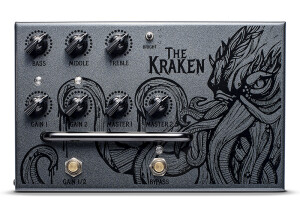
    SOUND: Working with a beast that has four valves produces such a lively and incredibly detailed and responsive tone that you become aware of why the digital/modeling age hasn’t quite caught up with the analog – particularly where there are tubes or valves involved – unfortunately, the sound compression inherent with YouTube videos will not do my demo justice. Nonetheless, the sound of the Kraken V4 is pure British, although unique to Victory Amps and its chief engineer, Martin Kidd. It produces a wickedly grainy, yet sweet tone, which is the hallmark of Victory and why the company has produced such a great fan following over recent years. Channel 1 has more of a vintage British drive sound with a super crisp and cutting distortion when cranked full. Channel 2 has more gain, but with tighter bass and a more biting mid-range (fantastic for chugging and lead playing). The cleans are exceptional, as well; place the gain of channel 1 at about 10-o’clock and then dial back your guitar’s volume a bit for a sparkling glassy timbre. The unit’s EQ has a very workable range, in that you can use a lot or not so much bass, midrange or treble (any combination) and it sounds pretty darn good regardless, which makes it very practical since both channels share the same EQ and for the most part you simply can keep the same EQ settings and still hear a difference between the channels. The Kraken V4 also has a global tone control or Bright switch – I suspect it remains neutral in position ‘0’ if used as a stand-alone pedal, but if used within your amp’s effect loop you may want to reduce the treble by a little (-1) or a lot (-2). Setting the Bright switch will depend on your gear and your ears. Bear in mind that the Kraken V4 is a preamp and still requires some form of cabinet for the best sound (since it’s only a preamp), which is where cab-simulators come in handy – although reproductions of actual speakers, whether using a cab-sim pedal, DAW software or if you’ve entered the Axe-Fx and Kemper world, it’s nice to be able to choose from dozens of offerings without having a room filled with wooden crates housing speakers. In fact, it’s difficult to demonstrate and appreciate just how good the Kraken V4 is without taking into consideration the cabinet/speakers you’re using, since each produces different tonal qualities. Nonetheless, and regardless of your speakers, or simulation thereof, the nature and grainy quality of the Kraken V4 shines through incredibly well and I demonstrated this in the video with Mesa, Marshall, Fender, Friedman and Vox cabs. Furthermore, this extraordinary preamp accepts pedals without reservation and better than other preamps I’ve tested. You can hear an actual hybrid of tones happening, as though the Kraken V4 is merging with the pedal in question and then producing an off-spring. As an example (demonstrated in the video) I combined a Friedman BE-OD Deluxe drive pedal (channel 1 gain at 25%) with the Kraken V4 (both channels tested at 50% gain) and the results were very pleasing – you could hear both the character of the Friedman and of the Kraken V4. OVERALL IMPRESSION: Victory Amps has won several awards through various guitar magazines/sites, and this preamp makes those reasons obvious, with its magnificent tone. The four valves running the Kraken V4 produces a rich tone and quality that I have not heard through other preamps or digital mimicking, making its $499 USD price a bit hefty to some, but definitely an investment if you’re looking for the crème de la crème. In fact, and although a pedal, the Kraken V4 was designed primarily to be integrated into an amp’s effect loop, to give access to additional amp tones at a fraction of the price of a new amp (and so, you can set it atop your amp head or amp/cab combo). Consequently, go ahead and keep your Marshall, Fender, Vox, Friedman or ENGL amp and still get the tones from Victory’s Kraken at a third the price and a fraction of the weight (an important factor for gigging musicians). It could be argued that various amp sims in a pedal offer up plenty of tonal variety, but if you are a gear snob and want the best in your tone, then an all-valve solution is the best solution – and that’s where Victory’s preamp collection (The Kraken, The Countess and The Sheriff) come in. Not only is the overall quality of sound note-worthy (pun intended), but the quality of construction is outstanding and other pedals sound awesome through both channels of the Kraken V4. And because you’re feeding this 4-valve beast a lot of power, it comes with its own 2-amp 12-volt adapter (together with plug ends to accommodate any country’s electrical concerns). GENERAL USE: You can use the Kraken V4 preamp in two different ways – it can be a standalone unit (on your pedal board) or used with your current amp in the effects loop. I use the unit as a standalone, going into an Axe-Fx II for my speaker simulation (as demonstrated in the demo video). However, its chief design was to afford musicians the ability to use an amp’s channel(s) as usual, and also the Kraken V4 for additional sounds and tones (perfect for those who run clean single-channel amps). Because the Kraken V4 is valve-driven, it has that pure analog quality and will sound incredible with other valve amps. And so, you can have your channel(s) in your amp, then switch to the Kraken V4 (which bypasses your amp’s preamp) while giving you great sound. Adding dirt or delay pedals, for example, will need to be arranged as usual and to your preference. In standalone mode you place whatever you want before and after the Kraken V4 (dirt before, delay/reverb after and modulation where it sounds best). If integrating the Kraken V4 within your amp’s effect loop you can add pedals direct to your amp’s input or along with the Kraken V4 in the loop, whatever works best for you. The Kraken V4 operates just like any other amp/preamp. There is a switch to bypass or turn the unit off (the LED is on when the pedal is on) and a switch to navigate between the two channels. Each channel has its own Master Volume and Gain, but both channels share an EQ. The Bright switch likely will remain on ‘0,’ which is neutral, unless you find your effects loop (or even a single-coil guitar) a bit bright or harsh, then you can remove some treble by flipping to -1 or -2. If operating in standalone mode you would want to adjust the EQ and reserve the Bright switch for when using the Kraken V4 in an amp’s effect loop. There also is a TSR input that allows remote switching, which is required if you have the Kraken V4 mounted atop your amp. OTHER DETAILS: Measuring in at 225 (w) x 140 (D) x 80 (H inc. feet) mm (8.85 x 5.5 x 3.1 inches) and weighing 1.7 Kg (3.75 lbs), the Victory Kraken V4 is massively built and of great quality. With an all-steel chassis (held-together with high-torque 8-blade Posidrive screws and machine bolts) you are certain to keep the four valves protected. The pedal comes with a 5-year warranty and the valves come with a 2-year warranty (good for approximately 6000 playing hours, which works out to two-hours-per-day over eight years – they can be replaced for approximately $15 USD). The pots have a very smooth feel when turned and both pots and foot switches are silent when turned or engaged (no static, crackling or clicking sounds). The Kraken 4 boasts a protective kick bar with what appears to be a powder coated dark grey metallic paint – and the Kraken graphic look pretty cool. The LEDs for on/off and channel selection are raised only slightly and well located, and so they are free from foot stomping trauma. All connections are made through the back (with the exception of the TSR remote switching input), which is good for protection of the cables and inserts, but also saves on pedal board space. The rubber feet under the unit are not the cheap stick-on type, but screw into the bottom of the base.

  • « First rate sound from full-bodied cleans to classic rock drive »

    No affiliation to the company. The last review I did on a Hagerman product was the Power Baby (tube power amp in a pedal), and that has impressed me more than any other Hagerman product… it’s one of those always on pedals that make a significant difference in one’s tone and overall note quality (which is true of any power amp… preamps on their own sound good, but something is missing). The Power Baby quickly replaced my power amp sims. It was shortly after that I was very curious about the Overdrive Clipper, a true bypass, all-analog, dual 12AX7 tube pedal preamp designed to mimic classic Dumbly tones, although Jim Hagerman’s design was customized to surpass the original. Them’s fighting words, and it didn’t disappoint. h This is a dual preamp, in that you have full, clear tones when ‘clean’ and then higher-gain with the Clip toggle flipped, thus engaging an all-tube symmetric clipper circuit for some great Rock edge. In either instance, the Tone and Color knobs is what provides a plethora of sounds and in various combinations. The Color control provides equalization, so that anything below 12-noon is smoother, duplicating Robben Ford settings (particularly when minimized), and settings past 12-noon have more edge and cut. The Tone control sweeps through a range of mids, whether looking for something darker or brighter, thus affecting and developing the Color to one’s preference. Again, without the Clip switch engaged, the cleans are fantastic, and make for an excellent pedal platform for distortion, etc., and particularly if looking for more gain than what the Overdrive Clipper offers. I demonstrate this in the demo. Nonetheless, with Drive up full while playing clean, you still get a nice sparkling bite that is very pick sensitive and dynamic. With Clip engaged, you now are into Rock territory and it sounds great… thick and chewy, yet very defined. The Lift switch acts outside the circuit, providing a 10dB boost in gain, which can push rhythm even harder, but obviously is suited best for lead playing. It really helps to make those notes sing and soar. There is plenty of Volume on tape, and I never pushed it to the limit while clean, and often kept it below 12-noon with Clip engaged (which increases volume). There’s also enough Drive for my liking, which sounds good low or full bore when clean (sparkly and some nice breakup). When clipping, I often keep Drive between 11-o’clock and 2-o’clock for rhythm, but may go full Drive, or at least past 12-noon, with lead. Much of this depends on the composition, of course. The way I used the Overdrive Clipper is within a pedalboard format, and then off for direct recording (or it could go to a mixer/PA for live playing). The pedal also can be integrated as a preamp feeding a power amp directly via an effects loop/return (keep tone controls close to flat on your amp and adjust Tone and Color via the pedal’s controls). I am a huge fan of preamp pedals, and the Overdrive Clipper has established itself as one of my main choices, for cleans, solid rock sounds that pop in the mix, but also as a platform pedal with other gear. I also should note that I have Cornerstone’s Imperium, which is a Dumblesque preamp, and although good, it does not compare to the tubes and guts of the Overdrive Clipper. The Imperium sounds more like a pedal mimicking something, whereas Hagerman created a pedal that responds and reacts like an actual amp. The Overdrive Clipper includes a wall-wart power source (+12V @500mA). Other specs include: 52dB maximum gain (no LIFT); 470k ohm input impedance; 3Vrms maximum output; 140V tube supply; and measures 4.7" x 5.8" x 2.3". Two thumbs up! https://www.hagamps.com/collections/pedals/products/overdrive-clipper-dumbly-tube-pedal

  • « Synergy 800 »

    This is a two channel all tube preamp module that is based on the preamp circuit design of the Marshall JCM800. It is absolutely fantastic. The first channel is the “low input “ channel of the JCM800 and second channel is of course the high input/high gain. The difference between it and the actual JCM800 is very negligible. You can run the Synergy preamp dock into a separate power amp or three cable it into any amp with series effect loop.I find it does phenomenal run into either an all tube power amp or into an all tube amp three cabled as it gives not just the all tube tone but also the all tube feel and response that way. Fantastic Synergy module.

  • « Digitech 2112 SGS ... AWESOME !!!! »

    I used to use a Eleven Rack and I was happy with it and had to learn to live with the digital sound . One day, after I got my tax return, I decided to treat my self to some new gear. I went into a small guitar shop and seen the Digitech 2112 SGS and decided to try it out. This old rack unit sounded much better than my Eleven Rack, those two 12ax7 tubes gave me some mind blowing tone and soon my Elleven Rack was sidelined for good. And with the Control One MIDI board controller, it just added more flexibility. I called Digitech and the nice lady that worked there printed out the owners manual and it helped me zero in on the features of this devine device. I have a Digitech RP-12 and RP-1 on my effects pedalboard. Even the presets on those floor units sounded great in my 2112 unit !!!! I went to my RP-12's harmonizer program and made a MIDI CC change that when I would push the root note go to the middle, the 3rd up go to the left and on the rightside ( from the 2112 ) a 5th down. All those notes were clean and prestine, just as good as my Eventide 3000. I gain stacked my distortions from my RP-12 and RP-1 so well with the 2112 SGS's overdrive, that I recreated my Carvin X-100 B, V3, Legacy 1,2,3, my VHT Pitbull, my Peavey JSX, Triple XXX with the tube distortion path and with the analog distortion path, I recreated my Randall Warhead, RG 80, RG 100, Carvin SX 300 and other amps. You can combine both the tube distortion and analog distortion or use them separately. You can recreate any amp ever made. The modulation; so many variations of chorus, flanging, the phasers, detune are unbelievable and flexable. I can recreate Jimi Hendrix at Woodstock or the Filmore East w/ the Band Of Gypsys, Dime Bag Darrell's tone, EVH's Brown Sound, David Gilmore's vast tones, SRV's Blues tone, Alex Lifeson's sound, Brian May's sounds , Metallica's sounds or the Edge's sounds and my own . Someone complained that the Wah Wah was lame, they just didn't have patients to set it up right. With the detune, I got a great acoustic guitar 12 string with an acoustic simulator sound and 6 string acoustic sounds with a Behringer AM100 Acoustic Modeler going thru a Decibel Eleven Loop Expander. I can now do Can't Kill Rock n Roll, Fade to Black, Revelation/ Mother Earth, Ramble on, Diary Of A Madman or Dead or Alive. You can place any of the effects any where in the program ...in any order . At the end, I always add a 6 band Parametric Eq to make this device to be an equal to any new modeler out there. Another great feature, you can add two more expression pedals, one from back of the 2112 or add another on the Control One pedalboard and that makes three expression pedals . And with the Seamless feature, I can have no pauses or glitches when I change programs. I can set it to overlap 2 to 3 seconds into the other program and it will fade away like a studio recording edit / punch in . Not bad for a device made in 1997 . Front panel ; ● One Input, Input knob, Output knob, Clipping light indicator . ● Gain knob to control the drive of the tube or analog / distortion, can go from Fender clean to Mega Rectified. And if the tubes are too intense or too weak , for your tube tastes, swap then out and you'll notice the difference. ● Bass, Mid, Treble and Mix knobs. ● Large Display screen. ● Program knob / Effect Wheel knob . ● Program buttons. ● Effects Library buttons. ● Solo button, give you the ability to get 6 dB boost for soloing. Back panel; ● AC Line Input, MIDI IN, OUT / THRU Jack's. ● Foot Controller Input. ● Expression Pedal Input ● High / Low level effects loop switch. ● Send / Return Jack's for the Effects Loop . ● Balanced Left and Right Outputs . ● Fuse receptacle. Over 40 different effect Algorithms that can be organized in your preferred order . With the gain stacking from my RP-12 and RP-1 going into the 2112, I can set the gain very low on the 2112. I can recreate any Distortion, Overdrive or Fuzz pedal or recreate any amp ever made . And if you stack your Modulation, Delays or Reverbs, you can add ambience that even Strymon owners could only dream about .

  • « Easy to Use with an Improvement in Sound »

    SOUND: As a stand-alone preamp, the Edison is very clear, yet full-bodied. When hooking it up to an Axe-Fx II (with Marshall cab simulation), the first thing I noticed is how ‘amp-like’ the sound was… headroom and dynamics without that processed sound. Now, to be fair, the Edison Preamp is an actual tube preamp, and so it should not sound artificial or lackluster, but matching it with a cab-sim, as opposed to an actual cab, brought about a quality of sound I was not expecting. Although one of the better sounding (and behaving) cleans I’ve heard, the Edison Preamp still needs to be tamed somewhat. Because it offers a lot of headroom, having the volume up too much can produce some distortion or rumbling (like an amp breaking up, which it likely is doing). Nothing wrong with that, but either the preamp’s volume or the guitar’s volume need to be dialed back slightly if you want to avoid those artifacts. On that note, the Edison Preamp does clean up exceptionally well and sounds great as you dial back a guitar’s volume knob. As for the preamp, it sounds good at lower volumes, but you definitely can hear more note fullness and fatness when turned up half-way or beyond. When combined with other gear the Edison Preamp offers a lot. It makes for a great pedal format, whether dealing with clean-type effects (delay, modulation) or distortions/drives/fuzzes. Even when combined with other preamps (I added the Edison to a few Victory preamps, the Kraken and the Countess) the Edison mixed with those other preamps incredibly well, for a bolder and fuller sound. What should be noted is that the Edison Preamp has fantastic warmth to it, which can make other gear sound a touch darker, which means upping your treble or upper-mids a bit to balance out the tone. Regardless of this minor quirk, the Edison does not color other gear very much (very little in fact) so that everything simply sounds ‘hot-rodded.’ OVERALL IMPRESSION: The Edison Preamp is aptly named, since it looks like a glowing light bulb within its aluminum housing. Developed by Night Owl Industries, this preamp has exceptional warmth, tons of headroom and pure amp-like tonal qualities. The Edison Preamp’s simple, yet effective design has a built-in voltage tripler to push the all-tube EF86 preamp for a real amp tone. It functions well as a stand-alone unit (in pedal platform), but also works well in pushing the limits of other preamps/amps (solid state or tube). Its third and obvious use is as a clean boost, but not any ordinary boost, since its full-bodied and robust tube sound will fatten up your tone for some great lead soloing. Its green glow (both tube and footswitch ring) not only look ominous, as though it came from a mad scientist’s laboratory, but makes for easy location on a pedal board and on dark stages. At $225 the Edison Preamp is of average cost and very decent value considering how it enhances other gear, besides working well with guitar, bass or a recording rig. Simple to use and effective best sums it up. GENERAL USE: Although Night Owl Industries suggest “try it in front of your favorite distortion pedal or another tube effect for endless possibilities,” I found my tone and results as good when adding the Edison Preamp AFTER some effects and other preamps (likely because my cab simulation came later in the chain). The sound was fine when used before in other instances, but placing it after impressed me as much and depending on the gear. The Edison Preamp is about as easy to use as it comes – a footswitch to turn it on and off. How great is that? No tone controls, although you need to adjust the volume accordingly (whether aiming for parity or boosting the signal). Insofar as the volume is concerned, how much you turn it up will depend on what is being connected to it. For example, if using the Edison as a stand-alone preamp (going into a cab or cab simulation) and with some pedals, the volume can be turned up more than if using the Edison to push an amplifier or other preamp. Then again, by keeping the gain/volume down on another amp or preamp, then certainly more volume can be had with the Edison (depending on what balance or ratio sounds best to your ears). Regardless of the setup, you will find there is a sweet spot in coordinating gear, so that you have enough push and sound fullness without adding distortion or artifacts. OTHER DETAILS: A slightly odd shape, the Edison Preamp measures larger at the top than bottom, but generally is a standard sized pedal. Measuring 3-inches across the top, 2.25-inches across the bottom, 4.25-inches long and 1.5-inches high, this preamp is lightweight and likely an aluminum housing (since it feels light) with center glass window (to view the cool-looking green light and valve). All connections, including the volume control, are located on the sides, which does take up a bit more pedalboard real-estate, but nothing excessive. The footswitch, which is SILENT (you don’t hear a thing when turning it on and off) has a solid click and is of good quality. The Volume knob also feels of good quality when turned. The glass window sits below the aluminum chassis, and positioned within the design of the pedal in such a manner that damage from a stomping foot is very unlikely (don’t wear high-heels). The Edison Preamp powers up via a standard 9VDC 250mA supply. Tubes can last a matter of months or even years, depending on usage and any potential flaws (inherent with tubes), and so the Edison’s reliability in regard to tube life cannot be determined with any confidence. However, Night Owl Industries does test each Edison Preamp and tube (via Amplitrex testing) prior to shipping, which helps to weed out any immediate operational issues in advance.

  • « Alter Your Guitar Tone in Seconds or Change a Strat into a Humbucking Axe »

    SOUND: DEFCON4 is not your typical EQ pedal. First, it’s a preamp that offers up some compression and push in tone, and so you get some energy behind those crafted changes. Second, the choices behind each EQ setting (Bass, Midrange and Treble) are very well honed, so that each selection (adding or taking away bass, mids or treble) is obvious, thus making it easy to dial in a better (different) sound than what your pickups are producing. Third, the 10dB MOSFET boost is just the right amount to thicken up your tone and make it more three-dimensional. The YouTube video with this review goes through the various settings with a humbucker-equipped guitar and through all the various bass, midrange and treble settings. You can hear how the DEFCON4 can enhance both clean and higher-gain settings. However, what is even more impressive is how you can take a single-coil Strat and make it sound like you’re playing with higher output humbuckers. To repeat, each EQ has settings that were very well-crafted, although you can get under the Chassis and change each bandwidth if so desired. The Bass adds bass without sound muddy, or takes it away without sounding too thin. The same is true of the Midrange and Treble, in that you can tweak a bit here and there and nothing is out of whack, and yet is obvious to the ear. DEFCON4 likely is one of the best tools to reshape your tone so that you can get rid of that weak jangly sound, clear up muddy pickups, etc. And when on stage you can switch from humbuckers to single-coils and not miss a beat, all at the push of a footswitch. OVERALL IMPRESSION: DEFCON4 is the signature pedal of composer and performer Ryan Adams, DEFCON4’s original intent was to allow Mr. Adams the ability to switch from a humbucker guitar to a Strat, and still be able to produce an equal amount of output and fullness in tone. Along with Walrus Audio, DEFCON4’s claim to fame has become a super fast tone-shaper, possible with only a few clicks of a 3-band equalizer and along with a 10dB MOSFET boost, if necessary. Some of the pedal is bells and whistles, such as the name, the little Defcon 1 through 4 lights, and certainly a world map that lights up with missile launching schematics – but who cares? It looks friggin’ cool and it is fun to use. If looking cool isn’t an issue, then I suggest all guitar manufacturers stop with the fancy paint jobs, graphics, and body designs. Not likely, right? And for those old enough to remember, the overall artwork and pedal design concept comes from the 1983 movie WarGames and Ryan Adams’ “love for all things 80’s nostalgia.” The tone-shaping capabilities of this pedal are exceptional, and the gang at Walrus Audio pulled this one off very well. Each click of each EQ bandwidth seems to change a guitar’s tone noticeably and in a very usable manner. Perhaps you don’t want full-out treble, but even when cranked to the limits it still sounds good, particularly with darker pickups. The point is that you can achieve a multitude of different tones very easily so that the same guitar can become a very different guitar. EASE OF USE: Do note that there can be no change in tone if you keep all the EQ settings pointing to 12-noon (zero). From there you have four choices on each… two steps down (-1 or -2) or two steps up (+1 or +2). For example, if you consider the Bass knob you can decrease bass a bit by clicking one step counter-clockwise, or remove even more bass with two steps counter-clockwise. Conversely, if you want more bass than click one step past 12-noon for more bass, and even more bass with one more click. The same works for the Midrange and Treble knobs. This makes operation of DEFCON4 easy since the degree of change from one position to the next is noticeable, but not extreme, so that you can add or take away just a little or a moderate amount (but not so much in either direction that the tone doesn’t sound usable). This is not like many other EQs that seem to offer an almost infinite amount of fine-tuning, which actually makes it challenging to zero-in on that ideal tone. As a result, DEFCON4 makes it very easy to remember past settings, or at least easy to achieve them again in a matter of seconds. The 10dB MOSFET boost can be used on its own or in conjunction with the EQ (and vice versa) and has a number of potential uses in different situations. For example, you could use the EQ to shape your tone and then add the 10dB for lead solos, regardless of the guitar. Or you could use the 10dB with EQ to thicken up your single-coil guitar. In regard to the latter, there are some musicians that likely enjoy jamming on a Strat for some hard rock or even metal, but those single-coils just don’t have the output and thickness of tone desired. That can be rectified with one pedal… DEFCON4. RELIABILITY & DURABILITY: DEFCON4 measures about 3.5 x 4.5 inches (8.9 x 11.4 cm), with a solidly built aluminum chassis. The feel of the pots when turning the knobs are of good quality as they ‘click’ from one position to the next. The plastic knobs are of good quality, while the small switches (to engage or disengage each EQ knob) are both solid in feel and located in a protective location… just beneath and between the larger EQ knobs. The input/output for cables are located along the sides, as well as the power supply (standard 9v 2.1 mm @ 100mA) insert is on the side. This places the inserts in a more precarious position (as compared to rear chassis inserts), but being a slightly larger pedal it’s unlikely one’s foot would step on any cables while stomping. Likely the only ‘fragile’ part of DEFCON4 would be the LED screen showing the graphics, although you do not need the screen to operate the pedal (it’s simply a ‘cool’ factor). Regardless, I cannot fathom actual damage from normal and regular use, as opposed to abuse and dropping something on it. For more information you can check out the pedal at: https://www.walrusaudio.com/collections/eq-compressions/products/defcon-4-preamp or https://www.rogueguitarshop.com/products/walrus-audio-defcon4-preamp-eq

  • « Le Lead 2-Channel Preamp »

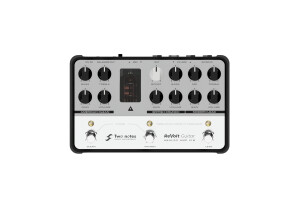
    SOUND: Le Lead is a 2-channel tube preamp that can produce a multitude of tones (although designed for lead, you can get some excellent crunch and rhythm from this unit). Le Lead offers a typical Channel (clean) and Channel B (high-gain), but also Fusion capabilities to blend or cascade the two channels. Below is a YouTube demo that goes through various settings on both channels, such as bass, treble and midrange response, the effect of the Gain, Cold Fusion and Hot Fusion, and a very interesting feature… the Midrange Sweep. When dealing with the EQ one of the first things I noticed is that you could turn the Bass up high (as well as the Midrange) and the Treble down low and there is no ‘mud.’ Although this is a 12AX7 tube driven preamp, with all the characteristics of tube technology, the signal remains clear, which is necessary for any genre of Metal and particularly for 7 and 8-string guitarists. Likewise, you can turn the Bass all the way off with the Treble all the way up and you don’t hear any shrill notes… certainly sharp tones (not in a bad way) that cuts through the mix like crazy. In regard to the actual ‘sound’ of this pedal, it depends what you have it going through, e.g., what cabinet/speakers, etc. I ran it through a Rock Bug (by Carl Martin, an amp-speaker simulator) and it sounds great! However, the maker of the Le Lead Preamp (Two Notes) has free VST DAW software for download called Wall of Sound. When you buy a Two Note product you get 16 free cabinets of different sizes, e.g., 2x10, 4x12, etc., with the option to demo and purchase more. And so, not only do you get some great British, American and High-Gain amps, but you can stack them (e.g., a British Vintage with an Engl-type amp) and even use different microphones in different positions… along with an EQ, Compressor, Reverb, etc., in the control panel. OVERALL IMPRESSION: Developed and engineered in France, Two Notes is helping to lead the industry when it comes to concept and design. Progressively more people are using software for playing and recording, and another group is slowly turning away from having to haul amp heads and monster cabinets from gig to gig. The idea behind the preamps (Le Lead, Le Crunch, Le Clean and Le Bass) is to integrate your amp on a pedal board, and perhaps plug into a cabinet. However, Two Notes also has a product called Torpedo C.A.B., an amp-speaker simulator in a pedal that allows you to custom design several cabinets for direct PA plug-in (or into a flat response speaker). Now you can get “cranked to 11” sound quality at any volume. The times are changing, and when you consider the cost of most amps with cabinets (and having more than one type at your disposal), the price of a Two Note preamp with the C.A.B. (or simply the Wall of Sound software) is unbeatable and a fraction of the weight. Get everything on your pedal board and be done with it! The Le Lead Preamp also has a host of options and features. I’ll describe the Hot and Cold Fusion in the ‘Ease of Use’ section while focusing on the other aspects. First, this pedal has a true high voltage (200 volts) design. As well, there is an FX Loop, it’s MIDI ready (both in and out to control something or to be controlled), has a headphone jack for private practicing, a speaker simulator (heard when using the headphones or the DI XLR output), and a Thru output (to feed to an amplifier or to record a dry signal). EASE OF USE: The Le Lead Preamp functions as would a regular amplifier. There are two Channels, each with its own EQ. The Clean channel has bass and treble, whereas the High-gain channel also has a midrange. What’s very nice about this pedal is there is a Sweep knob that affects the midrange, so that you can boost or attenuate (reduce) a particular frequency in the midrange. This gives you a LOT of tonal control on the midrange, which is the most important aspect when dialing in that ideal guitar tone. Consequently, this combination of midrange + sweep requires a bit of tweaking, but it’s pretty easy to get a good tone from the Le Lead and to dial in effectively. The Hot and Cold Fusion options also requiring a bit of tweaking, and you will notice some sweet spots when doing so. To explain these two aspects, Cold Fusion allows you to blend the Clean and High-gain channels (including both EQs), which sounds very different from the High-gain on its own (although it depends on how much Clean vs. High-gain you want). Generally, and if done conservatively, you will find adding the Clean channel in a small dose cleans up the notes a bit for better clarity (particularly when the gain is high on the other channel). The Hot Fusion cascades the two channels, so that the Clean channel (and it’s EQ) act as a Boost for the High-gain, which can be subtle or can produce some very heavy and thick distortion (ideal for those bar chord riffs and progressions). There’s a small push button that selects either ‘Cold’ or ‘Hot,’ and to get into Fusion mode you step on both Channel foot switches simultaneously. If you then stomp on the Clean channel switch only the Clean is chosen… and the same goes for selecting Channel B and getting only the High-gain channel. All this is fairly straight forward, but with a ton of tonal options available (particularly once you start mixing and matching cabinets in the free Wall of Sound software) you will be doing a lot of experimentation and having fun in the process. RELIABILITY & DURABILITY: When it comes to construction, this is a nice pedal. It has a good weight and heft to it, but not so ‘cumbersome’ that you wouldn’t want it on your pedal board. It’s only slightly larger than the average pedal (maybe two pedals worth), which makes sense considering all the input and output options and that it’s a preamp! The casing is all steel and the knobs feel like aluminum to my touch, together with a very smooth and solid feel when turning. The knobs also are countersunk from the front half of the pedal, so that their tops lie flush or slightly lower to the metal casing; and so, even if you step too far forward you won’t place any undue strain on the knobs. The steel foot switches are solid, although they don’t ‘click’ when selected (you do see the LED light for either when chosen). There also are small rubber feet on the bottom of the Le Lead. The 12AX7 tube is visible in the window, which is far removed from the foot switches to prevent any mishaps. The window also is slightly countersunk to the metal housing for better protection against vigorous stomping. On a related note, there is lighting around the tube to indicate what has been selected. The Clean Channel is green… the High-Gain Channel is Blue… the Cold Fusion Channel is yellow… and the Hot Fusion Channel is red. Any input and output is located along the sides of the Le Lead Preamp, impossible to place in the back due to so many connection inputs and outputs. The power input (it comes with its own adapter) is located on the side, but at the very back on the left.

  • « Mooer micro preamp 009 -ENGL Blackmore review »

    The Mooer micro preamp 009 -ENGL Blackmore is a great preamp! The cleans are fuller than most and the Hi Gain channel is articulate and bright. I compaired it to my AMT Elect E-1 (ENGL Fireball -JFET preamp) and found it to be very dynamic. Awsome value. I got more chord clarity from the AMT but the Mooer was brighter & w/ 2 channels. I boosted them both w/ a TS7 Tube Screamer and it lit it up. Solos are nice and present in the mix and harmonics are abundant. The mids can be cut heavy w/o an extra eq I found! m/ Classic Brutal ENGL tone! Can be used to turn a good amp into an entirely diff sounding amp thru the FX loop return.

  • « Rare Jem! 10 channel 12ax7 preamp! »

    10 channel 12ax7 preamp. 128 user presets. Easy to edit/program. Full MID implimentation. Did i mention 10 channels !!! UTILIZATION This has 6 outputs ( 2 line out to poweramp, 2x XLR w/ Cab sim, and 2x 1/4" cab sim outs that can all be used at the same time!) Awsome and emense tone perameters! programable FX loop w/ mix control. SOUNDS Guitar preamp of the early 90's that was very hi end! 2x 12ax7 tubes and 10 channels (3x Clean, 3x Vintage, and 4x Hi Gain). Very dynamic and powerful sounds. Amazing lead tones! 9 band graphic EQ and built in tremolo, Wah, and Chorus too. Endorsed by Alex Scholnik. Great Vintage Brown (Jimi), amd Fat Hi Gain (Mesa) channels. Prestine cleans! OVERALL OPINION I have used mine since 96' and every time i go into a music store i walk out thinking I LOVE my amp! Newer tech has surpassed it's Heavey Rhy tones but not the leads. It responds nice to a TS 808 boost and the Vai tones are solid! Overall a great preamp and w/ Russian tubes the Warm Hi Gain channel sounds exactly like a Mesa Recto! But i like the orig sounds (China Tubes). This preamp in front of a Mosfet poweramp and V30's has been amazing and timeless! If you see one cheap GRAB it! (i am a Pro quality gtr player of 27 yrs!)

  • fendermaiden's review

    To summarize: It's a 19" rack preamp. A tube preamp with 128 storable presets. Midi classic preamp with 3 channels. UTILIZATION It's pretty comfortable to use because it's very minimalist. In other words, you choose a channel, clean solid-state, clean tubes or distortion, you adjust the settings, and you record. Up to that point no issues. Getting a good sound...That's another question. It took me two hours to find my distortion, but I can say that it's just the way I want it. I didn't have any problems finding my clean sound, because I'm less demanding in that sense. All in all, this preamp sounds always good, it's not a crappy preamp. The manual is clear. SOUNDS It's time to delve into the details. This preamp is old, so the sound is a bit old-fashioned. Especially the distortion, it's not suited to play numetal, but rather hard 'n' heavy or thrash from the '80s and even '90s. Its hard-rock sound suits me very well (Skid Row used this preamp). The sound of the ADA is very straightforward, proper and precise when it comes to distortion. It's pretty British in spirit but with more gain. The solid-state clean is wicked, very jc-120-like, even though at first I had a hard time achieving anything. The tubes clean is like a clean marshall (think jcm 900), it distorts very quickly, which isn't really my thing. Edit: I applied the 3.666 mod and it changed the sound of my ada completely. It now sounds more like a mesa boogie rectifier preamp, but neater, the grit is very similar and to be honest, I think my setup is amazing. If you are hesitating about doing modifications, don't! OVERALL OPINION I haven't used it too long, but I already had some rehearsals with it and I played my first gig with it last Tuesday. What I like the most is the distortion, which is very '80s, and the clean sound suits me perfectly, too. I don't know what I like the least, but I analyzed several preamps to choose the one that suited me better. I bought it for $250 on ebay + $45 shipping + $50 customs + $20 for the bank transfer. It is in very good shape. It cost me $365 in total, which is acceptable. I would definitely buy it again. It's great for hard, heavy, thrash metal like in the old days. It sounds awesome with other styles, too, but I like to play hard! It's definitely pro gear.

  • « Fender cleans and marshall leads »

    3 channel all tube preamp. EQ and volume/gain for each. Bright switch too. Not terribly complex. Some units like this have tones of voicing switches and what not. I look at this unit as being Suhr's take on the old Bogner Fish Preamp. In fact I think the CAE is a much simpler concept. Not as convoluted in sounds. Basically the clean channel is a blackface clone. Fair enough. The crunch and lead channels are supposedly taken from the CAE heads which are some flavor of hotrodded marshall. UTILIZATION This thing is probably the easiest preamp in the world to dial in. Seriously. There's no trickery here. It's not like a Mesa where you need to read the 200 page manual to learn the secrets of dialing. The knobs all do exactly what they're supposed to, which IMO is how it should be. SOUNDS I've used it with multiple preamps. Mesa Coliseum, Peavey 50/50, VHT 2/50/2....whatever. Cabs have been 2x12 and 4x12. This is really a live rig preamp. Not exactly intended for studio use although feel free to let me know if that works for you. The clean channel is indeed spot on for blackface fender tones. Unfortunately I'm not a blackface guy. For those interested, I found this channel works best with 6L6 power amps, although it sounds fine with other ones as long as you aren't obsessed with getting fendery tones. I wish this channel came in a Vox option but alas... The crunch channel is like a modern voiced plexi. Very juicy and balanced tone with good sustain. That's what I like about the preamp is how balanced the tone is. It has just enough mids to get heard without being ice picky like some Marshalls can get. The lead channel can get very very distorted. Basically to the point of heavy metal. It sounds to my ears like a dual rectifier gain stage and a marshall EQ. Glorious high gain tones here. Stick it with an EL34 power amp and get ready to receive kids. OVERALL OPINION I can't say I ever use the clean channel much. I'm just not into the blackface thing which is unfortunately because Suhr nailed it. The crunch and lead are by far my favorite 2 preamp channels of all time...seriously. I've tried tons but these 2 have the modern marshall tones I desire. They are soooo good. Worth the price just for those 2 really.