Log in
EN
FR

Guitar Combo Amplifiers

2871 products found

Categories
Filter
Sort by
Brand
Evaluation
  • Reviewed or not
  • Editor’s award
  • Reviewed by Audiofanzine
Availability
  • Available or not
  • Sold new or used
  • Sold new
  • Sold used
Must-have products
  • All products
  • Flagship products
  • Best rated products
  • Hot products
  • Popular products
Price
  • Freeware
  • Low-cost (< $350)
  • Mid-range ($350 - $950)
  • Premium (> $950)
€
Clear
Sort by
  • Popularity
  • User ratings
  • Price - low to high
  • Price - high to low
  • Used price, increasing
  • Used price, decreasing
  • Name (from A to Z)
  • Name (from Z to A)
  • Added on
Choose a category
Selected category: Guitar Combo Amplifiers
Sort results
  • Popularity
  • User ratings
  • Price - low to high
  • Price - high to low
  • Used price, increasing
  • Used price, decreasing
  • Name (from A to Z)
  • Name (from Z to A)
  • Added on
Filter results 2,871 results found
Brands
Evaluation
Availability
Must-have products
Price
  • Freeware
  • Low-cost (< $350)
  • Mid-range ($350 - $950)
  • Premium (> $950)
Show results

The best Guitar Combo Amplifiers reviews

The reviews Audiofanzine members found the most helpful.
  • « Small Katana amp offers offers great value for money. »

    I first bought this Katana 50, then a few days after I returned it to get the Katana 100 instead as I had regrets. I’ve used the Katana 100 as my regular working amp for 6 months now, and I’ll also mention that I own two other amps besides it: a Fender Deluxe Reverb and a small Yamaha THR 10. Let’s now get back to this Katana 50 which I’ve had the opportunity to use for a few days. The amp seemed to me very easy to use. If you like old-school amps, this one will ring a bell. No Bluetooth, screen or complex settings, it follows the same philosophy as the Roland Cube series: very easy to use. It features 5 sounds based on the GT1/GT100 technology. Some geek geniuses have found the way to unlock the sounds of the GT1 / GT100’s 28 amps on the katanas. Lol! In short, forget about Boss's marketing chat about Tube Logic or Wazza technology. Boss has made us a good series of unexpensive amps with the good old GT100 chip inside. It features 5 sounds: clean, crunch, lead, brown and acoustic, each of them based on a sound from the Boss GT100 pedalboard. Don’t hesitate to tweak your guitar’s knob to modify the grain – the amp reacts to such variations. The clean sounds very well and works for every style. It’s based on that featured on Roland’s jazz chorus 120. The crunch sounds is a tad fatwhen the gain is pushed, and you soon get into lead territory. Again, don’t hesitate to use the guitar’s knob to get convincing crunch sounds, even with the gain setting at ¼. If I remember correctly, the crunch sound is based on a Fender Tweed. The Lead is modelled after a EVH 5150. I really love it! It sounds very fat, too. I’m not too much into Brown sounds, but at least there’s something for every taste. IIRC, it’s modelled on a Soldano amp. As for the acoustic model, well… it’s almoist full-range to plug an electric acoustic guitar in. The sounds is very convincing using my own electric acoustic, but not only it. This channel is very transparent, so I also use it with my electric guitar to allow my distortion, overdrive and preamp pedals to come out more transparently, as they would if plugged straight on a PA or poweramp. This feature is all the more interesting on thes Katana 50 that the amp doesn’t feature an effect loop. The included effects are great. There’s really all kinds of effects and for once I found the result better sounding than on other amps in the same price range. Again, I believe they are the same that can be found on the GT 100 & GT 1 pedalboards as the processor seems the same. The Katana 50 provides enough volume but lacks a little projection and low end. So, for stage or rehearsal use I can only recommend the upper model – the 100W version which is more suited for such uses. Or perhaps even the 2x12 cab and amp head. The difference between the different Katana model scan be heard clearly here: https://www.youtube.com/watch?v=oiC6MTQsZsE The included power control switch could seem a little useless on a 50W solid state amp, yet it appears practical for home use. Please note that the 0.5W setting already rocks – well enough for playing at home or in an apartment. Its cons according to me: - No presence setting. It would have helped to tame this 50W version’s sparkling aspect. If I remember correctly, the presence can be set using the Tone Studio software, but not directly on the amp. - Limited connectors: no effect loop, no line out, only one pedalboard out. This is the series’ entry level model, and the connectors reflect that. - The speaker’s quality : the sound is too shrilly to my taste, and the amp lacks projection with clean sounds. However, playing at moderate levels reveals no such big problem, while the highs quickly pierce your ears when the volume is pushed – more than with the 100 version. - No tuner: too bad on an amp that can be considered as a working tool. Its pros: - Its look and name: yeah, I know, it’s all about taste but I love them. - Its price: not much to be reproached considering the price - Its size and power, which make it the most suited amp to be used professionally in that series - The possibility to plug an electric acoustic guitar in: a great, alas rare feature! Plus, this channel’s transparency when used with external preamps. - The amp’s sensibility and reactivity to the guitar’s setting for a solid state/modelling amp - The included effects, which are very good as a whole. - The power control switch - The MP3 in & headphone out - The possibility to unlock more amp sounds & effects by tweaking it. Google “katana sneaky amps” for more details – in a nutshell, you can unlock almost all of the Boss GT100/GT1’s amps and effects, for a total 28 or 30 amps and many effects. Considering its price, it’s a really surprising “small” amp!

  • « Just great! »

    I’ve had it for 4 days, of course an update will follow if need be. This is an all-analog amp, with a 12ax7 preamp tube and a 12ax7 power tube. As the original output must be around 1 watt, its re-amplified with a solid state processor for a final 30 watts at 4 ohms. Such amps are rare – I’ve only known two, including Koch’s Jupiter and its more metal-oriented sibling. So, we get 8 analog preamps per channel (ranging from clean to saturax), resembling my old – and defunct – Yamaha DG60. Then, there’s an effect section (just mixed with the sound), allowing chorus+delay+reverb. The reverb’s length and depth can be roughly set, as well as the delay’s time (but not its depth), and as for the chorus you can set a mix between speed and depth. It can do the job, but there’s an fx loop on the back panel for a more serious job. Then, you have two switches per tube, drastically changing the overall sound. The result is well-conceived, and very versatile. The more you push the volume, the more the tube can be heard, compresses softly, even with the master at a very reasonable level. Valvetronix owners will definitely feel at home. Finally, the minimal 4-ohm impedance allows to plug just anything to its output (while bypassing the internal speaker) through the jack on the back panel. The on/off switch is quite peculiar, it has to be pushed upward to switch the device on (and downward to switch it off, but you won’t even need to do it as it switches off automatically after one houre without an incoming signal – very practical, and green too!). Soundwise, the tube circuit results in a very organic sound, it lives, pulsates, far from your average solid state amp. In clean sounds, you can’t get tired of the various possibilities, especially considering that the effects sound nice and warm, and the settings allow for two different clean sounds at once. Or two saturax by the way, and so on. Easy, user-friendly and efficient – what more can you ask as to its ergonomy? No background noise, which is a good point. The speaker is 10 inch large, but it sounds warm and wide – another proof that whenever the acoustic part is well-conceived… By the way, I consider its big brother to be too expensive (a hundred more bucks for a bigger speaker and only 60W…), as to the smaller one of the gang it lacks too many things and it already costs 250. In the end, the AV30 appears a very good compromise of size, weight, features and price. And the best part of it is – its look! Awesome, very classy, a nice furniture to have in your living room (its rounded curves and 3D-ish speaker cover are just… wow!). : I’ve used it for a while at a high volume, and it’s full of good surprises! I thought a 10” speaker would absolutely sound shy and lack lows, and I was absolutely wrong! The output volume is impressive, its diffusion in space is great and the small speaker provides large and precise lows. Plus, the amp doesn’t seem to shrink after a few hours – how impressive! The only cons is that I have too much highs with the HiHain 2 setting (even with the treble and mid settings zeroed), so I have to get satisfied with HiGain 1. Plugged into an alnico 212, it sounds much louder, it’s really an incredible small combo… Its sound intensity reminds me of the Princeton Reverb, more precise and powerful, needless to say how much stunned I am. As a result, I almost regret not opting for the AV60, but this 30W version is small and practical so not too much regrets. A single cons, the four tube switches at the right and the last one bring some buzz in. I’ll change the tube. Thanks for reading! Oh, and of course, if I were to buy it again… you bet I would!

  • « Why the hell didn't this amp turn into a best seller ? »

    Why didn't this amp ever turn into a best seller ? First, I think the reason lays in this amp's history. No one ever associates Ampeg with guitar amps anymore. Still, in the golden age of rock'n'roll, Fender and Ampeg shared most of the guitar amp market - one on the East coast, the other on the West coast. Then came the genius idea (but also a commercial suicide) of choosing electronic circuitry. The Ampeg Jet 20 is nothing but a handwired clone of a Fender Brown Face (6G3). That is, Fender's lesser known period: in between the Tweed and the Blackface and so on. 1964, I think. So, how does is sound? Very raw, rootsy, rock'n'roll, but overall very good! The crunch sounds absolutely beautiful: thick grain, and most important very "organic". The circuitry's simplicity makes its sound depend on tour choice of tubes. Don't hesitate to invest in NOS tubes. Yet, it's true that the "Low" channel sounds a bit dark, and the "Bright" one is a bit too bright, and the knobs interact with each other, and the stand-by wasn't designed by the book, but hell, how good does it sound!! And this tremolo, wahoou!! It affects the power tubes, so it sounds like... pumping. Beautiful! Perhaps too dirty-sounding for jazz and not high-gain enough for metal, this amp is versatile enough for blues, rock, punk, garage and probably hard rock. It's also pedal friendly, and loves fuzz and tube screamers. Its power is perfectly suited for crunch sounds with a band, while using the guitar's volume knob you can get beautiful clean sounds. In spite of the speaker's qualities, I replaced it with a Celestion Gold. I had to have it serviced three times in 5 years: once to add a variable resistor to allow setting the bias, and twice (the first technician failed to identify the problem) because of an oxydation problem on the tube holders. All small and cheap services. All three technicians were impressed by this little-knowned amp's qualities. First sold for €900, it soon sold for a mere €450. If you find one for sale, don't hesitate!

  • « Amazing and enchanting ! »

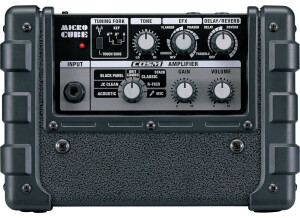
    I bought this small amp alone as it was enough for me, since I wanted a small nomad amp (it can also be associated to an additional speaker to get a small stereo system). I wanting something versatile, light and good-sounding. The animal seems sturdy in spite of its small size, the 3" speaker is protected behind a metal grid, knob-wise there's 1 Gain, 1 Volume, 1 EQ, 1 Delay, 1 mini-knob for delay mix, 1 OD switch, 1 on/off switch, 1 mp3/line in, 1 headphone/speaker out. It works with 6 AA batteries or an (non-included) external power supply (CAUTION, IT WORKS WITH A 6.5V EXTERNAL SUPPLY). It provides 3W of output power. I plug a Godin Session or Ibanez Artcore and a well-equipped pedalboard on it. AND THEN! I'm completely amazed, it sounds great in both clean and crunch! So, I get: - For crunch sounds, the guitar plugged straight in it, a little included delay... Wow, really punchy! - In clean sound with the pedalboard, all playing nuances are clearly heard. Granted, I wouldn't go as far as to perform live with it (even if well mic'ed into a good PA it could work), but for having fun at home, going on holidays or jamming with friends without having to take a large combo with you, it's perfect. Also, regarding the EQ, I thought I'd get a classic tone... Well, not at all, it allows to get from a UK sound to a US-type sound with the twist of a knob and with all possible nuances in-between (they call it the ISF system, and even if it can't be disconnected it really works wonder!). It's light (approximately 2 lbs), controls are efficient, sounds are convincing (that is if you don't push the gain and volume too high!), power is limited but credible, one can easily forget this is only a sugarbox-sized sound box. I have tried many other mini-amps, but this one is AWESOME! And now here we are, I couldn't resist, it won't be alone anymore! I bought the additional speaker. OK, you can't really call it "stereo" and that's not what it's here for anyway, but you're getting a way better sound ambiance and it sounds bigger, clean sounds are more airy and the crunch fill the room better. It's not meant to be used as a sound system for a venue of any size, but to try being smart with friends or familyit's great and the additional expansion you (not necessarily your audience)'ll get twice the enjoyment!

  • bloodjob's review

    Small, 60-watt all-tube amp that can single-handedly deliver more power into its speaker than many other amp heads with higher ratings. Despite the year of production, you can be sure it's made in the US, with a quality hardly seen today. You have an EQ, a spring reverb, a stand-by for the tubes, a master volume and a rather nice overdrive. On the back you have an effects loops, which is nice. No headphones output, which is normal on an all-tube amp. UTILIZATION The key word is use. You turn the red knobs, the brand's trademark, and you can easily find YOUR sound. Thank God Fender does things right, mamma mia! It's awesome! Half way up, the clean channel starts to crunch heavily, but the sound remains crystalline and pure. It's an amp that can make even the worst guitars sound good. SOUNDS I won't beat around the bush. I had never been a Fender fan. Until the day my dad gave me his "old" amp saying: Here you have something to enjoy yourself. And he was not mistaken. I've tried everything on top of it, from the grimy metal zone to the digitechrp2000 multieffects and the floor pod plus. Once you have found the right settings, this amp can deliver any sound in any style. I helped out a buddy of mine during a good death metal concert since the tubes had burned out. With the right settings and some good effects, it saved his day. And my small combo left more than one dumb founded. The only con is that the distortion/overdrive sounds really dirty for my taste, and the spring reverb isn't very impressing. OVERALL OPINION This small combo is 25 years old, according to the warranty card. The tubes had to be changed once during this period. The knobs make no noise after several years and the sound is still amazing. What warmth and tone. When I play stairway to heaven with my gibson les paul custom, I come close to the sound of jimmy page. If I could find this type of amp at a modest price today, I don't think I'd hesitate. But vintage gear is pretty popular and it's impossible to find it for less than $600-$700 unless it's in pretty bad shape. So, I don't want to sell mine. It's...priceless!!!

  • « Very good Marshall amp for home use, even it if has a couple of weaknesses »

    This amp produces some splendid clean sounds. Channel 1: It has a very good clean sound, not thick, not hyper-warm but, it's very clean and very nice. Plus, you can have a very good and powerful crunch if you push it. You could say it's for blues and rock, ac/dc etc. Channel 2: I think it lacks treble and even some gain. And especially a 12" speaker, but it's not bad at all. Gary Moore isn't too far :) in his heavy metal phase. This amp is truly excellent for heavy metal rhythm guitar (with scooped mids): It's what I would get for '90s hard rock/heavy metal (with the Tone Shift button engaged), because its sound is powerful. Good dynamic response, to play some blues à la DSL. On the other hand, if you crank up the mids (the high mids), the sound isn't nice, in my opinion. So forget Santana and company. To warp it up: If you are looking for a fat, powerful, dry overdrive that doesn't have a dip in the low mids, this isn't the amp for you. But, if you want to play Bon Jovi and similar sounds requiring punch, gain and a heavy sound, it's almost perfect! (otherwise, try a JVM). Blues might be possible: A mix of blues and heavy metal, but blues in the Fender, Laney or Vox sense, no. Do note that, like with many amps that have a 1/5w switch, you lose quite a bit in the high end in 1w mode, so you'd better play in 5w. I think the output power is manageable for home and it's pretty versatile, but the distorted sound is pretty modern and powerful, I'd say '80s and '90s. It doesn't have that old-school Marshal sound, instead you get mid lows to play fast and powerful riffs.

  • « The modern Swiss army knife of guitar amps »

    After using approximately each and every amp range -especially those from Line6 but also different tube and solid-state heads, tube combos, modelization combos...-, I was eager to have an opportunity to test this new generation of products announced as the next revolution in guitar amps. A revolution, well, perhaps not really. But real crazy sounds and a lot of guaranteed fun, well, YEAH!!! First cons: where's the manual!? Frankly, this the the ONE amp for which they should have done something in the true Line6 spirit! Usually their user's manuals are a pleasure to read, filled with advices, stoopid anecdotes and, most important, precious informations. Now, let's get straight to the Amplifi app. I use the Android version, on both smartphones and tablets it works wonder and allows awesome interactions. Soundwise, the models are... INCREDIBLE. I never got such a great and soft sound, at both low and mid level. I had tried the 75W version and was a bit disappointed by it as its distorted sounds sounded harsh, especially on high-gain amp sims. Here, it all just sounds great. The number of models, effects, interactions (some effects can be placed at various places in the FX chain). The ability to send sounds from your own music library wireless through Bluetooth is huge. Not to mention the Tone Search functionality, which allows identifying and finding a sound close to that in your favorite song straight from the Amplifi's online users shared database. I then tried it with the fbv mk2 pedalboard and the amp turned into a real stage performer. Plus, you can connect it straight to your computer through USB, turning it into a recording interface to record your songs in Cubase for instance. I was seduced by the sound it produces, although at very high volume it seems to distort and be less accurate. In this price range, I think it is by far the amp that offers the best modeling and sound capacities. The fact that you can associate different cabs, amp heads and microphones allows to multiply the possibilities. Also, changes are very easy to hear and the results are convincing, which to me is a real sound quality proof. I don't believe it to be up to par with the Pod hd500, but for that price it's hard to compare an all-in-one amp to a pedalboard (even such a high-level one) which implies other costs. I had also been convinced by the Digitech rp500 ans rp1000 series, which in my opinion offer amp modelings (especially the hi gain ones) at least as good as Line6's. To me, this amp is full of quality, I'd recommend it with no hesitation. I also like very much the amplifi TT, a smaller version without a speaker. A real revelation, oh happiness!

  • « The legendary amp!! »

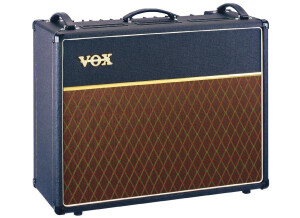
    I finally tried it out!! The famous all-tube AC30C2 (with 2 speakers) that's as heavy as a corpse!! I copy the features: - 1 Tremolo with depth and speed controls. - 1 Reverb with tone and mix controls. • 1 master volume control - Preamp tubes: 3 x 12AX7/ECC83 - Power tubes: 4 x EL84 - Output power: 30 watts RMS into 16 ohms - Speakers: 2 x 12" 8 ohm Celestion G12M Greenback - 4 inputs: Inputs: Normal (high and low), Top Boost (high and low), all footswitchable, - Spring reverb (switchable) - Tremolo (switchable) - ” Tonecut ” to adjust the presence - Master volume control - FX loop: The EFFECTS LOOP allows you to add other effects to the signal path rather than insert them between your guitar and amp. Using the effects loop with, for instance, a DELAY, you can avoid distortions and strange repetitions. The EFFECTS LOOP sends a -10 dB adapted signal to the effects pedals. - Dimensions (W x D x H): 702 x 265 x 556 mm / 27.64 x 10.43 x 21.89 inches Weight: 32.2 kg / 70.99 lbs. - Outputs: External loudspeaker jack, Extension loudspeaker jack, FX SEND jack - Options: VFS2A Footswitch USE It's a bit of a mess and, to top things off, the name of the controls is upside down when you are looking at the amp from the front!! What a joke!! But apart from that, I love its sound!! SOUND It's a really good amp because I can work the sound and really shape it. It's an amp to do precise work, it was not conceived for distorted rock, hard rock or metal because it has no drive, crunch or lead channel!! Only the Top Boost channel indicates that you can have a more significant sound. In practice, you really need to crank up the volume of the Top Boost so the sound starts distorting...and it's really good!! This amp really made my day today!! I plugged in an LTD elite horizon III and really shaped sound the way I wanted!! OVERALL OPINION I tried it out one afternoon and was half satisfied!! I said to myself: I have finally found a sound I love, but it lacks a more significant distortion, and I'll have to let it go!! Indeed, it's a pity, because I had finally found an amp that lived up to my ambitions!! I don't know if there's any trick, like on the '80s Marshalls where you had to plug a mini-jack of a normal input into a boost input to make the power amp distort more quickly, but I'd take it anyway, because it takes me closer to the sound I love!! To finish, I'd say this vox is an amp for rock and funk above all, for distortion sounds you'll have to look elsewhere!!

  • « Perfect for me, yes! »

    All tube, cathode biased 6V6 pair, 2 12ax7s on the preamp side, 13 watts, 15" speaker, volume, vibrato and a bright/dark switch, 3 inputs: guitar, mic( lower gain input ) and accordion ( basically filtered somehow to give a "honkier" sort of sound. I'll give it a 9/10 here because I did two mods to get it to where I wanted it. UTILIZATION I did two mods to get it to perfection as I see it. I changed all the Chinese fizz-bottles with: JJ 6V6s for the power end, a vintage RCA 7025 for V1 and a JJ ecc83s for the vibrato slot ( V2 ). The amp actually sounded pretty darn good out of the box but the JJ 6V6s and the 7025 really got it smoothed out. The vibrato was barely audible with the Chinese 12ax7 in V2 but it really started to come lively with the JJ. The second mod was a 500K potentiometer to replace the bright/dark switch. "Bright" was too bright, "Dark" was too dark. The pot basically pans between the two extremes, my general-purpose setting is halfway, 5 on the pot. SOUNDS I've got a G&L Legacy, a G&L ASAT, a '74 Les Paul Standard and a couple of pretty wonky no-name guitars and I can get just about any sound I'm looking for out of this baby. It's a player's amp, not a knob-tweaker's amp. Turn it up, it gets dirty, turn it down, it gets clean. Turn up the guitar volume, it gets dirty, turn down the guitar and it cleans up BEAUTIFULLY. Turn on the vibrato and play some country licks, you're there. Jazz? Turn down the tone pot ( which you WILL install, it's dead easy ) to it's darkest setting, hit the neck pickup, adjust the guitar's tone knob to taste and you're there. Rock? Get some dirt and let it fly. Weird honky twang-thang sounds? Hit the accordion input, get the vibrato warbling, adjust your guitar's volume and tone controls to dumb settings and you're just plain retro hi-fi alien. Clean, dirty, skinny, fat, it's all there. It's just one spunky little amp that's a blast to play. "Little" is not a good word 'cause it's also pretty loud, I would say small gig territory. This amp is VERY responsive to what you put in it, dynamics, gain, tone controls on the guitar, etc. Ok, so it's not for metal-style sounds, but that's kind of a no-brainer, huh? OVERALL OPINION I love this amp. I think the two tweaks I performed on mine are pretty well necessary. My only outlay after the initial purchase of the amp was the pair of JJ 6V6s. I had the JJ ecc83s and the RCA 7025 sitting in a drawer as well as the tone pot. About 2-3 hours of work and I was good to go. Value for the money, you bet, I'd do it again in a second. I've joined a photo of my tone pot mod. That's a Strat Volume knob, by the way. Here's the horrible, shameful truth. I like it better than my Orange AD-30 Combo and I like my Orange A LOT...

  • loupgarou2a's review

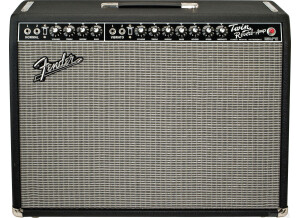
    All-tube amp. No need to add anything to what has already been said. It's important to choose the tubes right, try different things, but with the right tubes (like the RCA NOS) the amp gains in quality. There is no master volume but it's useless anyway, once you find the right volume for the clean channel, the distortion channel has a gain and a volume and you can balance everything. The effects loop is as simple as it gets and there are no ugly surprises when you switch from clean to distortion channel. The effects are all right. I use it with a Line 6 DL4 and MM4, and when I switch channels the effects are identical. Unlike what usually happens with Mesa, Marshall or Rivera, for example. The reverb is just what you expect from a Twin. UTILIZATION It has loads of push-pull controls to sculpt your sound, but it always sounds great. The manual is simple, but do you really need a manual to use a guitar amp (except maybe for the chapter dedicated to adjusting the bias)? The clean sound is that of a good Twin — it's clearly a Fender. The distortion sound is quite convincing, with a Screamer as booster you can come close to the sound of an old Mesa Boogie MarkI, which is awesome. Be careful, it has a lot of power and it can get very loud very fast in clean. No noise with good tubes. SOUNDS Crisp sounds, velvety crunch. I play blues, rock and a bit of jazz, and a couple heavier songs (like Deep Purple). I use two strats and a Heritage H535, a Fulltone Wah Wah, a Jacques Tube Blower and two Line6. The tone of the guitar is well-respected, you can hear clearly all nuances of your playing. It's perfect in every situation. OVERALL OPINION I've had: Music Man 65 210, RP100 212 and RD115 one hundred (I dream about finding another one, one of my best two amps), Seymour Duncan Convertible 60 and Convertible 2000, Marshall JTM100 and TSL100, Mesa Boogie MkI, MkIII, MkIV, DC50 and F50, Carvin XV112E (a great amp), Line6 Flextone, Rivera Anniversary 60, Fender Cybertwin, Acoustic (from the '80s, I can't remember exactly the model), Peavey, and Laney. I resold my The Twin because it was too heavy, and I just bought another one after two years of mourning its departure. Which means I HAVE BOUGHT IT AGAIN. You can find it at reasonable prices secondhand, and its value for money is unbeatable. The pros: The sound, the ease-of-use, the versatility The cons: The weight and, especially, the fragility of certain electronic components. You have to be kind to it, it can break down (I have seen several in that condition). But I've never had a single problem with it. Like every tube amp: Let it cool down before moving it, let it warm up a couple of minutes before putting it in stand-by, check regularly the state of the tubes, don't place any objects on top, give it some space to breathe, open it from time to time and use a vacuum cleaner to remove all the dirt and you'll have a faithful companion for decades.

  • « Amazing, what can I say... I'm amazed! »

    It's almost a year since I've had this amp. Small combo, not heavy (14kg), two channels plus reverb. Zero tubes, zero problems... Two full EQs, but shared reverb. You can change the channels remotely. Not much to say, actually. The integrated effects loop outputs a very powerful signal, almost impossible to match if you don't have a pedal with an input control. 12" speaker, 8 ohms for my model, but 4 ohms for the following models 94 watts rms, this amp can really rock you off your socks! UTILIZATION It's super easy to use, you just need to learn to control the contour setting on the distortion channel. The volume goes from 0 to 80 watts by simply blowing on the control, which is typically Fender... Not progressive at all, I'd say! So if you play at home, you'll need a volume pedal, like for mono pianos (I have a bespeco vm-16l, stable and not expensive) in the insert loop and it works great. It's an easy-to-live-with amp, especially in concert, because it's light, powerful and simple, plus easy to listen to (unlike a spider 75 that makes everything hazy). SOUNDS Typical clean sound, very clear. The EQ is effective. No further remarks. The big surprise is the distortion. I expected a deluxe hot-rod-like sound, but that's not the case at all. It delivers a tight and aggressive sound that can be shaped at will, with a damn good punch but proper at the same time. I love this channel, with my rg7 it's jaw-dropping, but I don't play metal. A hard rock sound is more than enough for my needs. The color of this channel, with the contour, suits my guitar particularly well. It's a real treat! OVERALL OPINION I gave the amp to a student of mine, who is very happy with it. Unlike a modeling device that does half the work for you, I believe this amp encourages you to learn about the sound of electric guitar. That said, its generous, clean sound can be used with any multieffects unit without a hitch, don't be a snob! It's an ideal amp, easy-to-use, light, really powerful, and absolutely reliable in real situations. Mine had several years of touring on its back and I never had a problem, except for the spring reverb and a speaker that became too soft (solid-state watts are very aggressive), both of which I had to replace. If you find one second-hand, check the reverb and, honestly speaking, for 350 euros, tops, it's a very good deal.

  • « It rocks »

    It's a tube amplifier with two EL34 power tubes and four 12AX7 for the preamp section. Power is 60W, can rock really hard when pushed. 2 Celestion Heritage speakers which work very well with it, great sound dispersion, I'd even say the sound is better when NOT facing the amp. Two totally independant channels with separate volume, bass, mid, treble and reverb settings for each plus a gain control for channel 2. There's also a global master volume and a front knob for the parallel effect loop (there's also a second, series fx loop). The weight seems quite acceptable, it's a 2x12 combo but it remains transportable, I used to have a Laney Chrome Ozone that seemed heavy as hell compared to it, yet it only was a 2x10. IN USE Very easy to use, you just plug it in and instantly get a great, vintage, very hot and punchy sound. Changing channel is done through the front panel switch or a classic footswitch (on a side note, plugging the footswitch de-activates the front panel switch). However, the reverb is not footswitch-controllable. As a little extra, there's also an XLR line out as well as a presence knob, both located at the back of the amp (which seems strange, but not really annoying). SOUND Clean sound is very dynamic, you have to be precise when playing with a pick. In all circumstances, it reveals of all the guitar's sound nuances. The resulting sound really matches that of the guitar very well, through it a Strat really won't sound like a Gibson. The tubes are really here to be heard. It starts crunching slightly yet in an interesting manner from volume set at three-quarters on this channel, thank the master volume to help regulate the overall volume output. The Overdrive channel goes from a slighly bluesy crunch all the way to a heavy distortion. The crunch sound is beautiful, really nice for playing blues. Both channels deliver an exceptional dynamics, be careful when playing with a pick, I really was impressed by how sensitive to attack it was. Really punchy. OVERALL It's a very good Marshall, it's strange how little known it is. Its power allows it to be used in all sorts of situations, either in rehearsal or on stage. As a former JCM900 combo owner, I can say there is no comparison between the two as far as sound quality is concerned. It seems reliable. I'd say it sounds like a JCM800 but in a modernized version, regarding its connectors, two effect loops and master volume.