Log in
EN
FR

Tube Combo Guitar Amps

1426 products found

Filter
Sort by
Brand
Evaluation
  • Reviewed or not
  • Editor’s award
  • Reviewed by Audiofanzine
Availability
  • Available or not
  • Sold new or used
  • Sold new
  • Sold used
Must-have products
  • All products
  • Flagship products
  • Best rated products
  • Hot products
  • Popular products
Price
  • Freeware
  • Low-cost (< $1,000)
  • Mid-range ($1,000 - $2,500)
  • Premium (> $2,500)
€
Clear
Sort by
  • Popularity
  • User ratings
  • Price - low to high
  • Price - high to low
  • Used price, increasing
  • Used price, decreasing
  • Name (from A to Z)
  • Name (from Z to A)
  • Added on
Sort results
  • Popularity
  • User ratings
  • Price - low to high
  • Price - high to low
  • Used price, increasing
  • Used price, decreasing
  • Name (from A to Z)
  • Name (from Z to A)
  • Added on
Filter results 1,426 results found
Brands
Evaluation
Availability
Must-have products
Price
  • Freeware
  • Low-cost (< $1,000)
  • Mid-range ($1,000 - $2,500)
  • Premium (> $2,500)
Show results

The best Tube Combo Guitar Amps reviews

The reviews Audiofanzine members found the most helpful.
  • « Good amp »

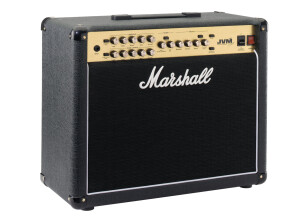
    All-tube amp with switchable output power (5 Watts or 0.5 Watts) and 2 channels. 1 headphone jack, 1 mp3 player jack, 1 footswitch. 3-band equalizer. 1 effects loop. 1 speaker output The mp3 input doesn't work unless you connect your headphones. Very good to play with headphones without disturbing your surroundings. The sound certainly doesn't have anything to do with the amp's sound without cans. It's very handy to be able to switch to 0.5 watts when you don't want to make too much noise, and the sound remains very good. You can really fell it's an "all-tube" amp. It's really powerful and has a good sound. USE The amp is very easy to use. The manual is clear and comprehensive. You can get a good sound right away, regardless of the channel you use. SOUND I play a Gibson Les Paul with humbuckers. It's a pity you can't have a clean sound at high volumes because the "classic gain" channel crunches very quickly. Other than that, this amp is excellent. I play mainly blues and rock and this amp sounds really good. I use the ultra gain channel with the gain set between 2 and 3 and it sounds very good. If you increase the gain you'll get a fat distortion right away. I have a ts9 dx pedal that I use as a booster for certain solos, but it's not really necessary. OVERALL OPINION I've been using it for a little over three months now and I can't get enough of it. I have a Vox AC15C1 that I hardly ever use since I bought this Marshall. Its 5 watts are more than enough to play at home, while the Vox is more powerful, maybe too powerful for home use. They both sound completely different. The Marshall provides a really fat and good sound right away, while the Vox took me more time to dial in. I also use both of them together with and ABY box and it sounds pretty good, too, plus I can have a clean sound at high volumes. The 10" speaker makes the sound lack some breadth, but it's quite normal for an amp with such output power. I tried out a fender blues junior at the same time as this one and it didn't take me long to make my mind up. I was looking for a more distorted sound and this amp really convinced me. I would certainly buy it again if had to. It's a very particular amp suited for certain music styles. If you want to play blues with a strat and a very clean sound, I don't think it's your best choice.

  • « Wow! »

    Redundant UTILIZATION In terms of routing: Channel A and B or Channel A+B (yes a channel sum...it's awesome) -- determined by the inputs. Reverb on one or both channels. Clean Fender Twin sound inside! No master volume control You can only get good sounds with this war beast. SOUNDS It's quite simple: This amp is versatile. Jazz, rock, blues fans... this amp was made for all of you! Even metal, with an additional distortion. With the push-pull (treble - mids on the clean channel, and treble, mids, bass, and presence on the distortion channel) you can easily get vintage sounds. The clean sound is downright spectacular: I'm in love with it, but I also love the distortion sound, the possibilities are huge. The weight...You gotta know what you want :-) 70 lbs. The volume: I play at 1 and it's very loud. It's mind-blowing! It is definitely built to last! A good investment I almost bought one 15 years ago in a store, but the side was damaged (a sledge hammer hit, in my opinion :-). I was subdued by this amp, I had never heard such a sound. 15 years later I found one! OVERALL OPINION If I could, I would buy a second one :-) If you have a small studio or room, I don't think it is the best choice, especially if your building has no elevator and the stairwell is narrow. If you love good and lasting things, go for it!

  • « Classy! »

    It's an all-tube Marshall (3 X 12AX7 for the preamp and 4 EL34 for the power stage) that delivers 100 watts (switchable to 50 watts). It has 2 channels, with volume, gain and reverb control each. The EQ is common to both channels (Low, medium, treble, presence). As usual with Marshall, simplicity is the name, it goes straight to the point and, then again, why complicate things when it sounds good just like that? UTILIZATION Ultra-easy to use. No need for a manual, even if the latter is well done. As I said earlier, Marshall has always played the simplicity card, and it's easy to get a good sound, be it clean or distorted. SOUNDS It's basically an amp designed for rock and hard rock. But on channel A, you get a quite appropriate clean sound and the reverb is not bad at all and pretty natural. Fiddling with the gain, you can get a slight crunch and, provided you have pickups worthy of it, you'll get a first glimpse of what this Marshall can do. Channel B is for distorted sounds. This is not an amp to play METAL, because it has a typical rock sound, but its aggressive side gives you access to a wide range of more vigorous categories. Personally, I try to avoid effects and I get a good distortion level. But I start from the principle that the guitar has good pickups, with a good output level. I don't want to enrage JCM 800 fans, which are excellent. The JCM 900 doesn't have that striking touch of the JCM 800, but it has inherited a very respectable sound, with a lot of versatility, thanks to its two channels.. The JCM 800 has a single channel and even if you know how to handle the volume control, it's hard to toggle between clean and distortion. What's more, you can play at very low volumes with this JCM 900 and still get a nice distortion. Do note that you shouldn't neglect the quality of the tubes. But that applies to all amps. As far as I'm concerned, I wasn't looking to make a mixture of tubes. I just wanted good quality tubes. I can assure you this amp sounds very good. And I won't make any comparisons to other amps (Mesa, Fender or Rivera). Each has its own personality. You can also change to 50 watts by means of a switch. But I don't think that changes much. It can be easily used at low volumes in almost any case. OVERALL OPINION I've used it for quite some years and it's the second one I have (the first one I had was a 4101, with only one speaker). I currently have a Fender TWIN AMP and a Peavey ULTRA PLUS, two amps I love and with very different styles. I've also had several Marshalls (TSL602 and TSL122), an ENGL head and a Vox AC30. With hindsight, the JCM 900 4102 has its own personality. Because for me, there's no real Marshall, or a Marshall with a better SOUND than another Marshall. There are dozens of models and each has its own SOUND. The JCM 900 is, at its core, a typical Marshall, I can assert that without hesitation. Fans of pedalboards and other effects pedals won't be disappointed either, because the tone is excellent. I gave it 10/10 overall. Even while being pretty demanding at all levels, I like its ease of use and the fact that it reproduces the sound of the instrument. By the way, it is in its original state and I don't plan to change anything (speakers, electronics, etc.). I would definitely buy it again without hesitation because it's an excellent amp for live use and its price is pretty reasonable.

  • iamqman's review

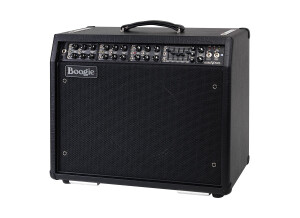
    Same amp as the regular Express with just a smaller speaker. Your tone will be a bit different since the speaker circumference will change but unless you A/B them you woulnd't know. I wish I could work over at Mesa and just play there collection of amps on a daily basis. They have so many wonderful amplifiers to choose from it actually can get a little complicated to pick one.This amplifier is one of the easiest pieces of gear to ever control. It is two channels that has two modes per channel. Which actually makes it a four channel amp because you can switch from them easily with the footswitch. Another cool feature is the Contour control which acts like a V formation like you would see on the Mark series amps. As you turn is to noon you will get that V formation and dial in an out the highs and lows and you turn is around. UTILIZATION Mesa/Boogie Express 5:25 1 x 10 Combo 25-/5-watt Tube Combo Amp Features: Open-back combo 1 x 10" E50 speaker All tube: 5 x 12AX7A, 2 x EL84 Switches from 25-watt Class A/B operation to 5-watt Class A operation Fixed bias for consistent performance Two fully independent channels with four style modes Independent Gain, Treble, Mid, Bass, Reverb, Master. and Contour controls per channel Footswitchable Variable Contour Control on each channel provides EQ from one rotary control All-tube long-spring reverb All-tube effects loop 3-button footswitch (Channel 1/2, Reverb, and Contour) Slipcover included SOUNDS The tone is a typical tone you get and we all have know from Mesa. It is a heavily saturated tone that feels nice and warm and room filling. I started with my favorite mode which is the Burn mode on channel two. Here you will get that familiar Recto tone that you get from the Dual, Triple, Roadster, and Road King rectifier amps. This amp sounds fantastic with a Strat and humbucker style guitar in front of it. Another great option is running the speaker out to a 4x12 or a 2x12 if you want more air pushed through for a bigger gig or a higher power rock band combo OVERALL OPINION This is a great amp for someone in a a need for a simple Mesa combo amp who needs a little less power but a few more options than an Electra Dyne amp. You can get all the recto goodness and have a good clean channel for country or pop music. Plus the addition of a crunch feature gets you a solid classic rock tone if so desired. At new they come in at around $1250. This is good price considering all the features you get with it. I recommend this amp to any guitar player needing a compact amp with enough features to play in any cover band.

  • « Big amp and great sound for a huge enjoyment ! »

    - What musical styles do you use this amp for? It's a clean sound machine, with very clear sounds till high power levels thanks to its legendary headroom. A perfect amp to play with a packed pedalboard. All pedals I plugged into it sounded like marvel. This is one of David Gilmour's favorite amps, and that's how he uses it. No fx loop, but you won't miss it since the amp only has a single channel. I've used it quite a lot in the studio, and this professional grade amp appeared limitless. I almost only ever used it, for versatile, beautifully pedal-crafted sounds. All by itself (without any pedal), the amp delivers a cristal-clean, precise sound, almost hifi until a high sound level. It may sound a bit shrilly depending on the guitar you use. If you drive it a little with a Strat, you'll get that Shine On You Crazy Diamonds sound (that's for Pink Floyd, fans - and I'm one of them). A delay, a good ol' OD and a phaser for the famous four notes and here we are - incredible! - Given its weight and power, is this amp feasible for practicing, rehearsing with a band, and/or using live? A rather delicate question. The amp is very powerful (50w Hiwatt really means something), sometimes too much for some small stages with PA engineers used to almost silent stages (yes, some of them are). In normal stage configurations (that is medium to large stages), I consider this amp to be perfectly suited. No problem either for working and rehearsal, as this amp is really dynamic. But getting THE sound takes pushing it a bit. - Are the clean, crunchy and distorted sounds suitable? Are the parameters efficient and effective? Clean sounds : already evoked, it’s one of the best amps in the world in that regard. Crunch: Master at 1 or 2, full-on volume with a Les Paul type guitar. It rocks, you’re at Led Zep’s but – is your room soundproofed btw? ;-) Distorted : no way. Perhaps using pedals, in that case you certainly can play anything you like. Settings are really basic, no problem finding your sound. Well, provided you get the interest of a presence knob and how volume and master volume relate to each other. Both inputs can also be linked using a small patch, opening way to new sonic opportunities (for the best of both worlds?). - What are the pros and cons of this amp? + vintage amp (mine is from 1977), point-to-point, built to conform army norms. Only high-end components. + awesome sound + huge headroom + excellent value-for-money on the used market !! Well, it seems Hiwatt isn’t “in” these days: a great thing! + perfect for my studio needs + a combo: transportable, still... - ...it weighs 34kg and is rather big. Not being the muscular type, It’s a bit of a problem to me. If you’re not too skinny, it’ll do. Glad I have nice and charitable friends. - too powerful for my on-stage needs.

  • « Awesome! »

    I used in in the studio. It was used on a track with my Artisan LP. It's perfect for all styles ranging from jazz to grunge. It's still a rather fragile amp (but it's also quite simple, so easy to repair), so I personally wouldn't bring it with me on tour, but apart from this you can record/re-amplify anything now (provided the monitoring system is decent) so why do without this little wonder? At least, in the studio, it's a real jewel of an amp! It has three knobs, the amp was used so much that you can't even tell what each is supposed to do, so you just use your ears. AND, you always end up getting the sound you were after, whether in clean, crunch or overcrunch :-D With a LP you have power at your fingertips, going from clean to crunch easily. That's kicky! Plus, it can be the ideal partner for a big, hairy and fat-sounding stack, adding nerves. Let alone the beast's natural charm. All in all, it's a must have - though of course not everyone can have it :bravo:

  • « Another Great Amp from Ken »

    This is a tube amp with some great features. First off the overall sound is stunning, cleans are smooth and not brittle. The various control features make it easy to dial up what ever your looking for. Two gain controls and a volume give lots of options for playing loud and gritty to clean and sparkly at either high or low volumes. Superb reverb with options in the intensity and depth. The EQ controls give all the best Fenderesq sounds I can possibly hope for. Blackface, deluxe it does it all. A 6V6 duo of power tubes at a 20 watts give it that nice warm feel. The switchable treble circuit add still more dimension to the sound. A perfect club amp or playing around the house. UTILIZATION I've had this amp for about a month and took it to rehearsal untested at club volume. it was easy to dial in the tone I needed to get in the mix with the band. A few tweeks and small adjustments from a flat EQ will get you where you want to be. The tone cicuit is very easy to dial in. Add in the High cut and prescence controls and sound options are endless. SOUNDS I use a G&L Legacy and a Fender Telecaster and a variety of pedals through this amp and I have to say that I may drop a few pedals. I really like to able to dial in a little hair on the clean as I play mostly 70's to 90's rock music. I used to have to do this with an OD pedal, but now I use the pedal for a clean boost for solos. I can now use the volume in the guitar to clean it up or make growl without punching a button. OVERALL OPINION I like this amp a lot. I've used another combo amp for the last five years and will now be using this amp as my working amp. I paired the amp head with a WGS Veteran 30 in a cab and I love it! The head is easy to carry at around 27 LBS, beautifully crafted at a great value. The guys in the band said they were impressed with the new sound, the bass player thought it was a better sound than my combo. I purchased one of Ken's Tiger 20 combos a few years ago and was so impressed with the quality build that I knew I would get another.I waited and watched and there are a lot of choices of other amps out there, but IMHO I am happy to have another one of Ken's great amps to play with. Even my wife (my loyal band supported for the last 12 years)commented on what a great looking amp it is and about how well it was put together. :)

  • « Awesome!! »

    25W, all-tube amp, 2 independent channels with equalization, gain, presence, reverb on very channel, and a master volume. On the rear panel you have outputs for additional cabs and, especially, a recording output that works by muting the cab so you only use the excellent tube pre-amp for recordings late at night. My girlfriend and neighbors love it. UTILIZATION It's pretty easy to use, but the controls are very subtle, the EQ is very effective. Even if the control panel is clear, the possibilities are such that they can send your head for a spin. The sound is awesome, it's excellent. SOUNDS The sound, ha, the sound. You can do anything with it. The clean channel is amazing, warm to play from jazz to reggae and blues (you can make it crunch without a sweat). The lead channel is also excellent, even if a bit heavy for my taste. I use mainly the clean channel. OVERALL OPINION Its secondhand value for money is amazing. I bought it for $800, so for the price of a Fender Hot Rod or a Marshall JCM I have largely superior sound possibilities, and incredible power (with its 25 watts it has nothing to envy a 100W Marshall JCM 900). It's main defect is its weight, you have to consider at least 2 lbs per watt, so its between 55 and 65 lbs. I would definitely buy this amp again, but it's getting harder to get hold of.

  • « Hotrodded British Tone, with Mesa Flavor »

    This is a recent model all-tube combo amp from Mesa Boogie, designed to evoke the tones of British amps (most obviously aimed at Marshall) while still having that Mesa Boogie preamp flavor that they're known for. It has: -Two channels, each with three modes (Fat Clean, Tite Clean, and Crunch on clean channel, Crunch, Tite Gain and Fluid Drive on lead) -50 watts of EL34 power, with a tube or solid state rectifier, selectable for each channel -Full power or "Spongy" mode, which is a simulated "Variac" kind of effect -One 12" Celestion V30 speaker -Serial effects loop with adjustable level, hard bypass available -foot switch for channel switching a solo boost UTILIZATION Unlike many Mesa amps, with their myriad of controls and dials, the Stiletto Ace, while still feature-filled, is a relatively easy amp to dial in. Setting the EQ dials at noon results in a punchy, even tone that's heavier in the midrange than its Recto brothers, but still very pleasing to the ear. What's nice with this amp (besides the versatility) is that it can get an amazing, chimey clean tone that's sometimes difficult to get with EL34-based amplifiers. It also excels in the mid-gain and high gain tones, covering the gamut from clean, classic crunch, 80's style high gain, and even can reach thrash metal levels of gain. This all without the assistance of any pedals. The ability to dial in a mixture of tones over the two channels is fun. For example, a spanking clean tone on channel 1, and a crunch tone on channel two. Or perhaps you want a crunchy tone for rhythm, and a singing lead tone for solos? No problem. Simply dial in a pleasing crunch on channel 1, and then a Tite Gain tone on channel 2. The manual is still a must to read (and enjoyable too, I might add) as it allows you to truly get comfortable with how the dials effect each other, recommended settings, and explanations of how everything works within the amp. SOUNDS The guitars I've used with the Stiletto are: -PRS SE Singlecut Korina -Fender Mexico-made Stratocaster -Ibanez JS2000 -Ibanez RG421 (hard tail) -Ibanez SC420 It takes nicely to all of them, however it seems to really favor the PRS and the strat. With the PRS and the Stiletto set to Tite Gain with the gain at noon, it is as close to I've ever come to a pure, amazing rock tone, enough so that I let out a bit of a laugh when I hit an A chord, because it sounds that good. With the amp set to Crunch, the classic neck/middle selection on the Strat sounds awesome. I can't say there are any sounds I "hate" on this amp, per se. However I will tell you that I won't likely be using Fat Clean very often, as it's a bit thin compared to Tite Clean. In high gain settings, it still manages to maintain note definition, even when hitting first position full chords. Providing you don't dime the gain, it maintains a very musical, usable overdrive. OVERALL OPINION I would have happily forked over full price for this amp, however the price I got it for seems like a steal. I simply cannot imagine a better amp for the money. The versatility is there, the tone is there, and the durability is there. The only thing I can vaguely say that is negative about this amp is the weight. At a shade over 60 pounds, this is one hefty beast, one deserving of its included casters. If this thing ever gets lost, stolen, or otherwise, I wouldn't hesitate to replace it.

  • « Cornford - British Boutique Quality »

    CORNFORD ROADHOUSE - hand built British amp 2xEL34 3x12AX7 30w 1x12 V30 speaker - gives Marshall/VOX classic 60s tones+ modern idiom. The Combo cabinet is expansive with the ability to tandem other cabs in addition to the main speaker. So I run into an additional V30 cab for a 2x12 config. which spreads the sound nicely. Is a very obedient and tamable amp for such an amount of gain available with its master vol and gain equipped class A design. No hiss or pops either and the dials have instant and nicely tapered operation - so unlike those unruly drive chn Fenders! The clean is a little dark as the amp is voiced for drive and then you are glad of that shade, !HOWEVER! running two cabs and the addition of my magic PROEL DS10 pedal, I get all that Keith Richards Fender Tweed Twin tone when plugged in with a Tele. But it is for those vintage Marshall EL34 tones that I go to this amp for, armed with a Les Paul and the EHX East River Drive and can enjoy some great British classic Rock riffs - you know, the ones that made you mad for guitar in the first place aged 14 !

  • « The affordable Fender sound »

    Overview The Fender Blues Jr. is easily one of Fender's most popular guitar amplifiers of the past decade. In addition to the classic black tolex model, there have been several limited edition releases over the years as well--often equipped with different speakers or electronic mods to offer a unique spin on the original amp. The original amplifiers were produced in the USA, but production was later moved to Mexico to keep costs down and meet the high demand for this little charmer of an amp. Currently (in 2015) the Blues Jr. sells for about $530 brand new, but they are extremely easy to find secondhand for a good price if you take a little extra time to look around. For settings, the Blues Jr. has it all: input gain, master volume, treble, middle, bass, reverb (from the included spring reverb tank), and finally a "fat" toggle switch that acts as mid-range/gain boost to the overall signal. The Blues Jr.'s popularity is due, in part, to the fact that it's a solid, affordable tube-powered amplifier, which is often considered a step up from solid state amps (depending on who you ask). As its name suggests, the Blues Jr. has been tailored to suit blues and rock genres, and it definitely does what its supposed to. The Blues Jr. is powered by two EL84 tubes, and driven by three 12ax7 preamp tubes (although this is the stock setting…the 12ax7's may be substituted for other tubes…more on this later). The stock tubes can be easily dialed to produce the "warm, crunchy tone" that many blues and rock guitarists are looking for in a tube amp, which cannot be fully replicated by solid state amplifiers (I say this from experience). Another reason for this amp's popularity is its ability to retain tone and overdrive at low volume levels, making it a great practice amp for apartments, dorms, and houses with napping babies. No wonder this amp appeals to such a wide audience. My Experience Unfortunately, I bought my (Mexican made) Blues Jr. in (very) used condition, and that came with its own set of issues. Luckily, I was able to fix most of the problems myself with a lot of research and a little soldering (with repairs/parts, I paid about $325 total for the amp…still a good deal). My Blues Jr. also came with dying stock tubes, so I later replaced the stock EL84's and 12ax7's for a different set-up, but I will quickly touch on the stock tube sound. My favorite aspect of the Blues Jr., which I have mentioned above, is that it can sound good at low volumes (as well as high volumes). In my opinion, this amp can be used for practice in the bedroom, recording in the studio, and even live amplification at a gig with a microphone on the cabinet (some would disagree with this, but they're probably thinking of playing in a freakin' huge stadium). The stock tubes can stay bright and clean with the gain rolled back and the master volume cranked. On the other hand, diming the gain and rolling back the master volume creates a powerful tube-driven overdrive that is not too harsh on the ears. The only problem in my case was that my used amp (before I fixed it) would occasionally give out and stop working, or it would start making loud cracking noises. This leads us to the next phase of my Blues Jr… After making the necessary adjustments and replacements my Blues Jr. was back up and running, but this time I added a new combination of tubes to change things up. I replaced the stock Groove Tube EL84's with two Mullard EL84's, and I replaced the stock 12ax7's with two JJ 12ax7's and one Electro-Harmonix 12ay7 (in the V1 position). The reason I chose these tubes is two-fold: 1) I already had the EL84 tubes on hand and I needed affordable replacements for the preamp tubes, and 2) I wanted a combination of preamp tubes that would make my Blues Jr. less prone to naturally overdriving… this is where the EH 12ay7 comes in. 12ax7's are known for their ability to overdrive easily and create classic tube distortion. The Blues Jr. comes with three of them, but only one really works to create this overdriven sound--the preamp tube in the V1 position (in the image below, the tube on the very right) Image provided by Billmaudio.com For my own guitar rig I use a pedal board with several effects, including overdrive, delay, and reverb. When I would play them through my Blues Jr. at high volumes the pedal sounds would be influenced by the overdriving 12ax7 in the V1 position. I did some research and found out that the high gain 12ax7 could be replaced with a lower gain 12ay7, which roughly uses about 70% of the power a 12ax7 uses (in simple layman terms). In other words, I could simply replace one tube and instantly have a "cleaner" amp, less prone to overdriving at higher volumes. The Blues Jr. works on a 'fixed bias,' so swapping out tubes is extra easy--the fixed bias eliminates the need for bias adjustment with a new set of tubes, which is an area of electronics outside of my expertise. Since I have made these changes, I have yet to run into any real problems with my Blues Jr. amp. A Few Objective Observations Though my experience with my own Blues Jr. has been complicated at best, I do have a few objective observations to share (I have played several of these amps in different stores and borrowed a few from friends). First, I have really never been impressed by the EQ and tone settings on the amp. The treble and bass settings have a fair amount of flexibility, but the middle control in particular has never made a difference to my ears. I've tried cranking it up and rolling it back, and it barely produces any variance in sound. As far as I'm concerned, the Blues Jr. would be better off without it. Second, the stock speaker and cabinet combination could definitely be better. Granted, my Blues Jr. was purchased very used. But even on other stock Blues Jr.'s I have not been impressed by how the cheaply made cabinet projects sound from the stock Eminence speaker. This may be more of a flaw in the cabinet design than the speaker itself, but I have heard the Celestion Vintage 30 is a popular replacement for the stock speaker. Finally, despite its design flaws, the Blues Jr. does offer a lot of bang for the buck. Though it's only a 15W amplifier, the Blues Jr. can be as loud or quiet as you need it to be. It's definitely a modern Fender amp, but it can still be dialed to capture the classic chimey tone that Fender is so famous for. Bottom-Line The Blues Jr. is a solid tube amp for an affordable price. It does not offer the same world-class tone and flexibility as high-end tube amps, but its a good alternative for the average joe who does not have $1,000 or more to spend.

  • « Super amp »

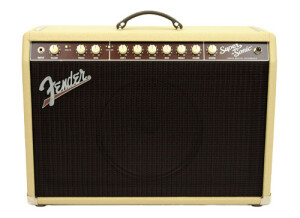
    This is one of the very best modern amplifiers that Fender has put out. This is more of a high gain amp for Fender but still keeping the vintage clean tones they are so famous for having. The amp have quite a bit of features compared to some of their more vintage styled amps. This one has a fat boost switch and also a reverb to add a bit of depth to the tone. I would call this a vintage modern amp for Fender. Fender Super-Sonic 60 1 x 12" Combo Amp Features at a Glance: Amp Type: Tube Output: 60 Watts Ohms: 8 ohms Speaker: 12" Celestion Vintage 30 Channels: 2 (Vintage and Burn) Vintage Channel: Volume, Treble, Bass, Voicing Switch (Vibrolux/Bassman) Burn Channel: Gain 1, Gain 2, Treble, Bass, Middle, Volume, Master Reverb, Rear-Panel Effects Controls: Send/Return Level Controls Effects: Spring Reverb Covering: Blonde Textured Vinyl Covering UTILIZATION Details Type Tube Number of Channels 2 Power 60W Speakers 1 x 12" Celestion Vintage 30 No Effects Reverb EQ Ch 1: Treble, Bass; Ch 2: Treble, Bass, Middle No Amp Modeling Preamp Tubes 6 x 12AX7, 2 x 12AT7 Power Tubes 2 x 6V6 Inputs 1 x Instrument Outputs 1 x Speaker Footswitch I/O Effects Loop Height 17.8" Width 25.3" Depth 10.19" Weight 54 lbs. SOUNDS I like this amp with all kinds of guitars, but mostly I like it with a Fender Stratocaster or a Charvel San Dimas or Socal. I like the light to medium tone of the ash and alder body woods. This compliments the nature of the amp quite well. The clean is very Fender sparkly and jangly. Then you go to channel two and having two gains is almost heaven. This is something you see on several boutique amplifiers. Suhr amps like the PT100 has a similar thing but theirs acts like another channel. This one just gives you deeper and juicy gain distortion. OVERALL OPINION If you need a god clean tone and a hot rod gainy distortion channel then this is your amp. The clean is remarkable and the gain has so much variation with the dual gains that is makes this amp a lot of fun to play. At new these amps come in at around $1399. Not a bad price for the quality and usability of this amp. Having two channels and both are exceptional is a big bonus. I would recommend anyone to go and try this amp if you get the chance. You may or may not like the voicing but it is a solid amplifier.