Log in
EN
FR

Guitar amplification

8217 products found

Categories
Filter
Sort by
Brand
Evaluation
  • Reviewed or not
  • Editor’s award
  • Reviewed by Audiofanzine
Availability
  • Available or not
  • Sold new or used
  • Sold new
  • Sold used
Must-have products
  • All products
  • Flagship products
  • Best rated products
  • Hot products
  • Popular products
Price
  • Freeware
  • Low-cost (< $400)
  • Mid-range ($400 - $1,000)
  • Premium (> $1,000)
€
Clear
Sort by
  • Popularity
  • User ratings
  • Price - low to high
  • Price - high to low
  • Used price, increasing
  • Used price, decreasing
  • Name (from A to Z)
  • Name (from Z to A)
  • Added on
Sort results
  • Popularity
  • User ratings
  • Price - low to high
  • Price - high to low
  • Used price, increasing
  • Used price, decreasing
  • Name (from A to Z)
  • Name (from Z to A)
  • Added on
Filter results 8,217 results found
Brands
Evaluation
Availability
Must-have products
Price
  • Freeware
  • Low-cost (< $400)
  • Mid-range ($400 - $1,000)
  • Premium (> $1,000)
Show results

The best Guitar amplification reviews

The reviews Audiofanzine members found the most helpful.
  • « Small Katana amp offers offers great value for money. »

    I first bought this Katana 50, then a few days after I returned it to get the Katana 100 instead as I had regrets. I’ve used the Katana 100 as my regular working amp for 6 months now, and I’ll also mention that I own two other amps besides it: a Fender Deluxe Reverb and a small Yamaha THR 10. Let’s now get back to this Katana 50 which I’ve had the opportunity to use for a few days. The amp seemed to me very easy to use. If you like old-school amps, this one will ring a bell. No Bluetooth, screen or complex settings, it follows the same philosophy as the Roland Cube series: very easy to use. It features 5 sounds based on the GT1/GT100 technology. Some geek geniuses have found the way to unlock the sounds of the GT1 / GT100’s 28 amps on the katanas. Lol! In short, forget about Boss's marketing chat about Tube Logic or Wazza technology. Boss has made us a good series of unexpensive amps with the good old GT100 chip inside. It features 5 sounds: clean, crunch, lead, brown and acoustic, each of them based on a sound from the Boss GT100 pedalboard. Don’t hesitate to tweak your guitar’s knob to modify the grain – the amp reacts to such variations. The clean sounds very well and works for every style. It’s based on that featured on Roland’s jazz chorus 120. The crunch sounds is a tad fatwhen the gain is pushed, and you soon get into lead territory. Again, don’t hesitate to use the guitar’s knob to get convincing crunch sounds, even with the gain setting at ¼. If I remember correctly, the crunch sound is based on a Fender Tweed. The Lead is modelled after a EVH 5150. I really love it! It sounds very fat, too. I’m not too much into Brown sounds, but at least there’s something for every taste. IIRC, it’s modelled on a Soldano amp. As for the acoustic model, well… it’s almoist full-range to plug an electric acoustic guitar in. The sounds is very convincing using my own electric acoustic, but not only it. This channel is very transparent, so I also use it with my electric guitar to allow my distortion, overdrive and preamp pedals to come out more transparently, as they would if plugged straight on a PA or poweramp. This feature is all the more interesting on thes Katana 50 that the amp doesn’t feature an effect loop. The included effects are great. There’s really all kinds of effects and for once I found the result better sounding than on other amps in the same price range. Again, I believe they are the same that can be found on the GT 100 & GT 1 pedalboards as the processor seems the same. The Katana 50 provides enough volume but lacks a little projection and low end. So, for stage or rehearsal use I can only recommend the upper model – the 100W version which is more suited for such uses. Or perhaps even the 2x12 cab and amp head. The difference between the different Katana model scan be heard clearly here: https://www.youtube.com/watch?v=oiC6MTQsZsE The included power control switch could seem a little useless on a 50W solid state amp, yet it appears practical for home use. Please note that the 0.5W setting already rocks – well enough for playing at home or in an apartment. Its cons according to me: - No presence setting. It would have helped to tame this 50W version’s sparkling aspect. If I remember correctly, the presence can be set using the Tone Studio software, but not directly on the amp. - Limited connectors: no effect loop, no line out, only one pedalboard out. This is the series’ entry level model, and the connectors reflect that. - The speaker’s quality : the sound is too shrilly to my taste, and the amp lacks projection with clean sounds. However, playing at moderate levels reveals no such big problem, while the highs quickly pierce your ears when the volume is pushed – more than with the 100 version. - No tuner: too bad on an amp that can be considered as a working tool. Its pros: - Its look and name: yeah, I know, it’s all about taste but I love them. - Its price: not much to be reproached considering the price - Its size and power, which make it the most suited amp to be used professionally in that series - The possibility to plug an electric acoustic guitar in: a great, alas rare feature! Plus, this channel’s transparency when used with external preamps. - The amp’s sensibility and reactivity to the guitar’s setting for a solid state/modelling amp - The included effects, which are very good as a whole. - The power control switch - The MP3 in & headphone out - The possibility to unlock more amp sounds & effects by tweaking it. Google “katana sneaky amps” for more details – in a nutshell, you can unlock almost all of the Boss GT100/GT1’s amps and effects, for a total 28 or 30 amps and many effects. Considering its price, it’s a really surprising “small” amp!

  • « A really great lunchbox amp ! »

    Specifications : - Power level : 30 / 15 / 9 / 2W - Tubes : 4x 12AX7, 2x 6L6 (can be switched to EL34) & single-ended mode - 6L6 / EL34 (re-bias) - 2 channels - 4-8-16 ohm outputs - FX loop I had this gem for Christmas in 2015, I’ve use dit quite a lot since then and here are my conclusions : The amp offers 2 channels with a shared EQ, which is a problem to some users. I play it with an N.O.S. oversized 2x12 cab loaded with V30s with an Ibanez JS2410 and honestly the result is really excellent ! The EQ is very efficient on both channels, which of course will be a problem to some who find a good clean sound that turns out to be too bassy or else in disto, this remains to everyone’s taste but I did find a good, common setting rather quickly. the clean channel has a very good headroom thanks to the 6L6, a very clear sound that reacts rather well to pedals – I use different dostp/OD pedals depending on my mood and until then everything has been alright. Even when maximizing the clean channel’s gain the amp doesn”t crunch much. As for the distortion channel, it’s a real bombshell! Gain at ¼ already goes for AC/DC-like heavy crunches, at half its course allows an easy legato, past the 2/3 mark you get into a metal solo register with sometimes almost too much gain (for my guitar and playing style at least). In a nutshell, you get an awesome versatility, and what a dynamics! This blow you feel in the low-end even with a 2x12 with a good old power chord! Really excellent, and the distortion is perfectly defined, make a huge chord and you’ll hear each chord resound, which is simply great to hear. The amp’s power is high enough for any amateur musician stage configuration, they say it’s 30W but the manual rather goes up to around 42W when pushed, with a Variac power system in the front that allows to reduce the power as well as a back switch that allows to use only a single power tube (and you can even choose which, so as not to always use the same). Still, I feel that on distorted sounds, using the Variac feature takes a bit away from the amp’s punch, so I prefer to keep it in full power and turn one tube off. I also own a Marshall JVM410H Joe Satriani that I also plug into the same N.O.S. cab – or a 4x12, depending on the stage. Frankly, even if I wouldn’t split from my JVM as it remains a superb amp, the Victory is one notch over any other amp I’ve played so far (including the Marshall Satriani) in many fields including build quality, power, sound definition, dynamics and all I’ve mentioned above – exceptions being in terms of versatility and comfort compared with the Marshall Satriani’s 4 channels and integrated noise gate. I still had to add a few pedals to find my settings on this small yet monstrous 2-channel amp but it’s really worth it, as it also provides little to no hum in distortion mode ! Also, both channels react really well to your playing attack and volume knob, resulting in the fact that even with a heavy distortion the result is excellent when you lower the guitar’s volume control. Also, the JS features a Hi-Pass filter which is great for preserving the guitar’s trebles while lowering the volume, keeping a great sustain and a nice sound definition! In a nutshell, that’s a really great amp – and one with character. I never owned a Cornford but former users from this brand almost all say they can recognize Martin Kidd’s signature. I had hesitated for a while with a Mesa Mark V:25, which is also great but the Victory really blew me away, with a really strong, punchy British character , a price that is really worth paying, 2 excellent channels, 18lbs (8 kg) with an included gigbag, all in all it’s just plain great! Go and get it, pals!

  • « A precise sound, with a "thank you" note from my back »

    I ordered 2 Celestion Neo Green back from my favourite UK speaker dealer. This is the 16-ohm version. Here are its main specs: Nominal diameter: 12", 305mm Power rating: 60W Nominal impedance: 8Ω & 16Ω Sensitivity: 97dB Chassis type: Pressed steel Voice coil diameter: 1.75", 44.5mm Magnet type: Neodymium Frequency range: 75-5000Hz Resonance frequency Fs: 75Hz DC resistance, Re: 6.6Ω & 13.1Ω I own a Budda Superdrive II 2x12 combo amp. This isn’t a heavy amp for a 2x12 (26kg, approximately 58lbs) but since it only has a single handle, it’s well enough to break a musician’s back. This amp’s sound is very dark on the overdrive channel and delivers a loud loud sound (the original speakers, the Eminence-made Phats, weigh in at 5 kg and deliver up to 103dB!). Replacing the original speakers replied to several aims: 1. making the sound better, to make it more precise, keeping the lows but pushing the trebles a bit further. Also, I’m used to Celestion speakers and as a rule I don’t like Eminence speakers, so I wanted a bit more “Britishness” into the sound. 2. making the combo lighter, so as to avoid visiting my chiropractor every time I moved it. 3. Turning the overall power down to be able to get the master volume beyond 10% (even in rehearsal!). In the end : 1. Soundwise, it’s perfect. The sound is avesomely precise. I’ve kept all the lows but they sound more dense, less on the drippy side than the Phats. I earned more mids as it’s a model M-based Creamback, but I also gained highs which are precise and not shrilly at all ==&gt; first point, done! 2. Regarding the weight: no question necessary, the original speakers weighed in at 5kg each while the Celestion Neo weigh barely 2. In the end, I find myself with a 30W all-tube combo with two 12” speakers for a total 20kg all ==&gt; second point, done! 3. Power: the power has diminished indeed since I got from 103dB speakers to “only” 97db ones. Unfortunately, it still delivers very loud, but now I can get the master up to 2! :-D ==&gt; third point, half-done! The Budda is a very dynamic amp with a superb clean (you can get from a rather fat, Marshallesque sound to another more on the Vox side) which reacts very well to stompboxes. I feared I would lose on these fields in changing the speakers, but that didn’t happen. These Neo Creamback render the amp’s dynamic very well and the pedals still work as well. I’ll also mention the price, which I consider very acceptable as the Neo Creambacks are priced the same as the classic G12H Creambacks. I’d do the same choice if I were to change another amp’s speakers.

  • « Just great! »

    I’ve had it for 4 days, of course an update will follow if need be. This is an all-analog amp, with a 12ax7 preamp tube and a 12ax7 power tube. As the original output must be around 1 watt, its re-amplified with a solid state processor for a final 30 watts at 4 ohms. Such amps are rare – I’ve only known two, including Koch’s Jupiter and its more metal-oriented sibling. So, we get 8 analog preamps per channel (ranging from clean to saturax), resembling my old – and defunct – Yamaha DG60. Then, there’s an effect section (just mixed with the sound), allowing chorus+delay+reverb. The reverb’s length and depth can be roughly set, as well as the delay’s time (but not its depth), and as for the chorus you can set a mix between speed and depth. It can do the job, but there’s an fx loop on the back panel for a more serious job. Then, you have two switches per tube, drastically changing the overall sound. The result is well-conceived, and very versatile. The more you push the volume, the more the tube can be heard, compresses softly, even with the master at a very reasonable level. Valvetronix owners will definitely feel at home. Finally, the minimal 4-ohm impedance allows to plug just anything to its output (while bypassing the internal speaker) through the jack on the back panel. The on/off switch is quite peculiar, it has to be pushed upward to switch the device on (and downward to switch it off, but you won’t even need to do it as it switches off automatically after one houre without an incoming signal – very practical, and green too!). Soundwise, the tube circuit results in a very organic sound, it lives, pulsates, far from your average solid state amp. In clean sounds, you can’t get tired of the various possibilities, especially considering that the effects sound nice and warm, and the settings allow for two different clean sounds at once. Or two saturax by the way, and so on. Easy, user-friendly and efficient – what more can you ask as to its ergonomy? No background noise, which is a good point. The speaker is 10 inch large, but it sounds warm and wide – another proof that whenever the acoustic part is well-conceived… By the way, I consider its big brother to be too expensive (a hundred more bucks for a bigger speaker and only 60W…), as to the smaller one of the gang it lacks too many things and it already costs 250. In the end, the AV30 appears a very good compromise of size, weight, features and price. And the best part of it is – its look! Awesome, very classy, a nice furniture to have in your living room (its rounded curves and 3D-ish speaker cover are just… wow!). : I’ve used it for a while at a high volume, and it’s full of good surprises! I thought a 10” speaker would absolutely sound shy and lack lows, and I was absolutely wrong! The output volume is impressive, its diffusion in space is great and the small speaker provides large and precise lows. Plus, the amp doesn’t seem to shrink after a few hours – how impressive! The only cons is that I have too much highs with the HiHain 2 setting (even with the treble and mid settings zeroed), so I have to get satisfied with HiGain 1. Plugged into an alnico 212, it sounds much louder, it’s really an incredible small combo… Its sound intensity reminds me of the Princeton Reverb, more precise and powerful, needless to say how much stunned I am. As a result, I almost regret not opting for the AV60, but this 30W version is small and practical so not too much regrets. A single cons, the four tube switches at the right and the last one bring some buzz in. I’ll change the tube. Thanks for reading! Oh, and of course, if I were to buy it again… you bet I would!

  • « My reference speaker! »

    I own a JCM800 cab equipped with g12-65s, and I'm replacing a pair of V30s with two others in a 2x12. This is my personal favorite speaker. It brings a great presence in all circumstabces and acoustic condition, with either one or 3 guitars in the band. Some will find it too "surgical-sounding". It's the exact opposite of a V30: bright-sounding, yet rather smooth, less of a beehive than a v30 or 75. Lows are less protruding and flattering (as it seems...) than with a v30. As a consequence, when the volume gets up, the sound remains accurate. To avoid for metal? Not so sure... If you like old-school heavy, this is a must have. I came across it by chance but always got back to it. Not the most flattering at first, but it turns out to be quite versatile, reliable (a lot of presence and a defined sound in all circumstances). All in all, accurate, and no need for extreme frequencies that blow your head off. Plus, it really bites, really much, in lead, whether you play clean, crunch or overdriven, but with a balanced sound. I'm neither a metal or thrash player but had the opportunity to play hard/heavy (it was featured on Marshall cabs in the glorious days of heavy metal), I mostly play rock & blues-rock. With all the heads and combos that were used with it, I consider it doesn't adapt so well to modern or so-called-vintage hi-gain type amps, which generally tend to a low mids, fat (think Rivera/Blackstar/Mesa) register. It doesn't work at all, these amps were thought for V30s or Classic 80s. The same goes with very bright-sounding amps such as Koch or Brunetti: much better but still a bit unbalanced. Must sound quite well with Orange or Marshall amps. While considered as THE 80s heavy speaker, its regular users (as mentioned by Celestion) are Mike Landau, Robben Ford, Ray Gomez, Lenny Kravitz... And since it takes a lot from the Greenback, if you also like Jimi and Eddie, your ears will have a good time!

  • « Why the hell didn't this amp turn into a best seller ? »

    Why didn't this amp ever turn into a best seller ? First, I think the reason lays in this amp's history. No one ever associates Ampeg with guitar amps anymore. Still, in the golden age of rock'n'roll, Fender and Ampeg shared most of the guitar amp market - one on the East coast, the other on the West coast. Then came the genius idea (but also a commercial suicide) of choosing electronic circuitry. The Ampeg Jet 20 is nothing but a handwired clone of a Fender Brown Face (6G3). That is, Fender's lesser known period: in between the Tweed and the Blackface and so on. 1964, I think. So, how does is sound? Very raw, rootsy, rock'n'roll, but overall very good! The crunch sounds absolutely beautiful: thick grain, and most important very "organic". The circuitry's simplicity makes its sound depend on tour choice of tubes. Don't hesitate to invest in NOS tubes. Yet, it's true that the "Low" channel sounds a bit dark, and the "Bright" one is a bit too bright, and the knobs interact with each other, and the stand-by wasn't designed by the book, but hell, how good does it sound!! And this tremolo, wahoou!! It affects the power tubes, so it sounds like... pumping. Beautiful! Perhaps too dirty-sounding for jazz and not high-gain enough for metal, this amp is versatile enough for blues, rock, punk, garage and probably hard rock. It's also pedal friendly, and loves fuzz and tube screamers. Its power is perfectly suited for crunch sounds with a band, while using the guitar's volume knob you can get beautiful clean sounds. In spite of the speaker's qualities, I replaced it with a Celestion Gold. I had to have it serviced three times in 5 years: once to add a variable resistor to allow setting the bias, and twice (the first technician failed to identify the problem) because of an oxydation problem on the tube holders. All small and cheap services. All three technicians were impressed by this little-knowned amp's qualities. First sold for €900, it soon sold for a mere €450. If you find one for sale, don't hesitate!

  • « Very good, professional-sounding, and practical !! »

    I use it for playing Rock, Blues, Hard. At home, I plug it straight to my 8" KRK monitors. In rehearsal, it gets into an Engl E810 poweramp/20 stereo ins outs and to an Orange PPC212C modified cab in Stereo. Simulations are very, very realistic. The settings are clearly extreme. The delays, flangers, drive, whammy, rotary (and so on) are exceptional (much better than a Kemper – according to me, of course). The practical aspect of having the preamps, sims and so on directly on your pedalboard makes for a real pleasure: no need for an additional amp or pedalboard on the road. A real professional conception. For the record, I’ve owned the Kemper 6 for 3 years, the FX8 for 6 months and I recently got the AX8. The French importer is very nice and reactive! A great product that sounds great, editing is very easy and intuitive but you can easily get into deep settings if you have spare time :-). I’m very happy with it so far, and I’m now planning to sell my great FX8 while keeping my Kemper, although it sort of acts as a duplicate now – I still haven’t managed or taken the time to reach the same dynamics or organic grain that I have on my Kemper. A cons: still no patch exchange platform for AX8 and FX8.

  • « 65 deluxe reverb blackface Version 2.0 »

    My meeting with VSA may sound stupid. Yet it is the most stupid stories that created the happiest accidents in the history of rock. In short, my test of fender 65 deluxe reverb combo impressed me. I could use these sounds. But the fact that Fender produced this amp only as a combo was a serious obstacle to any potential investment. I had cabs, plenty of, and wanted something small, to fit in the existing rig. So I traveled the net in search of viable alternatives and quickly discerned that some names reappear consistently. Victoria, Vintage Sound Amplification and Headstrong. But I noticed one detail: almost all users of real blackface amps used VSA too and where satisfied. Here I was already on a serious lead, when, suddenly, by chance, in a U.S. forum, a reknowned artist in the world of music, well known throug the world, came to give me the last advice about "why he used that, and in which situation". For me, if a guy of that caliber would take his valuable time to share with me about an amp he loves, then, it must be something around them. So I contacted Rick Hayes, the chief of this small brand. A friendly guy, like often with all those american fellows that are making a job they enjoy. A well stocked book options Unimaginable torture awaits you at this moment. Indeed, not happy to provide all possible finishes for the case, there are an incredible number of options and customizations available for this little amp. Master volume, dual independent reverb, tremolo deactivation * (saving even 3watts) tubes to choose from, reverb on both channels * Channel high gain * 6L6 upgrade for a 50w reaching amp, choice between blackface or brownface for each channel, a medium knob * and more... wow ... not obvious. You've got to know where you are going. I put a star on the options I chose. No hurry Oh yes ... take about nine months between order and time of delivery. When you have paid in advance, it is a long and insecure process. Especially the speed of response to emails is not the highlight of Rick Hayes. I think anyone else would have farted a cable (this was the original google translation, but I believe, in the US, we are more "snapping a cable" than farting). Anyway I had better things to do. I enjoyed, a little gesture from Rick for this. Non-standard work And I mean it. I'm used to seeing beautiful things move around me (also not so beautiful). But this vintage sound is in the upper portion of the amps on which I could lay my eyes on. Board in PTP well soldered and organized, intelligent mix of components for the circuit (predominantly orange drop), the input transformer over-sized, four mercury magnetics transformers, huge spring reverb for this little amp, full chromed chassis, mixed tubes (with some NOS material). We are very far into what is the best. Special mention for the case of this amp, which is probably the most cleanly finished that I have ever encountered. A solid pine with a substantial thickness, covered with a very very stable tolex and fixed/cutted, almost in an artistic way (see cutting the vinyl around the back vent, totally stylized) ... it blowned me ! However, I'm not used to make all "rosy" reviews, and I must still report the absence of instructions coming with this amp; what is not really practical when you remember that this amp is a little bit more complicated than a Marshall 1959. An power plug in U.S. format that will not work in europe ... it is ... smart, and RCA connectors for the footswitch. was close to the best. It is among the best in the world of amplification. USE In practice, no surprise to find all the advantages and disadvantages of a 65 deluxe reverb. No master and separate channels requesting a AB footswitch. However, the disadvantages of the fenders have been virtually erased here. Channel 1, normally the same as the channel two, is on this amp, a real alternative to a lead, making the addition of boost pedal useless. The stability of the grain at the end of the gain has been greatly improved, clarity and availability of good sound at low volume too. On channel two, the medium control can optimize the amp to the guitar that you want to connect. The headroom on channel 2 is better, allowing to operate cleans up at very high volumes. The progression of the settings are better than the original and you better feel what you are changing. For live, I use, sometimes, one of his special abilites. Because it is possible that two guitarists play on this amp. The quality of the sound suffers a little bit from that, but it helps you out, when your other guitarist has a dramatic failure on a live event. SOUNDS It would take days to explain clearly all the fun that this amp has to offer. If for you, the sound of an old Fender Blackface DLR is something beautiful, you are going to REALLY enjoy this one. The clean sounds, whatever you like clean crisp glassy sounds or more hotter cleans, are purely enchanting. Sometimes tight near to translucent, and seeming to touch the clouds. An impulsion of the wrist and/or a specific setting, will cause the arrival of a back layer of heat, like pebbles riding on a sea of ​​molten magma. You can litteraly "touch the sound". The guitar and fingers, are becoming of absolute importance here. Anything you transmit or feel, returns IRL to the speakers. This continues on crunches fleshy, filled of complex harmonics and rich, well structured, that will never vomit on themselves like on an other brand. Even in this mode, the smaller bits of your play will be magnified. You hear a complexe crunch, and, in the same time, you hear exactly which note you tripped on. Even the excellent Divided by 13 or Two rock didn't worked that well in this exercize. Channel two includes the qualities of what we already knew, but supply you with an increased gain. Don't expect a metal amp on that, but you will enjoy some serious powerful crunches without compressing the signal. The result is slightly warmer, with no lack of clarity in single notes. The advantages of this channel are two. First, it allow you to hunt a little more gain without having to specifically raise the volume higher than on channel 2. This make the amp more flexible. But when approaching the top of the volume on this channel, a well structured rage and some fattness in the lower frequencies is kicking in. And I mean, it kicks hard. This is around old ACDC-esque kind of tones that are really stunning. The reverb is not better as what is known about the normal fender. No, to my surprise, there is total equality, except that Rick has thought to make the effect a little more extreme on this amp. Very quick, I get a reverb already very invasive. I think the above positions will delight the experimentalists and country afficionnados. Special mention for the tremolo, significantly more discreet than on the fender reissue, but much more musical, almost liquid, giving a wonderful touch to the sound. Too bad, even at an end, he is a little more reserved and less "square" that the original effect. If you turn that effect off, you will hear an immediate increases of the volume of the head of 3w. It does not seem much, but is a significant difference, especially on a big stage. On little stages or home use, I put this effect on it's minimum but in "on" position. That allows a few dB to not reach the speakers. Overall, the amp feels more at ease in the medium or large concerts as well as a large rehearsal room. It delivers a little bit more volume than the original fender reissue amp. And even if good sounds are coming directly from the start, crunches will starting to occur at higher, already "planted" volumes. For a band with drummer, no problem. I use it on the 4-5 position to have good crunches. If I play it to the max, I can litteraly cover the drummer completely. Whether the categories are : in the family of Fender amps and their clones or even amps in general, this amp is a treat. A magnificent moment that can't be described with words. His performances goes further, in all aspects than the reissues series, and even make some other concurrents on the clone market looking quite sloppy. OVERALL OPINION This amp has the sound of the reference, for a price almost ridiculous compared to the sounds it can delivers and the quality of making. 1,700$, it is, in Switzerland, not even enough to buy a Marshall JVM410. Except, there, you will have a lot more for your money. Overall, I recommend it to professionals or, at least, to guitarists with a steady hand and clean in their playing, looking for a vintage Blackface and that do not want/can't invest in some capricious old granny. EDIT : Translated by Youtube. Corrected by a non native english person.

  • « LE preamp... but a bit too well-behaved, perhaps? »

    I use it for computer music, straight from XLR into the mixer with the amp emulation on, into presonus monitors. Various guitars, from dirty hbs to the thin clean sound of a Telecaster. A Zoom G3 is in the fx loop, only for its modulations. Before the Le Clean, I often use various ODs/distortions: boss, tube screamer, MI audio... I’d been looking for a way to listen to my favourite pedals on my computer music setup. I tried many "emulated output" tube pedals hoping to get the typical tube sound to accompany a backtrack from Youtube, all this without having to turn the tube amp on which would wake the neighbours, wife and baby up. AMT ss 11, blackstar, vox, and many others… so when i saw this brand (a leader in amp emulation) that started a pedal line, I went for it, that was exactly what I was looking for. Plus, it has a real 12ax7 inside? Oh joy! The Holy Grail of tube sound was taking shape in my dreams. Really tempting : an FX loop, Fenderish clean sound, MIDI, yeehoo ! GAS, here we go again, I bought it straight away! After a few days and leaving behind the euphoria of having a newly bought toy, here’s my review. First it’s NOT a pedal to be put in a pedalboard. It’s not made for it. Fans of Fenderish bluesy overdrives, go look somewhere else! A tube won’t turn your amp into a Fender Super Reverb! Even in the fx loop it doesn’t have the impact it would have on a music-dedicated computer. But, it becomes the perfect tiny amp for the computer musician. Clean sounds are so detailed – it’s just exceptional. Crystal-clean sounds. Add a bit of reverb, a tape echo and you’re there ! With it, I got clean sounds I didn’t expect from a Les Paul. With a Tele, you get such a rich, defined clean note sound that no DAW or basic recorder can render. But as I announced it, the biggest cons I can find it is its gain. Barely do you push a Fender amp that the note gets a little dirtier, so you push it to get a bluesy sound but no more – otherwise it becomes a really dirty distortion. Her, you even wonder why two channels. The first is so well-behaved that even pushed to its limit you keep a (Le) Clean sound! The second one is heavier, thickier, but again you hardly find how it’s supposed to resemble the Fender that supposedly inspired it. Too well-behaved again. And, there’s the fusion mode. The A & B channels can be mixed together, in series or parallel. And the hot fusion (A+B) finally starts to sound a bit like a Fender. I only use it this way, playing on the gain and volume settings (both those of the pedal and guitar). This mode deserves all due respect, even if it’s still hard to find the delicious harmonics of a tube amp. Now let’s talk about what most makes me fall for it, either in bypass or A channel: the addition of pedals. I keep on adding OD/distos to it, and I’m surprised to find exactly what I like. Without an amp, just on presonus monitoring speakers. i discover the proper character of each pedal with a great pleasure. The typical tube screamer, the SD1, the super crunch box, and even a really dirty fuzz deserve to be heard through this pedal, or should I say this “musical re-routing tool for computer music” should I say. Tube pedal lovers, don’t look this way ; but computer musicians, there’s a real chance this is what you’re looking for. PS: I’ve never had a technical problem with mine, the LED, contacts and tube are alright even after transporting it in a backpack – no problem. edit on Aug 7, 16 : after a while i decided to change the tube, as i was growing frustrated with the lack of gain and personality of the pedal. I didn’t take just anything, I chose a… 1959 phillips miniwatt 12ax7 which was in an old radio from my grandpa in the attic. Changing the tube is very easy, just unscrew the 4 screws in the back and there’s enough room to tweak the 12ax7 (the original one is a ruby) so as to take it out. Easier than on a Blackstar. Real MADNESS ! The A channel has become a vintage Fender amp. The notes’ depth and reactions are unbelievable, it sounded so beautiful I couldn’t believe my ears! Lively. Reactive. I barely touch the strings, the sound is only slightly dirtied and I’m in it, its identity keeps getting heard with a gain the Stones wouldn’t disapprove of. Alas, a lightning when I started it indicated a problem: the preamp stayed mute on the B channel, and even more in A+B mode. For security reasons and in order top spare the components, I took the Philips out and put a Tung Sol instead. It clearly has less character, but it’s still better than the original ruby ECC83 – which to me is a very bad choice. I’m only telling you that to encourage this pedal’s owners to change the original tube for another at your taste, which proves the quality of this model. Really astounding and realistic, amp-worthy if you find the tube that suits you. As for me, I’ll go after a NOS 12ax7… or loot among the old radios scattered around in my attic – you never know! :mrgreen:

  • « A little red bombshell »

    I'd been after a preamp to complement my torpedo cab for a while. I've used several models in the past: H&k, AMT ss11,Blackstar, Fredamp 800 (not enough gain for my taste) . While clean sounds were most often acceptable, no way to get a REAL high gain. Now, I've found what I was after: a compact preamp with not two but 4 channels! Channel A : a very good cleansound, it reacts well to pedals (both before and after). Channel B : A lot of demos insist on its high gain, and it is great indeed. The tube does a lot to shape the outcoming sound, it's the best I've ever had. Yet, in low gain, it's also VERY good. It's not a shredders-only preamp, a lot of sounds can be achieved with it, espacially using the... Fusion mode : This is where it's getting extraordinary. You can get the sound of both channels, either cascaded or in parallel with a mix setting. This allows to get an overdriven sound based on a clean one, allowing each note to sound clear and detached. You'd almost regret the impossibility to make presets, like with a multi-effect. With the output going straight into my torpedo CAB, I get an incredibly wide array of sounds, particularily with channel B's equalizer which allows to dine tune the mids. Connectors : very complete with effect loop, heacphone out, midi, direct out with speaker emulator... How did they manage to get all that fit into it? The box looks sturdy and professional. Sole little cons: the direct out with emulated speaker. It can do the job if needed, but it's light years away from the sound quality you'll get out of a CAB or real amp. Especially since the Wos speaker emulation software is included. Expected for a long while, this French-designed product is the perfect tool for any guitarist wishing for a light and high-performance tube preamp. In a short time, you get a great sound and can spend time to refine it and mix with the Fusion mode. I haven't tried the rest of the Two Notes series but this one suits me really perfectly.

  • « Amazing and enchanting ! »

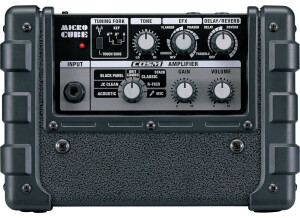
    I bought this small amp alone as it was enough for me, since I wanted a small nomad amp (it can also be associated to an additional speaker to get a small stereo system). I wanting something versatile, light and good-sounding. The animal seems sturdy in spite of its small size, the 3" speaker is protected behind a metal grid, knob-wise there's 1 Gain, 1 Volume, 1 EQ, 1 Delay, 1 mini-knob for delay mix, 1 OD switch, 1 on/off switch, 1 mp3/line in, 1 headphone/speaker out. It works with 6 AA batteries or an (non-included) external power supply (CAUTION, IT WORKS WITH A 6.5V EXTERNAL SUPPLY). It provides 3W of output power. I plug a Godin Session or Ibanez Artcore and a well-equipped pedalboard on it. AND THEN! I'm completely amazed, it sounds great in both clean and crunch! So, I get: - For crunch sounds, the guitar plugged straight in it, a little included delay... Wow, really punchy! - In clean sound with the pedalboard, all playing nuances are clearly heard. Granted, I wouldn't go as far as to perform live with it (even if well mic'ed into a good PA it could work), but for having fun at home, going on holidays or jamming with friends without having to take a large combo with you, it's perfect. Also, regarding the EQ, I thought I'd get a classic tone... Well, not at all, it allows to get from a UK sound to a US-type sound with the twist of a knob and with all possible nuances in-between (they call it the ISF system, and even if it can't be disconnected it really works wonder!). It's light (approximately 2 lbs), controls are efficient, sounds are convincing (that is if you don't push the gain and volume too high!), power is limited but credible, one can easily forget this is only a sugarbox-sized sound box. I have tried many other mini-amps, but this one is AWESOME! And now here we are, I couldn't resist, it won't be alone anymore! I bought the additional speaker. OK, you can't really call it "stereo" and that's not what it's here for anyway, but you're getting a way better sound ambiance and it sounds bigger, clean sounds are more airy and the crunch fill the room better. It's not meant to be used as a sound system for a venue of any size, but to try being smart with friends or familyit's great and the additional expansion you (not necessarily your audience)'ll get twice the enjoyment!

  • « Django Reinhardt's amp ! »

    As rare as it is pricey, this myth of an amp was the one Django Reinhardt was using by the end of his (too short) career. A bit of history* « Jean Guen made his first guitar pickups and amplifiers in 1974, the year he jointly founded a radio device build & repair shop in Courbevoie (near Paris) with a friend. The Stimer brand was born in 1947. Yves Guen was hired circa 1948 as a wiring specialist when Jean's friend and associate left the venture. That very year, the very first industrial pickup was released: the Stimer ST48! », told me French AudioFanzine member "Super Potiron", a real specialist in the history of French guitar amplification pioneers. According to Christian Guen (Yves's son) on his website, Yves Guen « met with Django Reinhardt, the famous guitarist, and both men decided to work together on a pickup project. Creating a pickup for Django was a fabulous endeavour. » At the same period, the Guen brothers created and built tube amps, also in the Stimer brand : the 6-watt M6, 8-watt M8 and 12-watt M12. The M10 is a 10-watt variation which appeared in 1953. The Nuance was released by the end of 1955 or early 1956. Django Reinhardt made Stimer famous when he used their pickups and amps and made advertisements for them. Gypsy players soon adopted the brand, as did a lot of jazzmen in the post-war era: Les Paul, Henri Crolla, Marcel Bianchi, Maurice Ferret, René Chaput, Barney Kessel... « From 1946 to 1957, Stimer pickups and amplifiers were all built in Courbevoie », Super Potiron says. After the Guen brothers split ways in 1958, Yves kept the Stimer brand going, still in the Paris area (in Maison-Laffite then Sartrouville) until his death in 1986. Technical aspects It's a 10W, A/B class, full-tube amp with an EZ80 rectifier tube, a pair of 6AQ5, a 12AX7 and a 6AT6. The speaker with included output transformer is a 22cm wide Vega or Gé-Go depending on the availability. The amp has two distinct inputs and an additional phono-dedicated input. Please note than unless you have the original ST48, you'll need an adapter to plug a female jack on the original screw plug so as to use it with nowaday's standard connectors. The sound A very distinctive sound that evokes the 1950s-60s Paris of guinguettes and so on. For a more precise idea, go to the Media section and watch the video of gypsy jazz player Christophe Lartilleux, who uses a M10. The price This is where it hurts. For a few years, M12 remakes have been available with jack connectors for approximately €1,500... An original M10 will cost you slightly more, but you'll have to add another few hundreds for a complete overhaul as high tension condensers don't tend to age well at all. But after all, its "Django's amp"! * Edited on 01/20/16