Log in
EN
FR

Accessories/Supplies for Guitar

3181 products found

Categories
Filter
Sort by
Brand
Evaluation
  • Reviewed or not
  • Editor’s award
  • Reviewed by Audiofanzine
Availability
  • Available or not
  • Sold new or used
  • Sold new
  • Sold used
Must-have products
  • All products
  • Flagship products
  • Best rated products
  • Hot products
  • Popular products
Price
  • Freeware
  • Low-cost (< $30)
  • Mid-range ($30 - $90)
  • Premium (> $90)
€
Clear
Sort by
  • Popularity
  • User ratings
  • Price - low to high
  • Price - high to low
  • Used price, increasing
  • Used price, decreasing
  • Name (from A to Z)
  • Name (from Z to A)
  • Added on
Sort results
  • Popularity
  • User ratings
  • Price - low to high
  • Price - high to low
  • Used price, increasing
  • Used price, decreasing
  • Name (from A to Z)
  • Name (from Z to A)
  • Added on
Filter results 3,181 results found
Brands
Evaluation
Availability
Must-have products
Price
  • Freeware
  • Low-cost (< $30)
  • Mid-range ($30 - $90)
  • Premium (> $90)
Show results

The best Accessories/Supplies for Guitar reviews

The reviews Audiofanzine members found the most helpful.
  • « Top notch – however... »

    First of all, i want to pay a tribute to my Boss Chromatic Tuner - TU2 which has been working perfectly on my pedalboard for years. So, why change it? And why spend almost 200 bucks in a tuner? Well, here we are : with 6-string electric guitars, 6- and 12-string acoustic guitars and a banjo, I - no longer felt like spending my time wondering about all the open/drop tuning and capo tunings. - needed a DI routed toward the TC helicon Voice live 3, or straight to the bose L1 or a mixer. Specs https://www.petersontuners.com/products/stompclassic/ 3 modes: Tuner mode, active DI mode and “monitor + DI” mode. The monitoring mode constantly analyzes the note you play and gives you the pitch and reference octave in real time (don’t play incredibly fast, though). Very good to validate the guitar’s tuning all over the neck. Can be parametered through USB from a PC or Mac. Navigation controls provide for an easy control to the different tuning settings you might need on the spot. Building quality It’s really sturdy, and the sensible parts are protected flawlessly. As far as the electronic circuit and supply are concerned, no hiss or noise to be heard, the sound is perfectly transparent in all modes. A ground lift switch allows to activate the ground if need be. The English manual is comprehensive and easy to read. The box’s advanced functions are soon at hand. Tuning quality With the TU2, I always ended up adjusting using my ears without ever really realizing it – only slight readjustments so as to find the sound more pleasant… Well, that’s what I thought: I’m no longer readjusting now using the peterson stomp classic, as the tempered tuner is calibrated to take into account the characteristic of various instruments (sweetened), and that’s very efficient feature. Just select the bass, banjo, electric guitar or acoustic guitar mode, and the tuning is perfect. The strobe display allows to get the tuning right while stretching the string, hence providing a solid, stable tuning. It provides a more visual approach of the action on one’s hand on the instruments’ tuners. That’s both sensible and incredibly precise. Control and display Very easy: 4 controls on the top to navigate within menus and access the different tuning presets. Can easily be set through USB (PC or Mac). A very big LCD screen, very easy to read even in full light. Very comfortable. 3 modes can be set through a 3-way dip switch: true bypass on/off (normal mode), monitor and Active DI. PAD: 3 entry level signal control settings using a 3-way dip switch - 0dB, 10dB or 20 dB. Pros A Rolls Royce of a tuner, with all that it implies in term of quality and comfort. Cons It’s a Rolls, with the size of it : its dimensions are plain ridiculously big, half a wah-wah in all dimensions so when you have to put in on an already crammed pedalboard… Of course, you can also consider that the space it takes is for a tuner AND an active DI and that makes things more acceptable, but still… I’ll take one star away for the size, though I’ll admit wilfully that I’m not sure whether all these functions could have been crammed within a smaller format. However, it’s clearly a point to be improved. Comparaison The only comparaison I could make was between the peterson stomp classic and theST200 turbo tuner by sonic research. The ST200 obviously takes less space, its strobe mode is easier to use with the LEDs blinking on the target frequency, in monitor mode it’s also quicker to analyze the frequency. However, the ST200 is more expensive, the strobe mode is more difficult to read in broad light, plus it doesn’t have a DI mode and it offers less configuration possibilities. In a nutshell, the Stomp Classic is a slightly different concept compared with the classic tuner pedal, you just need to know it before ordering it online. In the end Everything is top notch – accuracy, transparency, configuration, ease of use, versatility… Everything, except for its size which can only lead to advise you against getting it if your pedalboard is already lacking free space. Otherwise, this one’s all right!

  • « An endlessly modular, high-quality pedalboard king »

    Used to shelter the 3 Strymon (Timeline, Bigsky and Mobius), an Origin Effect Cali76 Compact Deluxe, the Xotic Wah and SL Drive, the TC Electronic mini Spark, polytune mini and Ditto looper, the Boss DS-2 and TC Electronic Spark (both used for vocals), plus the huge Boss ES-8 footswitch and two supplies, the Strymon Zuma (under the pedalboard) and Ojai. So yes, the Trio offers plenty of room, and that’s exactly what I expected from it. Looking closely at the PB reveals lightweight yet high-quality materials. The two handles (one on each side) allow moving it easily, which is all the more appreciated considering its weight once fully loaded. Underneath it is a reinforcement bar. A power supply can be put between it and the pedalboard. On the sides, spaces allow welcoming various modules. The concept behind the Trio28 is that of an extremely modular PB able to adapt to every musician’s needs. - one or several plates of various sizes (small, medium or large) are to be put under each pedal. Each plate has an adhesive side (to be fixed under the pedal) and another side with a notch in each corner that fit the pedalboard’s small holes, plus a screw in the middle that will allow to secure the plate to the pedalboard. Please note that the plates are to be bought separately (pr approximately $/€4 to $/€5 each), and you may need several of them for a single pedal, for instance 3 large plates for the Es-8, 2 mediums for the Wah, one large and one medium for each Strymon, one small for each mini-format pedal etc. Once fixed, it’s reliable and won’t fail, plus it’s very easy – once set in place it won’t move. I turned the entirely loaded pedalboard around and nothing moved, even considering the ES-8 alone weighs in at a solid 6½ lbs. There’s also a kit with a cleaning product which is available to unglue the plates easily. - running the cables: the pedalboard has holes all over, allowing to run the cables as you like. Please note that the smaller hole aimed at fixing the plates can also be used to run some small cables, eg Disasterplug Cable Kit, so again it’s very modular. - the side modules: various screwable modules can be bought separately for use in the dedicated space sides. I put two 4-jack modules which allows to plug easily all of my cables (guitar input, pedalboard output to amp, the loop’s send and return, the vocal mic’s input and output and the amp’s channel control output). I also use a very practical module which allows to plug the power supply directly, but several other models are available such as USB, MIDI and so on. - reinforcement bars can also be added under the pedalboard to make it a bit more rigid In the end: Well-built, easy to use, sturdy once everything is fixed, nothing moves: the Trio28 is much, much better than Velcro-based PBs, and yet in case you need to move anything just unscrew the plates and here you go! Of course, it is terriblt heavy once everything is installed on it, but this is the logical consequence of a PB with so much gear on it. Everyone can do exactly what he wants with it, which is great. To me, it’s the best you can get, so I have no hesitation giving it a 5 stars rating. Now, the only fault I can find with it is its price. Granted, 133€ for the basic pedalboard is more than acceptable in itself, but once you add the 89€ softcase, all the plates you need (consider a total 50 to 100€), the (50€ each) modules if you want everything arranged cleanly, a 20€ reinforcement bar and so on... Taking only the basic pedalboard makes it less interesting, so I mostly advise it to experienced users who are after a reliable and customizable pedalboard and are willing to make a real investment. PS: I’m adding a few pics to make the concept more explicit

  • « Really sturdy! »

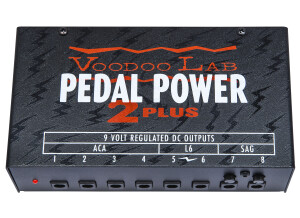
    The flight case seems very sturdy and well-finished, and so does the aluminium pedalboard: that’s the main reason behind my choice. The hard case’s sides are made of plywood birch over 5mm-thick. The hardware seems reliable too. The price is far from low, hopefully it’ll last a lifetime – at least that’s what I hoped when I decided to spend that much, unlike my Rockcase which only lasted for approximately 3 years and had cost me €139. After these 3 years, my Rockcase was completely washed out, the aluminium rail under the handle was beginning to fail everytime while it was being carried due to the important weight (25kg more or less), leaving all the weight to rest on the sole wing nuts – which ended up failing too after I’d changed the rail. The Pedaltrain would “only” have to last 2.5 times as long to be a profitable purchase. I’ve fille dit with a TC Electronic G-System, 2 Boss FV500L expression pedals, 3 standard-sized MXR and Jam Pedals stompboxes, an ISP Decimator and a Boss AC3 as well as a Voodoo Lab pedal power 2+ supply and an RJM Miniamp Gizmo MIDI box. Cramming it all within the 80x40cm space was like playing Tetris (my previous pedalboard was 80x50), but I managed to do it thanks to the supply and MIDI RJM that fill under the pedalboard. I didn’t want to buy the upper model ,the Pedaltrain Terra 42 which is over 1m wide and costs an extra €120. The Classic Pro is a bit lighter than the old PT-pro-HC which it has replaced in the brand’s catalogue (the flightcase is 35% lighter according to Pedaltrain’s website). It’s more or less the same board, but the flight case features no wheels on the side or the small additional compartment. So, it can only contain the board, but it’s also lighter and less cumbersome than the old version. It’s not a lightweight though, as the 1.47kg advertised by the online seller I got it from (against 2.72kg on Pedaltrain’s website) don’t include the hard case. This weight (while diminished compared with the previous version) translate the absence of compromise in terms of sturdiness and reliability. Effect pedals can be velcroed, screwed or cable-tied – a wide array. In case you want to use screws, you’ll have to drill a small hole in the aluminium structure, so you could end up with a pedalboard full of holes if you often change your pedals – which makes the Velcro and cable tie options all the more preferable. 2 velcro rolls (1 hook and 1 loops) and a dozen cable ties are included. The Velcro works very well, just pay attention to the fact that the surface has to be clean and dry for it to adhere. Pedaltrain’s typical “spaced-rail” design board is very practical to make the various (jack and supply) cables go under the board and to keep things tidy between the pedals themselves. A bit of organization and time spent, and all is clean. It also makes setup changes less easy as you’ll have to cut the cable ties and put new ones for any change in your pedals. The board is held within the hardcase thanks to the thick foam which is stuck to the lid. I had to cut in it because of my G-System which was a bit too big for the hard case (and for the soft case too): this way, it just comes in. Fitting the supply underneath the board requires a separate kit which gets screwed into the board and is offered in two different options - BRKT-2 for Voodoo Lab supplies and a universal Mount Kit version for all others. I’ve used both kits – the Vodoo Lab and the universal one – for my MIDI box and they work well. The Velcro that came with the universal wouldn’t adhere, though, and the included screws are low quality (the metal is too fragile) and one of the screw heads broke when I screwed it into the pedalboard (the hole I had drilled in wasn’t wide enough). Saving small money on such a cheap thing as screws seems almost shabby to me… There are many videos, tutorials and so on on the web on how to set your Pedaltrain up, don’t hesitate to have a look, some are very instructive. To screw things into the board, all you’ll need is a drilling machine, a metal drill slightly (but not too much) smaller than the screw thread and as shown on videos you only drill into the beginning of the board, screw in and it works – no need for dowels or nuts. In the end, this is a very high quality pedalboard which is quite pricey – but quality induces a cost. I’ve only had it for a short period of time, so no long-term opinion yet as to its sturdiness. I’ll give it a 5-star rating for the flawless finish and quality, and that rating is to stand provided it lasts long enough.

  • Greig's review

    I had had enough of random noises and bulky PSUs (I use one Line 6 PSU, one 1 Spot-like PSU, an ibanez PSU for a fuzz and a Dunlop for the 18V of the OCD... - oh, and I also have the H&K Tube factor PSU). I bought 3 to power 10 pedals (DT10 > Small Stone > MicroVibe > Derr Bender MkII > OCD > LGW > MicroAmp > Boss HF2 > DL4 > DisasterTransport. The results are conclusive from all points of view: Bulkiness, noise (well below my previous setup), cabling, price. I was able to feed the OCD with 18V and the DL using 3 outputs to guarantee the necessary current (theoretically, 2 are enough but I suffered untimely resets...). The cables supplied are perfect, with right-angled plugs, although they could've added a voltage doubler, now Ill have to solder a bit... Note: I use the daisy chain supplied as a current multiplier.... I'll update my review after my first gig and in a couple of months, if necessary. A detachable power cable would have been a plus.

  • « Compact and Powerful Pedalboard Supply »

    The 529i is a 12v 2000mA power supply (power cable included) for pedalboard use with 6x300mA channels and 2x500mA channels; it can be used plugged in or independent. An independent power source means you can sit anywhere, e.g., park or under a tree, with a few pedals and headphones with the 529i and practice or compose. The 529i solves a few stage issues, such as being unable to find a power main/outlet for a pedal board and avoiding hum or noise/interference when having to run long power cables (particularly alongside audio cables). Includes various plug end attachments to accommodate power/wall outlets in North America, Europe, Australia and the UK. Includes a USB cable (to charge or operate pedals) for computer hookup, 8 power cables (2.1mm negative center and 24-inches long) to run from the unit to your pedals and a Y-cable (that doubles the voltage if operating an 18v pedal). Fully charges in about two-hours; also charges while operating pedals. If operating and/or charging and running pedals via the USB cable the pedals need to be of low mA draw (150mA or less). When fully loaded (all 300mA and 500mA channels taken to capacity), the 529i has a 2-hour life of the battery. With the 529i fully charged I could run eight pedals for 4-hours, with all eight drawing under 200mA. And when I operated a 200mA 18v pedal (cab IR) with a 3mA fuzz pedal (using up three channels), the charge lasted more than 6.5 hours. The 529i also has a USB out so that you can charge phones, tablets and other compatible USB devices (USB A type cable required) . https://www.youtube.com/watch?v=VkcT_ik7xWc Limitations The 529i offers a lot, and likely the biggest drawback could be if you require an unplugged independent power source, you have maxed out the 300mA and 500mA channels and you need more than 2 hours charge. However, most pedalboard are not filled with 300mA and 500mA pedals and you likely will have more than enough juice for a 3-4 hour gig. A second (minor) limitation is that although the 8 power cables are 2-feet long each (a good length to reach just about anywhere on a good sized pedalboard), the Y-cable is only 11-inches, which means getting an 18-v pedal close to the 529i to make connection.

  • « Incredible Quality in a Pedalboard »

    I was looking for a new pedalboard for my home studio, something that would be functional, yet appealing visually for recording gear demo videos. This pedalboard had to be something more than metal framing or a basic structure, but of higher quality (and not something built in a foreign country with a North American logo added to it). My search began with a list of Canadian companies, although I have nothing against American brands (FYI, for Americans and the current exchange rate of 1.3 USD to 1 Canadian dollar, and with free shipping on orders over $250, you may want to check out Maple Rock Pedalboards!). Of those I investigated, the standards and hand-constructed quality of Maple Rock Pedalboards was an obvious choice. Maple Rock Pedalboards is a young, yet strong company out of Acton Ontario (it could take a few weeks to get your build based on demand) that also makes flight cases, road cases, pedalboards with lids and certainly custom pedalboards, cabling and installs to fit very specific needs. The company has various styles or models on its site, but I liked the ‘Standard Series’ design best. Available in various sizes, from 9x20 inches and up to 16x30 inches, I choose the largest model, since I have so many pedals and tend to do a lot of arranging of the board while filming demos. The specs for this board include: • Built with 5/8" Baltic Birch frame • 21 Tolex Finishes from which to choose (I went with classic Tweed) • Cable Access Slotted for all ¼-inch and power cables • Velcro carpet top • IEC power input plug • 2 Locking IN/OUT jacks wired with leads (I went with Stereo outputs, since some pedals I demo have a stereo option) • Choice of nickel or black hardware (I went with nickel) • Choice of nickel or black rack mount handles (nickel) • The underside is painted flat black • Non slip rubber feet • 1 YEAR - Limited Warranty There were other options as well, including having a built-in FX-Loop, MIDI input/output, Power Wire Harness to keep the underside wiring organized and from dragging on the floor, a built-in Signal Buffer, and also Voodoo Lab power units. The quality of construction is fantastic; you can feel it when lifting the board (solid, but not overly heavy) or touching any of the features. The locking input/outputs are a great feature (for those with careless feet), as well as the ability to run all cables from under the board. The attention to detail certainly produces a feeling of pride in owning a Maple Rock Pedalboard; and it doesn’t hurt that it’s a Canadian company. I also should add that the quality of service was unbelievable, from regular email updates and speed of service (both in construction and shipping).

  • « Decibel Eleven Hot Stone Deluxe . »

    I got tired of using a power strip on my pedalboard, so I got the Decibel Eleven Hot Stone Deluxe to power my foot pedals and a Decibel Loop Expander . Each outlet is shielded and isolated , so none of the pedals don't interact negatively ( hum or hiss) and it has surge protection. The Triordial Transformer is the key to clean power on this power supply. Features : ● 8 isolated outlets ● 10 total outlets ● Troiordial Transformer w/ magnetic shielding . ● Two variable out let's that range from 5 to 9 volts . ● Two high powered sections at 9 to 12 VDC at 400 ma. ● Two mid powered 9 to 12 volt at 200 ma .

  • « Virtual Tremolo/Whammy for Guitar+ »

    Do you have a favorite guitar and wished it had a tremolo bridge? Do you have a guitar with such a bridge, but you find you are always tuning it after some whammy escapades? How about an instrument that does not have such a device, including a bass or acoustic guitar, or perhaps another stringed instrument, like a cello or harp? Well, what seems like 4-5 years ago, I saw an ad or brief write-up about a new device… a tremolo/whammy arm called Virtual Jeff (after Jeff Beck), which connects to any guitar (perhaps not most headless varieties due to lack of positioning) or stringed instrument. It also would work for synths and the like that do not have mod wheels. The Virtual Jeff finally released about a year ago and I’m late to the party. Without hesitation I reached out to Peter Walker, its creator and inventor. In short, this is a trem arm attached to a small bridge-like body, that you affix to just behind the bridge or where it is suited best. One well-known YouTuber avoids his tremolo due to tuning issues – and so, he blocked it off and added the Virtual Jeff Pro. In another instance, a bassist connected it to the lower arm/horn of a bass. A few things before discussing ease-of-use and sound, and bear in mind that the Virtual Jeff website has many videos and instructions on these topics. First, it is easy to mount, using special non-damaging tape (and easy to remove if necessary); and since you can purchase additional mounting brackets (the kit comes with two), you can place this on as many guitars as you want; simply slide the trem arm on or off a chosen guitar (the mounting bracket remains on the guitar). Second, you can run an included cable direct from the trem arm to the floor controller/pedal or use the included wireless transmitter. If using the included cable, it would be best to tie it to your regular guitar cable to avoid two cables wrapping around your feet. If using the wireless 2.4GHz transmitter, it comes with a strap/belt clip, or place it in a pocket or mount it on a guitar (if using the clip or mounting methods, you will require one of the mounting brackets, which means only one bracket left in the kit to mount the Virtual Jeff – order more mounting brackets!). Essentially, it is that straight forward and I had Virtual Jeff up and running within 20-minutes. Now, what can Virtual Jeff do, and keep in mind it functions like any other whammy or tremolo arm, albeit with special features and incredible sound. Obviously, it can be used as a tremolo, its primary function. You have access to two presets, which you set according to your needs. For instance, you may want one preset subtle, with two semi-tones down and four semi-tones up… or whatever the measure… whereas the other preset could be for deep bombs and squealing highs. The Controller allows for up to one octave up in pitch, or any interval up to that point, and up to two sub-octaves down for times you want to growl. You can select as many intervals down to one sub-octave, and then the next interval jumps to two octaves. This is very nice when you want a very typical tremolo effect for one song, but want to switch to a big and broad sweep for other songs. Next, Virtual Jeff has a HOLD function, so that when you bend up or down to a particular and desired tone, you can lock it in and continue playing at that pitch-shifted position. The HOLD function is activated by a standard two-button momentary switch (e.g., Hotone’s Ampero Switch for about $20 USD), as well as the BLEND function, which I will address later. The switcher connects to either side of the Virtual Jeff Controller, making it convenient for placing cabling were preferred. A most obvious example for this function, although there are many, would be to set the V-CAPO (addressed later) an octave down, then when you switch you have a bass guitar. And so, I will discuss the V-CAPO feature next, which is a virtual capo that you lock into for a different pitch. Likely pitch-shifters are used most often by those who want drop-tuning for dark, brooding, and heavy music. This not only makes it convenient and quick to achieve semi-tones below normal, without having to retune your guitar, but it is one of the best sounding pitch-shifters I have heard. You literally get 100% of the new tone (unless you want to ‘blend’) without any artifacts from the original tone seeping in. You can use the V-CAPO on its own, or combine it with the BLEND feature, which also is triggered by the external footswitch. BLEND allows you to add the V-CAPO tone to your original tone as low as 12.5% (87.5% dry) and as high as 87.5% (12.5% dry). As stated previously, the up/down buttons on the Controller, as well as the LEDS that show ‘how much’ something has altered (your settings), is where things are adjusted. Initially, I thought the BLEND was too much on the lowest settings, but sometimes what you hear while playing and what you hear on a recorded playback are different. The low BLEND is quite sufficient to add some depth or thickness, and in a mix, blending is apparent, but far from overbearing. Higher blends do result in flipping which tone is dominant, and that is when the Virtual Jeff works even more magic. When you add a blended V-CAPO note, and then bend the whammy arm, it is the V-CAPO note that pitch-shifts and NOT the original note, thereby producing some beautiful and interesting harmonies. If the BLEND is too low, you barely hear the pitch-shifting, although you still hear the V-CAPO tone. As you increase blending, the V-CAPO tone and its pitch-shifting increase in predominance accordingly. This may not work well for high-gain playing, as I find blending works best with Metal music that has a low mix of the altered tone, but you do not get that big whammy or bending sound (barely audible with hi-gain). Conversely, you may find more blending brings out the whammy tone to the forefront, but the V-CAPO tone is too noticeable. Regardless, this will depend on your ears and what sound you want to produce. Overall, this is one piece of gear that not only is a long time coming, but you will spend hours having fun and discovering new sounds and applications – particularly those instruments that have been lying dormant with a fixed bridge. At $499 USD, this is hardly expensive when you consider many quality overdrive pedals are around the $250 mark or above, and many ‘boutique’ pedals that offer reverb, delay or other effects, match that price or greater. I have seen preamp pedals that cost nearly double that. The V-CAPO abilities are superior to others I have tried, including the DigiTech Whammy and the V-Capo functions on the Eventide H90 and Fractal FM3. Nor do I don’t feel or hear any latency (a more accomplished guitarist may, whereas I’m a hobbyist). And the fact that the Virtual Jeff can be mounted on as many guitars as you please (simply slip off the whammy arm and slide it onto another instrument), increases its value beyond modding a single guitar. Check out the Virtual Jeff website for plethora of demos, instructional videos, and everyday people showing how they use the Virtual Jeff.

  • « Gorgeous and huge sound! »

    I am fortunate to have a lot of different picks Patrick made, and all of them are both interesting and amazing for many reasons. Recently I got a MITOCHONDRIA Mega Jazz it is nothing but excellent. First of all, the finish quality is incredible : the bevels, polishing, brushing, whatever option you want, everything is perfect. It's actually hard to believe these are handmade. The MITOCHONDRIA feels completely different from my other picks : denser material, very soft to the fingers, it offers a natural great adherence! It gives amazing results with acoustic guitars, giving a warm, full and rich sound with great definition and a wide range of tones. It is also excellent for me in a Jazz context for the same reasons. All the picks Patrick builds are great helpers with your playing technique. They make everything feel easier, more obvious than regular picks. By allowing you to put less effort when you attack, you feel more relaxed, even when playing for hours. Everyone should try them at least once. Congrats Patrick for being that great inventor, plagiarized since 2009, but never ever duplicated.

  • « Outstanding, a pick for life »

    I am fortunate to have a lot of different picks Patrick made, and all of them are both interesting and amazing for many reasons. Recently I got a TORLON Mega Jazz with brushed surfaces and it is nothing but excellent. First of all, the finish quality is incredible : the bevels, polishing, brushing, whatever option you want, everything is perfect. It's actually hard to believe these are handmade. The TORLON is by far the most exceptional material for a pick that I had the opportunity to play. It feels light in the hand despite its size, and it seems completely unbendable. the brushed surfaces are a nice addition to this one. I am a very hard picker, and this one has the perfect, accurate response I was looking for! It's tough enough to last years of hard use and agressive playing, truly a must-have for any technical metal player, but not only! Bright attack, full sound, no unpleasant "tick", I will definitely use this one as my go-to pick for recording purposes. All the picks Patrick builds are great helpers with your playing technique. They make everything feel easier, more obvious than regular picks. By allowing you to put less effort when you attack, you feel more relaxed, even when playing for hours. Everyone should try them at least once. Congrats Patrick for being that great inventor, plagiarized since 2009, but never ever duplicated.

  • « Hufschmid Torlon Plectrum (Pai 4203) »

    Patrick creates the most astounding product on the face of this planet. I started with his Anvils made of Acrylic. The Mega Jazz, the Drop, the Ergo Anvil, and the Anvil XL, made my right hand so free, I had to tell everyone about it! I will have them ALL in time. But thats not what I am here to share! My right hand is Very efficient. I'm talking pre-Hufschmid. Now that I use his larger plectrums that relax my grip, I am CRAZY efficient. Want to sprint? Want to run miles? Or do you want to SPRINT for MILES? No brainer! When Patrick put Torlon on the market, (Yes, it was HIM who introduced it along with PEEK), he put the strongest, most low friction material out there for us to get our hands on. This pick made me SO much faster within the first minute of playing it. I'm on DOUBLE shred mode! Its a strange feeling. The attack is so sharp, you swear you're picking hard, but the pick just glides in such a way, that it feels unreal. Like.. "How am I doing this?" My Uncle has arthritic hands. He is not using Hufschmid plectrums to be faster. He just wants to play a guitar and not hurt. Well… Hufschmid plectrums did the job. He is now pain free whilst playing his old Cream songs. I handed him my Anvil XL and he never looked back. Why squeeze on a tiny pick all day? Ouch! He has ONE pick in his guitar room now. Back to the Torlon! This material is INSANE. BUT, so are Mr. Hufschmid's bevels. His pieces of art are like the cheat code you always wanted while playing against that boss on SNES who you couldnt beat on your own! I was attempting a Guthrie Govan passage yesterday that I’ve been pondering for some time. There was a spot I couldn't get because of a big string skip, right into a speed run that I found almost impossible. I was getting close-ish, but no cigar. This Torlon came in the mail within that hour. I pulled the Torlon plectrum out and got right back to the Guthrie line. I nailed it within my first minute of use of this Torlon pick! This is a true (and crazy) testament to just how good you can be with a new tool like this one. Wild, right? Sounds like Snake oil and hype, huh? Purchase one of these picks, and watch how slick you become on top of the work you have already put in. It is indeed instantaneous. You'll be tickled silly. No really, I was laughing at how stupid fast I was picking. I think it is unfortunate that more people are not aware of the genius behind these priceless tools! My Torlon plectrum, (PAI 4203) is my cheat code for every boss and level I couldn't beat before. My friends asked me how I was achieving such speed and accuracy on top of what I already bring to the table. I showed them my Hufschmid arsenal.. and said "They all relax my hand in a way you must feel for yourself. They all create such efficiency with very low amounts of movement due to size, they all have slick bevels that GLIDE”. But this Torlon… THIS Torlon just made me slicker than ever, and thats "Terrifying", as Paul Gilbert would say. Lets not get stuck on the "shred" stigma though. Blues and jazz... its all easier with these shapes and this particular material. It is certainly a bonus that this UBER high tech, bearing grade stuff glides the way it does. A few days ago, I was flying my glider at Kitty Hawk with the Wright Brothers. Today, I am Buzz F*ckin' Aldrin! Thanks for taking the time to read my very sincere review. There is one more step to take so you can preach on just like me; BUY ONE! You’ll soon understand why I’m so hyped! Patrick is extremely engaging and fun to talk to. Contact the the wizard himself at https://www.plectrum.ch/

  • « Easy to Use. Very Accurate. »

    I use this to tune my steel-string acoustic guitar. It is very easy to use with both an LCD "analog" meter, and low-correct-high LEDs (red-green-red). Uses a 9-volt battery. It quickly steps through A-A#-B-C-C#-D-D#-E-F-F#-G-G# by pressing the "Note" button. You can also choose any specific frequency from 435 Hz to 446 Hz in whole-number steps. Automatically accepts octave tunings (Set it for "A" and it will read "correct" when it hears 440 Hz or 880 Hz.) I'm no musician, which is why I needed a tuner. But I can use audio gear. Playing a 440 sine wave from my signal generator, the tuner locked onto the green "correct" LED. At 441, it flickered between the green "correct" and red "high" LEDs. Pros: Accurate, easy, light weight, small, long battery life. Cons: Grey-on-black lettering and case are a bit hard to read.