Log in
EN
FR

Boss Accessories/Supplies for Guitar

41 products found

Categories
Series
Filter
Sort by
Boss
Evaluation
  • Reviewed or not
  • Editor’s award
  • Reviewed by Audiofanzine
Availability
  • Available or not
  • Sold new or used
  • Sold new
  • Sold used
Must-have products
  • All products
  • Flagship products
  • Best rated products
  • Hot products
  • Popular products
Price
  • Freeware
  • Low-cost (< $40)
  • Mid-range ($40 - $150)
  • Premium (> $150)
€
Clear
Sort by
  • Popularity
  • User ratings
  • Price - low to high
  • Price - high to low
  • Used price, increasing
  • Used price, decreasing
  • Name (from A to Z)
  • Name (from Z to A)
  • Added on
Choose a series
Sort results
  • Popularity
  • User ratings
  • Price - low to high
  • Price - high to low
  • Used price, increasing
  • Used price, decreasing
  • Name (from A to Z)
  • Name (from Z to A)
  • Added on
Filter results 41 results found
Brands
Evaluation
Availability
Must-have products
Price
  • Freeware
  • Low-cost (< $40)
  • Mid-range ($40 - $150)
  • Premium (> $150)
Show results

The best Boss Accessories/Supplies for Guitar reviews

The reviews Audiofanzine members found the most helpful.
  • « A genuine improvement on a Classic »

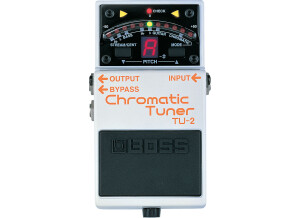
    In the days before guitarists could step on a pedal and tune their guitar on the fly, their best option was either an expensive model from the Peterson 400 Strobe series, or the small needle-based Boss TU-12. Neither were a very convenient option for a variety of reasons. The strobe tuners were difficult to read unless one was educated in how to use them, plus they were bulky, and setting them on top of your amp would still have you turning your back to the audience to tune your guitar. The TU-12 needle tuner was an improvement in simplicity and size, but compromised in accuracy. Another downside to these tuners was they didn't have the capability to mute the guitar signal coming from the amp while the player tuned. As a result, the unpleasant sounds of a guitar being tuned could be heard by everyone. The Boss TU-2 revolutionized stage tuning by placing the tuning solution on the guitarist's pedalboard where, with a step of the foot, mute their guitar signal, and tune the instrument utilizing a series of LED lights and Digital note readout. Pretty soon the TU-2 became standard equipment in every guitarist and bass player's pedalboard. The TU-3 was designed to be everything players had come to love and expect from the TU-2, while addressing common complaints about the TU-2. Boss succeeded beautifully in making the classic TU-2 design even better. The TU-3 sports a 21 LED readout, as opposed to the 12 LED readout of the TU-2, allowing a much more precise readout of microtonal deviations from the note. The display is also considerably brighter than the TU-2, allowing it to be read even on bright outdoor stages. Another improvement is response. The TU-3 tracks the signal pitch considerably faster than the TU-2. It also has a wider Vernier range than the TU-2, allowing a reference range of A436 to A445. All of these improvements are housed in the same familiar aesthetic and functional design of the TU-2. It still sports the mute/bypass jacks, mode change, and stream/cent switch of the TU-2. With these updates, The TU-3 is destined to become the new standard in pedal tuners.

  • « Banged and bruised, still going strong »

    I bought the TU-8 a LONG time ago, easily more than 10 years ago. It probably was my 1st tuner ever! It has seen a lot of use, first just at home, then I had it on a board, it resided in my cable bag etc. It has gone thru a lot, it's been kicked, dropped etc. Although it is plastic, no issues whatsoever. These days, I have it on my workbench where I restring guitars, I use it for quick tuning when re-stringing, works flawlessly. You can use it for bass and guitar and it has a manual mode but I always have it in auto-mode, you can alter the pitch from 428 to 445 Hz and it has a 9v DC input. I never ran it "in-line" because it will suck tone but always had it on an a/b-switch or the tuner out of a volume pedal. My first gear-tinkering happened when I wanted to get the tuner out of the signal path and have the ability for silent tuning. I got a Boss Line Selector and that was perfect. It performed flawlessly all the time. After all this abuse, the needle has stopped working but other than that, I still use it at home a lot. There are more accurate tuners out there but the TU-8 is great for a quick tune or check up. I won’t recommend this for doing setups and intonation as you will need something that is more accurate but for everything else, it will suite you just fine. The Boss tuners are industry standards and that didn't happen because of luck. The TU-range has something for everybody and plenty of pros are using them. Nothing but good can be said about this tuner! Most tuners these days are in pedal-form but if you need something at home, for acoustic guitars etc, the TU-8 is a great choice. Straight-forward in use and the battery will last plenty of time.

  • moosers's review

    The Boss TU-12EX is a chromatic tuner for electric, acoustic, and bass guitar. The tuner has both 1/4" inputs and outputs, so unlike most tuners of this kind you can actually plug through it. It can be powered up by a nine volt battery or power supply, and has an auto off mode that will power it down to save battery when it is not being used. The TU-12EX has separate modes for guitar and bass guitar, each with the ability to choose your tuning type and if you want to use it as a chromatic tuner or as one specifically for bass or guitar. The tuner also has reference tone for tuning by ear in stead of with the needle. However, the needle is quite accurate and the tracking is great on it. The Boss TU-12Ex is overall quite small and fits in my hand easily. While I enjoy using the tuner since it is user friendly and pain free generally, there are a few things that I don't like about it - mainly the price. For this price you could get the Boss TU-2 pedal tuner and save some money! In my opinion the TU-2 is a much more useful tuner because you can use it with your other pedals and it will also power up other pedals. I guess I can see why you would want something like the TU-12EX rather than a stomp box tuner, but common logic should say that these kinds of tuners should cost less money, not more! Don't get me wrong, the Boss TU-12EX is a great tuner that will get the job done and do it while looking great and offering up a good amount of features, but I just couldn't justify a tuner like this at this price considering what else is out there on the market...

  • « Boss TU-2 Tuner - Great unit for the price »

    The Boss TU-2 has been a great tool for tuning on the fly in gigging situations. Before this unit, I was using handheld tuners with little or no functionality built in for drop tunings. Playing both classic and modern music means you either carry way too many guitars around or you have a versatile tuning device such as the TU-2 to help. The features such as cent and stream make tuning in darkly lit venues a bit easier than using it in chromatic mode. It also has flat and double flat tuning which is great but for today's modern music, that is not totally sufficient which is a bit of a downside to this unit. I have manual handheld tuners that can be set for five flats to accommodate some of the crazy down tuned stuff out there today. Yes you can tune to a note but it’s a bit of guess work unless the unit is set exactly for that tuning as other units can accommodate. I think Boss has addressed this in the TU-3 but not sure but it is definitely worth doing the research as this feature would entice me to make a move. This unit also seems not to affect tone or suck bass too much but maybe slightly. True bypass would be a great addition if possible. All in all this has been a great asset to me thus far and I've not had any reason to want to replace it yet so thumbs up for the most part. If I were to jump to a modern rock band I might seek out something else but until then, this is doing the job. The output and by-bass jack are also a nice feature of this unit so you can use it based on the situation.

  • « Boss TU-80 »

    The TU-80 is the latest model pocket or case tuner from Boss. It is slim, lightweight and can be used as either a tuner or metronome. I found this at Best Buy for $24. I didn't know they sold music gear. I can plug into the tuner to tune or it has a built in mic. It makes a beeping sound when my note is in tune. This feature would appeal to setting up the intonation of your instrument, new guitarists or well anyone that has trouble hearing notes. The tuner has a chromatic mode, so say I want to tune to a C note I can do that. The unit runs on 2 AA size batteries. I prefer this over AAA as double AAs last longer and are easier to find when they die. The buttons are a little stiff, but I assume they built it this way so the tuner doesn't go on and off all day inside your pocket or gigbag. I guess you don't want your bag to start ticking either if you want to board a plane! The tuner is slim and fits easy into my hands. I'd compare it to the feel of a smart phone or remote control for a cable box. The buttons really take some effort to press, but I can live with that. I have nice a few fine scratches have formed. I have only had this tuner for a year. Oh well it keeps on working just fine. A very accurate and portable tuner metronome combo. This review was originally published on http://www.musicgearreview.com

  • « Boss Bag-LC »

    I bought this bag for my Boss GT-6 multi effects processor thinking what better way to protect my investment than with a bag specifically designed for the unit. Well, much to my dismay, with just shy of 2 light gigs this bag has bite the dust! I ordered this from Guitar Center's website. It set me back $50 + shipping + sales tax. I thought hey, may as well go all out. The description on the website made me feel like I could comfortably and safely store a newborn in there and not fret. It was a snug fit for the Boss GT-6 effects unit. There is a nice pocket on top to store a small cable, maybe some picks, strings etc. There are two different handles. The first handle is close to the bag where you can carry it as if it were a briefcase. Next there is the padded shoulder strap which is similar to a laptop bag. The strap broke as I was carrying this from my car into the gig. Yes that's right. I would not have been as ticked off except that expecting the bag to work I had my guitar and amp in my hands walking across a busy parking lot to get to my gig. Luckily, unlike the bag I did not die. Poor. I didn't even get one full night's use out of this bag! I'd look elsewhere. There are plenty of companies like SKB and Gator that specialize in these sort of bags. Heck, go to your local thrift shop. Anything will be better than this bag! This review was originally published on http://www.musicgearreview.com

  • « Decent pedalboard after some mods! »

    I got the BOSS BCB-60 pedelboard in a trade, and it's what I currently use on stage. Stock, it can only hold 6 standard BOSS pedals, or 4 pedals and a wah. Pretty sad eh? What I did was I took out the foam, and put Velcro and a riser in the back. This way I can fit MUCH more onto the pedal board. The board itself is built decently, it's a very sturdy plastic, and the patch-bays are metal with metal jacks. I haven't had any problems with the patch-bays yet, no tone sucking, etc. The power supply that came with it is good, for a daisy chain that is. I had to switch to a BBE Supa Charger that has isolated outlets because I was getting ground loop hum. That said, if you aren't running pedals in both the effects loop of your amp AND in front of your amp you should be fine. What I don't like is that the latches on the case do seem a little flimsy, but so far they've held up just great. Pretty much everything on this case seems fairly high-quality in general though, and being BOSS, it probably will hold up great over time. Overall, I am very happy with this pedelboard. It has served me well, but BOSS could have improved the original design by not using their silly foam system that absolutely wastes so much space. Would I recommend this to people? Well, somewhat. I am currently building my own pedalboard that is both bigger and angled, and I can build it cheaper than I can get the BOSS pedalboard for new, and I know it will be exactly what I want. So, if you are handy with tools, I suggest you build your own. If not, the BOSS is a good board to get.

  • moosers's review

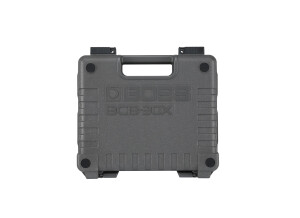
    The Boss BCB-30 Pedal Board is a mini platform for holding your guitar pedals. It can only hold three compact Boss sized pedals, of course being designed specifically for pedals made by Boss but can be fit any brand pedals of this size. It's more than just the pedal as it also comes with a daisy chain for three pedals for powering them as well as two mini 1/4" cables for connecting the pedals together. The case looks like a mini suitcase when boxed up but opens up into a small pedal board. I don't own a BCB-30 Pedal Board at home, but a friend of mine has it and I've played with his rig quite a bit. However, to be honest I'm not really sure that something like this is necessary or really the best way to go. While it's somewhat a sturdy case and it's nice that you can easily pack up your pedals for gigs, it only holds three pedals! Either you have to have a small rig or are down with swapping pedals out here and there. Being that it only holds three pedals, to me it's not really worth it since it's easy enough to carry around and set up three pedals anyway. I think that pedal boards are most useful when you've got a larger rig to set up. It is nice that this comes with a daisy chain and small 1/4" cables, but alone those wouldn't cost very much at all. I guess I can't complain too much since it's not that much money, but I can't imagine that too many people would want to be limited by only having three pedals. There are cheaper pedal boards out there beyond those made by Boss, as the BCB-60 holds more pedals but it's pretty expensive. In my opinion, if you are looking for a small pedal board, you're probably either better off making your own or waiting to get one when you might have more pedals...

  • moosers's review

    The Boss BCB-6 Carrying Box is a dual pedal board and pedal case, designed for easy set up and transport of your pedals. Of course the BCB-6 is designed for use with Boss pedals, and there isn't much room to use pedals of other shapes and sizes. The box has six spaces for six standard size Boss pedals, as well as for two smaller sized tuners or whatever else you could fit up there. It also has spaces for running wires to each of the plug-ins for power and all that, so in theory you can just open the box and be good to go on stage. This is definitely the best feature of the BCB-6, as it gives you a good amount of convenience in the fact that you can just set it up at home and be ready to go at your next gig. However, it's kind of a drag that they don't allow space for other sorts of pedals if you wanted them in there. I guess it's fine if you only have Boss pedals or pedals that are the same size, but many people out there don't just have pedals of this size, with myself included. The case is overall pretty sturdy and is fine for carrying the pedals around without fear of them breaking as well. I do also think that the BCB-6 could be a bit cheaper than it is, considering the flaws that it does have. Boss does have a few other pedal cases/boards of this nature that will be more accommodating to other pedals, but again they aren't cheap. If it were me that was looking for a pedal board, this would definitely not be the one for me, but that isn't to say that it isn't fine for what it is, it's just a bit limited in what it can offer. If you've got all Boss pedals, check out the BCB-6, otherwise look elsewhere...

  • moosers's review

    The Boss AC Adapter PSA230 is the standard nine volt power supply that is designed for use with Boss pedals. I've had mine for about five years and currently use it in tandem with the Boss PCS-20 A daisy chain to power a number of Boss pedals I have. I plug the Boss AC Adapter PSA230 into my Boss TU-2 tuner and then send the daisy chain to the five or six other Boss pedals that I want to use and it powers them all. This is truly a great combination to have if you have a lot of different Boss pedals, as it makes setting up easier and makes for a lot less clutter on the stage or in the studio. While I'm pretty sure that any nine volt power supply with the same specs as this one will do the trick, sometimes there isn't always compatibility and it is nice to know that the power supply you are using suits the pedals and that no potential issues could arise. This being said, it is the price you pay as the Boss AC Adapter PSA230 isn't that cheap as far as power supplies go, but people including myself are willing to pay the price to make sure that nothing does go wrong in terms of compatibility. I'm not saying that other power supplies won't do the same thing when used with Boss pedals, but sometimes power supplies can be tricky. Taking all of this into account, the Boss AC Adapter PSA230 does its job well and when used with the Boss PCS-20 A daisy chain, will power up to eight nine volt pedals at once. For those of us who using a number of different Boss pedals at once the Boss AC Adapter PSA230 is a nice power supply that will definitley do the trick.

  • moosers's review

    The Boss PCS-20 A is an eight part daisy designed for use with Boss pedals. I've had mine for about five years and have it hooked up to a Boss TU-2 tuner that powers the best of my Boss pedals. I love having this in my set up because it allows me to power all of my Boss pedals with a single AC power adapter that I plug into the TU-2. The Boss TU-2 is one of a few pedals that will power the rest of your pedals. The Boss LS-2 Line Selector pedal will do the same, in addition to a few other models. I believe that this will also power any other type of non-Boss pedal if it also requires nine volt power. However, unless you have one of the Boss pedals to power the rest of them you cannot really use the Boss PCS-20 A. This being said I would only really recommend those using a few Boss pedals to invest in the Boss PCS-20 A, because even though it is convenient, I do not now how compatible it is with other types of pedals. The price of the Boss PCS-20 A isn't that expensive, but is probably a bit more expensive than you would think. It is definitley worth the price if you use a bunch of Boss pedals as it makes your life a lot easier when it comes to setting up your pedals and will also save you a ton of nine volt batteries. I've definitely come to trust Boss when it comes to their pedals and their pedal accessories because they are generally well built and will last a while. All in all, the Boss PCS-20 A is a must have for those of us who use a few different types of Boss pedals at once.