Log in
EN
FR

Tuners/Pitch Pipes/Tuning Forks

406 products found

Sort results
  • Popularity
  • User ratings
  • Price - low to high
  • Price - high to low
  • Used price, increasing
  • Used price, decreasing
  • Name (from A to Z)
  • Name (from Z to A)
  • Added on

The best Tuners/Pitch Pipes/Tuning Forks reviews

The reviews Audiofanzine members found the most helpful.
  • « Too good to be true ? Or - too good for guitar? »

    Overall it's a very good stomp box to have on the pedalboard. Its readings are visible on/in all stage lights. You'll see the "roulette wheel" moving if something is out of tune the slightest. Very sturdy and road worthy build. It has some unique features that has not been covered in the rest of the reviews. Maybe it's just too good for guitar? Too precise, and too perfect? No guitar will intonate within 0,02 cents! I can press with just my fingers any string out of tune, severely with this pedal! Since it doesn't really show how much, it makes you think it's way out of tune, when it's just spinning like hell, but the real out of tune is maybe just at one cent. It reacts to when just TOUCHING the guitars head, or starting to reach for the tuners on the guitar headstock! It is THAT sensitive. It takes a bit too long time to tune up, because it's so sensitive, so one might be better off leaving it at home, when intonating and setting up the guitar or whatever instrument. It's so fast you can tune drums to it too. Very good for its price. The sound it makes? None! It does not have a reference pitch. Some pedals or tuners has this though. I don't have any use for that, especially on stage. Who wants to hear that? One thing that is different from ALL PEDALS: It turns off the battery when it's turned off. I e the battery wont drain when just you have the plugs in. Which means you can leave it plugged on your pedal board, and don't need to use any power cord, adapter which can be freed up for other pedals. No one has done this before. As one stomps at the switch one can hear a slight "clonk" - electric, not the acoustic mechanical clonk - for when the battery turns active. Also whenever a power cord, 9v adapter is used, it turns on regardless of anything is plugged in or not. Whether this is deliberate or not, I don't know, it says nothing in the manual about it. It is crucial if you have it on your board to know this. Because, the main caveat I have about it is that they shouldn't have placed the power jack for 9v BELOW the actual input jack! It should've been placed on the front of the box. It gets in the way for your guitar cable, as it protrudes out a bit, and makes angled input plugs impossible to use. Provided of course, that this is the first pedal in the chain. It IS true bypass, as it carries signal even when there's no battery in it, or power chord plugged into it. As fast as you step on the switch it turns silent. You can also program it beforehand to alternate tunings. Say, if you forgotten one and thinks "Hey, what was it that Michael Hedges used..." you just have to program it once, and remember that it was on the last preset, and tune up to the first down to sixth strings. Very handy. I don't care much for sweetened stuff, like BFTS tuning or TrueTemperament tuning at all. This is the drawback of such a meticulous tuner, with that prickly accuracy. You tend to get OCD and anal about intonation and tuning. Sorry, but an A 440 is A 440 to me, regardless of open strings or fretted anywhere on a guitar. It is a bit overkill for guitar. For other instruments, maybe even piano, it's ok.

  • Audiofanzine FR's review

    (Originally written by llabe/translated from Audiofanzine FR) - How long have you been using it? About four years. I use it with a Digitech Valve FX and it has a totally linear response. It finds the note very quickly and it looks nice. Its LEDs are powerful and they have a beautiful blue color. I also like it because it's eye catching :-). The Valve FX has a very powerful tuner indeed but it's not easy to read (bright lighting environments and too small LCD). The Fender tuner comes in very handy since it allows me to tune very quickly when I play live on stage. - Which feature do you like best? Effective, easy to read in every environment, looks. - Which feature do you like least? None - How would you rate its value for money? I don't know its price since I exchanged it for a Boss unit. But I recommend it if you don't want to damage your eyes using the tuner function of your effects processor. - Based on your experience, would you buy this product again? For sure.

  • « Excellent value for money »

    I bought it on eBay, straight from China or Hong-Kong – I can’t remember. I got it for a very decent price, and everything would have been perfect had the seller not forgotten to send me – as promised – a box containing a European power supply instead of the US version. In the end, after a few mails and a partial refund, I’m very happy with this purchase. :-D I’ve installed the stompbox very early in my fx chain on a pedalboard that I use for rehearsal and live, which is most often composed of my Relay G30 wireless receiver => a buffer/booster => this tuner/supply => 2 or 3 drive stompboxes => a buffer/booster => a hard-bypassed small EQ. All these are true-bypass, except for the two buffers/boosters. I mentioned that I’m using this setup both for rehearsal and live because the electrical supply is often an issue – what I mean is that in many places the electrics is rather poorly done, sometimes inducing hum because of phase and/or ground issues. That was my problem with my previous setup which involved a mini Polytune 2 tuner and a supply based on a Visual Sound 1-Spot with an 8-out daisy chain from the same brand – not a real hum actually, yet a little something that could be heard on distorted sounds. And I only ever play using distorted sounds. :-D So, i’ve replaced the mini Polytune 2 with the Joyo and taken the daisy chain away to supply each pedal (including the G30 receiver) through one of the Joyo’s power supply outputs – with the Joyo’s power provided by the 1-Spot. Great result with no hum – not in the place where my band rehearses at least as I haven’t used it live yet, but this seems to announce great things. The sound is not the cleanest you’ll get either, but this is inherent to all high gain circuits such as ODs, not to the supply. Yet, the wiring of my pedalboard looks a bit more messy now than when I used the daisy chain, but the efficiency of the isolated outputs – one per pedal – is here! :bravo: As to its role as a tuner, it is less accurate than the Polytune 2’s strobe mode (which is the more efficient, +/-0.1 cent )... which by the way I never used as it was, precisely, too accurate for me! :8O: Using it, I never managed to get 100% in tune and being a little maniac I couldn’t resort to play like that so I preferred the classic, +/-0.5 cent mode, which was largely good enough to my ears and allowed me to get in tune quicker. Whether in rehearsal or on stage, you have to be quick! :-D For this use, the Joyo is as accurate as the mini Polytune 2. The display is easy to read, at least when you play indoor – I don’t know what it would look like outdoor in a sunny place but IMO the LEDs seem powerful enough to be seen in such a situation. :) I couldn’t tell if it works well with alternative tunings or not as I don’t use any of these. In the end, this pedal is perfect as to the basic use of the tuner part which i make of it, and i’m very pleased with the advantages brought by the isolated supply outs to supply my other pedals, especially considering my pedalboard is too small to put a supply brick such as a Fuel Tank or DC Brick... ;)

  • « Legendary Peterson accuracy that fits in your backpack! »

    The Peterson Strobe tuner has been the industry standard for ultra-precise instrument tuning for decades. With the introduction of the 400 series strobe tuners in the 60's, touring acts now had access to precise instrument tuning, and the 400 series became standard equipment for guitar techs everywhere. But times, they are a-changin', and travel costs are skyrocketing, and the bulky design of the 400 series makes it less ideal for traveling in some situations. Peterson has recognized this, and produced numerous models of Virtual Strobe tuners that are smaller and "virtually" as accurate as their true mechanical strobe predecessors. Beginning with the VS-1 and now the VS-F StroboFlip, Peterson is placing their legendary accuracy into the hands of techs and players alike without the large size and cost of its more flagship bench models. The StroboFlip is roughly 4 inches by 4 inches square, and about an inch and a half thick, so it's comparably sized to most pedal tuners. It boasts a staggering 1/1000th of a cent accuracy, and features a Vernier range of A390-490hz, allowing you to tune virtually any instrument to any tolerance, even if it doesn't plug into the tuner (the Stroboflip has a built-in mic). There are quite a few features within the Stroboflip, among them being 34 built-in presets of temperaments and Peterson's patented "sweeteners", which are variations on perfect intervallic note spacing arrangements, optimized for certain applications and instruments. No other available compact tuner does this. And what's more, you can create your own presets and store up to 244 of them onboard the StroboFlip. It also features offsets for Buzz Feiten tuning systems. In other features, the StroboFlip includes a mounting clamp, as well as a seperate pickup for tuning acoustic instruments in loud environments. The Stroboflip operates via an included power adapter, or AA batteries. Batteries last for quite a while in the StroboFlip, much longer than a 9V lasts in most pedal tuners. The StroboFlip also has an auto-off function to preserve battery life. Signs of low battery power manifest themselves in a fading display and inability to grab and read a note. When tuning on the fly, it helps to use the StroboFlip with another, simpler tuner in series simply due to the sensitivity of the StroboFlip. Vibrations in the instrument (especially acoustic instruments) from surrounding frequencies are picked up by the StroboFlip and can make tuning difficult. Having used several models of Peterson Strobe tuner, I can say that the StroboFlip performs comparably to other models for precise string instrument tuning, so much so that I leave my trusty Peterson 450 model at home and use the StroboFlip on the road. There, I use it to tune electric guitars, bass, mandolin, and acoustic guitars. At a street price of $235, the StroboFlip is a great value, especially when one considers all it is capable of, and the prices of its mechanical strobe counterparts.

  • « A genuine improvement on a Classic »

    In the days before guitarists could step on a pedal and tune their guitar on the fly, their best option was either an expensive model from the Peterson 400 Strobe series, or the small needle-based Boss TU-12. Neither were a very convenient option for a variety of reasons. The strobe tuners were difficult to read unless one was educated in how to use them, plus they were bulky, and setting them on top of your amp would still have you turning your back to the audience to tune your guitar. The TU-12 needle tuner was an improvement in simplicity and size, but compromised in accuracy. Another downside to these tuners was they didn't have the capability to mute the guitar signal coming from the amp while the player tuned. As a result, the unpleasant sounds of a guitar being tuned could be heard by everyone. The Boss TU-2 revolutionized stage tuning by placing the tuning solution on the guitarist's pedalboard where, with a step of the foot, mute their guitar signal, and tune the instrument utilizing a series of LED lights and Digital note readout. Pretty soon the TU-2 became standard equipment in every guitarist and bass player's pedalboard. The TU-3 was designed to be everything players had come to love and expect from the TU-2, while addressing common complaints about the TU-2. Boss succeeded beautifully in making the classic TU-2 design even better. The TU-3 sports a 21 LED readout, as opposed to the 12 LED readout of the TU-2, allowing a much more precise readout of microtonal deviations from the note. The display is also considerably brighter than the TU-2, allowing it to be read even on bright outdoor stages. Another improvement is response. The TU-3 tracks the signal pitch considerably faster than the TU-2. It also has a wider Vernier range than the TU-2, allowing a reference range of A436 to A445. All of these improvements are housed in the same familiar aesthetic and functional design of the TU-2. It still sports the mute/bypass jacks, mode change, and stream/cent switch of the TU-2. With these updates, The TU-3 is destined to become the new standard in pedal tuners.

  • « Small, precise »

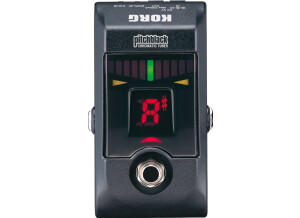
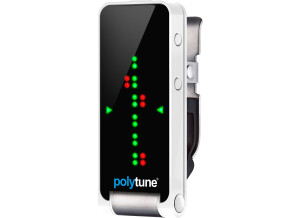
    I've been using it for four months. I bought it because I was tired of having to unplug my guitar every time I had to tune it. I chose the mini version for its price (which is less expensive than the normal version). The polytune function to tune all 6 strings at once is very practical and fast, but maybe a bit less precise than string-by-string. Nevertheless, it's prefect to tune quickly between two songs. I've had several tuners (Korg DT-10, Korg DTR-1000, Korg Pitchblack) and I have never been disappointed by the precision of any of them. The main differences have to do with the finish and the sturdiness of the pedal and the switch. It's a good tuner. If I ever have the chance, I'll get the normal version, which must have a bigger display and dimensions (my pedalboard is pretty big and the mini looks really tiny on it).

  • nickname009's review

    This is supposedly Peterson's first take at making their amazing tuner in a pedal form. Why haven't they thought of this sooner? I don't know, maybe they have but just took forever to make it happen? The strobostomp also includes the infamous buzz feiten tuning system for those who have guitars equipped for buzz feiten. Though I personally never used a guitar that required it. The LED could be brighter, well, it could always be brighter, especially for stage. There never seems to be a pedal company that makes the LED bright enough, it’s as if they’re scared it’ll be too bright. But on stage, there literally is no such thing as too bright! The brighter the better! Always! Always! Always! Anyhow, it's got 99.9% of all the same features you'd find in a regular strobe tuner from Peterson. So you know it's good, but the main complaint I had with this is of course the plastic jacks and the overall built quality. It’s definitely not like a boss pedal and not tough. I've had it crap out on me twice and had the plastic jacks replaced. I've also heard and read of many of the same or similar stories. Overall it's a decent tuner in terms of tuning. The functionality part is great too if one knows how to read strobes, most players couldn't care less. But whatever floats your boat. In the end however, I wouldn't call this a roadworthy and reliable tuner for your board. Plastic jacks is a huge problem and I don't know why Peterson decided to go that route, they've finally come out with the Strobostomp 2 which is an improved version with metal jacks and more solid body construction.

  • « Banged and bruised, still going strong »

    I bought the TU-8 a LONG time ago, easily more than 10 years ago. It probably was my 1st tuner ever! It has seen a lot of use, first just at home, then I had it on a board, it resided in my cable bag etc. It has gone thru a lot, it's been kicked, dropped etc. Although it is plastic, no issues whatsoever. These days, I have it on my workbench where I restring guitars, I use it for quick tuning when re-stringing, works flawlessly. You can use it for bass and guitar and it has a manual mode but I always have it in auto-mode, you can alter the pitch from 428 to 445 Hz and it has a 9v DC input. I never ran it "in-line" because it will suck tone but always had it on an a/b-switch or the tuner out of a volume pedal. My first gear-tinkering happened when I wanted to get the tuner out of the signal path and have the ability for silent tuning. I got a Boss Line Selector and that was perfect. It performed flawlessly all the time. After all this abuse, the needle has stopped working but other than that, I still use it at home a lot. There are more accurate tuners out there but the TU-8 is great for a quick tune or check up. I won’t recommend this for doing setups and intonation as you will need something that is more accurate but for everything else, it will suite you just fine. The Boss tuners are industry standards and that didn't happen because of luck. The TU-range has something for everybody and plenty of pros are using them. Nothing but good can be said about this tuner! Most tuners these days are in pedal-form but if you need something at home, for acoustic guitars etc, the TU-8 is a great choice. Straight-forward in use and the battery will last plenty of time.

  • moosers's review

    The Hyundai HGT-1000 is a guitar tuner from an unlikely source. Until I saw this tuner I didn't really know that Hyundai ever made anything like this, although I'm not even 100% sure on the origins of this tuner. As far as it's make up goes, it's definitely really simple, and unfortunately doesn't offer up much flexibility when compared to modern day tuners. I don't actually know when this tuner is even from, as I couldn't find any information at all on it after using it at the studio where I work. We have this tuner in our tuner collection, but it generally isn't the first one used since we have a bunch of other ones that are more flexible and slightly easier to use. The tuner has a mode switch for off, tuner, and battery, and also has a six setting parameter for choosing each guitar string and tuning to it. The tuning monitor is an analog needle, and shows you +/- 50 cents to the note that you've chosen. You can also change the exact pitch of the notes if you want to tune to a different tuning frequency. It has a built in microphone, which is what I mostly use with the tuner, but it also has a 1/4" inch input as well. I really don't know how you'd go about finding one of these, as I really think it's the type of tuner that you'd stumble upon and pick up rather than seek it out. You might be able to find one of these on eBay now and again, but they seem to be very rare and almost unheard of. I definitely won't choose this tuner first amongst the other tuners that we have in the studio, but it can certainly do the job just fine...

  • moosers's review

    The Boss TU-12EX is a chromatic tuner for electric, acoustic, and bass guitar. The tuner has both 1/4" inputs and outputs, so unlike most tuners of this kind you can actually plug through it. It can be powered up by a nine volt battery or power supply, and has an auto off mode that will power it down to save battery when it is not being used. The TU-12EX has separate modes for guitar and bass guitar, each with the ability to choose your tuning type and if you want to use it as a chromatic tuner or as one specifically for bass or guitar. The tuner also has reference tone for tuning by ear in stead of with the needle. However, the needle is quite accurate and the tracking is great on it. The Boss TU-12Ex is overall quite small and fits in my hand easily. While I enjoy using the tuner since it is user friendly and pain free generally, there are a few things that I don't like about it - mainly the price. For this price you could get the Boss TU-2 pedal tuner and save some money! In my opinion the TU-2 is a much more useful tuner because you can use it with your other pedals and it will also power up other pedals. I guess I can see why you would want something like the TU-12EX rather than a stomp box tuner, but common logic should say that these kinds of tuners should cost less money, not more! Don't get me wrong, the Boss TU-12EX is a great tuner that will get the job done and do it while looking great and offering up a good amount of features, but I just couldn't justify a tuner like this at this price considering what else is out there on the market...

  • moosers's review

    The Korg DTR-1 is a rack mountable tuner, designed for both use in the studio and on the stage.<span> </span>I’ve only used the unit inside of the recording studio, but for both applications it is the same type of use.<span> </span>The tuner has a few ¼ inch connections in the front for your instrument, as well as headphones.<span> </span>I’m not sure what types of connections it has in the back, as the one that I used was already racked and ready to go.<span> </span>As stated before, this is rackable and will take up only a single rack space. Using Korg DTR-1 is quite easy, as the unit overall is very user friendly.<span> </span>There isn’t really all too much to know beyond how to set the different modes and how to get it all set up.<span> </span>The monitoring screen is extremely large, so you can really zero in on the perfect pitch.<span> </span>You can also see exactly how far off cents wise you are.<span> </span>I don’t believe that a manual is necessary since it is so easy to use on its own.<span> </span>The DTR-1 is definitely one of the most in depth tuner that I have seen, as it goes beyond just being a single instrument tuner.<span> </span>It can be used with an electric stringed instrument that can be plugged into it as well.<span> </span>It won’t color your sound at all either when you plug through it.<span> </span>The price of the Korg DTR-1 is very reasonable for an in depth tuner that is rackable, but is more expensive than your average tuner for sure.<span> </span>I’d say that it is definitely worth it if you’re looking for a top notch tuner though.<span> </span>This is perfect for getting a quick and easy tune both on the stage and for being a main stay in the recording studio.

  • « Great for guitar, questionable for autoharp »

    I've had my Meisel COM-90 for perhaps 12 years (?). It has, and continues to serve me well for tuning my guitars all that time. I recently bought an autoharp and as far as I can tell it won't work for the purpose. It simply won't give me any notes but the normals (term?), i.e. no flats or sharps. It indicates below or above the notes for a guitar but no accuracy for flats or sharps. I don't know if the newer models are different in this regard but it seems I need to buy a new, or different, tuner for my autoharp.