Log in
EN
FR

Guitar Strings

470 products found

Filter
Sort by
Evaluation
  • Reviewed or not
  • Editor’s award
  • Reviewed by Audiofanzine
Availability
  • Available or not
  • Sold new or used
  • Sold new
  • Sold used
Must-have products
  • All products
  • Flagship products
  • Best rated products
  • Hot products
  • Popular products
Price
  • Freeware
  • Low-cost (< $10)
  • Mid-range ($10 - $25)
  • Premium (> $25)
€
Clear
Sort by
  • Popularity
  • User ratings
  • Price - low to high
  • Price - high to low
  • Used price, increasing
  • Used price, decreasing
  • Name (from A to Z)
  • Name (from Z to A)
  • Added on
Sort results
  • Popularity
  • User ratings
  • Price - low to high
  • Price - high to low
  • Used price, increasing
  • Used price, decreasing
  • Name (from A to Z)
  • Name (from Z to A)
  • Added on
Filter results 470 results found
Evaluation
Availability
Must-have products
Price
  • Freeware
  • Low-cost (< $10)
  • Mid-range ($10 - $25)
  • Premium (> $25)
Show results

The best Guitar Strings reviews

The reviews Audiofanzine members found the most helpful.
  • « Very nice, made me consider switching »

    I've used Daddario's for 8 years, just recently switching to daddario coated. I've gone through damn near every brand I can think of and always gone back to daddario. When these cobalts came out I decided to give them a try. My concerns were longevity and tone. They're brighter than most strings and rougher like daddario's so that was a plus. I've had a pair on my Jackson Rhoads for about 3 months now, just to see how they last. They still sound like new, haven't rusted or corroded at all, and feel great. The whole line of them being louder and more definition I think is BS. Even if they were louder with the type of pickups, distance from pickups, amp, amp settings... you'd never know it was the strings, no matter how much louder they were (which they are still negligible. So I think these are great strings and could possibly make me switch from Daddario but I'll have to test them a little more. They cost about the same as coated strings so money isn't an issue.

  • Audiofanzine FR's review

    (Originally written by marc05400/translated from Audiofanzine FR) I've been using these strings for a few weeks. They are the first flatwound strings I try so I cannot really compare them to others... But their quality somehow refrains me from trying out other brands... They give a jazzy or bluesy sound to my Lg Hmb Godin depending on the pickup and amp settings (Vox AD30VT). They are very comfortable to play with and hardly make any noise when I slide! They are "smooth" enough to easily play 1-tone bends on the 4th fret (if your fingers can take it!). I'm actually considering trying out their big sisters (gauge 12/52)... Right now I cannot say anything about durability... I give them 10/10! I have no reason to award them a lower mark at the moment...

  • « A quality nickel wound string »

    I have used numerous string brands over the years. I believe most instruments have string types that suit them best. The composition of the string along with the winding process do make a difference and one string that sounds great on one instrument might not do as well on a differently configured one. The thing I found most attractive about the Rotosound Yellows (10-46) was the consistency in production. Pack to pack the strings always seemed to perform as they are expected to. The sound is consistent and there are no variations in build which meant as long as I purchased them the intonation would stay consistent and need no adjusting. These strings are priced fairly for a well constructed string using quality materials. There is nothing new or special about their design but they remain tried and true over the years. They do offer a two pack that will save you a little money, but the coolest thing about this company is that they understand guitarists and always package an extra high string along for the ride, great for us who bend and break a lot of those. If you fall into that category then these will provide an outstanding value. I would categorize the sound quality of these strings with most nickel wound strings. They have a slightly warmer characteristic without sacrificing too much high end brightness. I primarily used them on a dual hum bucking Fender Stratocaster equipped with a Pearly Gates at the bridge and a '59 in the neck position. This was an odd American special issue guitar in the late '90s and tended to have a Les Paul type tone complimenting its Stratocaster build. After trying many material types then brands the Rotosound Yellows offered the best sound and reliability. The only downside to these strings is that, like other nickel wound strings, they do tend to corrode faster and if not wiped off after use will come out of the case in poor condition. That being said these strings also start to sound bad when they are dirty and the brightness they did possess goes down hill fast. A good amount of string life expectancy is related to the type of materials used and in our ability to care for the product as well. All things being equal I do continue to use these strings but am always on the look out for a new and better product.

  • « Holds its tone for longer »

    The Martin SP Lifespan strings are the more expensive version of their regular SP strings. The SP+ strings are claimed to last longer and hold their tone longer than the cheaper strings. The strings are made of a blend of phosphor bronze and come with Martin's Cleartone treatment that is supposed to make the strings last longer. My experience is that the extra cost of the strings does improve performance, although each guitar player will have to decide for themselves whether the extra cost is worth the improved performance. I have used both the SP and SP+ strings on my Martin DM (a mid-level guitar). I did not notice a major difference in the tone between the two different types of strings when they are initially put on the guitar. I never play hard enough to break strings, so it is hard for me to compare if the SP Lifespan strings are more 'durable' over a long time than the regular SP strings. In my recollection, the SP+ strings may have held their tone longer than the SP strings. I typically think that the SP strings start sounding dull after about 4-5 hours of playing. I would say that the SP+ strings probably held their tone for about twice the length of time. My main suggestion for anyone that wants their strings to last longer is to clean them after you play. The biggest thing that sucks the tone out of a set of strings is having the dirt and grime build up on the strings. When this happens the strings can vibrate appropriately. Finger oil will eventually build up on any type of string, regardless if it is SP or SP+. Buying 'coated' strings can help this problem. But if you are willing to spend the extra money to buy expensive strings rather than the cheap strings, you should also spend the extra time to clean your strings.

  • « New Strings Make All the Difference »

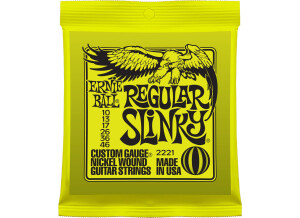
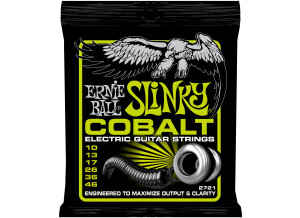
    I have been playing Ernie Ball regular slinky strings for more than 10 years. I typically change the strings on my electric guitar once a month, or even more often if I am recording. Probably the biggest tip I can give someone that is either new to playing the guitar, or is looking for a simple way to improve the tone of their guitar - change the strings. I know too many people that never change their strings until something breaks. This is the easiest way to insure that your guitar sounds dull and lifeless until the next time your strings break. The Ernie Ball slinky strings are the cheapest way to keep your guitar sounding good. Every time you put a new set on your guitar will sound much better than when it old strings with dirt and grime all over them. The main thing is that all the dirt and grime changes the physics of how your strings vibrate. When the strings can't vibrate properly, you are going to lose tone. Therefore, change your strings and clean them whenever you play. The only downside of these strings is that they don't hold their tone for very long. As soon as you put them on, they sound great. However, after about 5-10 hours of play time, they really start to sound dull. I guess you get what you pay for. There are more expensive strings that hold their tone for longer. Pretty much if you pay more money then you won't have to change the strings as often. With these strings, they are super cheap. I typically buy them in packs of 10 sets. But then you have to change the strings over and over again. This is a little bit of a hassle. I have recently tried out the new Ernie Ball Cobalt strings. I honestly don't think they sound better than the Regular Slinky strings, but I am hoping they hold their tone for longer. All this to say, the regular slinky strings sound great. As long as you are willing to change your strings often, then these are the way to go.

  • « Thunderous tone, but at what cost? »

    In 1985 I started playing with heavy picks and light strings 9-42. By 2002, I changed to light picks and heavy strings, the ZW 10-60. I have a Gibson Gothic Studio Les Paul from 2001. I saw Black Label Society in a local bar supporting the disc Stronger than Death. The venue was small as the band was not yet established; I was right up front to watch Zakk belt out awesome tone...I was immediately driven to acquire such a lethal, brutal, and clear sound. I slapped these 10-60 strings on my Les Paul. At first, I played in standard E with lots of drop D tuning; eventually I went down to standard D# with lots of drop C#. I stayed there for about 5 years, then settled into standard D/dropC. The tonal value was increased dramatically for heavy hi gain rhythm riffing. I went from wondering where Zakk got that tone to being immersed- all due to the string gauge. lighter/medium gauges just don't cut it- not enough power and too much floppiness. The heavier gauge really provides a tight modern metal sound. Lead tones ooze with fullness and quality. I play with an aggressive approach, so adjusting to the thickness was not a big challenge- it actually kept my vibrato in check and prevented the over bending I usually wander into with lighter strings. But there is a huge negative side...all these years, I tried to set my guitars up on my own. I'm no expert, but I understand the basic mechanics of intonation, string adjustment, truss rod, etc. But I couldn't get my Les Paul into proper intonation. The band I was in played a lot of straight ahead pop/punk/rock, so I basically tuned for the song I was playing. A few times I played with other people and attempted to play larger 6 string and jazzier chords- the intonation was so awful it made it impossible. I finally brought my guitar in for a pro setup. The luthier- well respected in the area and works with top pros- said that the guitar would not ever be intonated properly with these strings, unless I was willing to drill new holes. I believed this to be accurate due to my own explorations into not having enough room on the adjustments for intonation. Instead, I choose to go with 10-52 gauge and that solved the problem. Now the guitar plays like a dream! I asked how Zakk can do this, and the reply was that Zakk probably has a fleet of techs making custom adjustments. Bottom line, I have about 50 packs of these 10-60 in storage; while I love the tone, it looks like they are going to eBay. Yes, I miss the bold thick strings, but 10-52 is not too far away, and I do not wish to drill new holes. Knowing what I know now, I would NOT buy again.

  • moosers's review

    The D'Addario Pro Arté EJ 45 is a set of nylon/classical guitar strings. I would only use these on a guitar that is designated for nylon strings, although I don't know how they would work out on a steel string guitar. I don't own a classical guitar any more, but I used to have one when I was playing classical a bit and used these strings. The guitar that I had was a Takamine C132S and I still have a back up pair of these strings even though I no longer own the guitar. These strings are manufactured in the United States and are a normal tension set of strings. I'm not an expert when it comes to classical or nylon strings, but these are good strings and will definitely get the job done at a low cost. I honestly haven't tried too many other sets of classical strings, and probably none other from D'Addario, but I've certainly used other acoustic and electric strings from D'Addario and of course like many I've been a big fan. The Pro Arté EJ 45 have a very clean overall feel that will make your guitar as easy to play as it will allow. I don't think it's possible to go too wrong with these strings as they are very well made and won't cost you much at all. You might think that classical strings are a bit more expensive than your average electric or steel acoustic strings, but they're in the same ballpark and these are definitely right in there with the rest of classical strings when it comes to price. You can probably get some pretty expensive nylon strings if you're a true professional and need the best of the best, but for those looking for a good pair of classical/nylon strings for cheap, these will do the job.

  • moosers's review

    The DR Strings Pure Blues 11-50 are a set of electric guitar strings that I recently purchased to string up my Schecter Ultra III guitar. I hadn't used these strings before getting them as the guy at the guitar store recommended trying them out as a lot of people there were digging them. I don't get too fussy when it comes to strings, but I do like 11 gauge strings as these are. I figured I'd try them out and I'm glad I did as I'll definitely be buying a few more pairs of these for the same guitar in the future. While the Ultra III isn't my main axe, it was in dire need of string replacement and figured it would be a good opportunity to try some new strings. They don't cost much and are certainly comparable to other electric guitar strings, so price shouldn't be very much of a factor here. It was easy enough to string up my guitar with the DR Strings Pure Blues 11-50's as they are standard in every sense of the word. I was immediately happy with the way they were feeling as they felt sturdy while still easily playable. They sound good to as my Schecter Ultra III sounds as good as it has sounded. I don't know exactly why these are deemed "blues" strings as they were certainly work for other types of music as I mostly play rock. I'm not sure that the strings would be the right fit for my main guitar which is a Fender Jazzmaster as I like lighter strings on them, but next time I need a change I'm going to try them anyway to see how it works. If you're looking for a new set of strings for your electric guitar, go out and try the DR Strings Pure Blues and I think you'll be pretty satisfied with them.

  • « Good strings »

    Nice clear, precise, and crisp tone. Bright on the treble, but not overly so. They're very warm on the bass strings, but they still have some punch and bite. Very easy to string, and easy to fret. The tension is great. Not too loose, and not too tight. Anything under Drop D and they're really floppy in my opinion. Too floppy for my tastes anyway. Very easy to bend 3 steps or more. Easy to vibrato on, and just a joy to play on. Very easy to set the intonation for and harmonics ring out great too. They're not the longest lasting strings, at least not in my opinion. They last around 2-3 weeks, then start sounding dull and lifeless. They also, at least in my opinion, break very easily. I always broke my G and High E when bending them. I checked over, and it wasn't because there was a burr. It was a weakness in the strings themselves, whether it was due to bad production or just bad quality metal I'll never know, but I've stopped using them because of it. It happened with more than one pack as well, so it was because of the way the strings were made. I haven't had the problem with any other string band or gauge I've used. I switched strings because I got tired of them breaking. Maybe it's just me, but they didn't seem to cut it. Many other people use them without problem, so I must just finger harder than most or something. Overall, they're decent strings. They can do Jazz to country to metal if you put them on the right guitar. All in all, except for them breaking a lot, they're ok strings, but there are much better for the price in my opinion. I've switched to Ernie Ball and haven't looked back since.

  • « Not cheap, but best performance & quality. »

    I am an advanced guitarist. I have been playing for many years. These are my 1st choice strings for performance / recital & practice. I have a 30 year old rosewood back and sides, cedar top, mahogany neck, ebony bridge & finger board, classical guitar that makes exceptional tone and projection... these strings make it better. They give me the best control of volume and tones, in all picking hand positions. The articulation, clarity and separation of notes, even past the 12th fret is excellent. The Fretting hand touch must be delicate to avoid string squeak, but that comes with practice, & time. The Tone is well balanced across treble and bass, it’s nothing overpowering. No booming bass, no glassy piercing trebles, just mellow, beautiful sound. I have played, D’Addario, Augustine, Martin, Ernie Ball, etc. If a new set comes out I try them.... then I come back to these. It has been so for many, many years.

  • « Worth the extra $$$ »

    I have played the guitar for over 15 years. I have always been dedicated to keep fresh strings on my guitars (acoustic and electric) because I could hear that it makes a big difference in tone. Plus, who likes to play on strings with dirt and grime all over them? I have always been skeptical of paying the extra money for a $10 set of strings compared to a $5 set of strings. I figured, as long as I kept them fresh, that is what matters most. I had played Martin SP lights, and Ernie Ball slinky strings as long as I have have playing the guitar. Recently I tried out a set of Elixir strings on my acoustic guitar. I thought they sounded pretty good, and played really well. Then I switched back to the Martin SPs. It sounded like my guitar had lost all its tone. I was so surprised that the Martin SPs sounded dark and dull even with a brand new set of strings on the guitar. It was a shocking experience, and I couldn't believe that I had just been playing the Martin strings for so long and never tried anything else. Unfortunately for my wallet, I am going to switch to Elixirs. It is too bad they cost twice as much money, but the difference in tone was too much not to make the switch. I suppose I will just try not to switch my strings as often. But I will definitely put a new set on any time I am doing to recording, it makes a huge difference. Many times you can find retailers that carry these strings in "multi-set" packs so that you can buy two and get one free, or buy 10 sets at a discounted price. Assuming that you love the strings, and wouldn't want to try a different brand, buying in bulk is a good way to save a few extra bucks on these 'luxury' strings.

  • « Keep Them Fresh »

    I have been using the Martin SP Lights on my guitar since I purchased it in 2002. I have a mid-level Martin Guitar, the DM. I am not a professional, expert guitarist. However, I have been playing for ~15 years. I do a lot of recording, and I try to be as intentional and detailed about the tone of my guitar as possible. I change the strings on my guitar once a month. I probably play the guitar 3-5 hours per week. For the longest time I was loyal to the SP lights. I could definitely tell a difference when I put a new set of strings on after a month. They always sounded cleaner and had longer resonance/sustain. I think this is mostly due to the build up of dirt and grime that can occur on guitar strings. More often than not, I clean the strings by wiping them down after I play. Nonetheless, I would change them whenever I was going to do a new recording. Recently I tried out Elixir strings. After playing Martin SP's for so many years I was loyal to the SP's and have always thought that spending the extra money on strings wasn't worth it as long as I kept fresh strings on the guitar. I really like the sound of the Elixirs, and I thought they added a little something extra than my regular fresh set of SP's. I went to a local music store to pick up another set of Elixirs, but they only had Martin SP's in stock. I purchased the SP's and put them on the guitar. Honestly, I was a little disappointed with the SP's. I thought that the fresh set didn't sound as detailed and bright as the Elixirs. The tone on the SPs was definitely darker (which some people will probably like, if that is your style of music). But for me, I think in the future I am actually going to switch to the Elixirs.