Log in
EN
FR

Audio/MIDI Converters

49 products found

Filter
Sort by
Evaluation
  • Reviewed or not
  • Editor’s award
  • Reviewed by Audiofanzine
Availability
  • Available or not
  • Sold new or used
  • Sold new
  • Sold used
Must-have products
  • All products
  • Flagship products
  • Best rated products
  • Hot products
  • Popular products
Price
  • Freeware
€
Clear
Sort by
  • Popularity
  • User ratings
  • Price - low to high
  • Price - high to low
  • Used price, increasing
  • Used price, decreasing
  • Name (from A to Z)
  • Name (from Z to A)
  • Added on
Sort results
  • Popularity
  • User ratings
  • Price - low to high
  • Price - high to low
  • Used price, increasing
  • Used price, decreasing
  • Name (from A to Z)
  • Name (from Z to A)
  • Added on
Filter results 49 results found
Evaluation
Availability
Must-have products
Price
  • Freeware
Show results

The best Audio/MIDI Converters reviews

The reviews Audiofanzine members found the most helpful.
  • moosers's review

    The Roland GI-20 is a MIDI interface for electric guitar.<span> </span>You need to use this in tandem with a guitar or bass that has a MIDI pick up installed, as it won’t work without it.<span> </span>It has both USB and MIDI connections, as well as ¼ inch connections for a foot switch, expression pedal, and output.<span> </span>You can use this both with computer based virtual instrument and MIDI ready rack gear.<span> </span>It is powered by the power supply that comes with it… UTILIZATION <p class="MsoNormal">I haven’t found that setting up and using the Roland GI-20 to be hard at all.<span> </span>After installing and getting everything up and ready, which took a bit as I had to make sure that everything was all set, I haven’t had a problem since.<span> </span>I keep the MIDI guitar all set to go, so whenever I want to use it all I have to do is plug it in.<span> </span>Playing a MIDI guitar definitely takes a bit of getting used to as the tracking is way different than playing a regular guitar.<span> </span>Other than that, everything between me and the GI-20 has gone pretty smoothly. GETTING STARTED If you’re looking for a reasonably priced MIDI guitar interface, the Roland GI-20 is probably the way to go.<span> </span>I like it over the other Roland pedals and interface because it is compact and USB based.<span> </span>It gives me access to all sorts of MIDI sounds to be played with my guitar, which is pretty awesome.<span> </span>While it isn’t always the most realistic thing to use, having it around in the studio is cool incase I want to experiment.<span> </span>Most people probably don’t need this, as it definitely isn’t a necessity, but I’ve found it to be a great tool and is very cool if you want to experiment with different possible guitar tones…

  • RickD's review

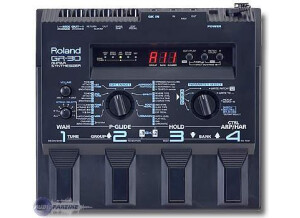
    I've owned this for about 7 or 8 years...basically from since it came out. The best thing about it obviously that it enables you to add sounds to your guitar that simply couldn't not imagine before...and it can be damn handy. The worst thing is that the tracking is slow and ghost notes can occur. This means that if you're not careful or you go too fast or strum too hard or not hard enough then you will get weird notes that were not quite desired. You can set the sensitivity of each string, though, to avoid this in most cases...takes some attention. This was the first MIDI guitar system i tried and it's not surprising because before this there was virtually nothing. I think there was maybe the GR-50 and GR-1, and they were slower etc. This one could have benefitted from the expression pedal...you get with the GR-20 ! But you can always add your own i think. Beware that the female output jacks are laid out & shaped in a way that will NOT let you use Neutrik jacks. You'll need something thinner! The sounds in this are quite amazing, although i wouldn't use most of this for anything else than impressing the mates... If you're careful, you can use the synth pads (which are VERY dynamic) to great effect, and if you put them through a good effects processor then you've got some fantastic sounds at your fingertips... You can also use this as a regular MIDI expander for your existing keyboard! You can have 2 layers going at the same time, which is pretty cool. I used this with my shitty PSR-90 to make it into something acceptable. If you have a Godin LGX (midi, electric and electro-acoustic separate outputs) you can have your regular electric mixed with the electro and then have a piano with strings via the GR-30. Now THAT makes a difference! Also, you can do your solo through your electric amp and have it layered with 1 or 2 wild synth sounds. Overall, i think it was a very expensive piece of equipment (i paid 4150 Francs, ie 625 €) but second hand it's probably quite a good deal now. If you use it. And put your mind to it, you really could! The piano & organ sounds are quite good, the double bass sound is not bad either, and if you stick to the middle of the range you can use strings & trumpets and even trick people into making them think they're real.

  • « get a new sound »

    The Roland GR 20 is an guitar synthesizer that you must own if you play the electric guitar. it’s a complete system that has a great selection of sounds like strings, organ , synths and many more. Editing everything on the Roland GR 20 couldn’t be easier either with the quick editing knobs like chorus and release / delay. The Roland GR 20 also has some of the newest and latest sounds that come on other Roland products. If you are a Les Paul type guitar player there is an attachment plate for you as well. UTILIZATION There was a little learning curve me to get familiar with the unit itself. It wasn’t difficult but I didn’t read any manuals so I just started messing around with it it. Using it is painless but it was one of the first type of pieces of gear like this that I have ever used so it too me a while to really get the feel and flow of how it works and what each knob does and how well it does it. But after a few hours I had no further problems. It was even fun just doing the trial and error method because I was able to create some really neat sounds. It really brought my creativity out. GETTING STARTED Sounds are good, it has some sax, flute, and brass just to name a few. Everything seems to sound pretty realistic as well. Most Roland sounds do sound authentic and they have carried that over to the Roland GR 20. OVERALL OPINION Overall, if you are in need of a guitar synthesiser then this could be the one you need to get. It cost a little more than what I was expecting and most of Rolands products arent cheap so I do expect it to hold up for me for a long time. Only time will tell how well built it is, I havent dropped it yet so that is a plus. I am looking forwared to some more synths for guitars that roland will come out with in the future.

  • « Roland VG-88 / GK-2A »

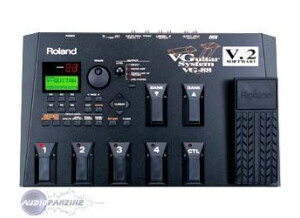
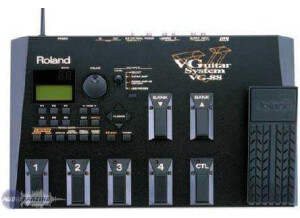
    I acquired this unit at the Guitar Center for $800. I have used and researched many guitar effects processors, and finally have found one that I really enjoy using, as well as the way it sounds. One of the other things that really attracted me to it, was the ability to change alternate tunings on the fly. How many times have you wanted to play along with the song you really like, but can't because it is drop D tuning. As I mentioned previously, the ability to change guitar tunings was a big thing for me, which no other effects processor that I've come across can do. Equally as important, is the modeling capabilities of the unit, not only as far as amps go, but also guitars as well. With this unit, you can get the sound of Hendrix classic strat sound just as easily as Jeff Beck's clean leads. You can make your electric sound like a 12-string acoustic. While it's not 100%, it's 80% plus there, and unless you have the money to buy all of the possible guitars and amps, $800 is a pretty good deal for what it offers. Unless you buy the roland ready strat (which is a mexican strat, and they don't make the american standard roland ready ones anymore), you'll have to buy the gk-2a pickup and install it on you guitar. I had it installed on my music man axis sport without any problems. Don't try to use the adhesive because it won't stick and the pickup will eventually move out of position and will fail to operate correctly. Just get a pro guitar tech to do the job installing it (you have to drill to permanently intstall it). This thing is made out of solid steel, and would probably still work even if a tank ran over it! Roland has always made high quality products that are generally designed to take abuse during normal gigs and such. A few years ago, Roland came out with the VG-1 which was priced in excess of $2000. Now you can buy a much better sounding unit for about 1/3 of the cost. If you don't mind the inconvenience of having to install the pickup, this is the best unit which features modeling and tuning capabilities you will not find in any other guitar effects unit. It's very easy to use and intuitive, and is perhaps the best unit I have ever bought. And if you are afraid of screwing up your guitar, buy the roland ready strat and see how satisfied you are with it. You won't be sorry. This review was originally published on http://www.musicgearreview.com

  • « cheap but good »

    I am very happy with the Sonuus i2M Music port device. The price is very low for something that provides guitar midi conversion. I'm impressed with it's responsiveness. It's important for everyone to know that I haven't yet put it through all its paces, especially fine tuning it with the software. I did plug my guitar into it and connected to my PC, getting the signal into Cubase 5. The direct guitar sound was fine to my ear and I pumped it through Guitar Rig Pro 4 and it sounded beautiful. I recorded some chords and riffs in Cubase 5 and I'm very happy with the responsiveness overall. I have to play around more with the settings though, since I did find a noticeable delay that threw me off when I was laying down the tracks. This could be my fault though, since I'm new to DAW configurations (I used to have a home studio, but it was all analog tape). I converted the guitar signal to midi and pumped it through some VST plug-ins I have and they sounded really good, even a concert grand piano. I hope to hell they put out a polyphonic version of this at some point. I would easily pay $300 for that! The sensitivity to attack and volume was impressive. I connected my microphone and tried singing a piece for the piano and then some other VST's, but even when restricting the notes with the software to compensate for my voice going off pitch even by the slightest amount, the midi note would register a change to the note. Again, I need to play around with the configuration via the software more, but I'm not a bad singer and my pitch is pretty good, so I was a little concerned about this level of sensitivity. I even turned pitch bend off completely and had similar, although less frequent results.

  • Audiofanzine FR's review

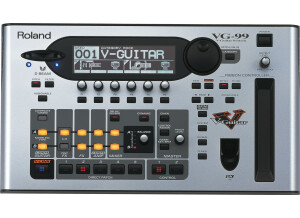
    (Originally written by la.boulanderie/translated from Audiofanzine FR) See Roland's website for detailed features and other user reviews. However, I'll tell you something you won't find there: The VG 99 is compatible with the GK2 I installed on my Ibanez 10 years ago, and which I didn't use a lot because the high latency of Midi guitars discouraged me. But this is a different story and it relates exclusively to the playing of the guitarist. I didn't try to burn my guitar like Jimi Hendrix but I think that's also possible. I tried to use the up/down buttons of the Midi pickup but had no success, and I think it has to do with wrong parameter editing on the VG. The Midi pickup settings are a breeze. You only need a measuring tape if you don't know how much your guitar measures. Choose the pickup model. Enter the strings length and the distance between each string and the Midi pickup. Set the sensitivity according to your playing style and the balance between all chords. And you're ready to start playing (it takes five minutes). You can also make settings for several guitars. The sound is accurate and clean because it's digital. It's not the right gear for you if you want noise, crackle, hiss and other vintage pleasures. On the contrary it's the perfect tool if you want perfect recordings. For my part I expect the following results with such a device: In the studio it must provide me a wide sound range without having to buy and service all corresponding instruments (folk guitar, classical guitar, dobro, banjo, sitar, mandolin, ukulele, Stratocaster, Telecaster, ES335, jazz hollowbody, Rickenbaker, Les paul, SG, 12-string acoustic and electric guitars, synth, bass... and more). Live on stage it must allow me to mix several instruments at the same time (bass/guitar, folk/electric guitar, guitar/synth) and to create different sound ambiances for each song (we are only two musicians playing with a female singer). UTILIZATION Very easy to use. I bought it Friday morning and I already used it live on stage on Saturday night. I did get a user's manual. I read it only to set up the Midi pickup. All other steps are very intuitive. I read it the day after our gig and I understood that I already knew everything I needed. If you want to test all possibilities (which seem to be endless) you'll probably have to spend a lot time with it but it's certainly worth it. The editor software provided is also very easy to use. I think the main difficulty is to understand all the possibilities in order to accurately edit it if you want to use all external controllers. During our live gig I did use my electro-acoustic guitar because I didn't feel that comfortable with the system, but next time I will take the time to edit each sound according to the set list and I'll take only one guitar to the gig. The ribbon controller and the D beam, which at first sight seem useless, can come in really handy in some stage situations. GETTING STARTED And what about the sound? It's perfect for electric guitar and I can't really hear any difference compared to the original models (its actually unnerving that, given the authenticity of the sound, you actually think that you are playing with the pickups and you tend to try to use the guitar knobs which of course are useless). The acoustic guitar sounds are really interesting. They can't replace a real acoustic guitar but they are still amazing. I didn't expect to be able to hear the sound of my fingers on the strings and to have the possibility to easily play pinch harmonics. The only thing I miss is the possibility to hit the top to get percussion effects (but perhaps it works if the Midi pickup is mounted on an acoustic guitar). Sitar and banjo sounds are great. My only complaint would be regarding the classical guitar, it has a strange response, more like a flamenco guitar than a classical guitar maybe? But I think this upsetting feel has more to do with the playing technique than with the sound itself. When you play a folk guitar the position of your hand is different because the body is bigger. And the strings are heavier and thicker. Their vibration is different from the string vibration of a solid body guitar with a Midi pickup. If you can adapt your playing technique accordingly it ought to work perfectly. The sound of all 12-string guitars is perfect. And also the dobro sound. The bass guitar simulations sound quite good. I don't use a lot of synth presets but I'm sure you can get pretty good results with some editing. What about effects? They are effective and well applied in the presets. OVERALL OPINION As a summary, I find this product amazing considering its price. I'm convinced that everybody will play such systems in the future and that our old magnetic guitar pickups will fall into oblivion. I haven't tried the Midi and audio interface functions of the system. So I can't say anything about them. Now I have a serious dilemma: either I definitely put away my Vigier (I like its wonderful neck, its weight and its color) and only play my old Ibanez via VG 99, or I buy another Midi pickup for my Vigier?