Log in
EN
FR

Guitar Power Amplifiers

136 products found

Filter
Sort by
Evaluation
  • Reviewed or not
  • Editor’s award
  • Reviewed by Audiofanzine
Availability
  • Available or not
  • Sold new or used
  • Sold new
  • Sold used
Must-have products
  • All products
  • Flagship products
  • Best rated products
  • Hot products
  • Popular products
Price
  • Freeware
  • Low-cost (< $350)
  • Mid-range ($350 - $750)
  • Premium (> $750)
€
Clear
Sort by
  • Popularity
  • User ratings
  • Price - low to high
  • Price - high to low
  • Used price, increasing
  • Used price, decreasing
  • Name (from A to Z)
  • Name (from Z to A)
  • Added on
Sort results
  • Popularity
  • User ratings
  • Price - low to high
  • Price - high to low
  • Used price, increasing
  • Used price, decreasing
  • Name (from A to Z)
  • Name (from Z to A)
  • Added on

The best Guitar Power Amplifiers reviews

The reviews Audiofanzine members found the most helpful.
  • « Efficient and reliable »

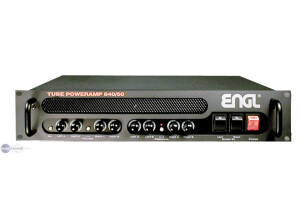
    All-tube 2U power amp (eight El 84, two 12AX7 and one 12AT7) 2x 50 W output power Contour and presence controls per channel, very musical, ideal to adapt to the acoustics of a venue. Comprehensive connection options (DI output to use the amp sound in studio, for example, slave outputs to use a second power amp, several impedance options, possibility to switch to 100W mono mode for a 4x10 stack, for example). USE It's intuitive, so it's very easy to use. SOUND Very British sound, similar to a Vox power amp, due to the El84s. However, it respects the sound of the preamp. The best sound I have ever gotten was with a Mesa Boogie V twin as preamp. It delivers a very creamy sound. OVERALL OPINION I've been using it for four years. I previously had a 3U 2x60 model, but it was too big.. It worked very well with my Triaxis back then. A similar sound to a Mesa Fifty:Fifty but with much less dynamics (and less expensive, too) Unbeatable value for money...Ideally coupled with a Mesa. The fan is a small drawback, it's annoying in a small room, but imperceptible onstage.

  • « Tube Power Amp in a Pedal that will Enhance any Pedalboard/Amp Sim, etc. »

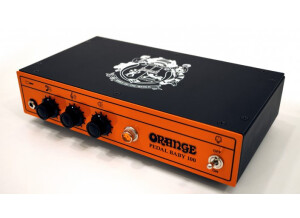
    If you find this review useful, below is a link for a Crowd Funder for Hagerman Amplification’s POWER BABY Power Amp (with a big discount until Oct 11/25). I receive no remuneration or gratuity, and Jim Hagerman is a trusted class act. POWER BABY will be released without fail. https://www.kickstarter.com/projects/1907446723/power-baby-tube-output-stage Hagerman Amplification’s reputation has always been about quality boutique builds at affordable pricing, but also innovation. I’ve tried pedal-based power amps (solid state) and a few digital simulations (Axe-Fx and KMG Machines), and then I heard about the upcoming release of Power Baby, a push-pull guitar power amplifier stage in pedal format that incorporates shock-mounted tubes – 1 x 12AX7 and 2 x 12AU6 with an all-analog circuit. I reached out to Jim Hagerman, as to when it will be available, but I didn’t want to wait an entire month (like most guitarists looking for the latest pedal); and so, Jim shipped off one of his prototypes (nothing more than a circuit board with tubes sticking up, although it offers the same sound as the finished product, which has an enclosed chassis measuring 4.7” x 5.8” x 2.3”). It’s interesting that Power Baby does incorporate a typical tube circuit, yet the pedal does not get hot (only warm) and does not require venting – no worries about dust, liquids or bugs getting inside. What you’re getting is D-style preamp tone from the preamp utilized, together with M-style power amp breakup from the micro-sized Power Baby. https://www.youtube.com/watch?v=kgwWWwbDrSg I’ll get to the sound, response, etc., but here are some things this power amp pedal can do: 1) It can drive an 8 or 16-Ohm speaker at bedroom levels, ideal for practice; 2) It also has a headphone jack, which seems to be a common ‘want’ among pedal users for silent practice; and 3) You can go direct to a mixer/PA or into your DAW interface. And so, there’s some decent flexibility depending on one’s needs. And considering many venues are saying no to big amps, Power Baby is perfect for the gigging musician who goes direct to PA. The demo addresses the above, although all my sampling was done with the Power Baby at the end of my chain (before delay). Sound-wise, I was blown away. I’ve heard many times that what a person often is missing in tone, particularly if working with preamp pedals and a pedal board is that power amp drive, and Power Baby delivers with thick, full pentode tube sag (via internal boost, as if tube rectification was employed), compression, and phase inverter distortion. It does NOT sound like the solid state and pedal simulations I’ve tried, all of which did add to my sound and tone, but no where near the extent of Power Baby. My setup now sounds like a full-blown amp! Also, it comes with a 12VDC 600mA power supply, although many pedal board power supplies have this available. Listen to the demo to know what I’m talking about, as it even works wonders with my acoustic guitar (going through an acoustic preamp pedal) or my digital piano module. Both surprised me, as Power Baby is meant as an additional gain stage to really push an electric guitar playing through some dirt. Power Baby has only two knobs, a Presence and a Master. The Presence is straight-forward, and offers that high-end clarity to off-set the raunch of the tubes, and do they make an impression as you tweak the Master. However, this depends on what you put in front of it. With an acoustic guitar, turning up the Presence and Master up half-way does not make it distorted, but crisp, full of overtones and lively… similar to what it does for the digital piano sample provided (with Presence and Master up full!). You get a tone less processed while sounding more realistic and dynamic. When it comes to placing some type of drive or distortion in front of it, that’s where Power Baby comes to life. The fullness, detail and definition of the notes are amazing, and sometimes you only need a little (the more high-gain the preamp or associated pedals, then less gain from Power Baby required to hit that sweet spot). When listening to the demo I may have went a bit overboard with the Master knob in some instances, but I relished in the heavy growl achieved; dialing in would require hearing it in the mix, which I did in the opening composition when comparing lead riffing with Power Baby on and off. Even with a moderate gain pedal in front of it, you can go from a sizzle, to a slight break up, to a snarl and to a growl. This thing has balls! Also note that the rhythm guitar in the background to the demo’s opening number also utilized Power Baby and produced a great sounding crunch. On a related note, expect to play somewhat differently or to hone your playing skills slightly, because the harmonics and nuances that pop forward are profound enough that you can achieve more tonal qualities from varying your pick attack than what you would notice or achieve otherwise. Power Baby is not coming off my board, unless Hagerman Amplification comes out with something even better. And in that regard, I think this is one of the best creations that Jim has developed. It simply makes a huge difference in what you can achieve with your gear, whether direct recording or playing live. I don’t say that lightly, and it’s a joy to go through all my preamps and distortion/ODs to hear them for the first time again! https://www.hagamps.com/collections/pedals/products/power-baby-tube-output-stage?variant=45504341672130

  • « Power Your Speakers while running Amp Sims, Preamps and pedals »

    SOUND: The Loudster is a unique piece of gear, allowing you to take regular pedal board gear, including amp sims, and get optimum loudness through your speakers with higher ‘sound pressure levels,’ and while maintaining the tone you like. The video below demonstrates the Loudster and how it works within the signal chain and for the modern guitarist looking to downsize audio equipment to just a pedal board: Although some may consider Hotone Audio’s Loudster a one-trick pony, it does its job exceptionally well and as intended. First, it enables you to work with pedals and preamps on a pedal board without having to haul around a full-sized amp head (the Loudster is the amp, and it sits nicely on the floor or on your pedal board). Second, the Loudster does not color your sound as an amp head would (each amp has its only tonal characteristics) – the Loudster has a high-quality tone and high input impedance to keep your tone as you originally intended. Third, it’s not just a volume/decibel increase that is produced, but high SPLs (sound pressure level), which gives that push or ‘oomph’ to speakers, which is what makes it seem so much louder. OVERALL IMPRESSION: Power amps have been around for decades… Eddie Van Halen used them to drive his speakers harder. In essence, they are used to amplify low-power electronic audio signals (e.g., guitar pickups/preamp/amp modelers) to a level strong enough to drive loudspeakers/cabinets. Often power amps are sized to fill a space or two in a rack-mount unit. Hotone Audio has developed the Loudster, the middle man between your tone and speaker cab, which produces upward of 75 watts of power and plenty of SPLs to push loudspeakers and cabinets. This is important for those gigging or jamming who may like digital effects or perhaps some preamps/amp modelers, none of which likely have the ability to push speakers sufficiently to achieve optimum speaker performance and/or volume to be heard effectively over a drummer and other instruments. This has become a more important factor in the past few years as musicians desire to downsize what they have to lug around, and carrying a 15-pound amp head is not only cumbersome, but adds to the cost of the gear and can alter the much desired tone you achieved with other gear, e.g., preamps, distortion pedals, etc. If you’re looking to push the envelope in volume and speaker performance, whether plugging into the house’s loudspeakers or your own cabinet and while keeping a small footprint, the Loudster is an ideal consideration for about $199 USD. EASE OF USE: The Loudster is so simple, all you need to do is turn the volume knob. Perhaps there’s a bit more to it. Sitting at the end of your signal chain (just before any speakers) the Loudster needs to be turned on first and then turned off last, to help protect against any power surging or loud pops, etc., that may damage your speakers or other audio equipment. It’s also best to keep it dialed down all the way when doing this. This little powerhouse does come with its own power supply, since it necessitates 18-20v and 5A, which tells you how serious the Loudster is. As well, it is compatible with cabinets of different impedances ranging from 4-16Ω, and so you need only plug into any cabinet and you’re ready to go. You can place anything in front of it, including amp sims and preamps, distortion pedals, etc. RELIABILITY & DURABILITY: The Loudster’s chassis is made of light-weight aluminum, measuring 4.75 x 7.50 inches (12.0 x 19.0 cm). There is no stomp switch to wear or break, but a power switch located in the back of the unit. There is no LED light on top, but rather there are lights that glow through the top grill to indicate that the unit is on (or off if you see nothing). All inputs and outputs are located in the back, which helps to prevent accidental stepping and strain at the input/output sites. The large volume knob feels like aluminum to the touch and is of good quality when turned (smooth). The little guard rails are a nice visual touch (to resemble common power amps with handles in a rack), but they do not serve a significant purpose beyond which to pick up the unit.

  • « Amazing!!! »

    - Solid-state amp with tube simulation - One input and 2 speaker outputs per channel - 2x150 watts max stereo or 300 watts max mono - One volume and one reactance (tube simulation) control per channel - Bridged mode button (mono or stereo) UTILIZATION Dialing it in is VERY EASY! A volume and reactance control per channel! You connect one or two preamps and your speaker(s) and there's no impedance problems, it's automatic (which is perfect because you don't run the risk of toasting your amp)! CAREFUL: In bridged (mono) mode you shouldn't use a speaker of less than 8 ohms The manual explains very clearly all connection possibilities. The sound? It's easy to make it sound, but it all depends on what you connect into the inputs and outputs. Personally, I use a Mesa Boogie Triaxis and they make a good couple! No presence control, unlike on the newer model, but it's not that bad, you only need to readjust your settings directly on the preamp. SOUNDS I play mainly metal and it's perfect together with the triaxis. It's impressive as soon as you crank the reactance all the way up, it has that smooth "tube" sound, the lows can be sometimes too present and force you to readjust the settings. Nevertheless, the amp remains very neutral. The sound is excellent, it's hard to get a better tube sound at this price point while still having a proper sound at low volumes without the need of a power attenuator. The headroom is large enough! OVERALL OPINION I've been using it since January 2013, bought it secondhand for $300 and I think it's an excellent value for money! Besides, there's no need for maintenance, which my wallet will appreciate! I didn't test any other power amps and I turned towards this one due to my limited budget! I don't regret my choice at all.

  • « Decent solid state power amp »

    The Mosvalve MV962 is a stereo solid state power amp made in the late '80s/early '90s to offer a more realistic take on the tube power section in a solid state power section. Tube power amps are great, but are subject to the consistency issue of the air around you and how your ears hear them, whereas solid state gear tends to sound more consistent. They can also be quite heavy when mounted in a rack, which is another selling point for something like this Mosvalve. It's a stereo rig that puts out about 80 watts of power per side. Each side (A and B) has volume and presence controls available. I believe it runs at 8 ohms impedance. UTILIZATION Getting a good sound out of this power amp isn't difficult. I'm definitely a fan of the Tube Works gear, and this is no exception. Granted, I do prefer a real tube rig, but for what the MV962 is, it sounds decent. When I had mine I tended to run it about flat as far as the volume and EQ went, and just did my tweaking from my Mesa preamp as far as master volume or tone. One nice selling point for the Tube Works is that it definitely did have a bit of that tubelike compression that you really don't hear often in simulated attempts at tube tones. I hear it in their amps as well which is cool. SOUNDS This power amp sounds decent overall. I used it with a Mesa Boogie Studio Preamp (basically Boogie's famed Mark IIC+ head in a preamp) and a cheaper Ibanez Tone Blaster TB412A angled cab with generic Ibanez "Power Jam" speakers. I got the rack rig as a package deal because I wanted to try out rackmount gear and compare it to the nicer heads I'd owned. I was definitely happy enough with the Mosvalve power amp for what it was. It certainly doesn't have the fully tubelike sound that one would get out of something like a VHT/Fryette or Mesa Boogie tube power amp, but for what it was it sounded good. I used it in a band setting for gigs and recordings and it held up really well for reproducing my glassy cleans and thick smooth drive tones accurately and clearly. OVERALL OPINION All in all I think the Mosvalve MV962 is a decent power amp to grab if you're on a budget and just want something simple that sounds great and consistent. They aren't made anymore but you can find them used for $200 and under all over the web. If you're a total tube purist you might not dig this, but for someone who just needs power, it's a great one to look into for sure.

  • « Surprizingly clear and dynamic! »

    I have played thru ADA, Mosvalve, and PA, solidstate poweramps but this one beats them all! Thought I was just getting a usual adequate poweramp but it shakes the floor!!! Dynamics push and pull Celestion V30's great at med to loud volume and dead silent too. The ADA and Mosvalve sounded sterile to me and everyone that has these rave about them. Kept mine in mint cond and will not sell=EVER! I would say you need a tube preamp to go with it though. I have used a BBE to brighten up the tone running Positive grids Bias thru a laptop and was usable. LOL!

  • « An amazing tube power amp!!! »

    Tube power amp...Houses two sets of matching tubes...You can combine whatever you like, with the exception of EL84s which will require yellow jackets to operate...6550 and 6L6GC...6L6GC and EL34...EL34 and 6CA7...6CA7 and KT88....KT88 and KT66...KT66 and KT77...And any variation you can think of...Or use 4 of the same if you favor only one type...WHatever you want...Bias is simple and accessible right in the front! A multimeter is all you need...No more needing a tech... 100 tube watts - 120 tube watts 3 preamp tubes - two phase inverters (which should be matched and balanced) and one input tube.. Presence and Density controls on front...Very nice and effective... UTILIZATION Easy to get this power amp to sound amazing....I use it with a series of Randall/Egnater RM4s and I can choose between 6L6GCs, EL34s, or both...You will need a stereo cab or two cabs as each set of tubes pushes 1/2 of the speakers...Since there are two sets you can run it all open together but will still need the stereo cab or multis... It's very sturdy and has never given me issues... The manual is great and there's a great MTS Forum online where there's lots of good people and professionals willing to help for no charge....We all just LOVE this stuff... SOUNDS The best sounding power amp I've used for my guitar rig...Since the bias is there and so simple, USE IT! You will get a better tone and longer life out of your tubes...Also know that preamp tubes don't need you to do anything but plug and play.... This power amp is LOUD and full...It sounds ok at low levels but is designed to be pushed and sounds best that way... The presence and density are great...Kinda like a built in BBE.... There are zero downsides to this thing aside from the weight...Don't have the specs but, trust me, it's heavier than Maiden playing in B Flat... OVERALL OPINION I like everything about it... Tremendous value for the cashito... The quality of the sound and build are top-notch... I have others, this is the best... I would, and probably will, buy more as they become available...They are unfortunately discontinued though I don't know why...

  • « Peavey Reactor »

    I've been playing guitar for 3 years. I play funk, rock, and blues. I like everything but country. I have two of them, both bought from a local used music shop, Trade Up Music. I paid $120 for the first one, and then put $185 dollars worth of work into it (a new nut, new locking tuners, new 3-way switch, leveling the frets). The second one was $179 because it had a Fender Lace Sensor (Red) pickup. Pretty much everything. I have a G&L 1986 ASAT by Leo Fender and although the G&L sounds amazing and has longer sustain, I choose the play the Peavey Reactors because the sound isn't that much of a difference, and I also don't want to beat up my G&L, which I leave in it's hard case. The guitars sound great, and there is a difference between the two because of the different pickups. The action is fast and I have small hands and the Reactor seams easier for me to play for long periods. They both have a black poly-coat which is extremely scratch resistant over a poplar body. They both have beautiful honey maple necks and fretboards. The two things I didn't like about the Reactor was it's low quality 3-way switch which was easily bendable and the tuners were not the best at staying in tune, which is why a had the work done on one of them, soon to be done on both. Rock solid construction and great quality execept for what I mentioned before about the tuners and the 3-way switch. Great guitars made in the USA for a rock bottom price you get a great playing guitar that can hang with the best guitars out there. This review was originally published on http://www.musicgearreview.com

  • « Marshall Amp »

    My friends brother sold it me for a great price of £90. I feel like i robbed him....OH WELL WOW. the first time i switched it on i knew that its amazing, it has great distosion, Very loud (perfect for annoying the teachers at school), 4 different effect, brillient clean channel. I recomend you getting 1 a slight vibration but can fixed....other than that it perfect VER VERY VERY SOLID, slight vibration, speaker is very versitile (can cope with the fastest heavyest music) great product BUY ONE or TWO This review was originally published on http://www.musicgearreview.com

  • « Marshall El34 100/100 »

    I brought it new from my local guitar shop. Cant remember how much i paid, but it felt like a lot of money. It's sheer grunt! It has ample headroom for loud and firm definition within the entire audio spectrum. Nice solid design, and durable chasis. Clear panel for a great view of those valves. Looks and sounds great. The only complaints i have are; - The manual doesn't tell me enough about the Input/Output details (for hooking up various cabs, and the amps influence on the outputs with regards to power and loading.) - The standby or power switch causes a loud crackle on the output when switched, this can be annoying! heavy duty and reliable :-) A nice guitar power amp, works good with hi-fi too!!! This review was originally published on http://www.musicgearreview.com

  • « Replaced my VHT power amp »

    The Atomic Rector 50/50 is a stereo tube power amp. 2 12AX7 for the phase inverter and 2 duos of 6L6 power tubes. Mine came with JJ's which I'm usually not that fond of, but in this case they were a very nice fit. Front panel controls are power switch, stand-by switch for each channel, as well as volume and presence controls for them. The fun part of it is that you get bias points and controls for it as well on the front panel. On the rear you have 2 fans, balanced XLR inputs from your pre-amp. As well as balanced XLR through jacks to run the signal say into a mixer as well. Also you get the usual unbalanced 1/4 inch inputs. A ground lift switch for either channel and two speaker jacks per side. Impedance selectors too which allow you to run four, eight or 16 ohm loads. And it's super light for a tube power amp. UTILIZATION Its a power amp. What I expect is to amplify what comes from the pre-amp and add some mojo to it. It does that nicely. It also is one of the few tube power amps that sounds great at low volumes as well as when it's chugging along and gets to move air. I've tried it with Vintage 30 loaded cabs which are relatively forgiving as it is. SO no surprise that worked well. My have was using it with slot ported 2x12 cabs with either Celestion G1265 or Heritage Gold speakers. Are very nice combination. SOUNDS The pre-amps I tried it with was the Fractal Axe-Fx Ultra, Axe-Fx2, Digi Design 11 Rack, Line 6 HD 500, Marshall JMP1, as well as loaded down heads. For this I used a black face Fender Bassman, and 72 JMP, and a clone of a 20 watt TMB Marshall. All of them sounded glorious at all levels. Guitars I ran the usual suspects, Baker B3, Vigier Excalibut with EMGs, Starts and tells. OVERALL OPINION I would replace it in a heartbeat was it lost or damaged. It's such a good amp at such a good price how do you go wrong!

  • Pm.'s review

    Power amp 2x20 watts lamps (http://www.mesaboogie.com/Product_Info/Stereo_Power/20_20_Stereo/20_20_stereo.html) Four EL84 (amplification) and December 3 AX7 (prsence and dphasage) Designed Trs well: deep enough to accommodate the seven lamps which are visible the rear (http://www.mesaboogie.com/Product_Info/Stereo_Power/20_20_Stereo/20-20StereoRearCloseup.html), grid arati of the front fan, all this because it is very well ventilated. (But it causes the breath) There could have been a switch to switch to Class A as the VHT (more Chres course) but we will not quibble ... Go - 1 because even when finally I quibble a bit to the price UTILIZATION Trs easy to use! The manual is just useful if you want to use it in mono (you must set the channel volume and zero-idle prsence thoroughly and especially do not connect a speaker cable into the HP port if no baffle n 'branch is!) I prcise nanmoins this product (as Brand dailleurs) did not forcment a large reputable trs of reliability and I would advise consquence DViT Careers News mono (single channel)! And as seen prcdemment design makes it very practical when changing lamps: there is nothing disassemble! SOUNDS Honntement ago trs fast way to be deaf, I have not Exceeds 25% of the power in mono! The power comes quickly (progressiv the knob), it just so far in most cases! I hsit time with a 2x50 and frankly when I see it get out I tell myself that I do 2x50W have not exploited ... Test with a POD 2.0, a Voodoo Lab (http://www.voodoolab.com/preamp.html), an ADA MP-1 and a VHT GP3 The Pod is transformed from the sound of the power amp Marshall VS8080!!!! (Thankfully!): You can feel the dynamics even with the lights modlisation The VHT GP3 from the Marshall VS8008 of Universal is not the same: more especially on Carrment distos (relative to 8008 compared to no 2/50/2). The Ada diffrent sounds from the Mesa 50/50 in which I test at the time of my purchase, or better less I do not know, but it is on diffrent: More mtal of memory! The prsence fulfills its rle by adding more or less acute (wholesale) but is moderately progressive, as the volume knob so The fan is audible! So when you do not play hard we hear it! But I think the one can not help it, that is the case with all amps lamp and that's the price to pay to ensure proper ventilation of the lamps. It lacks a little something for the metal. Excellent in a register Blues, Jazz OVERALL OPINION I do not have much basis for comparison, therefore, my opinion is worth what it is ... Frankly it's not the kind of product that is easy to try with his personal config I wanted a power amp too powerful lamp (less than 50Watts) ... There are only 2! The one and Marshall EL84 20/20 (http://www.marshallamps.com/images/products/rack/el842020.html) that does not rglages spars for each channel! It can not operate with a single exception hack Resistors ... So I opt for the Mesa (Please Kinder Guano for his precision on this point;)) Finally, the Mesa 20/20 with EL84 is top for the cleans and crunch, all with the personality Mesa (quite dark in lensemble) but average distortion in a particular registry mtal! Jai then opt for a VHT 2/50/2 His only major weakness is the price for us the European! 7 / 10 in the end because of price, switch to switch to Class A (quibble inside), the breath of the fan, the progressiv of knobs and the lack of distortion in groumph. A word about bias when you change the power tubes dun amp must be in some way give Lampl lamps = SETTING THE bias. Mesa Boogie sells lamps that are select to match the bias of his amps. Obviously Boogie lamps are more expensive but faster a spell with the technician. I'm not either sr trs as economic solution (Boogie does not sort the lamps free of charge) but hey PM