Log in
EN
FR

Guitar Amp Simulators

268 products found

Categories
Filter
Sort by
Evaluation
  • Reviewed or not
  • Editor’s award
  • Reviewed by Audiofanzine
Availability
  • Available or not
  • Sold new or used
  • Sold new
  • Sold used
Must-have products
  • All products
  • Flagship products
  • Best rated products
  • Hot products
  • Popular products
Price
  • Freeware
  • Low-cost (< $100)
  • Mid-range ($100 - $300)
  • Premium (> $300)
€
Clear
Sort by
  • Popularity
  • User ratings
  • Price - low to high
  • Price - high to low
  • Used price, increasing
  • Used price, decreasing
  • Name (from A to Z)
  • Name (from Z to A)
  • Added on
Choose a category
Selected category: Guitar Amp Simulators
Sort results
  • Popularity
  • User ratings
  • Price - low to high
  • Price - high to low
  • Used price, increasing
  • Used price, decreasing
  • Name (from A to Z)
  • Name (from Z to A)
  • Added on

The best Guitar Amp Simulators reviews

The reviews Audiofanzine members found the most helpful.
  • « Finally, Real Amp Tones in a Pedal »

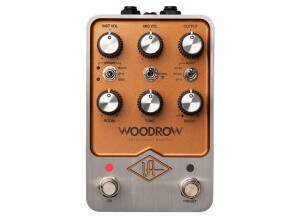
    Off the bat, the Universal Audio’s Woodrow ’55 is not a simulation but an emulation; and this is as close to something other than an actual amp sounding like an amp. Woodrow ’55 is based on the Fender Tweed 1955 amp, together with its functions, but also amp reactions, such as that rumbling breaking-up quality you get when cranking an amp. Let’s look at the controls and features, and I’ll leave the ‘amp sound quality’ for the accompanying demo. https://www.youtube.com/watch?v=B43-riqVtWw There is a main Output control for the volume, which you set after fine-tuning the other two Volume (gain) controls. The Instrument Volume does increase volume to some extent, but it more so increases the dirt and drive, into a warm growl. The Mic Volume has a similar effect and is not part of the original amp, but refers to the gain produced as you increase mic sensitivity when recording direct from the speaker. It also produces a gain, although not as growly as the Instrument Volume. When combined (in high levels), there’s a deep, heavy fuzz-like sound, ideal for Doom and Stoner rock. When both Volumes are turned relatively low, Woodrow has a super clean and slightly trebly tone (cuts through the mix like crazy), making for an ideal pedal platform (add a high-gain pedal, and the Woodrow serves just as much a modern amp as it does a vintage amp). Of course, dialing a mix of the two Volumes in different ratios produces a wide array of drive tones. I mixed different ratios in the demo, and relative to the six different speaker emulations, but dozens of different sounds can be produced. Now we’re onto the speakers. You receive three different speaker choices, but when registering you receive another three speakers, and this adds to the wide range of possible sounds (NOTE: You require a USB Type-C cable, not included). Speaker brands/names are addressed in the demo and, again, these are emulations and not IRs. What’s cool, however, is that Universal Audio provides a quick bypass of the included speakers, in case you wanted to run Woodrow direct to a preferred IR/loader, or you can use it as a preamp running into another amp/cab. Speaker emulation (and IR quality overall) has a lot to do with the sound and realism coming from any non-traditional amp, and UA knocked the ball out of the park with these speakers (and Woodrow overall). I watched some demos as they go through speaker selections, and often the reviewers keep the same amp settings as they proceed through the six options, turning their noses up at some options (as they may sound a bit thinner, too trebly, too nasally or midrangey, etc.). What I can say is that all speakers sound good, and offer unique flavors, if you dial into each one accordingly. I found it took 1-2 minutes to find a good usable tone for each speaker. The Room control is not a reverb, but a sense of space, providing that ambience, as though an amp/speaker is in the room. It ranges from completely off, to barely audible, to very apparent. Sometimes I like it on, other times just below half-way, depending on whether I’m mixing delay, drives, etc., but suffice to say, it adds an element of realism I haven’t heard from other amp-in-a-box designers. The Tone control is very much a mid-range control, and you can hear that as you sweep through the frequency. You can dial in more darkness or more brights, but it doesn’t go bottom heavy bass or sharp treble. And if you want to really push Woodrow with gain, and with certain speakers, you may not get quite enough highs out, and it can sound dark (or have a midrange hump, which can sound good with cleans, but flubby if more driven). This is where the Preamp function comes in, which increases volume to some degree, but serves more to enrich the signal and alter its character. There are three Preamp Boost types, including a ‘standard’ clear boost by UA (middle switch position), which gives a nice punch when on low and a ballsy drive/growl when turned up. The KORG SDD-3000 rack unit preamp (switch up) produces a smoother and less robust result, and it’s slightly more trebly. Most people may find this preamp lackluster compared to the Standard (middle selection), but I found this preamp useful for a few of the speaker choices that have a lot of mid-range or muffle (when cranking the Inst & Mic Volumes). The Maestro EP-3 tape delay preamp (switch down) sounds closer to the Standard selection, but is darker and helps tame any biting or harsh tones. I very much like these preamp boosts, as they add life to the raw amp, even when low. A few other features are the Preset saving, Stereo In and Stereo Out, and the mobile app. The Preset is exactly that; there’s already one on board, but you can change it. Alter the Mic Volume, change the speaker and preamp, etc., and then save it with a click of a toggle switch. In effect, this produces a quick 2-channel amp, for mixing clean with dirty. (FYI: Woodrow cleans up brilliantly via the guitar volume… from aggressive crunch to sparkly.) You can run Woodrow in mono, but there is both stereo ins and outs, which is nice for going direct to a FRFR cab (for example) and then direct to a PA. The Mobile App is for preset management, global settings, preset access to some world-renowned musicians, etc. In other words, you can create many different presets via the Bluetooth-ready Woodrow, save them and then recall them via the app. And, you can do the same with the many pre-made presets by the likes of Tim Pierce, Cory Wong and Justus West. Obviously, the app requires a mobile phone/tablet, which I do not have and could not explore; I would have liked a desktop version, but most companies are abandoning that route. Perhaps a PDF of what the premade settings are would be a good alternative. Overall, the Woodrow ’55 is a definite game-changer and I hope UA continues down this path with Marshall or even more modern amps, and for a few reasons: 1) no more heavy amps/cabs to lug around or take up space in a studio; 2) UA’s pedalboard amps (I also have the Ruby, which is an AC30 emulation) cost far less than the real thing; and 3) they sound authentic and fantastic. They’re not inexpensive, but when you consider what you’re getting, in both sound quality and amp flexibility, it will be difficult to dethrone Universal Audio.

  • « ENGL in a pedal !! »

    This is a one channel device that is all about achieving the PREAMP tone of a ENGL Fireball !! UTILIZATION This is a "one channel preamp" in pedal form that replicates the ENGL hi gain sound. It is meant to go straight into a poweramp or you can use the cab sim output into a PA or to record. This is NOT a distortion pedal!! Not meant (made) to go into the front input of an amp!! SOUND QUALITY BRUTAL ENGL hi gain sound!! Perfect dynamics and tone of a ENGL Fireball! Very accurate= think Megadeth -Endgame, Jeff Loomis. I run it into a tube poweramp and get a great tone from it. Benefits from a OD boost as well! Very tight, agressive dynamics and tone that cuts through the mix! OVERALL OPINION This JFET technology is just amazing. Yes it is just the Hi Gain Channel w/o a clean but it does it perfectly! At $130 this is a real treasure for people on a budget who cannot afford a hi end amp or real ENGL. Has a true bypass switch. Needs to be powered by a 12v 1.25 amp PS to get the full dynamics (will run on a 9v battery or 9v PS), this is VERY important. Amazing tone and Brutal Metal tone!! I wouldn't give mine up for anything, thanks AMT!

  • « Great Bogner tone! »

    This is a one channel device that is all about achieving the PREAMP tone of a (Bogner designed) Hafler Triple Giant -Sharp channel (Highest gain!)! UTILIZATION This is a "one channel preamp" in pedal form that replicates the Bogner hi gain sound. It is meant to go straight into a poweramp or you can use the cab sim output into a PA or to record. NOT a distortion pedal!! SOUND QUALITY Bogner hi gain sound!! Perfect dynamics and tone of a Bogner! Very accurate= think Jerry Cantrell or Marty Friedman (Holy Wars Solo's). I have ran this into the CD/aux input of a Marshall AVT20 w/a 10" Celestion and blew away the Marshall preamp! Sounded Very hi end. I run it into a tube poweramp and get a great tone from it. Benefits from a OD boost as well! Wide dynamics! OVERALL OPINION Wide dynamics! This JFET technology is just amazing. Yes it is just the Hi Gain Channel w/o a clean but it does it perfectly! At $130 this is a real treasure for people on a budget who cannot afford a hi end amp or real Bogner. Has a true bypass switch. Needs to be powered by a 12v 1.25 amp PS to get the full dynamics (will run on a 9v battery or 9v PS), this is VERY important. Amazing!!!

  • « Plug it in!!! »

    The Vox AC30has always been one of my favorite amps. It has a darker characteristic to them them that is very appealing and full of tone. This pedal is the pedal that attempts to emulate the tone and voicing of a British Vox Ac30. The Vox Ac30 is one of those amps that is really timeless now a days. The reason is that the Beatles used it as their main amps and now many players have inspired to sound like the Beatles gravitate towards the tone of a Vox Ac30. Tech 21 as done a great job of emulating the voicing of those amps and correctly naming the pedal the Liverpool after the boys in the Beatles. This pedal sound pretty good and convincing enough for a pedal when using it directly to you computer. If you use it in front of an amp it doesn't sound anything like the Vox CA30. And that is the trick to these character series pedals from Tech 21. You need to use it as a direct into protools or whatever for it to retain the nature of the what it is going for. UTILIZATION Tech 21 SansAmp Character Series Liverpool Pedal Features: Authentic-sounding tones, from jangle to top-boost growl Six level-, tone-, and drive-shaping controls (Level, Mid, Character, Drive, Low, and High knobs) Switchable speaker emulation Use as a stompbox, preamp, or standalone recording tool Proven SansAmp quality and reliability SOUND QUALITY This thing can do the BEatles tones very easiliy. You can dial it in for a nice crunch ala Brian May and Queen. You can also get a good Edge tone from U2 with this pedal, just by dialing in the character control knob and smooth out the drive a little bit. Use a nice Fender Stratocaster and get the mids to around 2:00 and the bass and treble at around 11:00. The character should be around 2:0 and the drive at 3:00. Then just set you level to your desired volume. There you will have a great tone for the the Edge tones. Now all you will need is a delay pedal and you're on your way. OVERALL OPINION At new these pedals come in at around $169, which is not a bad price for this pedal. It does sound like a Vox Ac30. However it sounds like garbage when running in the front of an amp. This pedal only really sound good when using it direct into you computer. I feel it looses some of its character when running in front.

  • reverba's review

    We are in the presence of a digital multi-effects/preamp, in the line of the Line6 Pod and company. in other words, it emulates: - Amps (based on models from Mesa, Marshall, ...) - Cabs (same as for the previous point) - Modulation effects, reverb, delay... In short, anything, it's a small Swiss army knife. Everything can be edited with the buttons or a PC with the Xedit software. It has rack-mountable format, 1U, and it has pretty varied connection options: XLR output to go directly to the PA, preamp loop to insert it into your favorite tube amp, midi, and usb. You could say that Digitech has done an all-in-one unit, thought for live and studio. In my humble opinion, the preamp ought to be immediately upgraded to version C63 (www.mustbebeta.com) as soon as you take it out of the box. This firmware, developed unofficially, adds super advanced routing possibilities, and MORE IMPORTANTLY it allows you to import convolution cab emulations (IR impulse, 10 banks available). USE It's not very intuitive, you need to read the manual, especially if you want to use it with a tube amp, with the 4-cable method. Fortunately, the manual is clear and editing on a PC with Xedit is very practical! SOUND QUALITY Effects and emulations aren't too bad, without reaching the level of Axe Fx and company, although the price is not the same! The fact that it uses IRs for the cabs adds an incredible realism and definition (FYI, live, my amp isn't miked, I only use an IR cab emulation and go directly into the PA). I play mainly metal, with an 8-string Schecter and a Brunetti XL2 R-evo tube amp, using the 4-cable method. I control this multi-effects with the dedicated Digitech Control2 pedalboard. FYI, my amp head has three channels and a MIDI port, which allows me to control my presets and amp channels at the same time! Super handy :) . To sum it up, I use the preamp of my Brunetti and the cab emulation of the GSP. When you import IRs make sure they include the cab AND the power amp section, because you only use the preamp, otherwise you'll mess up the tone of the power section if you use a cab IR directly. The result is amazing for the price, bye-bye to mics in front of the cab live! The sound is detailed, clear! What's more, I was able to edit an identical sound bank with the GSP alone, in case my tube amp leaves me stranded in the middle of a gig, that way I have a backup without having a different sound! I give it 6/10 because, compared to a Kemper or Axe Fx, it's still far behind, although they obviously don't cost the same! OVERALL OPINION I've been using it for 3 years, but I thought about it carefully, due to budget, functionality and format (1U). To be sure, I tested it during a Musikmesse when it came out and I don't regret it. It's robust, it sounds good, and has no latency when changing effects. Add to that the import of IRs for cabs and it's simply awesome for live gigs. With hindsight, I think I'd now go for a Kemper or Axe Fx, because if you sum the tube amp, Gsp, pedalboard, rack etc...it's almost the same and, especially, much less heavy :). And I think Digitech got that, because they haven't updated it in 3/4 years...The direct battle against Line6 is tough, not considering Fractal and Kemper in the high end.

  • « Very nice tones »

    The Tech 21 SansAmp GT2 is an analog guitar effects pedal. Kind of the first modeler before there was digital. The SansAmp GT2 is a direct-in or preamp-in tube amplifier emulator. Basically, that means this product helps the user reproduce that warm, natural sound of a tube amp, all while allowing the tonal personality of the instrument to remain unaltered. To go a step further, the GT2 doesn't just emulate a "generic" tube sound, but instead can be adjusted to emulate the tones of some of the worlds greatest tube amps like Fender, Marshall, and Mesa/Boogie. And the best part is that getting these great tones is easy. The pedal is analog so it directly cannot be edited with a computer. It has a regular 1/4" jack in and out and a 9v adapter in. UTILIZATION It is easy to get a great sound. The SansAmp GT2 has 4 guide knobs and 3 "Character" switches. The "Drive" knob controls the overall amount of gain and overdrive. The "High" and "Low" knobs are active tone controls. As the manual states, boosting Low and High compensates for the limited range of speaker cabinets and combos. The "Level" knob adjusts the output level without altering any of the tonal characteristics. There are 3 "Amp" switch settings located on the SansAmp GT2 and each one represents a different style of amplifier. The "Tweed," "British," and "California," represent the Fender-style, Marshall-style, and Mesa/Boogie-style, respectively. The "Mod" switch is used to influence the gain of the Amp-style selected. Clean" resembles a stock tube amp set up, while "Hi-Gain" and "Hot-Wired" push out a more overdriven sound. The last of the character switches is the "Mic" switch. Here the "Classic" setting increases the mid-range and gives greater definition to the notes. The manual recommends this for classic early tube amp sounds and for live applications. The "Center" setting gives greater high mid-range and increased low end, and is recommended for getting a bigger, stronger crunch sound. And the "Off-Axis" setting is similar to the Center setting, but produces a smoother sound with less upper mid-range. The manual is clear and sufficient. SOUND QUALITY The sound quality is very good. There are many options available for it being analog. I have used it live with guitars and have recorded guitars and bass with it. The bass recorded and the hi-gain Boogie tones are my favorites and it does pretty good cleans, too. I didn't like the Marshall tones too much- just sounded a bit thin to me. OVERALL OPINION For what this is and what it did before there was a lot of digital modeling, it is a nice piece of equipment. I like the recorded bass and hi gain Boogie sounds the most. Value for the money is good and they can still be bought used for a good price if you want to experiment. I think these pedals work best with direct recording and can be used live if you really need to. I did not try other models before getting this - there weren't too many options back then. I would make the same choice back then - but now there are so many options for this type of thing like Line6 and Fractal - I would explore the alternatives. So I'll give it an 8 for what it was back in the day and a 5 for this era.

  • « sound man's dream »

    Tech 21 in one of the most resourceful companies on the market today They have products in the hands of amateur musicians and professional musicians around the world. They have successfully provided the industry with pedals and effects that have been used to accompany many players rigs and clubs. They have successfully developed one of the most used power amps on the market today. They don't' stop with there but continue to break down the competition with useful direct boxes such as this one. SansAmp Para Driver DI Features * Active tone controls with 12dB of cut or boost * Sweepable semi-parametric EQ * 1/4-inch 4.7 megOhm instrument level input * 1/4-inch and XLR outputs with selectable levels * Parallel, uneffected output to run a dry signal to a separate channel UTILIZATION Sample Settings Included in the Owner’s Manual for : * Acoustic Guitar * Mid-Boost Guitar * Champ * Money for Nothing * Sparkle Electric Guitar * Schenker * Deep Tube Bass * SVT Bass * Jaco Bass * Lead Bass * Upright Bass * Active Bass Simulator * Electric Violin * Clean Boost * Electric Piano * Hammond Organ * Hip-Hop Drums * Kick Drums * Snare Drum * Stomp Box (Compressor) Direct-Clean * Stomp Box (Distortion) Direct-Rock * Stomp Box (Distortion) Direct-Metal SOUND QUALITY This little box is a sound man's dream setup for direct boxing an acoustic guitar. This direct box is a great price and a very useful unit that happily captures the real sound of am acoustic guitar all the while blending in the perfect balance of the instrument through the house sound mixer. You will alleviate problems of EQing the right acoustic with the help of the direct box. The user manual is great as well giving you tips and direction on how to use this direct box in certain situations for multiple instruments. It doesn't stop with the acoustic guitar but branches out towards the electric, bass, string instruments such as violin and cello, and even drums. They have broke it down for you the best way to Eqing this box to get the best out of whatever instrument you are hooking up. OVERALL OPINION At new these units come in right at around $200, which is a great price for this direct box. These units can climb in price quickly with certain manufacturers and this company tries to keep those prices competitive. I would recommend this box to anyone who need a basic direct box with a few extra features and doesn't want to spend a whole lot of money.

  • iamqman's review

    This pedal is a very cool and a very unique pedal. This pedal is Tech 12's take of the vintage early Brit sounds from the 70's. Basically emulating a Hiwatt amp which was a very important guitar amplifier that was coming out of England with many bands of that day such as Pink Floyd, The Who, and Led Zeppelin. All guitarist of each of those bands played through a Hiwatt amplifier either on stage or in the recording session. This pedal has some interesting control knobs such as the character control knob which takes the voicing of the pedal on a ride through different styles. Also the Fane speaker simulation which would have been the speaker of choice for Hiwatt amplifiers cabinets at the time and still to this day. UTILIZATION Tech 21 SansAmp Character Series Leeds Amplifier-emulation Pedal Features at a Glance: The definitive tone of '70s-era UK punk, rock, and pop bands Super-aggressive Fane-style speaker emulation Speaker emulation defeat switch for use with a real amplifier Level and Drive controls act like those on a traditional, well-equipped amp Active Low, Mid, and High EQ controls let you dial in your sound Continuously variable Character knob moves seamlessly among different voicings SOUND QUALITY This to me is a real sublte pedal and it doens't take over your natural tone of your guitar of your amp. It mostly just enhance the sound of the rig you are playing through and highlights the tonal characteristics of your rig with a HIwatt voice added. I have to say this pedal sounds nothing like a real Hiwatt DR103 or any other Hiwatt amp. If you have played a real Hiwatt then this pedal is going to be a little bit silly. This pedal in a live setting doesn't really sound anything like a Hiwatt. I have not heard it in a speaker simulated output into a recording session so that feature might be a where this pedal can come in handy. OVERALL OPINION This isn't a bad pedal for some nice British tones but it doesn't sound like a Hiwatt to me. It still can be used as nice subtle overdrive pedal or something hat drives the front of your amp a little more. At new these pedals come in at around $169, Not a bad price for the use of this pedal. You get a wide range of possible operations. This is a about the same price as the AMT pedals that do the same emulation speakers.

  • moosers's review

    The Vox Tonelab SE is an in depth guitar processing, tube based, work station that can be used on the stage or in the studio. I’d say it’s best suited for live shows, as you’ve virtually got ever type of sound you’d ever need on this thing. While for recording I like to use individual effects, this would be more than adequate for this application as well. As far as connections go, the majority of them are ¼” for your standard inputs and outputs, but also for headphones, inserts, and other routing options. It’s also got MIDI jacks, two separate expression pedals, and a real tube built right into it. UTILIZATION Learning how to use the Vox Tonelab SE is definitely a process, as you’re not going to learn everything on here after even using it a few times. I personally have only used this a few times on a series of sessions where a client brought it in. Even after having messed with it for a good amount of time, there is still a lot that you can do with it that I haven’t had a need to dive into. Getting your basic sounds isn’t too difficult, but there are just so many options to work with here (trust me I’m not complaining about this!). A manual is definitely something that I’d recommend having around for the Tonelab SE. SOUND QUALITY The sounds on the Vox Tonelab SE are actually quite legit. I must admit that I’m usually weary of guitar processors that have everything and the kitchen sink available on them, but this one for the most part does the job extremely well. The best part about using the Tonelab SE is the ability to blend sounds with all different sorts of effects. This includes in depth amp modeling, delay and reverb, and all sorts of modulation effects like chorus, vibrato, and all the rest. It’s also amazing that you can create and store all of these sounds all in one place, with the ability of course to bring it back with the push of a button. OVERALL OPINION The Vox Tonelab SE is an extremely powerful guitar processing, all in one effects unit. Most of these sorts of units that I’ve used in the past don’t exactly live up to what they’re offering, but the Tonelab SE is absolutely one of the best I’ve used. I think that fact that it’s tube based really warms up all of the sounds on here. Some are definitely more realistic than others, but for the most part I find this one to be pretty great. This isn’t the cheapest unit of it’s kind, but for quality you’re going to pay a price. If you’re looking to go the multi-effects route for guitar, the Vox Tonelab SE is most likely the model I’d recommend.

  • M Elise's review

    This amp simulator is distinguished from the others by the fact that it uses a tube to help produce its sound. It models most every classic amp and speaker combination in the book. It also has all the basic effects you would expect. It has room for 96 user presets. It can be used for direct recording or in front of an amp. It is very solid, well built and cool looking. The SE and LE versions are fundamentally the same thing in foot pedal form but take up more realesate. UTILIZATION The Vox Tonelab is very easy to use thanks to its user friendly knobs and clear layout. This is truly refreshing if you have ever experienced the nightmare of multifunction buttons and menu based layouts. The manual is very good at describing the original amps and history and can help because the different amp models require different approaches to the tone knobs due to the differences in the tone knobs of the original amps. The unit is the right size for what it does and sits nicely next to your computer. Storing, naming and recalling presets is easy. Its a great design. SOUND QUALITY This device is in fact extremely educational because the models actually sound like the amps and speakers they are modeling. I've owned various amps with various output tube types and speaker combinations and these models nail them as well as one could expect from a digital model(unless something else comes along and surprises me). Some of the detail of the models is truly remarkable like the rectifier sag you can actually hear in the cranked vintage tweed Fender model for example. The Vox AC15 and AC30 models sound particularly good. The sound and tweakability of the effects section is simply adequate and not as strong in quality as the models. OVERALL OPINION I love the sound of a great simple tube amp. Digital modeling always sounds kinda bad to me. However I picked this unit because I felt it sounded less artificial than the Pod. Pod products have an artificial sound to them I simply don't like. Digital modelers always sound cold and sterile relative to a good tube amp but offer some great advantages in terms of ease. This unit makes it easy to record a wide variety of great sounding amp/effect sounds quickly and cleanly. These modelers also seem to naturally compress and somehow eq on their own well when recorded compared to a real amp and this contributes to the ease of using them for recording. I use mine for writing in the studio and its great for that but I would probably never use it on a final recording for the public to hear. However in certain contexts one would probably be unable to know if one was hearing a model or the real thing. My favorite things about the Vox Tonelab are its user friendly design, sturdiness and lack of artificial coloring to the sound. And it looks far out!

  • Audiofanzine FR's review

    (Originally written by Froideval/translated from Audiofanzine FR) Everything has been said! This product is not very practical for live gigs because of its size and controls. I use it with my DAW. UTILIZATION Very effective controls. Depending on your setup you'll get a good sound really fast. My setup: - Guitar -> GT2 -> Behringer DI box -> mic input of my sound card. - Guitar -> GT2 -> Palmer speaker simulation -> mic input of my sound card. - Guitar -> GT2 -> VTB1 preamp -> mic input of my sound card. SOUND QUALITY Excellent sound (especially the British emulation)! I own several simulation devices (POD XT, V-Amp, guitar plug-ins) and it's clearly the best regarding sound. The sound is dry, raw and effective. I haven't found my ideal clean sound yet but I'm sure I'll find it... Currently my favorite setting is: Mic = center, Mode = clean and Amp = British. OVERALL OPINION I've owned it for two days... The first thing that comes to my mind when I try to describe it is... that it's a pedal for men... it's no toy... Serious business! Effective, responsive, accurate. I bought it secondhand via the Audiofanzine website and I think I will never sell it again (I would certainly regret it). I haven't found any cons. I'm fully satisfied!

  • « Amazing effects. »

    I play Metal and classical and it does well on the effects but the amp sims are hit and miss as most units of any price range are too. It has a lot of vintage fx that would take a crazy amount of money to collect. The 8 wah pedal choices are great and the whammy is realistic. The 5150 and Mesa Rectifier do not set up like the real ones (tone controls). The ENGL and acoustic sims are amazing tho. I use AMT preamps instead and this is great.They have preamp vers of all the amps so you can run into a poweramp and save CPU usage. Gets alot of flack for no IR loader but I have a Mooer Radar for that if needed. I got it for 4CM on a EVH and Crate BV120H. Perfect for this! The I/O's are the best of all my gear. Can use the mic and guitar in's at the same time as two seperate audio paths and put the FX loop and FX anywhere on either path. Can run a guitar and bass on thier own line path too as well as the two amp at a time mix. They really thought that through! Will be a keeper long after I get tired of the amp sims just for the FX. Global EQ, ect. Amazing unit and does alot for the money ($300-450). Best bang for your buck.