Log in
EN
FR

Portable Guitar Amp Simulators

69 products found

Filter
Sort by
Evaluation
  • Reviewed or not
  • Editor’s award
  • Reviewed by Audiofanzine
Availability
  • Available or not
  • Sold new or used
  • Sold new
  • Sold used
Must-have products
  • All products
  • Flagship products
  • Best rated products
  • Hot products
  • Popular products
Price
  • Freeware
  • Low-cost (< $40)
  • Mid-range ($40 - $60)
  • Premium (> $60)
€
Clear
Sort by
  • Popularity
  • User ratings
  • Price - low to high
  • Price - high to low
  • Used price, increasing
  • Used price, decreasing
  • Name (from A to Z)
  • Name (from Z to A)
  • Added on
Sort results
  • Popularity
  • User ratings
  • Price - low to high
  • Price - high to low
  • Used price, increasing
  • Used price, decreasing
  • Name (from A to Z)
  • Name (from Z to A)
  • Added on
Filter results 69 results found
Evaluation
Availability
Must-have products
Price
  • Freeware
  • Low-cost (< $40)
  • Mid-range ($40 - $60)
  • Premium (> $60)
Show results

The best Portable Guitar Amp Simulators reviews

The reviews Audiofanzine members found the most helpful.
  • nickname009's review

    22 HD amp models 100+ M-class effect models Up to 8 simultaneous effects POD HD Edit software editor/librarian (free download) Fully routable signal chain Dual Tone functionality Dedicated top-panel knobs for Drive, Bass, Mid, Treble, Presence, Tweak, Channel Volume and Master Volume A, B, C and D channel buttons Tap Temp button Looper control buttons 512 preset locations Built-in tuner 1/4-inch input XLR input Balanced 1/4-inch outputs 1/4-inch stereo headphone output S/PDIF digital output USB 2.0 FBV™ foot controller jack Metal chassis This is the newest latest and improved POD HD by Line 6. Apparently 'revolutionary' regarding the older PODs. As usual with the older PODs, there's always tons of features, very usable and very very versatile for both live use and recording. Of course though if you plan to use this desktop model live you'd need a seperate foot controller to get things working for you properly. UTILIZATION Being a previous POD user I know my way around these things. However if you're a first time user you should definitely have the manual with you while exploring. This newer POD is supposed to be a bit more user friendly than the older versions but I personally haven't really noticed such a big difference. It may be slightly easier but not heaps easier. It still takes some getting used to and tweaking your sounds will also take some getting used to and of course, TIME. SOUND QUALITY For me, and maybe most other POD users. The effects have always been quite decent, in terms of delay, chorus, flange and the weird synth stuff. They've always sounded ok but the new POD HD has definitely upped the tones quite a bit and added some more cool sounds to boot. The biggest beef has always been the distortion sounds. The cleans were always usable but it was always the distortion sounds that weren't right to most players. Either the distortion was way too grain and sizzly for heavy metal and not good enough for bluesy overdrive or the other way around depending on each player. I do have to say that the distortion sounds out of the box have improved. Though I wouldn't say they are MILES above. They are definitely better but i would say maybe by 15-30% better. They have definitely improved the picking dynamics however, which is great and makes the sound more amp-like. But it still needs tweaking and for those who hate tweaking, this might not be the best option for you. OVERALL OPINION Overall it is an improved POD definitely. Not by much though. Don't be persuaded by the "HD" title. You've got to try it out for yourself to see if this is something worth investing into. It's not expensive, but it will take TIME to play around with. And of course, TIME is the most important thing of course depending on each player. Some just want plug and play, some like to sit down and explore. If you're willing to take the time, you'd be able to get some great sounds out of this box. If not, look elsewhere! Simple as that!

  • « It's a staple unit. »

    Features Amp Models based on*: '64 Fender ® Deluxe Reverb ® '59 Fender ® Bassman ® '68 Marshall ® Plexi 100 watt Marshall ® JTM-45 meets Budda Twinmaster '60 Tweed Fender ® Champ ® Budda Twinmaster head '65 Blackface Fender ® Twin Reverb ® '60 Vox ® AC 15 '60 Vox ® AC 30 non-Top Boost '85 Mesa/Boogie ® Mark IIc+ Clean Channel '85 Mesa/Boogie ® Mark IIc+ Drive Channel Dumble ® Overdrive Special Clean Channel '95 Mesa/Boogie ® Dual Rectifier ® Head '89 Soldano SLO Super Lead Overdrive Dumble ® Overdrive Special Drive Channel 1987 Roland ® JC-120 Jazz Chorus Line 6 ® Insane Cabinet Models based on*: 1960 Fender ® Tweed Champ ® 1952 Fender ® Tweed Deluxe Reverb ® 1960 Vox ® AC-15 1964 Fender ® Deluxe Reverb ® 1965 Fender ® Blackface Twin Reverb ® 1967 Vox ® AC-30 1995 Matchless Chieftain 1959 Fender ® Bassman ® 1996 Marshall ® with Vintage 30s 1978 Marshall ® with stock 70s 1968 Marshall ® Basketweave with Greenbacks Line 6 ® 4x12 Line 6 ® 1x12 Line 6 ® 2x12 Line 6 ® 4x10 POD 2.0 Effects Compressor Delay/Compressor Tremolo Delay/Tremolo Chorus 1 Delay/Chorus 1 Chorus 2 Delay/Chorus 2 Flanger 1 Delay/Flanger1 Flanger 2 Delay/Flanger2 Rotary Speaker Delay/Swell Delay Reverb UTILIZATION I think nearly everyone has owned or played with one of these. If you haven't, you've certainly HEARD one - listen to anything produced in the last 11+ years, and there is usually something from this unit on there, from a simple overdub to a smattering of all guitar and bass sounds of a full album. I've actually done both approaches - I've made a couple of full-length albums that used only tones from this box, no miked sounds, and have gotten lots of positive feedback regarding those sounds. I tend to mic up guitar amps more nowadays, but this baby back in the day made great tones acheivable on the cheap and easy. It's a ubiquitous box that makes life simpler for a recording engineer. SOUND QUALITY The sounds are good. I'm rating it a 7 because the technology for amp modelling has improved vastly since these came out. But I know I could still jam out on a recording with one of these units and be satisfied with the results. The Treadplate sound is one of the best metal rhythm sounds around, and the delays are really cool on here as well. It's fun to use as a practice headphone amp! No matter what one thinks of amp models, I don't think anyone could plug into this and not find some kind of usable tone. OVERALL OPINION It's a collection of good, usable amp and effects tones, for not much money. And it is a lifesaver on a recording session - especially if a "signature tone" type amp goes down, this box can be plugged in to save the day. With some EQ and compression, the tones can be nearly indistinguishable from the originals in many cases. If one still turns one's nose up at the thought of using the little red bean pod for a record, it still makes a great headphone amp. And it's fun to mess around for reamping, like with crushed drums or distorted vocals!

  • « Not Bad »

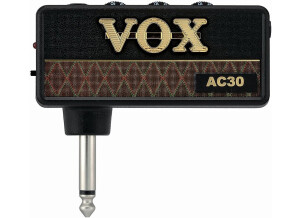
    This might be the best sounding of the pocket amps. It has a great voicing geared for lead playing with the added digital delay within the unit. The sound mimics the tone you would get from heavy loaded amp stacks tailor for metal and hard rock music. Vox amPlug Lead Headphone Guitar Amplifier Features: * Plugs directly into your guitar * AUX in jack lets you jam along with your CD/MP3 player * True analog circuit faithfully simulates the response of the original amps * Voiced for lead guitar; includes digital delay * Up to 15 hours of battery life with supplied AAA batteries UTILIZATION Details Type Solid State Number of Channels 1 Speakers No Speaker No Effects No Reverb No EQ No Amp Modeling Number of Models 0 Number of Tubes 0 Preamp Tubes No Tubes Power Tubes No Tubes Inputs 1 x Instrument, 1 x Aux (1/8") Outputs 1 x Headphone No Footswitch No Effects Loop Height 3.15" Width 3.39" Depth 1.22" Weight .09 lbs. (40g) SOUND QUALITY For me the tone from the classic rock amplug is similar to this one but with the added midrange for the lead tone as well as the digital delay. There is a little more gain added to this one as well. It has a great tone and voice for hard rock and metal. You don't have to play rock with this though, just roll back the guitar's volume and then the thing cleans up a little bit and has more or a low gain sound. This thing has a rich and warm heavy gain tone that is great for single not lead playing. It works well with rhythm playing as well. It sound good not matter what guitar you use with it. I prefer a Superstrat or a regular Fender Strat so you get that sweet sizzle and not clarity. OVERALL OPINION A fantastic pocket amp that can go anywhere with you. If you need a quiet amp that will be silent for practice jamming in your home or office. Just close your door and grab your guitar along with your headphones and you won't disturb anyone around you. At new these units come in at around $50 which is a great price for something of this quality. I recommend thise device to anyone who need a to go amp that is silent and fits in your drawer.

  • « AAAAAHhhhhh pass! »

    This amplug is a little bit unusual to me. I know they meaning Vox are trying to capitalize on the Joe Satriani fans by marketing this pocket amp but to me it sounds nothing like Joe's tone. Also it doesn't fit in with the tone from the rest of the pocket amps by Vox. The other ones have a very usable and natural tone to them especially when plugged into the computer but this one seems a little on the thin side tone wise for me. Vox amPlug Joe Satriani Headphone Guitar Amplifier Features at a Glance: * Get the sound of Joe Satriani's custom rig (a distortion pedal through a high-gain vacuum tube amplifier, followed by a delay) in your headphones * Plugs directly into your guitar * AUX in jack lets you jam along with your CD/MP3 player * True analog circuit faithfully simulates the response of the original amp * Up to 15 hours of battery life with supplied AAA batteries UTILIZATION Details Type Solid State Number of Channels 1 No Speaker No Effects No Reverb EQ No EQ No Amp Modeling Number of Models 0 Number of Tubes 0 Preamp Tubes No Tubes Power Tubes No Tubes Inputs 1 x Instrument, 1 x Aux (1/8") Outputs 1 x Headphone No Footswitch No Effects Loop Height 3.15" Width 3.39" Depth 1.22" Weight .09 lbs. (40g) SOUND QUALITY Out of all the pocket amp from Vox this one is a bit of a disappointment for me. I really like the acoustic and the classic rock the best because they have really captured a solid tone, but this is very thin. Joe's tone is not thin by any stretch and for them to put this thing out with his name on it is a bit bizarre. You probably want to use a Ibanez signature Satriani model guitar otherwise why would you buy this thing. Even coupled with a Joe signature guitar it doesn't even come close to any sound that I have heard him play. The voicing is close to his sound but the tone is lacking in depth and warmth that I find in the other pocket amps. OVERALL OPINION Unless your are a huge Joe fan and even if you are not this is not the best of these units. It has almost half the battery life and the tone is just sub par. At new these units come in at around $50 which is ten bucks more than most of the other pocket amps. With a higher price tag and a lot less battery life this is a must PASS for me. Pick up the Lead or the Classic rock one if you want heavy distortio. If you can't help yourself because you are such a Joe Satriani fan then this is the only person that is going to buy into this amp. I do not recommend this amp.

  • « Pocket Metal »

    All of these pocket amps from Vox have their specific applications and this one geared specifically towards the metal lovers. So the California metal tones are what this unit is modeled off of, which I'm guessing is Mesa Boogie. So if you hear this thing you can get that overly saturated gain structure. It has a midcut circuit that drops the midrange out for that low voicing. It actually is amazing to me how they are able to fit something like this in the size of a watch. Vox metal will get you a good Megadeth tone or something comperable in that type of metal genre. This isn't isn't 80's glam metal tones or even hard rock tones. This is all out balls to wall metal, and you won't get that tone either. Vox amPlug Metal Headphone Guitar Amplifier Features: * Plugs directly into your guitar * AUX in jack lets you jam along with your CD/MP3 player * True analog circuit faithfully simulates the response of the original amps * Metal delivers the explosive roar of US high-gain metal sound * Up to 15 hours of battery life with supplied AAA batteries * Quick and easy setup UTILIZATION Details Type Solid State Number of Channels 1 Speakers No Speaker Effects No Effects Reverb No Reverb EQ No EQ No Amp Modeling Number of Models 0 Number of Tubes 0 Preamp Tubes No Tubes Power Tubes No Tubes Inputs 1 x Instrument, 1 x Aux (1/8") Outputs 1 x Headphone Footswitch I/O No Footswitch No Effects Loop Height 3.15" Width 3.39" Depth 1.22" Weight .09 lbs. (40g) Notes "Metal" - California-made High-gain Voicing SOUND QUALITY If you are going to use this version over the other Vox pocket amps then you are going to need a humbucker style guitar. It is voiced for the low end so a single coil guitar like a Fender Stratocaster isn't going to cut it in any way. Sure you can play through it and it will sound fine but I would suggest the Lead version if you are going for the single coil operation. There you will get more of a yngwie malmsteen type tone. Or even the Joe Satrinani version with be better suited for thinner guitars or single coils. Any guitar will work if you are just wanting to jam but I find these setting to be the best for each version. OVERALL OPINION If you need a pint size amp that fits in your pocket and goes where you and then this is for you. You can toss it in your drawer at work or at home and quietly jam with some headphones quietly without disturbing anyone else around you. At new these units come in at around $40 which is a great price for a finger amp. This is a practice tool and not be able to use in any gig. You can hook it up to your computer and get some cool sounds with other effects units and such. Nice little buy!.

  • Audiofanzine FR's review

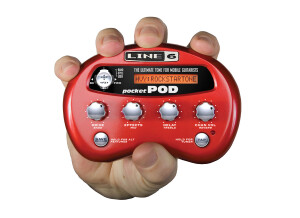
    Originally written by benbao on Audiofanzine French. I won't describe the effects provided: you'll find them on the Line6 website. In short, it's a pocket amp simulator. Works with batteries. The battery life is not very long: with rechargeable batteries, I can play nearly three hours. Connections: guitar input, phones out, amp out, line input to play along with a recorded song, PSU connector. Sold with a small manual but no PSU. It's a pity! UTILIZATION You can do your settings either directly on the unit or via a PC. Directly on the unit it's a bit difficult because some parameters require key combinations. Browsing within the presets is not very practical: in some cases, you'll press a key by mistake when you want to select another preset. For PC editing you'll have to download the software. Storing presets is not very intuitive: you can lose your settings by mistake pretty easily. I use it with headphones when I play guitar at home or when I'm on the road (I don't have to carry my guitar amp with me). It's ok for these applications. SOUND QUALITY Considering the price, the sound is rather good. However, I found some weak points, like noise with high-gain simulations. Another con: the simulations don't fully reproduce the sound character of the guitar you play. Altogether, the sound is ok for me. OVERALL OPINION I've been using it for three years as a practice tool. Don't expect to be able to use it as your main amp. Once you made your settings (with the software), it's ok as an additional amp, especially considering the price. I bought it to play/practice without making too much noise since my big amp is not ideal to play at home. I wouldn't buy it again if I had more money. I would choose a quality compact combo or a good sound card, but it would be more expensive.

  • mooseherman's review

    This is a miniature amp modeler, or a "headphone amp" if you will. It is simply a device that simulates the sound of a real amplifier in either headphones or larger speakers that use a 1/8" connection. It's not rackable or able to be edited with a computer, although it can be hooked directly into the sound card like a computer microphone. It is, surprisingly, an analog device. UTILIZATION There are only three knobs, gain, volume, and tone, which are pretty self-explanatory. There aren't a ton of effects that are available on this guy, just some distortion, so the editing is pretty simple. The manual explains everything clearly, though it's almost unnecessary as this is a pretty easy device to figure out. SOUND QUALITY I've used this with my Strat predominantly, and I have to say that for a headphone amp, this one is particularly good. It's obviously not something to rehearse with a band with, and definitely not for gigs, but for practicing on your own, you can get a good enough tone to be inspired. It does sound somewhat cliche, and it sort of sounds similar no matter what you plug into it, but it's still pretty great. It certainly colors the sound, but usually, its in a good way, similar to the way that a regular amplifier would. I really was surprised by how much I liked the clean tone, it doesn't sound flimsy like so many of these things do. I feel that the sound ends up being very reminiscent of late 70s arena rock bands like Bad Company and even earlier Van Halen, especially when you have the gain cranked. While not exactly what I would go for in a true amplifier, its great for practicing, because it gives leads a ton of body and allows you to really hear what you're doing. OVERALL OPINION I certainly liked the size and convenience of this thing the most. I never thought I would actually enjoy playing one of these things but I really did. I think that its a pretty good tool for someone who has roomates and/or lives with a family and can't practice at certain hours just because of noise. I think that $40 is a good price for the freedom to practice with a decent tone 24 hours a day. I have played a few of these, but I know that this one is definitely one of the better ones I've played. Highly recommended as far as headphone amps go.

  • « Multiple Amps & Effects Take Pocket Amps to the Next Level »

    https://www.youtube.com/watch?v=SmIJKjM0SXg AMPHONIX Pocket amps have a lot of use, including silent playing, jamming to backing tracks, pre-gig warming up, and even direct recording for newbies who want to get their feet wet with a DAW, etc. Sonicake took that tech and went one step further, at least further than I’ve seen from other companies. First, there are six popular amp/cab types from which to choose, all of which were demoed in the accompanying video, and with enough choice to play from clean, to classic rock crunch, to metal. You then adjust the volume, tone and gain via individual dials. The cleans sound very good and crystal clear. The moderate gain amps (Orange and Marshall) are fairly easy to dial in. The two high-gain amps (Mesa and ENGL) are more finicky, and they sound best with the tone and gain almost all the way down (they sound beefier and without the high-end fizz/frequency). There are three categories of effects, and what is cool is that you can mix a modulation, delay and reverb simultaneously (or turn those off you don’t want). That is very cool, as many previous models I’ve tried from other companies permitted you to chose either delay or reverb, for example. Modulation includes vibrato, tremolo, flanger, phaser, rotary and chorus. You select which by scrolling through the choices via the Modulation button. You then adjust the depth/intensity/speed of that effect via the ‘FX’ dial (the ‘active’ button flashes, whether mod, delay or reverb). Once you click on the Delay button, it will flash, thus allowing you to select the type of delay, followed by adjusting the ‘FX’ dial. Delays include tape, warm, slapback and modulated variations. The process then applies to the Reverb button and its mix. Reverbs include room, studio, hall, church and plate. Other features include the usual headphone jack and an 1/8-inch input for an MP3 or similar device, for jamming to tracks. However, Amphonix also is Bluetooth ready, which means you don’t need any cables for either headphones or pairing up to a device (holding the Delay and Reverb buttons turns off Bluetooth). However, the package does include an 1/8-inch to 1/8-inch cable for connection to a music device (I used that cable to direct record the Amphonix for the demo, going into the Sonicake QAI-100 mixing console). Also included is a USB cable for charging the lithium battery, providing 5-hours of play on a full charge. The price of the Amphonix is $39.99 USD, which is both reasonable and within the price range of similar products and with no drawbacks. It certainly offers more than less expensive pocket amps, and the sound of the amps is relative to individual tastes. Consequently, if you like all the features and some of the sample sounds in the demo, the Amphonix is a solid choice. QAI-100 The QAI-100 is a professional mixing console, and I used this to direct-record the demo, using the Amphonix. This is a bare bones platform without EQ or any special effects. It’s a piece of gear that provides connection and monitoring, and the best part is that it does not load drivers. It connects via your computer with a USB cable (included and connects to a 2.0 port) and there is a lot in this little device that fits into the palm of your hand, taking up very little desk space and is ideal for transport – weighing only ounces. There are two XLR combo input jacks, to allow for recording in mono or stereo. The Main Outputs are ¼-inch TRS balanced. You can select Line/Instrument as the inputs, and if using a condenser mic (a separate 3.5mm input), there’s also 48V phantom power onboard capability. There’s a SIG indicator (when input signal reaches -20dB) and a PEAK indicator (when the level reaches 3dB below clipping). Each channel has its own level, besides separate level controls for the Main and headphones. There’s even a REC Loopback switch, to record a mixed signal from both your computer and channel 1/2. And sound quality remains high with the QAI-100, at 48kHz, 16 bit. What’s amazing is that the QAI-100 is a control console, but also an interface without the need for drivers. Together with all the above features in a tiny footprint, the QAI-100 is a no-brainer for only $39.99 USD, and proves that we’re living in a golden era of easily-affordable gear.

  • « Three Amps with Clean, Crunch & Heavy + 3 Mic Settings »

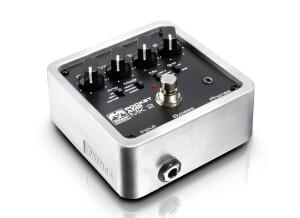
    SOUND: It may be small, but Palmer’s Pocket Amp MK 2 produces some very decent tones, as demonstrated in the YouTube demo below: With dynamics of a tube amp (although it may not be 100% authentic), the MK 2 produces some rich harmonics and note detail, but what first jumps out is the quality of the dirt or distortion, particularly with the Modern British and USA models (both of which provide tones from clean to hard-rock and metal). I’m jumping a bit ahead, and so be aware that there are three amp models besides the two just mentioned, the third being a Vintage (Tweed-style) amp. If you’re looking for a clean amp simulator, this one definitely is of good quality and accepts dirt pedals rather well (the others like dirt pedals if you don’t go too crazy on the MK 2’s Gain). I don’t find this version of the Vintage Tweed as jangly or trebly as an actual Tweed, which is good to my ears (apologies to Tweed lovers), but it is bright and clear without sounding harsh. On that note, I found the Treble pot to sound a bit harsh once you push it around 3-o’clock or more (although I rarely found need to get the treble up that high). The sound of each amp can vary considerably, depending on all the possible settings (which is true of any amp). There’s a Gain knob, which really packs a nice grainy punch to any of the amps, but with each amp you can select a Mode: Clean, Crunch and Heavy. Not only that, you can produce a tighter clearer sound with the Classic Mic, or get more mid-range and treble with the Centre Mic, or perhaps something less harsh and with more mids with the Off Axis Mic. The demo video goes into each of these aspects. Also, the MK 2 does have a Ground Lift if you happen to notice some hissing or noise when working with grounded pedals. OVERALL IMPRESSION: The MK 2 is very affordable at about $129 USD, and that price gives you three amplifiers (and three channels each) with three different mic setups that can be run to a clean amp, a PA/Mixer or your computer. It can be used as a distortion box, as an amp simulator or a DI box when bypassed. As well, Palmer’s Pocket Amp MK 2 can be used as a private practicing device ready for headphones. There’s a lot of punch in this little package. A decent sound with a significant range of tones, there’s a lot of experimentation as you adjust the Gain and select among different Modes and Mics. Although it may be argued that the MK 2 not ‘tube-like’ (why compare it to a $1000+ amp?), the MK 2 does produce some very usable tones in recording and play. The Vintage has a very pleasant and clear quality, whereas the British and USA modern models both have a superb distortion that is gritty and cuts through the mix. The Pocket Amp MK 2 also takes pedals rather well. I’ve played with pre-amps and amp simulators that are better in some respects, but often at double or triple the price – then again, the MK 2 has more options than many other pre-amps so that you can achieve a lot more sounds. All in all, a worthy purchase and a device the average gear-head will make use of repeatedly. EASE OF USE: Initially there may seem to be a lot of switches and knobs on the MK2, but once you know what Amp you want to use, the rest falls in place rather easily and you don’t have to tweak too much. The Vintage selection is pretty straight forward and you’re going to get a rather clean amp, although it does break up nicely if you crank the Gain and go into Heavy Mode. The British style amp has more high-mids and highs, (a grainy distortion) whereas the USA style amp has more low-mids and fewer highs (more bottom end). Of course you can alter this by tweaking the Treble and Bass, but those are the general characteristics when choosing the correct amp for your sound. The Mode selection is pretty straight forward if you think of it as a three-channel amp… clean, crunch and high-gain (although Palmer calls it ‘heavy’ on the MK 2, and likely because the crunch can sound pretty high-gain in some instances). Choosing a Mic also is straight forward as the Classic gives you a clearer sound with some nice mids, whereas the Centre Mic (aka SM57) produces more high-mids and treble and the Off Axis reduces some of that harshness for a smoother outcome. In that regard, when selecting an Off Axis Mic, you may need to turn up your treble if you find it has too much low-mids, or perhaps more bass if selecting the Classic or Centre mics. Obviously experimentation is paramount as it also depends on your guitar and its pickups, other pedals you’re using, etc. Also worth mentioning is the Aux In, which allows you to hook up a CD or MP3 if you want to jam with some music, and the XLR Output allows you to go direct to a PA or Mixer (you will need to turn the MK 2’s levels down and adjust volume accordingly). Of course, you can use the ¼-inch jack output as you normally would and go into an amp or direct to your computer for recording. RELIABILITY & DURABILITY: Encased in a die cast aluminum chassis, the MK 2 is of moderate weight, but plenty tough. The plastic knobs produce a very smooth and high-quality turn and the selector switches (Amp, Mode, Mic and Grd) all have solid clicks when moved into place. The footswitch seems ‘slight’ in its construction, although the ‘click’ is obvious when engaging and disengaging. The guitar’s input is in the front of the unit, off slightly to the left of the footswitch, and so if used on stage I would opt for a 45-degree cable end to keep any wiring as close to the chassis as possible and to keep a foot from stomping on it. The other inputs and outputs (power, aux in, XLR out and ¼-inch out) are located in the back and far from harm. The cable placement makes the MK 2 pedal board friendly, as well as its smallish size. The headphone jack is located in the top front right-hand corner, which is not an issue as headphones would not be used in a band setting and damage to the headphone chord or the input jack is unlikely as a result. The MK 2 can operate on a 9v battery, accessible from an easy to open door on the bottom, or via a standard 9v power supply (30mA).

  • « Not horrible...Not awesome... »

    OK, the PODxt is a comprehensive beast....Below is the TON of info about it...Since it models so many amps, cabs, mics, etc. it has a lot of specs...It doesn't such about the Line 6 Edit software but that is the GREATEST PODxt feature known...There are also "model packs" with new effects, amps, and cabs....Downloadable content is always growing and that's kinda cool....This is kidney version and is non rack able,,,, POD® xt Features +4dBu / -10dBV 1/4 Inch Outputs 24-bit A/D and D/A Converters MIDI In, Out/Thru RJ-45 Foot Controller Connector USB Connector for Digital I/O Headphone Output Guitar Input Precision Chromatic Tuning Audio Mute Bypass Hands-free Operation (with optional FBV-series foot controllers) PODxt Amp Models based on*: Line 6® Clean Line 6® JTS-45 Line 6® Class A Line 6® Mood Line 6® Spinal Puppet Line 6® Chemical X Line 6® Insane Line 6® Piezacoustic 2 Line 6® Agro Line 6® Lunatic Line 6® Treadplate Line 6® Variax® Acoustic Budda 2001 Twinmaster Fender® 1953 Deluxe Reverb® Fender® 1958 Bassman® Fender® 1961 Champ® Fender® 1964 Deluxe Reverb® Fender® 1965 Twin Reverb® Gretsch® 1960 6156 Hiwatt® 1973 Custom 100 Marshall® 1966 JTM-45 Marshall® 1968 Super Lead Marshall® 1968 Jump Channel Marshall® 1968 Variac Plexi Marshall® 1987 JCM 800 Marshall® 1996 JMP-1 Matchless 1996 Chieftain Matchless 1993 DC-30 Mesa/Boogie® 2001 Dual Rectifier® Mesa/Boogie® Mark IIc+ Roland® Jazz Chorus 120 Soldano 1993 SLO-100 Supro 1960's S6616 Vox® 1961 AC-15 Vox® 1967 AC-30TB Tube Preamp Marshall® 1974X (18W Reissue) Marshall® JCM 2000 w/ Germ Pedal Orange AD30TC Vox® Fawn Non-Top Boost AC30 Dumble® Clean (from POD® 2.0) Soldano SP88 (from POD® 2.0) PODxt Cabinet Models based on*: 6x9 Supro S6616 1x8 1961 Fender® Tweed Champ® 1x10 Gibson® 1x10 Gretsch® 6156 1x12 Line 6® 1x12 1953 Fender® Tweed Deluxe Reverb® 1x12 1964 Fender® Blackface Deluxe Reverb® 1x12 1960 Vox® AC-15 1X15 1962 Supro Thunderbolt 2x2 Fender® Mini Twin Reverb® 2x12 Line 6® 2x12 1965 Fender® Blackface Twin Reverb® 2x12 1995 Matchless Chieftain 2x12 Roland® JC-120 2x12 1967 Vox® AC-30 2X12 1967 Silvertone® Twin Twelve 4x10 Line 6® 4x10 1959 Fender® Bassman® 4x12 Line 6®s 4x12 1967 Marshall® Basketweave with Greenbacks 4x12 1968 Marshall® Basketweave with Greenbacks 4x12 1978 Marshall® with stock 70s 4x12 1996 Marshall® with Vintage 30s 4x12 Mesa/Boogie® PODxt Microphone Models based on*: Shure® SM-57 On Axis Shure® SM-57 Off Axis Sennheiser® MD-421 Neumann® U-67 PODxt Effect Models based on*: LA-2A® Compressor Noise Gate Fuzz Face Big Muff Pi® Tubescreamer® ProCo Rat Octavia CS-1 Comp/Sustainer Dynacomp Vetta™ Comp Auto Swell Mutron III Line 6® Sine Chorus CE-1 Chorus Ensemble Line 6® Flanger A/DA Flanger MXR® Phase 90 Uni-Vibe Opto Tremolo model from the 1965 Fender® Deluxe Reverb® Vox® V847 Wah Custom Vox® V847 Wah Bias Tremolo model from 1960 Vox® AC-15 Colorsound Wah-Fuzz Maestro® Boomerang Wah Leslie® 145 Jen Electronics Cry Baby Super Wah Vibratone RMC Real McCoy 1 Wah Auto-pan Arbiter® Cry Baby Wah Boss® DM-2 Sub Octaves Synth Effect Deluxe Memory Man Digitech Whammy Pitch Effect EP-1 Tube Echoplex Maestro® Bass Brassmaster Roland® RE-101 Space Echo Sans Amp Tube Driver Sweep Echo Volume (Pre- or Post-Amp Routing options) Line 6® Digital Delay Post-EQ Line 6® Stereo Delay Vetta Wah Large Plate Reverb Ping Pong Delay Vintage Plate Reverb Reverse Delay Slap Plate Reverb Fender® Deluxe Spring Reverb Cavernous Reverb Fender® Twin Spring Reverb Chamber Reverb King Spring Reverb Rich Chamber Reverb Small Room Reverb Large Hall Reverb Tiled Room Reverb Brite Room Reverb Dark Hall Reverb Medium Hall Reverb UTILIZATION OK, here's the best part...The Line 6 software is amazing...There is Line 6 Monkey which updates all of your Line 6 gear and software...There is an amazing tone bank online that is super searchable and very very very useful....Here's an example, you are in a late night session and want to keep noise down....You go to the tone bank and type in the name of an artist or song and immediately play that patch....Carlos Santana alone yields a hundred results...Song specific searches are great too- "Back in Black" yields a hundred plus results as well...If you play covers, this might be a tool you can use... The config is easy as pie...The manual is exquisite! All patches and effects listed on a nice laminated sheet....All setups included with a walk-thru...Tech support is free and useful.... SOUND QUALITY OK, all my guitars sound a little funny with this thing....It's strong point is versatility while it's weak point is sound...It's digital and, while not bad, it lacks that tube driven oomph....I use it occasionally as an added part but never as the main tracks....It can play a support role well but is not the quarterback... The models are pretty good but again the sound is so digital it's hard to get a great sound...Having said that the models and such are good...FX are good too... I do all editing on the software and LOVE that... I just don't like the thin digital tone....These things have their place and serve as a cheap backup to your main amp at a gig.... The FBV floorboard is useful too.... OVERALL OPINION I love the editing and ease of use... The value for what you get is very high... The sounds are plentiful but not the greatest.... I have owned other digital modelers and this is the most comprehensive...Although they all sound digital.... It's a good product though- especially for beginners....

  • « Zoom GM-200 »

    I play bass and keyboard. I started taking piano lessons at age 11. Ive played in bands sense I was 13. I was a lead singer and went on to play bass. I write, and of late Ive been involved in Christion rock band with a southern rock edge. I now play on our worship team at my church. I got the Zoom on ebay for about 30.00 dollars. The unit has a simple user approach. Not hard to dial in what you are looking for. Its ok. This unit doesnt have alot of tweeking ability. Fairly straight forward. Its just plastic. Have to be carefull with it. I would say keep it in the studio. I like it for just a quick effect to use for practice time. As not to get board with a straight tone. I believe it would be nice for home recording. Something simple. This review was originally published on http://www.musicgearreview.com

  • « Behringer V-Amp Virtual Amplification »

    I bought it from Music Stop in Moncton for $100 (can). I like the overall design,most of the effects(some really cheezy).The price was great.That it is beyond the technical abillities of normal guitar amplification. First i'll start with one thing,where's the power switch?it's a real pain in the ass to unplug this device everytime your done playing it.Then there's the drive power(where is it)distortion sounds like im playing through a $5 amp.I really hate the fact that its useless with 95 % of ams on the market.They have only one input and the ones with 2 are not equal.so the only way to bennifit from the two channels of your product is to use 2 amps like i do. Construction and design are great,if they spent as much time on the sound and the other flaws as they did on the design concept they might have gotten some where.Also what did the do different on the v-amp 2 has all the same options as mine. I use mine daily and found ways to compensate for it's flaws.I run my guitar to the v-amp then run the left output to a crate gx-65 and the right output to a peavey backstage plus and the headphone output to my pc for recording.I use the v-amp for vocal effects as well and its great for that.But if your on a budget this is for you but i wish i ciuld have gotten the line 6 This review was originally published on http://www.musicgearreview.com

Categories that may interest you