Log in
EN
FR

Fender Guitar Combo Amplifiers

319 products found

Categories
Series
Filter
Sort by
Fender
Evaluation
  • Reviewed or not
  • Editor’s award
  • Reviewed by Audiofanzine
Availability
  • Available or not
  • Sold new or used
  • Sold new
  • Sold used
Must-have products
  • All products
  • Flagship products
  • Best rated products
  • Hot products
  • Popular products
Price
  • Freeware
  • Low-cost (< $250)
  • Mid-range ($250 - $800)
  • Premium (> $800)
€
Clear
Sort by
  • Popularity
  • User ratings
  • Price - low to high
  • Price - high to low
  • Used price, increasing
  • Used price, decreasing
  • Name (from A to Z)
  • Name (from Z to A)
  • Added on
Choose a category
Selected category: Guitar Combo Amplifiers
Sort results
  • Popularity
  • User ratings
  • Price - low to high
  • Price - high to low
  • Used price, increasing
  • Used price, decreasing
  • Name (from A to Z)
  • Name (from Z to A)
  • Added on
Filter results 319 results found
Brands
Evaluation
Availability
Must-have products
Price
  • Freeware
  • Low-cost (< $250)
  • Mid-range ($250 - $800)
  • Premium (> $800)
Show results

The best Fender Guitar Combo Amplifiers reviews

The reviews Audiofanzine members found the most helpful.
  • lnn's review

    Tube amp in the typical Fender vein, with a warm sound. It has quite some power for a 60-watt amp, it's a pity that it's all concentrated between settings 1 and 2 of the volume knob. But other than that, you want it as soon as you hear it. I use it with a Tele custom FMT and it sounds amazing. It's limited in terms of volume in very large venues, but if you amplify it via the PA, it's PERFECT. Superb distortion. FENDER reverb, of course USE Very easy to dial in. SUPERB sound. Mine is old, I have no manual. But do you really need a manual? What for? It's a classy amp, not a Rube Goldberg machine. SOUND JAZZ, BLUES, ROCK, FUNK it can handle ANYTHING! OVERALL OPINION It's a small twin but with a GREAT, GREAT, GREAT sound. Its only defect is the weight.

  • gege 38's review

    60w tube amp manufactured back in the '80s with 12" speaker. 60w with tubes, so the sound is huge. Footswitachble clean and distortion modes. EQ and two inputs, FX loop and the possibility to add another speaker to the combo. UTILIZATION Easy setup. It's pretty easy to get a good combination with the treble, middle, bass, and presence controls. SOUNDS You can play any style. I use it with an ibanez as 200 hollowbody and a fender amrican standard. It's the fabulous Fender sound revisited by Paul Rivera. I modified it with jj tesla tubes, which are very warm and full of harmonics.l. I have played with many marshall, musicman, polytone, ampeg, mesa, and peavey tube amps.. And my pick is the super60, which unfortunately is not manufactured anymore. OVERALL OPINION I've used it for 11 years and bought it secondhand. Unbeatable value for money. It's great for all styles. Do not hesitate if you find one.

  • iamqman's review

    One of those simple amps from Fender. This is an amp that was onto the market for a while and then ultimately replaced by the Fender Stage 100 DSP. The DSP has multi effects based right into the amp that makes this an all in one amplifier. This model is more stripped than the DSP. You get a three channel amp that has a clean, drive, channel, and then a boosted drive channel. You also get an effects loop to run you effects pedals and units. You can also run a wet/dry setup if you don't want the effects loop by using the line out function and run another speaker cabinet. UTILIZATION Fender Stage 100 Features: Three channel operation (Normal, Drive, More Drive), Normal channel- Volume, Treble, Mid, Bass, Reverb, Drive channel- gain, Volume, Treble, Mid, Bass, Reverb, EFX Loop, balanced line out, external speaker out, 2-bttn. 3-function footswitch included. SOUNDS The amp is functionally pretty easy to use and get a decent tone out of within a few minutes. The clean tone is just like any other clean channel from Fender. It is great with a nice chimy tone that sparkles on the high end. The distortion channels are not that great. They are pretty bland and uninspiring. Just like most Fender amps the overdrive is just not that pleasing to the ears. The only amp from Fender where the distortion is nice is the Super-sonic and the new Hot Rod's. The second boost helps out a little more but still comes up short. OVERALL OPINION These amps have been discontinued now and only the used market can you find then. I have seen them for right around $300. Not a bad price for a three channel amp. NOt the best amp to come out of Fender but its average to pickup for that price. I wouldn't recommend this amp to anyone. there are a lot better amps out there that can do the things this can do and much better. I would suggest getting a Supersonic if you can afford it. That amp is far more superior to this one.

  • « Sweet tone! »

    If you are into blues rock or mild rock tones then this is the amp for you. If you play pop music or something similar to Coldplay then this amp will be right up your alley. This is exactly the same amp as the deluxe verion but with a change in casing which to allow more speaker. This one come with 4 10 in speakers. You get the same great tone and features but just in a bigger unit and more speakers. If you enjoy the tones and voicing of the Fender Hot Rod Deluxe amp but want a warmer for vintage style tone then this is the amp for you. I have been a fan of the Hot Rod deluxes for quite some time now. This amp is on par with that amp with the full rich bodied tone that is so reminiscent of records of old Fender Blues DeVille Guitar Amp Features: 60-watt two-channel tube amp with four 10" blue Alnico-Magnet Eminence speaker All-tube preamp and power amp Tube Complement: 3 x 12AX7, 2 x 6L6, solid-state rectifier Dual selectable channels (Vintage and Drive) Independent Gain and Master Controls in the Drive channel Bright Switch in Vintage channel Effects loop Fender Spring Reverb 2-Button footswitch for Drive select and Reverb on/off Chrome panel and Vintage chicken-head pointer knobs Controls: Presence, Reverb, Master, Middle, Bass, Treble, Drive Select Switch, Drive, Volume, Bright Switch, Standby Switch Genuine cloth tweed covering UTILIZATION Details Type Tube Number of Channels 2 Power 60W Speakers 4 x 10" Special Design Eminence No Effects Reverb EQ Middle, Bass, Treble No Amp Modeling Preamp Tubes 3 x 12AX7 Power Tubes 2 x 6L6 Inputs 2 x Instrument, 1 x Power Amp In Outputs 1 x Speaker, 1 x Preamp Out Footswitch I/O Effects Loop Height 23.5" Width 23.5" Depth 10.75" Weight 50 lbs. SOUNDS The tone you get get with this amp is remarkable! It is jangly and dirty but will never play something out side of your guitar's natural tone. It compliment the tone of your guitar and doesn't take on a new character. The ultimate tone for this amp is a Fender Stratocaster and maybe a Ibanez TS9 or some other tubescreamer. This will get you a solid driving tone that just slams the front end of the band mix. Plus with with the extra dirty channel you can get even dirtier than that. Although I must say that the crunch channel of this amp is fair weak and sterile sounding. So my recommendation is to use a overdrive pedal slamming the front of the amp. OVERALL OPINION If you are into the blues style tone and voicing and want a solid durable gigging amp then this is about the best you can get aside form some boutique builder. The tone is warm and full of driving blues tones that will get you excited to come home from work just to play the thing. At new these amps come in at around $1000 which isn't a bad price. I am not sure if these units are made in Mexican or America. They used me American but at some point I know the Hot Rods switched toe Mexico.

  • moosers's review

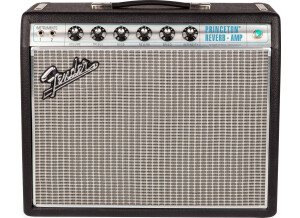
    The Fender Princeton Reverb Silver Face version is a small guitar combo amp that was made in the 1970's (or at least the one that I've used was made then). There's all different versions of the Princeton Reverb, including a reissued version, but this is for the original Silver Face one. The amp has 12 watts of power and a single 10 inch speaker inside of it. The amp is indeed a tube amp and just has two 1/4" inputs in the front of it. UTILIZATION Using the Fender Princeton Reverb is as simple as it gets for a guitar amp. If you know even the slightest bit about amps or guitars in general, you should be able to use this amp without any problems. The parameters that the amp has include volume, treble and bass tone knobs, reverb, and speed and intensity for controlling the vibrato effect. If you have used a Fender amp before, you'll certainly recognize this make up. Everything should be self explanatory, so a manual isn't necessary. SOUNDS The sound of the Fender Princeton Reverb is outstanding for such a small amplifier. I recently was working on a session where the guitar player brought this little amp in. We have a lot of amps to choose from at the studio I work at, including some smaller ones, but this would take the cake compared to any of the smaller combo amps we've got, which is saying something because we have some pretty good ones. The Princeton Reverb has a super clean sound where it's possible to get a bit of volume without over-driving it, which can be done, but for the most part it's very clean. For what we were going for, this was absolutely perfect... OVERALL OPINION There are ton of different vintage, small combo amps that Fender has made over the years, but the Princeton Reverb has to be one of my favorites. It's really the perfect amp for recording if you're looking to get a crystal clean guitar tone. I'd probably recommend a bigger Fender amp like a Twin Reverb if you're looking for some overloading tubes, but I'd go with this one to get that clean guitar sound. Don't know what kind of price this would command, but probably not too cheap since it's an older amp. Either way, if you're a serious guitar player looking for a great small tube amp to record or practice with, the Princeton Reverb is hard to beat.

  • sat4n's review

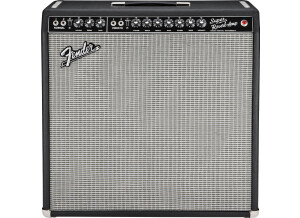
    The Super Reverb '65 is a reissue of Fender's legendary 4x10 blackface combo, often considered the mid-sixties to the legendary late-fifties Bassman. It is an all-tube amplifier, running a bunch of pre-amp tubes (mostly 12AX7s) a pair of 6L6GCs in the power section, and a single 5AR4 rectifier tube. It's rated at 45 watts. There are two non-switchable channels: &quot;normal&quot; and &quot;vibrato.&quot; The normal channel features a bright switch, a volume control, and treble and bass controls. The more elaborate vibrato channel also has the bright switch and volume knobs, but it steps up to three band eq (treble, middle, and bass). It also features reverb (with one knob) and vibrato (with controls for speed and depth), both of which are accessible only when using channel two. Each channel has two inputs, with the second one being padded a bit, allowing you to get a cleaner sound when using high-output pickups. There is a retro-style two-button foot switch which controls reverb and vibrato. The one major difference between this reissue and the original blackface Super Reverb is that the reissue uses a printed circuit board, while the original used a hand-soldered tag board. The latter allows for much easier repairs and mods, and many people argue that it sounds better, too. UTILIZATION This is a classic non-master-volume amp. The three-band eq on the vibrato channel is extremely easy to use, allowing more flexibility than many more complicated eqs because the three bands cover the entire sonic spectrum. With all three knobs at zero no sound gets through; with all three knobs at ten you get a significant boost in signal being passed from the pre-amp to the power amp. With all three knobs at five you get a lush and detailed picture of what your guitar actually sounds like. Usually the best way to get the sound you want is to put all the knobs on five and then turn one of them down a notch or two. The bright switch is there essentially to compensate for the differences in tone between single coil and humbucking pickups. SOUNDS The clean sound on this amp is heavenly! Extremely well suited to jazz or clean-guitar rock. Maybe country, too. The clean sound of a Fender blackface is desirable enough that other companies make pedals emulating it, and this amp delivers exactly what those pedals try, and usually fail, to approximate. One thing to consider, though, is that the amp only stays clean until the volume knob reaches about four, after which you get a distortion sound that is great for blues and classic rock, but less great for other types of music (I play indie rock). The amp is loud enough that in practice, or in a small room, or with a quiet drummer, the clean sound is more than loud enough. But if your drummer is loud, or you're playing a medium-sized club, you will get significant distortion before you get loud enough. This might be a problem, because the clean sound is where this amp really shines. I give it a perfect 10 for clean, a 6 for distorted tone, and a point off for failing to deliver the clean tone at big-club volume levels. OVERALL OPINION I used this amp for about five years, and only parted with it to trade up to a real early-seventies Super. It was my only amp during that time and I used it at practice, club gigs, and recording. It was great in every one of those situations as long as 1) I got my distortion tone primarily from a good pedal, and 2) the drummer was not so loud that I had to turn the thing up past four to be heard. In spite of these limitations, I'd recommend this amp to anyone who wanted to buy a Fender amp currently in production. The clean sound and the reverb are as good as any I have ever heard anywhere, and it's rare that you face a situation where the amp is too quiet and yet can't be mic'd. Most places that are big enough to overpower this amp assume they're going to be micing the guitar amps anyway. If you play jazz this is a great amp, because you don't need to play loud and the clean tone is great. If you play blues this is a great amp because it's got awesome blues/classic rock overdrive tone and real tube sag. If you want clean, modern rock tone, you may be better off with a Twin.

  • « A Little Classic »

    I play in a power pop covers band in the UK (The Fadeouts) I got this amp as a backup to my incredibly heavy Mesa Boogie Single Rectoverb 60, we play 10CC/Pilot/Be Bop Deluxe and much more besides (Lovin' Spoonful/Blur/Squeeze/Gigilo Aunts/Kinks) I have used this amp live and I can honestly say it has exceeded my expectations, the guitars I use with it, untreated other than echo are a Gibson Les Paul Studio and a Fender USA Strat, the clean channel is everything you would expect from a Fender, clear and warm, the revelation to me was this is the only Fender Amp I have played that has a great overdrive channel, it really took me by surprise, while my Mesa has a beautiful sound, the Princeton has a lot of middle that makes it cut through the mix, it's bass is very good too. I also play a Rickenbacker 660/12 with a compressor and 7 band graphic through the clean channel, it took the guitar to another dimension that the Mesa could only dream of. I have seen a lot of people complaining about a Telecaster suffering from too much treble after volume 5 with this amp, I am not sure what the state of these peoples hearing is but I have never needed to play over volume 3 on this amp, maybe they were playing the Hollywood Bowl !!!! any fool knows a Tele is treble heavy so turn down the treble on the amp. There are issues with the tone/volume pots being directly connected to the PCB, if the amp has been mistreated they will be loose, no need to worry about this too much, they can either be reconnected or an expert can hard wire a pot for you, but make sure you get it at a reduced price to compensate for this work. The pros are it is a brilliant amp that is light in weight and easy to set up tonally,plus once you have set up both channels you do not have to make many changes when playing live. The cons are while it is a durable amp and works even if you don't fix the pot problems mentioned, you do have to treat it with respect and take care of it. I can only say with the guitars I have used with it I didn't believe I was playing through a solid state amp, it is not like the more modern day budget Fender amps which are generally all power and no finesse, this one really does have a classy, distinctive and powerful sound, I love it and my Mesa has become my backup.........this little amp is that good.

  • « Good buy for a beginner »

    It's a 20W modeling amp. It has a good range of Fender simulations. It allows you to add the most widespread effects and to fine-tune the settings with the Fender Fuse software. You can connect to it: - a minijack audio output. - a minijack AUX input. - a 1/4" jack FT5W (footswitch) connector With the Master control for the output volume. It allows you to play with headphones or at reduced volumes, if you like your neighbors :). It has a good volume at full blast. UTILIZATION Setup is a bit complicated in the beginning, because there are many possibilities due to Fender Fuse. That said, you can find the sound you want and test all possible styles. I haven't used much the manual, but it's rather short. Still, you can quickly find the basic settings on the amp. The Fender Fuse software sheds a light on the possibilities of the amp. SOUNDS The mustang is great for beginners looking for their sound style and who wish to try a bit of everything. I have used it with my first guitar, an Ibanez GSA60 Jewel blue, and with my Tokai ALC53 White. In terms of sound, it's low-cost simulation in a combo. The sounds are all right, given its price and quality. The Clean sounds are all right, but I find the distortions a bit mediocre. OVERALL OPINION I used this amp 1 year before switching to a VOX tube amp. Before this amp, I used the amp with the ibanez GSAJ pack, the Ibanez GTA15R that is. If I were starting out, I wouldn't hesitate to buy this amp again, because it allows you to try lots of sounds while you look for your own at first :-) and also due to its effects. Fender Fuse allows you to truly customize everything.

  • « 2X10 With Chorus and some Punch! »

    The Princeton Chorus series are, (since the 80's), solid-state amps with ample power and very well rounded speakers. You are given the standard two input option common on many Fender Amps. Also you have both a mono and stereo FX loop, foot switch jack and a headphone output. The model that I own, (approx. '90), delivers 125 solid state watts of power and is plenty enough to compete with much more powerful and larger amps. On your clean channel you have volume, bass, mid, treble, and reverb controls. On the distorted channel you have gain, limiter, presence, and volume controls as well as a mid boost switch. Then you have the chorus settings which includes a rate and a depth control. One odd thing about the way this amp works is that the clean channel EQ section and the reverb control remain in use when you switch over to the distortion channel. This makes both the mid boost switch and the presence control in the distortion section very important if you intend to use the onboard distortion channel. I would personally suggest staying on the clean channel all the time and using an external distortion pedal or multi-effects board. The chorus is pretty good overall being a very limited and cheap factory installed ho-hum chorus. The reverb is your typical spring reverb and it...well...it's reverb. UTILIZATION The Princeton Chorus's 2 10in. speakers provide quite an unexpected amount of very well defined low-end. When I first got mine I was very impressed with how well it sounded live and how well it recorded, especially with palm-mute, chunky, distorted guitar sounds. It also has a great clean tone. Of course, your choice in instrument will always have a rediculous effect on the overall sound of your amp. I've used a Fender Telecaster, PRS soapbarII, Epiphone Les Paul, Harmony Stratotone, and various other accoustics and electric guitars with the Princeton Chorus and have always been able to get a good sound from it. Surpisingly, on a few very low-key quiet gigs I've even plugged my guitar and a microphone into my princeton and gotten away with a decent sound with no PA! I don't really recommend this by any means I just thought that it is an interesting thing to point out, food for thought as it were. Having purchased mine used, I never had a manual but I really can't see how the manual for this amp would be either incomplete or lacking. SOUNDS As I stated above, I've used many, many different guitars with this amp, ranging from really vintage sounding ones to very modern sounding ones. I've never been dissapointed. The Princeton Chorus really shines in the lower mid-range. It also has a very sufficient low-end growl and punch but, the highs aren't what i would call "brilliant". Overall, it seems that the frequency response kind of drops off above 6kHz. This is nothing that can't be remedied by a good multi-effects processor/pre-amp though. If you are fond of a very milky, very mid-rangy type of tone, then with the right guitar this amp will certainly fit the bill. OVERALL OPINION Don't buy this amp new or used for the chorus effect. Buy this amp because the factory 10in. speakers are of very good quality, and the 125watt solid state amp holds it's own very well and is also of good quality. I've had mine for many years now, driven it until it screamed for mercy, put it through the torture of "the road", and all I've ever needed to do was clean the dust off and clean and lubricate the pots every now and then. It's been a reliable workhorse for me for a long time. The Princeton Chorus has a somewhat muted, low-end heavy, robust mid-range tone that makes me tend towards classifying it as having a somewhat vintage sound. Yet, don't be fooled, with the right multi-effects processor or whatever you prefer, you can coax some very sharp, tight, modern sounds from it.

  • « Fender Cyber Deluxe »

    After testing many amps to find the right rock sound, I instantly fell in love with the Fender Cyber Delux at our downtown music shop. This amp is perfect for the musician ready to move out of the garage and onto the stage. Packed with good factory sounds as well as the capability to tweak every effect combination so you can create exactly what you want, the Cyber Delux will be an amp that will excede your expectations. It was pricy, $699, but worth every penny when you figure all the effects pedals you won't have to buy to get the sound you want. I like the 32 programable settings of the cyber delux and its superb fender amp modeling. It was very easy to get started playing, and after reading the manual i was blown away by the capabilities Fender has packed into this machine. Get the kids some earplugs because this baby can scream. I went out to the country to jam on a buddy's porch, at half volume this amp rattled my rib cage. Didn't like... Perhaps i'm asking too much, but i wish it came with a wah pedal as well as the four channel foot switch. Heavy construction as far as i've noticed. Good space inside the cabinet for the foot switch and various cables. Great first nice amp for any level of player. Lots of effects to keep you interested and lets your music grow. This review was originally published on http://www.musicgearreview.com

  • « One man's trash is another's treasure »

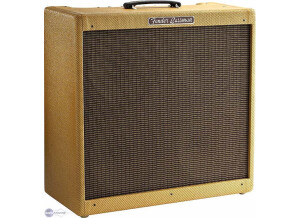
    The Fender Bassman '59 LTD is the company's reissue of the amp the was originally designed in 1952 to suit their very new Precision Bass guitar. Eventually bass players found that the amp was not really suited to their application as it would distort and break up too early. However, the blues and country guitarists of the day really loved that factor and started to incorporate their broken up tones into rock music. Eventually a fella named Jim Marshall over in England heard the Bassman and the rest, as we know it, is history. The '59 Bassman is a tweed style with 4 10" Jensens. It puts out 45 watts of power (6V6s) and has two channels (normal and bright) each with their own volume control. They share a standard EQ of bass, middle, treble and presence. No reverb or effects on this one... just pure tone. UTILIZATION Getting a good sound out of this amp is pretty simple. It's unlike the blackface reissues in that it's designed to get a little more of an overdriven break up early on, and the overall tone is darker, thicker and fuzzier. It still has a bit of classic chime there, but not near the amounts of the Fender blackface amps. That being said, the EQ works as you would expect and it's definitely a simple amp to dial in. The addition of a presence control to the circuit is nice to get a bit of high end that the treble control may not give you. Definitely cool. SOUNDS The Fender '59 LTD Bassman is definitely a slightly different beast. It's more suited to the slightly raunchier blues and rock n' roll styles where perhaps hotter pickups like P90s and humbuckers are being used to push the amp a bit harder. The tones are excellent for those styles, and if you hit with some sort of overdrive you can get some great classic and even early hard rock tones if you're skilled at tone tweaking. It's a nice departure from the cleaner than clean blackface Fenders that we all know and love. That being said, despite the amp's darker and thicker tonal nature, it's still quite clear and defined even at higher volumes which is excellent. OVERALL OPINION All in all I think the Fender Bassman reissue is a great buy for anyone who likes Fender amps and wants something with a little bit more grit fresh out of the box. It's definitely got its own sound and its easy to see why Marshall took inspiration from this original amp for their first designs. This reissue runs about $1,450 new which is a good deal considering the quality and tone of Fender amps overall. Definitely worth checking out for sure!

  • « Smaller is cool »

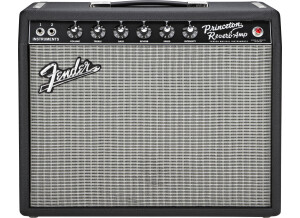
    The Fender Princeton Reverb is the smallest available amp in the Vintage reissue line. It features only the one channel, controlled by volume, bass, middle, treble, reverb, speed, and intensity (for the vibrato) controls. It's based on the original blackface model that was popular with students and studio musicians in the '60s. It puts out 15 watts of power and is powered by the standard Fender tube of 6V6s. It's a pretty simple amp, forgoing even the extra channel that most of the Vintage Reissue models have. That being said, if you're looking for a small yet clean amp that sounds great, here you go! UTILIZATION Getting a good sound with this amp is pretty easy. Where it's smaller and only 15 watts, it's much more likely that you'd be able to crank this one up a little bit, even in a smaller room just to get some natural sustain and compression happening from the tubes and speaker. This factor makes is great for recording at studio sessions or for smaller gigs. Even the 22 watt Deluxe Reverb can be quite loud, so this little Princeton is great if you need just that little bit smaller. The controls respond as you would expect. There is a bit less bottom end in this amp obviously, because of its smaller size but that's to be expected I suppose. SOUNDS The tones out of the '65 Princeton Reverb are pretty much standard Fender. The cleans are very crisp and clear, great for country or blues type tones, especially with single coils. That being said, an added benefit of this is that you can turn it up a little bit for natural compression. It's still not an amp I would expect to turn up full bore for power tube saturation (you'd still want a pedal of some kinda, but overall it can get you closer to that sonic satori. The onboard reverb and vibrato are of excellent quality as well and the amp sounds quite 3D and clear just like its bigger brothers. OVERALL OPINION All in all I think the Fender '65 Princeton Reverb is a great amp for someone looking for classic Fender cleans in a simple smaller wattage package. It sounds great and has the ability to be turned up a little more than some of the bigger Fender amps. It sells new for about $800 which is a good deal considering the tone and quality, and hey, what else can you get that's this nifty for under a grand that will sound great? Not much that I know of! Definitely worth a look if you're shopping.