Log in
EN
FR

SeriesFender Bassman

44 products found

Filter
Sort by
Evaluation
  • Reviewed or not
  • Editor’s award
  • Reviewed by Audiofanzine
Availability
  • Available or not
  • Sold new or used
  • Sold new
  • Sold used
Must-have products
  • All products
  • Flagship products
  • Best rated products
  • Hot products
  • Popular products
Price
  • Freeware
€
Clear
Sort by
  • Popularity
  • User ratings
  • Price - low to high
  • Price - high to low
  • Used price, increasing
  • Used price, decreasing
  • Name (from A to Z)
  • Name (from Z to A)
  • Added on
Sort results
  • Popularity
  • User ratings
  • Price - low to high
  • Price - high to low
  • Used price, increasing
  • Used price, decreasing
  • Name (from A to Z)
  • Name (from Z to A)
  • Added on
Filter results 44 results found
Evaluation
Availability
Must-have products
Price
  • Freeware
Show results

The best Fender Bassman reviews

The reviews Audiofanzine members found the most helpful.
  • « The best blues tone around »

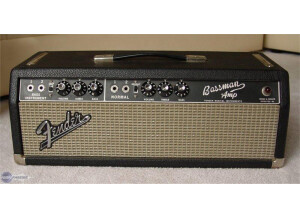
    - Totally handwired (turret) - Two independent channels - Two inputs per channel - Channel controls for volume, bass, treble - Master presence control - 50 watt head - Solid state rectified - Speaker, external speaker outs - All tube: 12ax7 preamp section, 6l6 power tubes UTILIZATION Piece of cake. Plug in, set two tone controls and volume, and you are set. No channel switching, no master volume, no BS to deal with, just pure vintage Fender circuitry. Each channel is totally independent, so you can plug in multiple instruments/vocals without getting canceling or noise issues. Each channel has two inputs, input 2 has a bit of a gain pad on it. It isn’t too heavy like most Fender heads, and is pretty much indestructible. I’ve seen these fall down stairs without any damage save the tubes. They are pretty old, so know that tubes and filter caps may need to be replaced. The amp reacts beautifully to pretty much any pedal I’ve used with it, though there is obviously not an effects loop. SOUNDS Pure bliss. It really is just the perfect blues amp. Very warm and round cleans, with just the right amount of grit when you dig in. When you can plug in to an amp and get a killer sound without any twiddling, you know you’re on to a keeper. That’s what this is. Great tone on just about any settings with every guitar I’ve run through it. The true presence control is a really fantastic feature that dials high end and sparkle back into the amp, and a much more useful control than the bright switches in later black and silverface models. These came stock with solid state rectifiers, so are less spongy and saggy. I’ve had a tube rectifier modded into mine which is pretty easy and nonintrusive, but that’s all personal preference. OVERALL OPINION If you can find one of these at a decent price, hold on to it. The blonde head was a transitional model between the tweed 4x10 and the blackface head, only made for a few years (mine is a ’63). It is somewhat of a sleeper model, though steadily gaining in popularity. Blonde Bassmans (men?) aren’t quite as expensive as other amps from that era. If you still find it out of your price range, the black face era amps are excellent, and run in the range of 5-600 USD. Another option is the Bassman channel on the newer production super-sonic. This is my favorite amp for warm cleans, and I recommend it highly.

  • « Excellent reissue with modern construction techniques »

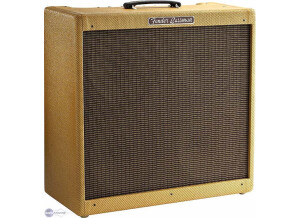
    Although the Bassman series dates back to 1952, The 5F6 Bassman circuit, introduced by Leo Fender in 1959 in 4x10 combo format, is widely considered to be the beginning of guitar amplification as we know it. As its name suggests, it was originally designed with the bass player in mind, but it caught on with guitar players to the extent that it's scarcely even considered a bass amplifier. It was so popular that even Marshall copied the circuit into what became the very first Marshall amplifier, known as the JTM-45. In 1991 Fender saw fit to reissue the Bassman as the Fender Vintage Reissue '59 Bassman LTD. This 50 Watt reissue features a lacquered tweed covered, finger-jointed pine cabinet, 4 Jensen special design speakers, and internal bias pot to adjust bias on the two 6L6GC Power tubes. In keeping with the original, the '59 Bassman features 12AX7 preamp valves, a 5AR4 rectifier tube, and the true 5F6 circuit. There is no effects loop or built-in reverb. UTILIZATION The '59 Bassman sounds excellent right out of the box. It has controls for volume, Treble, Mid, Bass, and Presence. Four inputs give you normal and bright inputs at two different gain levels. This is where the infamous "jumpering" mod was born, by running a short patch cable from one input to another, to loop two gain stages together. SOUNDS Unlike most Fenders that succeeded it, the Bassman uses a cathode-follower driven tonestack, which adds a certain compression to the preamp tone that is part of the Bassman charm. The Bassman is clean without being spanky, and smooth without being overdriven. The touch-sensitivity and dynamics are almost unparalleled. With the stock speakers, its rather easy for the Bassman to get harsh, so keeping the Presence control at a moderate level is a good idea. The Bassman adores pedals. A tubescreamer pushes the Bassman into a woody, organic roar that is neither forced nor aggressive, while a hard pick-hand attack evokes the natural compression the amp encounters from the slow tube rectifier. There is plenty of volume on tap with the Bassman, and most will not need to crank the amp past 4 (it goes to 12. Take that, Nigel!) even in most outdoor venues. OVERALL OPINION Construction of the '59 Bassman LTD is rock-solid, and a worthy of respect in a world where tube amps are now done on automated assembly lines with machines. All of the amp's guts are easily accessible, thanks to the rear cabinet panel over the chassis. This may or may not be a good thing, especially for those who are uneducated, as it makes poking around in a high-voltage circuit ridiculously easy. Most guitar players who are familiar with tube amps know better, however. The speakers are easily upgradable, and one will find a wealth of info online about different aftermarket speaker models that could enhance the Bassman's tone or help reproduce the nuances of the original. To that end, the defining difference between the '59 Bassman Reissue and the original '59 bassman are the speakers, transformers, and circuit construction, as the original used tag-board construction and the reissue uses the now-common PCB. But whatever "mojo" is held off from the reissue due to these differences is rather negligible. The '59 Bassman Reissue is a worthy and faithful reproduction that many, including myself, are and will be proud to own.

  • Audiofanzine FR's review

    (Originally written by SlapKid/translated from Audiofanzine FR) Very comprehensive feature set: good-sounding compressor, rear tuner output, RCA aux input, mute with flashing LED, very low noise operation. Serial loop, pre/post EQ XLR output with very high output level (for passive DI boxes). 150 small watts, cheap 12" speaker (4 ohms), adjustable tweeter. Wedge design a bit bulky and not convenient except for small stages. It's rather light but the shape makes transport very uncomfortable. UTILIZATION Easy to use after you install a good speaker (the 12" Eminence Gamma provides wonderful lows and a very clear sound). Even though it's an 8-ohm speaker you'll get much more acoustic power than with the original 4-ohm speaker... Don't mess with the EQ, just adjust the compression, the tweeter and start playing. You can get lost with the EQ and its two semi-parametric mids. The EQ sounds cold and narrow. So it's easy to use because you won't touch it. SOUNDS The original speaker has a very bad dynamic response, no punch, weak low frequencies and a nicely shaped frequency response. Hats off Fender. And I didn't mention the lack of acoustic power, similar to a 60-watt amp! Everything gets better after you upgrade the speaker (12" Gamma): acoustic power, low frequencies, dynamic response. Now the amp delivers about 100 watts of power but it sounds much louder than the 150 watts of the original speaker. But it's still a small amp and its older brother (Bassman 100 with a 15" speaker) produces a much higher sound power. I connected the 150 to my HughesKettner stack (4x10" + 1x15", 4 ohm total impedance) and it disappointed me: no depth nor punch, no lows but good mids (however cold)... And no 150 watts! OVERALL OPINION I've owned it for two years and I'm fed up. In spite of the speaker upgrade it sounds cold, has a bad dynamic response and no punch. Regardless of the speaker connected. This applies to my 5-string fretless bass. With my 4-string fretted bass it sounds even more metallic and colder... Awful! It's bulky and not easy to transport... It's hard to find any pros! The 150 watts rating is clearly unreal. The amp provides about 90 watts and my Bassman 100 provides much more acoustic power and sounds much better. Fender makes a lot of money with this amp. For the same price you can get a 500 watt Hartke head plus a home-made speaker cabinet... I don't recommend this product (not even if you have an unused Gamma 12). Fender just couldn't deliver (and it's not the first time I hear that!).

  • « Fender Bassman 10 »

    The Bassman 10, made in the 1970s, is a 50-watt tube combo amp with 4 10' speakers (probably Jensens or Celestions) in a sealed cabinet. Standard black Tolex covering, silver control plate with standard Fender-style knobs. Two channels, one 'Normal,' one 'Studio.' Normal channel has two inputs, a bright switch and Volume, Bass and Treble. Studio channel has two inputs, a Deep switch, and Volume, Bass, Mid and Treble controls. Master volume controls both channels. Fender jewel pilot light. Rear panel ON/OFF, Standby and Ground toggles plus speaker out and fuse cap. Powered by two 6L6s, two 7025's and one 12AT7. Weight: ~75 pounds. Comes with casters. Silver grillecloth. I've been playing bass professionally for 45 years. Ran into this amp in a studio. No longer made, they sell for around $500 on Ebay. Simply put, the amp sounds great, especially with a passive bass. Controls are boost only, typical of the era. It's clean and quiet, as it should be for studio use. With a standrad four-string bass like a Fender Precision or Jazz, it delivers a very Motown sound with minimal adjustment. Doesn't handle a low B string well, but when these were made, basses with B strings didn't exist or were very rare. Despite this, I used a Lakland Joe Osborn 5 with Fralin pickups and, at studio volume, the amp didn't break up even on a low C. Built solidly as are all Fender products of this era. For the studio, the Bassman 10 is does a great job. Sound is clean and clear, especially with Passive basses like the Fender Precision or Jazz, With flatwound strings on either of these basses, it's pure Motown. This would be a good amp for small groups that play at low volume and provide PA support, but you're not going to compete with today's modern amps for volume or massive low end. This review was originally published on http://www.musicgearreview.com

  • « Fender Bassman 250/210 »

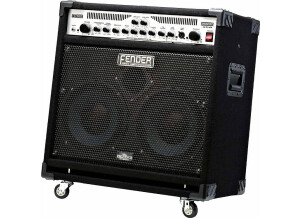
    I've been playing bass for the past 15 years. I'm currently finishing what will be our 4th song for our demo that hopefully will come out soon. My tastes are generally metal and hard rock but I also like to listen to blues and jazz (quite the opposite in styles...) I bought this amp at ''la référence musicale'' for 780$ cad. I was always a Fender freak for as long as I can remember. I bought because it has a nice tight mid punch and a low growl to it. I needed power and control over my sound and this amp covered it all. I play with a Jazz bass and a Jackson C20 concert bass also. As mentioned, tight mid punch and a good low growl to it. You can push this baby way up and it won't distort on you (the cliping shows).Lots of fine tuning with the controls that are on there: contour, bass, treble, low mid with level, high mid also with it's own level and soforth. What is also cool about it is that you have a headphones output in the rear (usually over 50w you don't) and you can plug a cabinet too. The XLR out has it's own volume and it's very quiet. Oh and I almost forgot the important part of it: U.S made Eminence speakers! The only issue about it but it doesn't affect anything is that the carpet covering tends to become all fuzzy over time... Other than that, perfecto! Very solid and reliable... like a 60's chevy... If you're looking for a good, solid and reliable amp with a huge punch, than look no further! This amp's for you! It gives so much back to ya when you crank it up it's unbelievable.In my many years of playing, I found (in my opinion) the holy grail of bass amps. Coming up next, the bassman 115 cabinet... Enjoy! This review was originally published on http://www.musicgearreview.com

  • « Fender Bassman 25 »

    This amp was purchased from Musicians Friend. They had a special on this amp and it cost $149.99 It was bought as a practice amp. I have a 1977 Bassman 100 and a Peavey T-Max and was looking for something easier to carry around. Excellent sound from such a small package. The amp has more volume than I expected from just 25 watts. Outstanding value. No XLR out. Very well built. Solid construction. Would recommend to anyone looking for an excellent practice amp. Also has enough volume for small gigs (churches). This review was originally published on http://www.musicgearreview.com

  • « Fender Bassman 200 »

    I bought my amplifier from the BASS PLACE in Tempe, Arizona for $495.00 in May of 2002. The pseudo-parametric equalizer is completely user friendly with all "good" settings throughout the full range of settings (much better than many "fussy" equalizers with only a narrow selection of "useable" settings?! I also like the balance of the case in relation to the recessed handles. It's well engineered to be able to pick up easily and handle without throwing your back completely out?! I am a 3 day a week working musician (with a regular "day" job in the Aerospace Industry) and treat my equipment with extreme care since I know it will only remain dependable if I take care not to abuse it. However this amp is a night-mare for both reliability and repair?! I had mine in 4 times in seven months for various problems varying from squeal through both the XLR and the external speaker (bad ground loop and "runaway thermal" problems) to extreme, random "popping and cracking" also coming out of both the XLR and the external speaker. The fifth time my amp just randomly "dropped out" with no sound but all the lights still lit? A short bang on the top of the cabinet would get it running again briefly and then it would drop out again. The one main repair facility in Phoenix was just "shot gunning" parts out in an effort to "guess"```````````````````````````````` the nature of the problem. It was a classic example of "one thing being fixed and another dieing" in just a short while afterwards. Finally, the "straw that broke my back" was when Fender sent an brand new amplifier from their factory warehouse to replace my "lemon" and literally "HOWLED" with feedback and noise at the very first turn on?!!! The repair facility found "cold solder joints" or POOR circuit board workmeanship. This is for the benefit of new buyers out there.......DON"T buy this lemon!!!!!!!!! Why do you suppose there are so few on the music store floor????? Guess?........quality. Additionally I strongly suspict a poor amplifier design in this amp. A good amplifier design would be a lot more robust than this "TURKEY" Poor quality, inept service available, Also very thin sounding bass on the bottom end next to similar 200 watt amplifiers available for a slightly higher price range like the Ampeg BA115 HP that I bought new to replace this "thing". I've owned a bassman 100 tube amplifier for over 20 years of club, playing throughout the 70's and only had a cracked magnet on a speaker over all the years I owned it. Now, I told Fender directly in their corporate offices in Scottsdale, Arizoan that I'll NEVER buy a Fender amplifier again.........ever!!!!! They've lost control of their quality process and I have little hope they'll gain it back? I just don't have time when I'm busy playing gig's to worry about the reliability of the equipment I buy so Fender is HISTORY. This review was originally published on http://www.musicgearreview.com

  • « Fender Bassman 100 »

    Bought used in new condition for $350 including tax. I had decided this was the model I wanted, and the first place I called was 5 minutes from home and had this unit. (Also found my Hamer Cruise bass. See my other review.) I guess I was having a good day! Great tone and low end. Hard to get a bad sound out of it. Not super loud, tho. A loud drummer and a cranked fender twin would overpower it. Sounds a little odd at the woofer/horn crossover. Horn volume control would be nice. Overdrive tone is silly, but I like clean bass, and I have a Tech21 Bass Driver (recommended) if I want some grind. Heavy, I'm always saying I'm gonna put wheels on it. (but not heavy enough that i actually do it, heh heh) Made in Mexico 100W transistor combo amp. 1X15 with a horn tweeter. Knobs: Gain/Master Volume, 3 band EQ with semi-parametric midrange, compressor level. Switches: Input is switchable for high/low gain, Enhance contour for slap tone, Mute switch kills all but the tuner out, Limiter, which I have engaged at all times so I don't fry my speaker. I saw another review which said it had little effect--the one I have works fine. LED's: Preamp level, Preamp clip ( I set the Gain so this just flickers when i really wail a note), Mute On (flashes, which i like), Power Back: XLR line out w/ level knob and pre/post EQ switch, Tuner out, Effects Send and Return, ground lift Quality: Solidly constructed, electronics work well, reliable so far. Great as a practice or rehearsal amp, or small gigs. I use it at church without going thru the PA. (approx 7500 sq ft room) This review was originally published on http://www.musicgearreview.com

  • « Fender Bassman »

    Aquired at Pearson/Mcfadyen music for about $260, new, as a practice amp. When I first turned this amp on, I was surprised by the power of the output. Despite its low wattage, the amp puts out quite a loud sound, and the preamp is capable of driving a much larger speaker than the one it's built on to. The preamp also has a nice slew of features, especially considering the low wattage. In addition to the standard features(Volume, instrument in, Bass/Mid/Treble control) it has a second input for a preamped instrument, an audio line in for a CD player or whatever else you elect to hook up to it, mute switch, mid booster, and separate volume control for the audio line in. In addition to the controls, it has an effects loop, tuner out, line out, and external cabinet out. Very nice. The sound quality is overall good, but it gets pretty noisy as it's cranked up, and loses some of its tone quality as well. It also could have been packaged with a slightly larger speaker, which I suspect would do wonders for the problems it has at high volumes as well. But, overall, a good unit, especially considering the small size and low wattage. This amp has served very well, excluding a period of about 2 weeks where it fed back, the sound quality broke up, and generally failed to function at all. A guitarist and drummer executed a savage beating upon it following the interruption of a good rehearsal, and that solved the problem. I guess some component had come loose and they kicked it back into place. I'm not quite sure what this says about the quality of the amp, but I've decided to forget about it, since I never had a problem again. Overall, a very good amp, which overcomes low wattage, small size, and a pretty low price tag to deliver a slew of useful features and a surprisingly large sound. For gigs it needs an extension cab or a PA, but it can hold its own in any practice, even with pretty loud drums. This review was originally published on http://www.musicgearreview.com

  • moosers's review

    The Fender Bassman 100 bass guitar head is a tube based amplifier that has 100 watts of power. It has two 1/4 inch inputs for each channel and has two channels in total - one for normal and one for bass instrument. It has EQ settings for each channel, as well as a master volume. In the back it has a 1/4 inch speaker output to send this to a speaker cabinet. UTILIZATION The configuration of the Fender Bassman 100 Head couldn't be easier to use as it has quite basic controls. Because of this, zeroing in on the sound you are trying to achieve isn't too hard and there is a great deal of variety available. It is easy to get a good sound out of this and has a great sound quality overall. I don't have a manual for this, but it is easy enough to use that you shouldn't need the manual too much. SOUNDS The Fender Bassman amplifier is great for all types of music, but I have mostly used it in rock and pop with great results. I usually use this amplifier with a Fender speaker cabinet and a Fender P-Bass or Jazz Bass. I only use this amplifier with a clean tone, and I always get great sounds with this. Its ease of use makes it a quick process to get a good sound from this amp. OVERALL OPINION I've been using the Fender Bassman 100 Head for about five years and it is really one of the best bass amplifiers I have used. The sound is full and great for both recording and live use. The price is reasonable if you can find one used, and is great option for all bass players looking for a high end amplifier. All in all, the Fender Bassman amps from the 1970s are some of the best bass amplifiers around.

  • Audiofanzine FR's review

    (Originally written by Böb/translated from Audiofanzine FR) Hybrid amp using both available technologies: tube preamp and solid-state power amp. 1200 watts / 2 ohms via 4 x 1/4" jack outputs. Numerous settings: 2 input channels (clean and lead) which you can also mix together. Tone controls: low, high, +3-dB boost (deep/mid, notch/bright). Switchable 10-band EQ. Switchable and mixable dual high/low compressors. Input selector for active or passive bass (active = -6 dB). Input bypass for tuning. Switchable pre/post-preamp line output on XLR connector that allows you to assign (or not) the settings to the mixer. 3-button footswitch for channel selection and EQ and compression activation/deactivation. UTILIZATION Although it seems to be complex, setting the amp is logical, clear and effective. I recommend you to start with a basic sound: clean channel with no boost, EQ or compression, and all tone controls in the center position. If the bassist, the bass and the speaker cabinets are good, you'll immediately have a good tone and rank this amp among the best on the market. Afterwards if you need more options use each single section separately before using several at the same time, otherwise the interaction between the numerous settings will be confusing. The goal is to get a GOOD tone (that's for all FX maniacs) rather than a sound monster with no shape and no power... The user's manual is very professional and comprehensive. It provides a real block diagram of the device with test points. Very rare! It's very reassuring in case of faulty operation... SOUNDS Thanks to its numerous possibilities, this amp can match any music style. I use it with a Fender Precision without external effects. The sound possibilities provided by this amp are very good. OVERALL OPINION I've been using it for 5 years. What I like most of this Bassman is the tone (no sh**?) and it's compact size (2U and 33 lb.) compared to its huge output power. Before buying it, I compared it to a Marshall VBA400, an Ampeg SVT II and an Orange 200B... I choose this Fender Bassman 1200 because of its sound versatility/weight/price ratio. Above all it's very reliable. It has endured about 150 gigs and thousands of miles on the road with me without a hitch. If someone gave me the money to make a choice, I'm sure I would buy it again. Böb (TOXIC KISS)

  • Audiofanzine FR's review

    (Originally written by seb_c_bien/translated from Audiofanzine FR) 15" woofer + tweeter Easily detachable casters. Tweeter control on the rear side. Quite light and easy to transport SOUNDS You get the Fender sound: - round, colored and smooth - With higher tweeter settings you get that brilliance the brand is known for. - Good low-end response (ideal for people wanting sub-lows). It doesn't handle distortion very good. - Versatility thanks to the tweeter. As soon as I can, I will add a 2x10" cabinet to it. You can place some small foam plates behind the grill to avoid vibration noises. Sexy sound! OVERALL OPINION Good sound, compact, light. Try it before you buy it because I don't think it's something for everyone's taste.