Log in
EN
FR

SeriesLine 6 ToneCore

24 products found

Filter
Sort by
Evaluation
  • Reviewed or not
  • Editor’s award
  • Reviewed by Audiofanzine
Availability
  • Available or not
  • Sold new or used
  • Sold new
  • Sold used
Must-have products
  • All products
  • Flagship products
  • Best rated products
  • Hot products
  • Popular products
Price
  • Freeware
€
Clear
Sort by
  • Popularity
  • User ratings
  • Price - low to high
  • Price - high to low
  • Used price, increasing
  • Used price, decreasing
  • Name (from A to Z)
  • Name (from Z to A)
  • Added on
Sort results
  • Popularity
  • User ratings
  • Price - low to high
  • Price - high to low
  • Used price, increasing
  • Used price, decreasing
  • Name (from A to Z)
  • Name (from Z to A)
  • Added on
Filter results 24 results found
Evaluation
Availability
Must-have products
Price
  • Freeware
Show results

The best Line 6 ToneCore reviews

The reviews Audiofanzine members found the most helpful.
  • « Decent compressor for the money. »

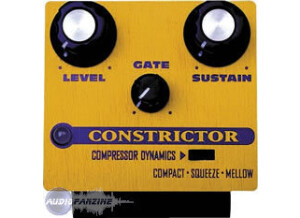
    The Line 6 Constrictor is one of the very rugged and extremely durable ToneCore series pedals. It's got a solid build and seems relatively indestructible. Standard input and output with a 9V adapter for powering. It has a very nice LED that is green when the pedal is engaged and turns red when there is a lack of power and it is unplugged. It has a Level knob that controls the overall level making this a good pedal if you want to use it as a boost. It has a sustain knob which controls the amount of sustain and compression you want. From lightly compressed to chicken pickin' squash. It has a gate knob that cuts down some noise but can further compress your signal making there be a bit of tone loss. Not so much so that I don't like this pedal though. Lastly there is a switch that changes the "compression dynamics", ranging from compact to squeeze to mellow. There are different levels of compression, I thought this was a cool switch, helps dial in exactly what you want. UTILIZATION It's pretty easy to set up. The manual is clear on how to get certain sounds. You can get some nice variations of compression out of this pedal and it really surprised me. I use it to get a little boost and liven up my clean tone. It works wonders for that. I play a lot of ambient stuff and like a lot of clean leads so this works extremely well for that. Very happy with the pedal in that aspect. SOUND QUALITY I use the pedal for my electric guitar only, but I'm sure it could handle other stringed instruments really well. It has a wide range of compression so it's fairly versatile in that sense. Obviously if you crank the sustain knob and gate knobs you'll be at a loss of tone. But that's what squashy compression does. This thing nails that and also much subtler "tone sweetening" compression. The only problem I have found sonically is that the pedal is very noisy when used in a daisy chain. I have it plugged in by it's own 9V adapter and it solved that problem for the most part. I couldn't be happier for the price of this pedal. OVERALL OPINION The pedal is built like a tank. It is very reasonably priced and it sounds pretty dang good. I've tried a few other compressors and this is definitely one of my favourites. It may not be the best, but it surely does what I need it to do. For the price you can find these pedals used, you would be hard pressed to find something better. I'd definitely recommend them to someone fairly new to compression.

  • nickname009's review

    Model Switch This switch is used to select from 11 distinctly different types: * '63 Spring - Based on* a Fender 1963 brown spring reverb head unit. Best known for great surf guitar tone! * Spring - Based on a studio spring reverb. * Plate - Based on a studio plate reverb. * Room - Simulates the acoustic properties of a classic echo chamber that consists mainly of early reflections. * Chamber - An elongated ambient space such as a hall, stairwell or elevator shaft creates this reverb type. Dreamy. * Hall - Simulates the sound of a concert hall or large open space with a strong reverb tail. Imagine a gymnasium, performance hall, or cathedral. * Ducking - Built using a 'Hall' but with a ducking effect. The volume of your reverb is "ducked" (reduced) while you're playing, and increases when you stop. This allows for clean musical passages with a touch of reverb that ramps up in volume once you stop playing. * Octo - Creates a lush, ambient space with a harmonized decay whose harmonic denseness is controlled by the time knob. Use volume swells and prepare to float on a cloud! * Cave - Surreal cavernous echo chamber. * Tile - Emulates the acoustic reflections of a tiled room, such as a bathroom with bright early reflections. * Echo - Just like it says ...echo...echo...echo. Mix Allows you to control the amount of reverb in your signal from dry to 100% wet. Decay Controls how quickly the reverb tail fades to silence. Time Controls the length of pre-delay. This is the amount of delay before the signal hits the reverb chamber. Tone Allows you to adjust the tonal character of the reverb, giving you the flexibility to go from dark and subtle to bright and splashy. Trails Switch When switched on, Verbzilla's processing is engaged while in bypass, so reverb smoothly trails away when you kick the effect off. UTILIZATION This is a very good pedal. Not too sure if it's underrated and I know it's famous not for it's reverb, though I do think the reverb is quite good the verbzilla is more famous (to me at least) for the octo setting. this is the famous sounds you hear on U2 records that the edge produces with more expensive equipment and this is also the primary reason i purchased this pedal! I'm not a HUGE reverb fan, except when it's on clean and when I use effects I generally like to use sort of the more extreme settings as an actual EFFECT. As opposed to some subtle noise to enhance a guitar's tone or whatnot. I haven't any need for the manual since it's pretty easy to use. The trails option makes the pedal very organic sounding and transitions the effects in and out more smoothly for the song to seem more..natural. SOUND QUALITY As I said before, I'm not a big reverb fan so it's hard for me to tell what is GOOD reverb and what is BAD reverb. To me, it generally all sounds the same and quite good. The octo setting, however is great! The mix knob allows me to put in as much of the octo signal as i want which is great also depending on the song. It is apparently true bypass also which is good, and again though it's not really the sound, but the trails option is great. I have to say that I'd be using this pedal mainly for the octo setting and thus the review is based accordingly so. OVERALL OPINION Overall it's a good pedal for the octo setting. the reverbs are good as well and good emulations that they say they are. However I'm not a reverb fanatic so i cannot say if this is the best reverb pedal ever. But I know that most people that own this pedal use it for the octo setting 80% of the time and not the 'verb. So I'm giving it a good review because of the octo setting. It's also a reliable looking pedal, very heavy and sturdy looking. I haven't gigged with it yet but it seems to be very tough. Knock on wood.

  • Audiofanzine FR's review

    Originally written by Mr Larsen on Audiofanzine FR. Digital distortion pedal with three selectable voicings. Effective EQ (parametric mid) and integrated noise gate (also very effective) UTILIZATION No problems. Or almost (see below)... SOUND QUALITY The sound of this stomp box changed radically after buying a new amp. Explanation: - I first had a Roland Cube 30 solid-state amp and the result was very good: guitar (peavey wofgang US) directly into the Uber Metal, and stomp box into the amp (clean channel). The result sounds very nice (I use the metal mode since I usually play classic hard rock) with a long sustain. Only the low-end is a bit too light. The tone is rather cold (it also due to the Cube) but easily usable. - I then bought a Valveking 112 tube amp: the result is disastrous!! Very shrilling sound, almost no low frequencies, etc. I tried to connect it into the FX loop of the amp: the sound was a bit better with more lows but less gain and less sustain... Surprisingly, the lead channel of the 112 gives better results. So, I don't use the Uper Metal!! OVERALL OPINION Try this stomp box with your amp because you could get bad surprises. I was very satisfied with my Roland Cube, but the pedal is useless with the Valveking. I bought a Vox Satchurator later and had no problems. I connect it to the clean channel and I get a good distortion sound. I don't know if you would experience the same problem with other tube amps: just try it out with your own amp before buying it.

  • moosers's review

    The Line 6 Space Chorus is a chorus guitar effect pedal that has two 1/4 inch inputs and outputs and is powered by the power supply designed for it. It is not a rackable effect as it is a stomp box. UTILIZATION The configuration of the Line 6 Space Chorus is really easy to figure out, as it only has a small amount of parameters, although there is enough to allow the user to get a good amount of varying sounds. You've got knobs for speed, color, and depth, as well as a switch to choose between chorus, tri, and vibrato modes and there is also an LED meter for tap tempo. Everything is laid out smartly and conveniently, making it a very easy to use pedal. I don't have the manual for the Line 6 Space Chorus, but it is pretty easy to use and you don't really need it if you don't already have one. SOUND QUALITY The sound quality on the Line 6 Space Chorus is very clean and overall sounds pretty great. The three different modes make this a versatile pedal that is capable of getting a bunch of different tones, but I probably use the standard chorus mode the most. I usually use this pedal with either a Fender Strat or a Gibson SG along with a 1976 Fender Twin Reverb amp, and I've found that I can get some pretty awesome sounds within this set up. You can really get just about any chorus or vibrato sound that you are after with this pedal, all with a super clean sound quality. OVERALL OPINION I've been using the Line 6 Space Chorus for about a year and it is definitely a good sounding chorus pedal that is useful for a number of different application. While I've only used this pedal for recording, it is perfectly suitable for live shows as well. Line 6 has won over my trust by making cheap products that still maintain a professional sound quality, and the Line 6 Space Chorus fits right in with this description. The cheap price makes it an option for players of all levels, without compromising sound quality. Overall, the Line 6 Space Chorus a great sounding chorus pedal at an even better price.

  • « Line 6 Otto Filter »

    Guitarist-Over 30 years, Rock & Blues Purchased it for about $99 This has become one of my favorite pedals. I used to think "Auto-Wah" pedals were for a cheesy old funk/disco kind of sound but, this is an extraordinary pedal for rock and blues lead. Don't judge this unit on a three minute demo. there are many cool variations once you get the hang of it. You can get alot of Hendrix/Clapton wah sounds. You can get an inspiring almost talking guitar effect. Play guitar direct into it and try not to use an FX loop. very quiet. You can swap any Line 6 Tone Core module into it's (mono) dock quickly. The switch occasionally pops a little. Built like a tank and has some weight to it. There are numerous useful, modern sounds in this unit. I've been pleased with it. A little experimentation will pay off. This review was originally published on http://www.musicgearreview.com

  • « two different delays! »

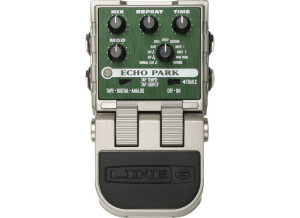
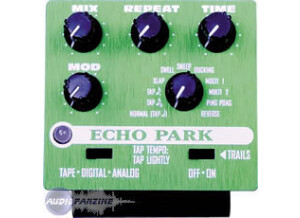
    This thing has two types of delay (digital delay and a tape echo simulator)with tap tempo and doubles as a phrase sampler. This is a digital effect. There is no editing except with the knobs and buttons on the device. As for connections, its all 1/4". There is one in, and five out. It is not set up to be rackmounted. UTILIZATION The sampling section did throw me a little, but once you figure it out, its not to bad. -Start recording by hitting the right switch. -Stop recording and start looping the phrase by hitting the left switch. -To overdub, hit the right switch again. -And to stop playback, hit the left again. May sound confusing, and it does screw me up sometimes. In reality, I rarely use this section of the pedal. As for editing, the delay side, its 6 knobs and 1 switch, pretty easy. I explained the loop side above. The manual will guide you through most if not all your questions. SOUND QUALITY I use the normal delay the most and I love it. Nice and clear delay. It sounds great and with the tap tempo, its all I could ask for. I don't use the tape echo as often, but it sounds good also. They did a good job capturing the analog feel. The loop function i use only when I am practicing and come up with a quick idea. I have a roland rc-50 for all my live looping needs. I use this as the last effect in my Rhodes Piano/guitar effect chain. The normal delay is what I prefer. OVERALL OPINION I have been using this pedal for 6 months. The best thing for me is the built in tap tempo feature. Every digital delay pedal should have one. I own a Boss dd5. This thing sounds way better, and I got mine for only $100. They usually go around $125, which is still not bad. In the end, I am saving up for Diamonds Memory lane analog delay with tap tempo, which is probably the greatest delay pedal of all time. Its just like $500, so I will happily hang on to my Line 6 Echo Park . even when I do get the Diamond. Because most people like myself can't afford $500 on a delay pedal, I would totally buy this again.

  • moosers's review

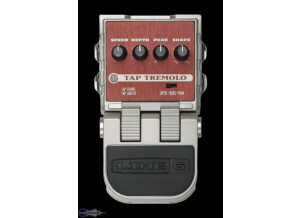
    The Line 6 Tap Tremolo is a guitar pedal that's no longer being made. It's a digital pedal that gives you the chance to, as the name clearly states, actually tap out the speed you'd like the tremolo to run at. The pedal is not rack mountable since it's a foot pedal, and has stereo 1/4" inputs and outputs as well as the ability to power it with either a nine volt battery or power supply. UTILIZATION The configuration of the parameters found on the Line 6 Tap Tremolo pedal are pretty straight forward, as it's got knobs for speed, depth, peak, and shape, as well as a switch for three different modes. These modes include opto, bias, and pan modes. Of course there's also the option for tapping the speed of the tremolo, but that's it so I don't think a manual is necessary. SOUND QUALITY The sound of the Line 6 Tap Tremolo is in my opinion, a bit above average but nothing more. It's a good sound and it's really cool that you can tap it out, but it doesn't come off as a warm sounding pedal, which is normally what I'm looking for. It is however a pretty versatile pedal as it's possible to get a nice collection of sounds between the three different modes. It's also cool that it has stereo and inputs and outputs for panning and what not. OVERALL OPINION Even though they're no longer making the Line 6 Tap Tremolo, you can definitely still find them used if you want one since they weren't stopped being made too long ago. While not the most overall realistic sounding tremolo pedal out there, if you're after a bunch of tremolo sounds in one place, this is a good place to start. So while it's flexible, if you're after a top tier sound, this probably isn't going to be it. Having said this, it's still a good deal for the price and should be checked out for anyone interested in an inexpensive but versatile tremolo pedal.

  • moosers's review

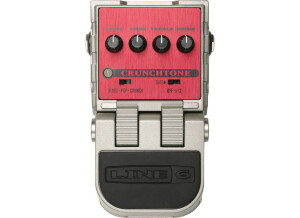
    The Line 6 Crunchtone is an overdrive pedal for use with electric guitar, but like all pedals is suitable for use with any electronic instrument that you'd like to use overdrive with. I've only used the pedal with electric guitar, so I'll be focusing on this application of the pedal. The pedal is a digital one, with 1/4" connections for input and output. It requires power via either a nine volt battery or power supply. It isn't rack mountable as it is a stomp box that is controlled with your feet. UTILIZATION The make up of the Line 6 Crunchtone makes it a very easy pedal to use. It has main parameters for level, bass, treble, and drive, as well as switches to choose the mode and enable a gate. The mode section gives you three different ones to choose from that include those for blues, pop, and crunch. The gate also has two different settings to choose from as well. The first gate mode is a soft one, while the latter really hits it hard. The crunch mode also adds some built in compression into the mix. I haven't looked at the manual for the Line 6 Crunchtone, but it is definitely easy enough to use without the assistance of one. SOUND QUALITY The sound quality of the Line 6 Crunchtone is about average in my opinion, and isn't really anything to write home about either way. I've only used the Crunchtone pedal for practicing and testing it out, as I haven't used it for any recording sessions or live shows. I've used the pedal in tandem with a Fender Jazzmaster and a '76 Fender Twin Reverb that doesn't have any built in overdrive, so I was looking for a versatile overdrive pedal to add to the mix and give me some kick. However, I found that the Crunchtone didn't really do it for me. Perhaps because it is a digital pedal it comes off stale, but I was looking for something with a lot of grit and character, which I didn't find here. So while versatile, I feel it lacks the body I'd look for in a great overdrive pedal. OVERALL OPINION While the Line 6 Crunchtone will get the job done for users looking for a cheap and versatile pedal, if you're looking for a classic tube sort of overdrive tone, you aren't going to get it here. I've now got an Ibanez Tube Screamer to do the job for me, as well as a few other pedals that I swap in and out. I'd encourage those interested in the Line 6 Crunchtone and other overdrive pedals to explore the full palette of options out there to see what will work best for the your wallet and the sound you're going for...