Here's a tube monster that I was totally psyched to acquire. I was able to get a great deal through my local shop, so I ordered a brand new one, right from the factory to the store and I was there to open the shipment. This is a 3 channel 100 watt beast that has plenty of power for almost any playing situation. Plenty of switches including fx loops, deep, Virtual Power Reduction, Separate Reverb for Clean and Crunch/Lead channels, Mid Boost Switch for tonal options on the Clean channel plus Tone Shift on the Crunch and Lead channels UTILIZATION Yes, this amp will sound decent almost right away. Throw the dials to noon and crank it up and the sounds will be workable. The controls are intuitive, so I never even looked at the manual. SOUNDS I have lots of guitars at my disposal, but I mainly used my Gibson Les Paul. I typically dialed in a clean tone that was mainly crystal, with a smidge of dirt. I would also dial in a high gain sound, and use the guitar's volume controls to create alternate lo/mid gain tones. Typically went with the DEEP switch engaged and often used the VPR (Virtual Power Reduction). The VPR knocks the wattage down; I'm not sure how, but it's clearly better than any attenuator I've used...perhaps it turns a couple power tubes off? I don't know, but it's effective for taming what is otherwise a super loud amp. OVERALL OPINION I had a dsl combo before this head, so i knew what i was getting into. Unlike many scathing reviews, I actually like this amp for the pop/punk/hard rock applications I used it for in my band. Super hi clarity and slices right through. Critics will say that the amp is a bit sterile and lacks the organic feel of the older famous Marshalls- but I enjoyed this modern take and the plathera of options the amp offers. But here's the issue that makes this amp a total ZERO- the transformer went out countless times. I kept going back to the shop, and even though it was covered on warranty, it was beyond annoying. One show it went out 30 seconds into the first song, making me turn to the next band and borrow his Line6 for the gig (ugggh). I shouldn't bag on the line6, at least that amp worked. I had the same issues with my combo. A quick look around the web says that this is a known issue that keeps happening, meaning that marshall just doesn't seem to care about improving it's product. I guess you could get a transformer upgrade, but at that price point I would recommend looking at the countless other "marshallesque" options that are out there. i would have liked this amp- even though others say it is a bee buzzy disgrace. Crank up the volume and the quality drastically increases, if it works... Thumbs down!
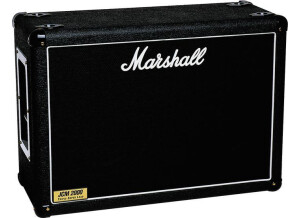
This is one of the last great combos that Marshall had built. These were a great sounding amps that has a very dynamic feel and organic tone that was very usable in many different applications. These amps were the a little bit of the JCM2000 DSL but had the extra channel. People didn't like the TSL as much and felt that the tone wasn't and blossoming as the DSL. I would have to agree but it does sound better than the JVM series amps that Marshall is doing now. UTILIZATION Features 3 Independent channels, each featuring Volume and Gain controls Independent EQ on the Clean channel. Shared EQ on the Crunch/Lead channels 60-watt Svetlana EL34 power section Individual Reverb levels for Clean and Overdrive channels, also on/off footswitchable Effects loop with level selection and front panel Mix control, also on/off footswitchable Marshall's famed speaker emulation circuitry for direct recording, for connection to an external power amp or for connection to a P.A. system Deep switch adding low-end resonance Tone Shift facility on the Crunch/Lead channel for instant tonal re-shaping 5-way footswitch for channel, Reverb and Effects Loop switching SOUNDS This is not a modeling amp so you won;t have choice of a bunch of different amp tones or models. Also this is not an amp that will do any effects. So You cannot get delays, chorus, phaser, or flangers built into the amp. This amp does has some reverb so that is the only type of effect that comes built within the amp itself. This amp has a decent clean tone and tales pedals very well. You get a good chimy tone not like a Fender but more like a better sounding plexi tone. Unlike a lot of clean channels in amps that may have a high gain channels as well the clean won't take distortion pedals very but this one does with pride. You also get a good crunch channel that sounds great and very usable for a general music or covers tone. The third channel or lead channel shares the same EQ with the crunch channel. So whatever you have set there will transfer over to the lead. This is designed for soling and lead tones. OVERALL OPINION These amps have been discontinued for a while now. They have been replaced by the JVM series amps which is my opinion are not nearly as good as the TSL or DSL series amps. This is an amp that you can pick up on the used market for right around $500. Not a bad price for a good working combo v=all valve tube amp.
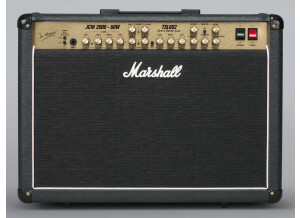
The Marshall TSL602 is a 60-watt 2 x 12 Guitar Amplifier with three channels, one clean and two overdrive. The amplifier is powered by two EL34 power valves and driven by four ECC83 preamp valves. The speakers on-board are two specially-designed "Wolverine" speakers made and voiced specially for this combo by Celestion. The clean channel has a dedicated EQ and the Overdrive channels share an EQ. All of the standard Marshall appointments are on-board: Effects loop with mix control, Deep Switch and Tone Shift, and an emulated line out. UTILIZATION I purchased this amp the same week I purchased my DSL401 1x12 combo so I had a great basis for comparison. The TSL602 is a 2x12 combo with 4 ECC83 preamp valves and 2 EL34 power valves. The speakers are custom "Wolverine" speakers that to my ears needed to be replaced due to overall flat tone. I tried replacing the preamp valves with both Ruby Select tubes and Mullard reissues. Nothing helped the tone of this amp. Even using a 4 x 12 extension cab with 2 x Vintage 30 and 2 x GT12-75 drivers the tone just didn't stand up. Plugging the DSL401 into the same cab yielded brilliant, complex, sweet overdrive... classic Marshall. Even on its own the DSL401 tone destroyed the TSL60. SOUNDS I play most of my standard Dimarzio-equipped Neal Moser guitars, Ibanez, and Gibson guitars such as Les Pauls and SGs. The TSL seemed a little unstable compared to the DSL. The footswitch was jittery and due to the tone of the speakers I couldn't tell if they were blown or just sounded poorly. I wouldn't gig this amp at all. I don't know if it was the difference between the power valves (4 x EL84 vs. 2 x EL34) or the speaker complement, or just that this is a poorly-designed amp, but I just couldn't get a useable tone out of it. The other thing that I found audacious is that the DSL is represented as a 2-channel amp (Clean and Overdrive) with a second, boosted overdrive that is a simple +20db boost on the OD1 channel. The TSL is represented as a three-channel amp. I don't really see where calling the +20db boost a third channel magically transforms it, even if you add an independent gain or reverb control. Everything about this amp was just flat, even with pedals, external EQ, etc. I eventually sold this amp and kept the DSL401 which still produces brilliant tones to this day. OVERALL OPINION I think for the price of the TSL line anyone would be better served spending the money on a DSL and enjoying better sonic quality. Unless something miraculous happens I'll never own another Marshall TSL amp.
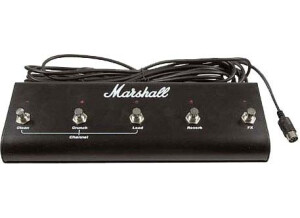
Let me start off by saying that I don't actually own a Marshall TSL. I did though buy this switch to rewire to work for my Peavey Ultra, which used to have a tiny footswitch that was much too small to have three buttons on. Anyways, I bought a non-working TSL footswitch off of Ebay, and when I got it I was amazing by how cheap this thing was made. The footswitch shell itself is very sturdy, being bent sheet steel. That's really what I bought it for anyways, the shell. I didn't care about the guts, since I had to rewire it to work with my Ultra anyways, but I did feel the need to share with others just how cheap everything was. The actual footswitch cable was thin and I can't imagine that it would take any abuse at all without shorting out very quickly, and the connector on the end of the cable that plugs into the amp was also pretty chinky. When I opened up the footswitch, it was immediately evident that the cheapness did not stop with the cable and connector. The actual footswitches that were mounted to the circuit board were also some of the cheapest I've ever seen. You see threads all the time about TSL footswitches dying because of a bad cable or a broken switch, and it's no wonder why. Overall, I have to say that this has to be just about the cheapest footswitch ever made. I just can't recommend that you buy this if you have a TSL, though I'm not sure if anyone else makes a TSL footswitch besides Marshall. If I owned one I would definitely be looking for somebody who did though. It really is no surprise to me at all that this thing stopped working, I'd almost bet that somebody stepped on or rolled a cart over the cord and killed it just like that. And oh yeah, did I mention that you get to pay around $150 for this footswitch? For that kind of money a footswitch should stand up to many years of gigging, but I can't imagine this one lasting any more than a year.