Log in
EN
FR

Edwards

97 products found

Categories
Filter
Sort by
Evaluation
  • Reviewed or not
  • Editor’s award
  • Reviewed by Audiofanzine
Availability
  • Available or not
  • Sold new or used
  • Sold new
  • Sold used
Must-have products
  • All products
  • Flagship products
  • Best rated products
  • Hot products
  • Popular products
Price
  • Freeware
€
Clear
Sort by
  • Popularity
  • User ratings
  • Price - low to high
  • Price - high to low
  • Used price, increasing
  • Used price, decreasing
  • Name (from A to Z)
  • Name (from Z to A)
  • Added on
Choose a category
Sort results
  • Popularity
  • User ratings
  • Price - low to high
  • Price - high to low
  • Used price, increasing
  • Used price, decreasing
  • Name (from A to Z)
  • Name (from Z to A)
  • Added on
Filter results 97 results found
Evaluation
Availability
Must-have products
Price
  • Freeware
Show results

The best Edwards reviews

The reviews Audiofanzine members found the most helpful.
  • « Old school LP tone »

    This is a guitar for those who want that real old school Les Paul tone. This is pure PAF heaven, and it's great for that more vintage kind of sound. The main thing that this guitar has going for it, besides the finish, is the Seth Lover pickups. These are really great PAF clones that sound wonderful. The guitar has the following specs: Mahogany body with a maple top Mahogany set-neck with a rosewood fretboard 22 frets with Gibson-style inlays Tune-o-matic bridge Seymour Duncan Seth Lover in neck and bridge Two volumes Two tones Three way switch UTILIZATION The guitar had a very nice finish on it. I believe they sprayed poly and then put lacquer over that, but I'm not entirely sure. It definitely felt more like a normal Les Paul than the other models did. The guitar had some nice flame on the maple top, and it was bookmatched pretty nice. The fretwork on this was very good, and it was probably one of the better Edwards I've tried when it came to fretwork. The guitar doesn't have binding nibs, so if that bothers you, you might want to look into getting a different guitar. I can't imagine it being that big of a deal, but some people are super picky about this stuff. The rest of the guitar was pretty much like any other Edwards. SOUNDS The guitar has some Seymour Duncan Seth Lover pickups in it. For those that don't know, these are some super fat and super vintage pickups. The bridge worked great for blues and even hard rock. However, once you got into the high gain territory, it started to be a problem. It seemed to fall on its face, but it's not really meant for that, so it's hard to fault it for that. The Seth Lover in the neck is probably one of the fattet and thickest pickups that Duncan makes. It can deliver a scary good PAF tone while taking no prisoners. It's a bit underpowered for my tastes, but once you start hitting that old school Marshall with a boost pedal, everything seems to make sense. OVERALL OPINION This is purely for those guys who want a more vintage style Les Paul guitar. Aside from the pickups, however, not much is different when compared to other guitars that Edwards makes. If you're not a fan of the Seth Lover pickups or have never played lower output, non-potted pickups before, you might want to look elsewhere, but for those of you who love that old school vintage tone, this is the guitar you want to buy.

  • « Kind of like a Jimmy Page Les Paul »

    Edwards is a small Japan only line of ESP guitars. They are Japan only so they can make really accurate copies without getting in trouble from Gibson. People have discovered them and realized their guitars are very good quality. This guitar is only about 1000 dollars whereas a real Gibson Les Paul Custom would go for thousands and thousands more. This guitar has all the same features or better features than a Gibson Les Paul Standard. It has a mahogany body with a maple top and a mahogany neck. This guitar is made to look like the Jimmy Page Signature Les Paul they made a few years ago. It even has similar relicing. It has gotoh tuners up top with a gotoh bridge out back. It has a Seymour Duncan SH-1 59 in the neck and a Seymour Duncan SH-5 in the bridge. The neck pickup is covered and the bridge pickup is uncovered in Jimmy Page style. The relicing job on this guitar isnt great. It is not the kind of quality you would get from a Fender Custom shop or Gibson Custom shop UTILIZATION Because of the set neck design there is a large neck tenon and joint. This can make the upper frets hard for some people to reach because the body essentially joins the neck at the 17th fret. After the 17th fret you are reaching around the body to get to the frets. The back of the neck is smooth due to the relicing process in which they sand down the neck a bit to give it a more aged look. This also removes much of the clear coat giving the neck a smooth satin feel. The Edwards guitars have super strong neck joints that are even bigger than on a normal Gibson. The tuning stability is good because there is no tremolo. The tune-o-matic bridge can be uncomfortable for some people. It has sharp edges where the strings come in contact and these can get into your hand. SOUNDS This guitar comes with better pickups than a Gibson would come with stock. This guitar sounds better than most Gibsons stock because of this. With the Seymour Duncan pickups the guitar already comes with some of the best pickups you can get so the tone is there out of the box. This pickup combination is something that Edwards uses in a lot of its Gibson copies. The 59 has a great PAF style tone. It has a good amount of sag and the mids are nice and pronounced. The Sh-5 in the bridge is the jack of all traits and can be used for just about anything. It is like a super hot rodded PAF You can get great overdriven tones all the way to searing high gain with it. Many Jackson guitars come with this pickup set so you know it can hang for metal too. If you are looking for even more metal tone you can throw in a set of EMG's but if you are doing that you should just get an ESP guitar that comes with them stock. OVERALL OPINION A Real Jimmy Page Les Paul from Gibson with the relic finish costs over 15000 dollars. This guitar is 1000 dollars. Its the same shape and is made of the same species of wood. The Gibson comes with Gibson pickups the Edwards comes with Seymour Duncans. You can play the Edwards without worried. The Jimmy Page you have to lock away in a vault somewhere. If you are looking for a guitar to play there is no reason why you should get the Gibson over this.

  • « Simply Awesome »

    This is a Japanese Les Paul copy. Typical LP wiring and features. It comes stock with a Duncan JB in the bridge and a Duncan '59 in the neck. Very nice neck medium c neck, I'd say in between the '50s and '60s profile as far as thickness. Very smooth pots. The quality of the parts is excellent and the finish is stunning. UTILIZATION This is a top notch LP clone. Honestly it as good or better than all the Gibson LP's I've played. Its really easy to get great tone out of this guitar, it just oozes the classic Les Paul tone. SOUNDS The '59 in the neck is my favorite neck pickup ever. Its the perfect balance of thickness and clarity, it cleans up really nice, and it just nails that smooth, open lead tone I want in an LP. The JB leaves a lot to be desired in my opinion. Where it really shines is with medium gain. Its super crunchy and sounds awesome for AC/DC style tone, it also can do a great 80’s pop metal tone. For cleans its mediocre and for high gain its really muddy and thin. Overall it’s not a bad pickup, just not as great as the rest of the guitar, and definitely not for me. Honestly I'm switching out the JB, because I know the guitar will be that much better with a better pickup. OVERALL OPINION Overall this guitar is amazing. If you're looking for a US quality Les Paul Standard at a more affordable price you simply cannot beat this guitar. It nails the crunch rhythm tone and the smooth lead tone you expect from a Les Paul. If you want a guitar for something other than classic rock I'd recommend swapping the bridge pickup. Otherwise this guitar cannot be beat. I will be buying another Edwards in the future.

  • « Classy p90 Edwards »

    Edwards is a brand of ESP guitars. They are a Japan only brand and they make guitars based off of popular models. The models are put together outside of Japan then finished inside Japan so you get good fit and finish at a lower price than full ESP guitars. Since they are Japan only they can make direct copies of stuff without getting in to trouble. People have been importing these guitars because the quality is so good yet the prices are great. This is a Les Paul Gold Top P90 copy. It has dual Seymour Duncan P90 pickups in it which are great. It has a mahogany body with maple top and a set make neck. The fretboard is rosewood which is traditional. and it has medium frets. Up top it has Gotoh tuners and at the bottom it has the standard tune-o-matic bridge. The finish is the classic Gold color old Les Pauls came in. The controls are standard with a volume and tone for each pickup and a 3 way switch. UTILIZATION This guitar mixes a classic feel with more of a newer feel. The rosewood fretboard gives a more vintage Les Paul feel compared to a Ebony fretboard. The neck profile is not as fat as a 50s Gibson would be. It is between the profiles of a 50s neck and a 60s neck so you get a good compromise and everyone likes it. The binding on the neck feels nice and helps prevent sharp fret edges popping out. The body is not chambered like on most new Gibsons so you get a real substantial feel to the guitar and real mahogany tone. SOUNDS P90s are some of my favorite vintage pickups. They have that bitey crisp single coil sound with the thickness of a humbucker. Its like having potato chips on a sandwhich or something. These two sounds blend together well and they are not bad for modern rock tones. A normal single coil with a lot of gain sounds pretty harsh and trebly, but with P90s you get enough smoothness to smooth out the high end so you get a high end crunch with a good bottom end that balances out the sound well. These pickups have a better overdriven sound than vintage PAF's do. Vintage humbuckers were just too smooth with their given output. You need some roughness to get a good overdriven sound with low output pickups and this is what the P90s Give. OVERALL OPINION This is a great reproduction of an old 50s Les Paul with P90s. A Gold Top Les Paul with P90s just reminds you of the old black and white videos of Les Paul and Mary Ford on tv singing away. This guitars really sings as well. Seymour Duncan P90s are some of the best P90s out there and they can really rock out if you are so inclined. They still have all the cool half single coil half humbucker sounds P90 users love so you can do your vintage covers with this. If you turn up the overdrive you can really rock and and there is nothing cooler than melting faces with a guitar that looks like it is from the 50s.

  • « Edwards version of a Flying V »

    Edwards is a small off shoot of ESP that makes very familiar looking guitars. Edwards is a sub division of ESP kinda similar to LTD but their guitars are in between the quality of a full blown ESP and an LTD. They are also a Japan only company officially so they can make pretty much identical copies of Gibsons without getting in trouble. People recently have begun importing these guitars to America because the quality on them is so good and the prices for them are so reasonable. This guitar is based on a late 70s Gibson Flying V with the more rounded and body colored headstock. The neck is 22 frets with a rosewood fretboard. The neck is bound which is something you do not get on the Gibson Faded models. It has the cool block inlays which you do not see much on flying V's anymore. It has two volume knobs and one tone knob and a 3 way pickup selector. The pickups in this guitar are a set that Edwards puts in many of its guitars. It has Seymour Duncan SH1 Jazz in the neck and a SH4 JB in the bridge. UTILIZATION Being such a close facsimile of a Gibson Flying V it has all the good things and the bad things that a Gibson has when it comes to playability. Because of the V design the upper frets are easier to reach than on a Les Paul. The set neck design means there is a bit of a heel at the neck joint but on this model it is not bad. Because of the shape you may have to play in a classical position when you play sitting down but this is not a problem for me because I always play in a classical position. The neck size on Edwards guitars are pretty interesting. The neck size is pretty much exactly inbetween a big 50s Gibson neck and the thing 60s Gibson neck. Edwards says its not too thick or not too thin. SOUNDS ESP and Edwards know how to really finish off a guitar. With a guitar this good on the surface they could easily throw in a set of garbage 2 dollar pickups and most people would still buy it and put in their own. But with Edwards they give you great aftermarket pickups from stock. The pickups in this guitar are better than what you would have gotten in the comparable Gibson. The 59 has a great PAF style tone. It has a good amount of sag and the mids are nice and pronounced. The JB in the bridge is the jack of all traits and can be used for just about anything. You can get great overdriven tones all the way to searing high gain with it. This combination is not just for classic rock either. Many Jackson guitars come with this combination so that should tell you that this combination is very versatile for every genre of music even metal. OVERALL OPINION This more and more of these Edwards guitars making the trip overseas to America more people will be able to learn of the great quality Edwards is putting out. You no longer have to search for a 30 year old guitar when you want a late 70s Flying V or pay 4000 dollars when you want a Les Paul Custom. If you can ignore the name on the headstock you are pretty much getting the same guitar WITH upgrades. They are made of the same wood and are the same shape but come with Seymour Duncans stock and usually for at least half the price. If you pick up an Edwards like this you cant go wrong.

  • « Great Edwards Les Paul Custom »

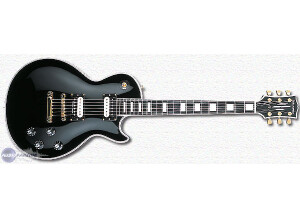
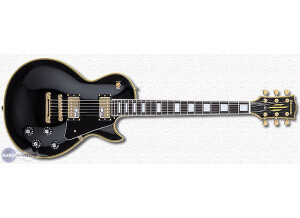
    Edwards guitars is another line of ESP similar to LTD. They are Japan only so they can make really accurate copies without getting in trouble from Gibson. People have discovered them and realized their guitars are very good quality. This guitar is only about 1000 dollars whereas a real Gibson Les Paul Custom would go for thousands and thousands more. This guitar has all the same features or better features than a Gibson Les Paul custom. It has a mahogany body with a maple top and a mahogany neck. The Edwards headstock has the right open book shape for a Les Paul Custom. The fully bound neck is ebony with 22 frets. There are large block inlays like you would find on a Gibson Les Paul custom. It has gotoh tuners up top with a gotoh bridge out back. It has a Seymour Duncan SH-1 59 in the neck and a Seymour Duncan SH-4 JB in the bridge. This is a classic Seymour Duncan set. All the hardware is finished in gold. The electronics setup is a standard Gibson setup with a volume and tone knob for each pickup. The only thing that stands out on the guitar is that they use strange top hat knobs for the knobs. These can easily be changed to speed knobs for a cleaner look. UTILIZATION This guitar is a very accurate copy so it has all the quirks that a real Gibson would have. Because of the set neck design there is a large neck tenon and joint. This can make the upper frets hard for some people to reach because the body essentially joins the neck at the 17th fret. After the 17th fret you are reaching around the body to get to the frets. The tuning stability is good because there is no tremolo. The tune-o-matic bridge can be uncomfortable for some people. It has sharp edges where the strings come in contact and these can get into your hand. Replacing these with roller bridges can make them more comfortable and decrease string breakages. When you change strings the bridge can come off because it is held on by string tension. If this happens make sure you put it on the right way because you can put it on backwards and your intonation will be horribly off. When this happens your guitar will sound in tune on the open strings but any chords you play will sound off. Some tune-o-matic guitars come with locking bridges now so they dont fall off when you change strings. SOUNDS No one will be able to tell this apart from a real Gibson from sound alone. With the Seymour Duncan pickups the guitar already comes with some of the best pickups you can get so the tone is there out of the box. This pickup combination is something that Edwards uses in a lot of its Gibson copies. The 59 has a great PAF style tone. It has a good amount of sag and the mids are nice and pronounced. The JB in the bridge is the jack of all traits and can be used for just about anything. You can get great overdriven tones all the way to searing high gain with it. Many Jackson guitars come with this pickup set so you know it can hang for metal too. If they are not heavy enough for you there are models that come with EMG's or you can swap them yourself. OVERALL OPINION If you play one of these you can really feel why Gibson does not want them sold in America. This guitars are the quality of all of a real Gibson at slightly more than a Epiphones price. You cant get a Les Paul Custom for 1000 dollars so Gibson clearly cant compete. They probably cost less than 1000 dollars to make but Gibson would never admit to that. This is a great alternative to a Les Paul Custom. You dont have to pay 4000 dollars for it so you can take it out and gig with it without feeling scared. If you are looking for a Les Paul Custom but only want to spend 1/4 the price you should try and import an Edwards.

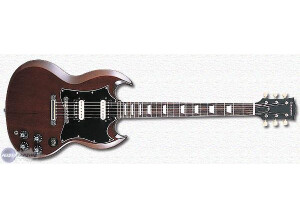
  • « Great SG copy with Duncans and Maestro trem »

    Edwards guitars is another line of ESP similar to LTD. They are Japan only so they can make really accurate copies without getting in trouble from Gibson. People have discovered them and realized their guitars are very good quality. This guitar is only about 1000 dollars whereas a real Gibson SG with a Maestro tremolo goes for 4000 dollars. The guitar has all the same features as a normal SG. It has the slab mahogany body with the double cutaways. It has a mahogany neck with a rosewood fretboard and 22 frets. Edwards guitars come with Gotoh tuners as standard. This guitar has a lacquer finish some models have nitro finishes. The Maestro trem is something that came on a lot of SG guitars back in the day as they were trying to compete with the stratocaster. It is good for subtle use so dont mistake it for a Floyd Rose. These Edwards guitars come with after market pickups from stock. This model has an SH1 59 in the neck and an SH4 JB in the bridge. It has the standard SG control layout with a volume and tone knob for each pickup switched with a 3-way. UTILIZATION Being such an accurate copy of an SG it has all the advantages and disadvantages as every other SG. It has the great dual cutaways that allow access to all the high frets on the neck. The neck is nice an thin with a 60s style Gibson profile. One problem SG's is that the neck is mounted far out on the body and with the body being thinner than a Les Paul the guitar is slightly neck heavy. Another problem caused by the neck being mounted like this is that the neck joint is pretty weak and the guitar and flex a bit and go out of tune. When you are standing up and playing the neck may want to drop down and you may find yourself holding the neck up. SOUNDS This guitar comes from the factory with upgraded Seymour Duncan pickups. With the 59 in the neck and the JB in the bridge you can really go straight from the box to the gig. It sounds good right out of the box with these pickups. The 59 has a great PAF style tone. It has a good amount of sag and the mids are nice and pronounced. The JB in the bridge is the jack of all traits and can be used for just about anything. You can get great overdriven tones all the way to searing high gain with it. Many Jackson guitars come with this pickup set so you know it can hang for metal too. The Maestro trem can add some layers to your sound but it can also put you out of tone pretty quickly so be conservative with it. OVERALL OPINION After playing one of these I can really see why Gibson doesnt want these sold over in America. These guitars will give any Gibson a run for their money at 1/4 of the price. They are a lot better than Epiphones and it is just slightly more expensive. With the aftermarket Seymour Duncan pickups in the guitar from the factory you do not have to do anything. With lower cost guitars the pickups are usually the first thing to go but not on this model. If you are looking for a nice Gibson copy and only want to spend one thousand dollars instead of four you should try to import an Edwards guitar.

  • « Same problems as the ESP model »

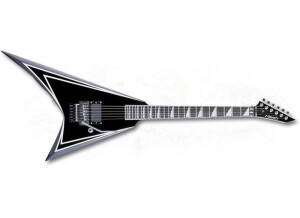
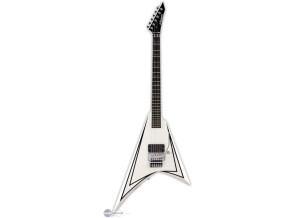
    Edwards is an offshoot of ESP guitars. They are a Japan only maker and their guitars fall inbetween ESP and LTD models. They are mostly assembled in China then finished off in Japan. This model is pretty much identical to the ESP model. It is the Edwards version of the Alexi Laiho signature ESP guitar. It is white with the double black pinstripes down the side. It has an alder body in the offset V shape. It has a maple neck with neck through construction and an ebony fretboard. The fretboard has 24 jumbo frets with the cool Scythe inlays that carry on the Bodom theme. It has a locking nut up top and a Gotoh Floyd Rose down at the bottom. The electronics are sadly typical too. It has a single passive EMG H4 pickup with a single volume control. The fit and finish on these Edwards guitars are typically good since all the final finishing is done in Japan. UTILIZATION The offset V shape usually lends itself to good upper fret access but since the V shape on this guitar is so broad they had to add an extra cutaway for you to reach the upper frets on the smooth ebony fretboard. The shape balances well and makes itself very comfortable when you play it. The back of the neck is unfinished so it feels nice like a bolt on guitar but since it is neck through it has no heel. This no heel helps a bit because the upper frets are kind of hard to reach. SOUNDS The pickup is the weakest part of any Alexi Laiho guitar. I think his ears are broken or something because he uses the EMG HZ passive pickups. This is supposedly the passive version of the EMG 81 but it has none of the balls the 81 has. Its just a little fuzz box in your guitar. He might like this since he uses a ton of high end in his sound but for everyone else it sounds like junk. These are the same pickups you get in like 200 dollar budget ESP guitars and Epiphone Zakk Wylde models. These are not the kind of pickups that should come in a big signature model. OVERALL OPINION ESP makes guitars with the same shape but come with 2 active EMG pickups that sound great. If you are just looking for the cool Alexi shape I would recommend getting one of those SV models. With this guitar you are sacrificing sound for having Alexis name on the guitar and I dont think it is worth it. This is an Edwards model that they should have not copied so exactly.

  • « Three pickup version »

    For those who want a three pickup Les Paul style guitar, Edwards has you covered. They make a three pickup version for those who absolutely need that third pickup and want those older style Les Pauls that were made way back when. The guitar has the following specs: Mahogany body with a maple top Mahogany set-neck with an ebony fretboard 22 frets with Gibson-style inlays Tune-o-matic bridge Seymour Duncan 59 in the neck + middle and JB in the bridge Two volumes Two tones Three way switch UTILIZATION The guitar itself wasn't put together too bad. It was fairly solid overall with few flaws. The finish was nice and free of swirl marks, the fretwork was pretty good (although the ends were a bit sharp), the guitar felt nice and everything was roughly on par with what Edwards normally delivers. However, the guitar had one major issue, and that was the middle pickup. No matter how much I try to get used to these middle pickups, I just couldn't jive with it at all. Tone aside, I kept hitting it, and to prevent that, I had to basically slam the pickup into the cavity via the height adjustment screws. SOUNDS The guitar sounded very nice, but I honestly feel that the magnetic pull of the middle pickup adjusted the sound slightly on the neck and bridge pickups. The bridge is a JB, and it works great for pretty much anything from blues to metal. It's got enough output to hang with the metal guys, but it cleans up nicely if you lower the volume knob a bit, too. The middle pickup is a Duncan 59. This is a great pickup, but I couldn't find much of a use for this middle pickup. It always seemed like it was lacking something. The 59 in the neck, however, was wonderful. I was able to get a nice, thick and full sounding lead tone, along with a great clean tone on this guitar. OVERALL OPINION If you're one of those guys who likes three pickup Les Paul style guitars, I'm sure you'd love this. However, this just isn't for me. The biggest issue I had was the middle pickup, and it seemed to ruin everything for me. Thankfully, Edwards makes more than just one Les Paul, and they have more than enough guitars to suit my needs, so I can't complain about this guitar too much.

  • « Covered pickup version »

    This is the covered pickup version of the Edwards "Custom" guitar. It has pretty much the same specs as the 85 model, but the pickups are covered to give it a more period-correct look, along with giving it some more class. The guitar has the following specs: Mahogany body with a maple top Mahogany set-neck with an ebony fretboard 22 frets with Gibson-style inlays Tune-o-matic bridge Seymour Duncan 59 in the neck and JB in the bridge (covered) Two volumes Two tones Three way switch UTILIZATION The guitar had some pretty good fretwork. The frets weren't quite as polished as I would have liked, but some quick work with 0000 steel wool fixed that up. On top of that, it cleaned the fretboard, which I noticed was slightly dry. The rest of the guitar is pretty much like your average Gibson. The only real difference you'd probably notice, aside from the poly finish, would be the fact that the guitar doesn't have any binding nibs. Some people love those, but I personally hate them. They annoy me to no end, and they can cause issues down the road. Whenever I get a refret, I yank them out and don't have my luthier keep them as it costs way too much. SOUNDS The guitar is a little bit thicker than the 85. It has a little more low end and has a little more of a mellow sound overall. This is pretty much due to the fact that the pickups are covered on this version. On the 85, the pickups are open, and open pickups tend to have more treble, output, etc. The bridge pickup in this is a Seymour Duncan JB. It's probably one of the most versatile pickups ever made. The guitar works great with both clean and distorted tones, and it responds quite nicely to the volume knob. On top oft that, it can do pretty much any style you can think of. The 59 is much the same way. It's a fat and vowely kind of PAF tone, but it has enough output to do metal without any issues. In fact, it happens to be my favorite pickup in the neck in the Duncan line. OVERALL OPINION If you want something a bit more like the actual Les Paul Custom, this is probably the guitar you'll want to get. It has a bit more class thanks to the covered pickups, and it's a bit thicker than the 85 version. In reality, both of these could be completely changed depending on how the actual wood sounds since every piece of wood sounds slightly different. Both are great guitars, and you won't be disappointed in either of them, I bet.

  • « Great LP for the price »

    For those who don't know, Edwards is a division of ESP. The bodies are made over in China with wood that ESP supplies them, and they're finished over in Japan by the ESP luthiers. While they're not quite as high quality as a normal ESP, they're roughly on par with the LTD series. The guitar has the following specs: Mahogany body with a maple top Mahogany set-neck with an ebony fretboard 22 frets with Gibson-style inlays Tune-o-matic bridge Seymour Duncan 59 in the neck and JB in the bridge Two volumes Two tones Three way switch UTILIZATION The guitar was very solid. It didn't weigh a ton, and I'm always a big fan of guitars that don't feel like boat anchors. The fretwork on this was pretty solid. Unlike most normal Gibsons, this doesn't have binding nibs. Some people might dislike that, but I actually tend to prefer it. The fretboard must have been slightly dyed to keep that super dark ebony look because some of the dye was coming off on my fingers. Over time, that would go away, but it's slightly annoying. The fretwork was pretty good, but it's not quite as nice as an ESP. It's roughly on par with a Gibson, I'd say. SOUNDS The guitar sounded very nice. The neck was a Seymour Duncan 59. These are wonderful for those fat lead tones and great clean tones. They're very versatile and can cover nearly any style from blues all the way to death metal leads. The JB is much the same way. It's a high output bridge pickup that can do nearly any style out there with ease. The bridge is great for blues, rock, metal and beyond. I also find they respond pretty nicely to volume adjustments via the volume knobs. The John Sykes model actually comes with Duncan Distortions, and they're pretty cool as well, but I tend to prefer the 59 and JB combo in these a bit better. OVERALL OPINION If you're looking for a guitar that can rival a Gibson, and you don't want to spend all the time and hassle looking for the proper Gibson, look into getting one of these. They're a bit more consistent than Gibson, and while they might not sound exactly the same, they'll get you close enough. They're a lot closer than the ESP Eclipse series, that's for sure. Definitely something worth checking out if you get a chance.

  • « Edwards Explorer »

    Edwards guitars are showing up more and more in America and around the world. People are realizing they are a great alternative to getting a Gibson. Edwards is ESP's budget line of guitars. They are kind of like their Epiphone. These guitars are technically made for the Japanese market so they can copy anything exactly without getting in trouble. This with the high Japanese build quality means you get guitars that meet or exceed the quality of what they are copying. This guitar is like a Hetfield Explorer with a natural finish. It is a mix between Hetfields ESP Explorers and his custom Ken Lawrence explorer. A Ken Lawrence Explorer is super expensive so this is a cool option to have. A metal Explorer in a natural mahogany finish with EMG's from the factory. The setup is pretty simple. It has a mahogany body and neck with a 22 fret rosewood fretboard. It has dual EMG 81 pickups. The controls are simple as well it has a master volume a master tone and a 3 way toggle. UTILIZATION The playability is spot on to what an Explorer should be. Edwards uses their own neck profile which they say is between a 50s profile and a 60s profile. It feels good either way. The upper frets are easy to reach because of the Explorers design. The radical shape actually gives the guitar a perfect balance for playing while standing up. The neck will come to rest at a perfect angle due to the large body acting as a counter weight. The satin finish is smooth and doesnt slow you down anywhere on the guitar. The frets are nice and big and allow for a nice and low action. The natural finish means the body and neck feel really smooth to your hands. SOUNDS EMG's are great for heavy music and tons of artists use them. Im kind of surprised they did not put the set Hetfield uses in this guitar. Instead of the 81 and 60 set like Hetfield uses they put in the dual 81 set which is what Hammett uses. I am not a big fan of the 81 in the neck. It has too trebley a sound for me. Your leads in the neck position come out harsh when you are using an 81 in the neck. A 60 or 85 would be better in my opinion. The 81 in the bridge on the other hand is great. You get a real sharp tone for your riffs. If you want even more crushing tone you can do the 18v mod to the EMG's. With the 18v mod you run the EMG pickups on two 9v batteries instead of just one. This gives you more headroom over all and more clarity. It will make your clean tones sound better too by giving them a more natural organic quality. You will just have to find somewhere to place the 2nd battery. OVERALL OPINION With this guitar you get all the feel and tone of a Gibson Explorer with EMG's without paying the price. This is a great alternative to getting a Gibson and putting EMG's in it. It is cheaper and already comes with the good pickups. The build quality in Japan is just as good as America so you are not sacrificing quality. If you are looking for an Explorer to play metal with you should consider getting an Edwards.