Log in
EN
FR

Alesis USB audio interfaces

13 products found

Filter
Sort by
Alesis
Evaluation
  • Reviewed or not
  • Editor’s award
  • Reviewed by Audiofanzine
Availability
  • Available or not
  • Sold new or used
  • Sold new
  • Sold used
Must-have products
  • All products
  • Flagship products
  • Best rated products
  • Hot products
  • Popular products
Price
  • Freeware
€
Clear
Sort by
  • Popularity
  • User ratings
  • Price - low to high
  • Price - high to low
  • Used price, increasing
  • Used price, decreasing
  • Name (from A to Z)
  • Name (from Z to A)
  • Added on
Sort results
  • Popularity
  • User ratings
  • Price - low to high
  • Price - high to low
  • Used price, increasing
  • Used price, decreasing
  • Name (from A to Z)
  • Name (from Z to A)
  • Added on
Filter results 13 results found
Brands
Evaluation
Availability
Must-have products
Price
  • Freeware
Show results

The best Alesis USB audio interfaces reviews

The reviews Audiofanzine members found the most helpful.
  • « Ok for first portable interface »

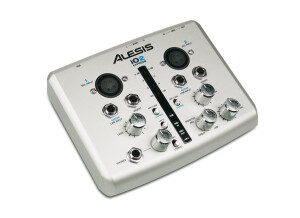
    The Alesis iO2 Express is an Audio Interface that has a very basic layout and design. The knobs appear to look like they are made out of heavy materials but they really are not and this could be an issue if the unit gets dropped. This interface only cost around 80 dollars though so I didn’t expect for it to be made out of the best materials. I was using this interface for my mobile set up for a few months. It is a 2 input unit with and XLR microphone input and ¼ TRS input for other units to be running into it. It gets its power directly from my laptop so there was no need to have any other power sources for it. I just kept it in my laptop bag and I was good to go no matter where I was. UTILIZATION Using and setting up the iO2 Express was very easy, it even came with a copy of Steinberg Cubase LE, which I used with it for a while. It worked great with Cubase and recording simple songs and stuff with this interface sounded great until I tried to record some more intricate stuff with it like instruments and other sound sources and it was just not able to handle everything I wanted to throw at it. Also I wanted to record more instruments and voices simultaneously and that just was not possible so I was forced to upgrade. GETTING STARTED The manual was easy to read and navigate through. I ran this interface and software on my Windows Vista computer running 32 bit and it also worked on my older XP laptop just fine as well. OVERALL OPINION I never had any driver issues with this interface or any type of crashes with it. It has worked great every single time that I used it. I do question its durability though when used and traveled with a lot.

  • « Alesis iO|2 »

    I bought an Alesis iO|26 a couple years ago and after being very happy with it I decided to buy the portable version of it. I mostly bring this interface with me when I’m traveling and want to capture an idea or a weird nature sound. If you a songwriter this can be a great item to own. You can buy this product for $159, I bought mine for under $100 on a ebay auction. <a href="http://www.glintonline.com">http://www.glintonline.com</a> First of all, I really like the look of this unit. Very simple, clean and modern. Knobs are firm and precise, the XRL and ¼ input make sound capturing easier, since you can just plug in your guitar and record (I usually use a peace of software, like Guitar Rig, to simulate amps and room reverberation). The two 1/4 inserts also facilitates signal processing. I also love how it comes with a led input level indicator. The only defect is sometimes you have to give all the juice to record a decent strong signal on your DAW. It happens every time I record my bass direct. Very well built interface, I have it for awhile now, it went through a lot already and still work as new. Here are some of its features: 24-bit, 48 kHz operation with high-end A/D and D/A conversion through integrated USB audio interface, 2 XLR mic inputs with 48V phantom power plus 2 1/4' balanced line inputs that can accept guitar level signals, 1/4' balanced main outputs, 1/4' TRS inserts on input channels, 1/4' TRS headphone output, Dedicated four segment signal/clip LED meter on both channels, Zero-latency hardware monitoring, 24-bit S/PDIF I/O for direct digital recording MIDI Input/Output, USB powered—no external AC power supply necessary, Low power usage for minimal laptop battery drain, Bundled with Steinberg Cubase LE software, Class Compliant device: works with drivers which are built into Mac OS X, Windows 7 (32-bit and 64-bit), Vista (32-bit and 64-bit), and Windows XP Great interface for a very reasonable price. Nice look with a modern and clever design. This review was originally published on http://www.musicgearreview.com