Log in
EN
FR

Accessories for Pianos & Organs

152 products found

Filter
Sort by
Evaluation
  • Reviewed or not
  • Editor’s award
  • Reviewed by Audiofanzine
Availability
  • Available or not
  • Sold new or used
  • Sold new
  • Sold used
Must-have products
  • All products
  • Flagship products
  • Best rated products
  • Hot products
  • Popular products
Price
  • Freeware
  • Low-cost (< $200)
  • Mid-range ($200 - $700)
  • Premium (> $700)
€
Clear
Sort by
  • Popularity
  • User ratings
  • Price - low to high
  • Price - high to low
  • Used price, increasing
  • Used price, decreasing
  • Name (from A to Z)
  • Name (from Z to A)
  • Added on
Sort results
  • Popularity
  • User ratings
  • Price - low to high
  • Price - high to low
  • Used price, increasing
  • Used price, decreasing
  • Name (from A to Z)
  • Name (from Z to A)
  • Added on
Filter results 152 results found
Evaluation
Availability
Must-have products
Price
  • Freeware
  • Low-cost (< $200)
  • Mid-range ($200 - $700)
  • Premium (> $700)
Show results

The best Accessories for Pianos & Organs reviews

The reviews Audiofanzine members found the most helpful.
  • moosers's review

    The Yamaha RA 100 is a unique rotating speaker from the 1980's. It was made for compact organs to get an authentic Leslie sound, but can used with any electronic instrument that you'd like. It's got a speakon external speaker output and RCA inputs. There's also a 1/4" remote output. It has two 12" speakers and also two rotating horns. It's a very easy to use amplifier and sounds quite good. The parameters it gives you to work with include knobs for volume, bass, treble, reverb, and tremolo speed. I've only used the RA 100 in the studio, but it would certainly be a nice thing to have live as well for your digital organ. I've used it with a Farfisa compact organ and for this it sounded fantastic. Even if you don't use the rotating speaker and just use it as an amplifier it sounds great. Having the two rotating horns however really make the RA 100 a cool speaker. I've seen a few speakers like this out there, but this is one of the only models that I've used and is definitely the best sounding one of it's kind. Unless you've got a preamp for a real Leslie speaker, I don't think you're going to find one quite as good as this. I don't know much background on the RA 100 and I'm not sure how easy it would be to get your hands on this as I've only used one the one that the studio owns. If I were a keyboard player with a digital organ, or even a guitar player looking to get creative with a rotating speaker, I'd consider the Yamaha RA 100 or something like it for live shows and in the studio as it really adds a certain quality that you miss out on with a digital Leslie simulator!

  • « Add Richness and Depth to Your Amp/Overdrive »

    SOUND: If you refer to the demo accompanying this review, it opens with a short digital organ segment, since the Tall & Fat was designed originally for that purpose and to make a digital organ sound analog. The outcome certainly is ‘rich’ and overflowing with dynamics and harmonics, but it did an equally good job with electric guitar and the various tube preamps I placed before it. I would be curious to know what it could do for a solid-state amp, but perhaps that’s where Lounsberry’s Amp Rescue prevails. Whether working with clean or dirty amp channels there is an obvious fullness and three-dimensional quality to the tone when adding the Tall & Fat. A term regularly used on the Lounsberry site, and one I have adopted for this review is ‘richness,’ and that term very much sums it up. There is a depth to the notes I have not heard from other ‘boost’ pedals, and certainly this is due to the Drive section and the unique circuit of the Tall & Fat, and it reminds me very much of another Lounsberry Pedal I reviewed, the Nigel Touch Overdrive. Both have different characteristics, but how they affect other gear certainly share the same designer and his unique direction in circuit building. With clean amp channels I find there to be more shimmer and chime, besides fullness of the notes. With dirty amp channels the grain and warmth become more pronounced, as well as the bite behind the notes. GENERAL USE: Straight-forward, Tall & Fat has only two controls – Level and Drive. The controls often mirror one another, so that if the Level is at 2-o’clock the Drive is at 10-o’clock… and if the Level is at 9-o’clock the Drive is at 3-o’clock. Some tweaking may be required from those ‘exact’ positions, but it allows you to dial in quickly and when getting started. I’m uncertain if the designer, Greg Lounsberry, designed the Tall & Fat in this manner or if that happens to be how the controls respond with my gear, but it makes for easy operation. Both Level and Drive interact very dynamically with a lot of headroom – consequently, have the pedal turned off or dialed back when first powering up your gear. The Drive section does add dirt to the signal, but it seems to be more ‘hairy’ with keyboard than with a guitar (I suspect since digital keyboards are far more pure in tone and output and the Drive pops in the mix more significantly). In the accompanying demo I open with a short keyboard example, and with the Drive set around 11-o’clock there is enough distortion that it sounds like the segment is clipping (which was not the case in my DAW, but it sounds as much). With clean and dirty electric guitar you can hear some subtleties in the tone’s characteristics with the Drive at 9-o’clock, an obvious ‘fat’ result at 10-o’clock and beyond, and with a modest breaking-up quality once past the 2-o’clock range. OTHER DETAILS: The Tall & Fat has a well-designed circuit, consisting of three-stage FET preamp with gain staging. Greg Lounsberry knows his craft, since providing just the right amount of drive and compression in a preamp (and Tall & Fat’s emulation of such) is based on the number of discrete stages, their levels and how the stages interact. When using the Tall & Fat you can hear this relationship as the Drive adjusts from low to high levels. As well, the pedal has an all-discrete build with no integrated circuits or surface mount components. Certainly the internal qualities measure up, but so do the housing and various parts. Measuring 110mm(D) × 60mm (W) × 45mm (H with knobs) or 4.33 (D) x 2.36 (W) x 1.77 (H) inches, the Tall & Fat is hand-built in the USA. A true bypass pedal, it has an aluminum chassis powder coated a dark aqua blue with painted on steampunk themed graphics. The footswitch has a solid click when engaging and disengaging the pedal, although silent when turning on unless the Drive and Level are up relatively high (no ‘pop,’ merely signal hiss when driving the signal hard and only with dirty amp channels). The two plastic knobs (Level and Drive) are of heavy plastic quality and the pots feel very solid and smooth when turned. The footswitch is far removed from the knobs, power input or cable input/output (located in the back) with little worry of stomping damage from regular use. The Tall & Fat comes with a 9VDC battery or you can use a 9VDC standard power supply (negative tip). OVERALL IMPRESSION: Tall & Fat may be a missing link between a digital keyboard and that desired analog sound of a clonewheel organ rig, but it also is a good friend to the guitarist, vocalist, etc., due to its handling of a wide frequency range. Definitely of high standards, the Tall & Fat was beta tested by Hollywood film composer, John Van Tongeren, and adds richness to everything. What the Tall & Fat does is emulate the dynamic behavior of the tube-based A0-28 preamp, thereby providing the “compression, second order harmonics” and dynamic drive characteristics of the famous tube preamp from certain vintage Hammond organs (e.g., B-3). It has a three-stage FET preamp with gain staging, which means a warm and lush sounding drive (Note: For keyboardists, the onset of overdrive can be controlled with a swell pedal). With the guitarist in mind the Tall & Fat simply expands your tone with greater depth and a more pronounced organic quality. I have tried this through several amps and preamps, some of which are demonstrated in the accompanying video, and in every instance there is a noticeable and recognizable effect produced by the Tall & Fat. At $199 USD this is neither an inexpensive nor higher-priced pedal within the industry, and certainly is a worthy consideration for what it does and if you want a richer tone.

  • « Nails the Leslie 122 - on guitar but...on full B3 organ? »

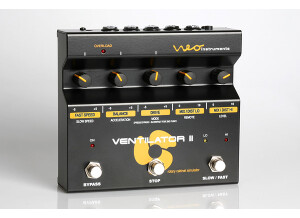
    Having used the old Ventilator for quite some time now, I got fed up with it in the end. Some reasons, it shares this with ALL Leslie speaker simulator pedals, so this is not really a stab at Neo instruments as such. Here's my caveats with it, which hasn't been brought up in other reviews, professional, and amateur alike. 1. It is not true bypass, although it says so in the manual. A signal that is "true" bypass should be able to pass through even with the power adaptor removed completely. This doesn't. While this is important to you or not I don't know. To me it is. Especially at that charging price for brand new item. 2. You have to use exclusively their power adaptor. It says nothing on the actual box/pedal what kind of current it needs and neither does the polarity. This has CENTER POSITIVE, and 12v and requires less than &lt; 300 mA it states in the manual, and the actual adapter says it delivers something like 2.5 A (!). Which is my concern, but read on, later on. 3. The remote input didn't even remotely work (ha!) with their own remote pedal. You had to do a fix. When using it the rotation stopped as if it was a BRAKE on real leslies, that you stopped the rotors but did pass through the speakers anyway. For a product at this price, this should be returned to the manufacturer, and withdrawn instead for modifciation. This was not a warranty defect. Above some serial numbers this had been fixed. Also, their own remote has their own foot switches which still gives a huge mechanical sounding clunk when turning off and on, and when using organ volume pedals and frequent shifts between chorale/tremolo settings on the switch, the clunk can be heard over the music big time and annoying. If there would be any sense to this, release a remote pedal with switches from - like - the Lehle company, or way more silent switches that holds up abuse. Now, I happened to buy the older ones, which nothing was said of, since the former user didn't use the remote. Now, for the current, voltage and input overload, and gain on normal organ B3 sounds. And especially on a real fully equppied Hammond B3, two manuals, and pedalboard. The B3 organ has a huge travel volume pedal range, and can put out a tremenduous amount of input at the Ventilator side, especially when using both manuals, full drawbars PLUS (this is important) a bass 16 foot pedal note. When using this setting in any organ it taxes the input on the Ventilator so you have to turn down the master volume so much (or volume pedal) at the other end, that the headroom leaves not much more than raised floor noise. The headroom is too low on this pedal. In order for not getting the overload led to light up you have to turn it down so much that it is useless. On a real Leslie, the tubes takes cares of any kind of "too much" input and distorts and compress in a nice way. This doesn't. It shares this with Lex Strymon, Leslies own pedals too, so it may not be a thing of Neo only. However, if you had to use their own ugly and unwieldy power adaptor which will scare guitar pedal boards owners off, I think, while they were at it, they could do an analog input that could take and cope with all that power from a B3 and a full keyboard and bass pedalboard onslaught. In order to cope with that you have to use a voltage of maybe 24 v or a 48v and a built in limiter before you go to do A/D converter. Or equip the pedal with an 12AX7 tube or something similar. You can't put this on a regular guitar pedal board and use the wires to power it form a regular Voodo Labs power station, say. But on guitar, the overload don't light up as it is a different beast. It can very well take the signal there. When the overload led lights up on organ, it sounds butt ugly and has this very unpleasant digital crackly distortion. They need to make a larger headroom or built in a limiter of some sorts. And I have tried all settings on the input/output LO/HIGH knobs at the back. To absolutely no avail. So, you are limited to using one manual keyboard organ, and no bass pedals at all (not even on the manual keyboard). The DRIVE (distortion) knob on this pedal is just average and resembles nothing of a tube. It does have its uses though. It's the actual swirl and rotation that makes this pedal the top of the heap. But competition are piling up. No problems there, but read the other reviews about it, then. Who hails it as the best thing since sliced bacon. I don't know their new pedals, the Vent II, but they have smaller footprint which makes them even better for guitar pedalboards but still you have to use their unwieldy and uncommon power supply which refutes the purpose in the end. You just have to make a pedal (or at least showing what polarity and current it needs) on the front of the pedal jack, so one can tell. It's bad business conduct to leave such things out, and if the power adapter should fail, (which it actually did once) you can't test it with another, and rule things out when troubleshooting. If it was a Behringer and/or at a Behringer price I would certainly have no quibbles. But at this price I except some more foolproof things. Just a liiitle more! They would most certainly have to resort to common power supplies when doing their new mini Vents and so on, which are geared towards guitarists anyway. The more it costs, the more right you have to be snarky and prickly about it. The less it cost, the more concessions you can make, and condone more than you condemn. EDIT: Instruments tested on: Hammond xk-3, xk3c and a friends real, full Hammond B3.

  • « 15" woofer! »

    The Hammond Leslie 3300 Rotary Speaker is a 220 watt bass amp and a 80 watt treble amp. It has a 15” woofer and master volume, bass, mid range, horn level, and sub woofer controls on it. The Leslie 3300 is very well built and can take a lot of abuse. The inputs are a 11 pin and 8 pin Leslie connector with a ¼ footswitch jack and ¼ line in jack. On the Leslie 3300 you can control the bass level separate from the horn level, also you can control the rise of the rotor speed right on the speaker. UTILIZATION The Hammond Leslie 3300 is portable to an extent but it still weighs over 100 pounds so it could be a hassle taking it to different places where you need it. The Hammond Leslie 3300 has a lot of low end sound that will provide a full and rich texture to it. Changing your sounds and frequencies is easy to do on the Leslie 3300 because you do it right on the speaker, and setting it up takes no effort at all. SOUNDS If you use the Hammond Leslie 3300 Rotary Speaker on your electronic keyboards it will take your sound and carry it across a large space. The sound that comes out of the 3300 is very big and travels even when the speaker is not turned all the way up. The 15” woofer is my favorite feature with this speaker. I have used a lot of other speakers and amps but nothing has compared to this one. The 3300 is also a lot more expensive then most other units that I have used in the past 5 years. OVERALL OPINION It comes at a high price, but it is worth it. I have heard rumors of the Hammond Leslie 3300 shorting out over long periods of use, this has never happened to me and I have never seen it happen just heard about it online. But just in case, I am pretty sure this speaker comes with a warranty for at least a year from Hammond.

  • « This thing is cool! »

    Wow is all I can say about this amp. Specifically voiced for the guitar, this amp produces some of the coolest most authentic leslie tones for the modern world. What is unique about this amp compared to the old Leslie speaker cab is that the drivers for the amp are designed specifically for the guitar instrument. There isn't a phaser or leslie pedal that can emulate the authenticity of this cabinet. Leslie G37 Combo Guitar Amplifier with Rotating Speakers Features at a Glance: A Leslie built 100% with guitar in mind Onboard 100-watt amplifier with a vacuum tube preamp Single-Channel Input features low and high gain input jacks 2-speed horn and bass rotor Slow and fast rotational speeds can be individually adjusted Horn and bass rotor will automatically stop in the forward position when the stop mode is selected 12" vintage V30 low-frequency drive made with all original materials Genuine Leslie high-frequnecy horn driver FS-10TL dual foot switch allows you the select slow, fast, and stop speed Optional variable speed control pedal (V-20RT) available Rugged-built, black painted cabinet made of 3/4" MDF, with protective corners and folding handles Details Type Tube Number of Channels 1 Power 100W Speakers 1 x 12" Vintage V30, 1 x High-frequency Horn Effects Yes (Rotary) Reverb No EQ Treble, Mid, Bass No Amp Modeling No Power Tube Inputs 2 x Instrument Outputs Rotor Control Footswitch and Speed Pedal Outputs Footswitch I/O No Effects Loop Height 26.5" Width 20" Depth 20.25" Weight 100 lbs. This amp sounds fantastic with any guitar you throw at it. Whether that be a Fender Stratocaster or a Gibson Les Paul the vintage rotating speaker tones are so chimey and surreal. The high gain channel of the amp is very nice and smooth as well. Not really a high gain amp per se but a distorted Leslie tone that is very usable in the recording studio. This amp is very great and extremely usable in a recording booth. At new these amps come in at around $1500, which might be a little high for a lot of people. Especially since this is a unique and particular type of tone you need to be sure this is the sound you are going for. I would recommend this to anyone who has an old Leslie that they wan to to preserve or someone who owns a studio who would like to get a new sounding pure Leslie amp.

  • moosers's review

    The Leslie 22H is a speaker cabinet that's specifically made for organs. I've used the 22H with a B3 organ at the last studio that I worked at before the one I'm currently at. There isn't too much that sets this Leslie apart when compared to the other top tier Leslies, but this is indeed as good a Leslie as you'll find. Like all Leslie speaker cabinets, it's got the rotating tweeter which gives the organ it's signature sound... UTILIZATION Once the Leslie 22H is set up, there's nothing that you'll need to do in order to control it that's directly on the Leslie. You'll control the rotating tweeter with a control panel that's on the Hammond organ itself. It has a special cable that connects the Leslie and the organ, but once it's set up you won't need to do much with it. SOUNDS There's really nothing like the sound of a B3 organ through a Leslie speaker cabinet, and the Leslie 22H sounds as good as any that I've used. I've actually done the bulk of my Hammond B3 recordings using this Leslie since I worked at the studio that had it for quite some time. I don't have any complaints about it at all, as it really sounds incredible. If you're aware of what a Leslie speaker can do, I think you'll find that the 22H will do the job as well as any. OVERALL OPINION If you have a Hammond organ of any kind, the Leslie 22H is the perfect speaker cabinet to use with it. In the studio it's a lot fun to use as it has an incredible sound and is especially fun to mic up this large cabinet. I don't know how hard or easy it would be to get a 22H specifically, but most Leslies of this kind are pretty comparable, so it's not the end of the world if you can't get the 22H. The 122 and 147 are also awesome Leslies, but the 22H is the one I've used the most. It's definitely going to be hard to beat the sound of a Hammond organ when paired up with a 22H.

  • Audiofanzine FR's review

    (Originally written by jerkijer/translated from Audiofanzine FR) This solid-state leslie is not so bulky as its bigger sisters (760). Two jack inputs on the preamp plus slow/fast footswitch and a 9-pin connector for direct connection to an organ. It's a good compromise for a first (cheap) leslie. It has no horn tweeter but the 12" speaker cabinet is conceived to reproduce high frequencies. On the other hand, it's not able to reproduce very low frequencies. UTILIZATION Very easy to use SOUNDS Expressive, typical leslie sound OVERALL OPINION I've been using it for three years. I wouldn't buy it again because I need more output power, the other musicians in my band play very loud.

Categories that may interest you