Log in
EN
FR

Other musical instruments

In his desire for music, man was soon confronted with the limitations of the only instrument that nature gave him: his body and his voice. In search of new sounds, new tones and new ways of expression, he began to build tools whose only purpose was to produce sounds. Thus were born thousands of instruments, all using different kinds of techniques and materials, from percussion made of wood or skin to wind instruments made from copper; bowed, plucked or struck strings to electronic instruments.
View more

5083 products found

Categories
Filter
Sort by
Brand
Evaluation
  • Reviewed or not
  • Editor’s award
  • Reviewed by Audiofanzine
Availability
  • Available or not
  • Sold new or used
  • Sold new
  • Sold used
Must-have products
  • All products
  • Flagship products
  • Best rated products
  • Hot products
  • Popular products
Price
  • Freeware
  • Low-cost (< $1,500)
  • Mid-range ($1,500 - $6,000)
  • Premium (> $6,000)
€
Clear
Sort by
  • Popularity
  • User ratings
  • Price - low to high
  • Price - high to low
  • Used price, increasing
  • Used price, decreasing
  • Name (from A to Z)
  • Name (from Z to A)
  • Added on
Sort results
  • Popularity
  • User ratings
  • Price - low to high
  • Price - high to low
  • Used price, increasing
  • Used price, decreasing
  • Name (from A to Z)
  • Name (from Z to A)
  • Added on
Filter results 5,083 results found
Brands
Evaluation
Availability
Must-have products
Price
  • Freeware
  • Low-cost (< $1,500)
  • Mid-range ($1,500 - $6,000)
  • Premium (> $6,000)
Show results

The best Other musical instruments reviews

The reviews Audiofanzine members found the most helpful.
  • « Close to perfection! »

    -As usual, it’s perfectly built : great job ! :bravo: -The keys’ touch seems to me slightly better than the 4D version, as I play more easily some piano pieces which were problematic. -The knobs are smoother than the 4D version, and they don’t move on their axis. I prefer the way they feel. -The drawbars have slightly changed, now they’re even more comfortable -Ergonomically, perfection is within reach :bravo: -The compact and lightweight format with a free and customizable sound library is perfect, especially with 1 GB for piano sounds and 256 MB for samples. -The effect section is better, with more settings for some of them: Phaser/Flanger/Chorus/Vibe with a "deep" switch -The tube distortion sounds very musical – I love it! -A new split feature – at last! You can play 2 different sounds in the same time, or organize them in layers to enrich the harmonics: it sounds just great! -The church organ is a really good feature, use it alongside a harpsichord and you can access perfect sounds for a gloomy/gothic/classical ambiance, hmmmmm! :-D -The screen is a perfect example in terms of simplicity and ergonomics, with a perfect contrast (real black background with very easy to read white letters). -The sample part is enriched with a minimal envelope, very practical to use. Depending on the samples’ volume (which may vary), you can set their output level in dB, which is very practical when mixing two sounds. Now, let’s go to where it hurts (but only very slightly) 1/ Still no wheel or pitch bend controls: Why? They’re quite practical when using plugs or the synth sounds from the Nord library. Also, why no real resonance filter (even if there’s a filter level control)? 2/ It’s also a pity that you don’t have 4 separate outputs to record split performances: you’ll have to record the parts separately in your DAW. 3/ The effects are shared and you have to choose from either Lo or Up, so no way to get two independent effects on two parts, which I consider a bit of a pity. 4/ You can’t play 2 different samples or 2 different piano sounds in the same time in “layer” mode, only a B3 and a bass pedal However, you can play 1 piano or Nord sample sound shared in split mode, e.g. piano with a drive effect with the left hand and a phaser with the right hand. You can even cut the sustain of one part over the other, which is very practical to play a chord and let the sustain on a LO part for instance while letting the UP part playing a solo or bass – or the other way around. Still, the split or layer capacities are limited. 5/ the reverb is common to both sounds, which is pity if you want the reverb on only one of them. 6/ Another thing I regret is the fact that when you change program among the 4 available in the “set list” menu, the sustain suddenly stops working A real problem for live IMO, perhaps this is the device’s main fault compared with a Kronos, but the price range isn’t the same either. In the end: as a whole, I’m seduced by this new version which really adds something, especially with the 1GB of piano sounds, the split/layer, the new, better-sounding effects, the screen and “set list” mode to prepare your shows, the church organ, the way the delay and reverb can now be used together or separate… I didn’t give it a full 5 stars however, as while it’s close to perfection it still lacks a few features...

  • « A true source of inspiration »

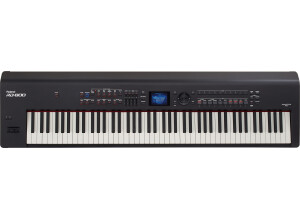
    1113 tones, 88 keys, ... you can download the user manual from the Roland website. UTILIZATION The RD 800 has the aesthetic design of a piano not of a synth, it's sober... What a delight! Right from the first touch, the keys are skilfully weighted and feel very nice. I'm rediscovering it and it's great. Moving from the RD 700 GX to the RD 800, the manual seems clear, but my view might be subjective, having previously owned an RD. The main access buttons are accessible and effective, the display is now a color one, but no bigger than on the RD 700 nor is it touchscreen, you must always use the wheel (maybe for the RD 900?) The patches and setups can be accessed extremely fast. I won't give it a 10 only for the connections, which are on the bottom part of the piano's front panel, making them less visible and accessible than on the RD 700, although on an "aesthetic" level, the cables are hidden away. SOUNDS In terms of sounds...I'm still stuck at sound "0001" – Concert Grand – what a sound! It's a real delight. The sampling is precise and brilliant right until the sound fades away completely. I'm really amazed. This Concert Grand alone justifies its purchase. It's no use to have 12000 sounds if they don't feel right. Just go a and try it out and you'll see what I'm talking about! The other sounds rise to the expectations, be it the electric pianos or other sounds. Typically Roland, the sounds are brilliant and dynamic, more for pop rock, funk than classical music. You can really make expressive music with this keyboard, from velvety to a percussive and explosive sounds, depending on the force on the keyboard. OVERALL OPINION I got it two weeks ago and it's a real treat. Owners of Roland pianos should go test it, it's worth it. I've had Yamaha (CP5) and Roland (FP7, FP7F, ROLAND RD 700) before, but the RD 800 is a true revelation and a source of inspiration. I'll still use the RD 700 until I configure a couple of things on the 800, but I can't wait to make the switch. Yes, it has won me over despite its price of about $2900, which is the normal price for pianos in this category. It is much better than my previous purchases, both in terms of sampling and keyboard. Images linked to this review

  • « Really beautiful »

    For all beginners and amateur musicians. Semi-professionals who know the piano market will very soon see its limits: they don't want to waste their time setting a tempo or calling a (tunes or styles) preset. Neither do beginners or amateurs, by the way. Pros: Ivory Feel-G Keyboard with double escapement : * * * * * SuperNatural piano sounds : * * * * * (1 more star for the three possible brightness settings) Design : * * * * USB connection USB key slot. Rhythm/Tone feature : * * * * You consider its weight and think "hey, that's Roland, that's real quality". Other styles and sounds quality : * * * * GM2 : * * * * * Very sober. Beautiful finish. Really a beautiful product. Price : * * * * * Cons: Key Touch system : * Makes everything more complicated compared with the unreplaceable (alas replaced here) traditional functions. Will we soon need an internet connection just for setting a tempo or selecting a preset? What a pity. hence, ease of use : * * - slow and fast knobs : thankfully they're here, but no +/- for the presets... - No SMALL screen (to see the tempo and the names of presets) - unbelievable : not even + and - keys for tunes and rhythm presets! Too complicated and space consuming, certainly... You'll have to read the manual (not a first thought among musicians, is it?) and learn by heart the keys, key touch combinations, long key holds and so on to be able to choose presets and rhythms (and to directly set the tempo). Weight : * * * (due to its construction quality) : logical. Playing directly with the default piano sound, it's excellent, no problem. The Keyboard is great, Roland's customers are very well taken care of on this point. The soundbank is large enough, with a faultless quality. But for those who use the voices a lot and are looking for a keyboard in this price range, I don't recommend this one which is first a digital piano, as it only offers the most common styles. For €700 the price is very good in spite of these cons. But, why complicate things unnecessarily when it was so easy to keep them simple - regarding the basic features for instance? It's really a beautiful piano for the price. Don't hesitate regarding its comfort and quality. In this niche market, its quality makes it worth more than its price.

  • « The future of vintage sound is in your hands. »

    A rare piece of gear, not an easy one to find. If you chance to see one for sale, don't miss the opportunity to try it - and to try it is to love it instantly. It's a 3-in-1 in the same series as Trilogy, but more of an organ. 2 keaboards of 4 octaves each. First the organs: They're split in 2 parts: - the upper keyboard has 8 presets, ranked from the softest to the brightest. Endowed with auto sustain and a percussion set (nothing to do with drummers, we're talking organ percs here, of course) which decay and volume can be controlled - a real plus that offers nice possibilities. - the lower keyboard has 4 timbre controls (8, 5.1/3, 4, 2.1/3), like a simplified Hammond. Crumar called that part Lower manual Flute. Not much to do with a flute soundwise, rather soft, flutty organ sounds I'd say. Really beautiful. - Both these organs can be routed to a slow-fast rotor effect simulation. Independant. Just superb. And a a bonus, there's an analog reverb which doesn't look like much but always sounds pleasant. Plus, the lower and upper keyboards can be muted separately to leave room for the following... Then the pianos : 3 nuances of electric pianos can be superposed. They remind me of a RMI electra harp, as I can hear on good old Genesis records I love so much. They can be affected to either or both keyboards. The finest is that back then, its conceptors thought of the possibility to route it towards a good old analog phaser. Bliss! Finally, I can get these Tony Banks, Genesis atmospheres. Finally a smaller String machine section: More sober, a little different from that I knew on Trilogy. Just an octave control and a possibility to affect it to both keyboards. But iot can also get through the phaser if you want. Bliss, again... A real enjoyment. Options: The T3 can be comptemented with a 13-note key/pedalboard. A 4th bass part was designed for such. Since I don't own the pedalboard, I can't judge it. I believe it to be impossible to find now. Another option. The faaaaaaaamous -and worthless- sequencer/arranger. I have it... well, too bad! I don't use it, I hate those things. Cons: Ooch ! This is where I feel I made a mistake buying it. - Of course it's cumbersome and heavy. 31Kg, 109x63x26... Ooch! sh..., my back! To be used with a RTX stand, or something sturdy anyway. - its body. While my Trilogy looked in a good state, the T3 one looks like it fell at sea or something. The paint goes away, replaced by rust. It looks like a drowning Russian nuclear submarine. - the electronics, as sh*tty as on all Crumar from this period. Push buttons looking on the verge of breaking, faders and knobs that spit as if out of a nursing home... - wooden flanks in laminated wood that stick out - and impossible to remove. Completely messed up by the thing's weight. -the keyboards are trustworthy, but too light at touch and sensitive. The lightest touch and you're in for a wrong note. In brief. The instrument is too heavy and cumbersome, hence impossible to sell for the price it would deserve. Mine was for sale 30km (20 miles) from my home. It was on sale for a year on a classified ads website for a year, meaning no one wanted to pay more than its value to have it transported professionally (€250). Still, it's not worse than a Hammond or Farfisa. At least, this one can enter your car. A lot of work to restore it. Plenty of work ahead. Not to be put in the hands of a non-handy(wo)man. It sure would stay rotting in the basement. But it's only happiness when its sound aims for your ears alignmed with the speakers. Keep it safe in a dry place and take time to play with it. Let it take you 30 years back. The future of vintage sound is in your hands.

  • « Music Circus! A large and good analog combo »

    A real mammoth that I found out of order at a pawnshop and managed to refurbish: partytime! It’s an organ/ string machine/ piano/ harpsichord/ synth/ drum machine all-analog combo with a vertical acoustic Leslie-style processor and a spring reverb! Even as a furniture it looks great and classy. - A rather “lightweight” organ sound, featuring harmonics (“flutes”) with on/off for sole settings and only little character: 6 on the upper keyboard, including 3 dedicated to percussions with long and short options and repeat feature (held and chopped but with a set speed). The release function can be parametered. The lower keyboard features 5 harmonics without a percussion (but you can cumulate piano, harpsichord and strings). Other sounds (ALL of which can be cumulated, including the organ) for the upper keyboard include: - A round and warm piano sound, but not realistic of course, - A very analog-sounding 70s-pop like harpsichord, - String ensemble: 2 identical presets with a 1 octave difference that can be used together, but the best surprise is that – it’s Solina! Independent settings include colume, lowpass filter (for brilliance) and release (for sustain). A real pleasure. - mono synth (=a single note at once): 8 presets with rather soft attacks (rendering wind instruments and violins). Settings through 6 faders: volume, lowpass filter, resonance (on/off plus attack length – why?), sustained sound or decay length + release (why, again?), portamento length, vibrato (off or on + speed), and finally a portamento on/off switch. You can “cheat” and add sounds over others, providing small color variations. A gadget: a pitch bend down function allowing for a half-tone down on all the sounds of the upper keyboard with a foot pedal, on the right of the volume pedal. - the analog drum machine (including presets) is a good surprise (it’s a Partner M). On the circuit card (see picture), I found the adjustable resistors for colume, color, tune or decay for most sounds! (the heavy kick and so on…). You can also cheat and add rhythms above each others, with results sometimes more interesting than the original ones. As a gadget, there’s a break per button on the front or foot-controllable on the side of the volume pedal (the left controller). - The acoustic “Leslie” is rather legit, especially used with the organ preset and the additional “click”. I intend to try and tweak it so as to be able to use it also with external sounds. The Leslie block is internally connected using real Leslie-style connections, so you should be able to plug the Farfisa into a real Leslie, or use and control the internal “Leslie” with an external device as was often the case in the past. - The reverb provides no surprise, but it would be nice to be able to push its volume further up. - Connectors include line out (except for the “Leslie”), external audio in (which can get through the reverb) and headphone out. I will finish to repair it cosmetically then try to post a more complete video than those that are already online. I’m not getting into all the details regarding the presets, bass pedalboard and many accompaniment, arpeggio and combination options, but it’s obviously a really high-end Farfisa model.

  • Michael-David's review

    It's a 76 weighted-key digital piano. It has 6 preset sounds (acoustic piano, electric piano, vibraphone, organs and violins), and it also has two non-editable basic effects: Reverb and chorus. It also has MIDI (IN, THRU and OUT), two 1/4" jack outputs (left and right), and one sustain pedal input. UTILIZATION It's very pleasant to the touch, more like a high-end synth than a real piano — plastic has its limits. However, the keys turn yellow easily with time, so it's important to not leave it under direct light when not in use. I've used it as backup piano and master keyboard and it has performed well in both cases. Very easy configuration and clear manual. SOUNDS It responds very well to the dynamics of your playing. Sturdy and comfortable, it won't disappoint anybody. If you are looking for a solid digital piano to practice, a master keyboard, for live situations or for the studio, the EP-7 is an excellent compromise. The sounds are quite all right for a piano of its age, and the effects are rather well quantified. There is one demo track and four tracks to record your songs to listen to them or transfer them via MIDI. It's hard to find a typical place for it, at home, on stage, in the studio, or in a teenager's room, it will fit in nicely with its sober but still modern design. Roland is the best! OVERALL OPINION I had it two years before switching it for a real master keyboard, but when looking for the latter I wanted to find one with a similar feel and overall design and usability as this old piano. I've played quite a few digital pianos (Yamaha and Korg) and this one has everything to seduce the general public, despite its somewhat high, but justified, price. I always take my time to reflect on what I'm about to buy, and this piano was no exception. Roland is still the best!

  • « My companion »

    Three keyboards, including a synth. One semi-pedalboard. Synth: 37 keys. Upper and lower keyboards: 49 keys each. Pedalboard: 13 pedals Synth: 12 tunable instruments. Portamento. Transposition. Volume. Brilliance, wahwah, vibrato. Depth, speed, delay. Touching or auto. Upper: 23 multiposition levers. 7 flutes, 8 orchestra instruments, 4 preset tones. 4 attack tone levers. Sustain. Lower: 10 multiposition levers. 4 flutes, 5 orchestra instruments, 1 preset tone. Sustain. Pedalboard: 5 multiposition levers. 2 basses, 3 orchestra instruments. Sustain. Overall: 4 multiposition levers. Brilliance, vibrato (delay, depth, speed). Upper/lower balance Reverb. Volume pedal+multi-function switch (glide, damper, rhythm stop, portamento). Flute response, orchestra response, flute percussive decay. Solo to upper and Solo to pedal couplers. Drum machine: 16 rhythms with 4 variations. Volume, drums/cymbals balance Sync. Tempo. 6 different breaks for each variation. Sequencer programmer, 3 programs, 3 variations. Special effects: Automatic tunings (4 types, 2 memory, 4 multi-bass) Special preset: 8 instr. Repeat. Volume. 2 voice groups and 8 other custom voices. Brilliance, volume. 5 special/custom couplers. 8 auto arpeggios with 3 adjustable voices. Sustain. Rhythm chord 4 pianos/guitar aut. Sustain. Tremolo: Adjustable speed. Chorus. Upper flute, lower flute, upper orch., lower orch. Symphonic chorus. Celeste, upper flute, lower flute, upper orch., lower orch., pedal. Other: Headphones jack, aux. in, aux. out, exp in. Leslie speaker connector. Tone cabinet connection. Fold-away music rest. Bench with sheet music storage space. Amp: 220V, 480W power supply. Center channel: 60W with 3 speakers (12", 8", 2") Tremolo channel: 60W with one 8" rotating speaker Left channel: 30W with one 8" speaker Right channel: 30W with one 8" speaker Dimensions: L=46-1/2" P= 29-1/2" H=41" Weight: 253 lbs. Music rest: lutrin L=29" H=8". Bench: L=26", H=22", P=12" Organ and bench in Walnut. Customizations: lighting of the keyboard with LED underneath the music rest The mark given corresponds to the purchase date. UTILIZATION 3 clear and comprehensive user manuals. Introduction for beginners User guide Registration manual Easy configuration for most controls. Programming of rhythm sequences not very practical. The mark given corresponds to the purchase date. SOUNDS The sounds were very good back in the time. Today, the drum machine obviously sounds pretty basic and the sounds are limited. However, all in all, it still suits my music perfectly: Commercial music and chanson. A bit of classic music. Lots of jazz and blues. I hate noise and distorted sounds. The rating I gave it corresponds to the purchase. OVERALL OPINION 30 years of use. I tested it a lot before buying it. I love most of all the synth. The value for money was good but passion had a lot to do with my decision. In hindsight, I would've bought something with a full pedalboard and richer sound register. I lack midi right now. The mark given corresponds to the purchase date.

  • moosers's review

    The Yamaha G2 is an acoustic grand piano with a big sound and great overall feel. My experience with the G2 is in the recording studio only. I was the engineer on the session and not the player, although I did get to try playing the piano for a bit. In the studio where we recorded with the G2, we also had an upright piano to work with, but the G2 is where we would go to get our clean, full, more traditional sounding piano tracks. I used a pair of Cole 4038 ribbon microphones to record the piano, and the result was nothing less than outstanding. For those who have used the 4038's, you know that they have an extremely warm sound, but also are very clean sounding for ribbon microphones. I might have used something different on the G2, but I felt that for this session the Coles worked very well. As far as the sound of the G2 is concerned, it's extremely impressive overall. It might not be as traditionally bright sounding as some of Yamaha's other pianos, but instead it has a full bodied sound that is overall very well rounded. Yamaha is definitely a company that I always trust when it comes to pianos, as they got their start making pianos and organs before they were the world's largest musical instrument manufacturer. The price of the Yamaha G2 is definitely reasonable for a piano like this, as you'll certainly be paying a good amount more for a piano of this quality from another brand. There aren't many flaws at all with the G2, so I'd have to say that I wholeheartedly recommend using it if you can, or checking it out for purchase if you're in the market for a grand piano like this one.

  • « If you only get one Ukulele... »

    This could be a contender. It's well made, very good when amplified and a pleasure to play at any time; it also doesn't break the bank Gibson no longer make Ukuleles... Apart from the fact that Gibson own Epiphone and Epiphone make this particular model of Ukulele. Also as Gibson own Epiphone and this is an Epiphone it means this is a real Les Paul rather than just a Les Paul shape. It even says Les Paul on the headstock. The Epiphone Les Paul comes in two finishes, the Vintage Sunburst, like mine, and the Cherry Sunburst, (when this model was introduced it came with a 3 colour sunburst for both finishes but in 2013 they changed this to a less impressive - to my eye - 2 colour sunburst) The Ukulele itself is very solidly built, (in Indonesia). It feels like you could club baby seals to death with it and then still knock out a tune. The downside of this solidity is it has a very thick sound board and this coupled with the fact it has quite a thin body means it's not very loud acoustically, you can of course put it through an amplifier though and it does do very well when amplified It's also worth changing the strings to get the best out of the sound and I have gone low G with it now which gives it a slightly more Guitar like feel. One thing though, It may say Les Paul, it may even look like a Les Paul but it sounds like a Ukulele. (And if anyone wants to be clever, remember Les Paul did own a number of Ukuleles, he did play them and he was part of Gibson tech team when they made the ETU3 Electric Tenor Ukulele in the late 40's)

  • « A standard for its time! »

    Easy to set up. Two sounds can be layered, for example: piano 2 + violins pad 3. (with volume foot control for the latter): I have never found anything similar since, a pity! UTILIZATION The keyboard has real hammers, felts...the best at the time! Over time, the piano demands some maintenance (nothing unusual for a 20-year old piano!): Changing the felt and rubber mutes. On the other hand, the plastic part around the hammers cracks with time. To put a remedy to that, remove the hammers and apply a bit of super glue, and the cracking stops. I still enjoy playing this piano very much today. SOUNDS I shouldn't say this, but I always use the electric and acoustic piano sounds of the fp8. It is slaved to my s90xs, because the piano sounds of the latter, which is much more modern, seem to me duller and without depth compared to the good old fp8. But that's a matter of taste! OVERALL OPINION I have noticed a frequent problem with this piano: the sound (through the line output or the piano's speakers) crackles quite a lot and even disappears sometimes, up to the point of making the piano useless. (Some have thrown their fp8 into the garbage can!) BUT IT'S NOT THAT BAD! 4 capacitors (that cost a couple of cents each) on the piano's motherboard burned out and had to be replaced. After an hour of work the piano is like new and ready for the next 10 years! In short, despite the several offers to buy it from me, I still have it with me, as an antique among the most modern pianos. And like every instrument you have enjoyed playing, it's hard to let go of it!

  • « very good piano »

    Look up the features on the website. The reverb and chorus effects available are OK, but nothing special I don't edit the sounds UTILIZATION I think the keyboard is better than the yamaha which I had before, for example The overall setup is clear, patch and midi channel selection are pretty straightforward and the manual is well done SOUNDS I find the sounds quite useful and fitting for me. They are very realistic, the expression is suitable without being exceptional. I have no particular criticisms to make regarding its sounds nor do I have preferences. OVERALL OPINION I've used it since 2004. I had a Roland master keyboard and then a Yamaha. I got interested in this piano due to its sound quality and keyboard. It has an acceptable price for this type of piano. I tried other brands, but in the end this is the one I chose. Its weight is all right, compared to other instruments.

  • Alkyos's review

    88 weighted keys, like a piano 32 non-editable sounds, 2 effects, independent non-editable Chorus and Reverb. Super-precise low, mid, high mini equalizers. 64-note polyphony MIDI In, Out and Thru Stereo headphone output, mono (L) and stereo (L+R) output, everything on jacks. Possibility to connect a volume, damper and sustain pedal. No built-in speakers. UTILIZATION The keyboard of this piano is one of the best I know. Roland remains the master in the subject. After having tested many others, this is the most faithful to a piano. It is very simple to configure and use, which makes it even more enjoyable. The user manual is clear and simple, as always with Roland. Midi is very simple and the latency is almost 0ms. SOUNDS The sounds are a bit poor, this keyboard was conceived for live, the piano, Rhodes and organ sounds are ultra-faithful and unmatched up to this day. As for the pads, violin and bass sounds, or the only drum kit available, they are just accessories, you will need a rack synth for your home studio. The built-in chorus and reverb are very discreet and effective. The velocity and aftertouch are perfect. Using it as a master keyboard, you can render very realistically the sounds of old rack synths. Roland was intelligent enough not to include built-in speakers (like Yamaha and other brands), which reproduce sound very poorly and only do a disservice to the quality of the product. OVERALL OPINION I've used it since it came out in 1995, 11 years ago. It has never broken down and yet I have never had a flight case, I've played lots of gigs with it, often transporting it under questionable conditions, and it has never left me stranded, the hammer action of the keys has not diminished in the slightest. It cost $2200 back then and its current price of around $750 is quite fair. If I had to, I would buy this piano again without hesitation. If you are looking for a solid master synth, with an unbeatable keyboard for live or your home studio, don't think it twice, it will be a very good deal. Its only drawback is the weight, but a weighted keyboard of this quality requires a heavy mechanism, so it ends up being just a minor detail.