Log in
EN
FR

Bowed Intruments

247 products found

Categories
Filter
Sort by
Evaluation
  • Reviewed or not
  • Editor’s award
  • Reviewed by Audiofanzine
Availability
  • Available or not
  • Sold new or used
  • Sold new
  • Sold used
Must-have products
  • All products
  • Flagship products
  • Best rated products
  • Hot products
  • Popular products
Price
  • Freeware
  • Low-cost (< $400)
  • Mid-range ($400 - $1,500)
  • Premium (> $1,500)
€
Clear
Sort by
  • Popularity
  • User ratings
  • Price - low to high
  • Price - high to low
  • Used price, increasing
  • Used price, decreasing
  • Name (from A to Z)
  • Name (from Z to A)
  • Added on
Sort results
  • Popularity
  • User ratings
  • Price - low to high
  • Price - high to low
  • Used price, increasing
  • Used price, decreasing
  • Name (from A to Z)
  • Name (from Z to A)
  • Added on
Filter results 247 results found
Evaluation
Availability
Must-have products
Price
  • Freeware
  • Low-cost (< $400)
  • Mid-range ($400 - $1,500)
  • Premium (> $1,500)
Show results

The best Bowed Intruments reviews

The reviews Audiofanzine members found the most helpful.
  • Audiofanzine FR's review

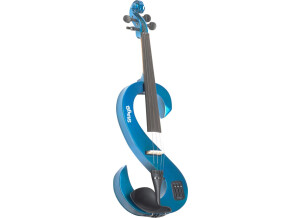
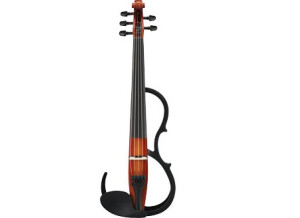
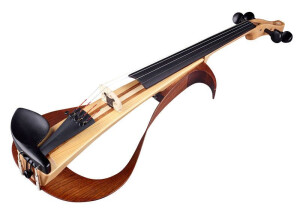
    (Originally written by pagamini/translated from Audiofanzine FR) I've been using it for six months. Headphone output plus preamp/amp output. Four pickups (one per string) with independent volume controls! Pros: excellent manufacturing quality, it has no sound box so it has a very good rejection to feedback (excellent to play live on stage), independent controls for each string (very useful). Con: sounds a bit cold and metallic. But this disadvantage can be corrected with a good preamp. The instrument's body doesn't generate vibrations and it's very uncomfortable. The fingerboard, bridge height and space between the strings are standard. You won't have any difficulty if you come from playing acoustic violins. Don't use it for classical music because it's not the best at that, like all electric violins... But it's interesting for all other music styles!! Notice that the electric violin is not the same thing as the silent violin, which produces an audible noise contrary to its name! This is an instrument you can use on stage without limitations. So pay a bit more and buy an instrument you won't change for a while.

  • Audiofanzine FR's review

    (Originally written by myodrummers/translated from Audiofanzine FR) - How long have you been using it? 2 years. - Which feature do you like the most / the least? The sound is perfectly reproduced if you have a good (guitar) amp. You can have a lot of fun with your amp (and an effect pedal) testing the distortions. A real pleasure^^. Its only weakness is its sturdiness... don't rush on stage with it. - Did you try any other models before buying it? Not at the time, but now I have an electric cello and although it doesn't have the same character as an acoustic cello it is better on stage. - How would you rate its value for money? Quite good considering the sound. Based on your experience, would you buy this product again? If I had the same budget, yes, no doubt.

  • Audiofanzine FR's review

    (Originally written by pagamini/translated from Audiofanzine FR) I bought it secondhand and used it for five years. It was my first electric violin. This instrument has a sound box. Thus it quickly generates very unpleasant feedbacks as soon as you play with distortion. But given that it has a sound box, it produces a much warmer sound than a skeleton-type electric violin. The manufacturing quality of the pickup is very bad. The wires move and create unwanted noise (or even signal drop-outs) due to the instrument's vibrations. If you open the small plate you'll see that the pickup wiring is very bad. It's impossible to use this violin live on stage because it's much too unreliable. It's a pity because it produces a warm and interesting sound...

  • « Great low-end violin pickup »

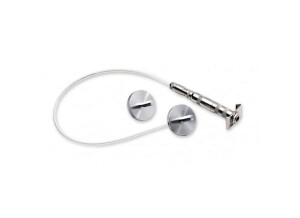
    The Shadow SH SV1 is a single disc electrical pickup, designed to be used with a regular acoustic violin. The transducer disc in 12mm in diameter, and it is made of piezoelectric material, and creates electrical signals from vibrations. The disc is placed inside one of the slots in the bridge, and depending on your bridge, you may need to either file the bridge or insert a copper metal spacer (which comes with the pickup). This can be annoying, but I found the transducer disc to fit perfectly and tightly in my violin bridge, and it stays in place no matter where I place or move the instrument. It can also be removed without extreme force or any special tools. The transducer disc is a little ugly and it seems to be a little too large, but it functions just fine. There is a short cable running from the transducer disc to the external connector, which is a 1/4" cable, similar to guitar cable. I do with the connector was an 1/8" connector, as the guitar cables tend to be very heavy, and they can pull on the cabling too much. The connector also comes with velcro and adhesive, which can be attached to the side of the violin. This is absolutely necessary, but I do hope the adhesive does not damage my violin. I've read and heard that the adhesive is safe on the violin material, however. The sound from this relatively low-end pickup is surprisingly good: The EQ seems balanced, it's not too trebly, lots of warms, and sounds very realistic. I was expected much worse, seeing how acoustic guitar pickups can differ greatly from mic-ing the guitar. But the sound here really does sound like the instrument is being mic-ed, and the pickup picks up everything. In fact, at times it can be too sensitive, picking up various noises, bumps, and movements. The cable itself can make loud popping sounds when pressed or touched, so you have to be careful where that cable lays. The noise produced from touching the cable can be excessively loud as well.

  • « Zeta Strados Crossover Bass »

    Natural finish, longer than most bass guitars but can squeeze into SOME gig bags but not all It's not a rock/blues/pfunk ax in any typical sense. It's more of a trainer for orchestral and jazz players ... usually sold to schools, but I use it in the Diva Duo: vox, KB and bass. I got it cheap from GC cuz they don't like to have weird or unusual axes in stock. The price is hard to pin down, but it were cheap enuf. It has a 6' radius neck that can be played as a bass guitar or a 34' EUB, pizz or arco. The piezo PU's are unusual and outstanding. Somehow the electronics manage to sound a very 'non-guitar' bass voice. There is no fretted version available, nor any lefty version, cuz it's not a guitar. I am left handed and find it very pleasant to play. It balances very well on the strap, even tho it's really a 'converted' EUB. If it had a 2+2 headstock instead of the 4 in line, it would fit in a much wider choice of gig bags and cases. It has an exagerated angle to the butt end which makes it impossible to lean it against a wall and you hafta be careful how you set it into some guitar stands . Nothing fancy at all, but very plain and solid. Weighs about the same as a Fender. Wood varies with price, as there are different prices of Strados. Everything is properly finished and fits neatly. Mine is alder, with a rosewood FB on a maple neck. The FB is hugely thick. The reason for this review is for someone who happens upon one of these as used, like I did. New, they are thousands of dollars and most players will not spend that on this uglee duckie. But under $1000 used, it's a cool ax. It is spozed to come with both an end pin and a 'bout mimic' for EUB style playing. It does not come with a bow. I'm gonna rate it as a 4. I mentioned some minor details that I would change, and I don't consider them personal preferences. Anyone would benefit by them, and they would not raise the cost, so therefore I cannot rate it a 5. But those details are about transporting it, and parking it during breaks, not about playing it. On the gig, between the breaks, it's most definitely a 5 ! This review was originally published on http://www.musicgearreview.com

  • « Stagg EDB 3/4 »

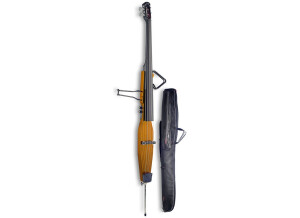
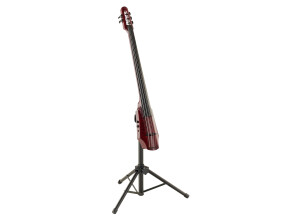
    I've played bass professionally for 44 years. I currently play in a praise band in a local church and also do studio work. I favor rock but have played just about every style, even -- shame -- disco. Favorite players include Paul McCartney, James Jamerson, Tony Levin, Chris Squire, Joe Osborn, Bob Glaub and Sting. Stagg EDB 3/4 Electric Upright Bass; transparent yellow finish; 3/4 size (same as standard upright); 42' scale. Includes a headphone out 1/8' jack and a CD in 1/8' jack to allow practice long with recordings. Controls are volume and Sub-bass, which is a bass boost control. Piezo bridge pickup. Strings are standard 3/4 size upright strings. 1/4 output jack to amplifier. Solid maple body; neck might be some kind of composite -- it's hard to tell. I purchased this instrument used from EBay in November 2009 to use in acoustic settings in my church band. I previously owned the NS Design WAV but sold it because I was not using it enough. Sure enough, not long after it sold, I found I'd need an EUB. Doh! I paid $399 with shipping and a fiberglass German bow was include in the price. To me, the Stagg sounds more like a 'real' upright bass than the NS Design did. It's hard to describe, but it sounds 'woodier' and has more 'mwah' than the NS, even though it has a slab body. I like that the Stagg has a wire hip brace that allows you to hold the bass away from you while playing, and also that it has an endpin, which allows you to move while playing. There's also a plug-in wireframe for the treble side of the bass that allows someone used to playing upright a reference point for where to switch to 'thumb' position. Since I'm not really an upright player, this doesn't bother me because I don't use thumb position. But it is a selling point for many upright players looking to move to EUB. I also like the larger, open tuning gears as opposed to the NS closed. Gotoh bass guitar type tuners. (See my review of the NS here on MGR to see why I don't like Gotohs on an upright.) The piezo pickup system is very sensitive and makes the entire body of the bass microphonic -- it picks up noises when anything hits the body -- a cord, a gnat, you name it. Stagg calls it 'noiseless,' and it may be electronically, but it picks up too many superfluous souunds. I attempted to alleviate this by putting thin foam under the legs of the bridge, which is where the pickup poles sit, but the effect is minimal. The endpin also rattles in some positions, which is picked up and sent to the amp. I had read that there are shielding issues with the control cavity, which is unshielded, but my bass is quiet. Maybe that has been improved over the years by Stagg. The Stagg is solidly built and the finish is very good. All components seem to be of good quality. Since this bass was purchased used, I'm not sure what strings are on it or if they are stock strings, but they sound good. The bass comes with a padded gigbag and, under normal handling, should stand up well. Even at a normal price -- they sell new for anywhere from $449 to $629 -- Stagg offers a decent quality for not a lot of money. Workmanship is not as good at the ND Design WAV, but the NS costs $300 to $500 more. If you're looking to experiment with upright or want to play EUB only occasionally, Stagg offers an affordable, good-sounding instrument. This review was originally published on http://www.musicgearreview.com

  • phraseland's review

    This is the budget version of the Schertler Dyn Pickup. I own both of them and even though the more expesive one costs almost three times as much I do like the Basik better. The version I am describing comes with a special 'goo' which attaches the microphone to the top of the instrument and can very easily be removed again. In this PRO model the power is supplied via phantom power (a DI Box is included that changes the currency from 48V to 10V). If you don't have a mixing board or amp that delivers such a currency then buy the other Basik model. There you will get a battery pack instead - everything else is identical. These pickups are very easily installed and have a pretty high output. I have used mine for all types of acoustic guitars. But they really can be used for many different applications. I once recorded a Cajon with it...or try it on a Cello! The reason why I like these better than their more expensive cousins is because it is a lot easier to get a good sound quickly. The Dyn pickups don't sound so open right away and the placing and EQ settings are a little time consuming. Don't get me wrong - they sound great but for live applications I have grown to love the Basik pickups. They could have constructed the battery pack better (give it a clip) and maybe they could have supplied the musician with a pouch or something. The carton box just doesn't cut it.