Log in
EN
FR

Accessories for Musical Instruments

207 products found

Categories
Filter
Sort by
Evaluation
  • Reviewed or not
  • Editor’s award
  • Reviewed by Audiofanzine
Availability
  • Available or not
  • Sold new or used
  • Sold new
  • Sold used
Must-have products
  • All products
  • Flagship products
  • Best rated products
  • Hot products
  • Popular products
Price
  • Freeware
  • Low-cost (< $40)
  • Mid-range ($40 - $100)
  • Premium (> $100)
€
Clear
Sort by
  • Popularity
  • User ratings
  • Price - low to high
  • Price - high to low
  • Used price, increasing
  • Used price, decreasing
  • Name (from A to Z)
  • Name (from Z to A)
  • Added on
Sort results
  • Popularity
  • User ratings
  • Price - low to high
  • Price - high to low
  • Used price, increasing
  • Used price, decreasing
  • Name (from A to Z)
  • Name (from Z to A)
  • Added on
Filter results 207 results found
Evaluation
Availability
Must-have products
Price
  • Freeware
  • Low-cost (< $40)
  • Mid-range ($40 - $100)
  • Premium (> $100)
Show results

The best Accessories for Musical Instruments reviews

The reviews Audiofanzine members found the most helpful.
  • « Elegant, Classic Pendulum Metronome »

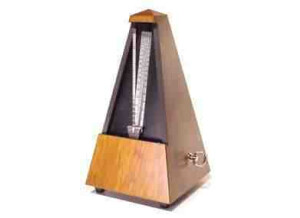
    This is an old-school, quality pendulum metronome, most likely designed for use with piano though it could also be used with other acoustic instruments. Due to its design, I would assume that most people would like to place it atop their piano, as it has a classic, elegant look. The way that it functions is similar to the metronomes of old. The pendulum swings back and forth and clicks in time to the appropriate setting of beats per minute. There is a lever that will allow you to adjust to the appropriate length. The clicks are loud enough to be heard even over the loudest piano passages, but still not overly loud. This is especially appropriate for learning classical pianists, as it also has the Italian tempo terms (allegro, largo, andante) listed next to the BPM of that particular tempo. Thus, the student can get a familiarity with these tempos to the point where they most likely will not need the metronome after many years. These are so well-built and timeless that they can last forever. In fact, my great aunt has had one at her piano for the last 30 years or so. Try doing that with an electric metronome! This won't work well for electric guitarists, drummers, or other loud amplified instruments, but you bet it would be great for pianists, violinists (and all string instrument players), as well as horn players (though jazz saxophonists might actually drown it out). A great device that is timeless.

  • moosers's review

    The Boss DB-60 is a portable metronome that also has built in rhythmic patterns, as this is in the family of Dr. Beat drum machines by name. The DB-60 is overall a pretty simple device to use, although since it does have more features than you would expect to get with a more traditional metronome, it does take a minute to get used to it all. The metronome is a digital one, so you can set the tempo to any and all different beats per minute, which isn't something that you usually get with an older, analog metronome. On the DB-60 you also have parameters for choosing between different metronome styles, for playing a pitch, a timer, as well as tempo tapping and looping, and storing your own loops and patterns. It has a small built in speaker with a volume scroll, but also has a headphone output. The rhythmic patterns aren't the most realistic I've heard, but they get the job done just fine in this sort of context. The digital screen makes it easy to see everything going on without any confusion at all. The Boss DB-60 fits right in your palm, so bringing it around isn't an issue at all, in fact, it's quite convenient. I would bet the face that this is so small is probably the main thing that will attracts users to it, as it makes it easy to bring on the go for recording sessions or live shows. The price definitely doesn't make it the cheapest metronome available, but it is really more than a metronome, which is the reason that it costs almost $100 USD. Overall, I don't really have too many knocks on the Boss DB-60, as it is a well built device that has a lot of great features and is perfect for bringing on the go.

  • phraseland's review

    I was looking for a metronome that allowed me to tap in the tempo, was loud enough so I could play my dreadnought along with it and had a sound that didn't hurt my ears after a few hours of playing. I looked hard and eventually only found the KDM-2 by Korg. A lot of the other metronomes try to be as small as possible or cut corners elsewhere. This one is bigger than most of its competitors but I find it to be still small enough to be taken out. The advantages of a bigger size are of course: - bigger display - louder and better sounding click - normal batteries can be used This metronome also doesn't make the mistake that it tries to be a mini-drum-machine...it is just a very good metronome. You can adjust the beats and have even presets for clave and similar rhythms. The tap button is very present on the top of the unit and the accent is also visible via an LED that either lights up green or red. The only thing I have to complain is that they didn't think of building in an 'auto-off' function...so don't forget to turn the unit off when you're done using it. The batteries do last a long time but after a week or two of just being turned on even they will run dry.

  • « KORG MA-30 METRONOME - Wish it was louder »

    Ok so what can you say about a Metronome, it should keep time and have a good range of speeds, this one does that from 40 to 208BPM. Instruction manual is very good and explains the features in enough detail to understand. It looks good and appears to be built pretty well for what it is. It also has a beat tap feature to get the tempo just where you want it to be. It also has a sound calibration button to choose from 12 different pitches. Comes with earphone jack, memory backup and the big one for me, adjustable volume. 250 hour battery life as well which is fantastic. That is all fine and dandy except for one big problem...it isn't loud enough, even with headphones. I bought this for my son to use with his drums and he can't hear the darn thing loud enough to use it for drums. For the sake of being fair, I think it serves guitar players very well and is loud enough for that purpose. It seems to be a nice metronome and I have used it for my guitar playing but I wish it was louder and I could appreciate all of the great features I mentioned above for my son's drum lessons. Also to be fair, this was suggested by my son's Berkley educated drum teacher so maybe we are doing something wrong. I just have to believe there is something better out there that maybe has it's own amplifier and can put out a louder tone. I have to conclude that this is probably ok for some people but we have just found it to be inadequate for our purpose. I have not tried any others as of yet but I have to say I will need to in the near future. Can't really give this high marks based on the volume.

  • « Boss DB-30 Metronome »

    I've used this metronome in all of my years as a student as well as as a teacher. I've been playing piano seriously since I was just a little boy and bass since middle school. I'm currently not in a band...just teaching at the moment. It's palm-sized and black. More to follow in the review... I got it because I needed a portable metronome. It was only about $30 at the time I purchased it from Volkwein's (one of the last purchases I ever made there...) back in 2002 or so. It was cheap, and the Boss Dr. Beat series has gotten plenty of well-deserved good press, so it was an easy decision. <a href="http://www.americanmusicalsupply.com">http://www.americanmusicalsupply.com</a> Incredibly long battery life, for one thing. I've only had to change the battery four or five times in those 8 years that I've owned it, and considering the fact that I use it daily, that's not bad at all. It'll do anything from 2/4 to 7/4 with a couple clave rhythms inbetween, and it'll play various subdivisions within that structure. It also has a little clip on the back so it can sit on your belt or on a music stand. Definitely helpful. It can also be used to give drone notes for tuning instruments or having something to tune to in exercises for string instruments. Having a headphone jack helps as well, especially for use in live performances when a song's tempo is critical. I would like to see more polyrhythms and styles represented, and I'd like more control over what subdivisions are played, but that's something that is already represented in a higher model. So I guess I'm not really complaining with this one. I'm just ready to move on. It's plenty sturdy, looks sleek, and plays great. The Dr. Beat metronomes are the best drummers you'll ever play with. And you can carry them in your pocket. <iframe title="YouTube video player" width="480" height="390" src="https://www.youtube.com/embed/qM5kJA2m-o8" frameborder="0" allowfullscreen></iframe> This review was originally published on http://www.musicgearreview.com

  • « Boss DR-90 Metronome »

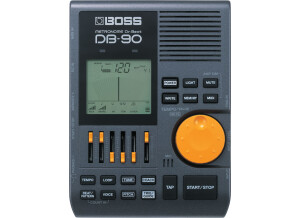
    I'm a drummer. I'm originally from Brazil. I play in a band called Glint. As important as owing your own drum kit is to own a great metronome. I previously owned the DB-88, which I already thought to be an awesome machine. But the new features that comes with DB-90 makes this addition to the line of Boss metronomes even sweater. Coming now with a MIDI input, a Rhythm Coach and an auto power off function that turn the metronome off after 60 minutes of not being used, plus all the 88's old features, like the note mixing and reference tone. I bought mine for $150 in a drum shop but you can get it for a little less online. <a href="http://www.glintonline.com">http://www.glintonline.com</a> The thing I like the most besides being able to write and save your own patterns and signatures is the tone reference function which is a great ally on drum tuning. Also, this machine is very user friendly. The DB 90 comes with a LCD display, MIDI, headphones and instrument inputs, 5 octave tonal reference range and it's powered by ac current or dry battery. This metronome is probably the best one you will find in the market. Filled with very cool features making practicing a lot fun. This is a fantastic tool not only for beginners as for pro drummers. This review was originally published on http://www.musicgearreview.com

  • « virtual time keeper! »

    This is an high quality metronome, most likely designed for use with piano though it could also be used with other acoustic instruments. Due to its design, I would assume that most people would like to place it atop their piano, as it has a classic, elegant look. The way that it functions is similar to the metronomes of old. The virtual pendulum swings back and forth and clicks in time to the appropriate setting of beats per minute. There is a lever that will allow you to adjust to the appropriate length. The clicks are loud enough to be heard even over the loudest piano passages, but still not overly loud. This is especially appropriate for learning classical pianists, as it also has the Italian tempo terms (allegro, largo, andante) listed next to the BPM of that particular tempo. Thus, the student can get a familiarity with these tempos to the point where they most likely will not need the metronome after many years. These are so well-built and timeless that they can last forever. In fact, my great aunt has had one at her piano for the last 30 years or so. Try doing that with an electric metronome! This won't work well for electric guitarists, drummers, or other loud amplified instruments, but you bet it would be great for pianists, violinists (and all string instrument players), as well as horn players (though jazz saxophonists might actually drown it out). A great device that is timeless. I have been using this for about 2 or three years and it has really helped with my playing on beat. The device is very small and portable you can take it anywhere with you it fits right into your pocket. Its really a must have if you are a guitarist, you really need a handy device like this one. I highly recommend having one of these around you at all times.

  • « Buy a Kyser and It Should Last. »

    The Kyser banjo/mandolin capo is basically just a shrunk down version of their popular guitar capo. I’ve used their guitar capos for several years so when I decided to pick up one for my mandolin it was a no brainer. I’ve used strap on elastic capos in the past and they either fit too loosely and don’t hold the strings down leading to fret buzz, or they fit just right to start with and eventually stretch until they no longer work correctly. I’ve used a Planet Waves capo in the past as well, and they have a clever design with a thumb wheel that allows you to adjust the tension on the strings, but this take a little longer to reposition in between songs. The Kyser works like a spring loaded clamp and is easy to position and holds the strings firmly without holding them too hard to the fret board, causing the instrument to go sharp. The capo doesn’t mess with your tone (no muffled or dead strings) or intonation it just does exactly what it’s supposed to do, raise the register of your mandolin. I’ve owned several of Kyser’s guitar versions before and over the years only one has failed me. The metal spring finally snapped on my oldest one awhile back, but with ten or so years under it’s belt, that’s pretty good reliability. I had two other brands of capos before I went to these and the rubber pad that seats on the strings came loose and had to be re-glued, never a problem with my Kysers. This is my first mandolin capo, but since it’s just a scaled down version of the guitar capo I would imagine my experience would be applicable to all capos. This capo is a good value and it’s worth it to spend $20 dollars once and have something that is going to work great time and time again without any fuss. Small and easy to clip to a mic stand when not in use, this capo also comes in a variety of colors to match your instrument, become nearly invisible on stage, or in my case, brightly colored so that my eyes can find it easily when I misplace or drop it.

  • « Definitely one of the best folding music stands »

    The K&M Heavy Duty folding music stand is definitely one of the best out of all of the folding stands out there. But hey, what else do you expect from a stand made in Germany? I have the Silver model, and while it's not as professional looking as the black version, it still looks very nice. Adjustments are made via big thumbscrews, and once you tighten them down the stand isn't going anywhere. I love how deep and wide it is. You can easy fit three sheets of music side-by-side on it without a problem, and it's deep enough that you can put a pen or something else small on it without the risk of it rolling off. Having total control over the angle of it is awesome as well, and comes in handy quite often. For instance, if you get glare from the lighting you can adjust the stand to minimize it. Quite handy. The expanding tripod base is pretty much the perfect size. It's wide enough that you don't have to worry about tipping over the stand, but small enough that it isn't taking up a stupid amount of room. The feet have hard plastic tips on them that hold it in place decently well, and protect wooden floors from scratches. The stand is a good bit heavier than others, but it still folds up small enough to fit in a bag easily. Overall, I can't find any fault in this stand. It is stable, wide enough for three pages, and is built to last a long time. If I absolutely had to change something, it would be that it would have rubberized feet instead of hard plastic. But that's a totally minor issue, definitely not a big enough one to knock it any points. I suggest that next time you are shopping for a music stand you give this K&M stand a look.

  • « Good tuner »

    This is a combination of a metronome and a tuner. The metronome can go from 30 to 260 beats per minute. It can be calibrated for 1-9 beats per measure. It has a volume control on the top, a headphone out, a 1/4" input for electric instruments, a mic for tuning acoustic instruments, and runs on two AAA batteries. It has no output and no option for a power adapter, which are both minuses for me. If you're tuning an electric guitar, every time you need to check your tuning, you need to unplug the guitar from the amp or pedal, and plug it into this. It's not for playing live or playing with a band, or any other time when getting tuned up quick is a necessity. The batteries last a long time, which is good, because I use it a lot. The metronome keeps time very well, and is very useful for practicing songs, techniques, ect. The tuner side is a chromatic tuner. In tuning mode, you can switch between showing semitones as sharps or flats. Hold the Metronome/Tuner button to switch between modes. In tuner mode, you can sound out a tone at a pitch you select and tune by ear. The tuner can be calibrated from A4 = 435 to 445 hertz, for those of you who like tuning to something other than standard, concert pitch. The tuner is accurate to +/- 2 cent, which, compared to other pedal tuners, isn't the best, but for $15 it is great. The tone generator is accurate within 0.5 cent, which is decent. All in all, this is a great tuner for cheap. Decent accuracy, fast tracking and decent note recognition. The metronome keeps time excellent and has loads of options. This is a decent tuner for a very good price.

  • moosers's review

    The Matrix MR 500 is a simple metronome, suitable for any sort of use. It’s really a basic metronome, with BPM settings ranging from 40 BPM to 208 BPM. It also has the ability to sound a tone at A 440 for tuning purposes. In the back it’s got a little stand to hold it up, making it easy to place in from of you. It has an 1/8” mini plug jack for plugging in headphones, and also has a mode for only showing the LED light rather than sounding the tempo. Although today we’re used to digital metronomes that allow for every BPM setting under the sun, the MR 500 goes in intervals and doesn’t have this ability. Most users won’t be using this for recording any way, so it’s certainly adequate enough for getting a ball park idea of the BPM that you’d like if you’re prepping for recording. I like the MR 500 and metronomes like this in general because they are small enough to carry around in your pocket or instrument case. They definitely are no longer making the MR 500, but you’d probably be able to find a used one without a problem if you wanted to. I can’t say that I’d recommend the Matrix MR 500 over other metronomes of this fashion, as it’s pretty much the same as most from this era. For this reason I can’t say that it would be worth it to seek out the MR 500, but if you do come across it, it’s a fine metronome to use. However, if you’re looking for a top of the line metronome, this definitely isn’t it. If you want all the works in a metronome, digital ones are cheap enough to be had, but if not the MR 500 does the job just fine.

  • moosers's review

    The Seiko SQ44 Metronome is a small electronic metronome, designed for uses of all types. It is powered up by a nine volt battery and has a stand on the back of it so you can set it down easily. It has a mini 1/8" jack for using it with headphones if you so choose. In addition it can play a tone at A 440 Hz for tuning purposes. It has two different modes to choose from, including beat, which makes click noises for your tempo, and a light mode which is just the flashing lights. It has a built in speaker that is pretty loud as I have never had a problem hearing it over what I'm playing, but if you were playing drums with it you would probably need headphones. The tempos on the SQ44 range from 40 bpm to 200 bpm, and they go in increments ranging from two to eight, but most of the tempos are in increments of three and four. While I'm definitely used to having every possible beats per minute available to me with the world of Pro Tools, so I generally only use this for practicing to a click rather than to actually find the right beats per minute of a piece. I might use it to get an approximation, but I like to get exact most of the time. This is the only hardware metronome that I keep around, and it isn't something that I use all of the time since I usually have Pro Tools available to me just as quick. I don't really know how much this will cost, as I got one of these second hand from a friend, but I'm sure that if you could find one that you'd be able to get one without much money. While they definitely have newer digital metronomes that are more versatile and can be set to every possible bpm, for what this is, the Seiko SQ44 will get the job done, but I would still recommend getting a newer metronome if you can...