Log in
EN
FR

Misc music/audio gear

6959 products found

Categories
Filter
Sort by
Brand
Evaluation
  • Reviewed or not
  • Editor’s award
  • Reviewed by Audiofanzine
Availability
  • Available or not
  • Sold new or used
  • Sold new
  • Sold used
Must-have products
  • All products
  • Flagship products
  • Best rated products
  • Hot products
  • Popular products
Price
  • Freeware
  • Low-cost (< $200)
  • Mid-range ($200 - $650)
  • Premium (> $650)
€
Clear
Sort by
  • Popularity
  • User ratings
  • Price - low to high
  • Price - high to low
  • Used price, increasing
  • Used price, decreasing
  • Name (from A to Z)
  • Name (from Z to A)
  • Added on
Sort results
  • Popularity
  • User ratings
  • Price - low to high
  • Price - high to low
  • Used price, increasing
  • Used price, decreasing
  • Name (from A to Z)
  • Name (from Z to A)
  • Added on
Filter results 6,959 results found
Brands
Evaluation
Availability
Must-have products
Price
  • Freeware
  • Low-cost (< $200)
  • Mid-range ($200 - $650)
  • Premium (> $650)
Show results

The best Misc music/audio gear reviews

The reviews Audiofanzine members found the most helpful.
  • « boutique vinyl cutter »

    The T560 is a vinyl cutting lathe, cutting realtime using a custom metal yoke/support/cutting mechanism. It uses a Technics 1200mk2 for vinyl platter and playback monitoring arm. A rack of analog gear is used to 1] optimize the signal for vinyl . 2] Volume control of cut/playback monitoring. 3] Amp dispatch levels , 3 band eq, groove spacing, cutter diamond temp control, motor control switch 4] monitoring R/L/ST/horiz treble/vert treble 5] Peak metering 6] cutter amp the cut vinyl extrusion is removed by vacuum pump directly from the cut. sounds are 3D and fat. extreme care in set-up needed both sonically, and physically ! Some wow & flutter , some background noise, like tape, but low. very long learning curve ! loads of parameters to balance and each cut is different. Good build quality. Good design. Quality product.

  • « As (positively) surprising as they're little-known »

    These Ditton are an excellent surprise. While I bought them without getting any user review first, I found these speakers to be soft-sounding, powerful, very balanced, endowed with a real presence and more redical than other Celestion speaker models. It's a matter of taste of course, but they are well above the Ditton Two & Three while sticking to the same style and materials. Their softness requires to puch them so as to let their sound roam free on rock or classical music, but they're also more than fit for modern, electro sound (no I'm NOT talking of modern club sh** ;) ). I'm 26 and a real music fan, and I'm surprised to find such versatile speakers in series of that age. Created by Celestion and built locally for national dealers, the usual screw terminals or high-quality veneer are replaced by more generic stuff, such as what could be done at the time by JM Lab / Focal. This changes nothing to the fact these Ditton 400 were Celestion's high-end by the end of the 1980s. They followed the famous Ditton 66 Legend, featuring rather similar balanced, powerful and precise sounds, but with a finish of a slightly lower quality - which shall be forgiven. However, its durability is not affected in any way. Even if you'll have to renounce Celestion's usual "Made in Ipswich" mention, they were clearly built to last: an elaborated filer, tweeters, coils and suspensions that ain't degraded with time (except perhaps for the waving of the glue generously applicated underneath the frame by the technicians that built it, but since these are high-quality, rubber suspensions you'll just have to unglue it, clean it and re-glue it... or, the end of planned obsolescence :bravo: ). I recommend them highly... But hush! ;) Let's not cause its price to skyrocket. Here are the pictures from another happy Ditton 400 user I found on another forum... They're better than those provided by my old Samsung

  • nvivo's review

    What a find! I bought it in a secondhand store for peanuts because it was in a very bad shape, the front was dirty, the inside was covered in dust, four inches accumulated in three decades (the old man who sold it to me told me he had it 15 years stored in his cellar!). I ran a first test, I connected everything and turned the speakers on...Nothing happened, no sound, no noise, the VU-meters didn't move nor did they light up. I opened it up and, as I wrote above, it was full of dust (I had never seen so much in one place). Two hours later I could see more clearly inside, but there was still no sound. The first reason was the relay didn't work. To cut a long story short, the relay serves as buffer switch: When powered on, the power supply sends electricity to the filtering condensers, their role can be assimilated to an energy reserve in order to feed the power stages continuously when lots of power is demanded. The relay becomes useful right when it allows current to flow as soon as the filter capacitors have taken in enough current. A brief checkup with a multimeter allowed me to verify the good health of the Technics. (I must note that the number of components is staggering). Since the relay didn't work, I didn't even bother to test it...But after a short while I realized I had forgotten it and discovered it was actually fine: Engaging it manually made sound come out one of the speakers. This made me start from zero again, with an added problem. Namely, no sound on one channel and an issue with one or more components. Given the electrical complexity of the amp, the technical diagrams were quite useful. I immediately thought about the four transistors in charge of controlling the relay and protecting the speakers, so I had to isolate the broken transistor, which wasn't easy to test. They all seemed okay, but, logically, the problem couldn't be rooted anywhere else. At this point, I had been working three days on the amp and still had the hardest part ahead of me...I needed to take the entire amp apart to change the transistors properly. In other words, about 10h of work to be able to take the logic card out. I took the opportunity to change the power cord, too, which was screaming for it. A new, shielded AC cord never did any harm. Since the light bulb of the VU-meters was blown, I replaced it with a Marantz one from the same period (it provides more light with the same amperage). I then changed the heat paste between the power transistors and the heat sink, put it all back together (one more day of work) and powered it on. Three seconds later, the relay was activated. Sound came out the right channel. A quick check of the fuses and replacing one of them (which didn't seem to be blown) solved the problem. What a relief. 04h35, first test, Katie Melua - Spider’s Web. No surprises... After 15 years without electricity it had to regain its health slowly. I'd resume listening in the morning or the afternoon...and leave it powered on a moment. Okay, the time came to put it to the test. Same song. The sound is impressive, clear, the VU-meters respond well and vibrations fill the room, very good presence in the lows and an overall perfect dynamic response. It sounds vintage and the increase in power is dazzling. After a day of listening, the timbres are more refined, vocals are warmer: No noise, no unbalances. This amp provides a real listening delight. The 7700 confirms that the notion of a Watt has certainly changed after 30 years! It can handle my Avantgardes without a sweat and provides very nice "jazzy" sounds. Once again, long live vintage gear!

  • « A smooth, refined, rare and beautiful hi-fi preamp »

    JJ Electronic is best known for its excellent new-production vacuum tubes (also erroneously known as "JJ/Tesla") which are a high quality alternative to the current production Russian and Chinese offerings, but they also make a little-known line of extremely high-end integrated and separate hi-fi amplifiers. The JJ 243 is the lone preamplifier in the lineup, and although intended as a synergistic front-end to the JJ 322 and JJ 239 monoblock amplifiers, it can certainly be used as a preamp in front of any other amp. The JJ243 is an all-tube stereo hi-fi preamplifier with an integrated phono stage. The line stage uses a pair of ECC82 and a pair of E88CC tubes which are exposed on the top plate of the unit, and the phono stage uses an additional four E88CCs hidden internally in the unit. The line stage offers three inputs. There are also three outputs available: the first is amplified, with volume control; the second is non-amplified, with volume control; the third is neither amplified nor volume controlled. The outputs give you flexibility depending on how hot your amplifier input is, whether it also has a level adjustment, and are also useful for connecting additional amps or active speakers or subwoofers. The phono stage makes 50db of gain which is suitable for Moving Coil cartridges with medium to high outputs, or Moving Magnet carts which are almost always high output. I have used this phono stage with 47kohm carts with outputs ranging from about 1.5mv to 2.5mv output and it's got more than enough gain for this; JJ claims the stage is suitable for outputs as low as 0.5mv, but realistically I wouldn't go any lower than a medium-output cart of 0.8mv or higher for best results. There are DIP switches on the rear of the unit that allow you play around with different MC cartridge impedances which is a very nice touch, though the higher output carts I've tried have been happiest staying at 47kohm be they MM or MC. The controls for the JJ 243 are as simple as can be imagined: one nicely stepped rotary switch that feels of solid quality, which selects between the four inputs (one for phono and three line ins); and a volume knob which is a very smooth, wonderful feeling ALPS affair with a great taper. That's it. What more do you need, right? JJ offers several color finishe combos for the wood cabinets and metal top plate, knobs and PSU cover: wood finishes are a lovely deep red, which is what my unit has, and also a brown walnut and black; metal finishes are gold (which my unit uses), as well as silver. Opening up the unit reveals quality PC boards and extremely high quality parts, including JJ's own excellent tubes and capacitors in addition to the very nice rotary switch and volume pot, nice tube sockets, and so-on. Construction is cleanly implemented and looks very good. All connection jacks are gold plated RCA-type. The power connection is via a detachable IEC-type which is great for playing with different types of power cords. I have used Zu Birth and DIY VenHaus upgraded cords on my unit to good effect. The sound of the JJ243 is, in a word, wonderful. The character somehow manages to be smooth, warm, rich, buttery, and clean all at the same time. It is sonically flattering, yet highly resolving. There is never, ever the slightest hint of grain or aggression. The high end is extended; midrange is very well fleshed out and it and the low end have a wonderful tube bloom. The lows are tight yet big and the entire frequency spectrum is produced with a very refined, svelte quality that simply oozes quality tube-ness. It can throw as big and airy a soundstage as the rest of your rig will allow. Its reproduction is simply breathtaking overall. The phono stage simply offers more of the above sound while amplifying your medium or high output cart of choice. I use it either with my JA Michell Gyro SE turntable with Origin Live Silver2 arm with Benz Micro Woodbody H2, Shure M97xE and formerly Clearaudio Aurum Beta S carts, or my other turntable which was a 70's AR Turntable that has been so heavily modified with Merrill-Scillia parts that it may as well be considered a "FrankenMerrill," with an Audioquest PT-6 arm and either Shure M97xE or Benz Woodbody H2 carts. In all configurations, the results of the phono rigs through the JJ 243's phono stage have been exquisite. The Michell Gyro/Origin Silver/Benz H2 in particular is an unquestionably extremely high end and rather expensive rig, yet the JJ 243 is NOT outclassed by it. They're simply an awesome, mind blowing pairing with as big, smooth, plush, airy, refined and resolving a soundstage and general reproduction across the frequency spectrum as you can imagine through any high end tube amp that's up to the task! The different output options give you some latitude int he amps you connect to. I have used this preamp in front of a broad variety of power amps ranging from solid state to hybrid to tube amps, from Class A to AB to D and H SS types. This preamp doesn't match play nice with all rigs due to its character which has occasionally been too soft-sounding for some amp types particularly if they have unusual input impedances and particularly some less than flattering Solid State types, but generally it is a smooth operator and is especially happy mated with tube amps. I have mated it long-term in my own rig formerly with a Conrad-Johnson MV-55 Class A tube amp and currently a pair of Manley Mahi Mahi Class AB monoblocks. Both pairings have been simply fantastic, and the JJ/Conrad Class A pair were especially exquisite. The Manleys have unusually hot inputs and I was happy to have the JJ's non-amplified, volume controlled outputs for that particular pairing. This amp compares very favorably with or in excess of such tube preamps as the Conrad Johnson PV10 and PV14, and shoot-outs have revealed that is can indeed compete with other tube preamps well in excess of the price I paid for it, which is good considering its asking price has climbed a fair bit in the 7 years I have owned it. It was a staggeringly good value when I bought it then, and is still quite competitive even at double that price. In terms of reliability, I did have a resistor go bad after a couple years and JJ Electronic took great care of me by sending me the part and paying my local tech to do the work so that I did not have to send it cross-country to my dealer and JJ importer, Bob Pletka of Eurotubes in Oregon. The only nitpick I have is that the gold-plated top plate and volume knob have developed a slight patina over time. In summary, the JJ 243 is a stunning sounding, lovely looking, all tube preamp with a killer tube phono stage. It is unquestionably a rarity; I was only aware of perhaps a dozen having been imported to the US when I bought it in 2004 and probably not loads more since then, as JJ Electronic's focus is on their tube production, but those wanting a very unusual preamp with good fit and finish and a super-refined, smooth sonic reproduction could do well to add this to their shortlist.

  • « Fantastic piece of gear, a digitally controlled analogue patchbay »

    Audio guy here! You're looking at a fantastic piece of gear, a digitally controlled analogue patchbay via proprietary software: just connect everything here, and then choose, at a glance of a mouse click (or else), your signal path! I've this patchbay since 2022, always patched into my machine room, and by its software I decide what combination of rooms/musician/signals I want to drive into my SSL mixer. Besides, 16 preamp and 16 hi-Z input, give me all the elasticity I want to. Really appreciate this product, Colin!

  • « Superb Power Amp »

    I was looking for 2.0 system after 3 years in HT entertainment. I used to have some good Pioneer Separate Amp and integrated amp from Yamaha, Sansui, Harmon Kardon and Dynaco tube before HT. As the convenience of Yahoo bid, I acquired this Onkyo Integra M-5060R lately. After a week of listening (mainly classical plus many other types), I am sold by it. The music details are more abundant than I had with my Pioneer M-1500 ( I still use the pairing C-1500 as preamp ). The vocal has more ambient and the high is filling higher frequencies without fatigue. The bass is going lower and controlled. I am re-listening many of my dust-plated CD's which I previously rated muddy ( blur ) or too-bright.. and quite a number of them are actually gold-mines instead through M-5060R now as either the previous muddy was due to less analytic or bright as little headroom for the low frequencies by previous equipments. I took 1 point off because though in playing large orchestral music, the details are more abundant but while on playing some chamber music, the clarity of the instruments is not as crisp (palpable) as Pioneer M-1500 - may be due to a much simpler circuit - 7.7 Kg by Pioneer compare to 18.5 Kg. by Onkyo. I also noticed the pairing P-306R (P3060R) is also a great component to couple with from knowledge forums. P-3060R is my next search. Maybe the Super Servo pair can make Onkyo a perfect 10 for my listening. One last thing,Power Amps need warm-up. This starts to be in good working condition after 30min and needs 1.5 hours to bring to its best sound quality.

  • « Doesn't hold up over time »

    The DBX PB48 is a low-cost, no-frills, 48-point, 1/4" TRS jack front-and-back patch bay. Patch channels can be normalled or de-normalled depending on how you have each module oriented--to change configurations, you loosen a plastic nut, remove each module, rotate it an re-install. The plastic nuts are spaced close together which can make them difficult to access and manipulate, and care must be taken not to crack them. The process of removing the modules for re-configuring is fiddly and tedious. If you expect to re-configure your patching scheme very much, I would look at other bays with easier mode-changes. The faceplates are very simple, clean and dull: charcoal metal frame and white label strip areas. I suggest using a thermal label printer with 1/4" tape for labeling these bays. I used 8 or 10 of these bays for years until my recent installation of a vintage console with internal TT patch bay. Patching is good and solid for a while with the DBXs, but in due course you will find the need to clean the internal contacts (coating a patch cord end in Deoxit D5 and inserting it several times in each patch point will do the job. Due to poor chassis rigidity and flimsy plastic-nutted module mounting, the modules are very prone to cracked socket solder joints on the module PCBs with continued use, which will cause intermittent connections and incorrect signal levels. I was pleased as punch by the time I upgraded patch bays and retired the dbx bays after about 5-7 years of service because they'd gotten to a point where I was having to pull and re-solder modules all the time just to keep the studio usable. I have also owned and used similarly priced and classed bays by Re'an and Neutrik. I consider the dbx and Re'ans to be very low duty, suitable for a light-use home studio and no more. The Neutriks are the best of the bad bunch, easier to reconfigure, a little more rigid hence a little better life expectancy, and good connectors. It would be a better spend of money for more serious or frequent patchers such as commercial facilities or frequent-use home studios to to bite the bullet and look into more expensive, slightly more permanent but better built, more difficult to install BUT more efficient, reliable and professional TT/Bantam patch bay options with multipin quick-connects or hard connection terminals on the back. The patch points on my 31 year old MCI console are much more solid and reliable than a ~5 year old, routinely used dbx PB48...let's put it that way (the dbx bays sure install easier, though!) Again, in a light-use home situation, I expect they would be longer-lived and just need periodic cleaning. Sonically, well, you're always going to lose a little something with the additional connections points a patch bay adds to the signal chain, and this rings especially true with jack in, jack out bays like the dbx PB48, but beyond that, these guys don't do anything especially horrific in a worse-than-average sort of way to the sonic quality of the signal. They're no better or worse than other similar bays in this regard...er, until you've patched one too many times, the solder joints start letting go and your signal starts getting wonky.

  • Audiofanzine FR's review

    (Originally written by kh400/translated from Audiofanzine FR) Hi, I owned this model several years and it provided all advantages this brand has to offer. But also its disadvantages... The high-end response is perfect thanks to the very good DOM4 tweeter and the exceptional DOM12 medium driver. I find the mids sound much better than on Sloop models although its paper cone is also good. But Clippers are are even better (IMO)! The famous 30BZ woofer mounted in a closed enclosure does a perfect job reproducing lows and low-mids. But I find it somewhat limited in the sub-bass range. It's the only "weak point" that led me to choose another brand. If Cabasse had made the necessary modifications, they would have had the best speakers in the market because this woofer was also mounted in Sloop and Galion models. Watch out for the suspension, it's breakable!... But Cabasse modified it later. They have a beautiful finish... It was a delight to listen to them but I wouldn't recommend them for hard rock, heavy metal and the likes because it's not their favorite music, if you know what I mean. On the contrary, they are excellent for jazz, classical music, vocals and acoustic instruments. A delight! Considering their secondhand price they have no competitors on the market!!! You don't need to look any further... Michel

  • « Could be better for 20€ »

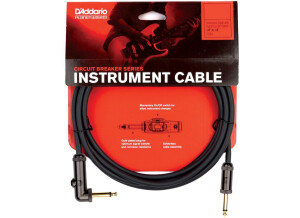
    I bought this cable in jan'2025 to use w/ my Jackson DKMGTFF & Orange Crush 20. 1st i did, i tested the capacitance. Having ~530pF for 10 feet gives us 53pF/feet, almost x3 of what good guitar cable should have. Actually i'm searching for a replacement and i will return this article back (bought on amazonfr). There are good cable w/ 15pF/feet to no problem. So just need some time to check datasheets (capacitance aren't mentioned for this cable btw!). Shielding is average. 20.50€ too expensive for what is it. I'd say, no more than 10 bucks.

  • « Good old boomin' party speakers »

    These and similar Technics speakers were decent affordable speakers in the 90's and even the 80's...I bought a pair that were almost identical for $99.99 in 1986 or so. I recently found another pair for 20 bucks and they still sound okay...ish. The 10" paper woofers sound weak by today's standards and the 1" mid/tweeter speakers sound washed out but not shrill. The super tweeters are good though. They are strong, loud, and clear and they don't crack up at normal volume. I use them in the garage for hard rock and metal and that's where they shine. Boomy, weak bass and strong clear highs...these sound like what they are. Cheap but effective oversized speakers. Not meant for audiophiles or pro audio but good for basic sound. The boxes are good and solid even after 20 -30 years. Good enough for me to upgrade the woofers, mids and the crossover in my set.The crossover consists of one capacitor. Cheap and effective I guess. I will put a board in and some larger mids and better woofers. Maybe I'll try them in the home theater set-up. Anyway...3 stars out of 5.

  • « Monster 2500 Power Center . »

    Before, I only used a ETA PD9 Power Conditioner/ Surge Protector and it is great for lower votage rack units in one rack and it cleaned up my signal very well. I read somewhere on an Internet forum, that to have better noise filtering you need seperate types of outlets for Digital, Analog and High Voltage requirements. I looked up Furman and bought one and it didn't affect the sound too well and I returned it back to Guitar Center. So I decided to get the Monster 2500. The first one failed and I was going back to the Furman, but decided not to, so I exchanged for another Monster 2500 . Went home and dropped it into my rack, hooked up to my tube amps ( now using two Crate Power Blocks) to the high voltage outlet in the back, used the Analog outlets to power my ETA PD9 Power Conditioner , run a cable with a power surge protection power strip for my Decibel Eleven Hot Stone Deluxe to power footpedals on my pedalboard and I used the Digital filtered outlet to run my Digitech 2112 SGS, Behringer 1124P Feedback Destroyer and ran a cable with another surge protector to give clean power to a Digitech RP-12, RP-1 and Decibel Eleven Loop Expander. And it sounded much better than the Furman, by a long shot. What I liked was the power sequence that the 2500 turned my equipment on. First, the Analog gear , the Digital gear and finally the high powered filtered outlet was the final in the sequence. Later on, a friend coincidencely, gave me a Monster 1100 Power Bar and then I had multiple layers of Power Conditioning, surge protection and noise filtering.

  • « Amassing speakers for the money »

    I will start to say that less people knows that Jamo company is owned by Klipsch now. The unexpected quality of those speakers made me understand why Klipsch decided to aquire Jamo in the past. I'm running those speakers with various vintage amplifiers from 25 to 90 watts per channel. They give you nice and loud sound both with low power amplifiers and more powerful ones. They are best in the highs, good in the middle and unexpected good in the lows too (at least according to my taste). They do not have a powerful bass, but if you want to hear loud and clear the voice the lows are just perfect as they are. Medium and low speakers are made of paper. I've read on a danish forum that the speakers paper and cabinets where made from carefully selected trees in Denmark but I can't guaranty this information is true or just some danish fan mambo-jambo. The rubber is still in perfect condition after so many years. It is worth telling that you can still buy online (in 2021) new foam surround for the woofer if you need to change it. I've got a new backup pair for only 13$. Regarding the cabinets it's a matter of taste if you like them or not but i can tell you that they are well made also. The wood is heavy enough to cope with the vibrations despite the light look of those speakers. I believe the silver front margin plays tricks on your mind when you see them suggesting that they are lighter than they really are. When in fact their wood cabinet is much heavier and you can see that from behind in the photos i attached. Good for hearing this type of music: classical, live concerts, folk, hippie music, techno, rock ballads and old traditional music from various countries with highlights on voices and high instruments. Maybe not so good for hip-hop and heavy rock for your taste (mine is pleased because I don't favor the bass). Best for listening at low volume. This part amassed me most: how good those speakers are compared to other when handling low volumes. Perfect for not disturbing your neighbors but still hearing the music loud and clear. Their original listing price was around 265$. They are now sold at very low prices, due to the fact most people don't know much about how good they are, making them a good acquisition for a hi-fi beginner. I'm always pleased to find hidden gems in the mud and those had enough hidden shine to surprise me. (Please notice that this my personal opinion strongly influenced by my taste)