Log in
EN
FR

Other Misc. Products

227 products found

Filter
Sort by
Evaluation
  • Reviewed or not
  • Editor’s award
  • Reviewed by Audiofanzine
Availability
  • Available or not
  • Sold new or used
  • Sold new
  • Sold used
Must-have products
  • All products
  • Flagship products
  • Best rated products
  • Hot products
  • Popular products
Price
  • Freeware
  • Low-cost (< $150)
  • Mid-range ($150 - $400)
  • Premium (> $400)
€
Clear
Sort by
  • Popularity
  • User ratings
  • Price - low to high
  • Price - high to low
  • Used price, increasing
  • Used price, decreasing
  • Name (from A to Z)
  • Name (from Z to A)
  • Added on
Sort results
  • Popularity
  • User ratings
  • Price - low to high
  • Price - high to low
  • Used price, increasing
  • Used price, decreasing
  • Name (from A to Z)
  • Name (from Z to A)
  • Added on
Filter results 227 results found
Evaluation
Availability
Must-have products
Price
  • Freeware
  • Low-cost (< $150)
  • Mid-range ($150 - $400)
  • Premium (> $400)
Show results

The best Other Misc. Products reviews

The reviews Audiofanzine members found the most helpful.
  • « I was actually going to build one, but Furman did it for me!! »

    For a long while now I’ve had this idea. My guitar sound system is made up of usually one or more valve amplifier heads, a minimal number of pre-and post-effects (boost pedal, auto wah in front of the amp, chorus and delay in the effects loop) and some basic noise reduction. I connect the pedals via either a Rocktron Patchmate 8 or VooDoo Labs GCX loop, and control everything via a Rocktron All Access MIDI controller. The idea behind this is that I like to have as little as possible at the front of the stage (despite the size of the All Access). Also, I’m a big fan of MIDI and believe that in 2012 the days of the pedal tap-dance should be far off in the rear-view mirror. A while back I found a great deal on some DJ-style lighting and thought they would be a great fit for a band playing smaller venues that may not have robust lighting systems to augment/enhance/improve the lighting and show. The challenge became controlling the lights. Now, some of the lights have sound activation controls, and there’s always the DMX protocol, but I was looking for something WAY more low-tech… something extremely simple that allowed me to turn these lights on/off at will. I then thought it would be even MORE cool if, for instance, the lights came on, let’s say, when I changed patches for a solo. The problem was, there were no lights or lighting controllers that could be controlled via MIDI. Now, in my guitar rig setup I already have gear that can handle either momentary or relay/latching switching, but none of the lights have any type of MIDI interface or way to be controlled via MIDI. There’s basically the DMX protocol, and the power switch. Well, I didn’t want to invest the time into learning how to program DMX, so I was stuck with the idea of turning a power switch on and off. Not the most attractive prospect in the world. Then I began to think… If there were some way I could connect a power strip to a relay switch, well, my relay switching is already controlled via MIDI, so if I could build some interface that would connect to the Patchmate and via an open/closed relay turn a power strip on and off, then I could control the lights via my MIDI controller. Brilliant!! Now all I had to do was build the interface to allow a power strip to be controlled by a simple contact closure. Leave it to Furman to make it easy on me. In the process of researching for different parts and components to BUILD this piece of equipment I found the Furman MP-15 Power Relay. The MP-15 is a two-receptacle power outlet that has a small control block at the bottom that allows power to the outlets to be turned on and off via Class 2 wiring—a basic contact closure. All I had to do was cut one end from a speaker cable and connect the two ends to the control block on the MP-15. The other ¼” end of the speaker cable plugged right into my Patchmate and with a simple MIDI-controlled toggle I could now turn on/off the two power outlets which in turn would turn on/off my lights, or whatever I choose to plug into the sockets (fog machine, other lights, etc.). I got the MP-15 installed in my rack, plugged it into my main power conditioner, connected the ¼” cable to my switching station, programmed the MIDI for on/off, and suddenly I had exactly what I had wanted. Every time I step on my patch for my leads/solo the lights turn on. When I go back to my rhythms, the lights go off. The other value-add is that I can assign that port to an instant access switch on the All Access and turn the lights (outlets) on/off at will, not just when I activate my solo patch. So, while the idea is incredibly simple, the implementation would have been incredibly difficult to design, build, and implement on my own. Furman saved me that hassle via the MP-15 for the price of a nice dinner out. The “15” in the MP-15 indicates that the unit will handle 15 amps of current for whatever is plugged into the outlets. Furman also makes a 20-amp model (The MP-20) if a higher load is needed. All in all, the Furman MP-15 Power Relay is a simple an inexpensive solution to one of today’s most perplexing issues… how do you control something that doesn’t have a control interface? Well, as long as it plugs into the wall, the Furman MP-15 Power Relay is your salvation.

  • moosers's review

    The Furman PL-8 is a power conditioner and lighting unit that is designed for use in both recording studios and live rigs. I've only used it in a recording studio setting, as we've got a few of these to power up our outboard gear in the studio where I work. The PL-8 is a fairly simple power conditioner, with eight power jacks in the back of it. It also has two light fixtures which slide out of the front of it and can give light to everything underneath it. This is probably most useful in a live sound reinforcement sort of setting, but I can see how this could be helpful in a dark studio as well. It has a light dimmer knob on it, so you can set how much light you'd like to emit from the PL-8. This is also a rackable piece of equipment, and it takes up only a single space. There isn't too much more to say about the make up of the Furman PL-8, as it's a pretty standard power conditioner. Furman has a ton of different power conditioners to choose from, so price will definitely play the largest factor here rather than features, as most power conditioners will more or less do the same thing for you. The PL-8 isn't the cheapest power conditioner that Furman has to offer, I guess since it also has the lighting options, but by no means is the PL-8 expensive. If you're after a power conditioner for your studio, I'd probably recommend looking at some of the cheaper options since the lights probably aren't going to be necessary for you. But if you want something for your live sound rig or venue, this is perfect as it will help you to see all of your equipment in the same rack. Furman is definitely the way to go when it comes to power conditioners, so do yourself a favor and see what they've got to offer, even if you aren't interested in the PL-8...

  • « Tough power conditioner-does the job »

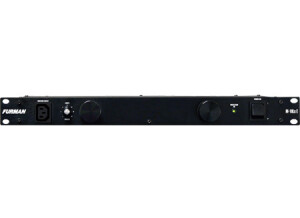
    Furman has been the musician's choice in providing accurate and reliable power conditioning and distribution for years. The PL-Plus is one of their more popular offerings. Here are some of the features found in this unit: -Two slide out lamps that illuminate rack with dimmer control. -8 rear outlets that are turned on/off via switch on front panel -Spike and surge protection for your gear -Multi stage RFI filtering to filter out unwanted noise from your rig/gear -15 amp circuit breaker -led monitor system on front that reads incoming voltage I bought my PL-Plus second hand late in 2010. I also purchased a small rack case at the same time. The Furman shipped inside of the SKB rack that I purchased. Upon arrival of the units, it was apparent that UPS had attempted to destroy my package!!! It appeared to have been dropped off of a skyscraper. When I opened the rack case, there were scratches on the case and the SKB's rack ears as well as the ears of the Furman conditioner were bent from the drop. I was pretty upset, but I tested everything and it worked! I eventually got over the damaged rack ears and the bent Furman and now it sits happily in my rig, and does what it's supposed to do! Just a warning, do not ship anything important or fragile via UPS! I've had several pieces of gear broken and carelessly handled by them, and I know some amp builders who have had more broken shipments than intact ones delivered by UPS. Avoid them! Some of the the bars and other places my band plays at have shady electrical wiring. This type of situation is where these units are important. If you play an expensive tube amp for example, you are taking a risk plugging into the venue's AC every night. Spikes and low voltage can damage your gear and cause unwanted noise and less than optimum performance. The Furman uses filtering to clean up the power as well as the signal from your gear, and will shut down your gear in the event of dangerous voltage before it damages anything. Another purchase I will eventually make will be to buy a Furman Voltage Regulator so I know that no matter where I'm playing, I'm plugging my gear into a controlled and filtered 120 volts. A standard power conditioner like mine can monitor the incoming voltage, but cannot change it if it is too low or high. Every rig should have some form of surge protection, even if it's just a plain old power strip. But for optimum sound and performance, pick up a power conditioner and experience less noise as well as outlets for your rack gear and surge protection.

  • moosers's review

    The Monster Cable PRO 2500 PowerCenter is a power conditioner that gives you stage 2 clean power for powering up all of your studio gear. It's got eight power outlets in the back as well as two extra ones in the front, so it's possible to power up a good amount of gear with each of these. It's also nice that it monitors your power and will make sure it won't overload or anything like that. I believe that it also monitors the voltage and evens it out if necessary, which is something you won't find with too many other standard power conditioners. The unit is rack mountable and will only take up a single space in traditional casings. I recently started working at a band's home studio and they've got two of these in the control room for powering up all the gear, including the Apogee converters, preamps and other outboard gear. It's nice to have a central spot where everything is powered because it also makes it possible to shut everything down with the single click of a button rather than having to power down each piece of gear individually. With the Monster Cable PRO 2500 PowerCenter you're getting more than a simple power conditioner, as it serves as a home base for powering all of your gear and it's designed to make sure that you never have to worry about overloading power and that it's always protecting your expensive gear. The PRO 2500 PowerCenter is going to be more expensive than your average Furman power conditioner, but if you have a lot of expensive gear it's definitely going to be worth it to ensure the safety of all of it. If you just have a few things you want to power, you can probably get away with getting something cheaper, but in general a power conditioner isn't something to skimp on if you have a lot of great gear to protect.

  • moosers's review

    The Morley HE-2 Hum Eliminator is a two channel device with one purpose in mind: getting rid of unwanted AC hum and noise. The two channels each have 1/4" TRS jacks for inputs and outputs. It goes under the sub-name Ebtech, but is put out by Morley, although I'm not 100% on the relationship here. It isn't rack mountable as it stands as it's own box. UTILIZATION There isn't anything at all to using the Morley HE-2 Hum Eliminator. Once you've made your connections to set it up, you're good to go as there aren't any parameters or further setting controls. The box does it's thing by getting rid of noise around 60 Hz. I haven't seen the manual for the HE-2 nor do I ever anticipate needing to look at it. SOUND QUALITY The Morley HE-2 Hum Eliminator does a pretty good overall job of getting rid of unwanted noise and hum that you'll tend to get with amps and whenever something isn't grounded. Usually a ground plug will do the trick, but this is like a super ground plug that will almost always rid you of unwanted noise. It doesn't have the capability of choosing where you'd like to eliminate noise as it only has one real purpose, but it can definitely come in handy in theses situations... OVERALL OPINION If you find that you're having noise and grounding issues on a daily basis, the Morley HE-2 Hum Eliminator is definitely something you're going to want to have around. Of course there are other ways to get rid of noise, but having this to get rid of it at the source is one of the most ideal options. It's not very expensive but isn't incredibly cheap, but keep in mind you're getting two channels here. The HE-2 is definitely one of the most compact and effective noise removers that I've used before.

  • « A high quality, high value power conditioner »

    This review covers the 120v North American, standard non-rackmount version of the PF Pro. It's a shame that the Furman Power Factor Pro (or "PF PRO") has been discontinued and replaced with a decidedly more expensive version, because these were (and are, though relegated to the used market) great, solid little boxes that sold for a song. The PF pro is an AC power conditioner whose party piece is to correct incoming AC power factor a little closer to unity, where you want it. It also offers the usual surge protection/spike shutdown, and a fairly healthy current reserve to keep a fast, steady, less impeded flow to plugged in items. The box is simple, with a decidedly utilitarian look to it, and the features are very familiar to users of other Furman products: the face has no more than the Furman logo, model in big block lettering, and a handy color-coded multi-segment LED input voltage display accurate to 2 volts AC as found on many other Furman products. The rear panel provides access to two duplex outlets for a total of four plug receptacles. In addition, there is a circuit breaker reset switch and the large, high quality red light-up rocker power switch common to other Furmans. Finally, there is a detachable IEC-type grounded mains cord included, which will appeal to pro audio users because it allows for various lengths of power cord to be used, and to audiophiles because it will allow higher end power cords to be substituted (however, I have substituted the stock basic power cord with a VenHaus/Hubbel DIY cord and a Zu Birth and not noticed much of any difference in the performance of this unit--not much point when it's correcting power factor and providing current reserve post-mains cord). The build quality is sturdy, basic, reliable and of high quality. Though I have not experienced a surge with these particular units, a friend of mine was indeed saved from a lightning storm power surge by his PF Pros which protected many thousands of dollars in connected high end audiophile equipment. The user must be advised that these units are only rated for 12 amps max so should not be used with multiple current-hungry sources such as high power bass, PA and hi-fi amplifiers that could exceed 12amps total draw. The PF Pros are great for a number of uses; mine are most typically in the recording studio for tube guitar amps and pedalboards, and at home for running my high end audiophile tube monoblocks (they're medium-low power and don't tug tons of current) and Class A tube preamp. They also work wonderfully for running studio monitor rigs, rack gear (as most studio rack aren't full of super power hungry gear) and so-on. I've seen them put to good use in high quality video rigs as well...really anything that could benefit from steady, clean current, surge protection and improved power factor. Of course, what the PF Pros can do for you sonically will depend on the relative quality of your mains power supply. If you already have unusually good, steady, clean power at the wall then great, you'll mainly benefit from the surge protection...but for most of us in most situations with less than optimal mains power with the typical heavy loads and noise on the local grid, you will be likely to experience greater clarity and lower noise floor, and sometimes improved punch and dynamics from audio gear on the units, particularly during parts of the day where local grids experience heavier power draws and especially in commercial or industrial areas, and particularly for gear with, shall we say, under-built PSUs. However, again, as ultimate performance is situation-dependent, your mileage will vary. Although I have have not personally required any servicing of my PF Pro units, I have always received exemplary tech service from the company with my other Furman products. I think they're a very good company to deal with. In summary, the PF Pros are basic, well built devices which do very well at their intended jobs. The prices were (and are, on the used market) more than fair and I would buy again.

  • moosers's review

    The Furman RR-15 Rack Rider is a simple power conditioner with some pretty standard features. I've used this power conditioner in a professional recording studio to power up a good amount of different outboard gear including microphones preamplifiers and compressor. It can however power up anything that requires a standard power configuration. The RR-15 has nine power inputs in total, with eight in the back and one in the front for easy access. It has a power cord that comes out of the back and plugs directly into the wall for power. There aren't any other characteristics with the RR-15 as it is a very simple power conditioner. Basically, once everything is plugged in and ready to go, this will do it's job without needing to make any changes or do anything else. It is simply a utility tool and should be treated as such. Having said this, the Furman RR-15 Rack Rider is a very good for what it does. I've never had any problems with it whatsoever as it has always done it's job and has never added noise to any of the modules sounds, which has been known to be a problem with things like this. I think that pretty much every power conditioner that I've owned has been made by Furman, although I don't own this one, it's just to say that I trust Furman and the products that they make. For years they have been putting out top notch power conditioners at reasonable prices, which is exactly what the Rack Rider is. While not the most readily available, I don't think I'd necessary recommend it over other Fumran power conditioner if you couldn't find one anyway. Having said this, the Furman RR-15 Rack Rider is a very solid piece of equipment, so if you come across one and are in need of a power conditioner, I wouldn't hesitate with this one.

  • « Does it do anything? »

    I compared with/without, i have the exact same annoying noise (ground sort). Ok, maybe it's not made for ground loop noise. BUT: I also have the same spike when I press the on/off switch that makes a spike noise in my sub-woofer. The switch of the sub-woofer does not produce the same spiky noise. AND I tried to plug the power directly into the wall, which is next to the interrupter for the fluorescent tube. You can clearly hear the "pop" in the speakers from the spike when I switch the light on. Who said "clean power"? Given that I have read on other websites that they material did get burn during a storm despite this device, my question is: what does it do? In my case, strictly nothing. Or the same as a power strip costing 100 euros less (with protection for surge as well). So I really wonder what this is supposed to do.

  • « Warning about iLok »

    The iLok dongle system is too unpredictable and therefore not reliable for live performance. I recently went thru terrible stress when, on a major production in New Zealand, the licenses of my iLok 2 weren't recognised anymore and moreover I couldn't open Logic X files using Sonnox plugins (at least to replace them with iZotope equivalents or else). I noticed that the plugins that can be transferred to my HD (GRM Tools, Flux, etc…) never failed whereas the Sonnox which cannot be transferred and requires the use of the physical iLok fail from time to time (and require internet connection to work again…). During a studio session you might spend a couple of hours to fix the problem but forget about it in live show/performance or in a place without internet connection. I’ve read here and there advices about getting cracked versions of my plugins. What a ridiculous situation: I would have to use cracked versions of plugins for which I paid and own the license… How can the software industry let such thing happen? It is like they are paradoxically rewarding theft… On the other hand, I never had problems with any challenge/response protection in over 20 years (Native Instruments, Ableton Live, iZotope, etc, etc…). So handy not having to plug a dongle when travelling a lot with a laptop (working in cars, trains, flights…) plus the risk of forgetting to take the dongle with me. I wrote a letter to iLok and Sonnox support letting them know in details my awful experience and asking them to allow for HD transferable licenses for any plugins I paid for and for which I need a professional grade reliability (especially the Sonnox in my case): they didn’t get back to me as of today. In the meantime, I’ll stop using the plugins “locked" on the iLok for any professional work… Be warned.

  • « Great concept sturdy bass drum spurs with classic look »

    I bought this product to retrofit some vintage Ludwig shells hoping to avoid drilling the shells for regular mounts and to save weight and to keep harware to a minimum. Context which I use the product on the drumset are live, studio, for practise and rehearsals. This is the only product at the moment that uses the lug and mount in one unit so there isn't anything comparible as such. PRO's: The bass drum spurs are really good, height adjustable, while heavy they are not overly heavy, no drilling of the shell was required, and they do look good. Happy with these. Cons: The mounts stick out quite far which could effect transportabilty with regard to case sizes etc. Just trying to find out how to use the adapter to fit skinnier hardware on some other mounts purchased.

  • « Not as advertised, flaky operation »

    I recently purchased the Carvin AC120S power conditioner/switcher to use in my home studio. I was looking for a device that would sequence my equipment on and off automatically and this unit fit the bill. It has a master on/off switch making it impossible to accidentally leave a piece of equipment tuned on when you are finished with a recording session. Exactly what I was looking for. At the time of this writing I have been using the unit for about 5 weeks. The AC120S was shipped quickly and arrived in a reasonable amount of time. First impressions of the device are that it is built solidly and made to last. The case is heavy duty and it has a really heavy duty power cord that you will never be able to overload. It is a professional looking piece of equipment and looks good in my rack. I was a little disappointed that there is no "Made in the USA" sticker anywhere on the unit, and as you will see below, it may not have been made in the USA. I first tested the AC120S without any other equipment connected to it. Pressing the master power button on the front of the unit turns on the voltmeter and prepares the unit for operation. I immediately noticed that the voltmeter reading indicated that my line voltage was 130 to 132 volts. After checking this against a high quality voltmeter, I determined that my line voltage is actually 122 Volts and that the AC120S was reading about 8 to 10 volts too high. After consulting with Carvin tech support, I was told that there is an adjustment pot inside the unit. I was quickly able to calibrate the voltmeter and it now reads accurately. While I was inside the AC120S I did not notice any of the MOV (metal oxide varistors) transient surge protection devices that I would have expected to find. The second thing that I noticed is that the sequenced timing when turning the outlets on and off is far less than advertised. With the time setting at 4 seconds there is a total of 25 seconds from the time the sequential start button is pressed until all of the outlets are on. I would expect this time to be 36 seconds. Of course, the 1,2 and 3 second options give even shorter times. Tech support did not have an answer for this and said they would email the people that manufacture it for them and let me know. This tells me that Carvin did not actually make the unit and it was most likely made outside the USA. After waiting several weeks for a reply I contacted tech support again and was told they have not heard from their supplier. I mounted the AC120S in the top of my rack, connected equipment to the outlets on the back of the unit, and pressed the sequence button to start my equipment. When sequencing "on", occasionally, the first two or three outlets will sequence on and then all turn off at once. Pressing the sequence button a second time usually sequences everything on normally. Similarly, when sequencing "off" the number 1 & 2 outlets almost always turn off simultaneously without any delay between the two. The unit works perfectly, every time, if all of the equipment connected to the AC120S is turned off. It seems as if the AC120S is sensitive to the voltage spikes that occur as the equipment is powered on/off; the very thing that it is supposed to be protecting my equipment from. Tech support had no answer for this issue either and at this point I do not expect to hear from them again. There is no way to know if the AC120S will actually protect my equipment from a line surge or not. At this point I am using a commercially available surge suppressor in front of the AC120S to be on the safe side. When I get some spare time, I will probably go back and add an MOV across each of the 10 outlets and on the incoming power line. There is a nice EMI/RFI filter inside the unit that I am sure will help filter out any EMI type noise that may be on the power line. The filter is a commercially available device, and I feel confident that it will work. This was my first purchase from Carvin, and it will most likely be my last. The AC120S is not built as advertised and its operation is somewhat "flaky". I can only assume that this is typical of Carvin's equipment and I will stay far far away from anything else that has the Carvin name. Fortunately at $149.00 plus shipping it was not too expensive a lesson to learn and the unit at least works to some degree.

  • « get rid of that noise »

    I have been using the Ebtech HUM X for 5 months now, it is a ground loop eliminator and it is one of the most affordable worth buying ones that are on the market. With certain setups I was getting a horrible sounding hum from an amp earlier this year. I had no idea what to do to stop it and it was really messing up a lot of things for my set up. Someone recommended to me that I try the Ebtech HUM X. So I purchased it for around 70 bucks plugged it in and bam! No more humming coming from my amp. It was that simple and that easy. I will never experience any humming again and if I do from another set up down the road I will know how to take care of it right away. The Ebtech HUM X did something amazing; it got rid of the humming without affecting any of the output sound quality coming from the amp. It is very easy to use; you can just plug it right into your power source. It will keep a safe ground for your gear and nothing will make any noises or short out on you. The Ebtech HUM X is a must have, and when I say must have I mean you must keep it with your set up at all times because you never know when you could experience a humming coming from your amp. It is better to be prepared than to have a humming especially at a live show. Many similar units will get rid of your ground all together, that is not safe at all and could result in serious electrical problems with your gear. Do not get a cheap ground eliminator that could end up costing your thousands in gear repair. Get the Ebtech HUM X and keep your gear safe and get rid of that ground noise!