Log in
EN
FR

Yamaha Other musical instruments

850 products found

Categories
Series
Filter
Sort by
Yamaha
Evaluation
  • Reviewed or not
  • Editor’s award
  • Reviewed by Audiofanzine
Availability
  • Available or not
  • Sold new or used
  • Sold new
  • Sold used
Must-have products
  • All products
  • Flagship products
  • Best rated products
  • Hot products
  • Popular products
Price
  • Freeware
  • Low-cost (< $1,500)
  • Mid-range ($1,500 - $4,000)
  • Premium (> $4,000)
€
Clear
Sort by
  • Popularity
  • User ratings
  • Price - low to high
  • Price - high to low
  • Used price, increasing
  • Used price, decreasing
  • Name (from A to Z)
  • Name (from Z to A)
  • Added on
Sort results
  • Popularity
  • User ratings
  • Price - low to high
  • Price - high to low
  • Used price, increasing
  • Used price, decreasing
  • Name (from A to Z)
  • Name (from Z to A)
  • Added on
Filter results 850 results found
Brands
Evaluation
Availability
Must-have products
Price
  • Freeware
  • Low-cost (< $1,500)
  • Mid-range ($1,500 - $4,000)
  • Premium (> $4,000)
Show results

The best Yamaha Other musical instruments reviews

The reviews Audiofanzine members found the most helpful.
  • « great digital piano bad speakers »

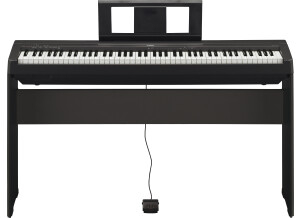
    The Yamaha P 105 is a 88 key stage piano with a graded hammer, it only has 14 sounds but if you use it for live performance or on stage you will love the quality of piano sounds it will give you. This is the perfect performance keyboard. I recommend this digital piano to anyone who is a working musician. If you only need piano sounds then why go out and purchase an expensive workstation that has more than just piano on it. The Yamaha P 105 does not come with a stand or a bench. So you will need to take those extra expenses into consideration because some stands can get pretty expensive. UTILIZATION Setting it up takes no effort, just plug it in pick your piano then start playing. If you like how grand piano’s sound but don’t have access to a grand or baby grand then the Yamaha P 105 is the perfect replacement. Plus when you are traveling around you cannot take a grand piano with you though some stages and venues may have one there for you to use. SOUNDS The Yamaha P 105 does have a 14 watt 2 way speaker system on it, it is decent but it could be a lot better. There are also built in drum patterns to play along with or you can use to work on your playing with drums like you are playing with a live drummer. OVERALL OPINION The only thing that the Yamaha P 105 could improve is the speaker system. But for the money it cost you cannot really expect to get a better speaker system. I recommend if you are going to get this digital piano to go out and get a good external speaker or monitor to use instead of the on board speakers. You will get a much better sound and a sound that will travel farther than the on board 14 watt speakers can.

  • « Nice product, in terms of feel and touch »

    88-key practice piano to move on to the real thing! Midi In Out Audio RCA & Jack OUT Sustain pedal connector Double headphones output Sounds can be edited in terms of effects, chorus, reverb...Bu that's not what this type of product is for, the effects are there to improve your listening experience. UTILIZATION This is the main strength of this digital piano, the keyboard is really interesting, rather hard, but you can obviously adjust it (hard, medium, soft) to make the sound come out easier with soft or have the sound respond to the keyboard with hard. I always use the latter, because the playing is more subtle, and it's also easier to play with another piano (if you can play the hardest, you can play the softest). In terms of setup, the manual is very clear, but the interface on the piano doesn't allow for an intuitive approach of the parameters (MIDI channels), although it's better for sounds. SOUNDS I'm hooked to Afro-American music, blues, reggae, jazz. The expression is convincing for this type of product (which shouldn't be compared to an upright or grand piano). The sounds are good, I like especially the Piano1 sound and the organ, the rest is all right but I never use it. I use it mainly to forget about my home studio and play standards. But that doesn't stop me from using it as a master keyboard with a MID USB interface to build my songs at home, the keyboard is truly YAMAHA! The sound through the speakers is very good and also through the different outputs. I use it a lot with headphones in the evening (due to my neighbors) and it's impeccable. OVERALL OPINION I've used it for two years. I bought it secondhand and I am very happy with it. Compared to the more recent P85, the keyboard of the P120 for live applications is really good.

  • « A home piano. Nothing less. Nothing more. »

    The P95 is a fine digital piano; it may not be as entirely full-featured as its peers, the Casio Privia PX-330 and the Korg SP250, but I believe its piano sound does indeed surpass either of the other two's. Unfortunately for the poor P95, Yamaha has a habit of crippling their entry-level products with convoluted and arbitrary limitations, like 64 note polyphony. I have no idea why Yamaha didn't decide on the standard 128 note polyphony. Most playing is fine; but when I was comparing it to its peers (I ended up buying the Privia PX-330, and have written a review on that as well) I found that notes did in fact drop out when playing through heavier and more saturated passages in the music. In fact, when you're trying it out, since pianos have 88 keys; gliss from the bottom to the top or top to bottom on both the white and black keys and you'll hear the ever jarring note dropouts. Finally. Don't make me mention the lack of 1/4" outs. Do not presume to gig with this guy, especially for reasons explained in sound. Thank goodness for the MIDI connections. UTILIZATION This piano does get lots of points for being incredibly easy to use. Everything from metronomes, to sound selection, to layering; it's all very intuitive to use. Nothing much to be said here. SOUNDS The sounds are fantastic. The piano sound is the best in its class by a respectable margin. I, however, am not a huge fan of the touch. I find it to be a little bit too light; it doesn't feel quite weighted. It seems to be closer to semi-weighted. This was quite the turn-off. It's a shame that without the necessary line outs, that the built-in speakers aren't better. They distort fairly easily. OVERALL OPINION The Yamaha P95 is a perfectly respectable board, until you discover Yamaha's painful limitations imposed on it. You could tell me that I should like it for what it is, and I do. You could tell me I am bitter about the piano because it wasn't what I was looking for, but the truth is that if it is designed to compete with full-featured pianos, Yamaha cannot arbitrarily take out important features to drive the consumers to the next model up while still hoping for it to be a viable option against its peers. So before you buy a P95, know that it's not a flexible machine. It sounds good, but it can't do much with it when its hobbled by Yamaha's ridiculous business model. Anyone notice the new MOX synthesizers have 64-note polyphony? Absurd.

  • « I love youuuu, I love you lalalala »

    All in all, a very classic organ, but well-equipped thanks to the upper, the lower and the programmable drum machine. It's ultra versatile It's a boeing (over 200lbs ) The third small keyboard is EXCELLENT, because it's mounted on a rail that moves laterally...Did you say expressiveness??? yeahhhhhh :::: UTILIZATION I use it often And the arpeggiator is great SOUNDS It's like everything: Whether you explore the "street dance" side of the unit.... Or you fiddle with it...Welcome to space..... It can make a 737 soar The basses you can play with your hand or pedal sound like moroder ...hmmmmm The strings: Having owned a famous 310 ...it sounds identical because the chorus circuit is orbitone style... welcome oxygen and equinox OVERALL OPINION I have it I'll keep it I use it, I like it

  • « A superb digital piano equipped with a great arranger mode »

    The instrument looks great, even if I preferred the appearance of the 407. I use it at home, for my own personal pleasure. Piano sounds are very realistic, and the keys feel close to those of an acoustic piano. The woodwind and guitar sounds are very convincing. There are so many effects that you can change the sounds and get whatever result you were after. The arranger mode is up to par with the best, and the styles offered are of a high quality standard. The outgoing sound is very good and adapts to the room. The touchscreen is precise and sensitive. The pianoroom environment’s ergonomics could be better though. It’s unpleasant to find that the zone allowing to exit the current screen is not always at the same place (it’s always on the right side, but sometimes at the tom and others at the bottom). Four assignable controls allow for quick access to the most commonly used functionalities without havingto go through the touchscreen. Even if I consider it to be expensive, I do not regret buying it. PS: Please note that aspect faults have appeared on the F2 and G2 keys after 10 months using it...!

  • « Very good value for money, but ... »

    88 keys, weighted keyboard. Piano sound and several other basic sounds (electric piano, harpsichord, strings, church organ, vibraphone) No audio output apart from headphones (stereo minijack). Midi in and out (but no midi through), jack input for sustain pedal. UTILIZATION The keyboard is adapted to the piano sound (for the price, they spared no expense). The rest of the sound are only accessory, and for the price they deserve a very good mark. The few settings available are described on the instrument itself, it's not necessary to read the manual to find them. There are certain "advanced" options (like the reverb adjustment on the piano) that require a more complex manipulation (and therefore are hard to find without the manual), but I have never made use of them. SOUNDS The piano sound is all in all very good. The electric pianos are OK as well. The rest are only toys. Keyboard dynamics is adapted to the piano sound. OVERALL OPINION I have used it (on and off) for six years, but most of all as a master keyboard. I looked at other 88-key master keyboards, but its feel convinced me (especially given its price at the time...). A major disadvantage: very limited connections: it lacks midi through and a real audio output. But hey, it does the job...

  • « Stunning! »

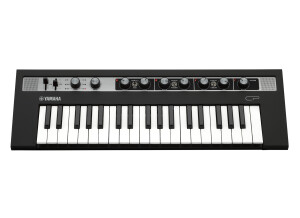
    This CP 30 was a present from a friend and it had been sitting for years in a garage. I use it in a progressive metal band that blends Magma, Tool, Messhugah, Neurosis. The Cp30 has a very unique sound: Halfway between a clavinet and a Wurly, in my opinion. Not too Rhodes. It's an electronic piano, it's not warm and does not intend to compete with a piano. It has its own sound. It may be equipped with several sound banks, but the difference between them is not "flagrant." It's more like a variation of the same basic waveform. Do note that it's pretty noisy: A noise suppressor is a must! I plugged it into a JCM900 with lots of effects: wah, fuzz, delay, and I toggle between clean and distortion sound. It's not easy to tame its sound, you need to try lots of combinations, but it has a very interesting personality! It's the centerpiece of my set: Besides it, I have a Korg DW8000 and soon a Nord electro... Broadly speaking, the CP30 is a piano that won't go unnoticed! Its advantages: - The pitch, decay and tremolo, which allow you to sculpt the sound and provide it a strong personality. - Very powerful lows, an edge that allows it to find its place even in a saturated mix. - A rock-solid build - Dual/mono possibility - Its price (about $400) - A unique personality. Its disadvantages: - A stiff keyboard: It's good to exercise the fingers, but you can feel that you are dealing with a real instrument - Its weight, it's like a dead horse. To make yourself an idea of how it sounds, watch this video: https://www.youtube.com/watch?v=ut0TOrraLUg

  • « I like the Yamaha CP-300 »

    There are 7 octaves on the Yamaha CP-300. There are Midi Connections In, Out, Through, Phones, Input,(L Mono,R) Output(L/R) Assignable Foot Pedal (Sustain/Sostenuto/Soft/Aux) USB to Host, AC Inlet. There are 530 instrumental sounds including XG Voices. You can hear two instrumental sounds by pressing two buttons at the same time, it has a transpose button to transpose the Yamaha CP-300 if you`re not use to play in a different key. Minus 12 making it 13.25 cycles per second (lowest A) on the Yamaha CP-300 You can make it sound like a five manual pipe organ that way, a specially of you use push the pipe organ and another instrumental sound. and transpose plus 12 making the Yamaha CP-300 8,000 cycles per second highest C on the Yamaha CP-300 Piano. It has some demo songs too. UTILIZATION The set up is simple if you play around with the Yamaha CP-300. You can look up on www.manualslib.com/ then Yamaha CP-300 to see how to opperate the Yamaha CP-300. I played around on the Yamaha CP-300 in a music store a while back. SOUNDS The sounds are realistic, except I don`t like the brass sound on it, that`s about the only thing. I like the brass sound on the Technics PR-305 Digital Piano better, it sounds a truest instrumental sound, but over all like all the other instrumental sounds on it,the sounds are OK. it has a touch sensitivity too. I would put the Yamaha CP-300 on top of the Technics PR-305 with the midi cables hooked up to it, I`d get four different sounds at the same time. OVERALL OPINION The Yamaha CP-300 is a lot of fun to play on over all, the price is pretty good, The Yamaha CP-300 weighs about 71.63 pounds, but over all I would buy the Yamaha CP-300, it has built in speakers, it`s a must have keyboard. The newer models are lighter,like the Yamaha CP-4 but you can`t mix the sounds by pressing the two buttons and you have to get an amp for them too.

  • Phoebus1's review

    Large GH 88-key piano. Piano sound based on dynamic sampling (3 levels) 22 Mbytes Sampling of the dampers, sampling of the resonance pedal, 14 AWM sounds x 2 variations 64-note polyphony DSP Dual / Split mode 2-track song recorder Metronome, key cover, 2 headphone outputs, MIDI / To host interface, Aux Out/In, rosewood cabinet, 2x40W amplification. Reverb, Chorus, Brilliance, Delay .... UTILIZATION The keyboard is very nice and it can be adjusted (Hard, Medium, Soft). It's easy to get started with and use it. SOUNDS The grand piano is excellent, especially with the Hall option. Organs are very good, acoustic guitars very good, bass is not bad, violins are decent. You can hear the noises of the harpsichord's mechanism, the precision of the details. Adjustable phaser, tremolo, chorus, delay effects adapted to the piano. GH 88-key keyboard very similar to an acoustic piano, you can play with nuances. (I have tested acoustic pianos whose keyboard was not as good or pleasant). OVERALL OPINION I've been using it for 8 months. I love the grand piano with the echo and the hall effect, everything adjustable, obviously. I have tested several Rolands but I found the keyboard very soft and too bouncy to my taste. It's a great value for money, especially when you don't want to annoy the neighbors. It's very interesting secondhand. If i had the same budget, I would buy it again ─ twice.

  • moosers's review

    The Yamaha RA 100 is a unique rotating speaker from the 1980's. It was made for compact organs to get an authentic Leslie sound, but can used with any electronic instrument that you'd like. It's got a speakon external speaker output and RCA inputs. There's also a 1/4" remote output. It has two 12" speakers and also two rotating horns. It's a very easy to use amplifier and sounds quite good. The parameters it gives you to work with include knobs for volume, bass, treble, reverb, and tremolo speed. I've only used the RA 100 in the studio, but it would certainly be a nice thing to have live as well for your digital organ. I've used it with a Farfisa compact organ and for this it sounded fantastic. Even if you don't use the rotating speaker and just use it as an amplifier it sounds great. Having the two rotating horns however really make the RA 100 a cool speaker. I've seen a few speakers like this out there, but this is one of the only models that I've used and is definitely the best sounding one of it's kind. Unless you've got a preamp for a real Leslie speaker, I don't think you're going to find one quite as good as this. I don't know much background on the RA 100 and I'm not sure how easy it would be to get your hands on this as I've only used one the one that the studio owns. If I were a keyboard player with a digital organ, or even a guitar player looking to get creative with a rotating speaker, I'd consider the Yamaha RA 100 or something like it for live shows and in the studio as it really adds a certain quality that you miss out on with a digital Leslie simulator!

  • M Elise's review

    This is a relatively inexpensive digital piano with 2 built in speakers. It is no longer made. The construction is solid but light weight. It has line level stereo/mono outputs, midi in/out, damper pedal out, and jacks for two headphones in the front that defeat the built in speakers. Besides the main piano sound it has a few others like organ, harpsichord, choir etc but nothing to get excited about. It has on/off buttons for chorus and reverb effects. It has a built in sequencer that can record 4 separate single track recordings, i.e. it is not multi track. There are 3 levels of touch sensitivity possible. UTILIZATION I'm not a serious piano player so I can't rate this as far as feel goes. I like the fact that this is a basic piano without editing capabilities. The configuration couldn't be easier or more strait forward. SOUNDS Finding an inexpensive digital piano with a realistic piano sound is quite a chore. The main piano sound is what its all about. I bought this used for $225.00 (discounted for broken headphone jacks) because it sounded more realistic to me than all the others I tried in this price range including some newer Yamaha models. However I wish the damper pedal (which I use a lot) allowed for more of the reverb/ringing effect its supposed to produce. I can't really get the depth and quite the inspiring romantic effect I want out of it. I can get it somewhat but I want more of the atmosphere and I've gotten it out of other digital pianos. This piano sounds more realistic to me than the Yamaha PRS types but less realistic than the awesome old Roland RD 500 I borrowed for a while. These (the Roland) sound and feel great but are a much heavier and more professional and expensive keyboard. OVERALL OPINION If you want a fairly realistic sounding used or new digital piano for little money this is worth considering but try it first with a damper pedal. The bottom line is everyone has to use their own ears and make the compromise.

  • Audiofanzine FR's review

    (Originally written by pagamini/translated from Audiofanzine FR) I've been using it for six months. Headphone output plus preamp/amp output. Four pickups (one per string) with independent volume controls! Pros: excellent manufacturing quality, it has no sound box so it has a very good rejection to feedback (excellent to play live on stage), independent controls for each string (very useful). Con: sounds a bit cold and metallic. But this disadvantage can be corrected with a good preamp. The instrument's body doesn't generate vibrations and it's very uncomfortable. The fingerboard, bridge height and space between the strings are standard. You won't have any difficulty if you come from playing acoustic violins. Don't use it for classical music because it's not the best at that, like all electric violins... But it's interesting for all other music styles!! Notice that the electric violin is not the same thing as the silent violin, which produces an audible noise contrary to its name! This is an instrument you can use on stage without limitations. So pay a bit more and buy an instrument you won't change for a while.