Log in
EN
FR

Peavey Bass guitars

52 products found

Categories
Series
Filter
Sort by
Peavey
Evaluation
  • Reviewed or not
  • Editor’s award
  • Reviewed by Audiofanzine
Availability
  • Available or not
  • Sold new or used
  • Sold new
  • Sold used
Must-have products
  • All products
  • Flagship products
  • Best rated products
  • Hot products
  • Popular products
Price
  • Freeware
€
Clear
Sort by
  • Popularity
  • User ratings
  • Price - low to high
  • Price - high to low
  • Used price, increasing
  • Used price, decreasing
  • Name (from A to Z)
  • Name (from Z to A)
  • Added on
Choose a category
Selected category: Bass guitars
Sort results
  • Popularity
  • User ratings
  • Price - low to high
  • Price - high to low
  • Used price, increasing
  • Used price, decreasing
  • Name (from A to Z)
  • Name (from Z to A)
  • Added on
Filter results 52 results found
Brands
Evaluation
Availability
Must-have products
Price
  • Freeware
Show results

The best Peavey Bass guitars reviews

The reviews Audiofanzine members found the most helpful.
  • « Peavey 1978 T-40 »

    Black satin finish Maple 4-piece bolt-on Neck Northern Ash body (quite heavy) 2 Passive Peavey Blade Humbuckers Three-way pickup selector 2 Volume, 2 Tone Phase Switch Massive Peavey Bridge Wide string spacing for a 4-string I've used this bass when playing in a reggae band as well as in various rock ventures. It has a very full and rounded tone with a fantastic treble edge with the tone rolled all the way on. Roll the tone back a bit and it maintains a very clear but deep note. Overall it has an almost piano-like sound that I palm-muted for most of the reggae recordings. I have not used this bass for my jazz recordings because of the wide string spacing and the dexterity required. This was acquired as a hand-me-down from my Uncle - a birthday present. As far as I've seen these basses run for something like $150-$250 depending on condition. The Natural finish usually runs on the higher side of that range. It was my first bass at the time, and I've owned it for about seven years now (My Uncle owned it for another twenty-some years, and it still survives in very solid condition.) I enjoy the near-crystalline tone of the bass and the wide spacing of the pickups for a wide variety of tones that I can get by turning each pickup's volume up or down, panning between the two. The bridge pickup almost has a Jaco-esque midrange bumb with the tone fully on, too, something I would never expect out of a bass with such dark wood and warm neck pickup. Both pickups are incredibly responsive to your finger stroke. All the better to hear bad technique in your fingers, as well, so don't be frightened if it takes some getting used to to start playing it and getting all these sounds. The sensitivity will eventually become your best friend, as the subtleties, piano-like tone and almost vocal expression are not only possibilities but even available at muscle memory recall speed. A fantastic-sounding, well-rounded, and wonderfully expressive bass. Not only a jack but maybe a Queen or King of all trades. I find myself wishing for a 5th string now, although I didn't when I first got it. Now that I'm used to 'normal' 4-string spacing, this bass seems quite wide when I come back to it and takes some getting used to. Not only is the string-spacing wider, but the bass has a long-scale neck, and the spaces between frets are wider, which can be taxing on the hands for long repeated riffs (such as Golden Earring's jam in the middle of 'Radar Love'). In the lower positions, because of this, I generally resort to a three finger technique in my left hand reminiscent of upright technique to make playing easier. This is probably my greatest complaint with the bass. As a minor note, I find the sound with the phase switch in the 'out' position to be on the tinny side, without much foundation to the sound. It's still worthwhile to experiment with, but it's not a 'bass' sound, more of a lower-pitched guitar. This is both good and bad, and either way it's an extra sound to be played with. I don't find the added weight to be a bother (it's also one of the sources of the instrument's large, round tone), but then I'm only 21 and back problems are a long way off, I hope. I can't speak for the older generations. The model (and the brand in general) has a rock solid reputation for rock solid construction. Peavey basses and guitars seem to always be referred to as 'tanks,' and although they do weigh a bit more than their counterparts, Peavey has generally more than made up for the added weight in beautiful tone and with an instrument that can take a serious tumble without nary a scratch. Long story short: They don't break. Ever. Short of lighting the thing on fire or running it over with a steamroller, they don't break. Pros: Beyond solid construction. It's a tank. Beautiful, expressive, warm tone in the neck pickup that gets a Warwick-esque growl when attacked strongly. SIZZLY slap tone! Biting, midrangey sharpness in the bridge pickup reminiscent of Jaco. Overall range of tones, each done quite well for a cheap bass with such variety. It's CHEAP: Usually around $200. I guarantee you won't find a bass that sounds this good under $500 new. Northern Ash is a fine wood. Cons: It has been called 'weighty' and 'heavy on the shoulder' by some, although I don't really notice. Wide string spacing can make dextrous right hand work harder. Wide fret spacing and large scale length can make work in the lower positions tiresome, but still doable. I feel like in the right situations, this bass makes a fine choice. I play it in rock groups, reggae bands, where not a lot of jazz or fusion-esque dexterity is required (a la Stanley Clarke, Tal Wilkenfeld, etc.). Lines in the vein of The Who's Jon Entwistle or Zeppelin's John Paul Jones are still very reachable and sound particularly great on this beast. I would give it JUST shy of a 5 because of the string spacing issues (perhaps a 4.8), but in these situations, it really shines as a fantastic instrument with few equals. Good comparisons include: Squier Vintage Modified Series, Warwick Rockbass series, OLP Music Man and Tony Levin Signature bass, Ibanez ATK, ESP 300 and 305 This review was originally published on http://www.musicgearreview.com

  • « Peavey Milestone 3 »

    Hertford Music to begin learning bass £99 The peavyey milestone 3 is a great bass guitar with a beautiful sound it is light weight for a bass and extremely easy to play also you dont get fuzzes when it is plugged into an amp the only thing i dont like about the Peavey mileston 3 is that the wood dents very easily and is quite weak which has ment that where i have been plugging my lead in and removing it the input jack has been tearing away from the body. it is put together very well and has a sleak shape although the body is made out of a weak wood. This review was originally published on http://www.musicgearreview.com

  • « Peavey Fury II »

    Bought this (barely!) used for ~$125 from ebay. When it works it has a great sound, very playable. It stays in tune well, provided you're careful with it (why do all bass guitars have such huge tuning knobs?). The electronics have been a huge problem for me. First the input jack wires came loose and then came off. The 9V battery (for the active pickups) clip wires have come off forcing me to manually clip the wires to the terminals. All kinds of connecting wires within the bass have come off as well. I have had a problem with the electronics of this bass at nearly every show I've played so far. I have to keep the back cover off because I need to tweak with the wires so often. The musical components of this bass are solidly built. The neck is straight and plays well, the tuning components are very solid, all the knobs have stayed on and it looks pretty slick. I cannot recommend this bass due to all the problems I've had with the electronics. It may just be this particular one that's giving me trouble, but unless you've got a warranty or you feel comfortable fixing the wiring inside the bass yourself I'd stay away. Definitely not reliable enough to play gigs with, but if you're only going to be using it to learn how to play at home you might think about getting one cheap because it plays so nice. This review was originally published on http://www.musicgearreview.com

  • « Peavey Fury IV »

    I paid $399 for the bass not including the case. It is al 2002 model, and was purchased in April of 2002. I am a guitar player, but I wanted a decent bass for recording in my home studio. Since I'm a guitar player, I chose the four string so that I wouldn't have to deal with learning the B string, although for simple progressions it's pretty instinctive. If I were a bass player, I would go for the five string. My Fury is the sunburst amber with black edges and it is a beautiful instrument. The quilted maple venear looks three dimensional, changing as the light hits it from different angles. The neck is very comfortable. The insturment as a whole is well balanced. The active pickups and three band EQ allow me to get a wide range of tones. It can get very bright and punchy, or mellow and bassy. The pewter looking hardward really sets off the guitar, I think, although some may miss the chrome treatment. The black on the head stock matches the black on the sunburst, and really sets off the guitar. There's not much not to like about the Fury. The only thing I have found that could be better is the pan knob, which is used in place of a pickup selector switch. The knob pretty much jumps from one pickup to the next. It could be more linier. There was a little fret buzz on the E string that I adjusted out by raising the saddle a hair. The dealer had to file the frets down on the treble (G string) side of the neck. I was really taken back how well the bass is made. I looked for a flaw in the finish, but there is none. The fretboard is perfect. The truss rod is easy to use, and is a good design. The tuning gears are enclosed and have a good feel. There are five big screws which secure the bolt on neck. I'm very impressed with the Fury. Everything seems to be well thought out. It plays, feels and looks great. I can't imagine ever needing any more in a bass than the Fury. I played a number of other basses, and this was clearly a better bass for the money than the others. I've learned from 20 years of gigging that you just don't have problems with Peavey gear. This review was originally published on http://www.musicgearreview.com

  • « Peavey Fury »

    I picked up this bass at a Chicago area guitar shop during one of their "private perferred customer sales" about a year and a half ago. It was used and sold for only $99. I had been looking around for months for my first bass and couldn't find any deals and desided that this was the best for me. This bass has the FASTEST fret board around. It also has 21 frets which is good cause i play alot of songs that require those extra frets. The P-style pickup is gorgous. The tone this bad-boy boasts is unreal and is comperable to basses that are much, much more. The bridge is very solid and compliments the bass perfectly. The down side is the tuning knobs. I've read other reviews that have had the same problem. Even though it really doesn't affect the sound when run through an amp, it's still a lousy design. But it's an easy part to replace for only $30-40. The only other problem I had was the volume and tone controls came loose on me. But I fix that with a simple guitar tool and haven't had any problems since. Like I said, the tuning knobs aren't very good. But beyond that, it's a very sturdy bass. The finish has taken a really beating from my wild playing techniques. Overall a very solid axe. If you can find one of these, I would strongly suggest picking it up. Especially if it's your first bass. There's nothing like a great USA made bass. It has amazing tone, compliments of it's alnico P-style pickups. I play everything with influences from Adam Clayton to Bootsy Collins to Stephan Lesard. This is the ultimate all around bass! This review was originally published on http://www.musicgearreview.com

  • « Simple, affordable, different. »

    Made in Korea 34" scale with 21 frets Bolt on maple neck with 8" Radius maple fingerboard Solid alder body with sculpted front and back contours Articulating bridge with machined steel saddles 1-1/2" nut width All chrome-plated hardware 3-layer pickguard One alnico staggered single-coil pickup and one alnico straight single-coil pickup 2 volume master controls and one master tone control Butterfly tuners 1/4" output jack UTILIZATION The Zodiac BXP from Peavey is nothing fancy - no exotic woods, no piezo systems, no super-ergonomic countours, no space age magnets in the pickups. No, this is a bass built with old school features in mind, yet with a distinctive shape, so as not to be mistaken for any of the classics. This is a new, no frills axe, which is very similar to a Jazz Bass crossed with a Precision Bass, and plays and sounds like a cross between the two. The hardware seems good for the price, as does the wood. The fit and finish are really nice as well, and the setup was good right out of the box. SOUNDS This is a nice-sounding bass! It does the growl thing very well, like a P-Bass, but can also get smooth yet articulate fingerstyle lines like a Jazz. Slapping felt good on this, and the pickups made the notes fairly balanced. This bass could cover all the tonal, ahem, basses, for most genres. I found that it really liked anything with a bit of dirt, like old Led Zeppelin lines, or the Meters - anything just a little bit nasty. OVERALL OPINION At this price level, the Zodiac BXP is not a bad choice at all. It'd recommend it for musicians with more traditional music tastes, yet with a desire to set themselves apart from the pack in their musical ambitions. Anyone who fits that mold that needs an affordable axe would do well to check this bass out.

  • « Fantastic bass for the price. »

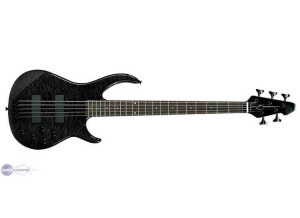
    - 34" scale - 15" fretboard radius - Hard rock maple neck with rosewood fretboard - Composite Nut - 2 way fully adjustable torsion rod - 5-string bass - String through body or top load feature - 19:1 ratio tuning machines - Two straight single coil pickups, hum canceling when used together - Ergonomic body design with waist cutaway for superior balance and comfort - Case not included - Basswood body with highly figured quilt maple top on trans models - Weight Unpacked: 8.82 lb(4 kg) - Weight Packed: 14.99 lb(6.8 kg) - Width Packed: 18.5"(46.99 cm) - Height Packed: 50"(127 cm) - Depth Packed: 3.75"(9.525 cm) UTILIZATION This is a really nice instrument for the price. It looks great, is very versatile in tone, and plays like a dream. The bass balances very well, whether on the knee or standing up with a strap, and it is surprisingly lightweight for a 5-string bass. The basswood body resonates with rich authority, and the pickups complement this wood nicely. One neat option is that the player can string the bass through the body or through the bridge rear - this gives the bass even more tonal options. SOUNDS This is the area that was most surprising to me. I've never played a basswood bass before. Basswood is a tonewood that is mainly used in guitars - it has a reputation for being cheap, as it doesn't figure well enough to be used on translucent finishes, so it nearly always has a solid color finish on it. This somehow gives the perception that it is not a great wood for tone - however, the Ibanez Jem is an incredible instrument with superior tone, and it is made with basswood. So it is my opinion that the "basswood equals inferior tone" is a myth. And it was refreshing to have my opinion re-affirmed on this bass! This bass could hang with any genre and shine - the tone is the good, yet that variable. OVERALL OPINION Overall, I am a big fan of this product. With the great looks, playability, and tonal range, the Millenium BXP is a great choice for anyone looking for a quality 5 string bass on the cheap. Highly recommended.

  • moosers's review

    The Peavey Fury is an electric bass guitar that was made in the USA and has two pick ups. The bass is clearly modeled after a Fender bass as it looks remarkably similar. The bass only has setting controls for both tone and volume, so there isn't too much control over your sound in terms of what you can do on the bass itself. UTILIZATION Playing the Peavey Fury is quite enjoyable as the fluid neck makes it an easy guitar to play. The shape is reminiscent of a Fender guitar, but is slightly different looking and the head stock is of a completely different style as well. The weight isn't anything out of the ordinary as it seems to be about as heavy as a standard bass guitar. Playing all around the neck is a cinch as I find I am able to easily navigate my fingers up and down the neck of the guitar. Getting a good sound also isn't too hard as it has a nice inherent tone, granted of course that you know how to play already. SOUNDS The sounds that I am able to get with the Peavey Fury for recording are quite good. It has a unique sound but if it can be compared to anything I would once again compare it to a Fender bass guitar, specifically a P-Bass. I normally will record both a DI signal and an amp signal from this bass guitar and I find that this is a pretty good combination in terms of getting a full sound that also packs a lot of punch. The main thing that I would like to emphasize with this bass is that it has a lot punch to it and is great for playing up beat rock and pop music. OVERALL OPINION I've been using the Peavey Fury in the studio for about a year and half and while I wasn't familiar with this bass because I came across it, I've become a big advocate for it in the time that I have been using it. I haven't seen too many of these for sale so I don't know much about the price range of this bass. I would think that it wouldn't cost all that much money as these are exactly the most sought after bass guitars in the world. Overall the Peavey Fury is a great option for the bass player looking for a mid range guitar that may not be the 'real deal' like a Fender but is a great instrument nonetheless.

  • Audiofanzine FR's review

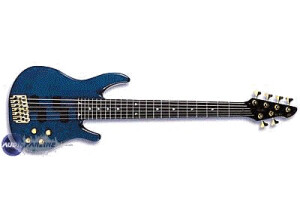
    (Originally written by Ben_137/translated from Audiofanzine FR) 5-string passive electric bass. 21 frets. Two Jazz Bass type pickups. Bridge with two options: string through body or drop-in bridge Lime tree body and neck, maple top and rosewood fingerboard. Mine is blue . Basic settings: one volume control per pickup plus one master tone control. UTILIZATION Rather slim neck. Good playability. Average access to the upper frets. The bass is ergonomic and quite light. Good balance. Very versatile sound but without character. SOUNDS I used it with tube and solid-state amps and I couldn't hear any difference between the amps. The sound of this bass has no character, it sounds the same with every amp. Now that I have a G&L I can hear the difference. I liked this versatile and characterless sound very much. The thin strings have a punchy response, which might have to do with the height of the pickups. The sound is satisfying considering the instrument's price. The strings feel a bit too dull. Perhaps the playing feel improves with heavier strings. The instrument sounds fat, but I used to set the tone control to minimum because the knob is really effective and you can end up with a very nasal sound, which I personally don't like. Perhaps for slapping? OVERALL OPINION I played it two years while I studied music. The quality is satisfying considering the price. This bass is probably not interesting for a professional musician. But I still use it on stage for songs that have a non-standard tuning. The sound is ok. Advantages: wonderful look, amazing value for money, versatile sound (which is also a disadvantage). Disadvantages: the low B, the tone control. I wouldn't hesitate to buy it again because it's worth its price and it allowed me to spend three beautiful years studying music without spending too much money. I give it a 10 because I think the value for money is exceptional!