Log in
EN
FR

Korg Digital Synths

50 products found

Sort results
  • Popularity
  • User ratings
  • Price - low to high
  • Price - high to low
  • Used price, increasing
  • Used price, decreasing
  • Name (from A to Z)
  • Name (from Z to A)
  • Added on

The best Korg Digital Synths reviews

The reviews Audiofanzine members found the most helpful.
  • FP User's review

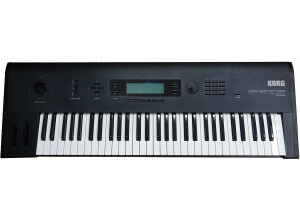
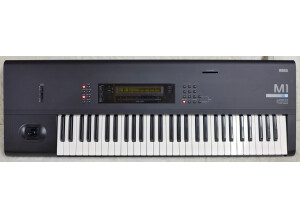
    The M1 is twenty years old now, and has a basic 16 channel midi implementation only, as well as pitch bend and modulation.It does have four outputs which isn't bad for an old synth and a card slot for extra sounds. The on board effects are probably it's best feature and the keyboard is also very nice to play if you can find one in good condition. I must say I've never really got into the sequencer on this thing as it's not easy to master and the lack of the beloved knobs and sliders is a shame, though the M1 was designed during a period of change in which digital synths took over the world. price paid: 300.00 GBP UTILIZATION As mentioned the sequencer is pretty horrible, but the basic navigation and sound editing is a breeze. The only thing I would change is the sequencer with one that was a little more user friendly. SOUNDS Well as you know this by todays standardsth M1 is an old school beast, but it still sounds great. It has been previously argued that korg rely heavily on effects for their sounds. This is true to an extent with the M1 but the effects are really pretty cool, and the overall combination of sample and effect is a good one. By modern standards your not going to be blown away by the presets, though the classic piano still sounds great and the organ still pops up on house and garage records from far and wide, plus in combi mode you can make some pretty monstrous sounds if your willing to persevere a little. For me the reason I have stuck with this synth and would buy another one if it died on me, is that it is so easy to make new sounds with very little effort. I understand that hip hop heavy weights The Neptunes use an old 0/1W as one of the main stays of their set up and I read that they make subtle changes to the presets to make new sounds. They do this by trying different internal effects or taking a standard patch like a piano and scrolling through the different wav forms and samples with the same synth parameters applied. This is what I have done for years with my M1, reason being that I always get results. I have some sounds on my M1 that you would never believe it could produce and the fact is, they were very easy to achieve. In terms of out and out sound 'quality' it's not capable of the lofty realms of sonic perfection you get with modern soft synths but to me that's no bad thing. The analogue outputs take the edge of it and it still sounds top notch, and can hold it's own in a professional environment with ease. OVERALL OPINION I have to say this thing is very well made, there are loads of them still around in full working order, mine has been gigged all over the UK, it's been dropped a couple of times and is still in good shape. I've never had it repaired though the internal battery died after about 19 years It cost me about £1.00 for a new one which was a bit of a git to fit, but after a bit of swearing and violence it went in fine. Oh I love this thing, I just love it, maybe because it's now very familiar to me like an old jumper or pair of slippers, or maybe because it is just such a beast of machine. I love the way it plays, it's so easy to edit the sounds, it still looks pretty cool to me and it's solid as a rock and the effects are superb. Long live the Korg M1. Originally posted on FutureProducers.com Posted by: breakbeat-cafe (January 0-, 2005)

  • « Korg X5D »

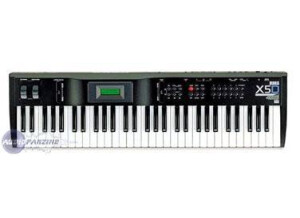
    I acquired the Korg X5D on October 10th of 1998, in a store called Sky's Land C.A., that was located in Maracay, Venezuela. The price of the unit was 650.000,00 Bs. (899,99 $ aprox.). It was my first sinthesizer. The sounds of the Korg X5D are quite good in relation with its price. Between the multisounds that I like more they emphasize the organs; the electronic sounds like the PWM, Saw, square, mini 1a, etc ; the Winds, the Strings and the pianos. It is a very portatil and easy to use sinthesizer, that I recommend so much either to beginers as to professionals. The keys are very small and very smooth. It doesn't have portamento. The interface is very simple, and it is not designed for live performances. This unit employs Korg's AI square synthesis system that consists of filters (VDF), amplifier (VDA) and two digital multi-efects processors of 47 good effects, which ensures to high quality sound. The X5D contains 430 built-in Multisounds, which are multi-sampled PCM waveforms. The Korg X5D has 100 programs in the bank A, 136 compatible General MIDI programs in the bank G, and 100 Combinations (up to eight timbres can be assigned to each combination). The X5D provides 215 types of very popular drum sounds; including both drum and percussion sounds. This unit has 64 voice polyphonic capability. It is provided with a computer interface through either a MIDI connection with a MIDI interface; or through a direct conection using a serial cable. Korg X5D is a sinthesizer that was designed to be simple, portatil, small, cheap, good, useful, with good sounds of great variety. I use it like a secondary keyboard. I don't regret me to have bought it. And I recommend it to any musician. It has a good tecnology (AI square synthesis system) that Korg use in other good sinthesizers like the 01/RW, the N-series, the i-series. This review was originally published on http://www.musicgearreview.com

  • « good board »

    I´m impressed on the quality of the sounds on the Korg Micro Station. The first time I used it was in a practice and everyone at first were curious that I left my M3-73 at home and brought this instead. They were amazed that this little keyboard was enough to fill the gap for the practice! At the beginning its weird to switch from the normal size keys to the mini-keys back and forth, but now I can say that I´m used to it. But I want to say as a user that I´m more than satisfied with what you can do with the microstation. UTILIZATION I took one sound from it that I really liked (specifically the Fantom EP) and I could reproduce it, param by param on the M3, showing that it shares a similar synth engine. I has also some of the sounds present in the M3. I see this as a synth module with mini-keys, as I also connect it to an stage piano using midi and play live with the microstation using the synth engine of it to generate the sounds and the 88 normal keys of the piano. There are many options for me with this. SOUNDS The only 2 cons for me is that 1) you need to connect it to the laptop and use the editor for advanced edition since the display is very small, but I understand that is also related to the price, and if you want more you have the M-50 or the M-3. 2) I would like to have rhythm patterns in program mode as the M3 does. OVERALL OPINION Strings and brass especially nice. only one pedal input, but using a second unit or midi full size means u can plug an exp pedal in as well, all meets up at baby keys. the trick to realizing it plays nice with ur fingers, was putting at right height on a real stand. uses sd card up to 2 gig to save patches and sequences. just use it as a gigger, be happy, it will work great for you.