Log in
EN
FR

Korg Synthesizers/Racks/Modules

176 products found

Categories
Series
Filter
Sort by
Korg
Evaluation
  • Reviewed or not
  • Editor’s award
  • Reviewed by Audiofanzine
Availability
  • Available or not
  • Sold new or used
  • Sold new
  • Sold used
Must-have products
  • All products
  • Flagship products
  • Best rated products
  • Hot products
  • Popular products
Price
  • Freeware
  • Low-cost (< $200)
  • Mid-range ($200 - $500)
  • Premium (> $500)
€
Clear
Sort by
  • Popularity
  • User ratings
  • Price - low to high
  • Price - high to low
  • Used price, increasing
  • Used price, decreasing
  • Name (from A to Z)
  • Name (from Z to A)
  • Added on
Sort results
  • Popularity
  • User ratings
  • Price - low to high
  • Price - high to low
  • Used price, increasing
  • Used price, decreasing
  • Name (from A to Z)
  • Name (from Z to A)
  • Added on
Filter results 176 results found
Brands
Evaluation
Availability
Must-have products
Price
  • Freeware
  • Low-cost (< $200)
  • Mid-range ($200 - $500)
  • Premium (> $500)
Show results

The best Korg Synthesizers/Racks/Modules reviews

The reviews Audiofanzine members found the most helpful.
  • « A good price price, and a fun little toy. »

    The Korg Monotribe is a tiny, analog synth. It features an 8-step pattern sequencer and a ribbon controller for playing, and a 3-waveform VCO, the classic MS20 VCF, an LFO and a three part drum synth. It can run off of batteries and even has a built in speaker, or you can send it out. The thing is SUPER simple, and a really fun little toy, with the potential for all kinds of fun. I love to toy with this synth, because I can do it without any set up or plugging things in and turning things on. It's really fun to just make little ideas on, and it's a real analog synth which is cool. It's not something I'd recommend unless you have some extra cash around, and need a cool toy. UTILIZATION One of the greatest things about these guys is the sheer simplicity. All you have to do is turn it on! There's a built in speaker and it can run on batteries so you can walk around with it or lay in bed with it and just mess around with the sounds. It doesn't have any complicated features, and not too many bells and whistles. Also, if you want to use it in a performance, you can connect an external power supply, and there is a 1/4 inch out jack on the back. SOUNDS The sound is like that of many basic synths, but the signature ms-20 style filter really makes it pop! The built in drums are not amazing, but they do work well together which is cool. They gel well. The kick is a little clicky but not to the point where it's problematic or intrusive. The volumes of all three are automatically set, and Korg did a pretty good job of that. The ribbon controller is cool, and responsive, with 3 voice polyphony and it's not too hard to control. I don't really have any complaints, as this is actually a great deal for a real analog synth. OVERALL OPINION My favorite things about this synth are the simplicity, and the filter. I take this with me all over the place and love it. I make noises while I'm doing whatever and it's awesome. It's super portable. I also love the filter, having owned an MS20 gives a real appreciation for just how cool this little thing is. The thing is worth the money, if you need a toy. It's also great for working out ideas on the fly. It would be cool if you could hook it up to a midi keyboard, but it's fine how it is. I love this little guy.

  • « Korg N364 »

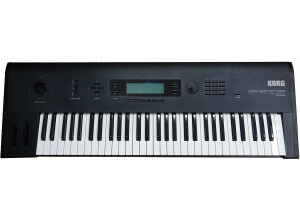
    I acquired this keyboard because I needed to take a progress in my career as a keyboard player and compositor... Before playing the N364, I had an old Roland E-16 (not even a synthetizer). I bought it in a famous street in Capital Federal, Argentina, where all the marks and models are shown: Talcahuano. I really get crazy when I get there and it's a pleasure to look around the uncountable number of shops. I paid U$S1500 in year 2000, now it's U$S1000... When I first played I realized that it was very easy to use, in fact, it has 47 buttons, two "sliders" to increase/decrease the values and a very visible LCD display. This synthetizer has an unique touch as well as aftertouch. N364 finished my search: I needed a 16 cannel Sequencer, a piano, an intelligent synthetizer, a general midi keyboard, a big number of sounds, and an absolutely facility to move it anywhere. At the left of the synth lies an incredible joystick. You can use it to control effects moving the joystick down, up, left or right as well as blending the notes... This unit counts with 47 different effects and a very useful RPPR mode that you can use to make solo performances without being worried about the riffs... This RPPR is an utility in which you asign sequenced patterns to different pitches and with one touch you obtain a looped riff. The 3 1/2 disquette deck is a big weapon to manipulate midis and sounds between your computer and the synth. And midi in/out/thru are hard guns too! The setup menues are very accesible from the button keyboard. When you know exactly what it can do, you will probably make original, amazing sounds!! First of all, the Trinity model make N364 lose because it was also made in 1995 and if you were about to buy a keyboard you would probably wait 2 months to buy the Trinity. Another thing was that the prices were similar and you would earn U$S 500 and buy it... The company could have think more about that!! If I had to remake the N364 I would add a value wheel and would take off the value slider which is very imprecisious!! In spite of getting incredible sounds, it's very difficult to make one from the first step, choosing the "multisound" (internal sounds): the initials in the LCD display are not always clear and sometimes you will increase or decrease a value and get no change. You will always have to read the manual before making a sound... If you had to make a live performance it would be very difficult to remember where a sounds was... and putting the sounds one after one will make a trouble of internal sounds and you may repeat some of the suonds twice or many times... Well, i said that it was easy to carry and it is not a big or heavy synthetizer... I have to say that it is an incredible strong Korg (I made it fall one time) N364 have the same weight at both sides... and it is a very confiable unit!! If I had to chose again I would probably buy a Korg N364 as my first synthetizer, because it is easy to use, has a good touch and an accesible price!! This review was originally published on http://www.musicgearreview.com

  • yoTrakkz's review

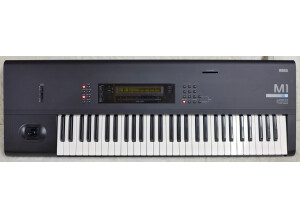
    The Korg M1 is a board that has been used all over the world and still is used today even though it’s the old model of the M versions from Korg. The M1 has great control with the pitch bend and modulations not to mention card slots and expansions. You don’t have expansions too much on other boards such as this one. UTILIZATION Great board, sequencing isn’t anyting spectacular just the basics and you probably wont like it too much like most people. I suggest upgrading to the most recent korg board because it puts this one to shame. SOUNDS Sounds pretty good, Korg always keeps good solid soundsets when they come out with a board or module. At first glance with this board you will be blown away by some of the synths and piano’s, but keep in mind that these are very old. Then being very old is probably what will blow you away, that the synths sounded this good back in the day. But if you used this board today, im sorry to say your sounds will be out dated. Most all musicians at a higher level have messed with the M1 to some extent and can probably tell you when they hear a sound off the top of their head if its from the m1 or not. OVERALL OPINION Overall a great board, but its very outdated. Today I wouldn’t pay more than 250 for it used. Mine as well save up the money and just get the Korg M3 because it has better sounds that are up to date and it’s a monster all around from the sounds to the parameters and editing options. Plus the Korg M3 isnt too expensive anyways, but if you have the M1 already keep it, or if some one is offering you a great deal on it I would get it because it’s a classic board.

  • mooseherman's review

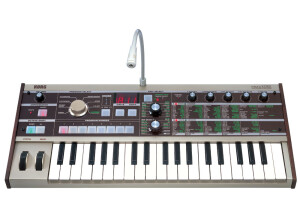
    This is a digital synth that has three octaves. There are connections for a microphone (input) as well as a 1/4" output for amplifiers and PAs. There's also an XLR out. The Microkorg has a built-in vocoder which is the reason for the microphone. There are wheels to adjust pitch, modulation, and sustain. It can be used for monophonic or polyphonic purposes. The sounds on this machine are finite, meaning you cannot update them with a computer. UTILIZATION Using this machine is pretty simple overall. While there are a bunch of sounds, there isn't an astronomical number of them, meaning you can get around them pretty easily and program your favorite ones for easy access. THe hardest thing about using this keyboard is the size of the keys. These keys would be relatively small for any player who isn't a child, and my hands happen to be quite large, so I sometimes struggle to fit the notes in. However, I think this is a relatively small problem considering that my main use of this synth is for single note lines, though. The manual is really good at explaining how to work the synth, and it definitely made things easier once I got started. SOUNDS I love the sounds that come out of this synth. Don't let the size fool you; this guy really brings it! My favorite sounds are ones that can best be described as throwbacks to 80s new wave and 90s dance music. I think that if this is what you are looking for, these sounds are great. It also does a decent job of emulating mellotron and organ sounds, which I wasn't expecting. I wouldn't buy it specifically for those things, but they are a nice bonus. To top it all off, the Vocoder is undoubtedly one of the best features of this synth, and almost worth it for this alone. The sounds are only as realistic as a synth can be. It emulates synth sounds, not the sounds of real instruments, so I'd say they are overall pretty realistic. There isn't much in the way of touch sensitivity, but the sounds that come out of this guy aren't really the kind you'd need a whole lot of sensitivity on anyway. I like some of the effects, particularly the modulation and reverb effects. I haven't had a single complaint with any of the sounds that have come out of this synth. OVERALL OPINION This synth came highly recommended by a few friends of mine. They didn't steer me wrong. I am very happy with this purchase. I like the diversity of synth sounds, the vocoder, and the relatively compact size of this keyboard. It's a bit pricey but I am very much convinced that it's worth it. I think that the sound quality is solid throughout, and assuming you use the right amp or DI this thing can work wonders. If broken, I would certainly replace it.

  • FP User's review

    For the MS2K's intended purpose of being a Virtual Analog Modeling Synthasizer, it boasts virtually anything you would want in a VA Synth. My reason for not giving it a 10 are because of the limited 4-polyphony and the quality of the keys. UTILIZATION The MS2K is very simple to use. The abundance of 30+ knobs gives you total control over your sounds. A larger display and less sub-menus would have been welcomed. The Korg MS2000 is a very frail machine. The keys are very cheap and light. The knobs are fine for the fast twists I often like to do... but the mechanism underneath the knobs (internally) could have been stronger. The real wooden panels on the side werre a nice touch and rest assured, this will be a coveted vintage synth someday. SOUNDS Absolutely amazing. A monkey might get on this thing and crank out better sounds than your first try. The sounds are rich and phat. Almost too easy to impress someone with the results. The built-in vocoder is one of the best I've heard, the bass is extraordinary, and the effects are sick! OVERALL OPINION I intially bought the MS2K for flash web development (sound fx, vocoded mouseovers and fx, beats) but I found myself making some pretty cool music with it. In fact, it inspired me to buy a second keyboard, a Yamaha Motif. Originally posted on FutureProducers.com Posted by: Unknown ( 6-, 2002)

  • FP User's review

    Alot of bells and whistles as im pretty sure that the architecture was used in the design of the Triton rack, well the original one anyway. However i could use a floppy drive or maybe even a small sampling package. But this is probably what korg was going for. price paid: $160 USD UTILIZATION Not easy at all. i wanted to chuck this damn thing out the window of my second floor apt complex, BUT....once i got it and im still learning i settled down and made some music. but the learning curve is NOT for the faint at heart SOUNDS The sound quality is good, i dont think its the motif es rack by any means but impressive none the less. The reverbs sound great but a little overkilled at times. I havent had a chance to sift through ALL the sounds but the ones ive heard definitely peaked my intrest and for less than 200 bucks you can go wrong. OVERALL OPINION This is a tank, well almost, as when i bought it i lost a knob on the way home from where i bought it but i just doesnt have enough externally to get broken. i havent had it long enough to say that i have love for it, but it is my first rack, so im a little taken by it Originally posted on FutureProducers.com Posted by: greydonsquare ( 3-, 2006)

  • « Korg Volca Keys: A Great Machine, but the Phara-O Mini Fixes Its Weaknesses »

    The Volca Keys was my first compact analog synthesizer. I’d previously owned a Minikorg 700, and I missed it. As a big fan of Korg’s sound, I was immediately curious. I sold it a few months ago without regret, after the announcement of the Behringer Phara-O Mini. In the meantime, I’ve been able to get similar sounds with Korg DS-10. What stood out for me was the ergonomics—probably the best I’ve found on such a compact synth. The sound was thick, lively, and the filter was exactly to my taste: expressive, with tons of character while still being quite versatile. There were a few downsides. The delay effect, while useful, often introduced a bit of unwanted noise. Also, the power setup always felt off to me—especially with the uncommon adapter and the reliance on 6 AA batteries. Not ideal for long sessions. And I never understood the point of the built-in speaker. It’s pretty much useless and, in my opinion, detracts from the overall value of the product. Despite these issues, I have great memories of the Volca Keys. It’s a charming, accessible, and effective machine. However, the Behringer Phara-O Mini seems to fix most of its shortcomings, which is why I decided to move on.

  • « Go Limited Edition »

    The MicroKorg XL can be purchased in a few different versions and colors. I have the limited Edition all black MicroKorg and it cost 515 dollars brand new. It has 37 keys and comes with a built in 16 band vocoder. There are a total of 128 sounds on the MicroKorg XL, and the reason that I got this limited edition version is just because I like the “all black” design. Everything is black even the “white” keys are black. There is only silver knobs and writing on it. They also make a standard version but it looked really boring compared to this version and they were both the same price so I went and got this one. UTILIZATION The 16 band vocoder is awesome. I have not performed with it yet, but I plan on really getting out there and doing some live stuff with this vocoder that the MicroKorg has. The microphone is a goose neck mic and can be adjusted to different positions depending on where the user wants it. SOUNDS There is an LCD screen on this board too; there are 3 knobs that basically control all of the functions for the LCD screen. It is very easy to choose your filters and add effects with the screen. The overall sound of this board is very classic, the 128 sounds that it comes with are all very good and have value right way without having to do anything too them. But if you want to tweak the sounds to make your own you can do that without a problem. OVERALL OPINION This board can be run off of batteries or from wall AC power making it very portable. The board didn’t come with a carrying case or any type of protection so I am not going to be traveling with it too much just yet until I get a case for it. This synth is well worth the money spent and I recommend getting the “limited edition” one because it looks way better than the standard one!

  • « creativity at its finest »

    This 61 key synth is very small light and portable, it will fit on your desktop or workstation with room to spare. The keys are touch sensitive and fast. You can really work your melodies with this synth because the keys are light and fluid like. Most of the sounds for the Korg X50 come right from the Triton sound engine. Not saying that you should get this over a Triton by any means. But if you like the Triton sounds, then you will love how you will get some of those same sounds in this smaller and more portable synth. UTILIZATION Using this keyboard is simple because of the interface. Everything that you might want to do or need to do can pretty much be done form the push of one button. Even working with the effects, they are very easy to add and manipulate right from the main interface of the keyboard. SOUNDS All of the effects are great on this keyboard. The reverbs and chorus are awesome; they will really spark your creativity. You can also use the dual arpeggiator on the X50, and you will also have full control over which direction it moves and the gate and timing of it. OVERALL OPINION The X50 does come with editing software that you can use a plug in, it will connect to your computer via USB and you can use the X50 as a plug in with any DAW you prefer. This synth is affordable, portable and user friends. It comes loaded with high quality fat sounds that you can use as is without having to add anything to them; if you are not a fan of tweaking sounds and presets. I love to tweak sounds just as long as it does not get overwhelming and time consumer because I feel like it interferes with my creative when I have to stop my workflow to completely make a new sound. This keyboard synth will boost your creativity without breaking your budget.

  • « Well built, keys may stick »

    The Korg PS60 61 is a performance synth that is made for a live musician. The Korg PS60 has a very nice backlit display on it that no matter what your lighting situation is where you are you will be able to read the screen without the need to squint your eyes. The Korg PS60 comes with a manual that is in depth in helping you understand all of the functions of the Korg PS60. It also comes with a quick start guide which is more like a watered down manual with just the basics. UTILIZATION The Korg PS60 has a total of 70 different effects and has a very user friendly interface. The keys have a great response to them and they are semi weighted. The sounds are all broke down into categories like Electric Piano, Organ, Strings, Brass, Synth etc... All of the sounds are well designed and are perfect for performing with. SOUNDS The Korg PS60 is supposed to be portable but to me it is a little bigger than expected and definitely heavier than I expected it to be. It does not come with a stand, bench or speakers. So these are things that you will need to have if you are going to be gigging with it. OVERALL OPINION There are many positive things about this keyboard when it comes to gigging with it, but for the price it might be better just go with one of the Yamaha keyboards with similar specs. They are a little lighter and less expensive than the Korg PS60. Also I have noticed with the Korg PS60 that over time they keys may start to stick. This can happen with any keyboard, but I have seen it happen frequently with the Korg PS60. It is a great keyboard and at a decent price, but for gigging it should be a little smaller. Also, the output volume is kind of low for it to be a live keyboard.

  • « Korg T1 »

    I bought The Korg T-1 second hand a few months ago. I'm a musician for 20 years now (I started playing the piano when I was 6), classical and then started electronic music when I was 12. I actually bought the Korg T1 because it was one of my fantasies as a child. Some great names had this synth a long time ago. At this time it was worth more than 5,000$ and I got it for 500$, in a perfect shape. First, it looks great, it's almost a beautiful piece of furniture (half of the synth is in wood). The surface can be used to put a Mac keyboard and a mouse which is very practical. Second, the keyboards is quite good and can be used as a keyboard controller. I also like the joystick than can control 2 MIDI controllers + the picth bend. Now let's talk about the sounds... They were probably great 20-30 years ago but now they really sound ultra kitsch. Also, go with a friend when you buy it: it's huge and heavy (30 kg). Construction is very good (it was the top product of Korg at this time) and finish has some beauty. Korg T1 is a (old) legend, but sounds are now too old fashioned. The keyboard is good but you can also find a light P80 from Yamaha if you search for a piano weighted keys. This review was originally published on http://www.musicgearreview.com

  • « Korg MS2000BR »

    I won this piece of gear via the Korg incentive program...I am a dealer. It has amazing fat analogue like sounds to it. Especially for bass. A previous user mentioned that it was but a "toy" because of a lack of user preferences. Initializing patches I suppose. That reviewer was wrong. You have more than one "scratch" patch to start from, as you can initalize any of the programmable patches. The lack of control w/ the distortion. Built well. Plently of knobs and buttons for tweakers. This is a fat sounding analogue modeling unit. Great for bass and fat leads. This review was originally published on http://www.musicgearreview.com