Log in
EN
FR

Yamaha Synthesizers/Racks/Modules

135 products found

Categories
Series
Filter
Sort by
Yamaha
Evaluation
  • Reviewed or not
  • Editor’s award
  • Reviewed by Audiofanzine
Availability
  • Available or not
  • Sold new or used
  • Sold new
  • Sold used
Must-have products
  • All products
  • Flagship products
  • Best rated products
  • Hot products
  • Popular products
Price
  • Freeware
  • Low-cost (< $250)
  • Mid-range ($250 - $650)
  • Premium (> $650)
€
Clear
Sort by
  • Popularity
  • User ratings
  • Price - low to high
  • Price - high to low
  • Used price, increasing
  • Used price, decreasing
  • Name (from A to Z)
  • Name (from Z to A)
  • Added on
Sort results
  • Popularity
  • User ratings
  • Price - low to high
  • Price - high to low
  • Used price, increasing
  • Used price, decreasing
  • Name (from A to Z)
  • Name (from Z to A)
  • Added on
Filter results 135 results found
Brands
Evaluation
Availability
Must-have products
Price
  • Freeware
  • Low-cost (< $250)
  • Mid-range ($250 - $650)
  • Premium (> $650)
Show results

The best Yamaha Synthesizers/Racks/Modules reviews

The reviews Audiofanzine members found the most helpful.
  • « Great sounding patches »

    The Yamaha S90 XS is a 88 key synth with a stage piano as well, it has over 1000 voices as well as a built in USB drive and on board DAW controls that can either be used with a Mac or a PC (any version of Windows). At first glance looking at this board you will think that it cost way to much money for as simple as it looks. They key part of this board is that the sounds are very good, there really are no bad patches on the whole thing. It is a very good synth to have for a large genre of music. When it comes to the stage piano part of it, you can easily plug a microphone right into it and have an on stage set up right at your finger tips. I have used the Yamaha S90 XS with Reason 4 and with recording directly into Pro Tools. UTILIZATION Setting this synth up takes no effort at all. You can read through the manual if you need it, but I hardly ever do everything on this board from the song process. I basically used it for the sounds and maybe a few small performances for some friends. Editing the parameters of your sounds are very in depth. I won’t say it is easy because it is not, unless you are use to doing your sound editing from a keyboard. Its actually a lot different than doing it on a software synth. But after you get use to it you will be very comfortable with editing all of the parameters on the Yamaha S90 XS. SOUNDS When you are playing the Yamaha S90 you will love the feel of the keys, they have a nice weighted feel to them. As a player, you can really get your expressiveness out like you can sitting at a real piano. The piano sounds are very good and realistic, they are actually some of the best piano patches that I have heard coming from a synth keyboard. OVERALL OPINION The Yamaha S90’s sounds are the selling point for it, if you get a chance go to your local music store and see if they have this on display. You will be locked in on it for hours just messing with all of the sounds and effects. But, the fact that the price is so high almost makes it not affordable for the average “at home” musician. I do suggest purchasing this keyboard though if you can afford it. The quality of the Yamaha S90 XS is well worth every dollar that it cost. I have been using the Yamaha S90 XS since the winter of 2009, and I am still learning new stuff about it.

  • « easy to use vintage gear is great »

    The Yamaha SK20 is a classic analog synth with a lot of sounds from the late 70’s into the early and mid 80’s. The bad thing about this board is that over time they start to have some serious issues that can come about. I learned this first hand after purchasing one of them on eBay when I was looking for some vintage sounds to blend in with my current music. So I came across this board and purchased one, it only had some small scrapes and scuffs on it and that didn’t concern me at all because the board is like 30 years old so I expected it to have some scratches. But what did concern me was with the noise in some of the sliders. For some reason over time this boards have like a “short” or something of that nature to them because when moving the sliders you will hear like a fuzz sound. Now this fuzz sound wont record if you are recording into a mixer or external gear but it can be annoying when every time you slide a slider you hear a bunch of fuzzing sounding feedback. UTILIZATION The Yamaha SK 20 couldn’t be easier to use, there are no navigation and everything is right on the main face of the board. That is one of the best things about vintage gear, they really didn’t make it to hard to use. SOUNDS The sounds are great, very vintage and warm. It was exactly what I was looking for , im glad that I got to purchase one of these. OVERALL OPINION They are online now and they are very affordable. Just try to find one in the best possible condition and hope you don’t get the fuzz sounding sliders. But if you do get one with that problem its not that big of a deal. The sound only happens when you slide, not when you play the notes. So if you can get past that you will be ok.

  • moosers's review

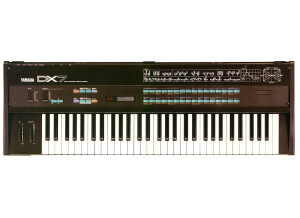
    The Yamaha DX7 is a frequency modulation based digital synthesizer. The keyboard spans about four and a half octaves and has both pitch and modulation wheels. It has 1/4 inch outputs and it also has MIDI connections. In addition, this synth is fully polyphonic. UTILIZATION The configuration of the Yamaha DX7 can definitely take some getting used to, as there are a lot of different things you can do with this. It both has preset sounds and has the ability to store your own sounds as well. It is easy to toggle between all types of sounds, but will take a little while to understand all the ins and outs of this keyboard. The manual for the Yamaha DX7 is pretty complete and is definitely good to have around while you are trying to learn this powerful instrument. SOUNDS The sounds on the Yamaha DX7 are pretty varied, but all have a similar recognizable sound about it. It definitely sounds like the time period in which it came from, which is the 1980s. It is great for dance and pop music, and if you want to get creative you can definitely use it for all types of instruments. The feel of the keyboard is nice and it is very easy to play. The pitch and modulation wheels, and other parameters provide for almost endless possible sounds with this keyboard. Overall, an extremely unique instrument that is a great tool for a wide variety of applications. OVERALL OPINION I've been using the Yamaha DX7 synth for about three years and it is easy to see why it has become a classic. Surprisingly, these are pretty easy to find and aren't really that expensive. So if you are a fan of the sounds on this, it is a pretty easy pick up and is great to have around for both recording and live shows. Overall, the Yamaha DX7 is a unique instrument that definitely holds a place in the history of synthesizers.

  • FP User's review

    My big dissapointment is that to use the good performance sounds, you have to be in performance mode, and that mode is monotimbral. Other wise you can use up to 4 XG sounds at once in multi mode. Very annoying. There are basic filters on this that are pretty limiting. Definitely &quot;first synth&quot; territory. Price paid 700$ UTILIZATION The menu is pretty complicated for such an entry level synth. And no thats not a good thing. There is one knob and 10 arrow buttons to press to navigate the huge menu. A lot of the things are not self explanitory and half of the stuff you will never use. 3 knobs fell off on mine (they are cheap plastic knobs), and now I turn them with their metal bars instead. However, it still works after 8 years in all respects. SOUNDS Ok basically this is one part ROMpler and one part GM/XG machine. As far as the ROM sounds go, they are exemplar of the mid nineties dance/trance scene. A few pads, lots of leads and basses. Drums are OK. The GM sounds are good, but they are GM. Considering the low cost of the cs1x the sound set is pretty good. I'm sure you can find much better for more money but considering that this is a 8 year old machine that shouldnt be a challenge. OVERALL OPINION Ok now here is where the 10 comes. You're probably asking urself; ok why does he still have this synth? Here is the reason: it is a PERFECT midi controller. Ok maybe not perfect, but very good. Why? You can definetly get this on ebay for less than 100$. It has a solid 66 synthaction key board. It has 6 good assignable knobs. Simple to use. Nuff said. This has been my sole controller since I got into MIDI and it has never let me down. Moreover, it is a good keyboard to try out ideas on...it has all the major dance sounds you need as a trance/dance producer to use as a &quot;scratchpad&quot;. Then, when you are ready to control your VSTs you just press a button and there you are. And I'll admit it, I just have a love for this thing as my first keyboard...yeah I said it! Originally posted on FutureProducers.com Posted by: I_watch_stars ( 7-, 2005)

  • « thick sounds »

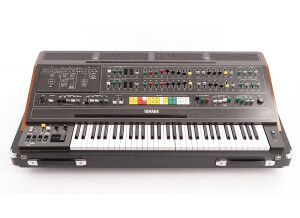
    The Yamaha CS 80 is a very big unit. I do love the way that it is laid out though with color coded sliders, I think it looks cool and kind of makes some sense of all of the stuff on the board. This board is very big though and weighs about 150 or more pounds. So there wont be any taking it anywhere. You will want to leave this in the major studio, so I don’t know why someone would want this in their home unless they just have a good space to get it in. The Yamaha CS 80 has some amazing sounds that are very thick and phat. I didn’t think that sounds on this type of gear could be so fat. They are almost to fat and need to be eq some. UTILIZATION Using it will take about a day or two depending on how long you sit at the unit, you will have to learn where everything is so that when you want to do something you know exactly where that slider or knob is to tweak. But with the color coded stuff it kind of makes sense of everything for you once you get the hang of it. SOUNDS The sounds are by far the best thing about this unit. This has the best sounding phat sounds out of any piece of vintage gear that I have heard ever. This is the winner hands down as far as sound thickness goes. Also the ability to edit those sounds is pretty easy once you understand some basics. OVERALL OPINION This thing is huge, so don’t purchased it if you don’t have the room for it. There are two handles on it, but you probably wont be able to carry 150 plus pounds like it’s a suit case, its just too big for that.

  • « Yamaha AN1X »

    I purchased this for $500 during the great Sam Ash blowout of 2000. Before the blowout it was retailing for three times as much. Lovely sound. Relatively warm and full featured for a virtual analog synth. Appearance and controls: It has a five octave synth-style keyboard, a ribbon controller, 8 programmable knobs and a two dimensional ribbon controller. Synthesis Architecture It's a ten voice virtual analog synth with two oscillators, two LFO's and a single multimode filter per voice. An additional high pass filter is located at the end of the signal chain, but it's passive with no resonance. The AN1X sports a ring modulator and white noise generator as well as FM and Oscillator sync functions. The oscillators have an "edge" parameter which allows you make them more rounded or more jagged. So you can go smoothly from a bright saw to a sine wave. One feature that stands out is the amplifier's feedback parameter. This emnulates the minimoog trick of taking the output of the amplifer and feeding it back into the filter. This adds a smoky, tubey saturation sound, warming things up nicely. There is a well featured modulation matrix in the synth which can control nearly all synthesis parameters. Sixteen concurrent routings can be mapped in a single patch, allowing for a lot of expressiveness. Two unusual features in this synth are the free envelope generators and the scene morph function. The four free envelope generators can modulate virtually any of the synth's parameters and can be set to run free or be triggered by the keyboard. They can be synced to midi, and looped in different ways. The scene morph function allows you to morph (i.r. interpolate) between two patches with the mod wheel. The morph yields lots of complex timbres and is much more expressive than a simple cross-fade. Effects and arpeggiators: The effext section is quite comprehensive which each voice passing through a multi-effect, a delay, a reverb and an eq. There's an arpeggiator on board as well as an analog style sequencer. Sounds: As you might expect it does analog polysynth sounds very nicely. In monophonic mode it does yield brassy Moogy sounds as well as some rather nice Roland type "wet" resonant sounds. It does lovely synth effects since it's filter self-oscillates. Of course it doesn't do natural instruments like pianos and violins at all. It has a clunky wall wart power supply, The filter does stair-step on high resonance settings. I wish it had an octave/transpose button. It's well made The casing is plastic but feels sturdy. It's extremely lightweight and convenient for gigging. I have had no problems in the 2 years I have owned it. And I am thinking of geting a second one because I like it as a controller. It's emerging as a cult synth. Although Yamaha has put much of the functionality into the AN200 board and the PLG-AN plug-in card, the AN1X appears to have an ardent following. With good reason. This review was originally published on http://www.musicgearreview.com

  • « great board »

    I bought my first synth in about 1990 and have owned at least a dozen since. I also played piano for ten years before that. I've had this unit for about 5 days. It is really nice. I just recently sold a Fantom Xa, XP-30, Korg X-50, and a Yamaha AN1x. Now I have only this board and I can pretty much get any sounds I had before out of just this one board. It is a great sounding synth but the pianos are the best I have ever played in hardware. In fact, I own software pianos that aren't as nice or versatile as this board. They sound great and there are several of different styles. None of them are bad and the good ones are pretty much great. I love the pitch modulation. UTILIZATION You can edit quite a few things without but I like to be able to fully dig in when I want to. For two, as great as the arpeggiators are and all of the 6000+ patterns, they are not programmable...... at all. Not from the board and not in the editor. There is one song, "Hella Good" by No Doubt, where I need a really standard little step sequence of 3 notes and a rest. Nope, cant do it. This is the only thing that I am having a hard time dealing with. Otherwise, I am totally satisfied with the tone and my ability to make about any sound I would ever want. manual is easy to understand as well. SOUNDS I have been in a cover band for the past three years that plays a lot of 80 pop and I am also a huge Van Halen fan of the synth-era stuff. I immediately prgrammed sounds for Love Walks in, 1984, Jump, Subdivisions, Tom Sawyer, etc. No real problems getting all the tones I want and I am a tone snob when it comes to programming. THese versions I have made have lots of sweet punch and sizzle. Love it! sounds are very realistic. OVERALL OPINION Bottom line, I love it. I dont think I've ever had my fingers feel so connected to the sounds that they are triggering. The action is sort of buttery smooth. Love it love it love it!!!

  • moosers's review

    The Yamaha Motif-Rack ES is a MIDI sound module for use with a MIDI keyboard or otherwise. For those who don't know, Yamaha has a series of keyboard workstations under the Motif name, with this one being just a rack version that contains all of the sounds and features without a keyboard. The unit has MIDI jacks for input, output, and through, in addition to 1/4" stereo outputs and four 1/4" assignable outputs. It also has a digital output, optical output, and a USB port. The front panel also has a 1/4" jack for headphones. It is of course rack mountable and will only take up a single space. UTILIZATION Using the Yamaha Motif-Rack ES is a bit more difficult than using a full Motif keyboard since it's so compact, but it's still not too hard to navigate through sounds here and all that. I haven't used the Motif-Rack ES for it's in depth features, using it as just a sound module with an external MIDI keyboard. There's definitely a good amount that can be done with it that I'm sure is more in depth that I haven't used it for as of yet. A manual is definitely a good thing to have if you're looking to learn everything possible with the Yamaha Motif-Rack ES. SOUNDS The sounds on the Yamaha Motif-Rack ES are awesome across the board. They're the same exact sounds that you'll find in the keyboard version of the Motif ES, which range from traditional acoustic piano sounds to emulations of acoustic instruments, to synth sounds and beyond. It also has drum kits, effects, and pretty much everything you'd expect a multi-functional workstation to have. All of the sounds are pretty realistic, with some being more so than others, but for the most part this is a top notch collection of sounds. OVERALL OPINION If you're a keyboard player who has a rack of modules and a MIDI keyboard, you really can't go wrong with the Yamaha Motif-Rack ES as your main module. It's not going to give you the most realistic analog keyboard sounds, but for just about everything besides this, it's top tier. If you already have a MIDI keyboard this is a great way to expand your palette of sounds. It's cheaper than buying a Motif keyboard, but in some cases it's probably worth it to go for the full keyboard. The Yamaha Motif-Rack ES is definitely a nice option to have and is one that should be considered by anyone looking for an all purpose MIDI rack sound module.

  • FP User's review

    This is a one-trick pony. A virtual acoustic modeller. In that respect its perfect, but it doesn't really do much else. WIth one note of polyphony also, it's meant for live, or single tracking in a sequencer. Price paid $600 NEW UTILIZATION Menu system sucks, too many button pushes to get to what you need. Manual is OK. Just average. Luckily, once you get all the sounds the way you want them, you can send Midi CC's to change 'em up easy from a midi controller or sequencer. Not a biggie as long as you come prepared. SOUNDS Best *affordable* acoustic synth out there. It's big brother has a better sound, but costs ~6x more. OVERALL OPINION Once you set it up, it's rock solid. Sturdy, and hasn't failed me yet! If I lost it, I'd buy a new one the next day,. I know I trashed its features, but like I said, it's meant to do one thing... to give you the best synthetic acoustic sounds money can buy and in that respect it excels Originally posted on FutureProducers.com Posted by: Unknown ( 5-, 2003)

  • FP User's review

    This doesn't really bother me , since i use it solely for the sounds( i dont use the arpeggios,multi, etc), but it doesnt have a sampler nor can one be added, and it doesnt have a sequencer. itd be nice if one day they can have a fully loaded motif rack, but i record,sequence,mix, and add effects on the computer anyway. So it basically does what its made for which is deliver an arsenal of pro, usable sounds. Price paid $1,000 USD UTILIZATION I haven't really tried to use all the features so i wouldnt know, but simply for sound accessing,its a 10.. at first, i had major trouble trying to figure out how to split the sounds into sections,so i can play the piano on the right side of the keyboard and the drumkit on the left. the manual didnt help and guitar center didnt know either.. eventually i figured it out. so with that i can guess its pretty complex. they should let you save your split keyboard settings, so you dont have to set them up every time you want to use it again. SOUNDS The motif EASILY has the best sounds, and not only does the Rack have every sound the keyboard has, it also has a ton of extra sounds that the motif keyboard doesnt, stock!!! the horns are wack, it only has about 5 basses that sound professional, but thats it. and besides , the triton and fantom's pianos,guitars,horns,basses, etc are all wack.. i dont think any keyboard gets a 10 in sounds yet OVERALL OPINION Ive never had any problems with it,and i take it places to perform. even though i didnt give it all 10's doesnt mean i dont like it.. i wouldve given any other products 3's and 4's. this is my favorite peice of equipment and if your lookin for the best stock sounds i recommend the motif-rack ps. it has 128 polyphony !! how tight is that? Originally posted on FutureProducers.com Posted by: Fewture ( 9-, 2004)

  • FP User's review

    FIlters can't screech that well and synthesis ain't too strong. Envelope generators makes so little difference to the sound, and the layers are hopeless. I'll rather say it's ok! Can't stand the little arpeggio manipuation, so limited concept. Price paid $1450 UTILIZATION Pretty simple to use till the point of boringness. Quite easily switchable though. Too little realtime controls. Yamaha should have a case for this model, everytime i carry it around in a bag, it gets knocked. Really makes me worried. However, it's still ok and functioning. The switch knob falls off easily. They should have those similar model knobs as ibanez guitar knobs, which looks really alike. If that is possible, the color can be switched, sure would be fun to decorate some. Never called Yamaha support for this item, but did for others. Service average. SOUNDS Clear sounding. Synth patches and strings are good. Piano sounds are clear, but of cos no match for real pianos. Techno sounds are pretty good, can get good harmonies. This is more a commercial dance/ambient synth. Effects are plentiful and pretty good. OVERALL OPINION The arpeggio manipulation is what really turns me off, i'm having an idea but can't shuffle the groove around. The sound manipulation is ok, can't stand the lag of filter sweeping. If Yamaha wants to come out a dance synth, they should go all the way, so many of their models are more based for honky tonk styles. This model is like a dance wannabe. Lose outright to Roland. However, it ain't too $$ for a dance synth. Originally posted on FutureProducers.com Posted by: Unknown (January 1-, 2003)

  • FP User's review

    A whole world of synthesis (EX: expanded synthesis) lot of techniques to make sounds, but not very friendly to integrate as one. Sampling is very cool with the EX5, but the memory capabilities are very limited. you can reverse sounds without accessing editing screens, and make 1024 waves from the samples you have recorded. The sequencer is the worst feature of EX5. It has 16 tracks, but you can assign effects only with three of them. If you jump from one track to another one, there is an annoying interference on the sequencer playing. If you use an analog sound, you can't assign effects to the other 15 sounds. The arpeggio secuencer is really cool, but complicated also, and with some innecessary feaures. You have a four track secuencer for making 50 user arpeggios, an 8 track secuencer for 50 user patterns. and a song mode for lineal recordings. But only 30.000 notes capability for all these features???? Who understands Yamaha enginneers?????? Price paid $1.200 UTILIZATION Well, the EX5 is one of the most complicated synths to navigate. The user interface is really annoying, you get lost in a huge mess of directories and subdirectories. They try to put too much features in just one machine, a terrible waste. Yamaha put a lot of their synthesis knowledge in this synth. The result is a keyboard with too much software, an infinite path to create original pads, with a really confusing hardware to operate it. the sequencer is a waste. It has 30.000 notes capabilities. SOUNDS The EX5 has FM, AWM, FDSP, virtual, sampling and analogic synthesis. Something else? The quality of the sounds is really good. The virtual sounds rocks, you can improve thwm with a brath controller, and the FDSP effects are very original, it has very realistic effects, for example, for playin' an acoustic guitar. If you combine the different ways to edit sounds in just one, the EX5 can make incredible sounds. For example, you can layer a sample wave, a FM voice, and a virtual voice, and make an original pad with these features, and resample this pad. EX5 synthesis is really original, an odditie for pads creation. The coolest feature of EX5 is its capability to make new sounds from the combination of all the Yamaha's different synthesis into a unique instrument. OVERALL OPINION No customer support for this keyboard. I can't even find accesories, supplies, memories, etc. how much EX5 or EX7 users around the world? 600, 700???? This keyboard is the factory prototype for the Motif. Motif is the improved version of EX5. I like EX5 because just a few people has it. It's a freak, and a failure from Yamaha sound engineers, who tried to make &quot;the new DX7&quot; for the ninetiees. you have to take your time to learn how to operate it. But it's an incredible machine for sound editing. Combining the different synthesis like FM, Analog, FDSP, virtual and AWM into just one single pad is possible. I use it for editing weird sounds. Its very handy for me when I want to create sounds with my personal signature. Originally posted on FutureProducers.com Posted by: Unknown (January 1-, 2003)