Log in
EN
FR

Yamaha Electronic instrument

551 products found

Categories
Series
Filter
Sort by
Yamaha
Evaluation
  • Reviewed or not
  • Editor’s award
  • Reviewed by Audiofanzine
Availability
  • Available or not
  • Sold new or used
  • Sold new
  • Sold used
Must-have products
  • All products
  • Flagship products
  • Best rated products
  • Hot products
  • Popular products
Price
  • Freeware
  • Low-cost (< $300)
  • Mid-range ($300 - $1,000)
  • Premium (> $1,000)
€
Clear
Sort by
  • Popularity
  • User ratings
  • Price - low to high
  • Price - high to low
  • Used price, increasing
  • Used price, decreasing
  • Name (from A to Z)
  • Name (from Z to A)
  • Added on
Sort results
  • Popularity
  • User ratings
  • Price - low to high
  • Price - high to low
  • Used price, increasing
  • Used price, decreasing
  • Name (from A to Z)
  • Name (from Z to A)
  • Added on
Filter results 551 results found
Brands
Evaluation
Availability
Must-have products
Price
  • Freeware
  • Low-cost (< $300)
  • Mid-range ($300 - $1,000)
  • Premium (> $1,000)
Show results

The best Yamaha Electronic instrument reviews

The reviews Audiofanzine members found the most helpful.
  • « 76-key Tyros 5 - the cash cow »

    I don't want to go over all the possibilities of this remarkable instrument, for that you should go to the Tyros 5 forum. The 76-note Tyros 5 is the culmination of the 4 precedent ones. There's not much to criticize, so the debate revolves around the philosophy of this type of instrument. There are the pro-arranger and the anti-arranger voices, who (rightly) criticize the commercial policy of Yamaha, but that's straying from the main subject, it's a debate between spoiled kids who already have Tyros 1,2,3,4,and even the Korg pax3. But if you have to buy one digital instrument, the Tyros 5 76 is a must. With its 76 keys you can play like a pianist and it's you who decides whether you want an arrangement or not, to split the keyboard or not, your right hand is free and complex chords are recognized by the styles. The tyros is an arranger keyboard if you want it to be, its sounds are fabulous and alone for that you'll crave for it. It would be tedious to describe all additional functions, but the tyros is not unnecessarily complicated, it's easy to use. UTILIZATION Sound editing is rather limited, even with the software, you can change ADSR, the filter, but simple "elements" always have the same character (strings use the same elements for 20 sounds). OVERALL OPINION The tyros finally has 76 keys, the keyboard is pretty nice. I don't like the vocal harmony at all.

  • « I tested it but haven't had the time to buy it!! »

    The technical description is available at Yamaha/mdownload, etc.... So, in short: - 61 truly synth-like keys, almost like an organ, but what can you expect for the price... - Almost 1200 presets - Maximum three dual insert effects per channel, one EQ per channel, 2 x sends (reverb/chorus for example), one Master Fx, and one general EQ. - 2 x 4 pot matrix, 2 x assignable function buttons, 1 pitch bend wheel + 1 modulation wheel and 2 x footswitch inputs (I think) + 1 x sustain/hold... - 64 notes maximum polyphony for simple mono sounds (careful!!!). It's not such a great stage keyboard, it's more functional, I think Yamaha conceived it with Home Studio owners in mind ─ do correct me if I'm wrong!!! UTILIZATION The overall design is very simple. It's not easy to edit sounds with the small screen, but the PC editor makes it easier. I've been using workstations since the '90s, some of which were like Rube Goldberg machines, and it's not my thing!! I kept a Korg EMX-1, which I also use as an "expander" for electronic/analog sounds. The interface is perfect for that. Th menus system provides an intuitive browsing of the parameters and effects at different levels. Likewise, the music production workflow is pretty well implemented: Ever since the Motif 6, Yamaha has really evolved its sequencer and right now it's simple AWESOME. It's fast, creative, it makes you want to play more, make songs, play covers...In short, you have a blast with it! Ah!! If I had had it ten years ago instead of the Motif 6.... SOUNDS I have liked Yamaha sounds for a long time because I think the Yamaha sound is always a bit better than before, there's always something to arrange/compose/play in different music styles. It doesn't limit me, it sounds good. With a 800/1600W PA System it really rocks, with great dynamic response, sound might seem a bit cold but a bit of EQ will allow you to color it to your taste. There's plenty to do... There are not many Yamaha sounds that I don't like, maybe the synth sounds, but I have a supernova and/or EMX Korg for that, so..... The controllers allow you to do great things in Song and Pattern mode, it's good to create Fx/wooshes. OVERALL OPINION I didn't buy it: The MoxF came out when I wanted to buy it but I went to the store at least three times to test it properly. I kept my Rack ES equipped with two PLG-150-AP and PF cards. I had a Motif ES6 and an XS, which I sold. It might fall short in terms of polyphony for someone who does arrangements or composes with it, and it only stores three insert FX in multitimbral mode. Its main advantage is the built-in audio/midi interface and its PC integration: It's awesome! But even better is that it has the exact same engine as the XS but with half the polyphony....): Direct recording in performance mode of four Arps with chord recognition at this price...Simply put, it's a unit to make music with ease!!! Given its price, I recommend it to beginners, arrangers, composers, etc. It's a formidable practice tool and a superb stage instrument, too!!! Don't think it twice: At this price, specially secondhand, GO FOR IT!!!!

  • « Tone Generators »

    The Yamaha EX7 has some really good tone generators and it allows you to sample. I remember when it first came out, it was out of my price range at the time but about 5 years later I ended up getting a great deal on it and had to buy. It has some of the best effects that any synth I have ever owned had; you will get over 80 effects like reverb, delay, distortion and chorus. There are also 512 presets that are all usable as is without having to do any editing. The engineers and programmers that designed these sounds deserve a pat on the back because they did a great job. UTILIZATION There is a 16 track sequencer and an 8 track pattern sequencer that can be synced up to your other gear via MIDI. You can actually use this synth as the brain of your whole set up if you want to because it has everything you need to get other sounds into it and MIDI it up quickly. There are 2 MIDI in and 2 MIDI outs with a MIDI thru as well. SOUNDS The sampling ability of the EX7 is also amazing; I am all about sampling because of being a producer and a DJ. This keyboard is even compatible with Akai and AIFF file formats. But understanding how to use this synth to its full potential could take some time because there are just so many options and features to work through. You will have to reference to the manual a few times before you fully get the hang of it. OVERALL OPINION I recommend this to anyone who wants a full workstation that will allow you to do everything the current trending boards can do. The difference is that you will have a board that no one else has anymore. No producer really uses this board much so it is almost like getting a new synth when it first comes out. It is worth every dollar that it cost and I highly recommend getting it.

  • « can work with current music »

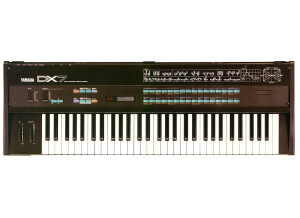
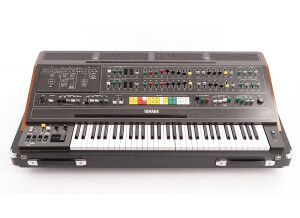
    The Yamaha DX1 was a very expensive keyboard when it first came out a long time ago. It was used by many popular bands of the 80’s and even into the 90’s. Today its value is not what it was at that time but it can still be used to make some really cool vintage sounds. The downside of this keyboard is that it is huge. There is just not space for it anywhere, I do not know the exact measurements of it but I can say it is probably the biggest that I have ever had. UTILIZATION The sounds are mainly based from FM synthesis, and it is very similar to the sounds of the DX7 but the DX1 has better overall quality. There are 73 keys on this board and they are touch and velocity sensitive. It does have MIDI connections which I think is fascinating considering that this keyboard came out such a long time ago. SOUNDS The DX1 is a 32 voice polyphony keyboard that has 64 presets, and all of which will pretty much take you back to the 80’s. None of these sounds can really be used in modern music unless you put it throw a bunch of processors and racks to bring it up to date. But if your style is electro music, then this will sound great for you. You will be able to plug these sounds right into your music and it will fit right in. OVERALL OPINION The DX1 is well made, and when it first came out it cost so much money that the average musicians could not afford it. So the only people that used it were established bands and musicians. The sound is nice and fat plus the keyboard itself looks great with a wood grain trim around the bottom half of it. It will be hard for most people to get their hands on this keyboard now because it still cost a good amount of money and most people are collecting them and not selling them.

  • « A classic drum machine »

    The Yamaha RY-30 Rhythm Programmer is a classic drum machine, that is decades old, but still very usable today. The drum sounds are 16-bit, 48kHz PCM with digital multimode filters. The RY-30 can store up to 100 user patterns and 20 songs, and it comes with 100 preset patterns in various styles for instant drum accompaniment. The RY30 has over 80 waveforms, including acoustic drum and percussion samples and electric drum sounds. There are 6 analog waves, including sine, triangle, and saw waves. Two oscillators can be layered to each voice, and the voices can be pitched and played via MIDI or the modulation controls on the unit. It has 16-note polyphony, including a voice dedicated to the metronome. There are 12 touch sensitive pads dedicated to a certain type of drum sound, including bass drum, four tome, snare, two hi-hats, ride cymbal, crash cymbal, and two misc percussions. There are 96 drums sounds built-in (12 banks of eight). Additional sounds and patterns can be brought in with ROM cards for the RY30/RM50, including the Tommy Aldridge RSC3072 card, which I happen to own with this unit. UTILIZATION This unit can be utilized for many different things. You can play live drums using the pads on the front, you can program drum beats and songs for use with live shows and such, and you can even play the drums with an external midi control. You can even use it as a sequencer, to send midi data to another drum machine or computer. SOUNDS For a unit this old, the sounds are surprising good and usable, both the acoustic drums and electric drums. It's not merely a practice unit, you can certainly record professional tracks with this thing! OVERALL OPINION Overall, the Yamaha RY-30 is one of the more legendary drum machines that were ever made, and if you're looking for something vintage but still very usable, this certainly works.

  • « powerful board »

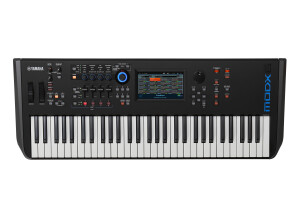
    I am really happy with the MOX8. Let's keep in mind that this is a mid class board but pro all the way. Finally a lighter weight, full sound pallet, with a good piano sound, 88 note weighted keys, synth and it's black in color! UTILIZATION The MOX8 is also not as bulky as so many of Yamaha 88 note keyboards tend to be so they are listening to us. I will take the mod and pitch wheels above the keys in order to make is smaller and more portable. The only drawback, in my opinion is the polyphony at 64 notes. You will hear drop out if you are a classical piano player playing long arpeggios with the sustain peddle depressed but for me I can live with it as the drop out is at least smooth not like I used to find with the S90 I had a few years back. SOUNDS The sound pallet is stellar with those Motif ES and XS sounds and that includes a very decent piano sound and it all comes in around $1700.00. The accompaniments are also surprisingly useful if not a blast to play. The weighted keys are on the lighter side which I like but it's still meaty and expressive. OVERALL OPINION Though you can probably find an MO8 used at a good price these days, I'd go for the MO8X as it's 15 pounds lighter and has a deeper and more up to date sound pallet. You will see Yamaha synths more often at big shows than any other company and it's because that sound pallet is solid in all categories and you get almost all the sounds of the Motif XS on MOX8. All in all this board is a winner and very suitable for anyone looking for a very portable, all in one weighted keyboard for live or home.

  • « Much better than I expected »

    This unit can be racked but will need a "rack tray" that can hold two 1/2 size units (this being one of the two). Actually, the only way to really do any editing with this guy is with Midiquest or some other midi editor. I have never tried using the buttons on the front for editing, but you might be able to by doing the "hold this button down and click that button" dance. This unit has the typical GM range of sounds (i.e. drums, keys, woodwinds, horns, etc....). I have never heard of any expansions for this unit as I can't see where they would go. This has Stereo 1/4"s out and Midi in/out. UTILIZATION With MidiquestXL the sound editing couldn't be easier unless it had dedicated knobs for each parameter on the front, which it doesn't. Again, using MidiQuest is essential with this device. I don't even want to think about trying to use it without a computer editor. With that said, the config is simple for me as I just change the patch and play. I have never read the manual honestly. Everything is accessible through the computer editor. SOUNDS No, the sounds are not realistic (with the exception of a few horns actually, not great, but surprising for this time). But I didn't buy it for realistic sounds. This is one of those units that people pick up these days because of its "not realistic" sound. I pair this up with a MAudio Axiom keyboard and it plays quite nice, no latency or clunky notes. I actually only use hardware effects with this unit, I feel they warm up the sonic quality enough so it doesn't sound so brittle. I love just about every sound on this device, but that is because I wanted a synth that sounded like the late 80's early 90's and this thing really does. I did really like the horns though. OVERALL OPINION What I like most about this unit is it is a true FM synthesizer and will give you that Early 90's sound if that's what you are after. What I don't like is the inability (or at least the ease) of being able to easily edit sounds from the front of the unit. MidiQuest makes it all better though. I only paid $25 for this guy, so I can't complain at all. I think they sold for close to $1000 back in the day. The quality is spot on for that era in my opinion. I have used several Roland synths from the same Era, and I have to say this guy outperforms the D-5 and D-110 in terms of sound. For that price, I would buy ten of them and have some crazy "Sega Genesis" compositions playing in my house, hahaha. Definitely pick one up if you can.

  • FP User's review

    This is one of the most complex sysnths ever created. You could write a book dedicated to the dx 7, and this is a lot more powerful than the DX7 so I guess this one deserve's an encyclopedia. It has 8 operators, and 8 unvoiced operators. It has 88 algorithm's. When the filter section isn't in use it has 32 voices but with the filter on the number of voices drops to 16. It also has &quot;FSEQs&quot; which make speech like modulations. Its efx are quite nice for a synth, but they aren't &quot;Phat&quot; like the effects on the access virus. 4 parts multi timbral. Price paid $500 UTILIZATION Editing this synth is a miserable experience from the front panel. This is as bad as it gets. So, be advised that if you are adverse to using software editors you will struggle with this synth. It was designed with a software editor in mind I think; no one rack space sized synth could amiacbly accomodate so many parameters with a hardware interface; I doubt a synth which take's up an entiure rack could do that either. WIth software its a breeze, without software its torture. SOUNDS The sound quality has greatly evolved from the dx7's: Better converters, more waveshape's and algorithms, more operators, a filter, vocal formants... The presets are awful, and it take's a lot of time to program this synth. If you ever buy this synth you should buy some sort of book which explains FM synthesis and understand how the different ratio's of operator pair frequencies lead to different sounds, and accordingly that interacts with the algorithms. if you don't have some basis for setting your feet down at first you will want to sell it since it's a tricky beast. This is related to sound imho, because FM synthesis is much more powerful than subtractive. Instead of having a LP filter to blanket out partial frequencies with an FM synth different ratio's of operator pairs and their settings can control the partial content, or sideband frequencies as they are called by FM synthesists. And, with an FM synth the range of control is far more precise which in a nutshell means there's many more opportunities for things to get ugly, I mean really ugly if you don't know how to program it, or if you have bad taste(which is kind of subjective). Over all though I'd say it's sound is quite punchy. Its filter isn't a VA filter, its very Yamaha'ish, and is useful, but a lot of the stuff you'd control with filter cut off or resonance can be achieved without a filter on an FM synth. The filter is great for acidy sounds though, and there's even a 18 db. filter if you want to do FS!R faux TB 303 impressions. OVERALL OPINION This thing is built like a tank and quite stable. This will take you to the top, it will win the war, impress the girls, get you points in your next contract, and of course it doesn't take up much space. When I first bought it I didn't like it because I didn't know how to use it. You must be very careful with the FS!R because, as i previously stated, if you don't know what your doing you will not find the superb sounds it is capable of producing- and that would be a shame. Used in a cool context this thing shine's, especially for a little contrast to Analog or Sampled sounds. Heck, this thing can make really hard sounds and buzzy noise or really soft pure sounds...it can even sing(literally) or pierce your ears with sounds similar to a guitar feeding back. Also FM synths are capable of a far wider sp[ectrum of waveshape's than Analog synths, and there's o law against sampling am FM sound then using some Z plane filters on it. Running an FM sound into an analog filter will also work. i.e. Aphex Twin did quite well with his ms 20's and fm synths! But, if you don't know what your doing you'll have to get a clue about FM before you start programming. It's not like analog, so do your homework! Originally posted on FutureProducers.com Posted by: Unknown (January 1-, 2002)

  • « Love it despite some latency »

    Yamaha workstation, 61 keys, purchased 2 additional sound cards. See product descriptions with lots of details elsewhere. UTILIZATION For getting around the keyboard and doing the basic stuff for recording and performing, editing on this level is simple ONCE you've gotten accustomed to it. The manual gets a "C" grade from me. I've found more helpful info at YouTube - thanks for all who have posted on the ES there. SOUNDS Great sounds, expressiveness and touch sensitivity are excellent for a non-weighted keyed. Effects are all very good as well, and easy to edit from the top-left side of the unit. Acoustic piano and electric piano programs are among the very best IMHO -- I sold my Rhodes. Electric guitars (esp. Mega-Voice ones) and strings are also killer, as well as its organ programs. BTW, if you really want killer organs, use Performance Mode and program the 4 channels to different organs of your choice, and be able to use your 4 sliders to customize and edit your overall organ output/sound with these 4 sliders, and/or fade between different types of organ programs/sounds in any given song. Motif, hands down, produces the phattest and warmest/richest sounds around -- they kill my Korg Krome, which sounds very thin in comparison. Dynamic range is also excellent. While playing the grand piano, you can really hear the difference when playing FFF vs. ppp. OVERALL OPINION The 2 complaints I have about the ES are these: 1) when in Performance Mode and using all 4 voices and their effects, you can easily get some latency during a performance. I've got to experiment a bit to see how to minimize this; it'll likely require me to reduce the no. of effects associated with each of the 4 programs that I load into each Performance. 2) When switching between Performances, you may have to "clear" the volume settings for one or more of your 4 voices in this mode; which, requires you to slide the faders all the way to the top, then bottom (or visa versa). Otherwise, some voices won't be active. This was and remains a little frustrating; having to make sure that I do this little procedure every time I switch between Performances. I've not ever used the sampler, so I have nothing to say about that. There's a YouTube video posted that is a sped-up time lapse video of a guy really digging deep into modifying some sounds in the ES. It is worth checking this out, if only to realize how deep you can dig, and how much of an exercise this is/can be. I've play-tested the XS and XF, but truthfully, neither seems that much better than the ES in terms of overall sound quality. Yes, loading programs into the unit is much faster with these newer versions, but other than that, I've not had enough reason to sell my ES and opt for an XS or XF. Go to YouTube, and a bunch of guys tell you why you should switch/update to an XF, but they're much more expensive than the ES was, and I'm quite happy with my ES.

  • « Amazing sound engine »

    The Motif XF6 is a 61 key workstation synth that has some of the best sounds that you will ever hear. I have heard some of the basic presets that it offers in mainstream top 40 music on a regular basis. I am an owner of the original Motif that came out over ten years ago and I loved it, I have been using it almost every day for the last 10 years and when I found out they were coming out with a XF board I jumped on it pretty quick. UTILIZATION The XF6 is easy to set up and start using (for me because I had the original Motif). There are a ton of presets and kits to work with and this board is even expandable though I have not purchased any expansions yet. I have been using it with Cubase since the day that I purchased it and could not be happier. SOUNDS The XF6 allows 64 patterns and up to 256 voices for all patterns. It does allow sampling and it has a 128 polyphony. It comes with installed RAM of 128M which was more than enough for me to sample other audio. The keys are semi weighted and have a great touch to them; I love just playing the pianos on this keyboard because it feels so real and almost gives me a baby grand experience. OVERALL OPINION Sequencing on this keyboard is something that I didn’t like mainly because I didn’t like the interface of the sequencer. That is why I prefer to keep it in Cubase because I am already familiar with Cubase and have been using it forever. The arpeggiators are pretty cool as well on the XF6 and they are customizable to get the exact style of arp you are looking for. This keyboard was pretty expensive but after using the original Motif I knew this was a must have.

  • BeyondR's review

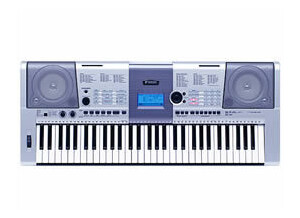
    Yamaha PSR-E423 is a an inexpensive portable synthesized keyboard that has 5 octaves offers much more than other keyboards in the same price range. It has plenty of effects and features that allow the player to create different arppegios , effects , riffs and runs. UTILIZATION The editing and configuration is extremely easy and fast to use which I enjoyed so much to get out of my comfort zone and create something little bit more out of the ordinary. OVERALL OPINION What I like most about it is that not many of the low budget synths out there offer USB connectivity and flash memory. That is a great addition to its features, giving you the ability of installing additional voices other than the stock ones. But it comes with some great pre-installed voices, so you won't be in a rush to download and install new ones. The price and quality balance is great however , what holded this keyboard a little behind others of the same price, is the number of keys. This keyboard has only 61 keys, it is great for learning how to play. But if you're a more experienced player, you might not see past this 'flaw'. That's why some potential buyers can avoid this piano and buy one with 76 notes (but it may not have the same tone quality like this one). This model is recommend if you pursuit more authentic built in tones, but don't mind the keyboard range. I think it is satisfactory for all beginner-intermediate players, as it also includes a pitch bend wheel, quality stock voices (with the possibility of upgrading them), built in chord library and lessons and recording on flash storage. Knowing what I know , I would buy this product again and again , I like how great it sounds , I like how advanced yet simple it seems.

  • « major improvements from previous models »

    The PSR E433 is a 61 Key portable keyboard that has over 700 sounds built into it, now most of these sounds are very thin and cheap like, but there are some that are very good for this board to be the price that it is. You will not get any of the high end Yamaha sounds like the ones on the Motif but you will still get some really quality sounds from this board. It has a built in arp and an onboard player for music. There are over 180 styles to be used for accompaniment too. UTILIZATION Setting this keyboard up is very easy, it is just like setting up any lower level keyboard that you might get at like Radio Shack or Wal-Mart. There is nothing special that you will need to do it will be ready to use right out of the box. Just take a glance at the manual if you need to and you will be good to go. The keyboard is pretty light for it to be this size and it has 2 onboard speakers. The speakers are decent, nothing that will shock you. They do get very loud though, but the louder you turn them up the more “distorted” they will get. OVERALL OPINION If you have used previous models of the PSR boards you will notice some vast improvements with this version. The pitch wheel is made so much better on this unit and so are the sounds. The organ sounds really shocked me because on previous PSR board the organs sounded really cheap. They put some work in to make them sound better this time around. The effects are simple basic reverb, chorus, harmony and some master effect types but they will get the job done because you can’t expect much more for this price. There is an onboard system that will let you record up to 10 different songs and store them on the internal memory. This really is not a sequencer so don’t expect to be laying down your best work with it. It is a great tool for a beginner though.