Log in
EN
FR

SeriesYamaha PSR

156 products found

Filter
Sort by
Evaluation
  • Reviewed or not
  • Editor’s award
  • Reviewed by Audiofanzine
Availability
  • Available or not
  • Sold new or used
  • Sold new
  • Sold used
Must-have products
  • All products
  • Flagship products
  • Best rated products
  • Hot products
  • Popular products
Price
  • Freeware
€
Clear
Sort by
  • Popularity
  • User ratings
  • Price - low to high
  • Price - high to low
  • Used price, increasing
  • Used price, decreasing
  • Name (from A to Z)
  • Name (from Z to A)
  • Added on
Sort results
  • Popularity
  • User ratings
  • Price - low to high
  • Price - high to low
  • Used price, increasing
  • Used price, decreasing
  • Name (from A to Z)
  • Name (from Z to A)
  • Added on
Filter results 156 results found
Evaluation
Availability
Must-have products
Price
  • Freeware
Show results

The best Yamaha PSR reviews

The reviews Audiofanzine members found the most helpful.
  • « High-end? »

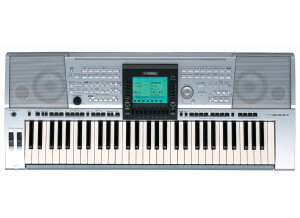
    Synth without the keyboard of a real piano. The connections allow it to communicate with a PC in all possible ways (backup, memory, playback or record MIDI files or WAV or MP3, USB and MIDI connections, etc.) It's full of effects UTILIZATION I'm more of a guitarist, so my review isn't probably very significant. I was craving for an arranger keyboard, to amuse myself. I wanted it to have very good sounds and to be easy to use. And I'm more than satisfied. 1) Beginner, and I still haven't looked at the manual,...It's well-designed. Bravo. 2) The sounds are fabulous. Synth, electric and acoustic piano, distortion guitar, strings, there's nothing to complain about. It has punch, and you can adjust almost everything. The keyboard allows you to vary the attack of the instruments (sax, trumpet, violins, synths, etc.) and insert motifs automatically. 3) The automatic arrangements are very, very good...And since the sounds are natural, it's easy to get impressive results. 4) Everything can be adjusted.. absolutely EVERYTHING. The speakers of the unit sound very good. The direct reproduction over PA is perfect, much better than with the P200. I think this keyboard is specially addressed to professionals, who will appreciate its features live (cabaret, bar, party halls) or for recording. The model above features a built-in mic to sing. Is it as reliable as the old Yamahas? (I have two other arranger keyboards from the '80s and '90s that still work pretty good, after 35 years!) OVERALL OPINION Most keyboards in the same price range sound "synthetic," not too natural. This is the first mid-priced keyboard with fantastic sounds. I almost stopped playing guitar. Not being a professional keyboard player I can only talk about my impressions. Would I buy it again? Absolutely!

  • « A Swiss-army knife to take anywhere! »

    The technical features are described in the previous review. I only want to emphasize something: EVOLUTION / The DSP effects that allow you to get a very flattering sound, the piano sound has gained depth and realism, although it still can't compete with the big names, the distorted guitars gained some grit, the brasses are finally credible (the smooth brass sound is awesome) The synth and electric piano sounds have improved since the psr s910 The new audio tracks in the styles are stunning, but too rare (you can expect optional paid packs coming soon...) The vocal harmonizer is very nice (it's a pity that it doesn't have a dedicated effects processor, because when the other parts use effects, you can only adjust the reverb and chorus) The amplification is better than that of the previous generation and the fact that the line outputs don't mute the internal amp is very good news, because you still have the built-in speakers. Thank you yamaha for allowing styles of previous generations to still work on the new models. The audio editor is very powerful, but I still haven't found a use for it, though. CRITICISMS / The keyboard is still too soft and not very pleasant for a pianist. When will there be a weighted-key version? The black finish is nicer than the gray of the s710/910, but less practical because it's harder to read the functions. The design is flattering, but it's made of a plastic that isn't as nice as that of its eldest (and economic decision, surely...) UTILIZATION People who are familiar with the brand will feel at home. Everything evolved, but nothing change it terms of control, which is very nice, it's similar but better. This keyboard is fine for all sorts of music, the samples aren't as good as on the yamaha motif pro series, but objectively speaking, it does the job. The S950 is great for a small combo and it's spectacular amplified, with an irreproachable stereo width. Lightweight, easy to use and to make it sound. Overall opinion 9/10 I bought my 950 last December. I'm an experienced musician and I also play with an 88-note MOTIF (very good, but very heavy). I previously had a PSR S710, which I liked for its lightness and programming ease. I'm thrilled with the 950 whenever I go out and can actually play a keyboard that is just as light but more powerful. The first review, which is very critical, seems unfair to me. The 950 is a very good arranger but it will never replace a pro piano, it's aimed at the general public and can be used by pros who want to use good-sounding accompaniments for a fair price. The number of functions can be disconcerting for beginners, even if the internal styles allow you to indulge yourself very quickly. OVERALL OPINION I bought my 950 in December. I am a musician experienced, also playing on a MOTIF 88 notes (very good but very heavy to carry), I had one previously PSR S710 that I appreciated for its lightness and ease of programming. With the 950 I'm thrilled to go play with a keyboard still lighter and more efficient. The first opinion seems to me very unfair criticism, the 950 is a great arranger but it will not replace a keyboard pro is the public that can be used by professionals who want a base and accompanying sounds fair price. For beginners the number of functions can be confusing, even if the internal styles can have fun very quickly.

  • BeyondR's review

    Yamaha PSR-E423 is a an inexpensive portable synthesized keyboard that has 5 octaves offers much more than other keyboards in the same price range. It has plenty of effects and features that allow the player to create different arppegios , effects , riffs and runs. UTILIZATION The editing and configuration is extremely easy and fast to use which I enjoyed so much to get out of my comfort zone and create something little bit more out of the ordinary. OVERALL OPINION What I like most about it is that not many of the low budget synths out there offer USB connectivity and flash memory. That is a great addition to its features, giving you the ability of installing additional voices other than the stock ones. But it comes with some great pre-installed voices, so you won't be in a rush to download and install new ones. The price and quality balance is great however , what holded this keyboard a little behind others of the same price, is the number of keys. This keyboard has only 61 keys, it is great for learning how to play. But if you're a more experienced player, you might not see past this 'flaw'. That's why some potential buyers can avoid this piano and buy one with 76 notes (but it may not have the same tone quality like this one). This model is recommend if you pursuit more authentic built in tones, but don't mind the keyboard range. I think it is satisfactory for all beginner-intermediate players, as it also includes a pitch bend wheel, quality stock voices (with the possibility of upgrading them), built in chord library and lessons and recording on flash storage. Knowing what I know , I would buy this product again and again , I like how great it sounds , I like how advanced yet simple it seems.

  • « major improvements from previous models »

    The PSR E433 is a 61 Key portable keyboard that has over 700 sounds built into it, now most of these sounds are very thin and cheap like, but there are some that are very good for this board to be the price that it is. You will not get any of the high end Yamaha sounds like the ones on the Motif but you will still get some really quality sounds from this board. It has a built in arp and an onboard player for music. There are over 180 styles to be used for accompaniment too. UTILIZATION Setting this keyboard up is very easy, it is just like setting up any lower level keyboard that you might get at like Radio Shack or Wal-Mart. There is nothing special that you will need to do it will be ready to use right out of the box. Just take a glance at the manual if you need to and you will be good to go. The keyboard is pretty light for it to be this size and it has 2 onboard speakers. The speakers are decent, nothing that will shock you. They do get very loud though, but the louder you turn them up the more “distorted” they will get. OVERALL OPINION If you have used previous models of the PSR boards you will notice some vast improvements with this version. The pitch wheel is made so much better on this unit and so are the sounds. The organ sounds really shocked me because on previous PSR board the organs sounded really cheap. They put some work in to make them sound better this time around. The effects are simple basic reverb, chorus, harmony and some master effect types but they will get the job done because you can’t expect much more for this price. There is an onboard system that will let you record up to 10 different songs and store them on the internal memory. This really is not a sequencer so don’t expect to be laying down your best work with it. It is a great tool for a beginner though.

  • « Great for an Inexpensive Starter Piano or Midi Controller. »

    The PSRE413 is a discontinued 61 key portable keyboard from Yamaha. It is very lightweight and is completely made out of lightweight plastic. It can be powered by an adapter or 6 AA batteries. It has a built in arpeggiator that provides 100 different patterns and beats, 5 types of master EQ, recording capability with onboard sequencer, and Performance Assistant technology. The keyboard also comes with Yamaha Education Suite and tools to help beginners learn new songs. UTILIZATION The keyboard is well laid out with it’s controls. It does have two knobs located on the left hand side of the keyboard that allow real time tweaking of different parameters to cope some syth like tones, or layer effects on the patches and Yamaha even throws in a pitch wheel. It’s extremely lightweight so traveling with the keyboard is easy. It has USB and Flash connectivity so you can download songs over the internet and learn them or use it as a MIDI controller like I do a lot of times. It works very well as a MIDI controller. It has a six track sequencer, but I don’t find it useful personally. Sometimes I’ll play along with the included drum machine as a metronome. It has the ability to set the tempo and rhythm of the drums and then cues the drum loop as soon as you start playing so you don’t have to turn on the beats and then fumble through the first few chords of the song. The keyboard has an input for a sustain pedal, and an output for a PA system with a variable master equalization section. OVERALL OPINION This keyboard has over 500 voices that can be tweaked to give a ton of tones from this thing. Some are great and some are just OK, but all could be usable for certain situations. The one I use the most is the Yamaha Portable Grand voice, which sounds very convincing as a baby grand for coming out of a cheaper electronic keyboard. There are a few string and organ patches that sound super too. There are some sounds on here like the drum and percussion patches that I find cheap and useless, but there are a few really good patches and a lot of very usable sounds in the PSR. Overall this is a decent practice keyboard for someone looking for a couple of good patches or as a starter keyboard. I like it much better than the competition in this price range like that offered from Casio. It is inexpensive and has a good basic piano sound and is touch sensitive with output for a PA. That’s all I was looking for in a starter keyboard and this fits the bill. If I could go back I would probably try to find something with weighted keys, which would cost a little more, but I feel a big jump in feel from playing this keyboard and a real piano. A lot of bells and whistles on this little guy, and some of them are pretty useful. It would make anyone a great starter piano or a great travel piano for someone who didn’t want to tote around their professional keys to small jams.

  • moosers's review

    The Yamaha PSR-GX76 is a electric keyboard and is a work station lite for beginners. It’s got all sorts of features on it, but definitely is aimed at beginners. It’s got 76 keys, spanning about five octaves. It has emulations of sounds for just about every instrument imaginable, but across the board they aren’t too realistic sounding. You’ve also got a ton of built in rhythms and demos, as well as a screen that will show you what note your playing both on the keyboard and on a musical staff. UTILIZATION The feel of the Yamaha PSR-GX76 is about where you’d think it would be for a low end electronic keyboard. The keys aren’t weighted, but the keyboard is certainly more than playable. They do feel somewhat light, but for practicing or messing around, it’s just fine. Choosing sounds is easy, but getting in depth with the keyboard will take some time since there’s so much that can be done with it. I haven’t seen the manual for the PSR-GX76, so I can’t speak to it’s usefulness. OVERALL OPINION The sounds heard on the Yamaha PSR-GX76 in general are pretty cheesy and definitely not too realistic. The piano sounds are probably the best, but at least you do have every sound under the sun to choose from here. The organs don’t sound that bad either, but those interested in the PSR-GX76 should know in general that this is a beginners/kid’s instrument. There are also some pretty funny sounds on here, including the entire ‘DJ’ setting, which definitely has some funny ones to mess around with. For a cheap beginner’s electric piano, the Yamaha PSR-GX76 will definitely get the job done. Those exploring the PSR-GX76 should definitely know up front the nature of this keyboard, as it isn’t for serious players and is really just for those looking for a cheap electric keyboard option or to get your kids started on the instrument. The Yamaha PSR-GX76 is a fine practice instrument, but I wouldn’t use it outside the home in any capacity…

  • « Nice and versatile keyboard »

    This is a keyboard that can be described as an "all-in-one". If you're still studying music or if you're a music teacher, it's a good learning tool. If you're a composer, it has lots of features that help you on the composing process. If you're a band keyboard player, it has the Registration Memory, that stores all kinds of panel configs. If you like to use softsynths and/or software sequencers like SONAR and Cubase, it has a USB to Host port and a "PC Mode" to help. I think it could also have the conventional 5-prong DIN MIDI ports if you'd like to control sound modules, but modules are being outdated anyway.

  • « Great speaker system »

    The PSR-A2000 is a 61 key synth that has built in speakers and it is made by Yamaha. It comes with some simple effects, Chorus, Reverb, and DSP but total there are over 400 effects on the PSR-A2000. It has 500+ voices and over 30 drum kits. The drum kits are decent but there are only about 4 of them which I would ever use because some of them don’t sound as rich as I like my drums to sound and they involve too much EQ and attention to make them work for me. There are also SFX kits on the PSR-A2000 and they have some really cool sounds that you can use for your effects and transitions. UTILIZATION Setting up the PSR-A2000 was not very easy, it does require reading the manual to get the swing of things. I recommend browsing through the manual first and then coming back to it if you need it later. OVERALL OPINION The value for the price of the PSR-A2000 is solid. It cost 1400 bucks and I feel that is spot on for what it offers. The thing that surprised me about the PSR-A2000 was the speaker system. The speaker system sounds great, it produces a full and rich sound that travels far. Though this is not a gigging synth per say, but you could definitely use it for one if you wanted to because it is not too heavy and the on board speaker system is better than a lot of Yamaha’s more expensive keyboards and digital piano’s. There are a lot of options to choose from when working on the PSR-A2000, you can edit all of your parameters and add sound effects easy and all in real time. I have been using this keyboard for a few weeks now and I am getting some pretty unique sounds from it. The sounds and presets are different from all of the other Yamaha synths.

  • moosers's review

    The Yamaha PSR-E203 is a digital keyboard with built in speakers that is designed for beginners and those interested in getting their feet wet with digital keyboards but don’t want to spend too much money at all. The keyboard of the Yamaha PSR-E203 spans about four and a half octaves and has ¼ inch output connections for sustain as well as to send the signal to another speaker or wherever else you’d like to send it. UTILIZATION The configuration of the Yamaha PSR-E203 is incredibly simple to follow, as it is designed for beginners who have no prior knowledge about keyboards. While there are a lot of handy features in addition to the wide array of tones, including demo songs, a nice screen that shows you which keys are being played on the keyboard in music notation, and a great sounding reverb effect. Whether you know what you are doing or not, figuring out the Yamaha PSR-E203 won’t take long if you play around with it for a little while. The manual for the Yamaha PSR-E203 seems complete and thorough, but I never used it too much because the keyboard is easy enough to use that I never needed it. OVERALL OPINION I’ve had the Yamaha PSR-E203 for about a year or two and have found that it is more than adequate for the beginner who wants to learn how to play the piano but doesn’t want to spend any decent amount of money. The Yamaha PSR-E203 has all features that a beginner needs with all sorts of different electric and acoustic piano sounds, as well as organ sounds, synth sounds and all sorts of emulations of woodwinds, brass, stringed, and percussion instruments. Its ease of use makes it the perfect candidate to be a beginner’s keyboard. I would highly recommend this for anyone who wants to learn the instrument. The Yamaha PSR-E203 won’t really exceed expectations, as the sounds are the most realistic, but the price makes up for where it might lack in tone. Overall, the perfect keyboard to mess around with and to get acquainted with the wonders of the digital keyboard.

  • M Elise's review

    There are a gazillion different PSR models and Yamaha has been making them for many years. This particular model is old but when I play the newer models in the local music store they don't seem that much different in terms of sound or features. These things are everywhere and they can be gotten cheap. They are inexpensive light weight non-professional keyboards that feature the usual array of sounds and functions you typically find in these type keyboards. Here is a list of some of the features. Yamaha"s great piano sound for inexpensive keyboards, tons of AMW and GM sounds, effects, multi track sequencer, auto rhythms with section options and fills, one note and chord type auto accompaniment, loads of auto styles, midi in/out, damper pedal out, built in speakers, line outs etc. However there is no expression or bend wheel. UTILIZATION These keyboards are remarkably fun and useful. The main drawback is that the interface (at least on this particular model) can be very cumbersome and hard to read. It uses yellow words and numbers on top of a silver background and its very difficult to see unless you are in well lit surroundings. Accessing some functions via the multi function buttons and menus can be a real chore. However there is a useful dial for accessing items and there is a nice one touch button that allows the user to instantly return to the basic piano sound from anywhere. However the keyboard actually does a lot and I guess you would have to be an engineer to figure out how to access all this stuff in a small space. OVERALL OPINION The sound output by this keyboard is not of professional quality and there is some low level background noise. However the sounds are remarkably good especially the piano sound for such a cheap keyboard. Personally I have had a lot of fun with mine and I like the fact the you can move it around easily or stand it up on its end and store it in the corner. I play mine for fun and to write melodies with. Some of the rhythms are very fun and useful too. If you are interested in an inexpensive keyboard I would definitely look at any Yamaha brand PSR. There are tons of em out there so there is no reason to pay a lot for one. The piano sound is probably unbeatable in this price range.

  • RickD's review

    Manual: http://www2.yamaha.co.jp/manual/pdf/emi/english/port/PSR90E.pdf - What type of keyboard (synth, piano...)? How many octaves? This is a 5 octave electronic keyboard, not a synth nor a piano. Not even close. The touch is like most synths: ok, but no dynamic touch or after touch here. This is an extremely basic machine with crap sounds and it was probably extremely overpriced when it came out around 1982. However, if you stick it through some good effects, i'm sure you can use it quite adequately. - What connection types are there? (audio, MIDI...)? RCA stereo out, some sort of effects loops out & in (still stereo RCA) but i've never used that...MIDI in & out...exp pedal and footswith. Power is a separate adaptor. The keyboard comes with a plastic & metal stand that fits on it and lets you have sheet music to read while you're playing, as seen on the photo here. You can take this off. - How many different sounds and/or styles available? Can they be edited? Not a lot. Check the manual but we're talking about 24-36 here. You can't edit the sounds other than add chorus, reverb, portamento. The rhythms are the only reason one would want to buy this, along with the fact that this is a very simple drum machine with some fairly decent sounds, surprisingly enough. The rhythms are cheesy & fun, it's great, you can have a looot of fun with this. Plug it into an expander (i used my Roland GR-30 MIDI guitar expander with no probs) and you can actually have a good time, but i'm not sure you can do much with this thing apart from that. - Is there an effects section? Nope - What are the features/characteristics of the sequencer? 4 tracks, you can save to cartridge if you find any on the second hand market (good luck) or to cassette or minidisc. Those of you who have had a Sinclair ZX Spectrum or a Commodore 64 will know what it's like. UTILIZATION - Is the general configuration/setup simple? Oh yeah! - Is the sound or effects editing easy? The what? - Is the manual clear and sufficient?... Yep. OVERALL OPINION - For how long have you been using it? Probably too long. - What thing do you like most/least about it? I looove the rhythms and i often use the drum machine feature of it, cos it's easy & fast to come up with something, and i actually like some of the drum sounds, believe it or not. That's why i bought it and that's why i still have it...after 8 years or so... - Did you try many other models before getting this one? One or two smaller ones...more modern...just as bad/kitsch. - What is your opinion about the value for the price? No idea how much this was selling in 1982 but it was way too much for what it is. I bought it for a crazy £70 in 2000, and looking back i think i was stupid, it's worth £20 max. Unless you can see the unique fun potential in it...in which case it's priceless! - Knowing what you know now, would you make the same choice?... Yes, i guess, cos i've made one of my favourite tracks ever with the rhythms on this, and i would never have done that with any other machine.

  • « A great nostalgy-bringing arranger keyboard... »

    The PSR-510 is a keyboard that I got in mid-90's, I think as a birthday gift. There were LOTS of buttons on its panel (!!!) but although it looked difficult for me (I was a preteen at the time), I could learn how to use it real fast. The user manual helped me a lot. I quickly learned how to combine sounds, make music through the 5-track recorder, and even create my very own styles. About the sounds: there were 128 of them. Yep, it was one of the first GM Level-1 fully-compatible arranger keyboards. Most sounds were pretty decent for a 1993 mid-level instrument. If I could find a "new" (because it's not new anymore, of course), well-mantained and fully functional PSR-510 today, I'd get it without thinking too much, although I own a much more complex keyboard set today, but it doesn't matter. The PSR-510 is a synonim of nostalgy to me.