Log in
EN
FR

Roland Electronic instrument

581 products found

Categories
Series
Filter
Sort by
Roland
Evaluation
  • Reviewed or not
  • Editor’s award
  • Reviewed by Audiofanzine
Availability
  • Available or not
  • Sold new or used
  • Sold new
  • Sold used
Must-have products
  • All products
  • Flagship products
  • Best rated products
  • Hot products
  • Popular products
Price
  • Freeware
  • Low-cost (< $300)
  • Mid-range ($300 - $900)
  • Premium (> $900)
€
Clear
Sort by
  • Popularity
  • User ratings
  • Price - low to high
  • Price - high to low
  • Used price, increasing
  • Used price, decreasing
  • Name (from A to Z)
  • Name (from Z to A)
  • Added on
Sort results
  • Popularity
  • User ratings
  • Price - low to high
  • Price - high to low
  • Used price, increasing
  • Used price, decreasing
  • Name (from A to Z)
  • Name (from Z to A)
  • Added on
Filter results 581 results found
Brands
Evaluation
Availability
Must-have products
Price
  • Freeware
  • Low-cost (< $300)
  • Mid-range ($300 - $900)
  • Premium (> $900)
Show results

The best Roland Electronic instrument reviews

The reviews Audiofanzine members found the most helpful.
  • « It sounds all right, but offers limited possibilities »

    It's more of a sampler than a real synth: No preset can be edited: You have to do with the sounds conceived by Roland, with the only possibility to play with the filter and the effects. No tuning, no decay(!), and I won't mention other well-known mods of the TB-303. Which is quite a pity. The manufacturing quality seems pretty good., the unit is heavy and gives the impression of sturdiness that you expect from a Roland. UTILIZATION The fact that the audio interface is built in (like on the AIRA series) is an undeniable advantage. Unfortunately, it's not class-compliant and you have to install the Roland driver (which isn't a good sign, because it implies that it will become obsolete), and every AIRA device requires its own driver: Not cool. The manual is reduced to its most simple expression and gives a cheap impression, considering the price of the unit and the Roland tradition. The learning curve is very short (the limitations of the product do have a reason to be), the programming of the sequencer (be it live or step-by-step) is very intuitive once you understand how the ties and rests work. SOUNDS The presets are nice, but I would really like to be able to edit and save them. The immediate impact of the position of the controls on the sound of the presets can prove to be frustrating. That said, if the presets are right for you, the sound is very good. It's really hard to distinguish between the TB-3 and the TB-303 with the classic saw and square waveforms, the modeling is almost perfect. OVERALL OPINION If you are hesitating between this model and a clone of the TB-303, you're asking yourself the wrong question. The TB-3 is capable of reproducing the classic TB-303 sounds, without a doubt. It is also capable of many other exploits, but the similarity ends there. The biggest drawback of this product is the impossibility to edit presets. You have to make do with what Mr. Roland decided to offer, you can only change the patterns and play with the modulation controls on the fly (cutoff, resonance, accent, and effect, plus the touchpad's X-Y mode ). No parameter locking (neither in step-by-step nor per preset: This means that the position of the controls immediately influences the preset that you load). It's very intuitive, which is a good thing given the poor documentation. Some of these problems could be addressed later if Roland offers a firmware update some day or, even better, a software editor for the TB-303 (and when that day comes I will update my review). But right now there's nothing on the horizon. That said, what a sound it has! It really kicks ass! But it's no replace for a TB-303. It's different, a complement.

  • « Very good (mobile) keyboard amp »

    2x15W amp, light, very good sound reproduction Mix of 4 inputs, 1X mic input (XLR/Jack) 2X stereo Line inputs (Jack) 1X iPod, CD input (Mini-Jack stereo, RCA) 1x stereo output (Jack) Effect: Reverb/Chorus, headphone output. 30W output power on mains, 20W on batteries (8x1.5V) USE Very easy to use. No need for a user's manual. Very good sound with my Audya8 Ketron OVERALL OPINION I've been using it for a month and I'm quite satisfied with it. What I like best is that it works on mains or batteries. It is very light, sturdy and beautiful... It might be a bit expensive for a 2x15W amp. But it's a Roland and it sounds great! ! !

  • « Roland RA-30 Tongenerator Soundmodule Desktopversion Realtime-Arranger aus 1995. Made in Japan »

    Drumset, Bass und Begleitinstrumente! Tongenerator Soundmodule Synthesizer. Beim Anblick von Soundmodulen habe ich mich schon immer gefragt, wie man so viel Technik in ein so kleines Gehäuse packen kann. Und wenn die eigentliche Elektronik lediglich den Raum eines halben Schuhkartons belegt, dann muss im Inneren der entsprechenden Keyboard-Version logischerweise gähnende Leere herrschen – und das ist tatsächlich sehr häufig der Fall. Auch das RA30 von Roland ist so kompakt, dass man ihm auf den ersten Blick nicht unbedingt zutraut, eine solche Soundqualität und Vielfalt zu bieten, wie sie der Blick in die technischen Daten offenbart: Das Modul strotzt nur so vor Sounds und Styles. Das Roland RA30 hat einen für diese Preiskategorie (bis 100€ (2020)) guten Grundsound. Die Drums klingen wirklich druckvoll und sind mit ausschlaggebend für den guten Sound der Styles. Bei ihm handelt es sich um einen sehr gut klingenden Arranger im Mini-Format, der sich blitzschnell in vorhandene MIDI-Umgebungen einbinden lässt. Guter Gesamtsound, schnelle Einbindung ins MIDI-Setup, leicht und kompakt!

  • « ROLAND: U-110 Sample-Player 1988 »

    ROLAND: U-110 Sample-Player Erstauslieferung: Winter 1988 Preis bei Auslieferung: 1.850 DM Das U110 Module ist eine rein Sample basierter Klangerzeuger. Beim U110 wird der komplette Sound eines Instrumentes durch Samples wiedergegeben. Das Lied "You" von Ten Sharp wurde komplett mit dem U220 (dem größeren Bruder des U110) eingespielt. Die U110/220-Module waren so um '88 bis '92 ziemlich beliebte Preset-Kisten, da ihre Naturklänge in der Preisklasse nur wenig Konkurrenz hatten. • Tonerzeugung: 16 MB Sample-ROM (erweiterbar mit vier Steckkarten auf 24 MB) • Polyphonie: 31-stimmig, 6-facher Multimode, polyphoner Aftertouch • Display: beleuchtet, regelbarer Kontrast, LED (MIDI-Indicator) • Programmspeicher: 99 Tones, sechs Parts pro Patch, 64 Patchprogramme, Dual, Detune, V-Mix • Klangbearbeitung: Hüllkurven, LFO • Audio: Stereo-Mix (l/r), sechs Einzelausgänge (Output-Mode, frei belegbar) • Anschlüsse: MIDI In/Out/Thru, vier ROM-Cards-Slots • Maße: 19", 1HE https://www.youtube.com/watch?v=wZO_2Rn6vIY

  • « No Toy for Noobs »

    Pro: Video Output um das winzige Display auf einem grossen Bildscirm abzubilden. Macht Sinn! Aber auch die Bedienerführung an der Gerätefront ist sehr einfach zu erlernen. Exzellente Filter. grossartiger Klang, Aussergewöhnich sinnvolle Features wie zB einstellbare Offsets im Performancewindow, um Filtersettings und ADSRS und LFO zu optimieren. Viele Einzelausgänge , beim Video Optionsboard ist ein Digital I/O als SPDIF/Optical mit dabei. Für digitale Sampletransfers vom Computer über Digitalaudioport sehr hilfreich. Contra: Problematisches Display! Roland liess dieses Display exklusiv für den S-760 herstellen. Leider haben inzwischen fast alle S-760 Displayfehler, die sich in toten Displayzeilen auswirken (siehe Foto!) Es, ist quasi unmöglich, Ersatzdisplays oder Ersatzteile zu finden. Also aufpassen beim Kauf! Weiterer Nachteil: Komplexe Menüstruktur,- allerdings auch sehr viele Features, die man sonst nur noch in Profi Equipment findet. Die Roland Maus MU-1 kann man inzwischen vermeiden, es gibt einen Adapter für PS-2 Mäuse. Sehr interessante Alternative zu teuerer SCSI Peripherie: SCSI2SD als Austauschmedium mit Mac/PC, leider mit ca 70-100€ recht teuer. Letzter Nachteil: Keine Effekte. Fazit: Der Roland S-760 ist auch heute noch eine Geheimwaffe, wer es sich antun will, einen "echten Sampler" zu bedienen wird hier mit exzellentem Klang belohnt. Wenn schon Vintage Sampler, dann auch SCSI-Voodoo mit passendem Vintage Mac! Folgende Vintage-Softwares kann ich als hilfreich & kompatibel empfehlen: Alchemy, Peak, D-Sound Pro, Alles Soundeditoren mit Transferoption zum Roland S-760. Diese Softwares sind sämtlich auf MacOS 8 bis MacOS 8.6 lauffähig, Sampletransfer über Midi macht keinen Sinn, dauert viel zu lange, also ist ein SCSI Mac irgendwo zwischen Mac8500 und grün-blauem G3 nötig. Ein Computermonitor mit Composite Video In oder S-Video Input ergänzt sich mit dem Videoausgang des Roland Samplers. Ein paar Worte zu Vintage SCSI Peripherie: Finger weg von Syquest oder Zip Drives, Früher waren die anfällig, Heute dürfte Datenverlust die Regel sein . MO Drives hingegen sind extrem langlebig, dito Gold wert, MO Medien allerdings Mangelware.... Ein externes SCSI CD Laufwerk evtl noch mit Caddy... maximal 12fache Geschwindigkeit und ihr könnt dem S-760 Akai Sampling-CDs zuführen.....die Roland Kibrary war hochgerühmt, aber machen wir uns nix vor. Die Sounds die damals atemberaubend waren lassen uns heute gähnen. Noch eine Warnung: Gebrauchtgeräte die von Ahnungslosen & Noobs misshandelt wurden, bringen Probleme ohne Ende mit sich. Meine amerikanischen S-760 wurden gleich mehrfach misshandelt, indem sie direkt ans deutsche Stromnetz angeschlossen wurden, Dann verkauft, und dann kam gleich der nächste Noob und hat sie wieder...... jaha..... siehe das Foto mit dem durchgeschossenen Kondensator, :-) Sehenswert! Gebrauchtmarkt: Man findet keine mehr. Der Roland S-760 ist jetzt eine Rarität, wechselt entsprechend für Mondpreise den Besitzer, Wer einen hat, gibt ihn eben nicht mehr her. Dieser Sampler ist also eine Art Aktie und steigt permanent im Wert. Also falls Euch einer für wenig Geld über den Weg läuft, zuschlagen! Abschliessender Tip für maximal Ungeduldige und Jungs die erst fummeln und dann nachlesen. Finger weg von Vintage Samplern. Die richtige Reihenfolge: Erst Manual lesen, dann anfassen. Wer nicht über SCSI bescheid weiss, sollte auch keine SCSI Kabel befummeln.SCSI- Hotplugging killt Dein Equipment! Vintage Sampler sind störempfindlich, Funkenüberschlag durch Dussliges Amfassen heikler Komponenten ohne vorherige Erdung transformiert Euren Vintagesampler in einen funktionslosen Briefbeschwerer. :-D

  • « My first and only! »

    I bought this keyboard while I was still in high-school (1990 or so). Yt apparently did not become "available' until the early 90's, but in Canada, I am sure I was one of the first users. The keyboard split is brilliant, and I just played a gig with it TODAY (May 2016). I love it. Its sounds (I use piano, some organs, a slap base, some horns, and some strings) are super. Still does a great job, and I love to play it. Had some keys replaced (it fell down some stairs in my rock band says!) and the left speaker is smashed and silent, but I use it live to this day. I do not use its arranger or MIDI, but I do practice with drums for tempo. I bought it to write songs with, but used it for countless gigs. The only downside I can see is that I wish the sounds were just a little deeper. They are super, but seem a little tinny on occasion. Overall, my first and only.

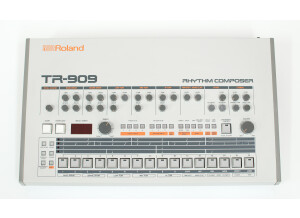
  • « The TR 909 IS THE TRUE BOSS!!! »

    Easy to program, midi, roland old-school sync, and the typical roland sequencer that earned the TR its reputation. I now think the sequencer of the 808 is more "lively." It has a magical groove which isn't as present on the 909, except when play with the shuffle, which makes it more interesting. I have noticed, for example, that putting the TR 808 in sync out mode to start the 909 in sync in mode, the latter adopts the magical groove of the 808. I think it's due to the sync clock of the 808 being less stable, so the precision of the intervals, which ought to be a defect, turns out to be a good quality. But if you do it the other way around it doesn't work! USE There's no need for a manual, except for step-by-step editing. It has multiple separate outputs, three trig outs to trigger the sequencers and arpeggiators of your good old analog toys. Real-time processing of some instruments is great and it really alows you to "rebuild a song" with the same pattern by playing with the volumes, attacks, decay, tuning, etc... The external card slot is a great plus to save your songs/patterns, just like the MIDI, for those who use it. SOUND I can't say that all sounds are great. The snares are all right, but the ones on the 808 are better, and the same goes for the ride/crash. But it's THE KICK that can really make a difference in an electronic music production, even though the one of the 808 and 606 are pretty good, too. Some sounds of the 707 are similar to those of the 909, like the clap and hi--hat. I have always loved the 909, but I have a weakness for the 808, which has that "special something" that can't be defined and a more vintage sound. OVERALL OPINION I just got it, after having exchanged it for one of the two TB 303s I had. It was in a great condition (I checked the buttons, knobs, etc.). I wanted one ever since I started my TR collection in 1995. It currently sells for about 1200/2200 euros and it's very rare to come by. Like other vintage gear, it's an "investment.". Anyone who has one in a good condition in 15/20 years will make a fortune with it because it will be a 50-year old legend. That's why it's worth buying spare parts right now, so you can service and repair it. The current price is due to supply and demand, anything that's rare is expensive. And even if the TR 8 isn't bad at all, and even just as good for some sounds, it doesn't bear comparison with the 909. The latter has an incredible punch and everybody wants one. The same applies to other analog drum machines and synths (just take a look at the Jupiter 8, whose price has sky-rocketed to over 6000 euros, the same it cost new back in 1981!).

  • « A simple yet powerful workstation for the EDM Market »

    The Roland FA-08 is an 88-weighted key synthesizer workstation. It is equipped with sounds from both Roland's XV series of sound modules and the newer SuperNatural sounds. Additionally, there is a complete Virtual Analog Synthesis engine on-board that allows 3 oscillators to be programmed in many ways. There are 16 pads that can be used for triggering loops, samples, and sounds, a pitch bend and modulation joystick, 6 rotary knobs that can be assigned to a variety of parameters, a D-beam control, and a screen with a scroll wheel for editing and creating sounds/songs. The polyphony is 128 voices. UTILIZATION Editing sounds is extremely easy and fun. The supternatural Synth engine is a breeze to use. Everything appears clearly labeled on the screen and navigation with the buttons is straightforward as can be. I found using the sequencer to be a little annoying at times, compared to the Fantom G, but this is only personal preference. The G has a larger screen that is arranged more like a DAW. The screen shows your instrument list and numbered bars of the piece. You can see a color coded representation of which bars have audio or midi of that instrument recorded. I do like however, the ease of constructing and performing loops. This is much easier than the Fantom G. The sampler is pleasant to use. It is based on one of Roland's standalone samplers and works quite well. The sampling and looping capabilities make me feel that this workstation is aimed at the EDM market heavily. The Fantom G came out at a time when it was still common for people to produce their tracks on a workstation, but I believe that today people lean towards the DAW because of it's easy access. This keyboard gets it right and puts fun, easy to use functions at your finger tips without having to fire up a computer to create a few loops and play with ideas. That said I don't personally use the keyboard to create complete tracks. I don't think any workstation will match the speed at which this can be done in a DAW today. SOUNDS The sounds are fantastic. The XV series sounds still hold their own today and work well in a mix. The supernatural side of things is the best aspect of this keyboards sound. The synth is just incredible, and Roland has been great at supporting it and uploading more sounds to their AXIAL website where you can expand your preset bank. The synth is especially good at imitating a variety of vintage gear such as Jupiters, Junos, and Moogs. I don't notice any problems with the converters, they sound great through my speakers (yamaha HS series) and I enjoy them all very much. OVERALL OPINION The best part about this keyboard is it's loop triggering and portability. It's lightweight and small enough that I can take it to a gig without much trouble, and since I can create and trigger loops so conveniently I am able to hold quite the one-man-band show. I will say I don't like the keys as much as the Fantom G. They are still ivory-feel weighted, but they feel a little small and unresponsive to me. I will usually trigger the keys from another board at home if I am playing much. The sound quality is great and leaves me impressed every time. I considered getting a Korg Krome when this came out, but the many features of the FA lured me in and I have no regrets.

  • « pop music »

    The Roland GW 7 is a very good workstation that is geared more towards people that create “pop” music. But I have heard it used in so many different types of music its ridiculous. Im so familiar with this board I can point out sounds when I hear them in a song and pretty much tell you it came from the Roland GW line. The sounds are different and unique, they arent copy cat sounds that a lot of other boards have. The sound developers spent a little more time trying to be different with this board. But since they say its for more of a pop musician than I guess it is. But to me it can be used for whatever, just the sounds are brighter pop sounds so if you are into whipping out those pop chords this will be right up your alley for sure. UTILIZATION Using the Roland GW 7 is very easy to understand, they made it that way on purpose probably because of all the issues that they get when the other boards roland has come out. Most of those are so difficult to understand, right off the bat you will be able to use this and start making music and put the manual down. OVERALL OPINION The sounds are good, depending on what type of sounds you like, as I said the sounds are more pop like and could be used in some electronic type music, but I wouldn’t look at this board if you are into jazz or anything like that. Its just not for you then, but if you want nice bright sounds than this will go great with your collection. Overall, I do like the Roland GW 7 very much, just wish it wasn’t geared only toward pop music. Some of the synths are just too light and airy for me, I need more thick sounds. Im not really a pop producer so, but im sure if I was I would love the GW 7.

  • Audiofanzine FR's review

    (Originally written by Yvo2000/translated from Audiofanzine FR) - Types of connections (audio, MIDI, etc.)? Midi in/out/thru, six 1/4" TS jack outputs, one 1/4" headphone output, two Tape RCA outputs, footswitch, insert 16 velocity-sensitive pads - How many presets and programs are available? Five banks of 16 sounds, various presets. Very authentic sound considering when it was manufactured (the goal of this drum machine was to reproduce an acoustic drum kit). So there are no electro sounds! Nowadays the sound quality is far from modern software samplers like BFD2, EZdrummer, Battery, Guru, etc. - Does the unit have an effects section? No effects but you can output the drums via six audio outputs so you can mix them with an external device and use effect processors to shape your own sound. The sound is good enough for electro, trip hop, pop or industrial music styles. - What are the features of the sequencer?... The main asset of the device is the sequencer. Combine your R-5 with BFD2 or Toontrack EZdrummer/Superior2 and you get the ultimate workstation for authentic drums production. Free yourself from your computer mouse and you'll increase your creativity. ° Real-time programming with adjustable quantize function, velocity-sensitive step programming with 98 steps per bar! The small display shows all steps, like on the TR-909. ° Editing of complex groove templates you can assign to your patterns. Adjustable swing parameter with pattern assignation. (The swing of the R-5 is a bit "cold"... I miss a "humanize" function like on an Akai MPC2000). You can modify the sound and the tempo to get a human feel. ° You can create songs using the patterns, you can copy/paste and extract a part of a pattern, etc. In short, the sequencer is ultra comprehensive and easy to use. The R-5 can be a professional rhythm creation tool thanks to Midi and a good drums software. Amazing workflow! UTILIZATION - Is it easy to make settings? - Is it easy to edit sounds or effects? - Is the user's manual clear and comprehensive? Menus and sub-menus are easy to use. It's all a matter of practice until everything becomes intuitive. Sound editing is easy and comprehensive (pitch, attack, decay, expression, pan, velocity curve, etc.) but I haven't used the internal sounds for a long time. I use the R-5 only as Midi controller. Very clear user's manual. It details all functions and includes tutorials. The only disadvantage is the display, which is quite small and doesn't show the movement of the cursor (like on a TR-808 or 909). SOUNDS Do the sound presets fit your music style? - Are they authentic? As I already mentioned above, I don't use it as a sound generator but as a Midi controller. But for a drum machine of its age it provides good and authentic sounds. It's not for fans of the analog sound of the TR-808 or TR-909. Guitar and bass players looking for a good drum machine to play with will probably like it . On the contrary, people looking for authentic acoustic drum sounds won't find it good enough. But the sounds can be routed to six independent outputs so they can be processed with a mixer and effect processors. Huge sound editing possibilities for more authenticity or experimenting. However it has a more digital sound of the late 80's than an analog sound of the early 80's. I don't really like the sound. - Is the expressiveness good? (velocity and aftertouch sensitivity)? No aftertouch! But good velocity. It provides the possibility to edit groove templates that affect the pattern playback in a realistic way, giving them a more human feel (that's where the name comes from: R-5 HUMAN RHYTHM COMPOSER. The results can be excellent. OVERALL OPINION - How long have you been using it? 20 years. It's the first music instrument I owned! When I bought it I was looking for a drum machine for my rap band! So I know this device very good and it has a sentimental value for me. - Which feature do you like the most / the least? I used it a lot the first couple of years and I gave up on it at the end of the 90's to use samplers instead because their sound was better for my music. I don't like its sound anymore. it sounds too authentic for electronic music and not authentic enough for acoustic music. But I came back to it some time ago and I rediscovered how easy it is to work with it. I make a lot of drums programming for my different projects and it came in really handy. It's great to use this drum machine together with my favorite software tools like FXpansion BFD2 and Toontrack EZdrummer. I've produced many rhythm parts and grooves ever since I use them together. I first program the R-5 trying different groove templates and swing settings, and then I record that via Midi. Afterwards I fine tune the groove and the "humanization" using BFD2 or EZdrummer (which is much more limited than BFD2). The R-5 and BFD2/Toontrack make a great couple. I couldn't work anymore without both of them. - How would you rate its value for money? It was quite expensive when I bought it. But it's a Roland so it was made for life. I've been using it for almost 20 years so the return on investment was great. Could I say the same thing about the modern gear I buy every year? - Based on your experience, would you buy this product again? I bought an Akai MPC and many different software tools. But thanks to its velocity sensitive step sequencer and humanized groove templates, the R-5 is a fully professional and (still) modern tool. To give you an idea, I currently use a lot the R-5 and almost never my Akai MPC, which is obsolete compared to software tools. Even the plastic pads of the R-5 are better compared to the rubber pads of the Akai. But I guess thats a matter of habit and taste. If my R-5 ever breaks I would do anything to find another one...

  • « A POWERFUL MACHINE »

    Features worthy of a modern piano. It came out in 2004 but it is still a well-respected workstation due to the quality of its manufacturing, sounds, interface, but especially due to its SRX 01 to 12 expansion cards, which can be found at very good prices. They are a real plus, even if the factory sounds are already terrific, like the acoustic and electric piano, the electronic sounds, strings, percussion/drums. It's up to you to see what the piano lacks depending on your needs. Follow this link to make yourself an idea of the SRX series: https://www.rolandus.com/flash/demos/srx/ Personally, I'm a big fan. Roland used to be ahead of the game, it's a pity they are trailing behind in terms of workstations nowadays. UTILIZATION Nothing could be clearer, I haven't found a better interface (except for the fantom g, whose interface is simply perfect). The manual is very clear, there's no need to fear anything. Sound editing is super easy, just like using effects. SOUNDS In terms of sounds, it limps a bit when it comes to brasses and electric guitars, but a simple SRX card fixes it all. Otherwise, there's not much to remark. It's great! ;-) OVERALL OPINION I would surely buy it again, the only thing that makes me think it twice is the weight: 65 lbs. Plus a betonex/readyroad type flycase, which makes 130 lbs. Good luck...and pump some iron if you plan on buying it lol lol lol I sold it for that, I don't pump iron lol But other than that, you can buy it with your eyes closed. Just watch for the wear and tear of the knobs and buttons, if you buy it secondhand you may end up with an ugly surprise. For example, changing the sensors of the keys and damaged buttons can cost you $400-$500, if you need to change the motherboard, make sure to get an unbeatable price to make up for the repair at a Roland authorized service shop.

  • « its a great workstation »

    The roland fantom g 6 is extremely powerful, everyone in the industry uses this board or has used it at some point in their musical career. The price for it is pretty high, but if you look around on eBay or Craig list you can find a used one for very cheap, that’s what I did. UTILIZATION DAW like sequencer. Plug in a USB mouse and you have computer-like sequencing at your fingertips. Highly robust, reliable, accurate sequencer with 128 MIDI track capability. Unheard of. No button pressing delays like the XS. SOUNDS Buffet of extraordinary preset patches that are mix ready and can be seamlessly overdubbed together right out of the box. Roland sets up presets ready for your mixes. Drum kits are banging, EQ'd just right. Pianos, organs, Rhodes, wurlies, bass (acoustic and synth), leads, pads, brass, etc etc are all AWESOME. Can not wait for new Keyboard expansion card. Incredible. No glitch LIVE mode that guarantees no delays between switching performances live in concert. Finally a company listened to us. Thank you Roland. Live mode is SO cool OVERALL OPINION Overall its great, but if you don’t need the sequencing you can always go with the fantom rack and have all of the sounds, I think the fact that it’s a workstation is what makes it so expensive, because the rack is over a grand cheaper. but still roland always comes out with great products and this one is perfect.