Log in
EN
FR

SeriesRoland Juno

19 products found

Filter
Sort by
Evaluation
  • Reviewed or not
  • Editor’s award
  • Reviewed by Audiofanzine
Availability
  • Available or not
  • Sold new or used
  • Sold new
  • Sold used
Must-have products
  • All products
  • Flagship products
  • Best rated products
  • Hot products
  • Popular products
Price
  • Freeware
€
Clear
Sort by
  • Popularity
  • User ratings
  • Price - low to high
  • Price - high to low
  • Used price, increasing
  • Used price, decreasing
  • Name (from A to Z)
  • Name (from Z to A)
  • Added on
Sort results
  • Popularity
  • User ratings
  • Price - low to high
  • Price - high to low
  • Used price, increasing
  • Used price, decreasing
  • Name (from A to Z)
  • Name (from Z to A)
  • Added on
Filter results 19 results found
Evaluation
Availability
Must-have products
Price
  • Freeware
Show results

The best Roland Juno reviews

The reviews Audiofanzine members found the most helpful.
  • « Portable with great sounds »

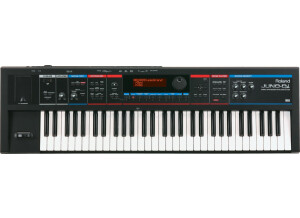
    The Roland Juno-Di is a synthesizer keyboard that is easy to work with and understand. It is very user friendly and comes loaded with over a thousand high quality presets or sounds that you can use right away without having to add a bunch of effects or EQ to them. The Juno-Di does not have a sound on it that I didn’t like. UTILIZATION The Roland Juno-Di is a portable keyboard as well, it looks bigger than it actually is and it is pretty light. So if you want to use it for live shows, you can easily put it in a bag or a keyboard case and take it with you. SOUNDS Some of my favorite sounds on the Juno-Di are the guitars, grand and electric pianos, strings, and brass. Some of the percussion on the Juno-Di is pretty good, but I prefer to use my own percussion kits and drums. You can also use the Juno-Di without plugging it into the wall. It does run off a battery, and they battery life will give you a few hours of straight continuous use without having to charge or plug it in the wall. OVERALL OPINION The Juno-Di does come with a manual but I didn’t not need to look at it at all because everything is easy to understand just by looking at the front of the keyboard. You can even connect your iPod or MP3 player to the Juno-Di via the external input. You can also plug in a microphone to use with the Juno-Di, you can then run your voice through the built in vocoder on the Juno-Di and do some really cool stuff to your voice for live performances or even studio and recording use. The Juno-Di is not only affordable, but it feels and sounds great. This is the most portable Juno keyboard that I have used.

  • « Better than other Juno's »

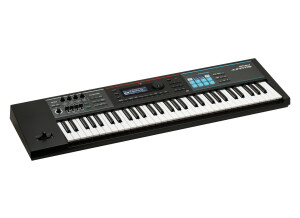
    The Roland Juno Gi is very affordable as well as powerful. I have used the Juno Gi with Reason and with Cubase as well as with Logic from time to time. The Gi has a new 8 track recorder that will allow you to sync it right up with your DAW to do your track outs in a timely and easy fashion. All 61 keys are velocity driven, and there are 79 different effects that can be added right on the board which is not bad for a keyboard that cost under 100 dollars. It excepts all of the standard file formats including MP3, WAV, and AIFF and it has over 120 different presets for arps. The Roland Juno Gi is different than the other Juno line of boards from Roland. It is more up to date and has more sounds of “today’s” music rather than some of the other Juno boards that have some older sounds. The Juno Gi has a very good pitch been lever than gives you a clean pitch bend like most of the Roland boards do. It is easy to maneuver and move around to bend your pitches. UTILIZATION Editing your sounds are not as easy as they are on some other Roland boards but that is primarily because the screen isn’t as user friendly. The Juno Gi is more designed to use the on board knobs and sliders to change your sounds rather than on a screen. The manual that comes with the Juno Gi is kind of confusing and a little bit too long. They could have summed up some of the functions in less words to not make it so lengthy. Setting the Juno Gi up couldn’t be easier though! SOUNDS Some of the sounds are very realistic and some are not. By far, the sounds on the Gi are better than the other Juno boards to me though, but they all need a little work. Unfortunately some of the sounds and presets from the other Juno’s aren’t including in the Gi which I was not to happy with. Some sounds are included but not my favorite ones which makes me have to keep both boards. OVERALL OPINION The Roland Juno Gi is very affordable and easy to use, if you are looking into the Roland Juno set of keyboards then you should go with the Gi first. It is far ahead of the other models and has an easier ability to sync with your DAW or software. For the price it is a must have.

  • ericthegreat's review

    This is another one of those boards that comes industry ready right out of the box. It’s extremely easy to get it set up and ready to start making great music. The editing abilities on this board are easy to do and the workstation is easy to navigate. I love the pitch and modulation on this board, works great and is very smooth. UTILIZATION The manual is very easy to understand and is concise and in depth. But unfortunately the manual doesn’t come in a printed version. Some of use love to have hard copies of a manual and don’t want to have to pop in a cd just for a reference on something we might need to check or to do. Even with the ease of computers, I still prefer a hard copy of a manual so I can just index what I’m looking for and find it and understand what I need. I don’t like having to find the cd and put it in just for a quick reference. SOUNDS This board comes stock with a few sounds that sound great and are very warm and clean. The brass sounds are really realistic in my opinion. I was very surprise with the quality of the brass sounds and presets. But there arent enough presets for me, I wish it had a few more. The Piano sounds didn’t impress me and weren’t as good as they are on the other boards that are out in the music world today. The just didn’t seem as realistic and warm as I am use to with the Fantom and Motif. Choir and Organ patches are good and unique sounding patches, but nothing that blows other boards out of the water, just very basic sounding patches. OVERALL OPINION Overall this is a very good keyboard from Roland JUNO 106, the synths on this board have the weird feel to them, great board for techno or club music. This board is pretty expensive but not as bad as a lot of other professional boards on the market.

  • « Juno D is great »

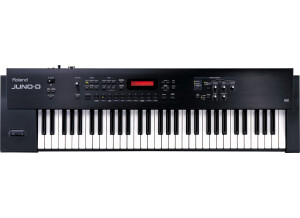
    The Roland Juno D is a good board, I wasn’t sure about this one after spending 3 hours on it at the guitar center down the road. One thing that I can stand with it is the interface and sequencing just didn’t do it for me. But there where certain sounds that I really liked and the on board controls to minipulate those sounds made it really easy for me to get the sound I was really looking for . UTILIZATION Very easy to operate, its almost to easy. You may only need the manual just to understand a few small things. But sequencing on it was difficult for me because I am use to a more user friendly screen and menus. There really just wasn’t much to the interface of this board. Maybe it was just too easy for me and that’s why I didn’t like it because I am use to sequencing on other workstations that have a much more complex screen and menus. SOUNDS The sounds a pretty good, especially when you add a few small effects you will really like the sounds you can get when you play around a little bit. The brass on here is what surprised me the most, I didn’t expect to hear such a big band style of brass. Its just sounds full and rich when those horns are being played. I can honestly say the brass on here was some of my favorite presented brass out of almost any board on the market. The brass was ready to fit right in to my songs with out any equine or anything. It was almost made just for me. OVERALL OPINION Overall, This board is really easy. If you want something easy then this is what you need. Its not much to look at and doesn’t look all fancy. that’s because its not fancy. Its good though and has all the connections you need to get it right to you DAW. Its very realistic and ready to go right into your mixes. You will love the Roland Juno D.

  • « Pretty sweet rave-y synth »

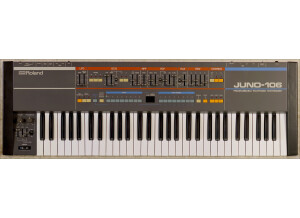
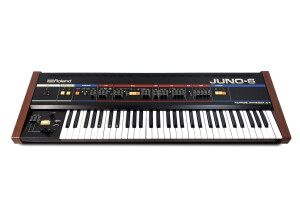
    This is a vintage synthesizer from the 80s. Though it is an analog synth, it has some digital controls, which made it a unique hybrid of the technologies. There are 64 presets as well as 64 user memory patches, meaning there is a lot of room to customize the sound. The digital controls includeDCO digitally controlled oscillators, LFO, bend, ENV, pulse, waveforms, noise, PW/PWM, high pass filter, VCF filter with freq/env/res/lfo/kybd, VCA envelope, chorus and others. There are really nice analog filters on it too. It's not new enough to be computer-updated and it is not rackable. UTILIZATION This is a pretty easy synth to use, honestly. The digital wheel controls all of the settings on it as well as the presets and the channels. Switching between sounds on the fly is tough, perhaps it's better suited to studio use for this reason, though I'm sure with practice you could switch it quickly enough to get comfortable for using it live at a venue. It's pretty easy to set it up and get it going too. The manual explains everything pretty clearly overall, there's certainly a lot to cover with it but it's all in there. SOUNDS The sounds made from this synth seem to be a little ahead of their time for a synth that was released in 1985. Most of it sounds like 90s rave-style stuff. Prodigy and Fatboy Slim are two of the more notable people who have been known to use this synth, and thus countless imitators have also used it for the same reasons. I think overall it doesn't have realistic emulations of real instruments, but that's not really why I would use it anyway, nor do I think anyone else would use it for that reason. One advantage that this model has over its predecessor, the Juno-1, is that it is touch sensitive. That's a big advantage for me personally, as I like to be able to control dynamics with my playing as much as possible. The effects are great, the analog filters are the best part about it. It's a great hybrid of analog and digital technology overall. It's capable of fat, booming bass sounds as well as spacey, high pitched effects. It's got it all really. It doesn't have the warmth of an old school Moog or something like that but it's still a great synth. OVERALL OPINION This is probably going to be pretty expensive nowadays. While I like the synth a lot, I'm not sure it's so unique that you can't find an acceptable MIDI patch to replace most of these sounds. Still, for live use, it's great. And really, you're better off with the real thing than a crappy plug-in. It's worth the price if you are constantly going to be using it. Otherwise it's not really. It's a fine sounding machine and it definitely has an old school vibe that would work well for a lot of people. It's not going to compete with 2010-style synths for top 40 club charts domination, but it's definitely got a nice character and it's versatile. Highly recommended.

  • FP User's review

    For a real analog synth from the pre-MIDI era, this is a very complete synth. Six voices of polyphony, simple but good arpeggiator, great 24dB LP filter with cutoff/resonance, HPF, great LFO's (which are maybe a little poor-featured), fat chorus (I think that's typical Juno), 56 patches of memory storage. And a rare bonus: the pitch wheel/filter as well as the manual lfo control. Minor point: lack of several oscillators: only 1 DCO (triangle/square with pulse width/square with suboscillator) per voice. $295 (Kenton MIDI retrofit kit included !!) UTILIZATION Piece of cake. The user manual is very clear; even for analog modelling newbies: the whole stuff is well explained and there is an addendum with lots of basic exemples. The synth's front panel is built as simple as possible; if you know the very basic analog sound modelling principles, you can go your way immediately and tweak that knobs !! This is a robust synth, the only things to be careful with are the wooden side panels (scratch-sensitive !!). The buttons are very solid and have no intention to break at all. No cracklings caused by dust up till now. Haven't contacted the customer support yet, so can't give info about that. SOUNDS One word: GREAT !! All kind of analog sounds are great; from very fat to very deep basses and subbasses, nice spacey strings/pads, fat analog leads, clean to dirty organ sounds, trance arpeggio's, ... This machine can be used for every kind of electronic music: from trance over techno to dnb; from triphop over rnb to hiphop. OVERALL OPINION I like it very much. A real fat analog synth with great filter and great sounds. F.y.i: the Juno has been used by Enya, The Cure, Sean Lennon, Faithless, Astral Projection, Vince Clarke, Rabbit in the Moon, Olive, Dee-Lite, ... (info from www.vintagesynth.com) Originally posted on FutureProducers.com Posted by: Unknown ( 7-, 2002)